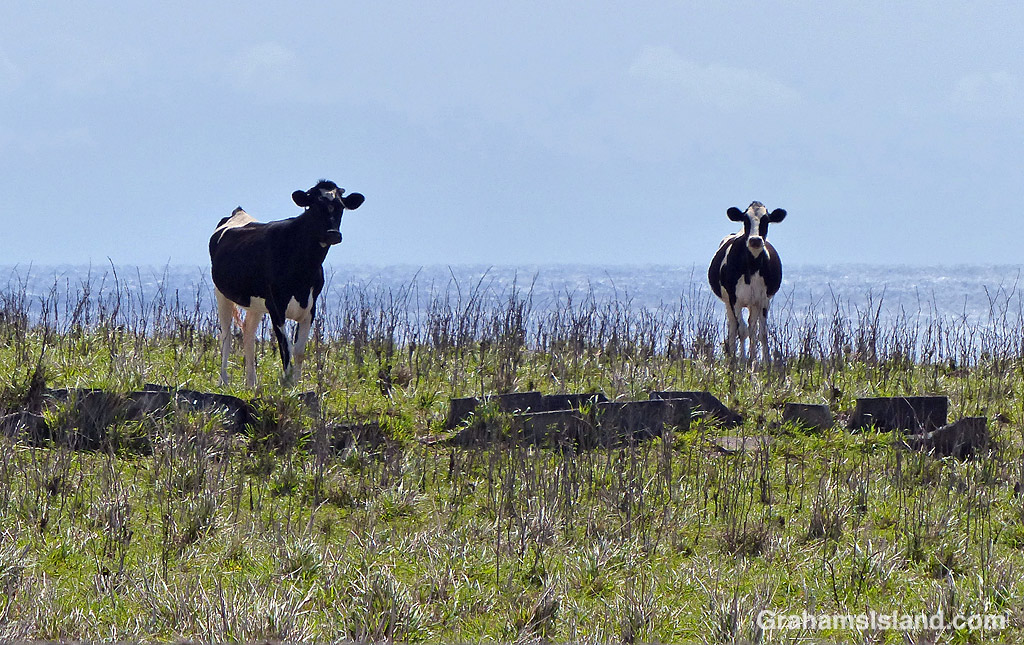
There are four reasons why I took this photo and why I like it. The ears!

There are four reasons why I took this photo and why I like it. The ears!

A tug and barge enter Kawaihae Harbor around sunrise.


As the sun dipped toward the horizon, this sliver of a moon shone against the blushing clouds.

Late afternoon sun peeks through a tangle of trees.
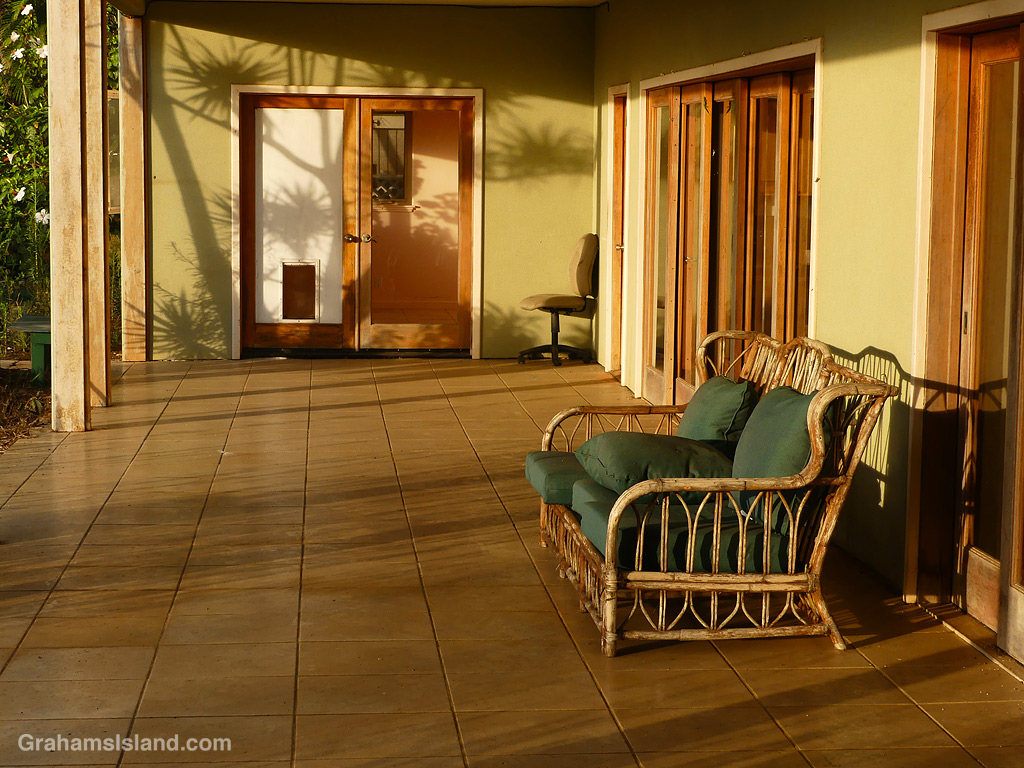
Looks very inviting, doesn’t it? A covered lanai in the late afternoon sun with a comfy, rattan sofa to relax on. The lanai above this is even more inviting, with a view toward Maui, currently blocked by trees.
But this is my neighbor’s old house, currently unoccupied and falling further into disrepair, with broken windows and a floor collapsing. I’d be leery of sitting on this sofa for fear of what’s living in it or that it might collapse. There’s also a chance that the hot tub on the upper lanai, could end up dropping on your head.
So perhaps, like many things these days, this is an invitation best experienced virtually.


Cattle Egrets are usually seen flying or on the ground, in the company of cattle, horses, goats, and lawnmowers, as they forage for food. I saw this one perched on an old snag, and it remained there for some time, looking this way and that, before taking to the air and disappearing.
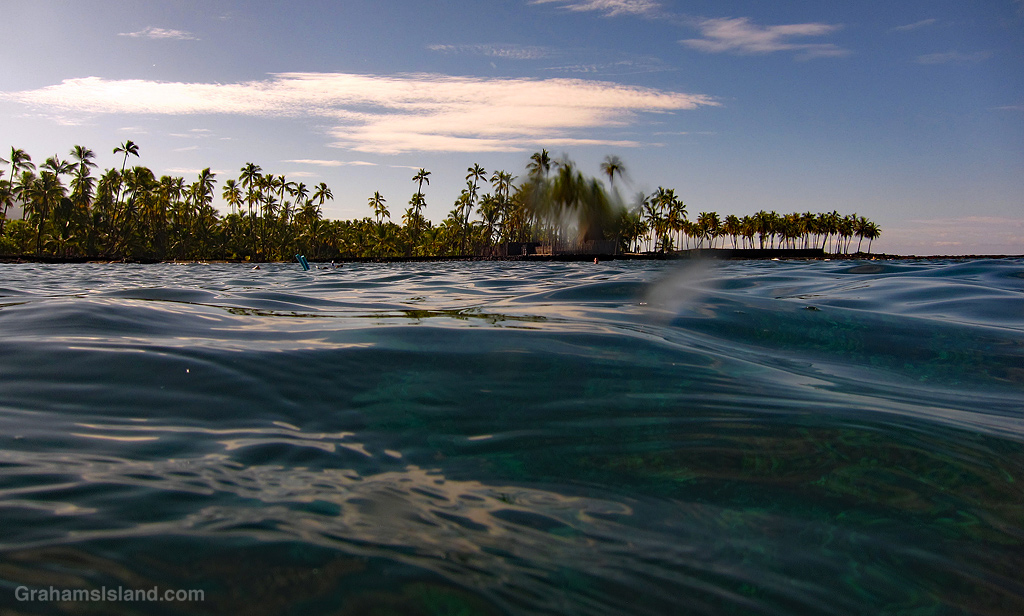
This week’s Sunday Stills challenge theme is ‘Celebrations.’ See more responses here. Since I rarely take photos of people, the usual options for this one were off the table. So I’ve gone with some photos from Pu’uhonua o Hōnaunau National Historical Park.
This site is also known as Place of Refuge and it represented guaranteed forgiveness for those who had broken kapu. The park’s website (here) notes, “Kapu (sacred law) regulated fishing, planting, and the harvesting of other resources. Any breaking of kapu disturbed the stability of society, and the punishment was often death. Any fugitive who had broken kapu could seek refuge and forgiveness within the walls of the Puʻuhonua.” The refuge is bordered by a huge L-shaped wall on land and by the ocean on the other sides.

I imagine some such unfortunate swimming across Honaunau Bay. The palm trees look welcoming, but this is a sacred place, home to Hawaiian royalty, and to important ceremonial sites. One of these is Hale o Keawe, situated at the northern end of the wall, a place of powerful mana, or divine power. It is home to many ki’i, representations of “the akua, or the multitude of Hawaiian gods, deities, and venerated ancestors.” The refuge is on the other side of the Hale.
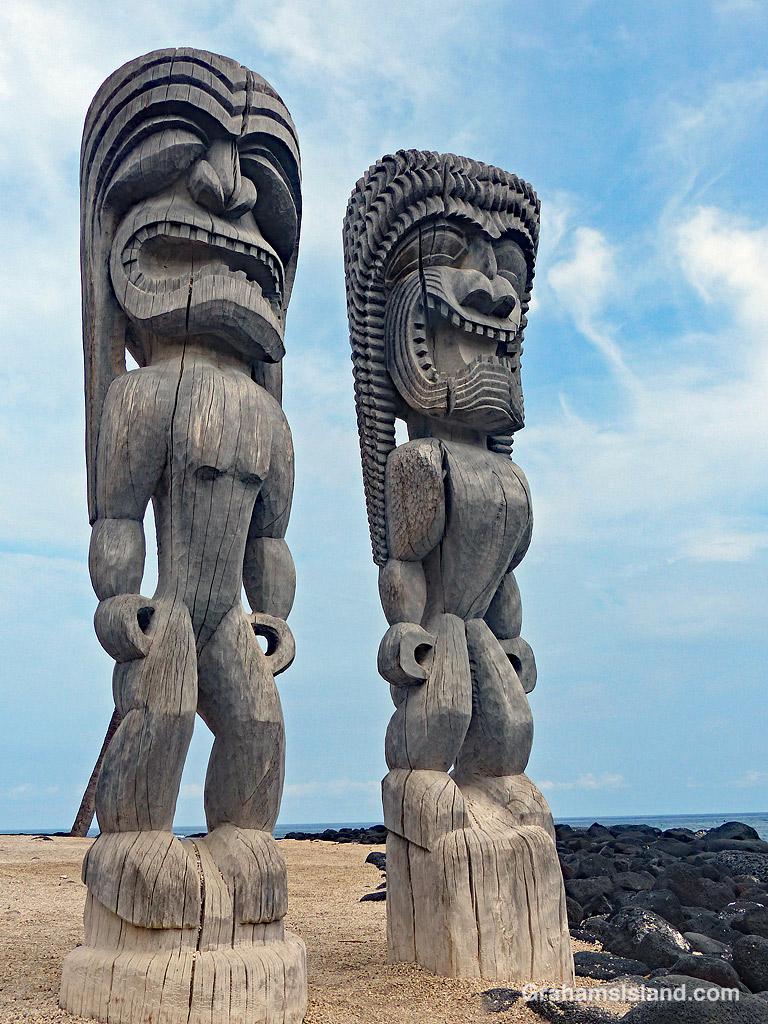
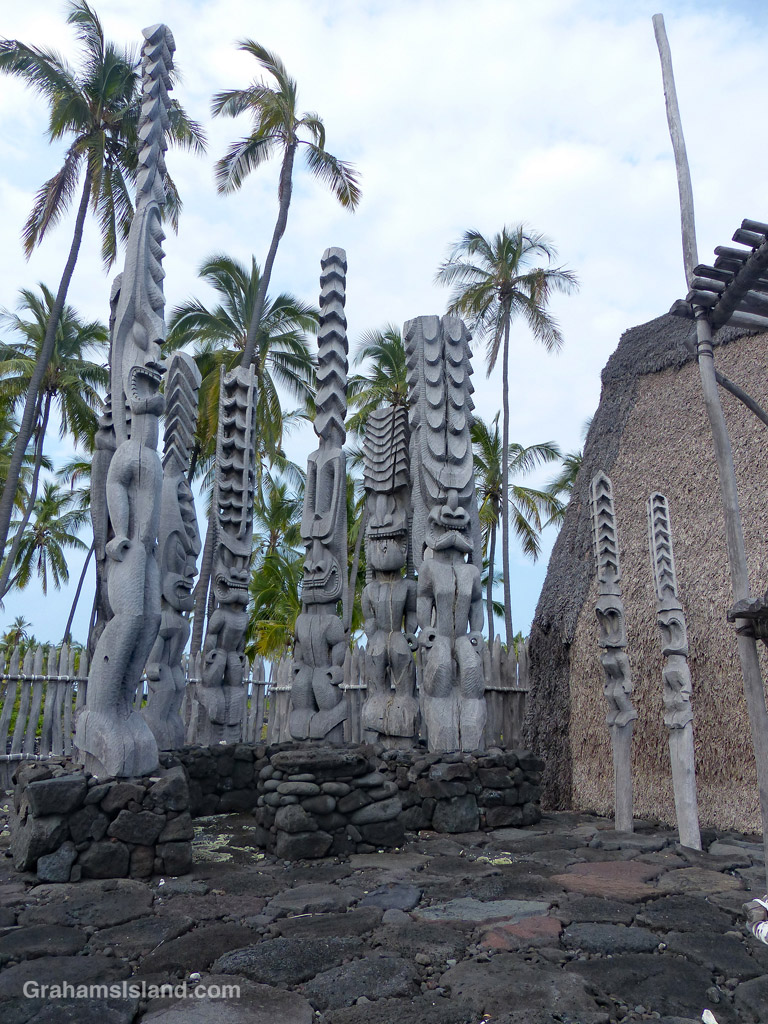
These ki’i would look down on the miscreant swimming toward them, growing in size as they got closer. But so too would the welcoming palm trees and though it is a rocky shore, a few cuts and scrapes would be a small price to pay for salvation.
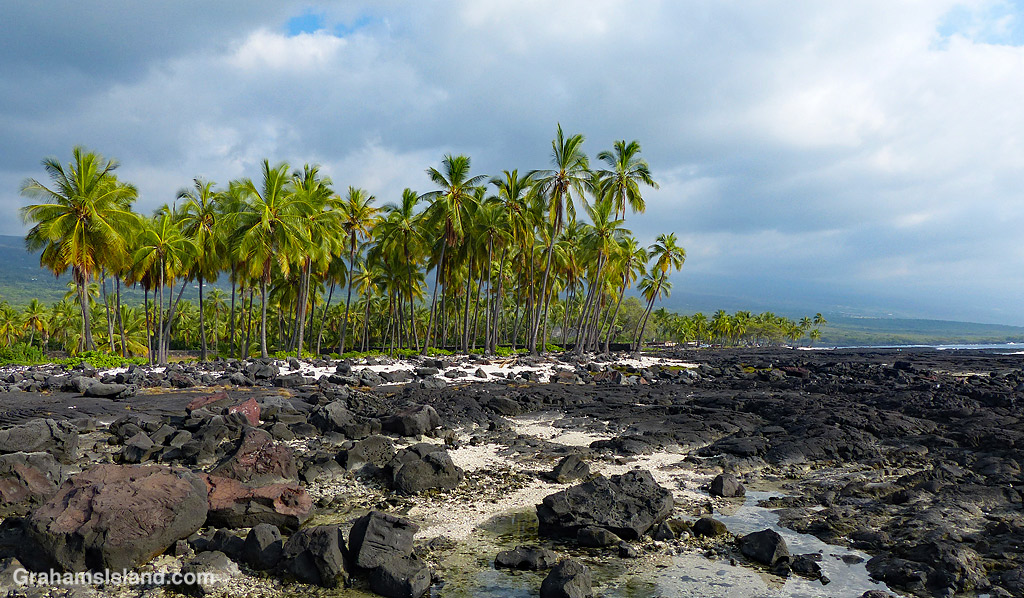
Once ashore, forgiveness was guaranteed and the person was free to reenter society and rejoin family and friends, who would no doubt celebrate the return.

A sailboat runs before the wind in the Alenuihāhā Channel, between the Big Island and Maui.
 Graham's Island