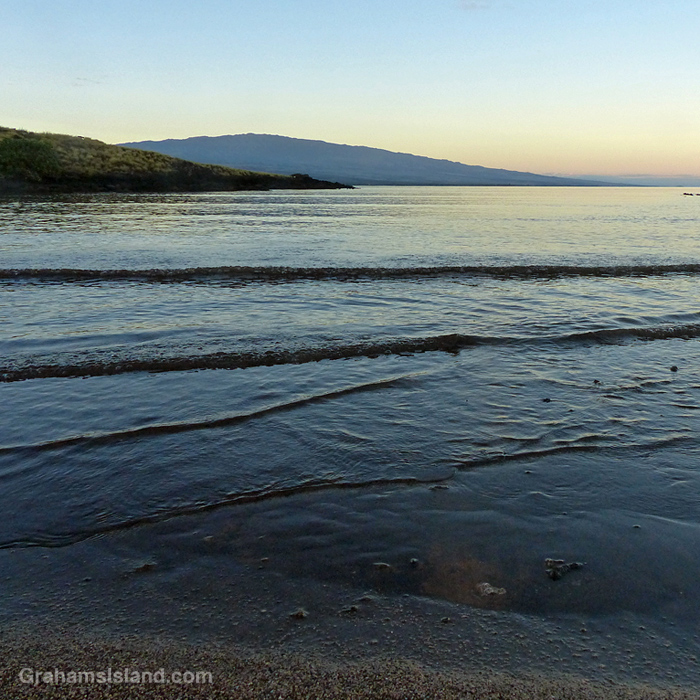
I was walking the beach at Pelekane Bay one morning, when I realized there was a lot of movement on the sand. A bit of quiet observation revealed crabs everywhere. They skittered back and forth, but if I moved, they zipped back to the edge of their holes or disappeared into them.
Ready to disappear below in an instant.How do I get this down my burrow?Yes, there’s a crab in this photo, obviously!
I picked a spot where I could observe a good number of them and spent about 40 minutes there, kneeling in the sand, moving minimally, while the crabs went about their work. The ones in these photos are Pallid Ghost Crabs.
Pallid ghost crabs leave sand balls outside …… when excavating their burrows.
Posted for Becky’s Squares: Move Forward, Reconstruct, Renew, and/or are Burgeoning. See more responses here.
I was at Spencer Beach Park when I heard bees. Looking up, I saw them all over an open flower on one of the trees. I’ve never seen so many bees on the same flower at the same time. As they left, others would be moving forward to join the party.
The tree was an Autograph Tree (Clusia rosea), which is native to the Caribbean and is something of an invasive species here. It gets its name from its thick leaves with a thin green covering. Kids scratch their names into the leaves and watch as they grow with the leaves!
Posted for Becky’s Squares: Move Forward, Reconstruct, Renew, and/or are Burgeoning. See more responses here.
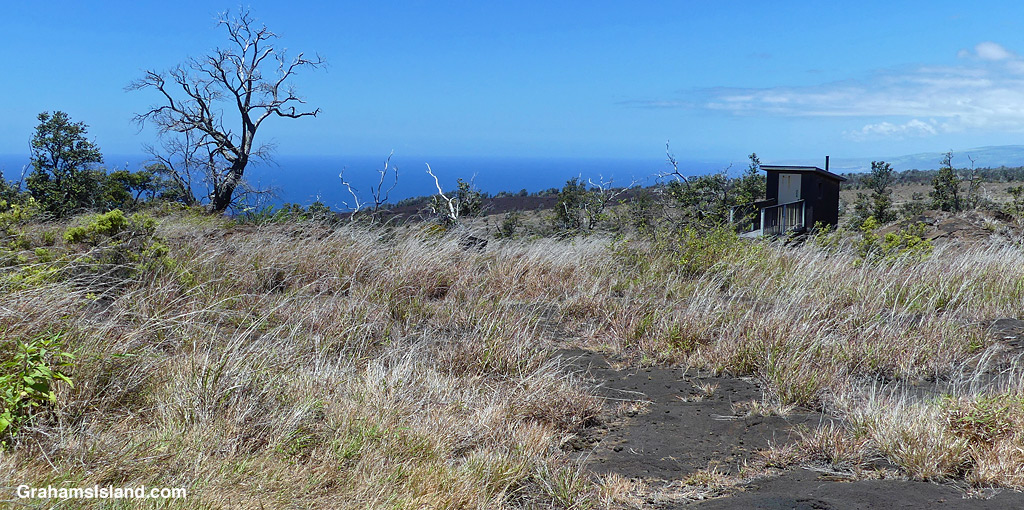
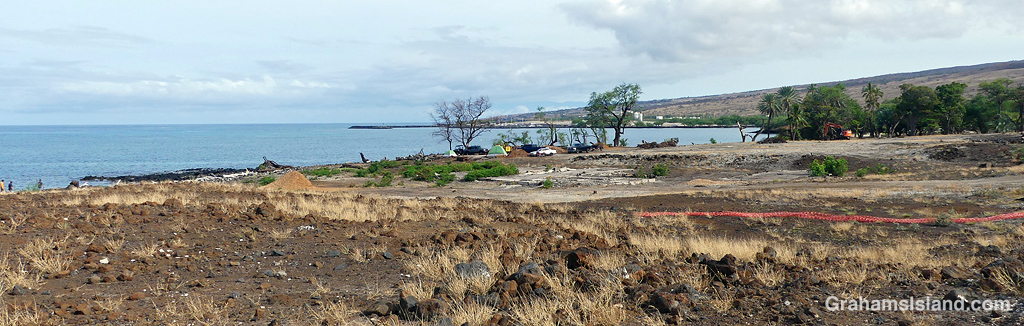
Recently, I went down to Spencer Beach Park for a morning walk. The area south of the park was torched by a wildfire back in August of 2023, which I wrote about here. Since then the power lines have been restored and a good deal of clearing has been going on.
In that previous post, many burned trees are visible, but these have now been removed, as has most everything else. It looks like the area is getting a new start, but what that start is, I don’t know.
On this day, what captured my attention was this group of workers on the project. I first saw them heading south along the coast, then picked them up again on their return journey. Much of that time, they moved forward steadily, and evenly spaced. It was a Monday, so maybe they were walking through the areas they’d be working on, and discussing what they’d be doing.
Posted for Becky’s Squares: Move Forward, Reconstruct, Renew, and/or are Burgeoning. See more responses here.
Sunday Stills Monthly Color Challenge is ‘Cobalt Blue.’ See more responses here.
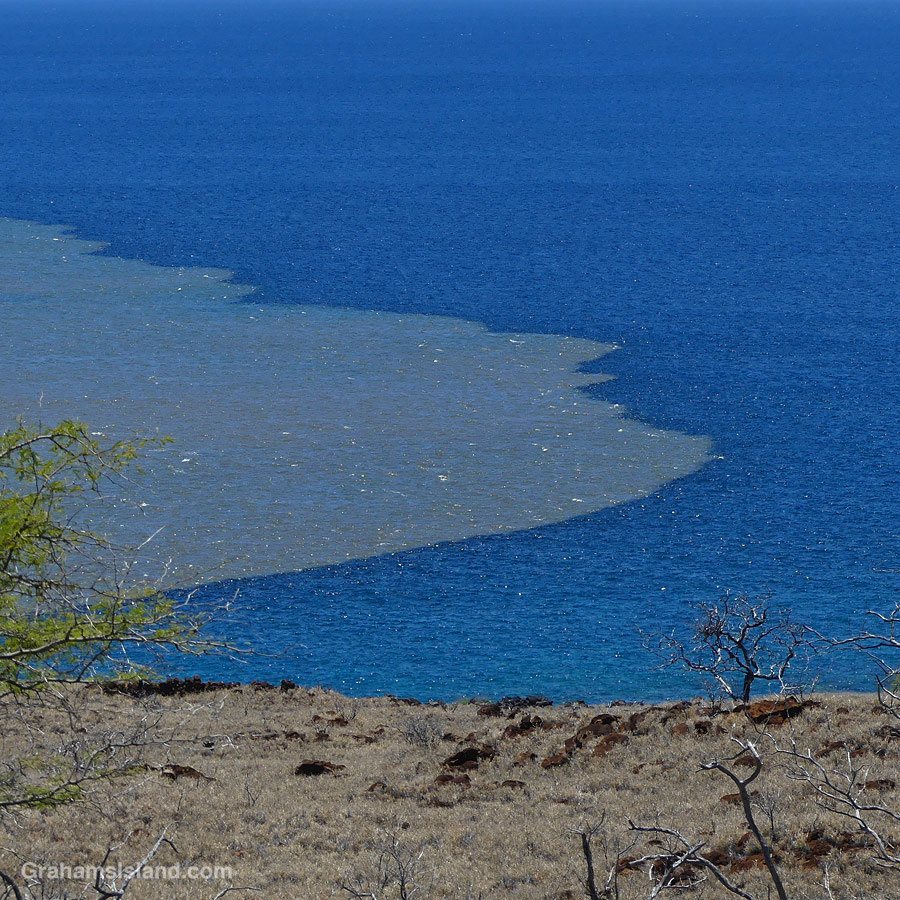
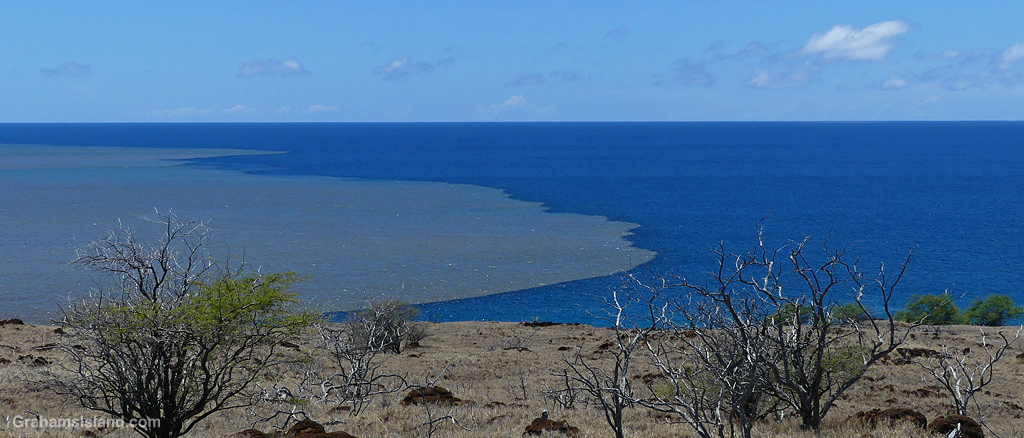
I had a post all lined up, until I was called into work yesterday to do some clean up after flash floods swept through several places, including where I work. On the drive down, I came on this scene.
The cobalt blue waters of the Pacific were being overrun by muddy waters swept into the sea by flooding. I’ve never seen such a sharp line before and, as I watched, I could see it moving forward, to the north. On that coast, the current generally runs in that direction, and a swell from the south was probably helping it along too.
The muddy waters entered the sea down by Kawaihae and when I first saw them, they’d almost reached Lapakahi, a distance of around 12 miles. When I returned home, about three hours later, the brown water had moved up off Kapaa Park, another two and a half miles north.
It will take a day or two for the ocean to clear again, as the waters mingle or are eased away by offshore currents. In the meantime, Kawaihae is digging itself out from the copious amounts of mud left behind by the floodwaters.
Also posted for Becky’s Squares: Move Forward, Reconstruct, Renew, and/or are Burgeoning. See more responses here.
The photo number isn’t 140, but this still works. Watch out for that tub!
An itsy bitsy, teeny weeny Striped Lynx Spider.
The idea of The Numbers Game is to enter a number into the search bar of your computer and then post a selection of the photos that turn up. This week’s number is 140. Captions are on the photos.
An endangered Palila, a bird found only on the Big Island, Hawaii.Rainbow over North Kohala.Little fish and Padina japonica seaweed in a tide pool.A fireweed control moth (Secusio extensa).Sunrise over North Kohala.
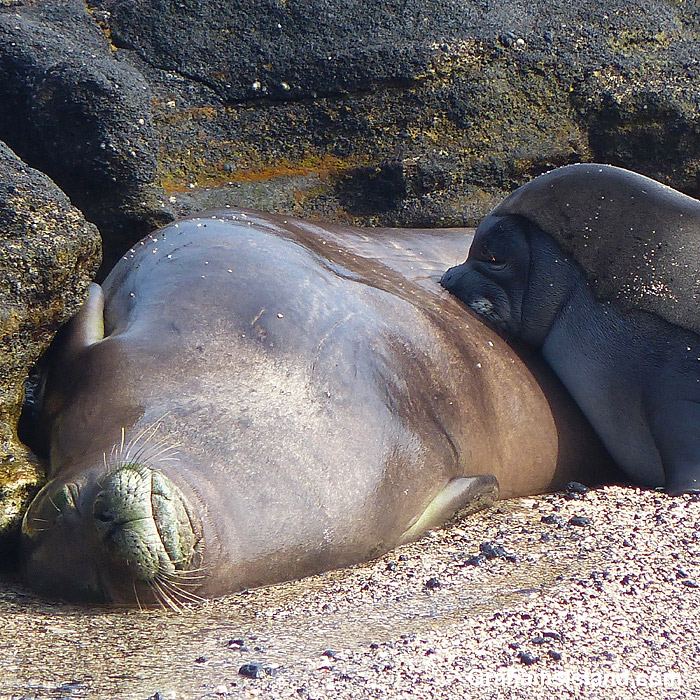
Monk seals often come ashore during the day to rest.
I was down at Punalu’u Black Sand Beach Park with my brother, and we were watching a turtle resting on the beach, in an area enclosed by a low rock wall. I told him that most turtles hauled out here, but they sometimes came ashore on other parts of the beach, and I pointed to a dark lump, surrounded by cones, some distance away.
Looking at it, I thought, that’s a big turtle! So I zoomed in with my camera and saw it was actually a monk seal. We hot-footed around and I took these photos, which I later sent in to the Marine Mammal Center, which keeps track of monk seals.
This monk seal looked in good condition, with no visible wounds. The green around the face and flippers is algae and is an indication the seal might molt soon, which they do annually.
They responded to let me know the seal was ‘Imikai, a daughter of RB00, who is also the mother of the last seal I saw (here). ‘Imikai was born on Lānaʻi in 2018 and has had two pups of her own. Apparently, she came to the Big Island in 2023 and has been seen mostly around the southern parts of the island.
Tags in the tail flippers are used to identify the monk seals.
Strong winds whip up whitecaps in Kawaihae harbor.
The idea of The Numbers Game is to enter a number into the search bar of your computer and then post a selection of the photos that turn up. This week’s number is 139. Captions are on the photos.
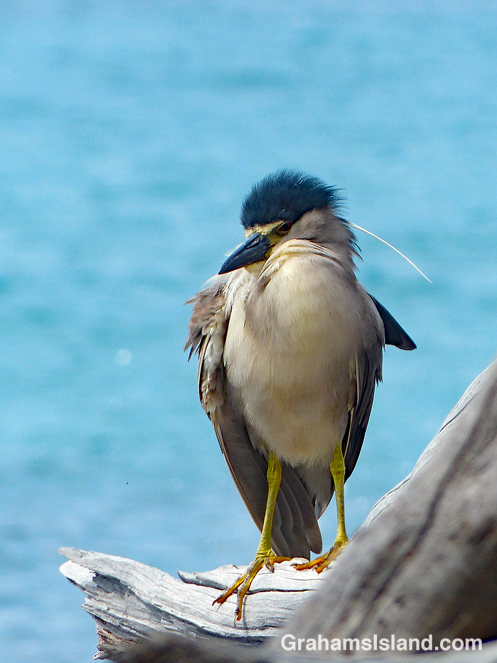
A Black-crowned Night Heron snaffles a Tilapia. Original post here.Bees and their honeycomb inside the wall of a house. Original story here.The firehose of lava at Kilauea Volcano in 2017.Hawaiian Stilts in flight.There’s always one who’s got to get your attention, as evidenced by these Northern Pintails.
Halemaʻumaʻu crater sits within the larger Kilauea calera.
Jagger Museum sits on the center of the ridge above Halemaʻumaʻu crater. This view gives an idea of the scale.
This week’s Sunday Stills challenge theme is ‘Earth Day.’ See more responses here.
My brother has been visiting from England and, a few days ago, we went down to Hawaii Volcanoes National Park to check out the scene. The volcano’s last eruption ended in September 2023, and it’s been mostly quiet since then.
We arrived to find the volcano socked in with clouds, but the next morning the skies had lifted and we got some great views. We started at Uēkahuna, a viewing area next door to the Jaggar Museum. The viewing area used to be at the museum, but that was badly damaged during Kilauea’s 2018 eruption and is currently in the process of being removed.
Halemaʻumaʻu crater is a pit crater within the larger Kilauea caldera. By the end of that 2018 eruption, the crater floor had collapsed into a deep pit. A small lake formed at the bottom, but that was boiled away and covered in the next eruption. Subsequent eruptions have continued this process of filling the collapsed pit. I hadn’t been down to view this area for quite a while and I was surprised at how much had been filled in. The whole floor was easily visible from the many viewpoints around the caldera, and while there’s no active lava to be seen, there’s plenty of steam rising.
Volcanic cones, from the last eruption, on the floor of the crater.
Steam rises from cracks in the walls of Halemaʻumaʻu crater.
Ironically, yesterday I got an email from the U.S. Geological Survey announcing that ‘Increased seismicity over the past three weeks, indicates heightened activity. Updates will be provided daily while at a heightened state of unrest.’ In other words, watch this space!
For more information about Hawaii Volcanoes National Park, go to nps.gov/havo/.
A view of Halemaʻumaʻu crater. On the left, the flat area with a white line on it, is a section of Crater Rim Drive that slid, intact, into the crater!