This week’s Sunday Stills challenge theme is ‘Summer.’ See more responses here. Seemed like a beach-related theme worked for this. And at the beach…



This week’s Sunday Stills challenge theme is ‘Summer.’ See more responses here. Seemed like a beach-related theme worked for this. And at the beach…

I grew up on a dairy farm and have been around cows off and on for years so I’m used to them, used to what they do. Recently, I was walking past one of the local dairy’s fields. The nearest cows turned their heads to look. A couple jogged away from me. Other carried on grazing.
Up ahead, on a rise, away from the rest if the herd. I saw the cow in the photo. At least I thought that’s what I saw. But what was it doing? Was it one cow or two? Alive or dead? As I got closer I thought for sure I was looking at one cow sitting on another, no matter that I knew that was highly improbable.
It wasn’t until I got quite close that I was finally able to make out this one cow resting in a rather contorted position. I think my confusion was caused by all those lumps sticking up, by the swirl of white on the visible rear leg, and by the black hump of the back.
I’m pretty sure the cow was alive though I didn’t notice a single movement while I was watching.

This bird looked a bit forlorn when it landed on an outdoor shower at Spencer Beach Park. I think it was just looking for a drink of water, though there were alternatives not far away.
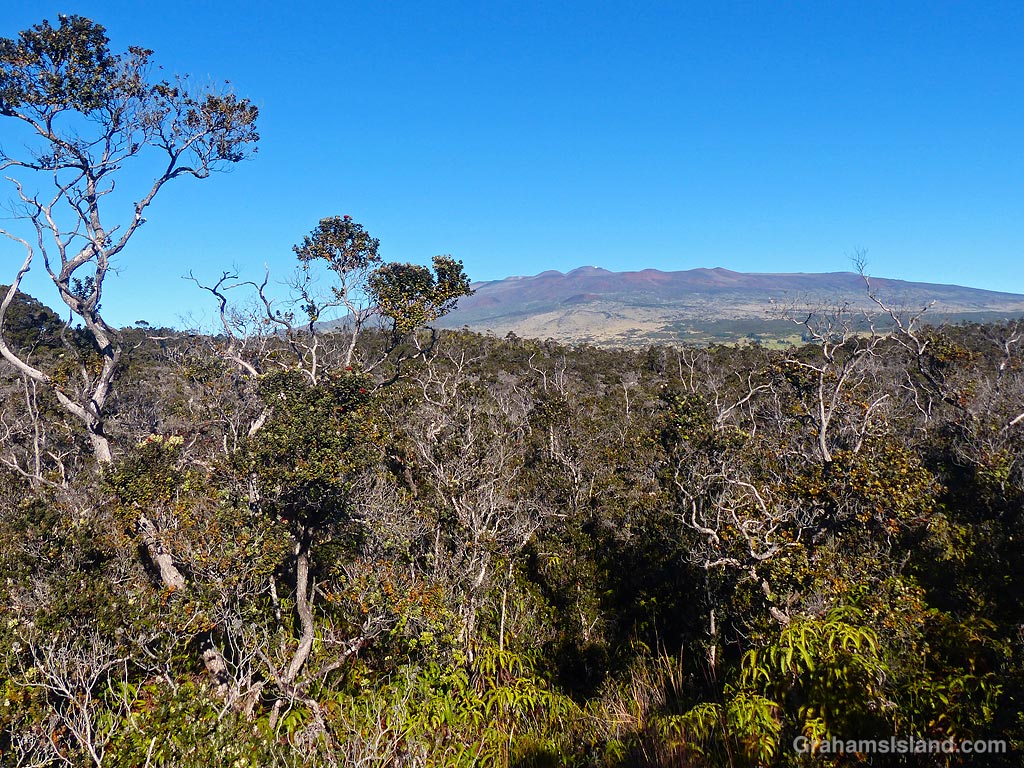
Kaulana Manu Nature Trail used to be known as Kipuka 21. A kipuka is an area of land that has been surrounded by lava and the 21 referred to the fact that this one was located at the 21 mile marker of the road across the middle of the island.
It has been renamed Kaulana Manu Nature Trail, presumably to reflect its new grandeur since the trail has been renovated, which is a good thing. However, a new toilet facility and parking lot, featuring space for three large buses, has also been built, which is not necessarily a good thing.
The trail is a one mile loop through a fragile environment, where native endangered birds can sometimes be seen. I’m not clear on how disgorging busloads of people into this area is going to help preserve things. If three buses did arrive, there would be gridlock on the trail, which is narrow and winding.
Fortunately, when I’ve visited, the place has been pretty much deserted. Long may that continue.
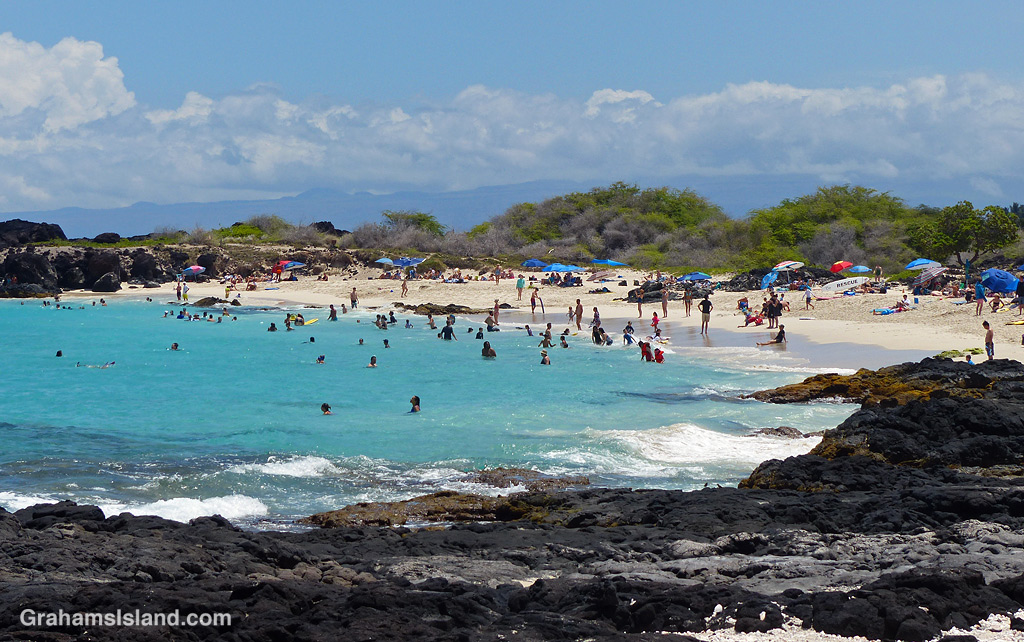

Kua Bay is a popular beach park a little way north of Kailua Kona. There’s no car park, so vehicles line the road to the beach. The beach itself is a small, but lovely curve of sand. It’s very popular because of this and its proximity to Kailua Kona. Most people head for the main beach, which tends to get crowded, but one doesn’t have to walk far to find more room.
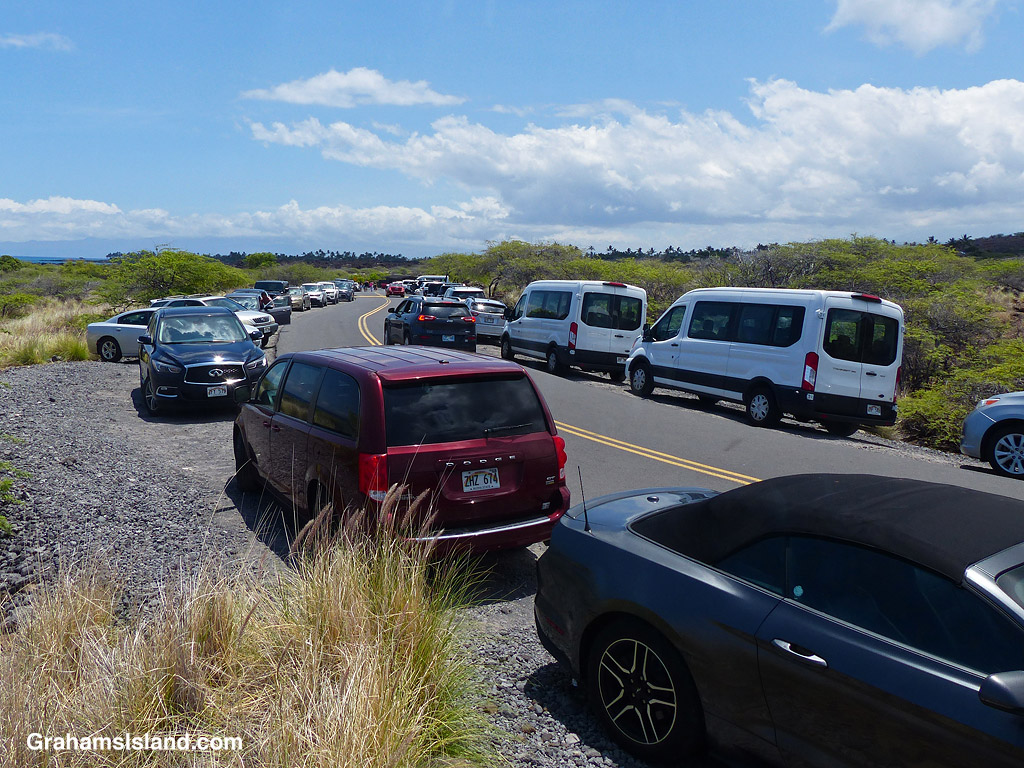
There’s a lifeguard hut at Kua Bay. The lifeguards get to deal with the result of activities such as those in the photos. The bay can also be somewhat dangerous when there are onshore swells. Body surfers can get slammed against the sandy bottom, causing significant injury and requiring the help of those lifeguards to get out.


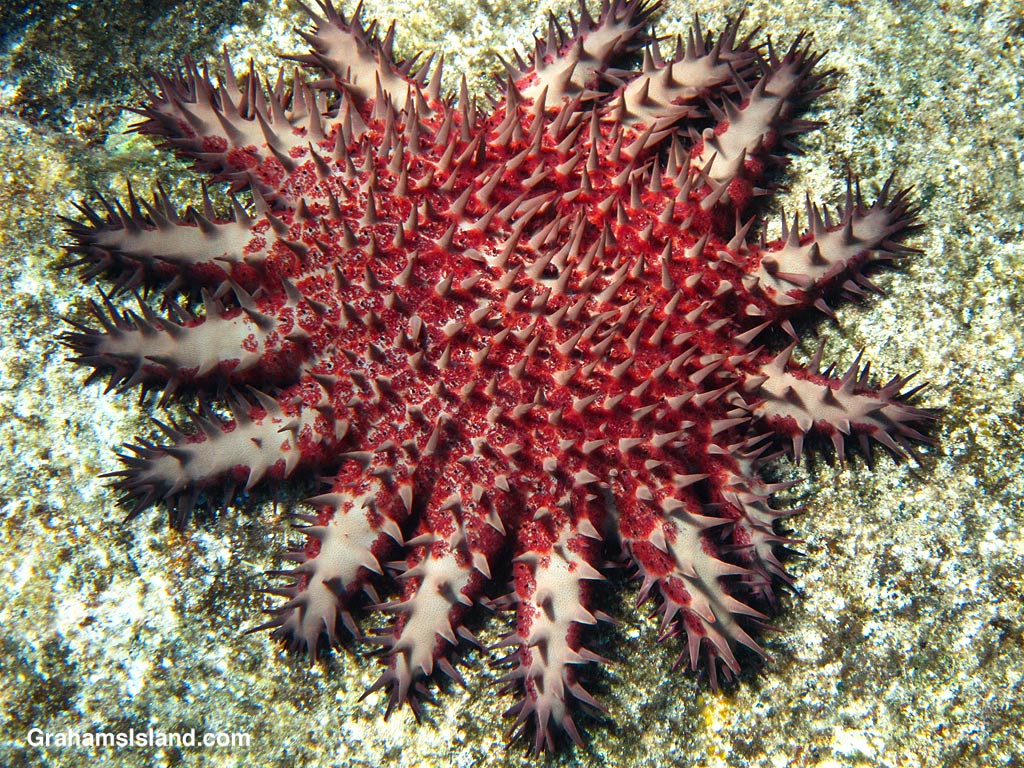
This week’s Sunday Stills color challenge theme is ‘Ruby Red.’ See more responses here.
The top photo shows a Crown of Thorns sea star, which feeds on coral, though not to a problematic extent in Hawaii.
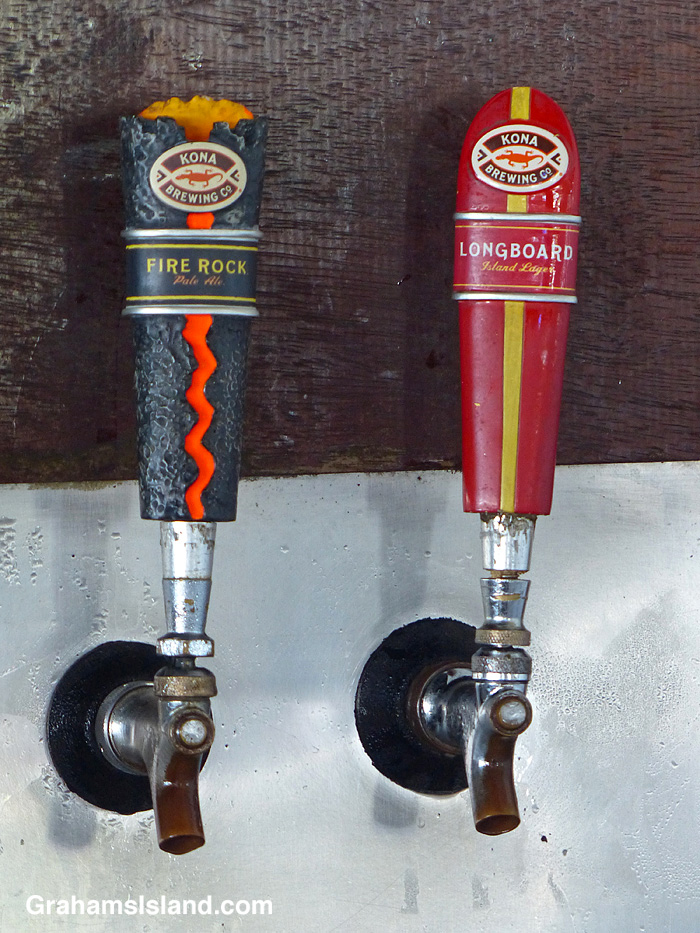
The second photo illustrates a definite problem. When I stopped by the Harbor House restaurant at Honokohau, these were the only two Kona Brewing taps available. I was told the company has discontinued their Castaway IPA, which, if true, is a sad state of affairs, it being by far their best beer in my humble, but completely correct opinion.
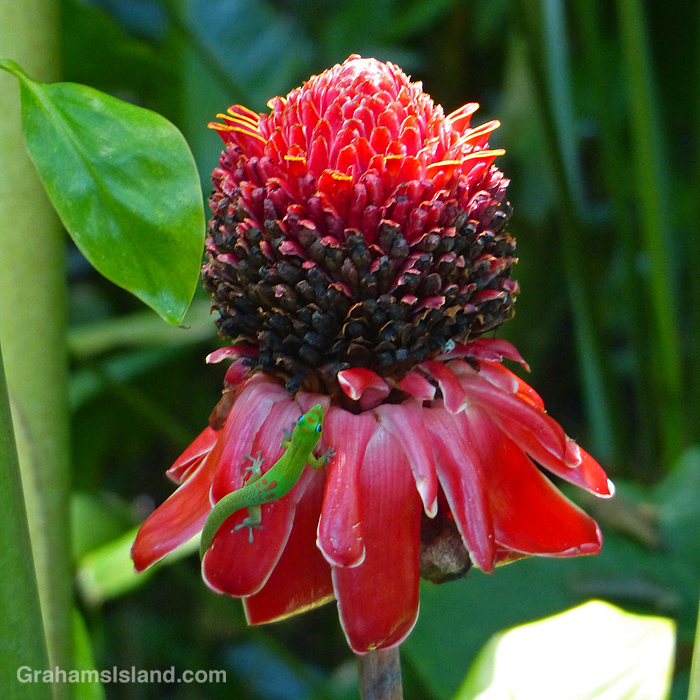
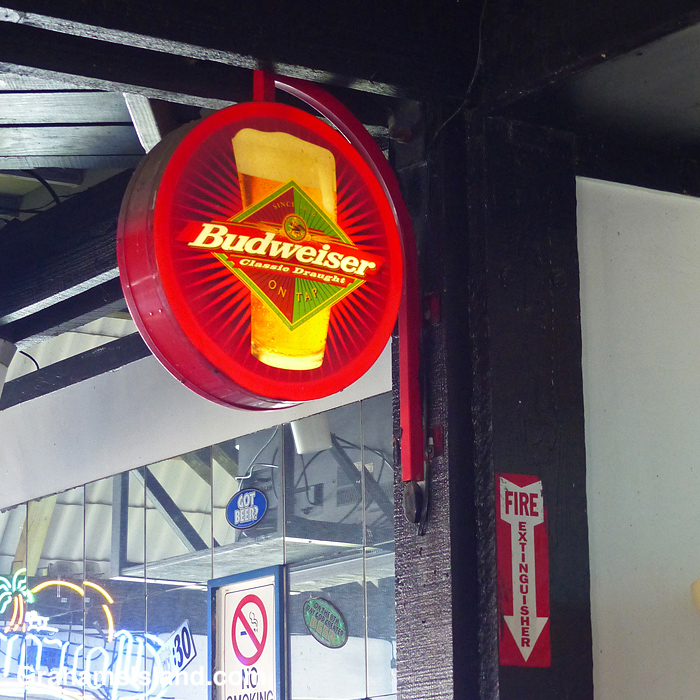
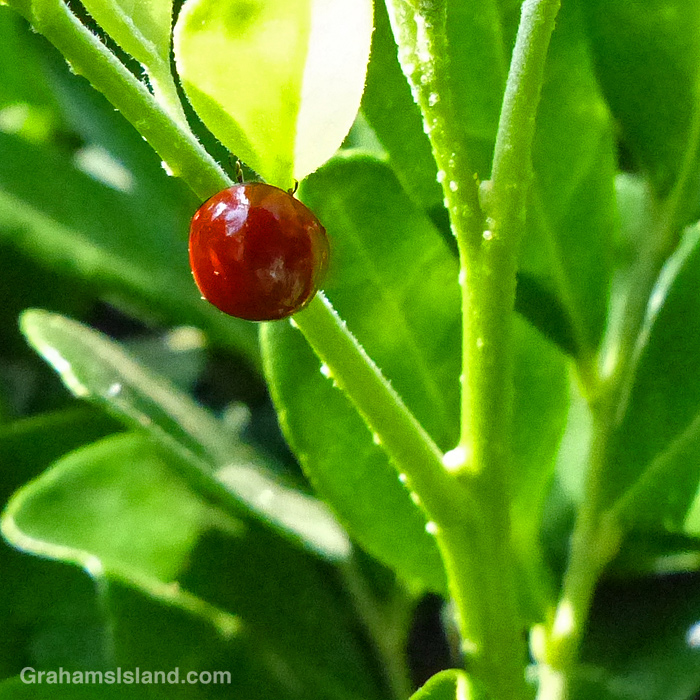
The bottom three show a Gold Dust Day Gecko on a torch ginger, a Budweiser (not my beer of choice) sign at the Harbor House, and what I think is a Western Blood-red Lady Beetle.


This boat hoist, on the North Kohala coast, is used to launch small boats off trailers and into the water. I’ve featured it before (here), being engulfed by towering waves. All that salt water has undermined the integrity of the structure, but despite some large holes in the very rusty metal structure, people still launch boats here. All I can say is, I hope those boats are insured.

This week’s Sunday Stills challenge theme is ‘Beautiful Beaches.’ See more responses here. Obviously, this was a tricky challenge for me, but I have managed to come up with a few photos!
The top photo shows Green Sand Beach. It’s official name is Papakōlea Beach and the color of the beach is due to an abundance of olivine from the old volcanic cinder cone that borders the beach.
Next we have two black sand beaches. The best known black sand beach on the island is Punaluʻu Beach, which is often referred to simply as Black Sand Beach. However, there are several others. The first of these is Pololu Beach here in North Kohala. The black sand is a result of the breakdown of black lava into smaller pieces. Over time, the grains become as fine as those on white sand beaches.

Pohoiki Beach is the newest such beach on the island, formed by the eruption of 2018. The grains are still a bit coarse, but it’s mind boggling to think that before that eruption, there was basically no beach here at all. Now, as the photo shows, it’s extensive.

Finally, some white sand beaches. Anaeho’omalu Bay Beach, at the south end of Waikoloa Beach Resort, is a curve of sand dotted with palms, a quintessential tropical beach.

Hapuna Beach, farther north, is a regular on lists of best beaches in the U.S.A..

The beach at Spencer Beach Park is a current favorite of mine, a place I like to walk in the early morning before going to work. The sheltered waters, shade trees, and picnic areas make it a favorite with families.

 Graham's Island