I saw this dragonfly zooming back and forth above the anchialine pool at the south end of Kiholo Beach Park.
Posted in response to Becky’s October Squares challenge theme of ‘Past Squares – Blue.’ See more responses here.

I saw this dragonfly zooming back and forth above the anchialine pool at the south end of Kiholo Beach Park.
Posted in response to Becky’s October Squares challenge theme of ‘Past Squares – Blue.’ See more responses here.

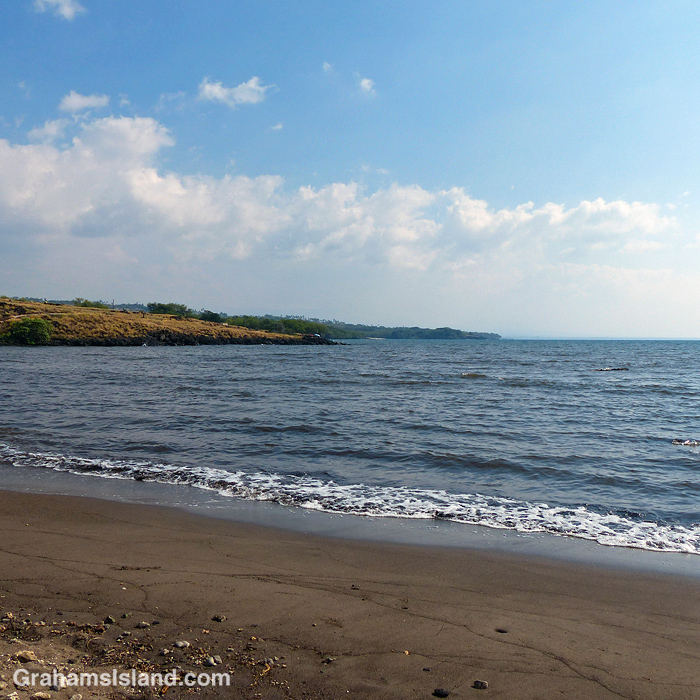
I took the top photo on my way to work one early morning. It’s a tranquil scene (the reason I go down there) shot from the beach below Pu’ukohala Heiau in Kawaihae. The second photo was shot on my way home in mid-afternoon. It was taken from the same beach in roughly the same place and looking in roughly the same direction.
Astute observers will see past the similarities in the photos and notice something is missing. Hualalai Volcano has disappeared. Now, it’s not unreasonable to think that those puffy white clouds in the second photo have something to do with this, but that’s not really the case. True, they might mask the upper reaches of the volcano, but the whole thing? No, the culprit is the fuzzy band between the clouds and the land – vog!
The latest eruption of Kilauea Volcano, which began on September 29th, is churning out vog, which forms when volcanic gases interact with sunlight, air, moisture, and dust. Two days later, when these photos were taken, it was having a visible effect. I’d noticed the vog drifting up the west side of the island during the morning and by afternoon visibility was greatly reduced. But it’s not just visibility that’s affected. Vog is especially troublesome for people with breathing difficulties, but can also irritate the eyes and skin of just about anyone.
Posted in response to Becky’s October Squares challenge theme of ‘Past Squares – Time.’ See more responses here.

This week’s Sunday Stills challenge theme is ‘Sports and Hobbies.’ See more responses here.
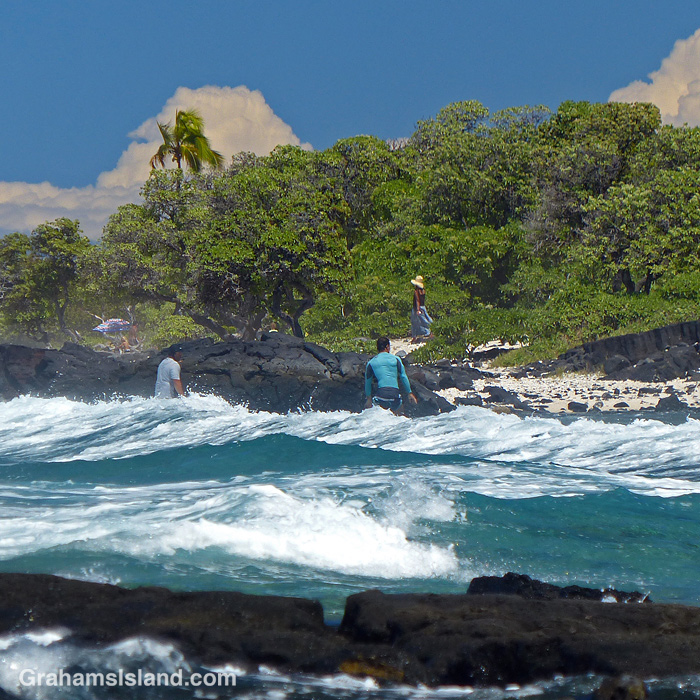
Hawaii is the home of surfing, a sport that accommodates everyone from the casual weekender to fixtures on the professional circuit. On this day, Pine Trees surf break at Kohanaiki Beach Park was thronged with surfers in the water, but not many catching waves. Those that did tended to be far away from where I was. But I liked watching these two surfers casually glide back to shore on white-topped blue-green water, under a blue sky.
Also posted in response to Becky’s October Squares challenge theme of ‘Past Squares – Blue.’ See more responses here.
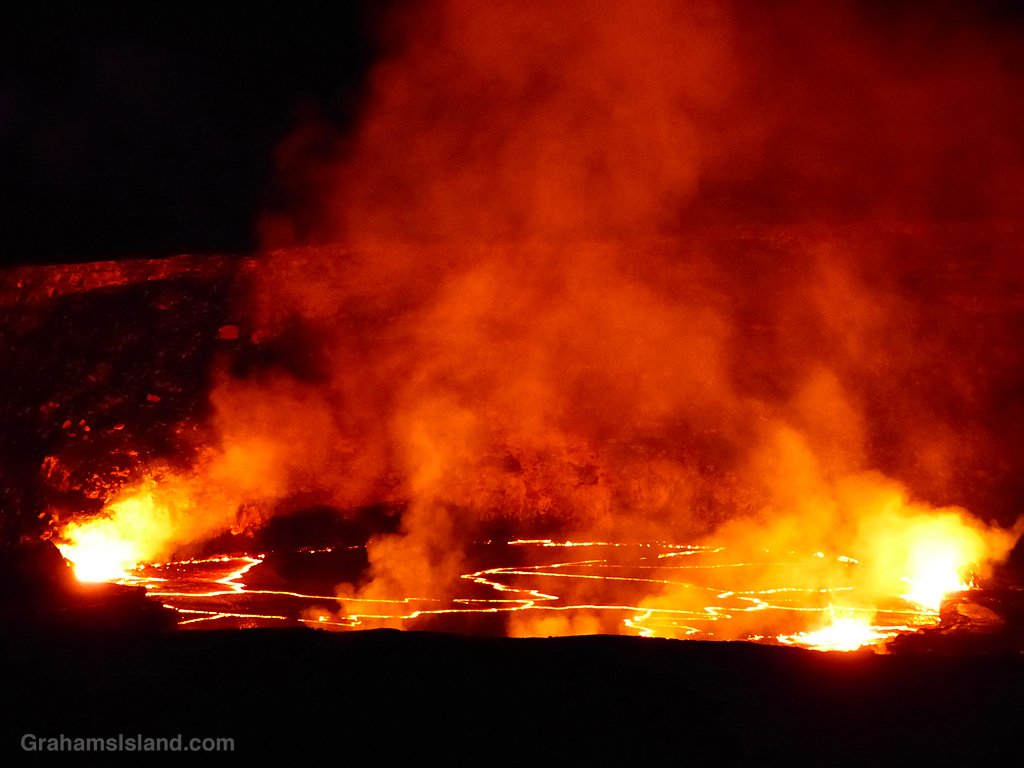
Yesterday afternoon, around 3:20 p.m., Kilauea Volcano began a new eruption. Like the previous one, from December 2020 to May 2021, the eruption is in Halemaʻumaʻu crater, at the summit of the volcano. That eruption created a lava lake in an area that collapsed in 2018 when the main activity moved down the east rift zone to the Leilani Estates Subdivision. This new eruption has reactivated the lake in the crater.
These photos are from the 2018 activity in Halemaʻumaʻu crater shortly before the level of the lava lake dropped and the crater floor collapsed.


There’s nothing like spending some time on the beach at Kohanaiki Beach Park. Even when it’s busy it never seems crowded. All a person needs is a chair and a beach umbrella for shade and then you can sit back, relax, and read a book or watch surfers trying to catch a wave.


On my last visit to Kohanaiki Beach Park I noticed this dive boat a little way off shore. Not being a diver, I’m not familiar with the best spots for diving around the Big Island, but there are usually one or two boats to be seen here.
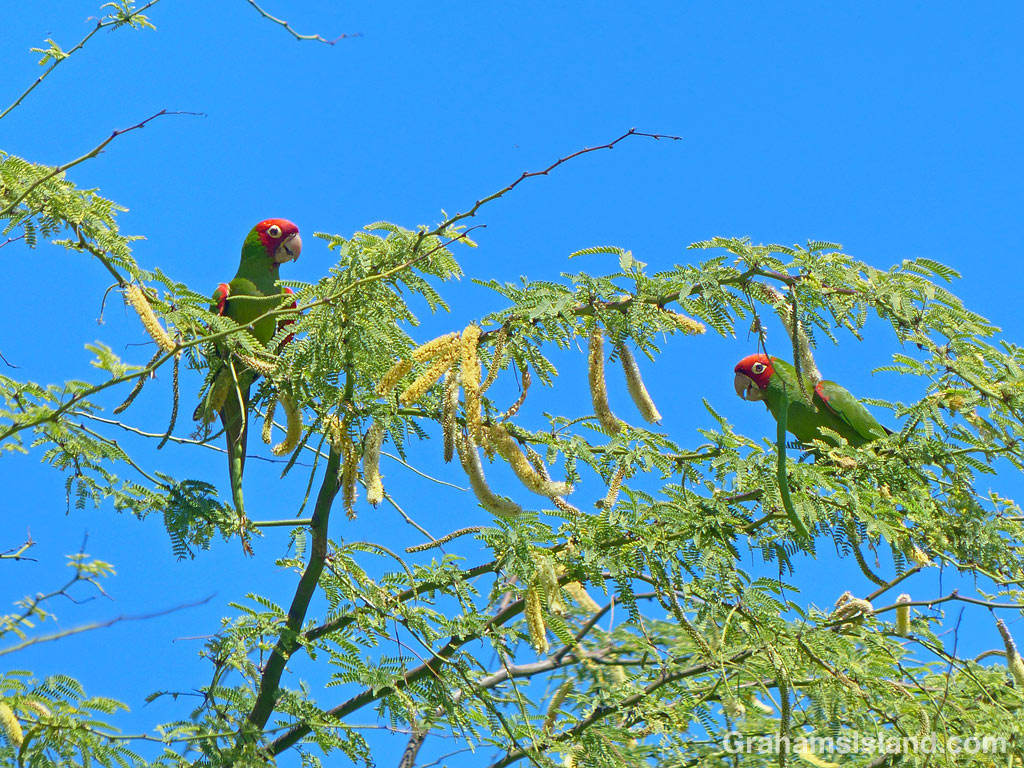

I’ve lived in Hawaii for more than nine years now and had previously never seen any of those most tropical of birds, the parrots. One reason for this is that parrots aren’t native to Hawaii, but a variety of different parrots have become established here.
Red-masked parakeets were first seen here in 1988 and are probably the most common parrot on the Big Island. They’re natives of Ecuador and Peru, but are now fairly well established on the Kona coast, which is where I saw this a pair, in Kohanaiki Beach Park. While they forage along the coast here, they roost high up on the slopes of Hualalai Volcano.