Category Archives: Parks

Monk seal pup update

A few weeks back, I posted (here) about a new monk seal pup that had recently been born on the Big Island. I’m happy to report that the mother and pup both continue to do well.

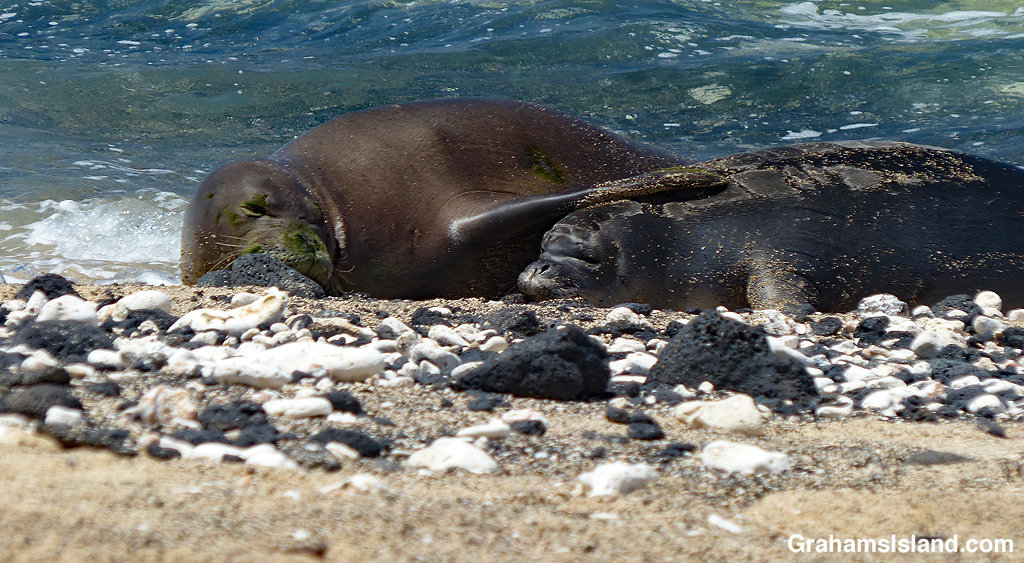
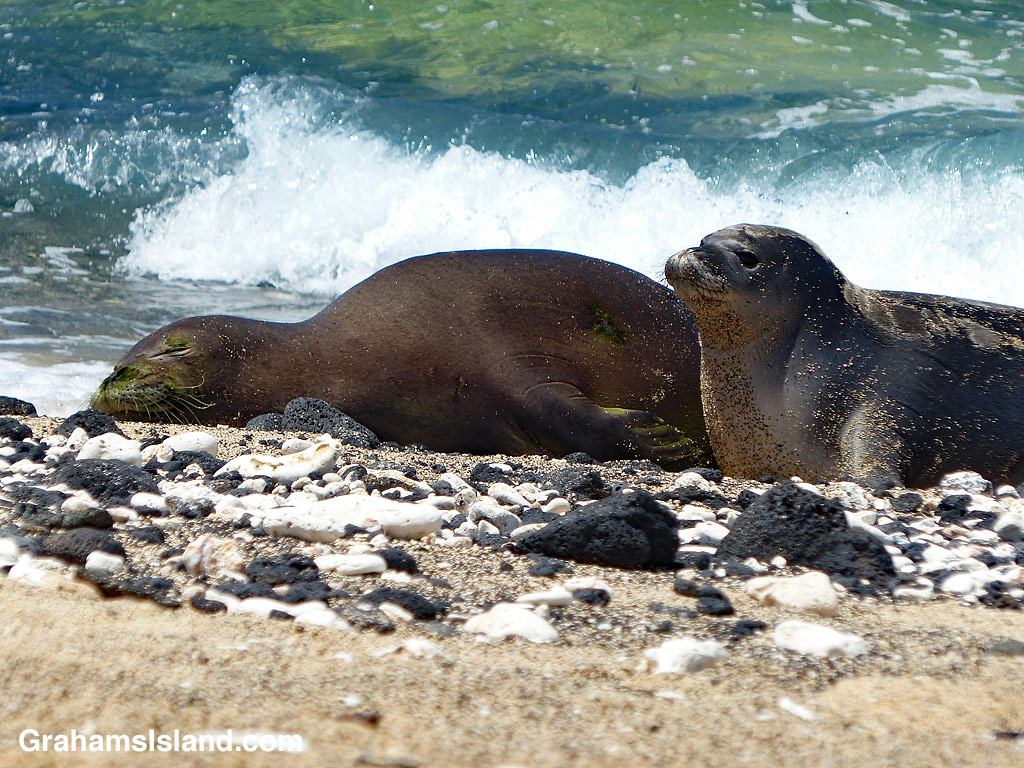
The pup is now about six weeks old and is much closer in size to his mother than he was in the previous post. It’s likely that his mother, RA20, will soon leave him to fend for himself. She has lost a lot of weight and is also looking quite green on her head and flippers, so she will head out to feed and then to molt.

The pup’s sister, Manu’iwa, has been a regular visitor to the area, but the mother is very protective and drives her away. Once the mother leaves, it’s likely that the two siblings will spend some time together in the area. Eventually, the new pup will head out on his own and make his own way.

Manu’iwa has had a very good first year, which is often a very testing time for a new monk seal. Hopefully, the new pup will be equally successful and be another step toward boosting the endangered monk seal population to more sustainable levels.

I’m posting this in response to this week’s Friendly Friday challenge on the theme of ‘Posing.’ (More responses here.) The top photo in particular could easily have the caption, ‘That’s my boy.’

Kekaha Kai beaches

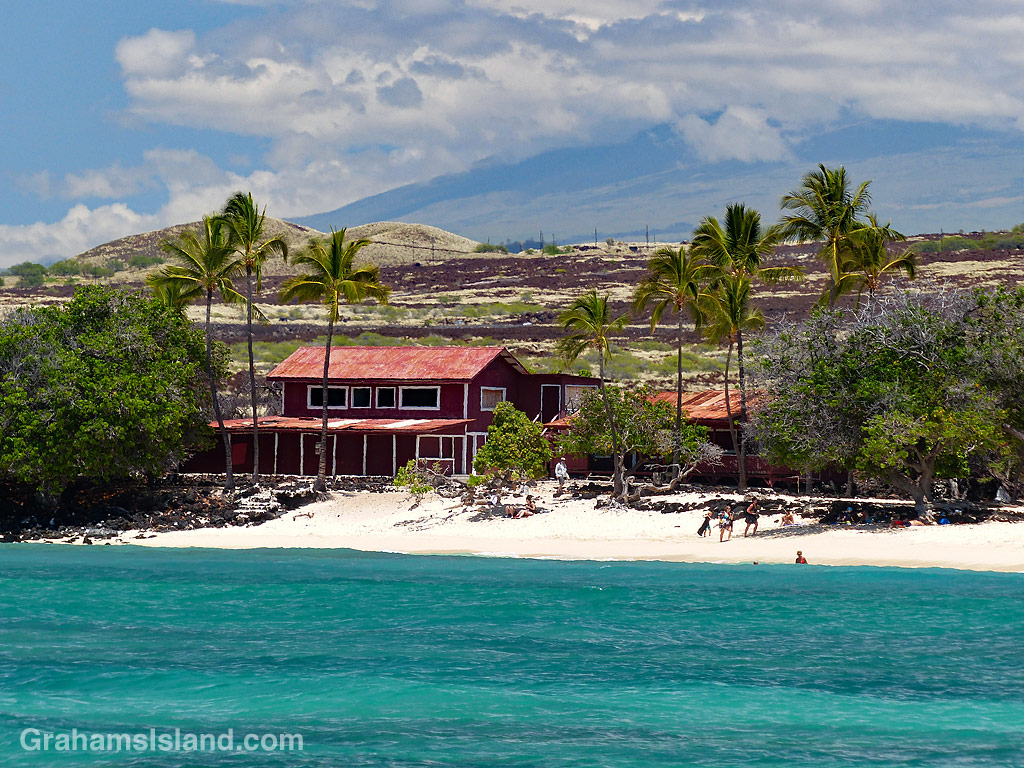
Some of the beaches in Kekaha Kai park. The most popular is Makalawena, which requires a bit of a hike but offers several stretches of sparsely populated golden sand. The swimming is decent at many of these beaches unless there’s onshore swell. The biggest drawback to them is that the road in is very rough and directly overhead is the flight path approaching the airport.

Lava trees

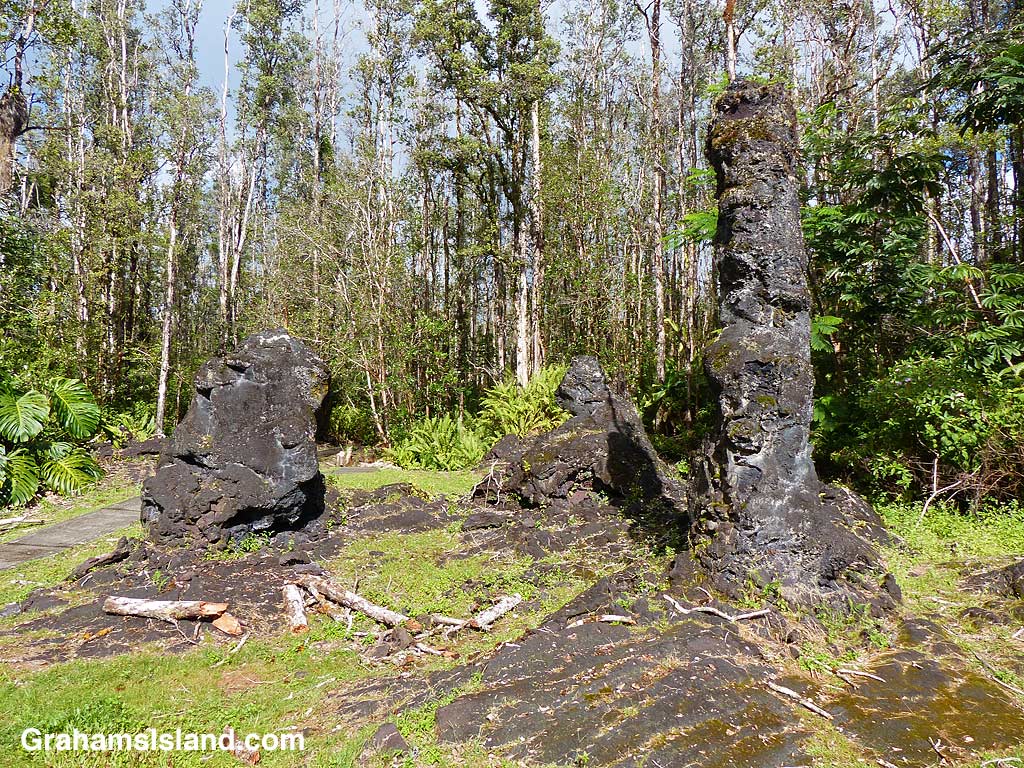
Lava Tree State Monument is in the southeast part of the island, within half a mile of the edge of last year’s flow. As the name suggests, it has some good examples of lava trees.

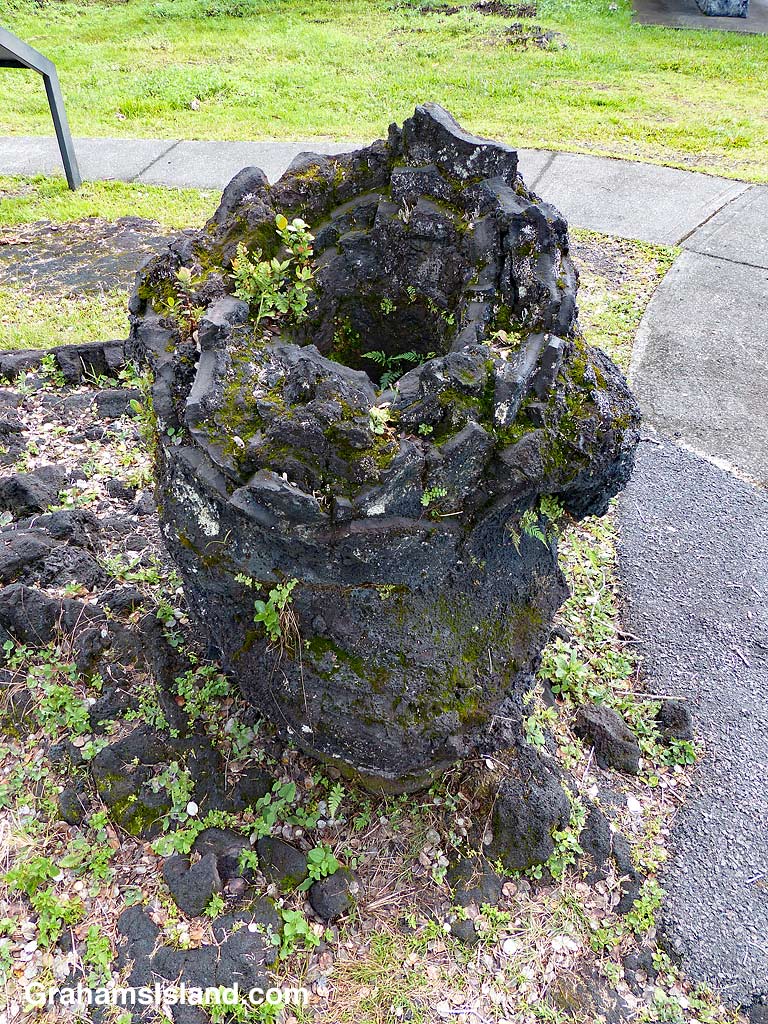
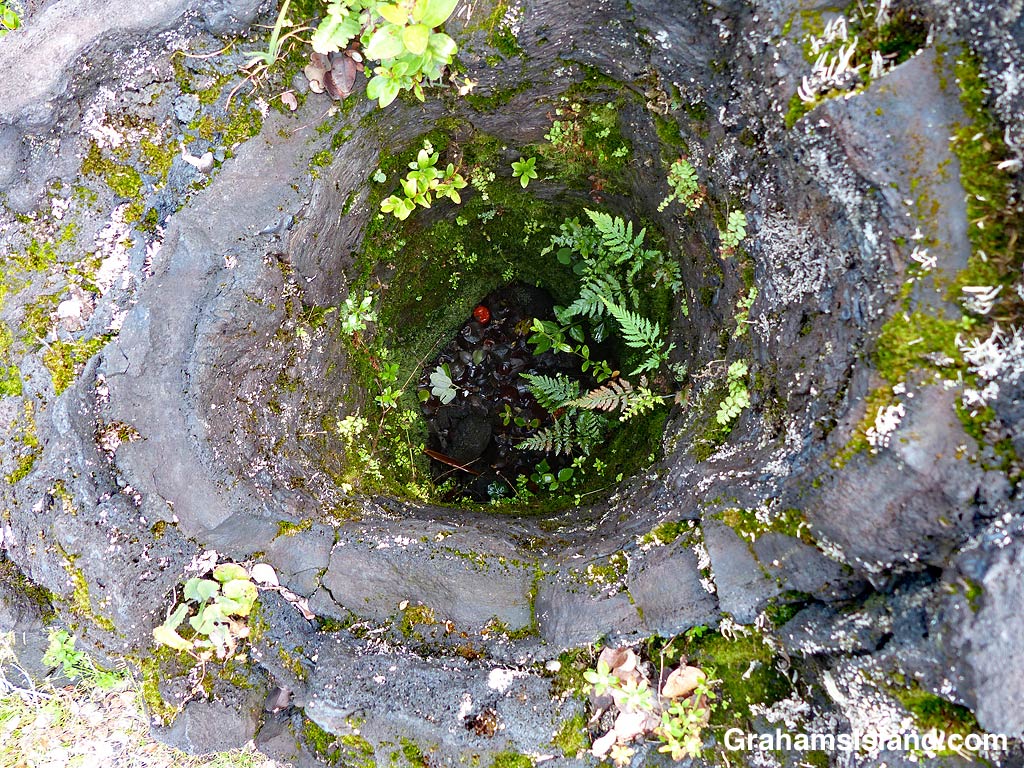
Lava trees are formed when molten lava coats a tree, burning the wood, and leaving just the cooling lava shell that surrounded it. There are two ways this can happen. One is when a flow surrounds the trees and then drains away. The other way is for falling lava to cover and burn the trees.

The lava trees in Lava Tree State Monument were formed by the first of these two methods. A lava flow in 1790, as high as 11 feet, surrounded ohia trees in this part of the island, and burned the wood away. When new fissures opened soon after, the lava in this flow drained back underground, but the lava immediately surrounding the trees had cooled enough that it was already hardening, so it remained, retaining each tree’s shape in its center.

The photos show lava trees in the park, a closer view of one showing the hollow center, and a view of the hollow core where new plant life is taking hold. In some cases, this new plant life is new trees growing out of the old, hollow lava trees.

For more information about Lava Tree State Monument, go to https://hawaiistateparks.org/parks/hawaii/lava-tree-state-monument/.

Monk seal and pup

Last February, I posted about a new monk seal pup being born on the island (here and here). I’m happy to report that the pup, Manu’iwa, continues to do well. Now, her mother, RA20, has returned to the same site and given birth to a new pup.

The new pup is just over two weeks old and so far the signs are good. The pup is nursing well and the mother is being very careful around it. When Manu’iwa showed up to see her new sibling, the day after it was born, RA20 quickly put a stop to the meeting. Monk seal mothers are very protective of their pups.

Mother and pup will likely spend about six weeks in the area before RA20 leaves the pup to fend for itself. During that time, she will lose weight while the pup gains and they will be a lot closer in size than they area currently.

These photos were taken in the early afternoon when the pair were resting and not much was going on. Morning is the best time to see them being active.

Erckel’s francolin

Erckel's Francolin

Erckel's Francolin closeThere are three kinds of francolin in Hawaii, the grey francolin, black francolin, and Erckel’s francolin. All are introduced game birds. Of the three, the Erckel’s francolin is the largest. It’s native to North Africa and was brought to Hawaii in 1957. It’s distinguished, not just by its size, but by its bold markings and chestnut crown.

This one was at Hawaii Volcanoes National Park. For more information about Hawaii Volcanoes National Park, go to nps.gov/havo/.
Road across the flow

Road across the flow

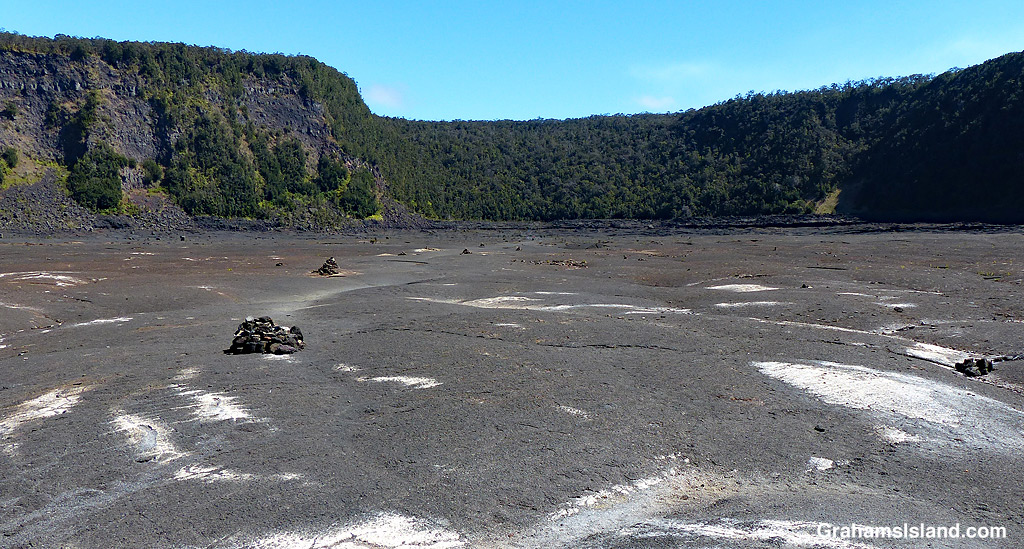
I’ve posted about my January visit to Pohoiki here, here, and here. The reason I was able to make that visit is because the county finally put a temporary road over one of the flows that cut off that part of the island.

One of the features of lava flows is that they don’t uniformly erase everything in their path. Sometimes they flow around areas. Sometimes they stop and a new flow emerges to one side. Sometimes a flow blocks one side of an area and a different flow blocks the other side.

The 2018 Kilauea eruption was no different in this regard. Some houses escaped destruction, but became inaccessible by road. Pohoiki was one of those places, until the new road was completed.

Things move at a leisurely pace in Hawaii and one might think the delay in building the road was due to this, but in this case, the county had good reason to wait. The simple reason is that they had to wait for the lava to cool down. It took several months for the lava to cool enough to make it practical to build a road over the flow. Even then it would not have been safe to cut through the flow and build the road at its former level.

How quickly the lava cools depends on many things including hot hot it was to begin with and how deep the flow is. It can take many months before the lava at the heart of a flow cools down enough to solidify and not present a danger.

For those interested in what happened during that 2018 eruption, the PBS show, NOVA, broadcast an episode titled ‘Kīlauea: Hawaiʻi on Fire.’ It’s about 50 minutes long and has a bit of a dramatic ‘will anyone survive’ tone in places, but I found it very informative. It might be available at https://www.pbs.org/wgbh/nova/, but if not you can see it here.

First Big Island visit

Pololu beach

Turtle at PunuluuTropical foliageLava flowingThis week’s Friendly Friday challenge theme is ‘Turning point.’ (See more responses here.) Since this is a photo blog about the Big Island it seems appropriate to post some photos from my first visit here in 2010, a visit which was the catalyst for the move to the island. There was no ‘ah ha’ moment, but these photos give a general idea of some of the things that appealed.

The top photo is Pololu beach on the North Kohala coast. Second photo is a Hawaiian green turtle resting on the black sand beach at Punalu’u County Beach Park. Third photo is tropical foliage next to a small cascading stream. Fourth photo shows some small lava breakouts in the flow that was active at that time. Conveniently, that activity was about 100 yards from the parking area and only 10 feet or so beyond where I was standing. The bottom photo is a view of Two Step, a popular snorkeling spot, from Pu’uhonua o Hōnaunau National Historical Park.

Two Step from Place of Refuge