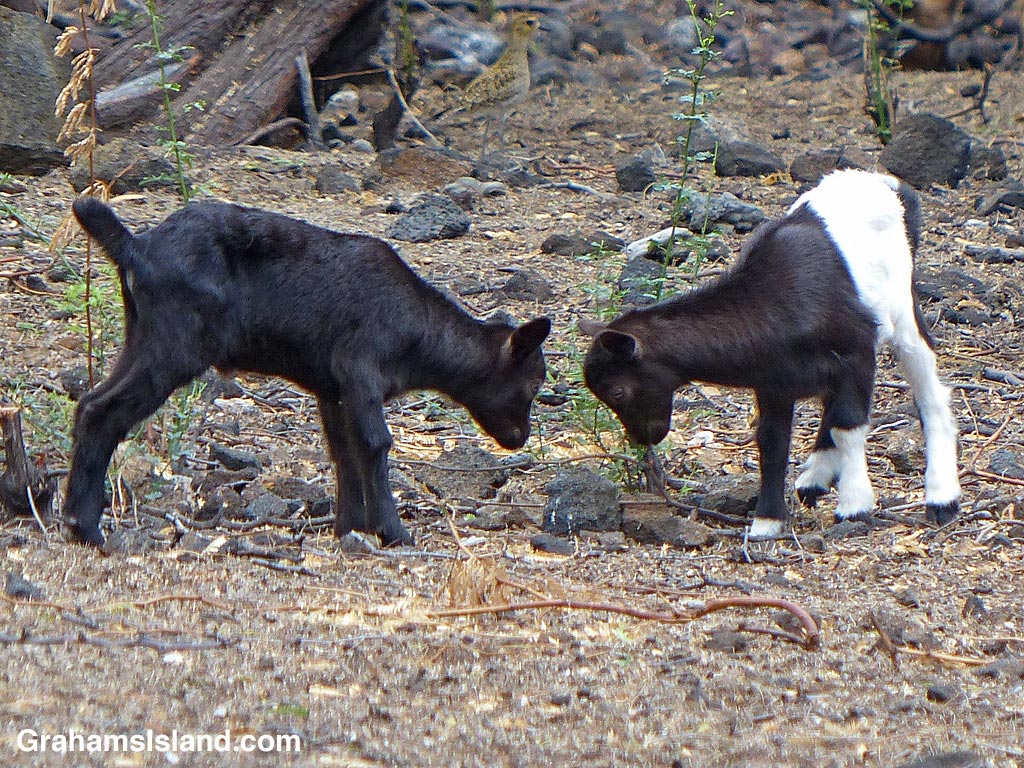
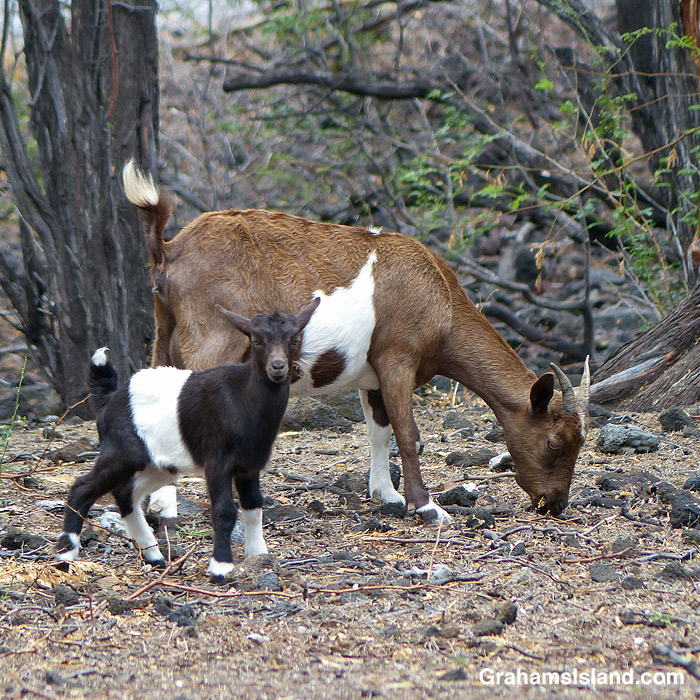
There are no shortage of goats at Kiholo and it doesn’t look like their numbers will be dwindling any time soon. On my last visit these two kids caught my eye with their typically rambunctious behavior. Mom, in the middle photo, looked singularly unimpressed.
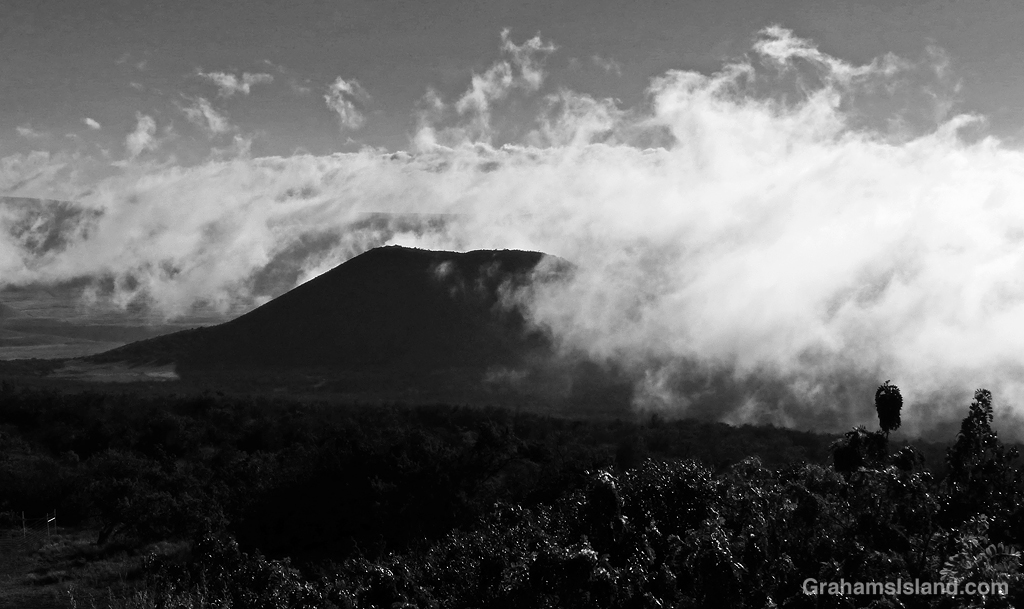
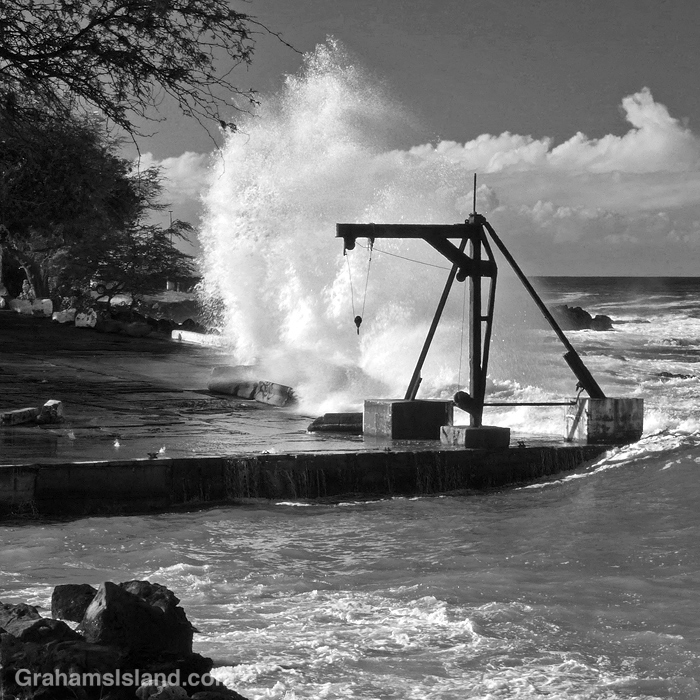
This week’s Sunday Stills challenge theme is ‘Your Best Black & White Photos.’ See more responses here. Having posted only one black and white photo until recently, this is the second such post in a couple of weeks.
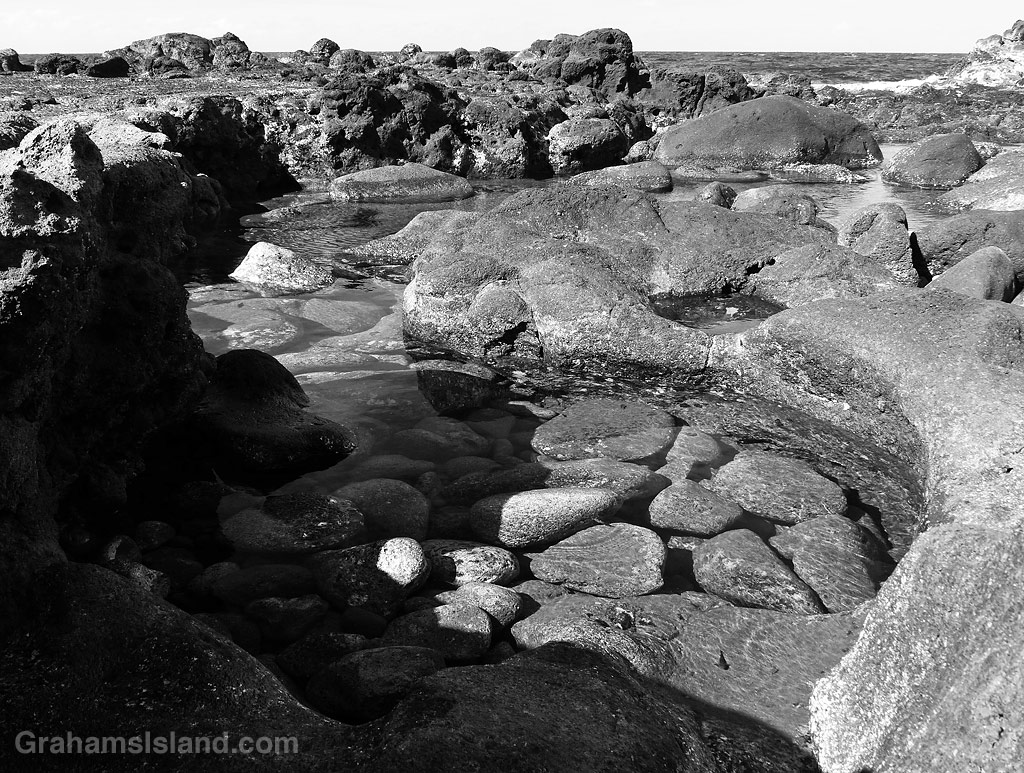
In the top photo, clouds swirl around Pu’u Ahumoa on the southwest slope of Mauna Kea. The second photo shows surf crashing against the same wharf seen in the previous post. Last, but by no means least, is a photo of a tide pool on the North Kohala coast.
When I’m out walking, I rarely see praying mantis egg sacs. They’re no more than an inch long and they can blend in with the trees and branches where they tend to be found. However, on a recent walk on the coast, I saw these three sacs in the space of 20 minutes, the top two on branches and the third on a tree trunk.
I’m not sure why they caught my eye, though this is the time of year when they’re typically seen. Perhaps it was because I was watching for butterflies and dragonflies, so was paying a bit more attention to details than usual.
Each sac can contain up to 300 eggs. The eggs are encased in foam, called ootheca, which hardens into the sacs seen here. The sac in the middle photo was crawling with ants, which I suspect is not good news for the would-be mantises inside.
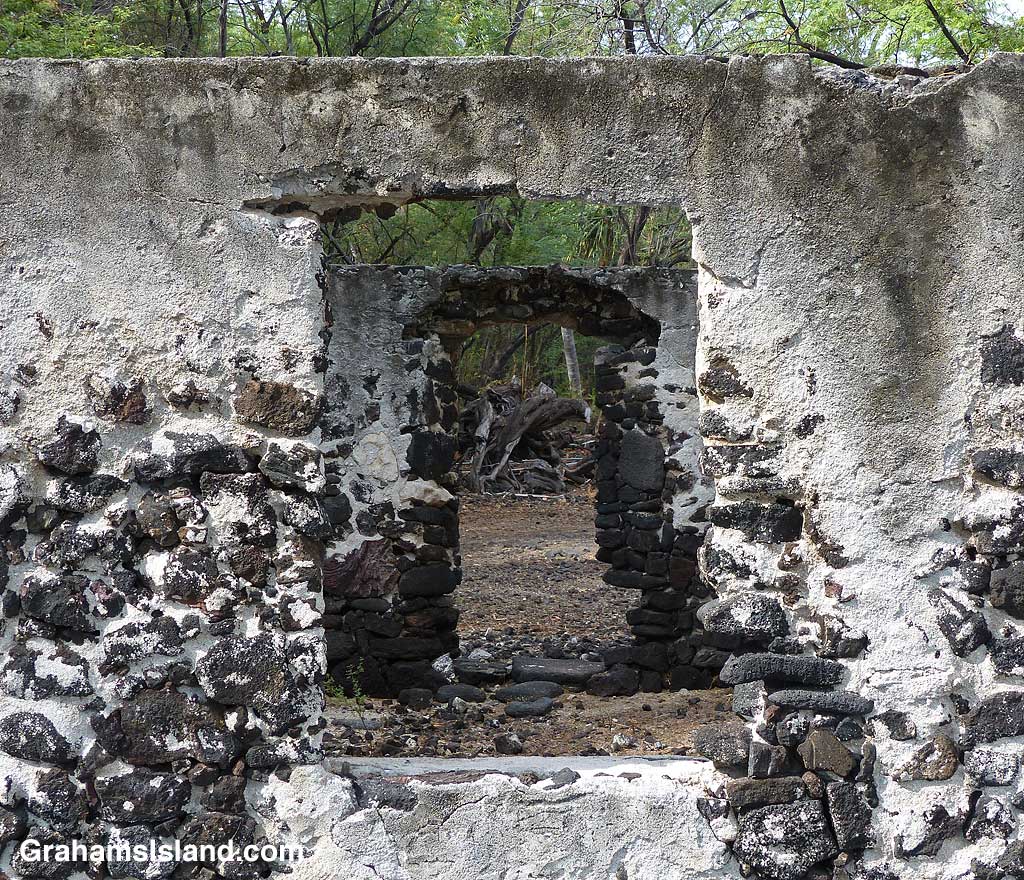
There aren’t a lot of houses around Kiholo Bay, but those that are range from older, rustic shacks to palatial millionaires’ compounds. This building is solidly in the rustic end of the range.
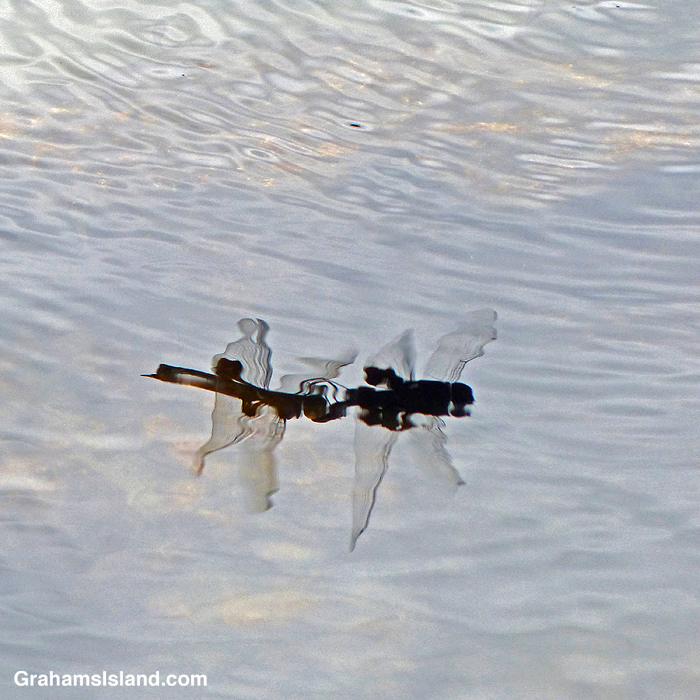
The pool at the south end of Kiholo State Park Reserve is a hotspot for birds and insects. When I go there, I’m lured in to taking photos of dragonflies. I ran one at the bottom of this post. This is another from that visit, showing a pair of black saddlebags dragonflies mating. I failed to get the actual dragonflies in any of my photos, but did get this reflection of them in the pool.
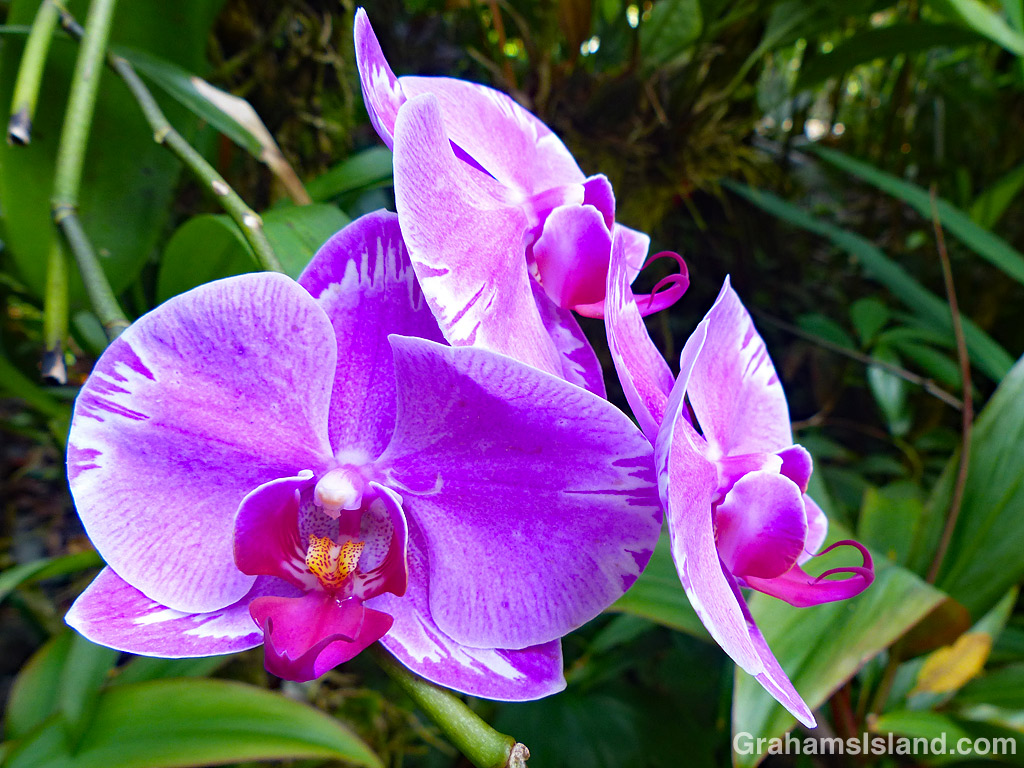
This Phalaenopsis Minho Princess orchid was at Hawai’i Tropical Bioreserve & Garden. The garden has been closed for almost a year now because of the Covid-19 pandemic. I haven’t seen any indication of when it will reopen though it will undoubtedly do so when conditions are right.
For more information about Hawai’i Tropical Bioreserve & Garden, go to htbg.com.
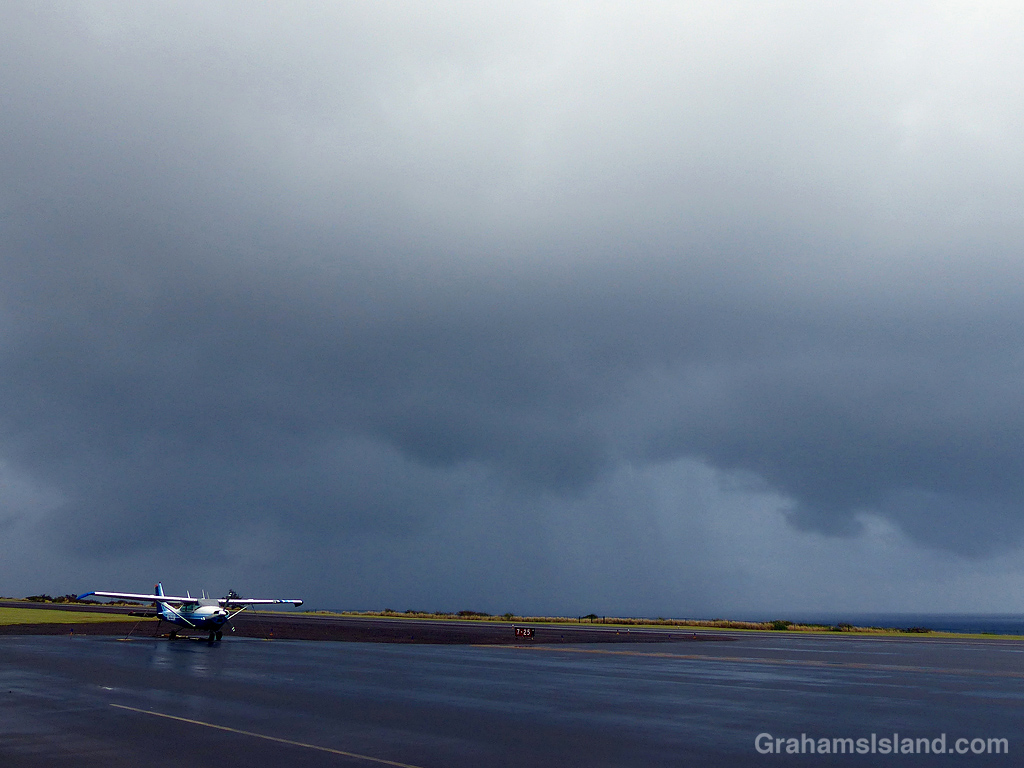
This week’s Sunday Stills challenge theme is ‘Rainy Day.’ See more responses here.
I had just finished my walk around Upolu Airport when the weather closed in. Usually, clouds and rain are blown in by the northeast trade winds, but on this day a system was moving in from the west. I’d been watching its progress as I walked, but still got caught out as it moved faster than I expected. Still, I did make it back to the car, waiting for me in the wet parking lot, before the next deluge arrived (top photo).
The crab spiders didn’t seem to mind the weather, and the raindrops made a picture of their webs (middle photo). It also made them easier to see so that I could avoid my usual trick of blundering into them and having webs wrapped around my head.
On the drive home, after my walk, I carved an avenue of spray as I motored along the puddled road (bottom photo).
Chain of Craters Road is the route down to the coast in Hawaii Volcanoes National Park. As the name implies, it passes a variety of volcanic craters, which were the scenes of eruptions in years gone by. But as it gets close to Hilina Pali, a series of great views open up. This one looks to the west and southwest, the backcountry part of the park.
For more information about Hawaii Volcanoes National Park, go to nps.gov/havo/.






 Graham's Island