Category Archives: Places

Shrapnel

These days, the military conducts exercises at its Pōhakuloa Training Area in the saddle between Mauna Loa, Mauna Kea and Hualālai. At 133,000 acres, it’s the largest such installation in Hawaii or anywhere else in the Pacific.

But during World War II, the military leased 91,000 acres from Parker Ranch, around Waimea and down towards Kawaihae. A temporary base, called Camp Tarawa, was built on this land, and much of the rest of it was called the Waikoloa Maneuver Area. This area was used to train troops for campaigns in the Pacific.

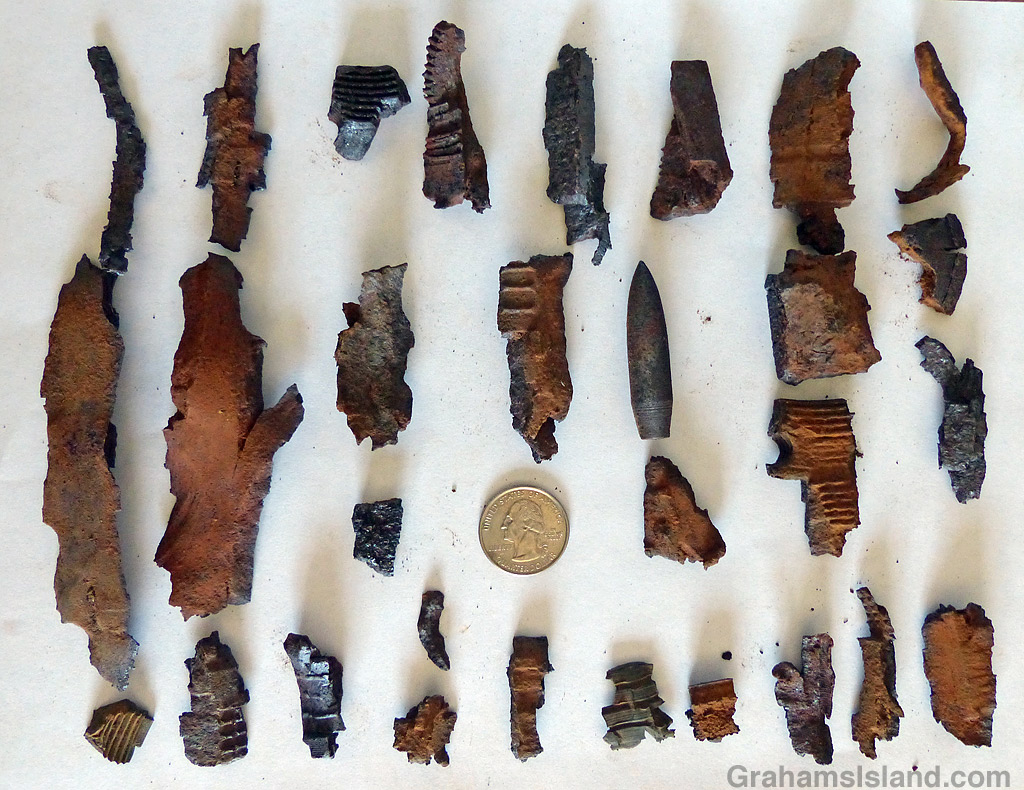
After the war, the land was returned to Parker Ranch. While it was cleared of most munitions, a lot of shrapnel can still be found there today. The top photo shows part of the haul from a half-hour walk through the area. The coin is a U.S. quarter, a little under an inch in diameter. Many of the pieces have lines, grooves, and other marks that might help identify what munitions they were once part of.

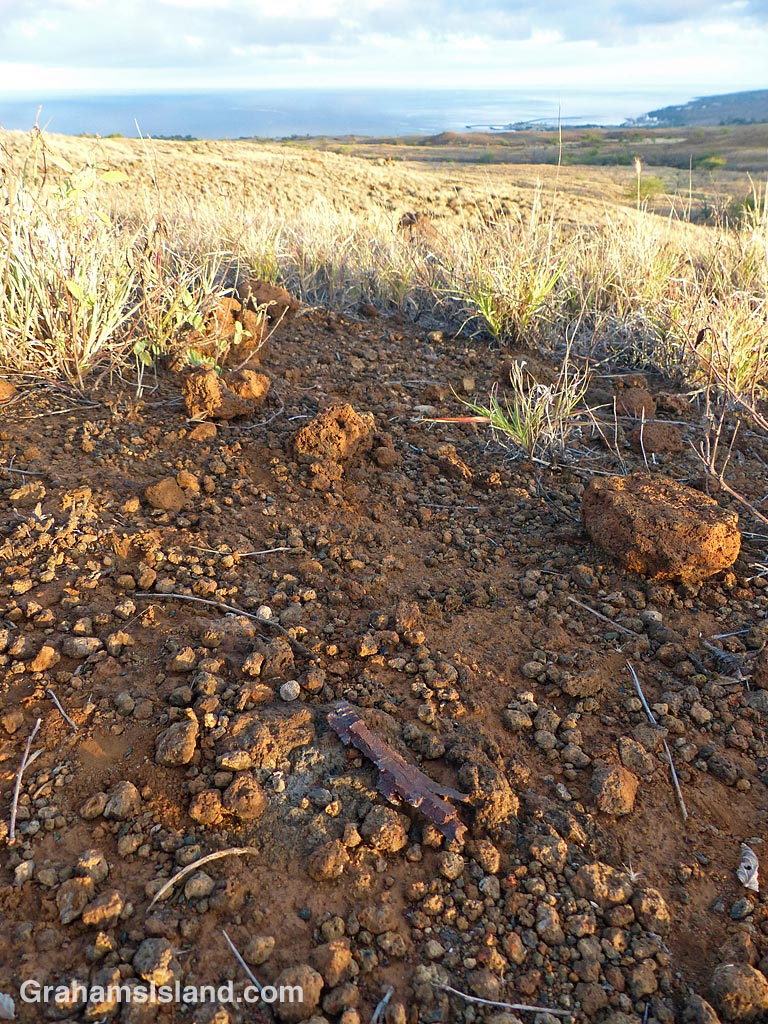
The photo to the right shows a piece of shrapnel lying in the dirt in the scrubby ground that makes up most of this area. Kawaihae Harbor can be seen at the top right. I thought it would be hard to spot shrapnel in this terrain, but it’s surprisingly easy. Shrapnel has a slight, but distinctly different look to the dirt and lava rocks. Pick it up and it’s noticeably heavier than any of the rocks.

Hunting for shrapnel isn’t without risks. Apart from the dangers of wandering around on rough, unstable ground, there’s always a chance of finding something live. Best tread lightly.

Tugs and a barge

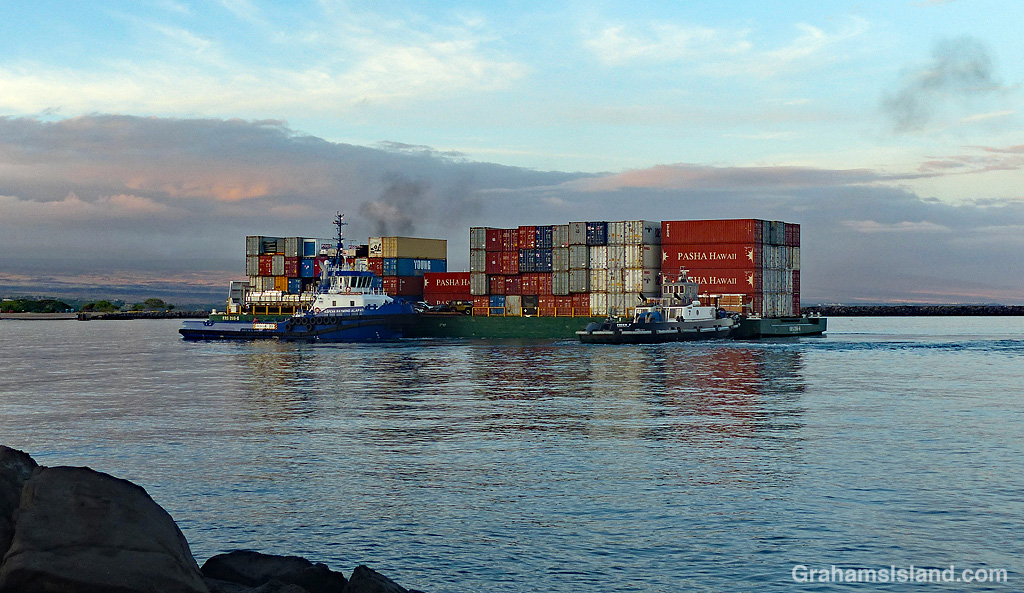
A lot of cargo for Hawaii is delivered by ship to Honolulu on Oahu. Cargo for the smaller (in population) islands is then distributed by inter-island barges. One of their ports of call is Kawaihae, on the west coast of the Big Island.

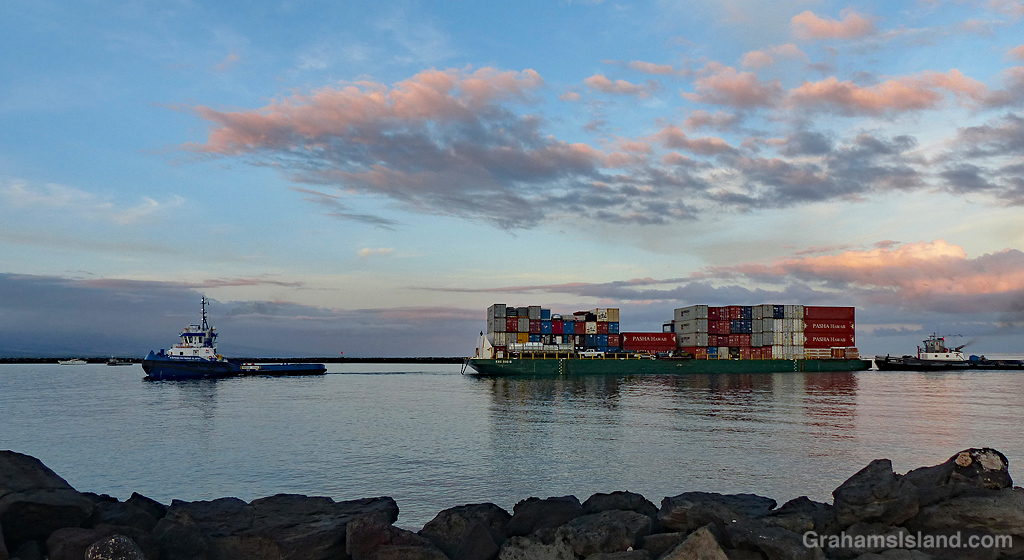
When the tug and barge arrives at the port, a second tug is sent out to hook a line onto the stern of the barge, so that it can help check the momentum of the barge. The tug at the front stops towing and assists in this braking process. Once the barge has pretty much come to a stop, the two tugs push the barge around until it’s alongside the jetty for unloading.

These photos show some of that process. Above: entering the port and slowing down. Below: both tugs begin to push the barge.

Posted in response to this week’s Friendly Friday challenge on the theme of ‘Between the Lines.’ See more responses here.

Pu’u Wa’awa’a views

This week’s Sunday Stills challenge theme is ‘Great Outdoors.’ (See more responses here.) When I think of the great outdoors, I think of hiking, and one of my favorite hikes on the Big Island is up Pu’u Wa’awa’a. It’s an 8-mile round trip and tops out at just under 4,000 feet. On a good day, the hike offers great views, not only from the top, but also on the way up and down. And there are several benches where a person can rest and take in those views, including a couple on the summit.

The top photo shows the view north from around 3,500-feet elevation, with Tamaki Coral in the foreground and Kohala Mountain in the background. The bottom photo is a view from 100 feet or so below the summit looking east toward Mauna Kea.

The hike can also include many native trees and plants as well as a variety of wildlife. There are domestic sheep, cattle, and horses, as well as wild pigs and goats. When the trees are in bloom, they’re rich with insects and birds including several native varieties.

To top it off, most of the times I’ve visited, usually in the early morning, I’ve had the place to myself.

For more information about Pu’u Wa’awa’a and its trails, go to puuwaawaa.org.

Flowers at Hawaii Tropical Botanical Garden

This week’s Friendly Friday challenge theme is ‘Floral.’ (See more responses here.) I thought a few photos from my last visit to Hawaii Tropical Botanical Garden (with Terri from Second Wind Leisure Perspectives) would fit the bill.

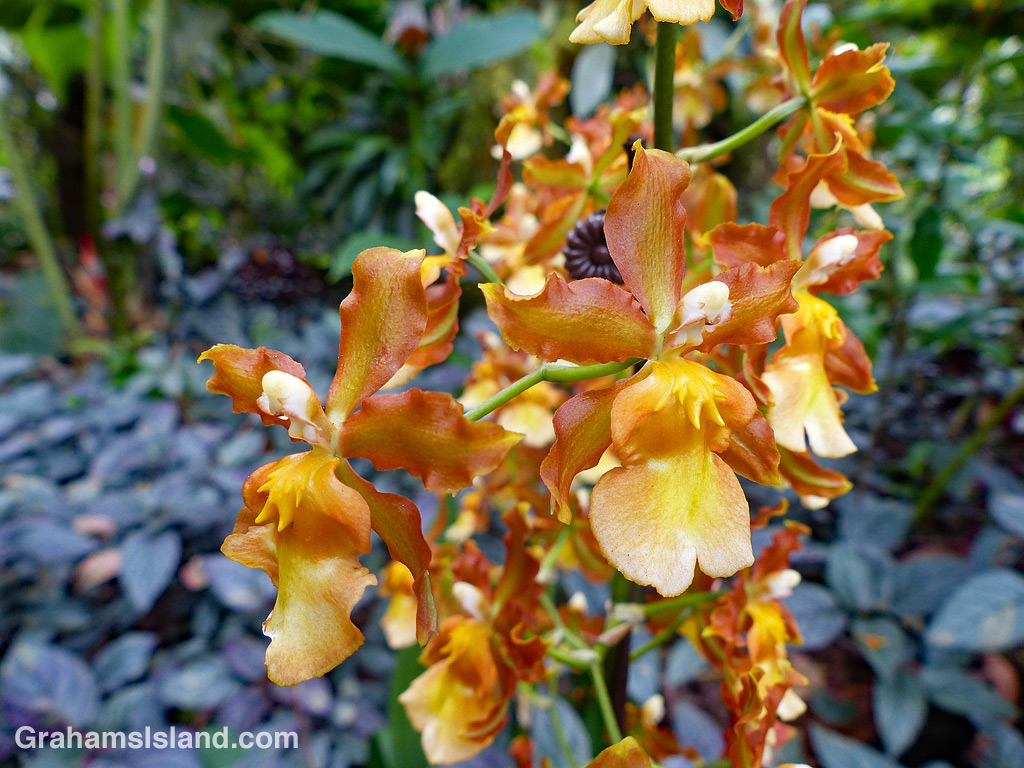
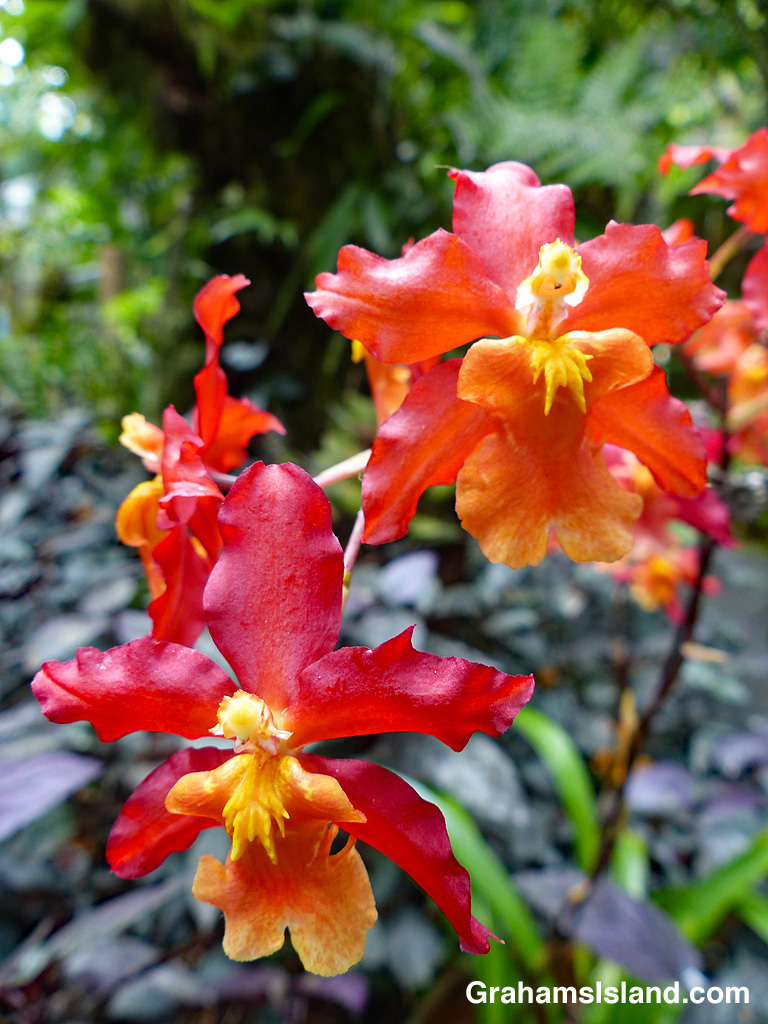
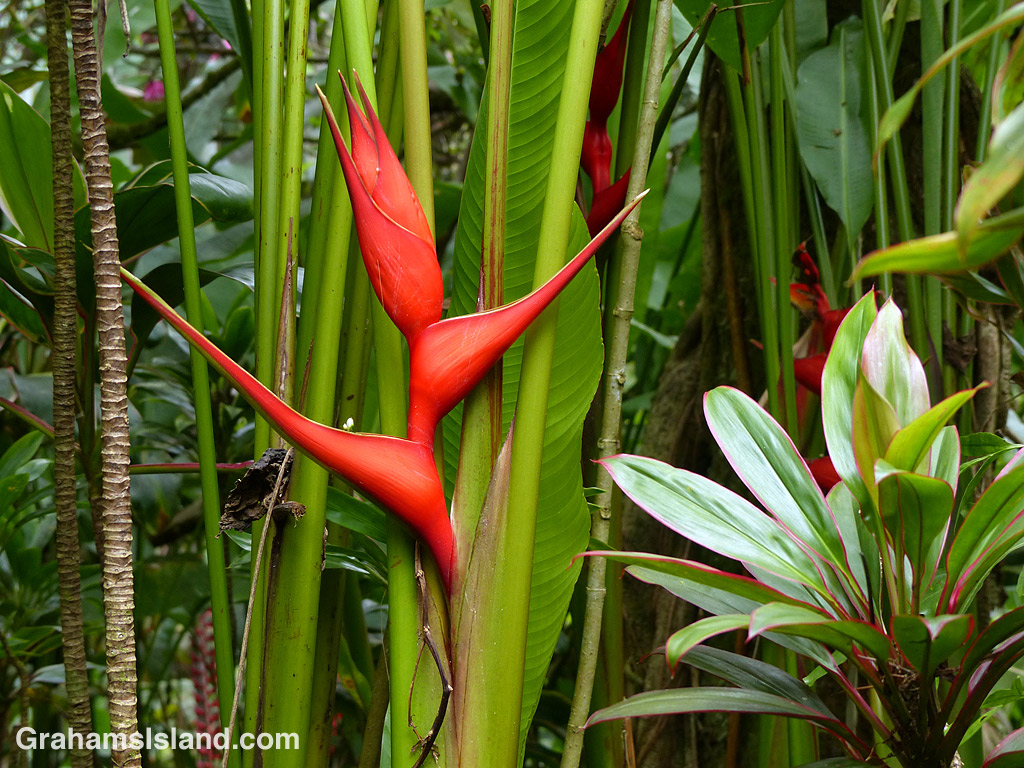
The top photo is an orchid, Catatante ‘Pacific Sunspots.’ In the middle is another orchid, Wilsonara Aloha Sparks ‘Halloween.’ Below is a heliconia against a backdrop of tropical foliage.

For more information about Hawaii Tropical Botanical Garden, go to htbg.com.

Black-crowned night heron

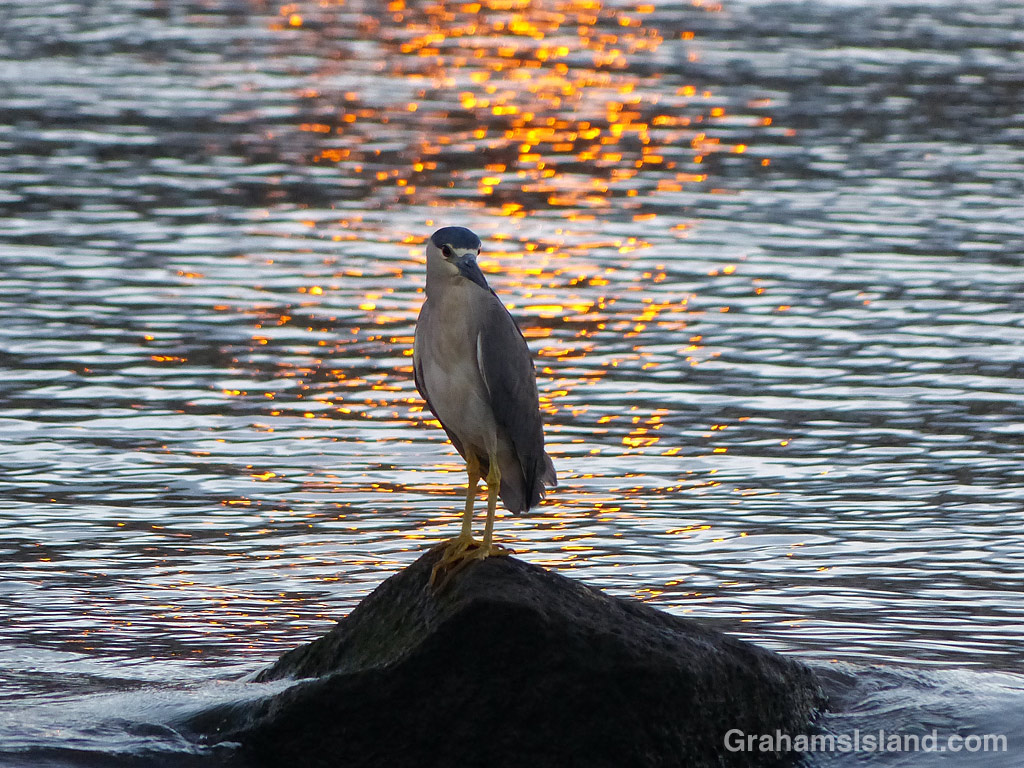
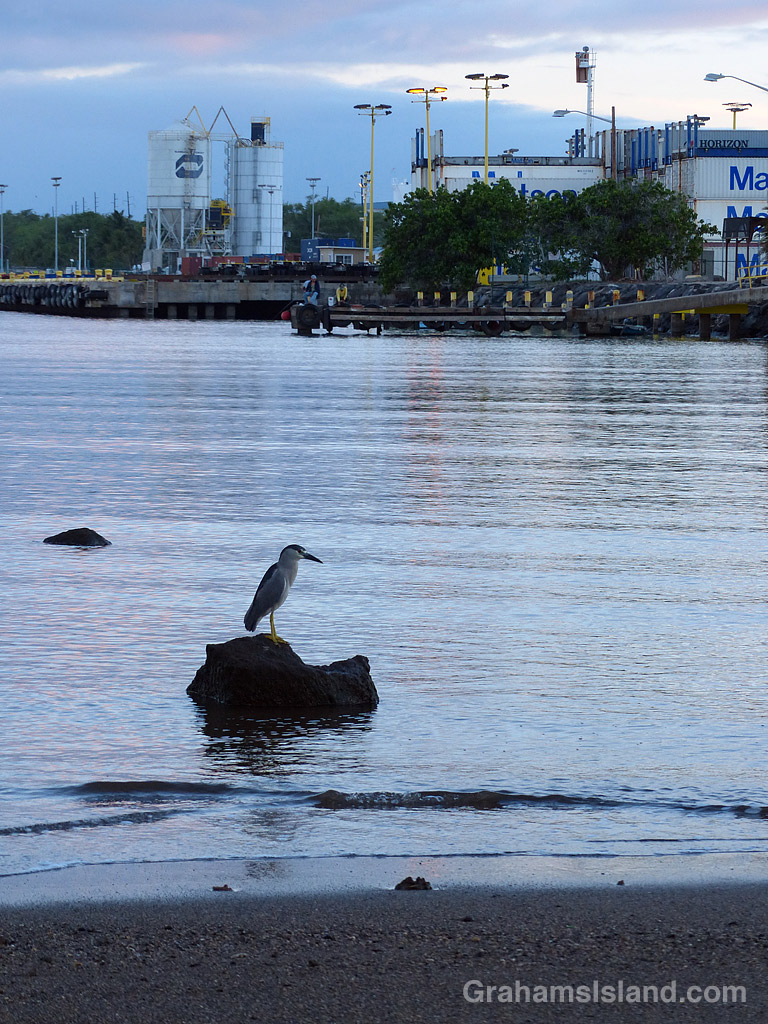
This week’s Sunday Stills challenge theme is ‘Stillness.’ (See more offerings here.) It made me think of this scene.

I was out early one morning and stopped by the port at Kawaihae. There wasn’t much going on, but I was happy to see this adult black-crowned night heron perched on a rock in the shallows. It didn’t seem to be actively fishing.

Indeed, the heron remained mostly still. It was just dark enough for the lights of the port to illuminate the rippled waters inside the harbor. The port itself was also quiet. No boats moving, no trucks lining up, no machinery grinding. Just a couple of men fishing off the small boat dock.

Mooring buoy

At the northern end of Kealakekua Bay, near Captain Cook’s monument, is an area that has good snorkeling. People can hike down to the place or take a boat trip there with one of several companies.

Many of the tour boats are small runabouts. The skipper can just drift with the boat in the bay while the clients snorkel. The largest boat is Fair Wind II, a catamaran that features has two 15-ft waterslides and a high-jump platform! This is not a boat suited to drifting around a bay lined with shallow, coral rich waters and crowded with snorkelers. So they have a mooring buoy in the bay.

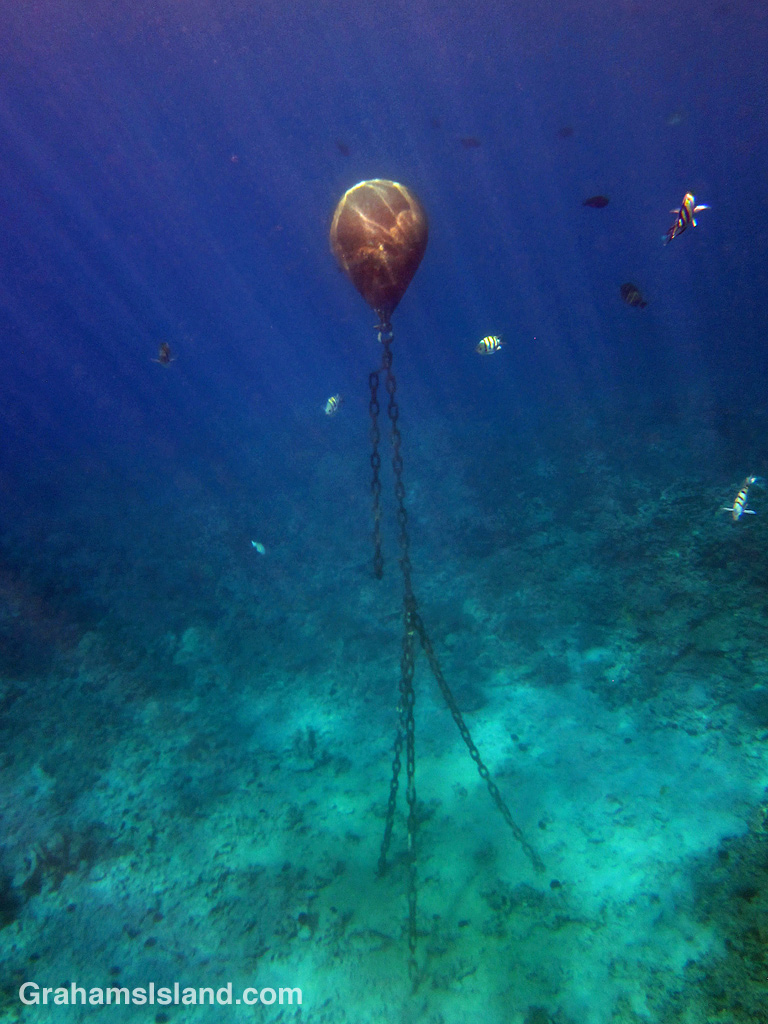
Mooring buoys are basically floating balls with a length of chain tethering them to something heavy, usually a large concrete block. The chain is long enough to allow for the ebb and flow of the tides so that the buoy is always available for use. The idea is that a boat ties a line to the buoy, which holds it in a relatively restricted area so that it doesn’t crash into underwater obstructions, land, or other boats.

The Fair Wind II buoy in Kealakekua Bay is different in that its length of chain keeps it permanently below the water, regardless of the state of the tide, as the photo shows. The idea is that when the boat arrives in the bay, a crew person jumps overboard with a mooring line and attaches it, not to the buoy, but to the length of chain hanging below the buoy. The line is then hauled in and the boat is secure and held in place. I think that the reason for this slightly different arrangement is that there’s no buoy floating on the water day in, day out, regardless of whether it’s being used or not. In this historically important bay, this might be regarded as an unwelcome sight.

The last time I was there, the eerie appearance of the buoy was augmented by movement of the water causing the loose length of chain to clank, loudly, against the fixed length. It was a scene straight out of scary movie where the ominous quiet is shattered by the terrifying … well, you get the idea.

Posted in response to this week’s Friendly Friday challenge on the theme of ‘Ebb and flow.’ See more responses here.

For more information about Fair Wind II, go to fair-wind.com/.