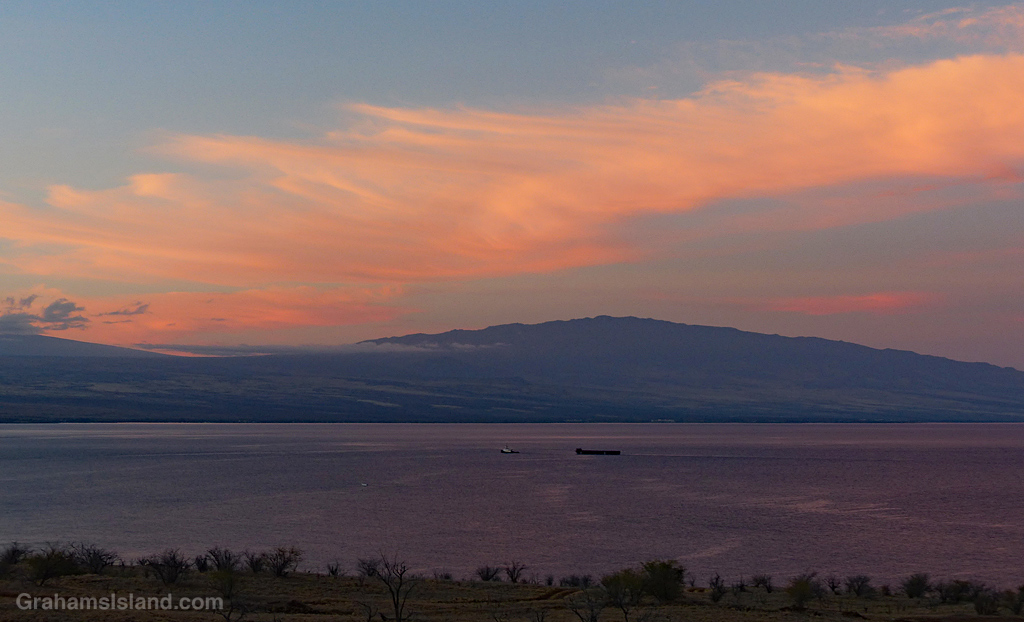
Wispy clouds catch the early morning sun above Hualalai volcano while an inter-island tug and barge heads in toward Kawaihae harbor.

Wispy clouds catch the early morning sun above Hualalai volcano while an inter-island tug and barge heads in toward Kawaihae harbor.

Another orchid from Hawaii Tropical Botanical Garden.
For more information about Hawaii Tropical Botanical Garden, go to htbg.com.

Some of the beaches in Kekaha Kai park. The most popular is Makalawena, which requires a bit of a hike but offers several stretches of sparsely populated golden sand. The swimming is decent at many of these beaches unless there’s onshore swell. The biggest drawback to them is that the road in is very rough and directly overhead is the flight path approaching the airport.
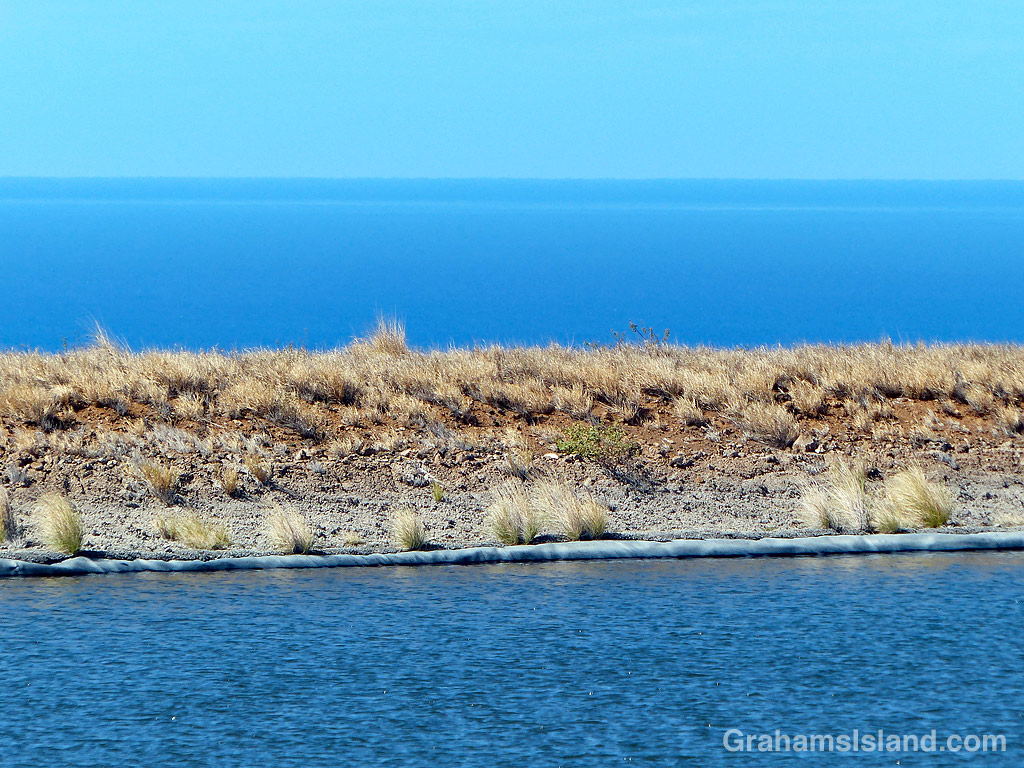
In the foreground, a reservoir bordered by some kind of waterproof lining. Then a dirt bank and beyond that, the Pacific Ocean and blue sky.


Recently, the highway department carried out some improvements on Kohala Mountain Road. The road is narrow and winding, though very scenic, and there are often accidents. The latest improvements added more guard rails and more yellow and black arrow signs to let drivers know they’re approaching a corner. I had a couple of observations about the work.
The guard rails are probably not a bad idea since anyone running wide at these places would be looking at diving into a gully or plunging down a steep hill. On the other hand, there’s virtually no shoulder where the new rails are and, in some places, none at all. So now, a moment’s inattention is likely to send a vehicle banging into the rail and bouncing back into oncoming traffic. We’ll see how that shakes out.
What made the biggest impression on me though were the new corner signs. They’re bigger than the old ones – all the better to see them then. But as I mentioned, it’s a winding road, so for about three miles there’s now a never ending sequence of these signs, pointing one way, then the other, then back again. While this is visually striking during the day, at night the effect is dramatic. The signs are, of course, reflective and impressively so, especially as they’re new. Driving along as the large signs flash up and past is like a carnival ride and I’m starting to hear calliope music as I pass. I just hope it’s not of those sinister rides where you wonder whether you’ll make it to the end alive.

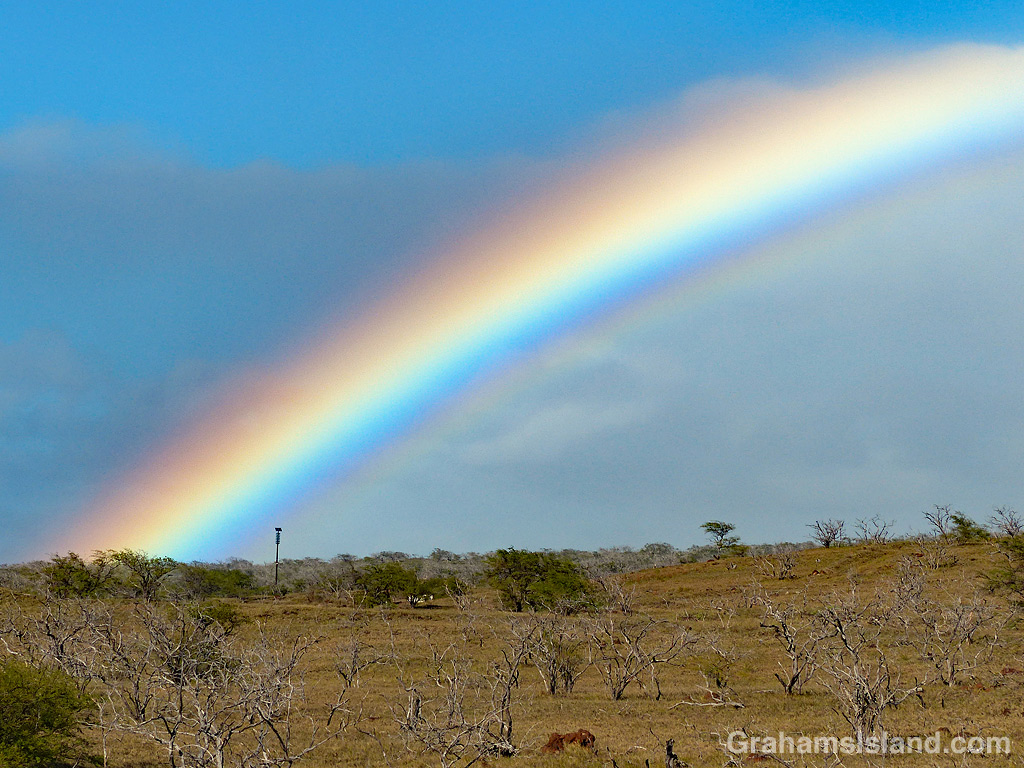
A rainbow arches into the sky just beyond the tsunami siren above Kapa’a Beach Park. The scrubby, dry ground reflects the lack of rainfall on this part of the coast, less than 20 inches a year.
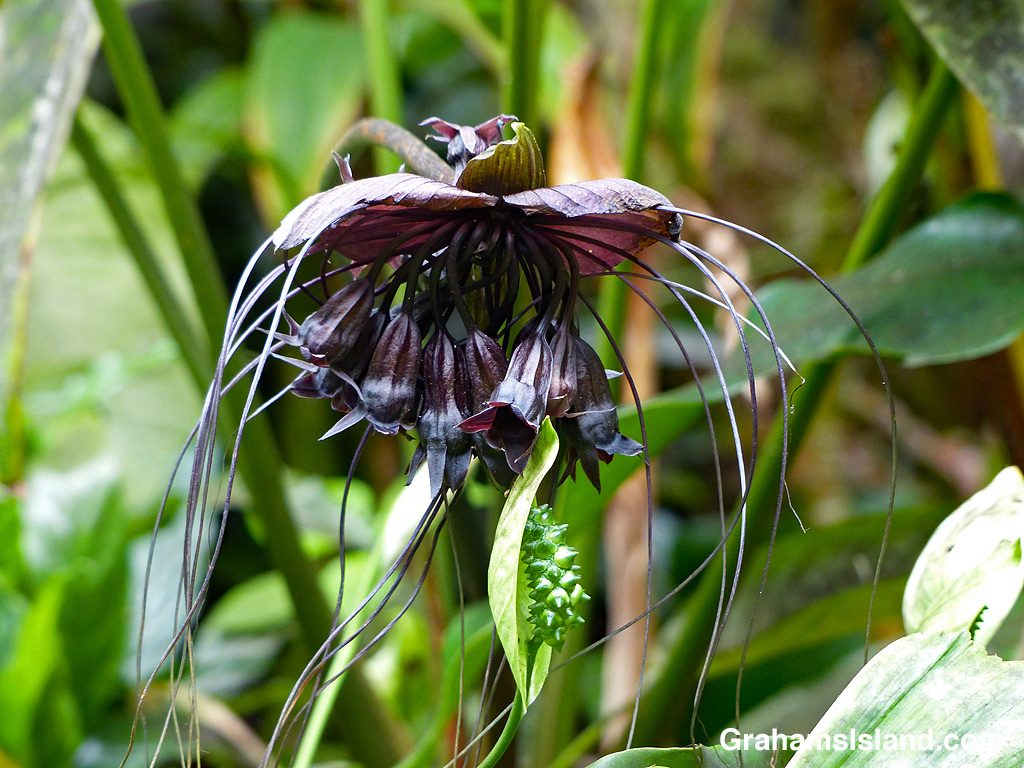
Bat plant is the common name for Tacca nivea, a tropical evergreen from Malaysia. The name comes from its appearance. Large white petals stand above dark flowers and long bracts and together these make it look like a bat face.
In this photo the two petals are not standing up, but are lying on top of the flowers so the look is different, but still striking. I’ll have to go back again at a different time to catch it with standing petals.
This one was at Hawaii Tropical Botanical Garden. For more information about Hawaii Tropical Botanical Garden, go to htbg.com.
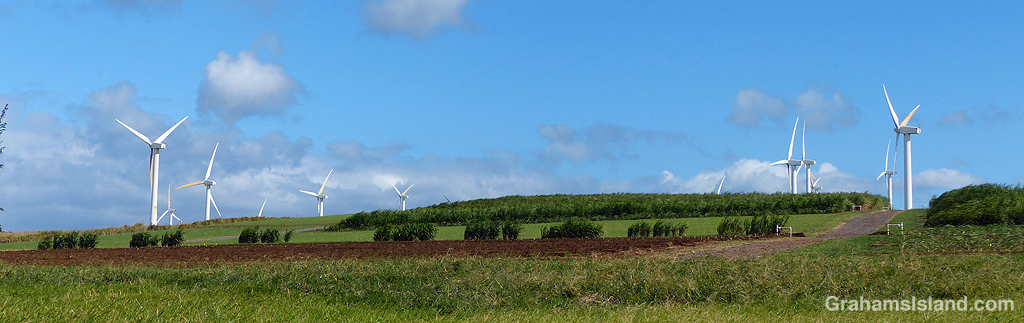

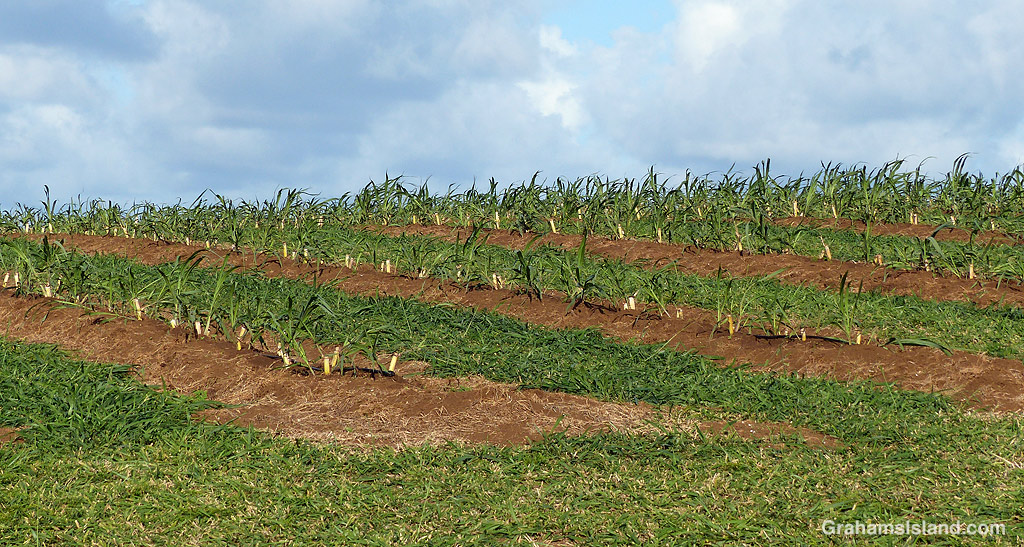
North Kohala was a significant center for Hawaii’s sugar industry through the boom years in the 1800s until its decline in the first half of the 20th century. Now, sugar cane is being put to a new use in the area – rum production.
The photos show sugar cane being grown in the fields below Hawi wind farm. This isn’t just any kind of sugar cane. These are heirloom varieties, derived from canoe plants – plants brought to Hawaii by the original Polynesian settlers. Now they’re being used in the production of rum agricole.
Rum agricole hails from the Caribbean, particularly the island of Martinique. Regular rum is made from molasses, but rum agricole uses fresh sugarcane juice. The people behind Kuleana Rum have begun producing the Caribbean-style rum here on the Big Island. They have a distillery in Kawaihae, about 17 miles down the coast, and have opened Kuleana Rum Shack, a bar and restaurant in Waikoloa.
For more information about Kuleana Rum, go to kuleanarum.com. Posted in response to this week’s Sunday Stills challenge on the theme of ‘Spirit.’ See more offerings here.
 Graham's Island