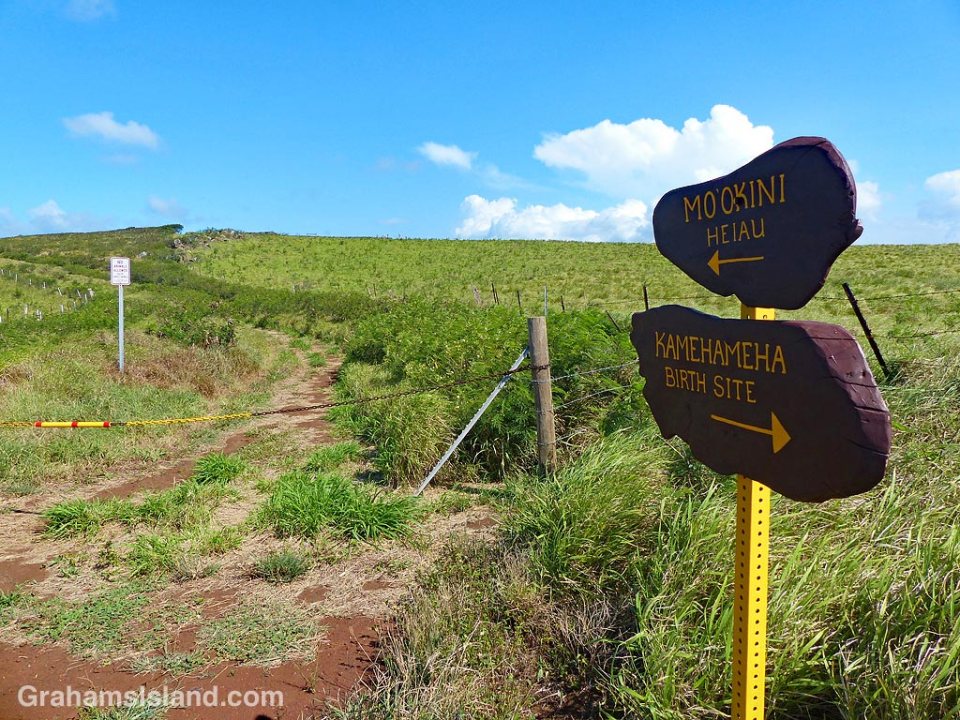
Mo’okini Heiau is located just off one of my regular walks. The old signs for the heiau and the Kamehameha birth site fell from their original spot, tacked on a fence, some years ago. Since then, the signs have been wedged into a barbed wire fence, from which they regularly fell into the grass.
When I noticed this, I’d root the signs out and wedge them back in the fence. I believe other people also did this. At some point, one of the signs split in two, so there were three pieces to try and arrange in some way that they wouldn’t immediately fall down again.
I kept thinking I should bring some wire and a drill and try and put the signs back together again, maybe attach them to a fence post, but I only remembered this good intention when I was picking the signs out of the grass.
The grounds of the heiau are maintained by staff presumably contracted by the county or state. However, the area in the vicinity of the signs never got much attention except when, a couple of years ago, a sign prohibiting animals (on the left of the photo) suddenly appeared. I have a fondness for that sign because the chance of anyone enforcing that regulation is right up there with me winning three different lotteries on the same day (and Hawaii doesn’t have lotteries).
So imagine my surprise the other day when I reached this point in my walk and saw this spiffy new sign. Two new boards attached to a brightly painted pole securely set in a rock. I was giddy with shock and excitement (yes, I don’t get out much). If an alien spaceship had landed I wouldn’t have been more surprised. Note too the red and yellow paint on the chain across the trail to the heiau, and the well-supported post that fell down about a year ago.
Folks, forget the volcano. You want to see something truly amazing on the Big Island, come up to North Kohala and check out these signs while they’re still standing.


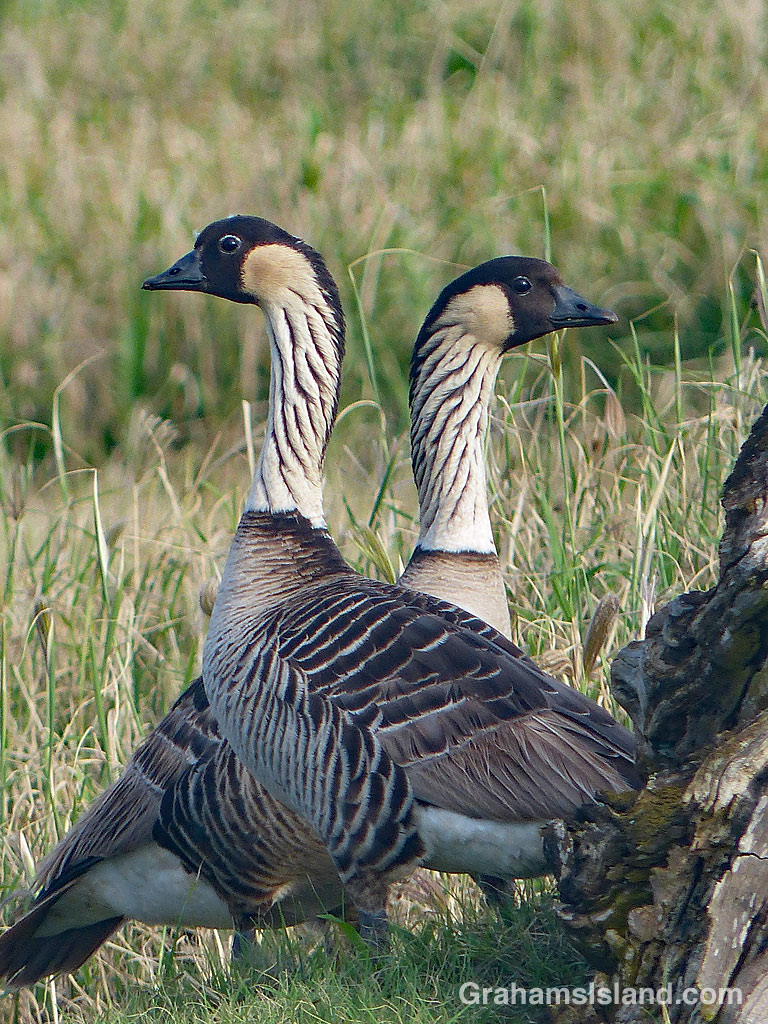 I came across this pair of nene, the Hawaiian goose, on one of my walks. They didn’t seem too bothered by my arrival in the vicinity and continued to graze.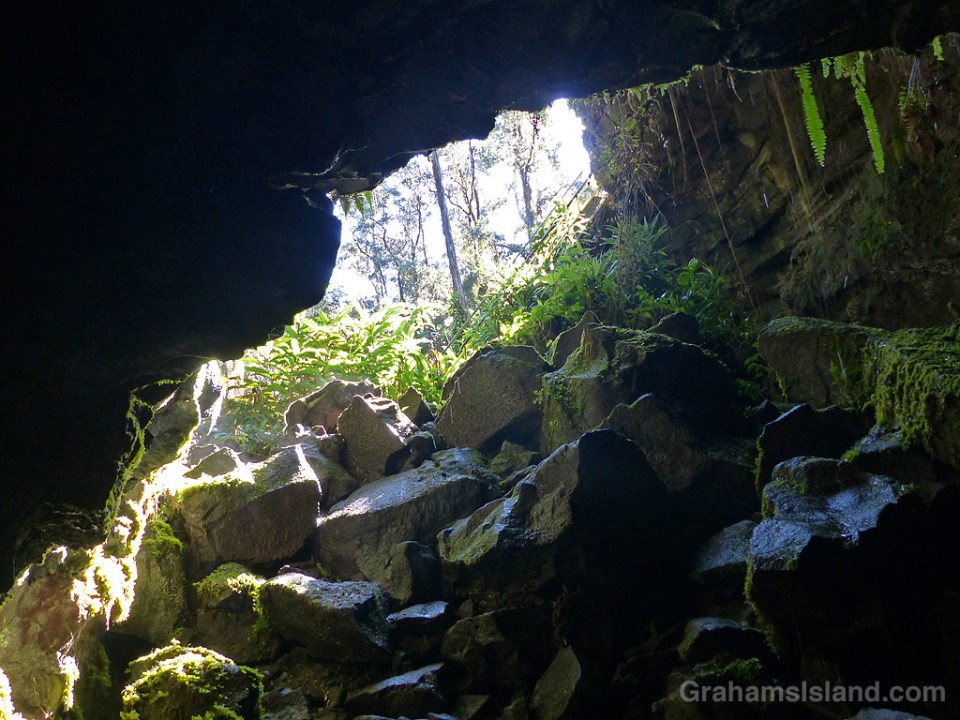
 Kaumana Caves State Park is a small park west of Hilo. Besides the usual park facilities, the main attraction is the caves. The caves are actually a lava tube, created by a flow from Mauna Loa in 1881. They’re accessed through the large opening where a section of the tube collapsed, so the two caves are at opposite ends of this opening.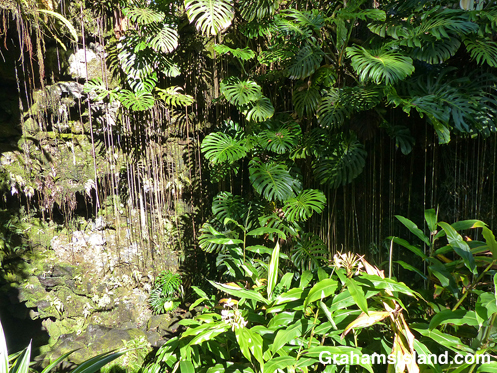


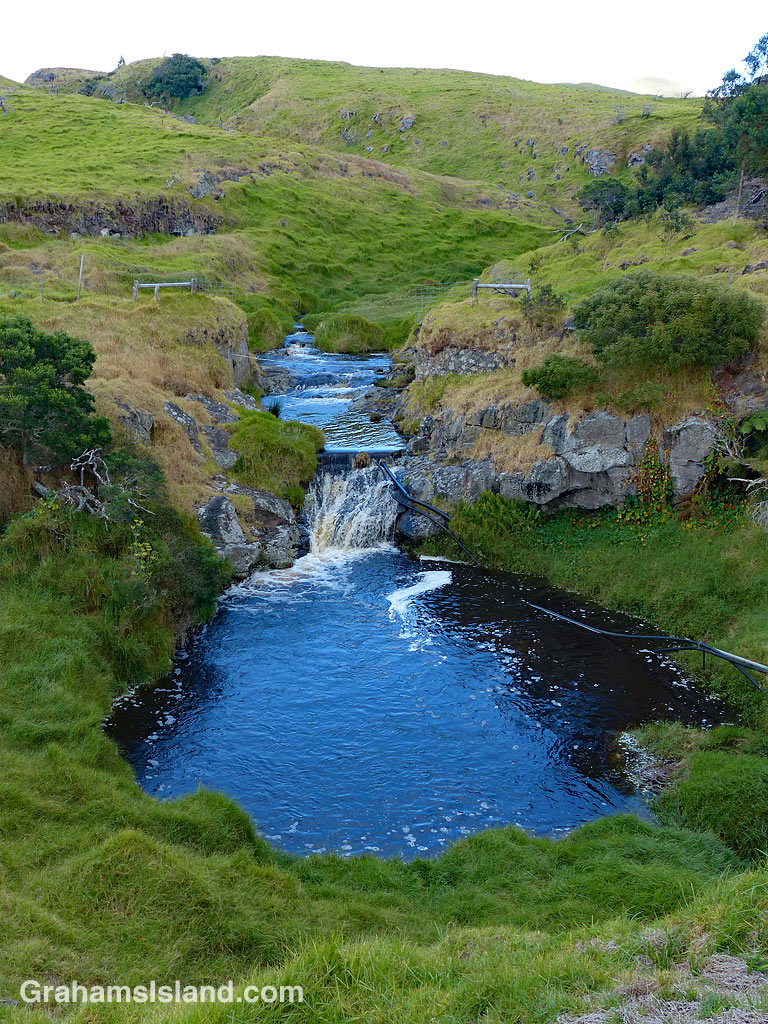 The Kohala Mountain Road passes over the dry southwest side of Kohala Mountain. There are several streams running down the side of the mountain toward Kawaihae and the Kohala Coast and they can run anything from dry to flash flood. It all depends on the rain.


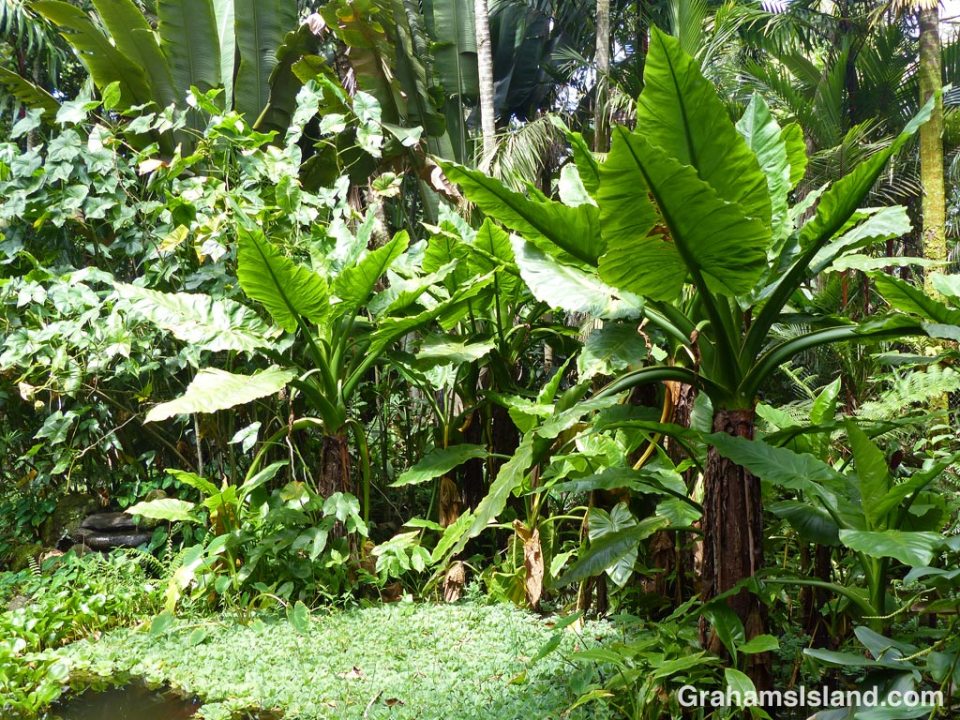
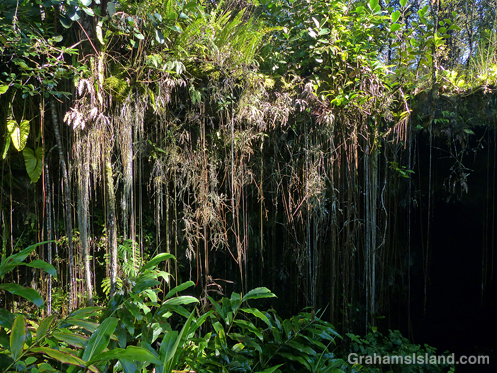
 I live in a pretty green area of the Big Island, but I always enjoy a visit to the much wetter east side. The extra rain allows the tropical foliage to run amok. Trees and shrubs compete for space and light, and vines run everywhere – along the ground and up tree trunks. It’s a riot of many shades of green and leaves of every size, from tiny ground covers to giant bananas to the distinctive leaves of a monstera deliciosa surrounding its flower (below).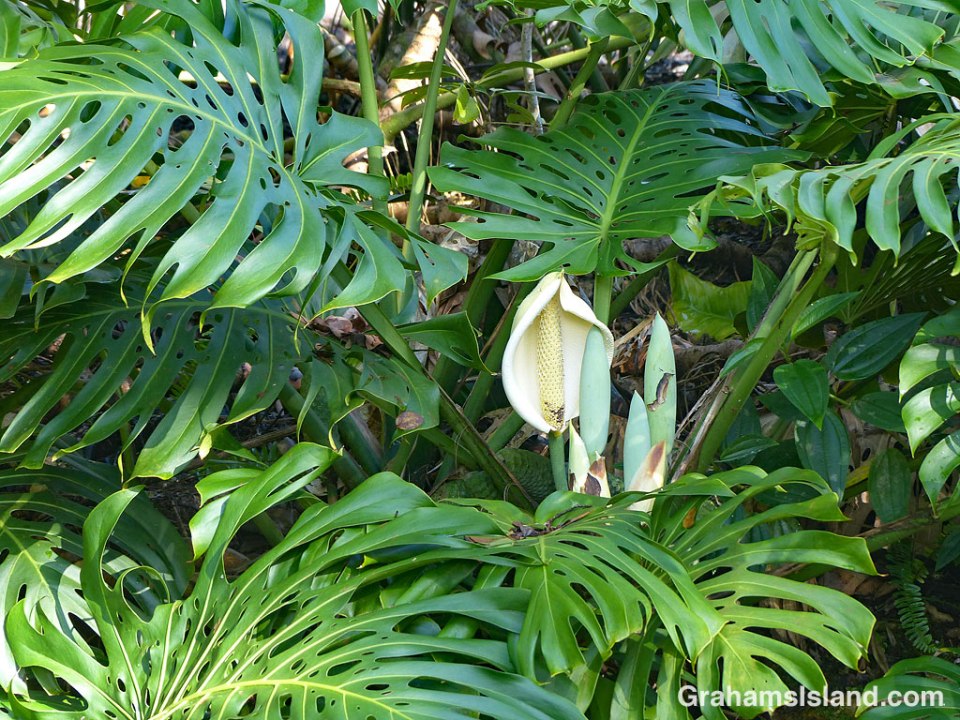
 Graham's Island