
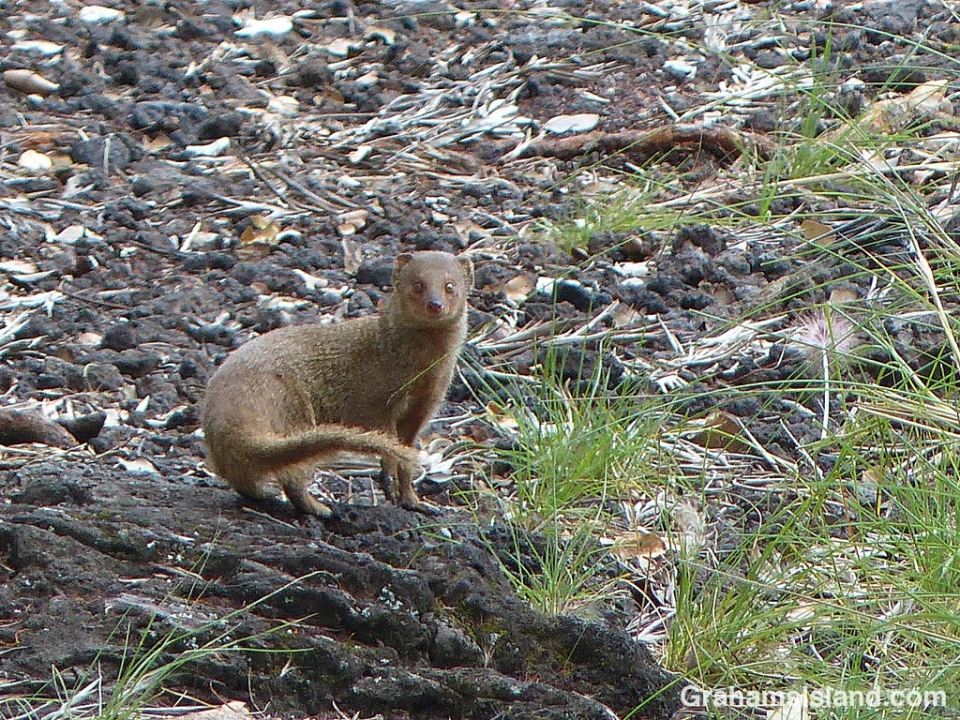
On a recent hike at Pu’u Wa’awa’a, I was ambling along one of the trails when I heard squeals and a commotion in the grass a few feet off to the side. A mongoose shot out from cover hotly pursued by a second one. They took off down the trail, away from me, before vanishing into the undergrowth on the other side.
A couple of minutes later, this one reemerged, trotting away on the trail before it turned suddenly and gave me this look. I don’t think my presence had registered earlier, so it must have been a bit surprised to see me. Don’t know what happened to the other one, but since I didn’t hear any horrendous screeching, I suspect it got away.
For more information about Pu’u Wa’awa’a and its trails, go to puuwaawaa.org.
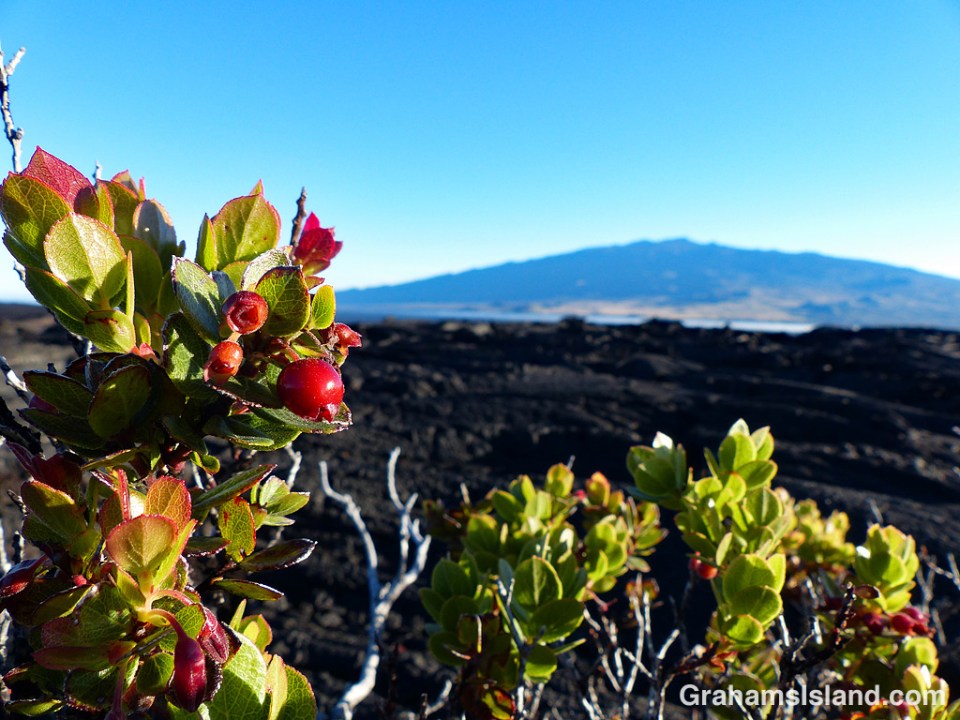
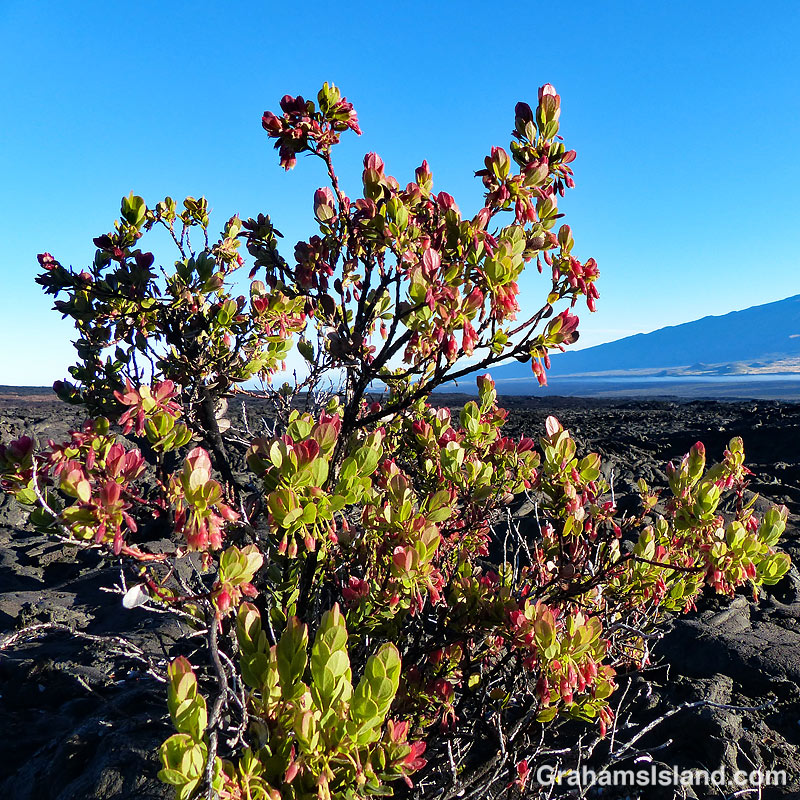

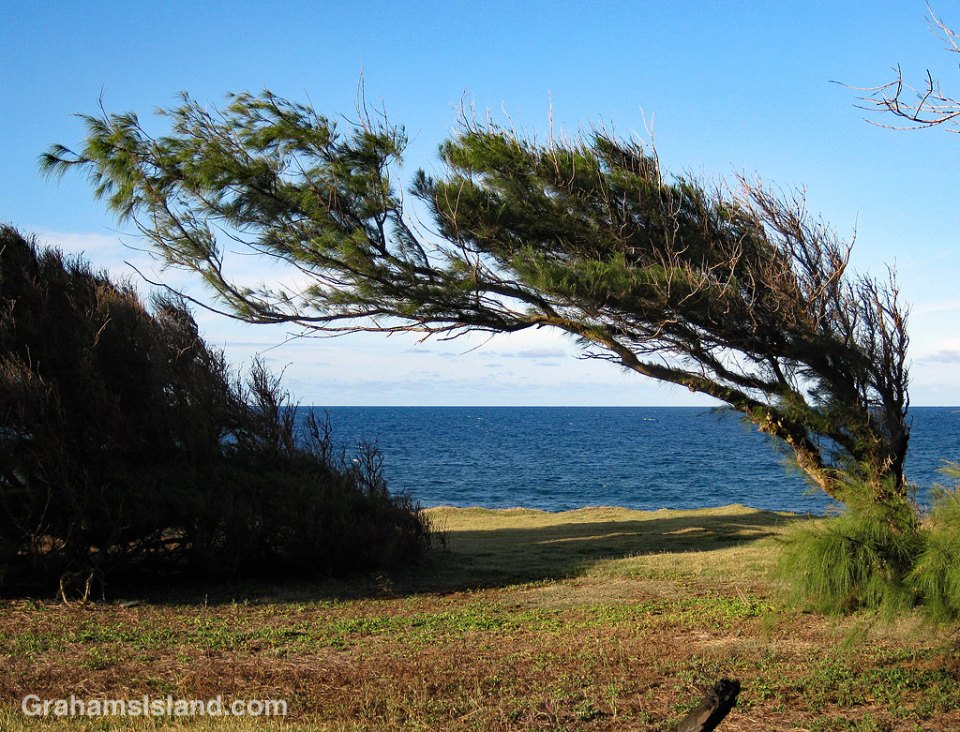
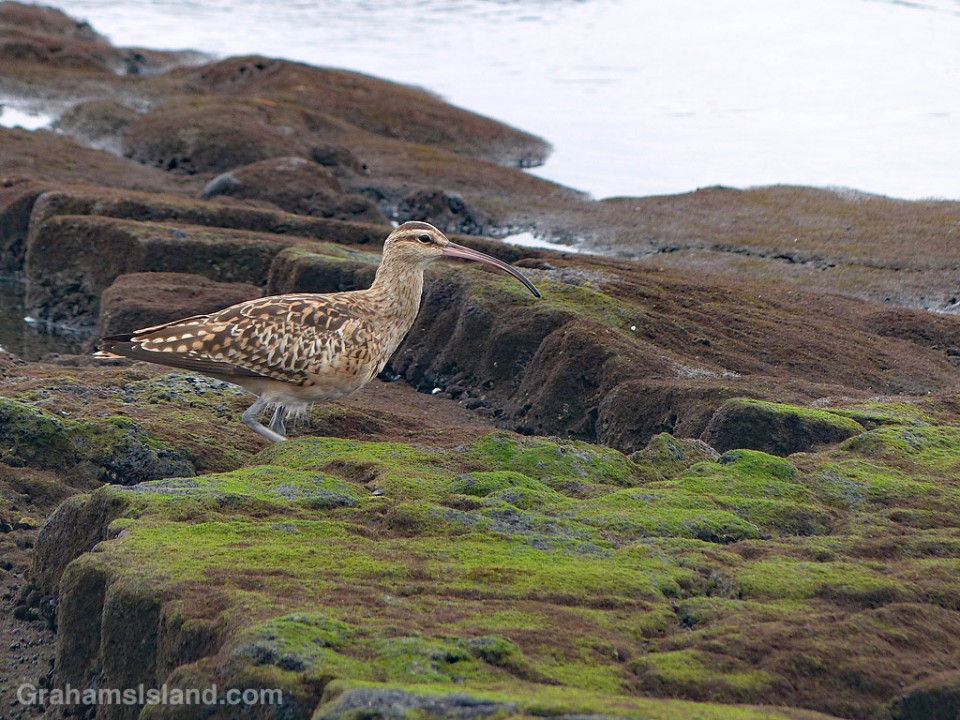
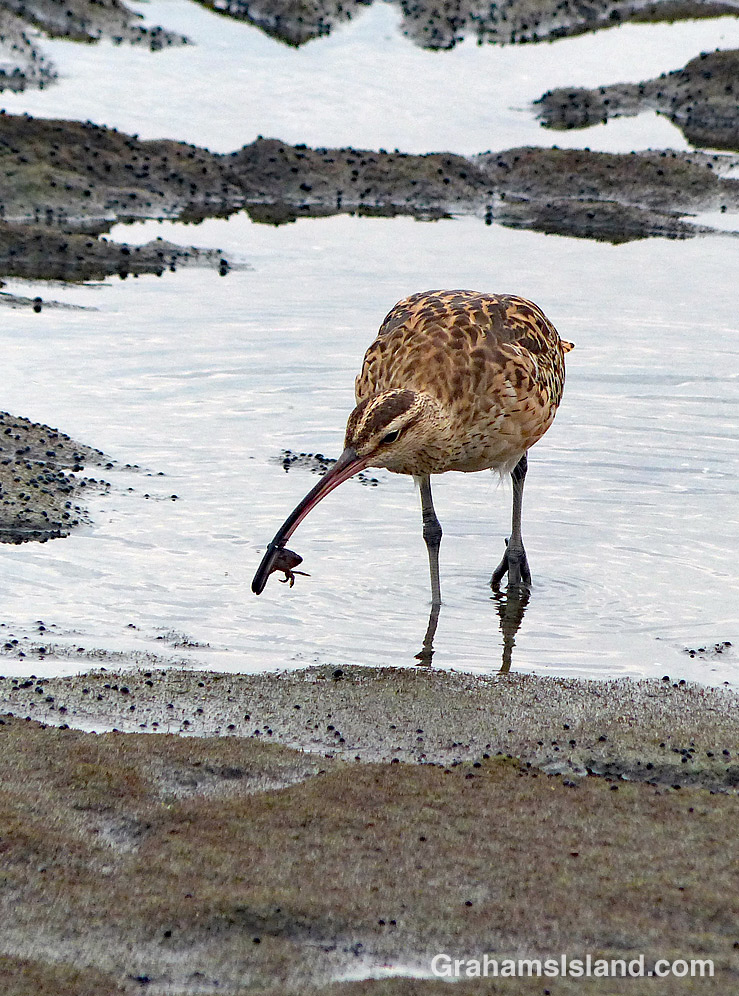 A bristle-thighed curlew making its way along the shoreline at Kiholo while searching for food. The middle photo shows it with a small crab that it plucked from one of the tide pools.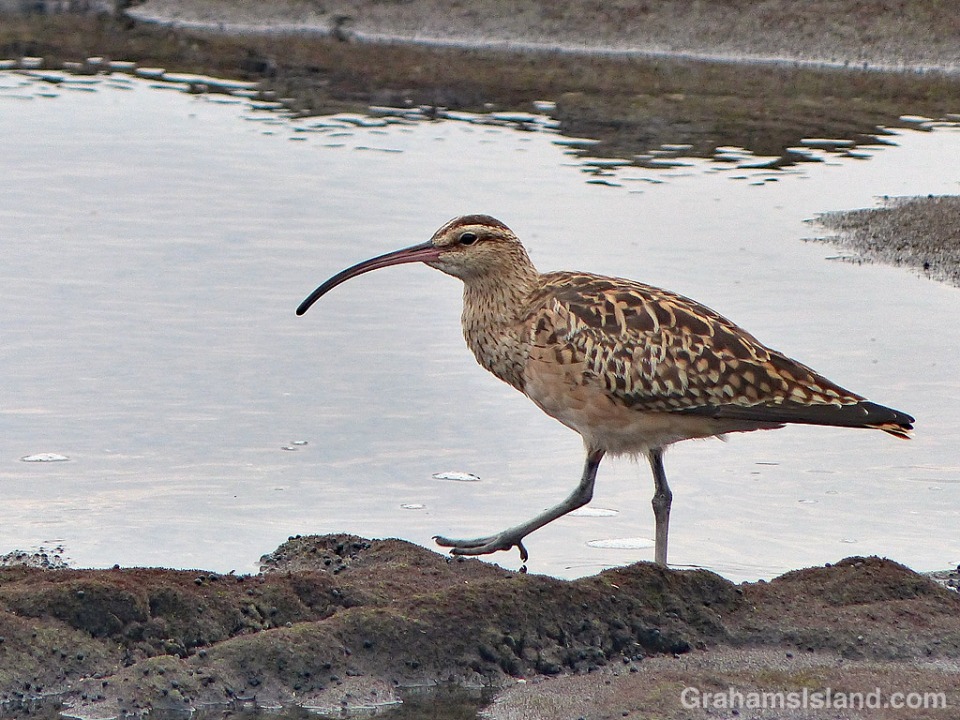
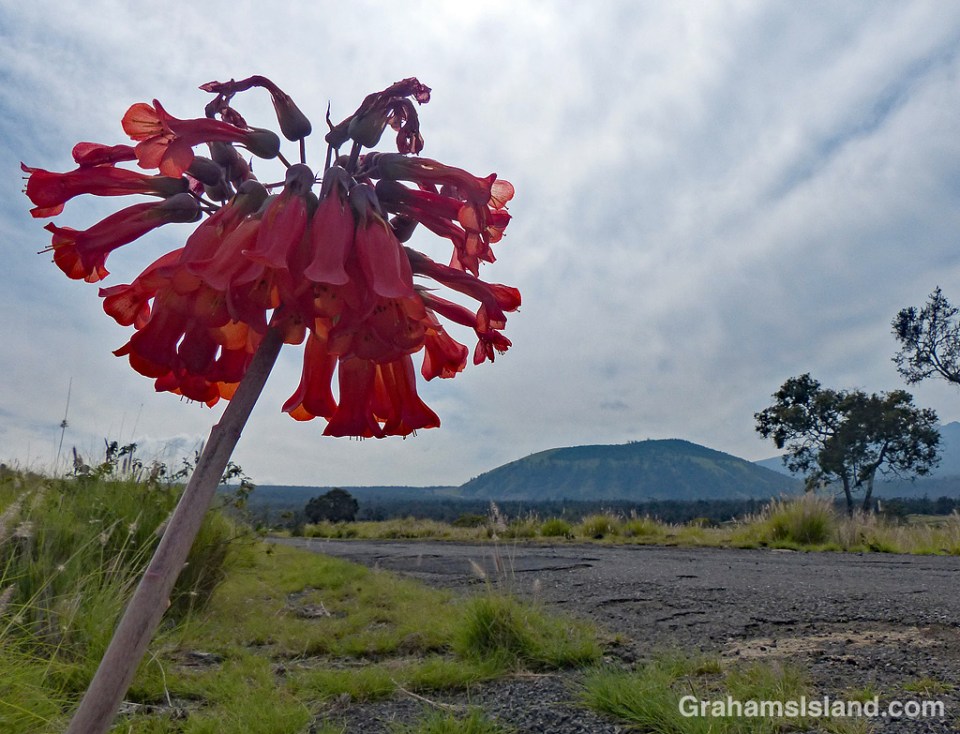
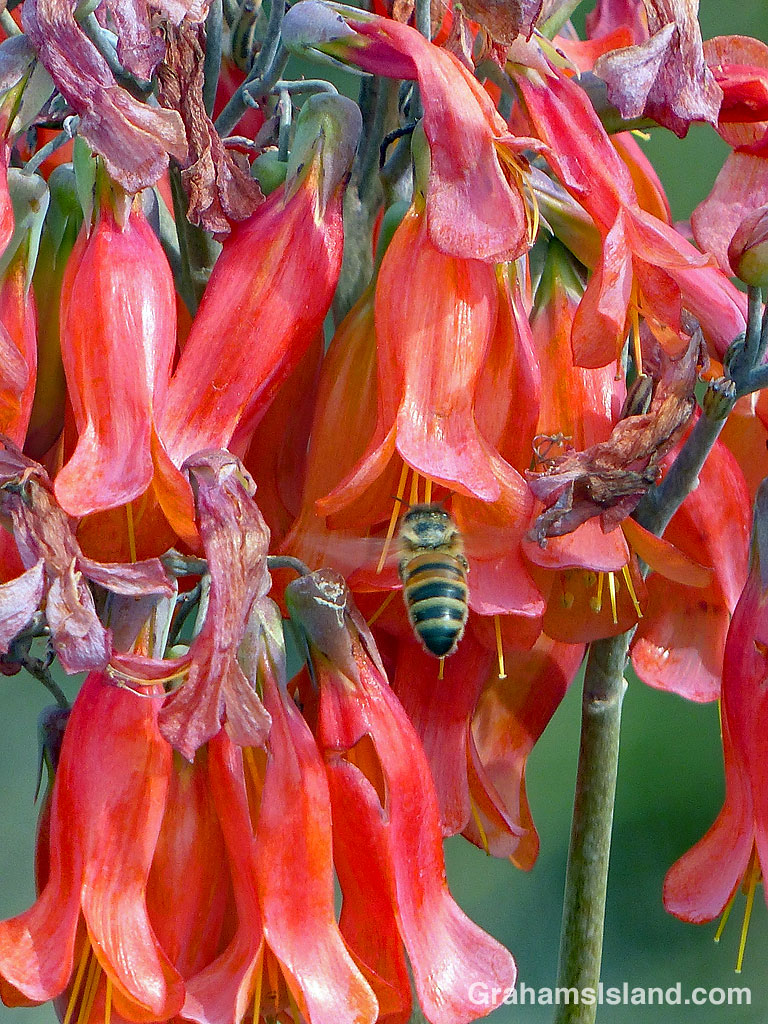 This bryophyllum is probably bryophyllum x houghtonii, but there are several similar looking varieties of bryophyllum. Their common names are telling, however. Bryophyllum x houghtonii is known as ‘hybrid mother-of-millions.’ Common names for other bryophyllums include ‘mother-of-millions,’ ‘prolific mother-of-millions,’ and ‘mother-of-thousands.’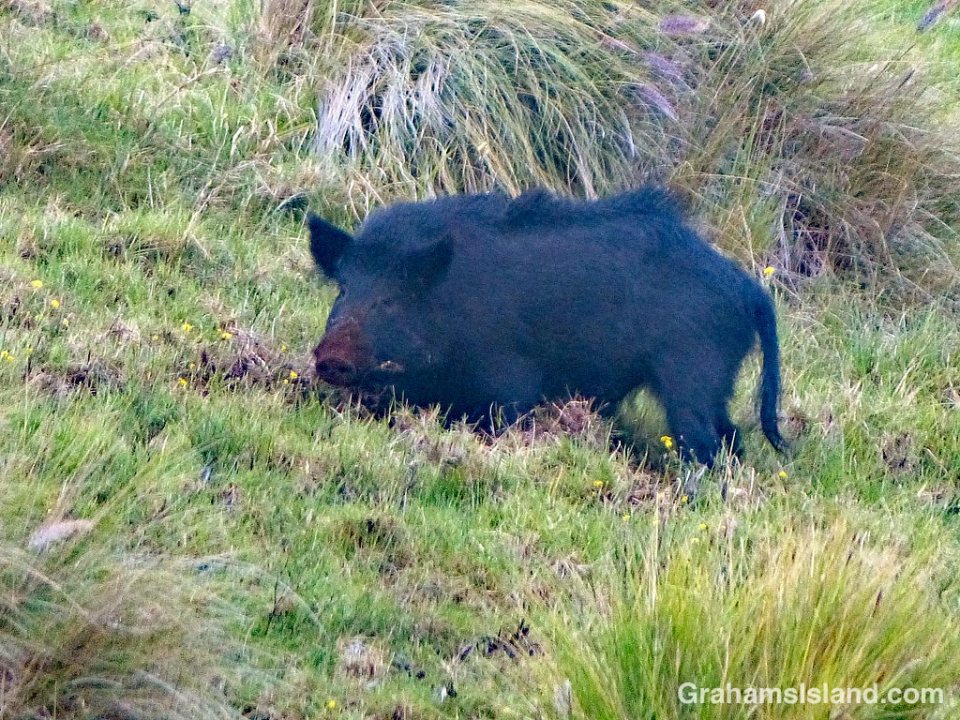
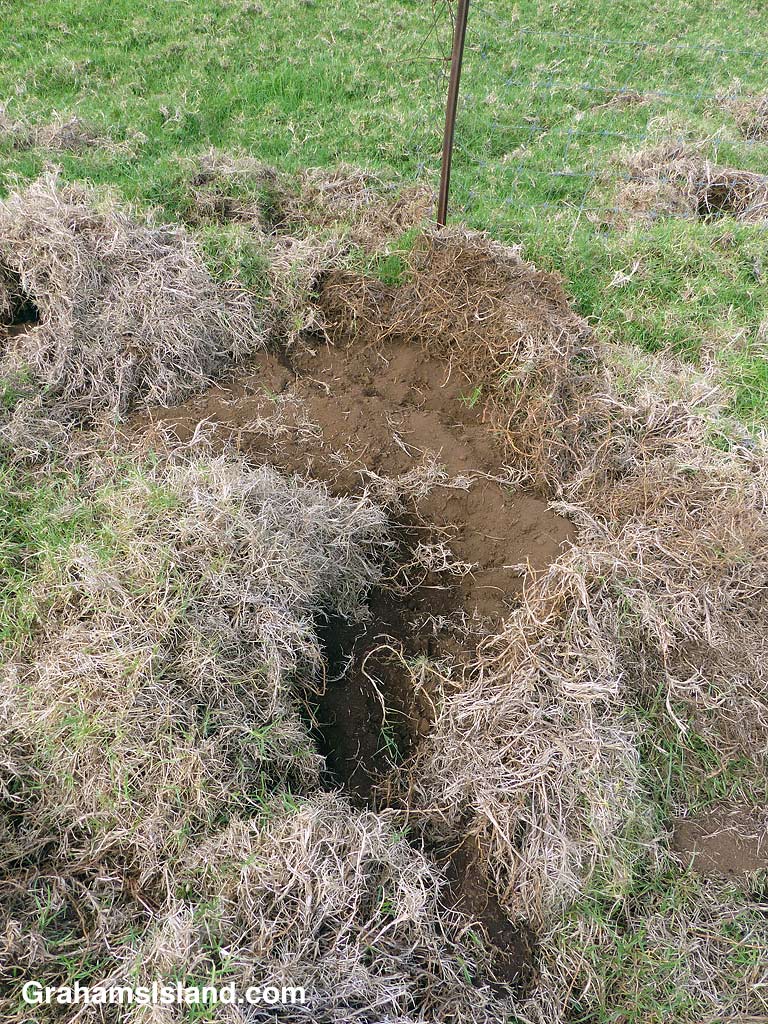 On an early morning hike at Pu’u Wa’awa’a, I saw this wild pig on the hillside above me. It was busy rooting around in the dirt, hence the brown snout. Wild pigs can do an enormous amount of damage in their foraging. The photo at right shows one of many areas alongside the trail that has been dug up by pigs. These areas are susceptible to erosion when it rains.
 These are older photos, but still interesting to me. I spotted this monk seal one day, not too far from a second seal that is a regular around the Big Island.
 Graham's Island