Category Archives: Volcanoes

Sulphur Banks Trail

One of the trails I took on my last visit to Hawaii Volcanoes National Park was the Sulphur Banks Trail, otherwise known as Ha’akulamanu Trail. It’s not far from the visitor center and so is usually popular with visitors because it’s an easy walk, about 1.2 miles roundtrip, and pretty level the whole way. But with few visitors around currently, I had the trail to myself.

This trail is one of several areas in the park where signs of volcanic heat can be seen even when there’s not an active eruption. Steam swirls upwards. The smell of rotten eggs indicates the presence of hydrogen sulfide in the air, one of the volcanic gases leaking from the ground along with sulphur dioxide and carbon dioxide.

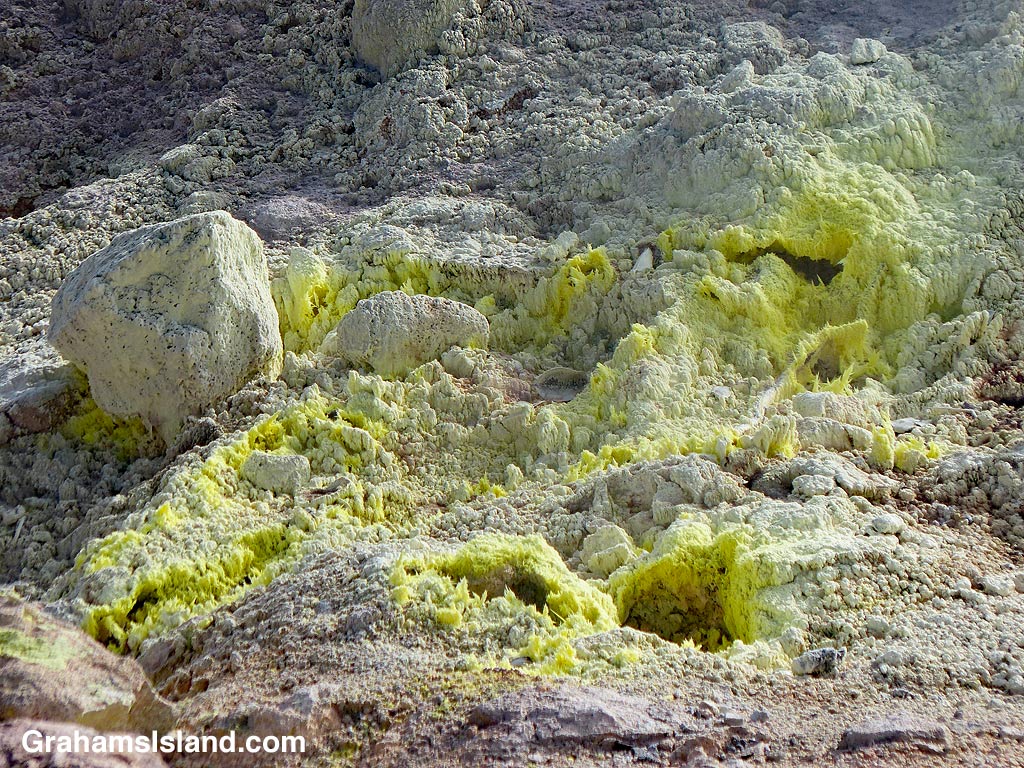
The yellow tint of the ground is due to the sulphurous gases and close examination reveals the sulphur crystals that have been deposited there. The crystals photo was taken at one of the displays along the trail. It wouldn’t be wise to thrust one’s camera too close to one of the active vents, such as those in the bottom photo.

For more information about Hawaii Volcanoes National Park, go to nps.gov/havo/.

Posted in response to this week’s Friendly Friday challenge theme of ‘Close Examination.’ See more responses here.
Kilauea trails

Kilauea Iki Trail in Hawaii Volcanoes National Park

Hawaii Volcanoes National Park recently opened up more areas of the park that had been closed because of the Covid-19 virus pandemic. I thought this was a good opportunity to hike some of the summit trails that I usually avoid because they’re more accessible and popular with tourists. I put together a loop hike that would have been great had all the trails listed as open actually been open.

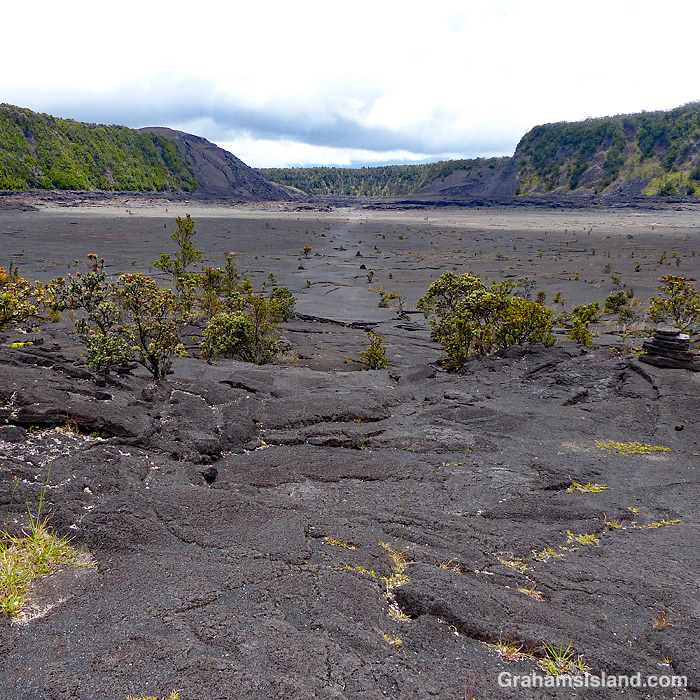
Despite this glitch, I had a good time and enjoyed the variety of landscapes the park has to offer. The top photo shows the part of the Kilauea Iki Trail that traverses that crater. The crater floor is a little under a mile across. This crater used to be much deeper before an eruption in 1959 filled it up another 400 feet. There is some vegetation, but the crater floor is mostly bare lava and steam can often be seen rising in various places.

The middle photo was taken on the Halema‛uma‛u Trail, which winds down from the summit into Halema‛uma‛u Crater. Despite the trail’s proximity to the vent in the crater, which was active until May 2018, vegetation thrives here as it does on many trails in the park.

The bottom photo shows a section of active steam vents alongside the Crater Rim Trail. This section of the trail is paved because the area normally sees very heavy use. When I was there, it was mostly deserted because of the lack of tourists on the island. The buildings on the horizon are the Volcano House Hotel which recently reopened for business, though the restaurant is still closed.

For more information about Hawaii Volcanoes National Park, go to nps.gov/havo/. For more information about Volcano House Hotel, go to hawaiivolcanohouse.com/.

Posted in response to Becky’s July Squares challenge theme of ‘Perspective.’ See more responses here.

Chain of Craters Road

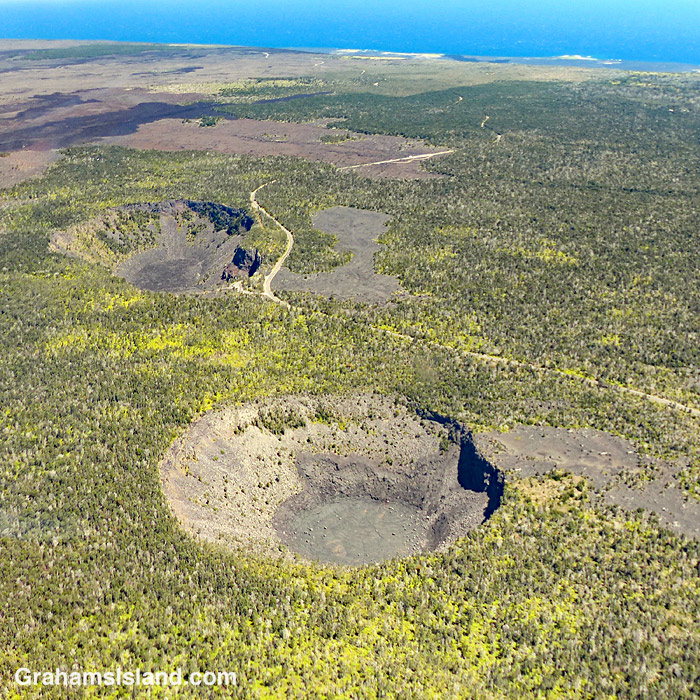
A view from the air gives a different perspective on Chain of Craters Road in Hawaii Volcanoes National Park. The road winds it’s way from the park entrance down to the coast. And why is it called Chain of Craters Road? Well, there are two big clues in this photo.

For more information about Hawaii Volcanoes National Park, go to nps.gov/havo/.

Posted in response to Becky’s July Squares challenge theme of ‘Perspective.’ See more responses here.

Pu’u Wa’awa’a bench

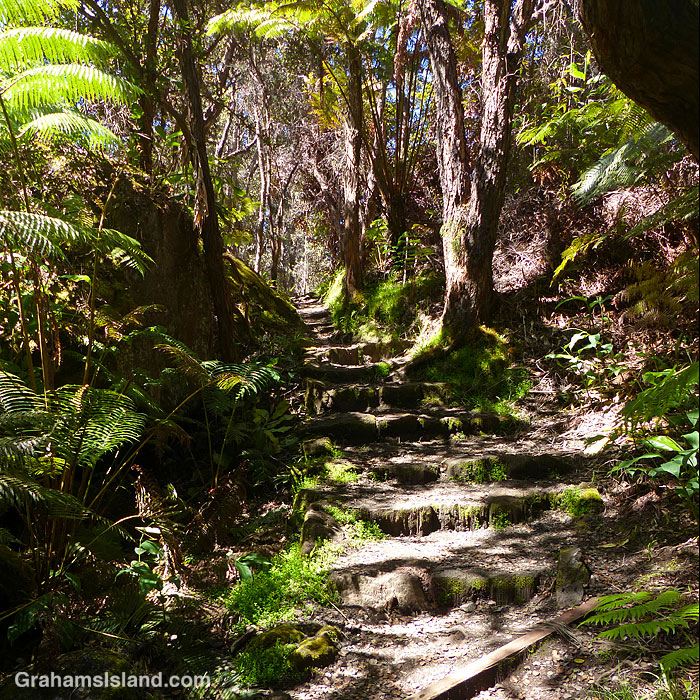
One of the nice things about the hike up Pu’u Wa’awa’a is the selection of benches available for rest and contemplation, on the way up and at the top. This bench sits halfway up the steep slope that accesses the top of the hill. It gives a good view of Mauna Loa and the pastures on and around Pu’u Wa’awa’a. If you’re lucky, you might even see a dung beetle or three doing what they do.

Alien cloud

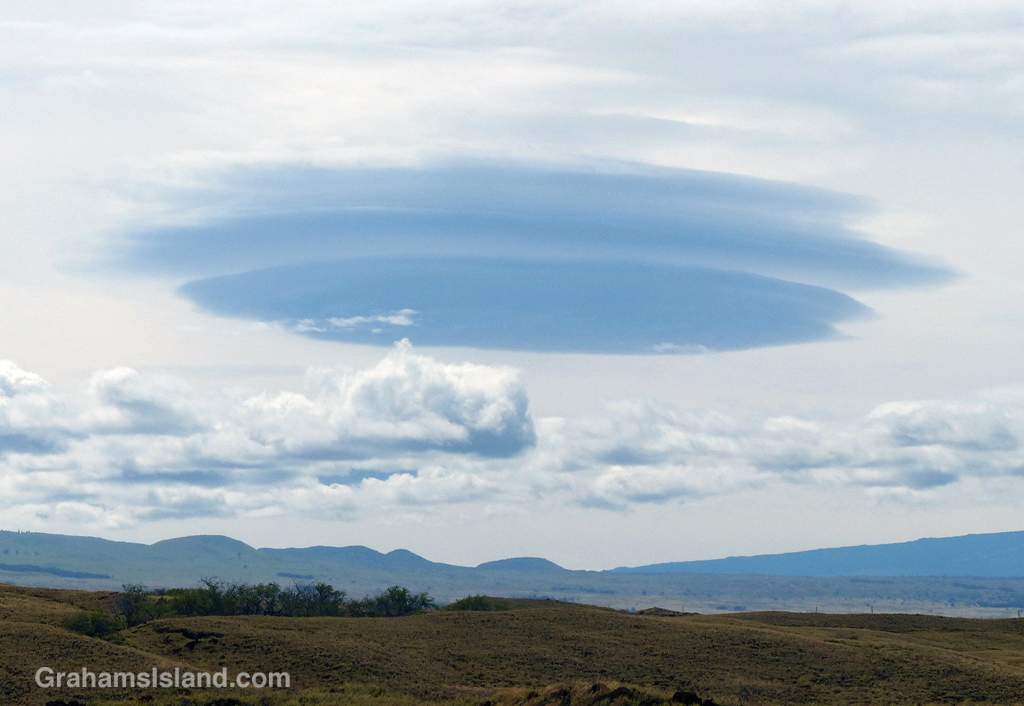
This vary strange looking cloud formation appeared one day atop the saddle between Mauna Kea and Mauna Loa. It hung around there for a long time before suddenly disappearing into space. No, not really. Instead, the lower level clouds continued to build and eventually obscured the view of the alien cloud. All very mysterious.

Kilauea lava

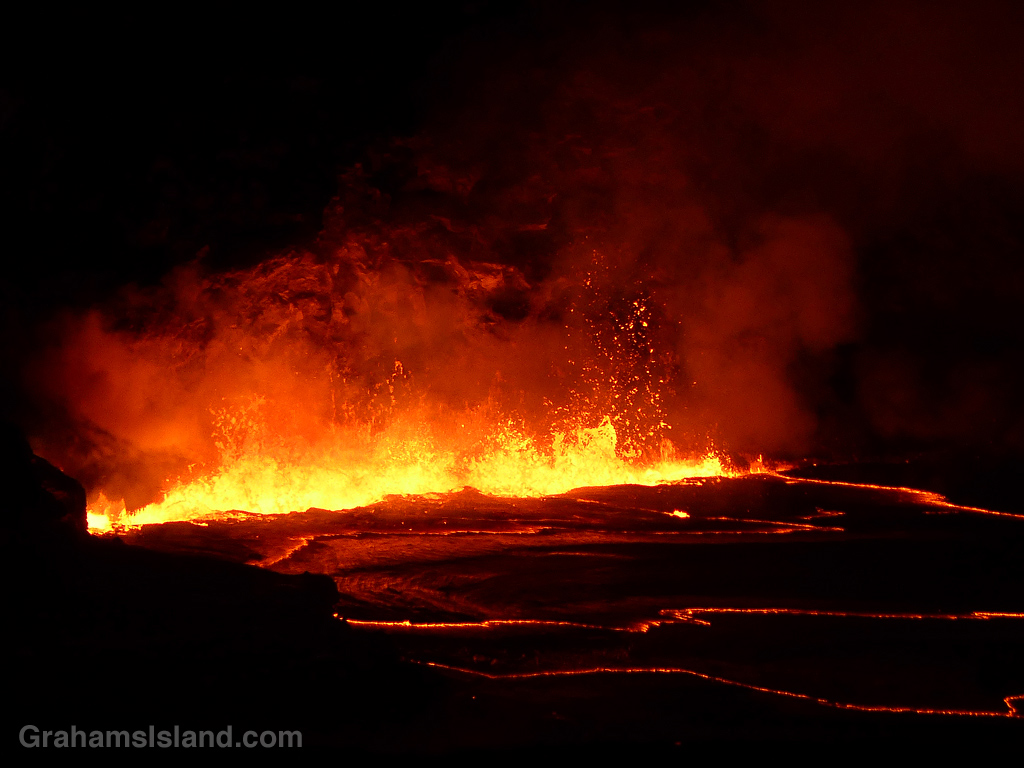
Lava fountains flare up alongside the rim of the active vent in Halemaʻumaʻu Crater at the summit of Kilauea Volcano.
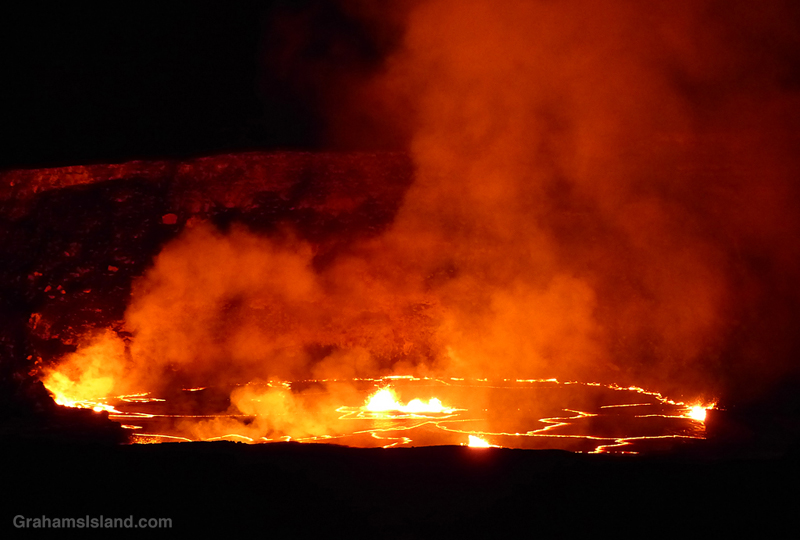
The walls of the crater illuminated by the lava.

This week’s Sunday Stills challenge theme is ‘Mother Earth.’ See more offerings here.

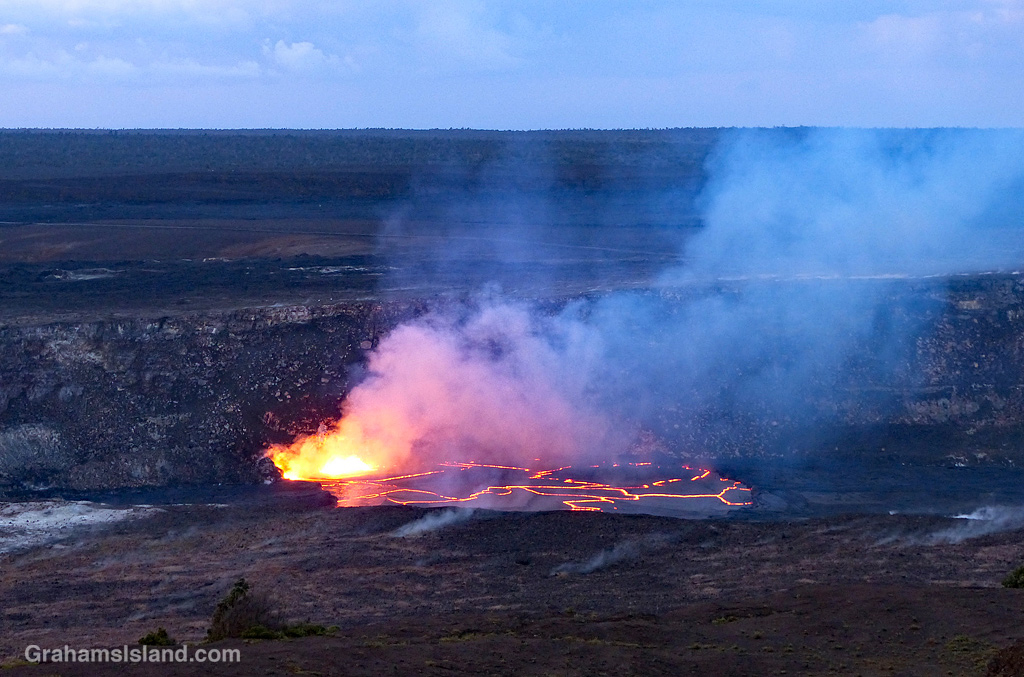
The Big Island is home to Madame Pele, who in Hawaiian culture is the goddess of volcanoes. She is the creator of new land as well as a destroyer. These photos were taken on April 24, 2018. (An account of that visit, and more photos, can be found here.) On May 1, the lava in the lake began to drop. Within a week, it had dropped more than 700 feet and continued falling. Lava had also disappeared from Pu’u O’o, the other active vent on Kilauea.

The drop in lava levels was due to magma in the system moving down the east rift zone of the volcano where it emerged in a series of vents in Leilani Estates, a housing subdivision in the southeast part of the island. This new eruption lasted until late August, 2018, since when the volcano has been quiet.

While there has been no visible activity, below ground, magma has been moving through the system, notably into Kilauea’s summit chamber. It’s surely only a matter of time before Madame Pele makes her presence known again on one of the world’s most active volcanoes.

The early morning light shows the crater and land around Halemaʻumaʻu Crater. This is a scene that no longer exists. Since this photo was taken, not only is the vent no longer active, but the crater floor has collapsed numerous times and the walls have also subsided in places.