This week’s Sunday Stills challenge theme is ‘Near and Far.’ See more offerings here.
The photo above shows a distant view of some of the telescopes atop Mauna Kea, silhouetted against an early morning sky. Below is a closer look at the Gemini Northern Telescope, which sits a little way north of the summit of Mauna Kea.
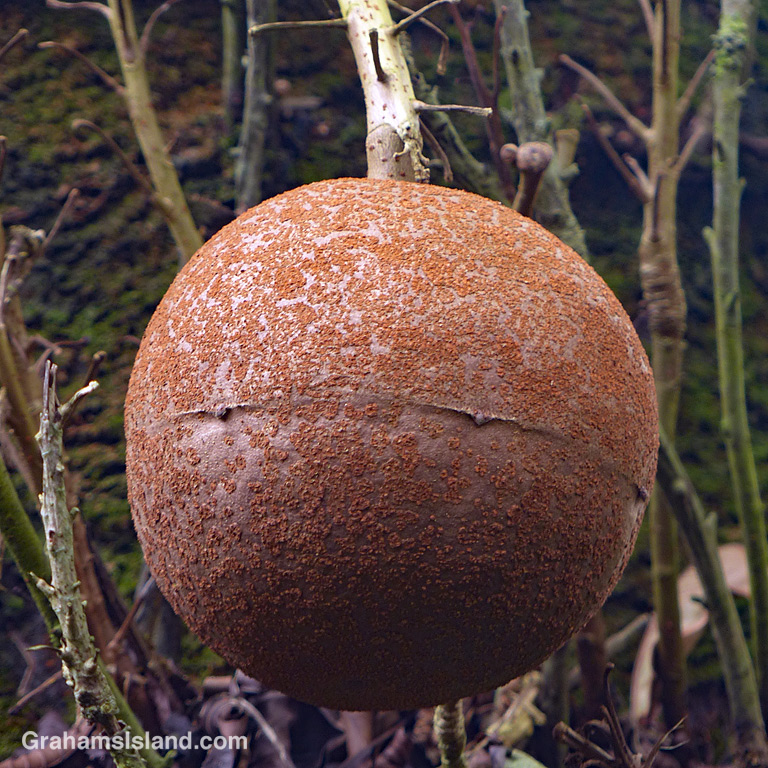
I have posted photos of the flower of the cannonball tree (Couroupita guianensis) before (here, here, and here). But the flowers aren’t what gives the tree its name. It’s the woody cannonballs that are its fruit.
In these photos, a cannonball tree is loaded with fruit. The flowers, and subsequent fruits, grow directly off the trunk. And the fruit itself, well it’s not hard to see why it gets its name. When the fruit falls from the tree it usually breaks open. The pulp and seeds are eaten by animals which go on to disperse the seeds.
This week’s Friendly Friday challenge theme is ‘Sea Creatures.’ See more responses here.
I go snorkeling two or three times a week and feel fortunate to see a great variety of sea creatures while I’m out. Some of these can be quite unusual or exotic. I recently saw my first titan scorpionfish, and threadfin jack juveniles are weird and wonderful. And then there was my one and only encounter with a pyrosoma.
But for this challenge, I’ve opted to go with some fish I see most times I get in the water. Yellow tangs are probably the most noticeable reef fish around. Bright yellow, they putter around in the shallows, and are easily visible in the water and from shore. Trumpetfish look nothing like yellow tang, but often take on a yellow color and blend in with shoals of yellow tang in the hopes of surprising small fish, which are their main prey.
In these photos, a trumpetfish is doing just that. While it might seem like it would be pretty obvious that the long trumpetfish is quite different from the rest of the shoal, when seen from the front, which is the business end of the trumpetfish, the distinction isn’t so great. And if the trumpetfish can get close enough, it will suck its prey in and devour it.
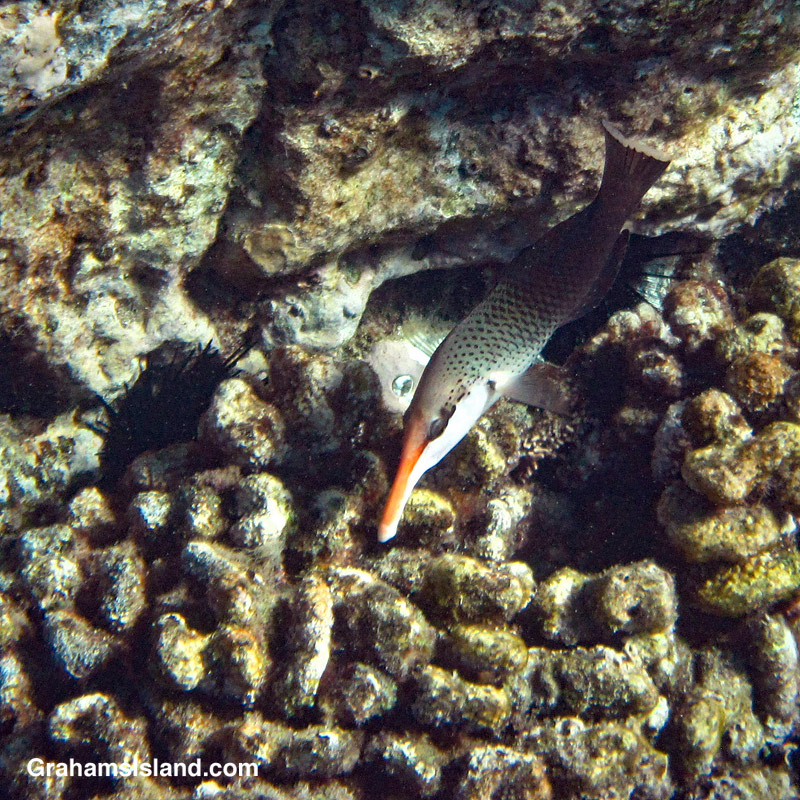
Bird wrasses are quite distinctive. The long ‘beak’ is used for winkling out crabs and shrimp from nooks and crannies in the reef. The top photo shows a blue and green supermale, with its lighter green blaze above the pectoral fin. To the right is a more subduedly-colored initial phase bird wrasse, that could be male or female.
These are one of those fish that seem to be in constant motion. I have taken many photos of them where they aren’t in shot by the time I push the button. I got lucky with these two.
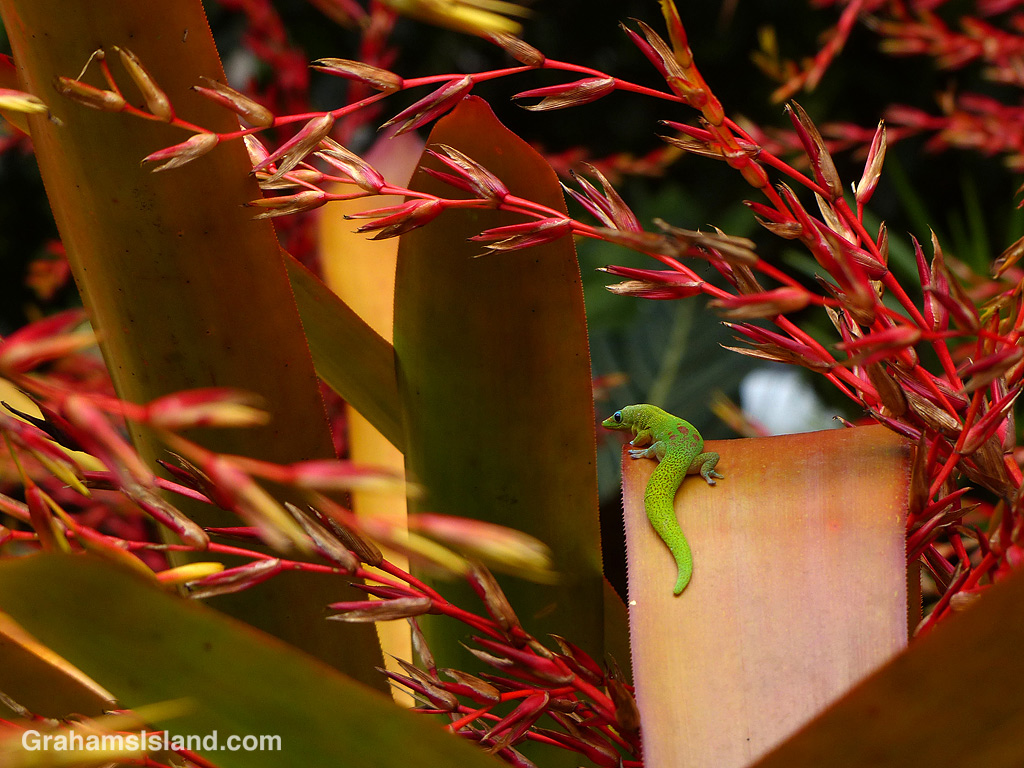
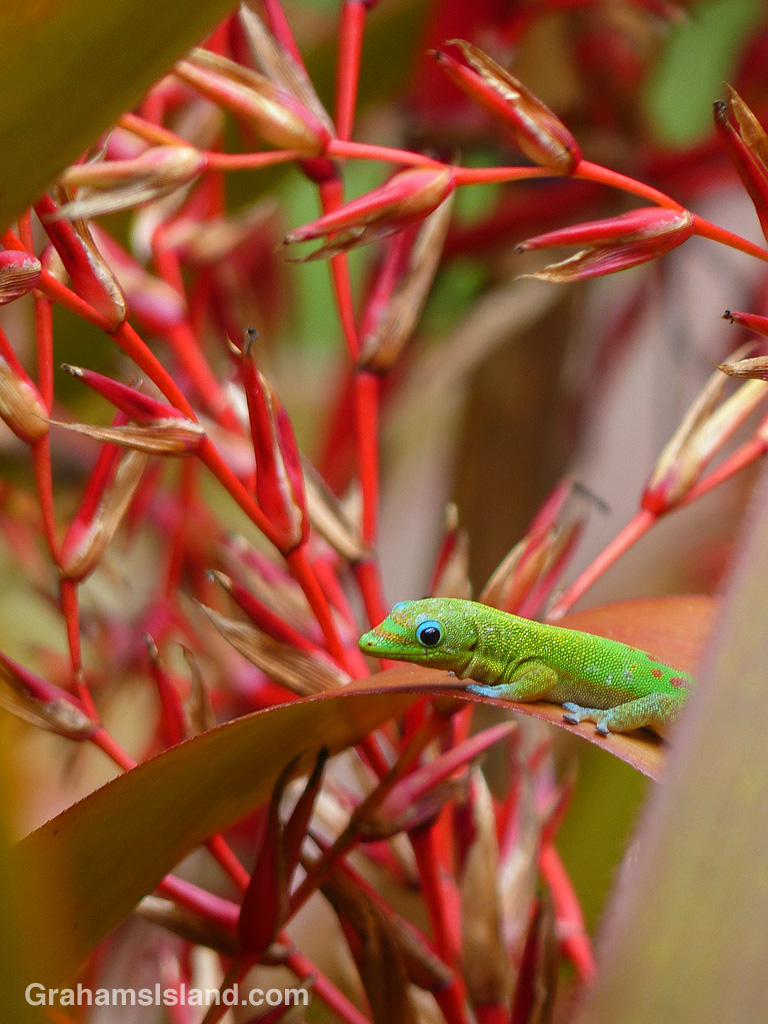
The gecko is a gold dust day gecko, originally from Madagascar, and the bromeliad is aechmea blanchetiana, originally from Brazil. I liked this scene for the strong color contrast.
These were seen at Hawaii Tropical Botanical Garden. For more information about Hawaii Tropical Botanical Garden, go to htbg.com.
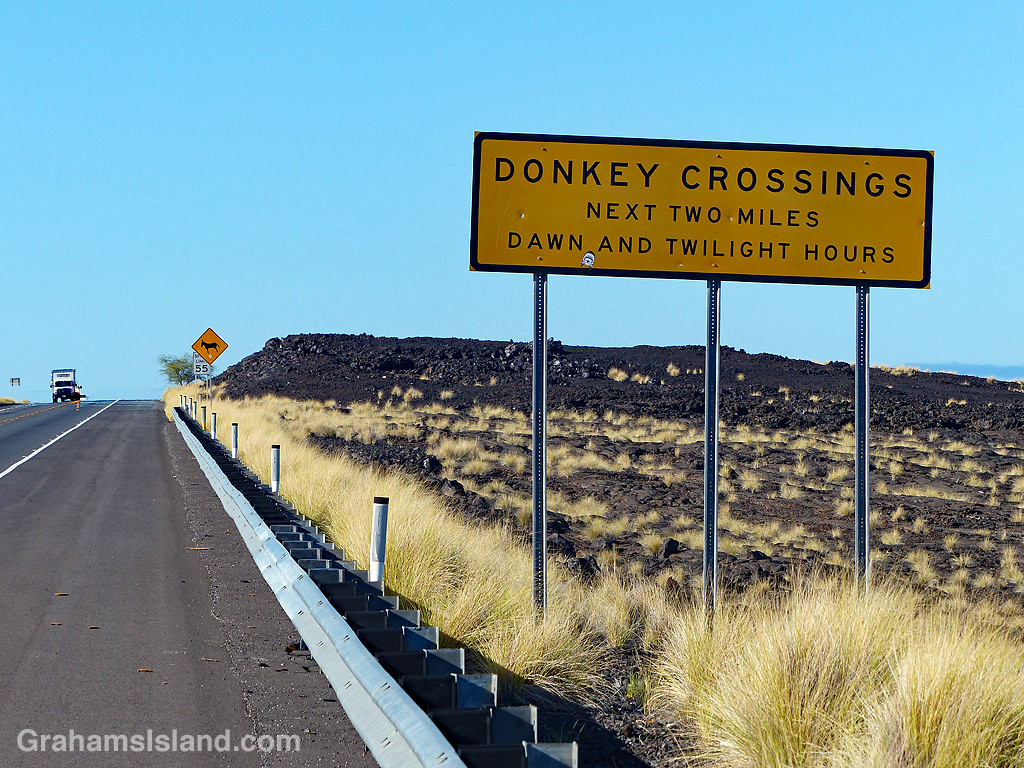
A few miles north of Kona Airport is a stretch of highway where these signs can be seen – the written warning in the foreground and a handy image in background for those who don’t know what a donkey looks like. Not that they’re going to find out here. There are no donkeys.
The signs hark back to when there were a number of wild donkeys roaming the island and this was, apparently a place where they crossed the road on a regular basis. But donkeys crossing a major road travelled by many speeding vehicles is not a tale that ends well, for the donkey or the vehicle. So the donkeys were all rounded up and put out to pasture, as it were, in domestic situations. Only the signs remain.
Except … I’ve been told that not all of them were captured. Unaccountable braying has been heard, though no donkeys have been seen, but do you want to take that chance speeding past these signs only to see, too late …