This week’s Friendly Friday challenge theme is ‘Mood.’ See more responses here. For me, mood elevation often comes in the form of interactions with nature. Anything from bugs to birds, fish to flowers, can leave me in a better mood.
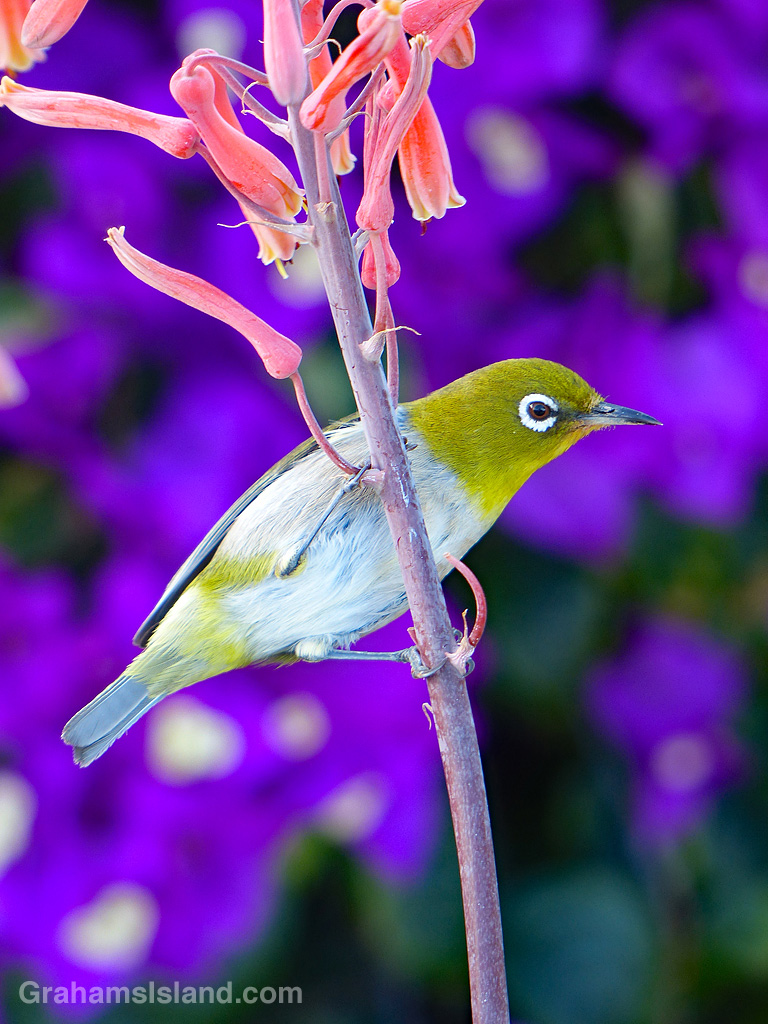
I had been watching Japanese white-eyes visiting Japanese aloe flowers on a daily basis. But I was really happy to capture one, perching on a stem, with purple bougainvilleas in the background.
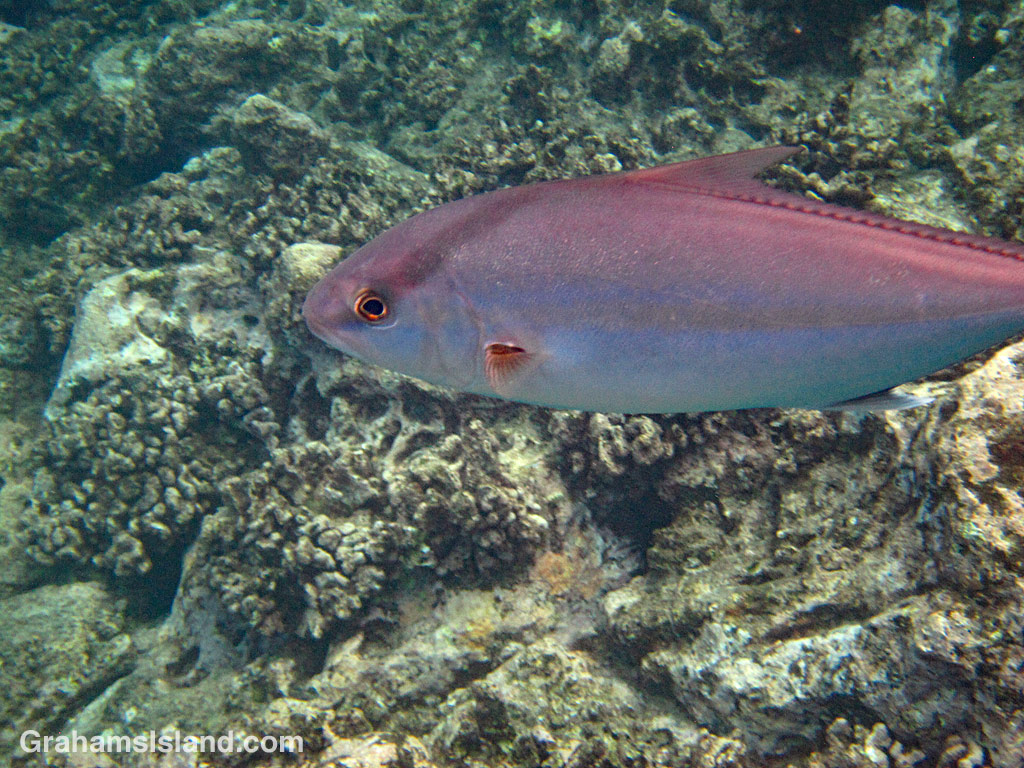
Nearing the end of a long swim, I noticed these two fish swimming towards me. At first I thought they might be bluefin trevallies, but I could see the coloration was wrong. The other thing I noticed is that the two fish never deviated in their course, which took them right by me. Most fish, when they see someone coming their way, will zip away or at least cautiously ease around the interloper. Because they passed so close to me, I was caught by surprise and only managed to get these two shots before they were gone.
The fish are greater amberjacks, which spend most of their time in deeper waters, but occasionally venture in shallower waters as these two did. The fish are easily identified by the dark diagonal bar through the eye and the yellow stripe along the sides, though that isn’t always visible.
One quirk of living in Hawaii is that it’s not unusual for people to have to fly for medical treatment. There aren’t a lot of specialists on the Big Island. Typically, they’ll visit once or twice a month. But the bigger issue is that expensive pieces of medical equipment are mostly on Oahu. Need an MRI? You might have to go to Honolulu.
For scheduled appointments, people generally take commercial flights, but some conditions, and most medical emergencies, require a medivac flight.
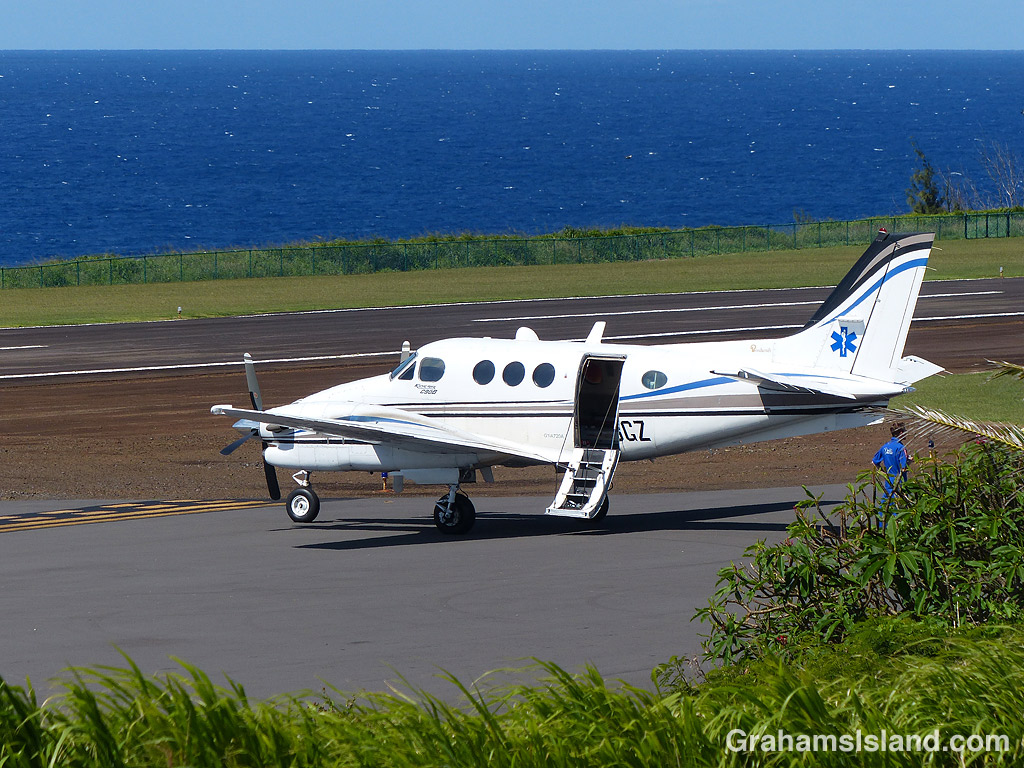
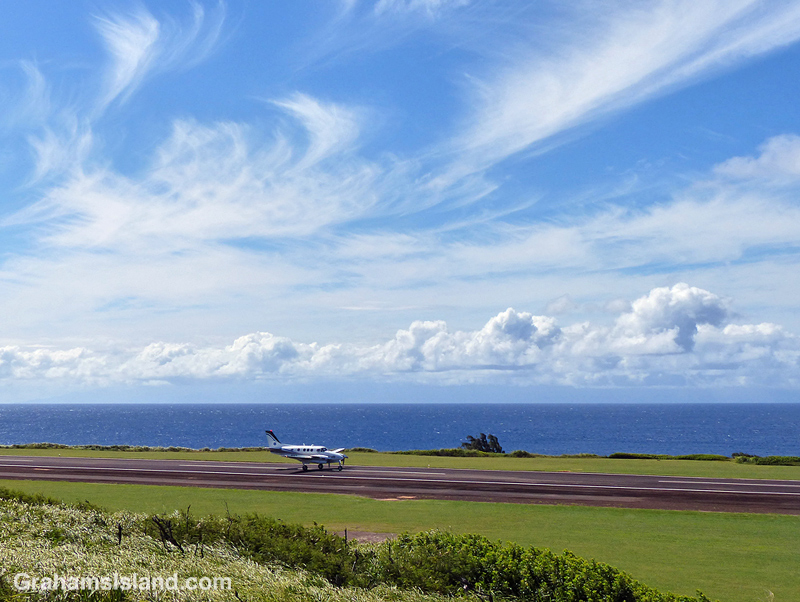
Upolu Airport, which is basically a runway with few facilities, is used by these medivac aircraft on a regular, if not frequent basis. These photos are of one such plane awaiting a patient, then heading down the runway and into the air, bound for Honolulu.
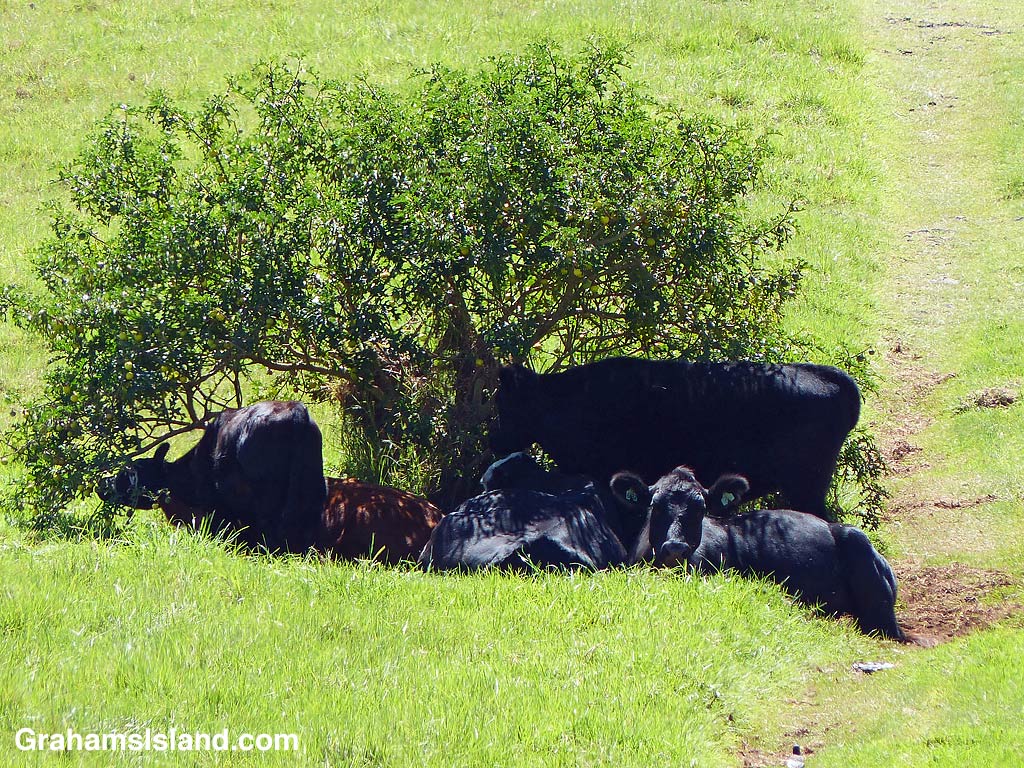
This group of cattle was crowded together beneath a small shrub on the side of Pu’u Wa’awa’a. They were making the most of the scant shade on offer and weren’t about to give it up because of my presence.
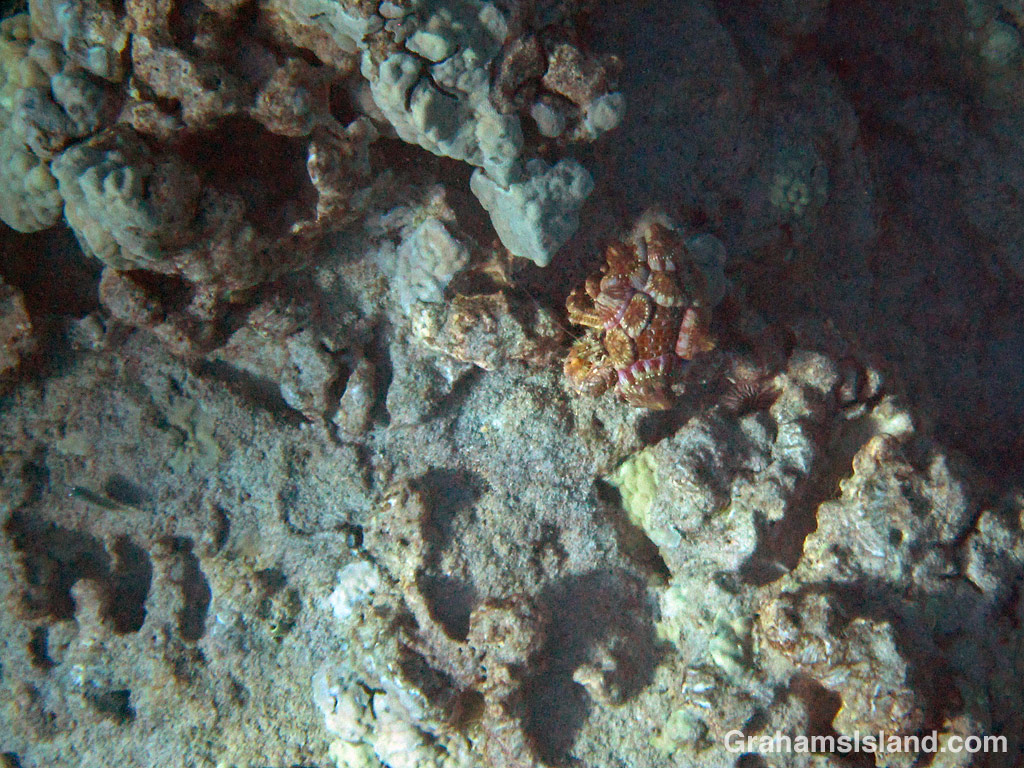
My wife spotted this crab scuttling quite rapidly along the floor of the bay where we were snorkeling. It was clearly some kind of hermit crab, but it was quite deep and this was the best photo I got.
When we got home, I looked through my copy of John P. Hoover’s Hawaii Sea Creatures and the jeweled anemone crab seemed the most likely identity. As can be seen in the photo, the shell is covered with anemones which is a feature of these crabs. Since these crabs are mostly night feeders, we were lucky to see one still active in the early morning. Possibly it had been disturbed and was headed to a new hiding place.
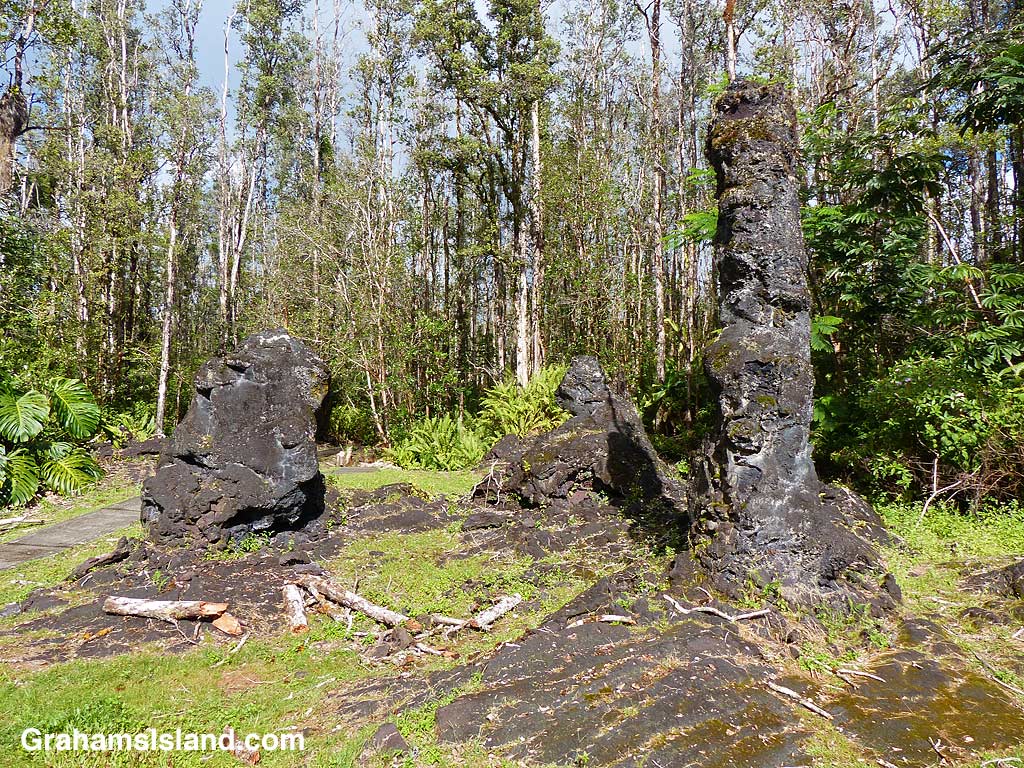
Lava Tree State Monument is in the southeast part of the island, within half a mile of the edge of last year’s flow. As the name suggests, it has some good examples of lava trees.
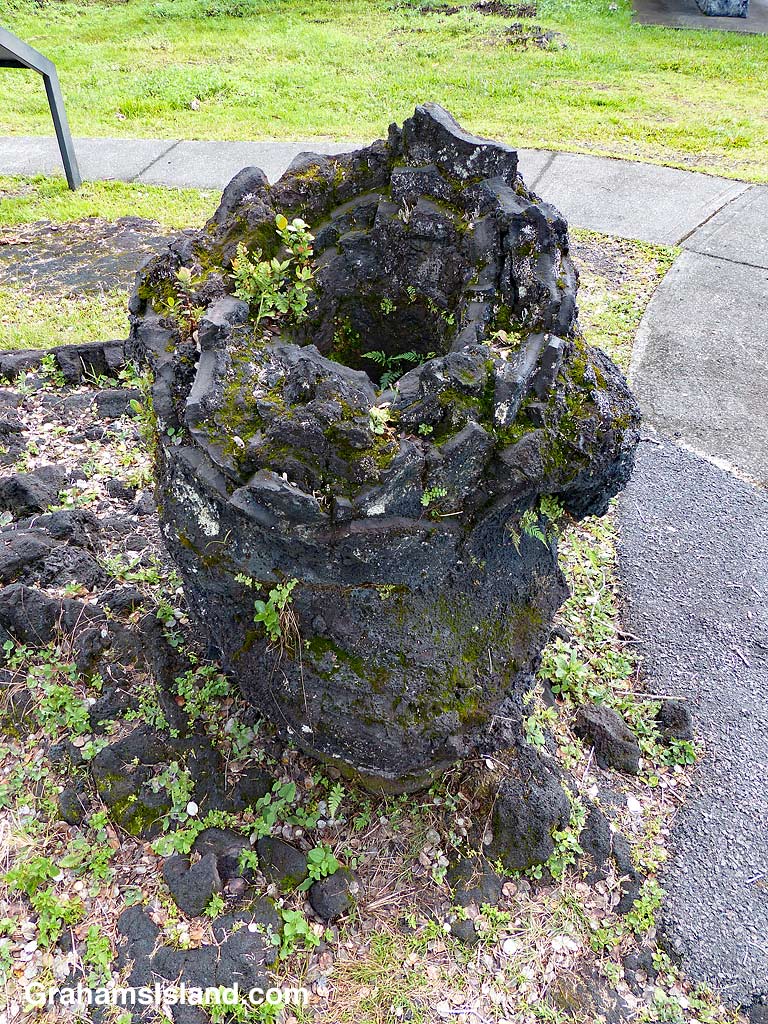
Lava trees are formed when molten lava coats a tree, burning the wood, and leaving just the cooling lava shell that surrounded it. There are two ways this can happen. One is when a flow surrounds the trees and then drains away. The other way is for falling lava to cover and burn the trees.
The lava trees in Lava Tree State Monument were formed by the first of these two methods. A lava flow in 1790, as high as 11 feet, surrounded ohia trees in this part of the island, and burned the wood away. When new fissures opened soon after, the lava in this flow drained back underground, but the lava immediately surrounding the trees had cooled enough that it was already hardening, so it remained, retaining each tree’s shape in its center.
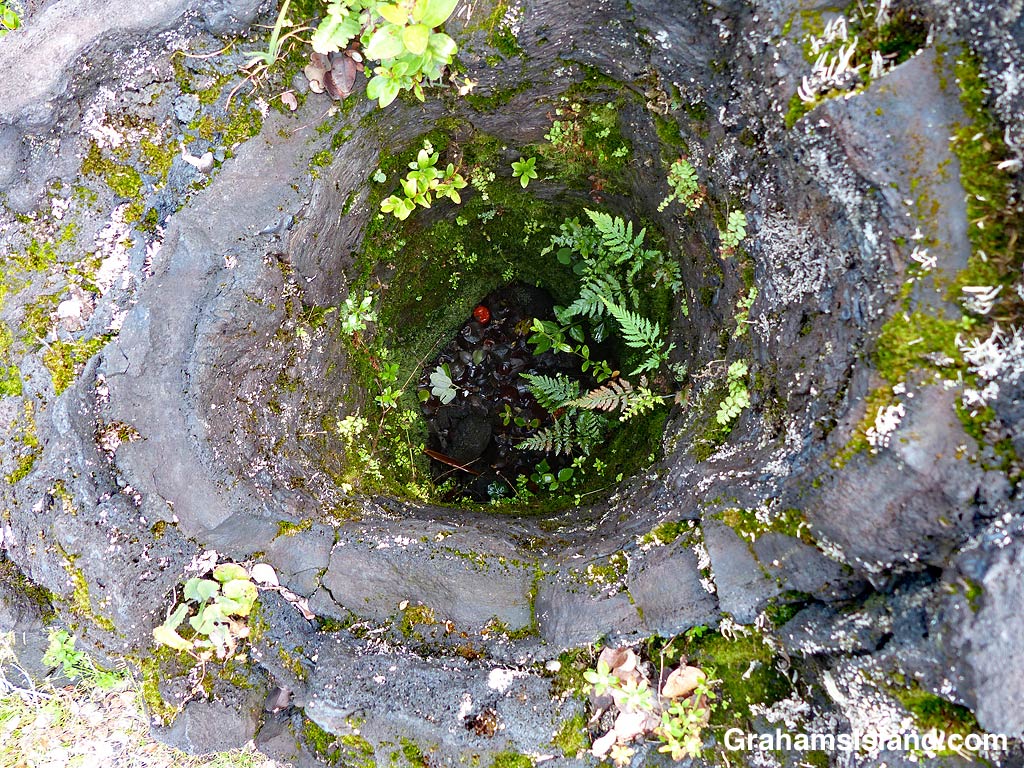
The photos show lava trees in the park, a closer view of one showing the hollow center, and a view of the hollow core where new plant life is taking hold. In some cases, this new plant life is new trees growing out of the old, hollow lava trees.
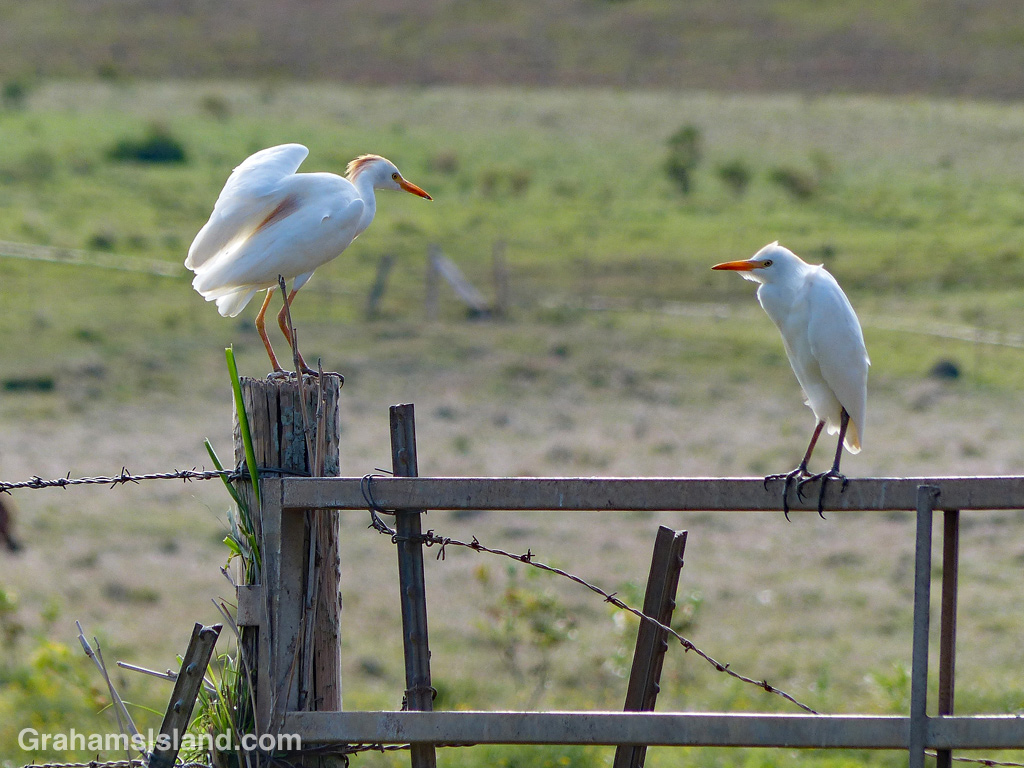
This week’s Sunday Stills challenge theme is ‘Gate.’ (See more offerings here.) I remembered these two cattle egrets, on a gate separating two cattle pastures. I like how the birds seem to be engaged, like a couple of neighbors talking over the garden fence, or in this case, on the fence.
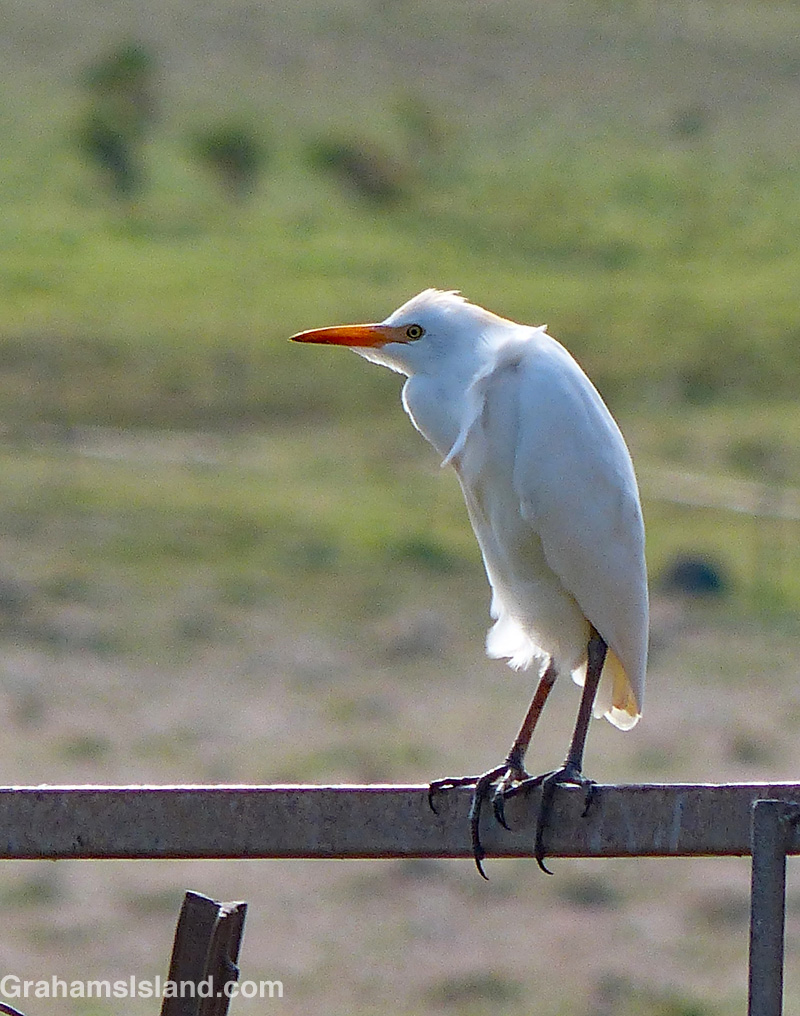
Also, I like the feet of the bird perched on the gate. Makes me feel like my feet are positively dainty!
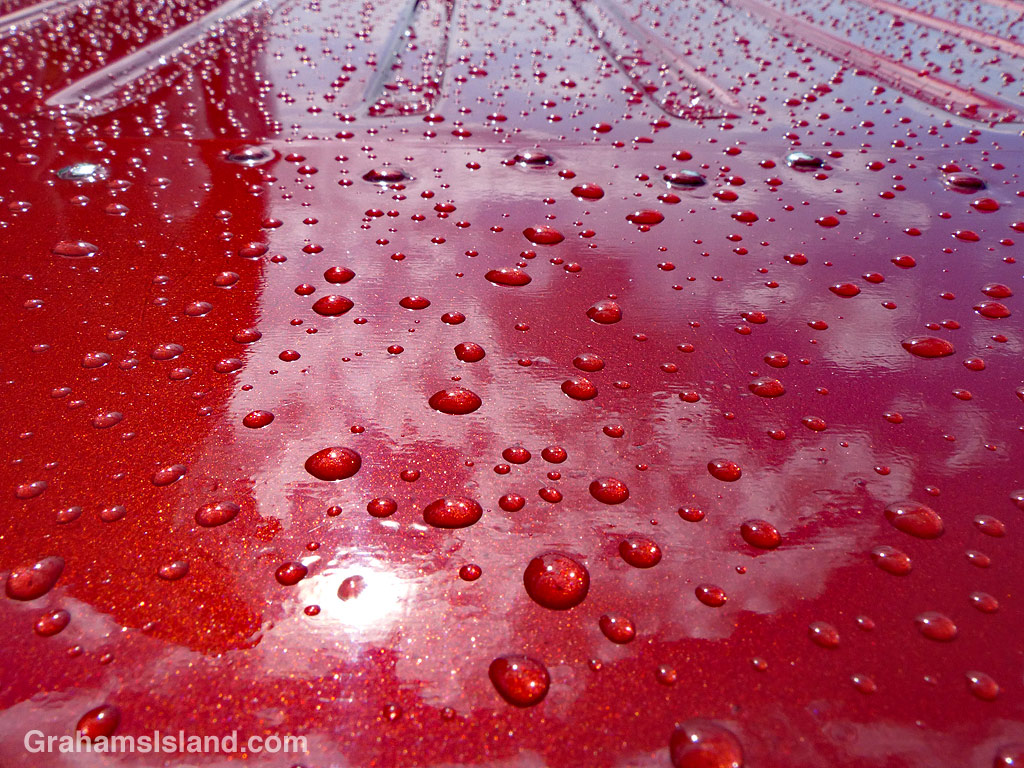
This week’s Friendly Friday challenge theme is ‘Raindrops.’ (See more responses here.) It was convenient therefore that today, just as I finished waxing some metal parts, a shower of rain passed over. The raindrops beaded up nicely on the shiny surface.



 Graham's Island