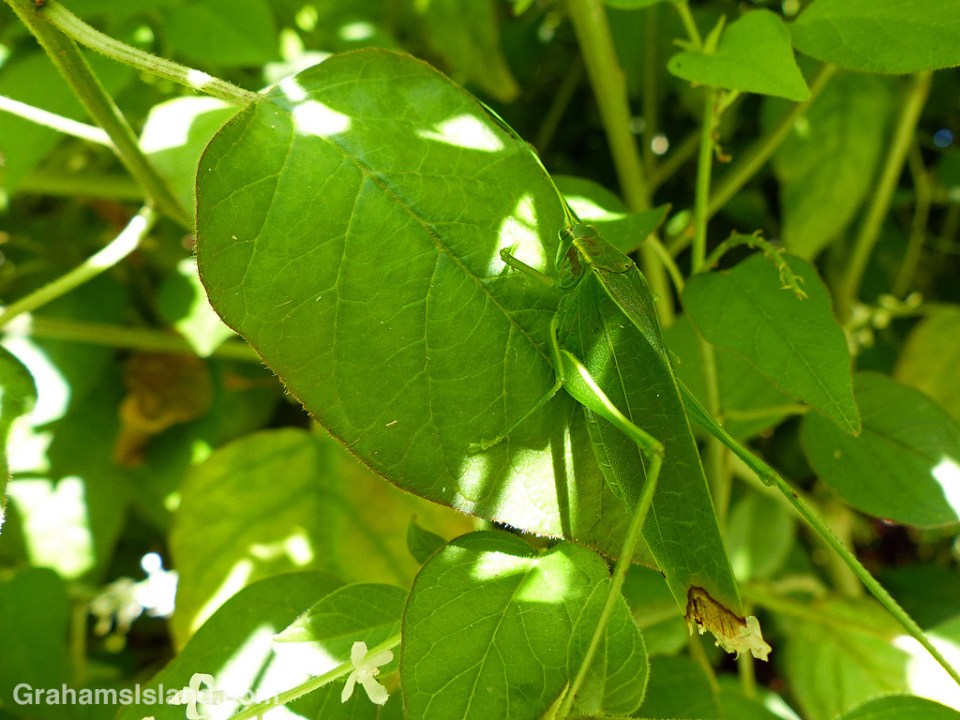
Just a straightforward ‘Spot the katydid’ photo. I was sorting some older photos and I had to look at this one more than once to figure out what was going on.

Just a straightforward ‘Spot the katydid’ photo. I was sorting some older photos and I had to look at this one more than once to figure out what was going on.

This is where they get the milk to make chocolate ripple ice cream. Fact.
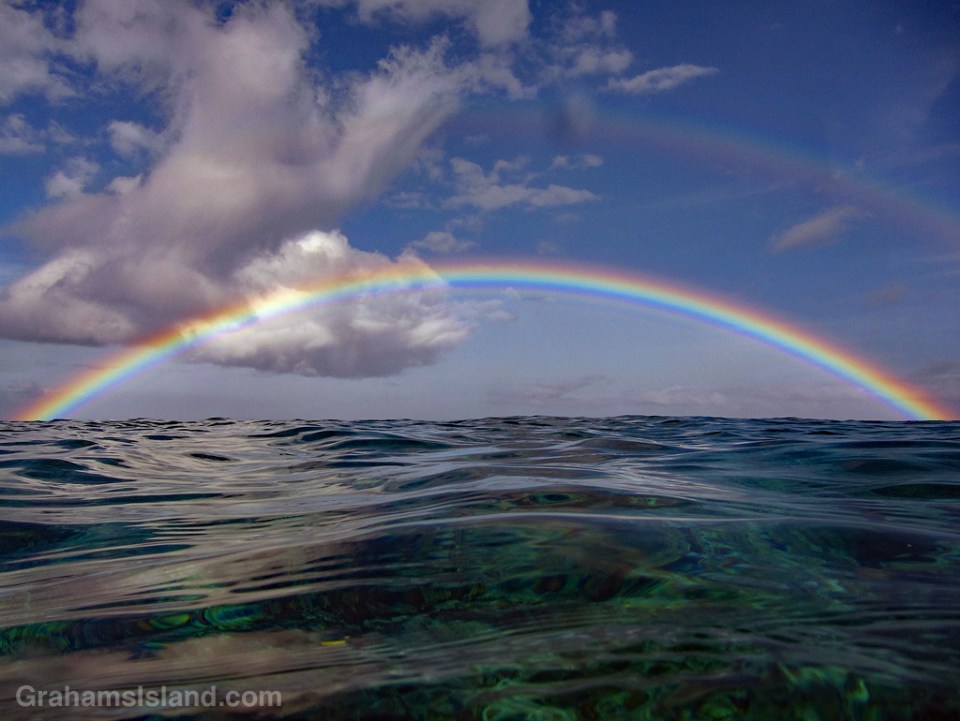
During a recent swim, I was lucky enough to see this gorgeous double rainbow. I took several photos and this one is actually a composite. In the best rainbow photo the water looked a bit flat, but in photos that gave a glimpse below the water’s surface the rainbow wasn’t as good. So I combined the best of both and it came out pretty good I think, especially given my rudimentary skills in my Photoshop Elements.
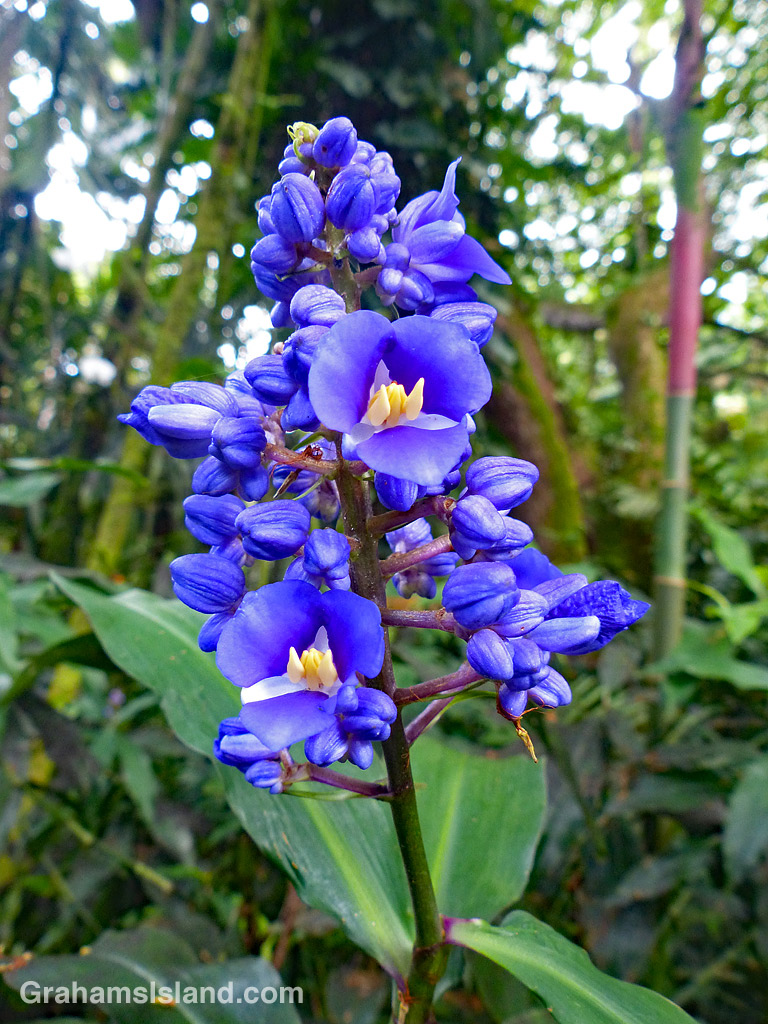
Blue ginger (Dichorisandra thyrsiflora) is not really a ginger but is in the same family as spiderworts (tradescantias). It’s grown primarily for its striking blue flowers.
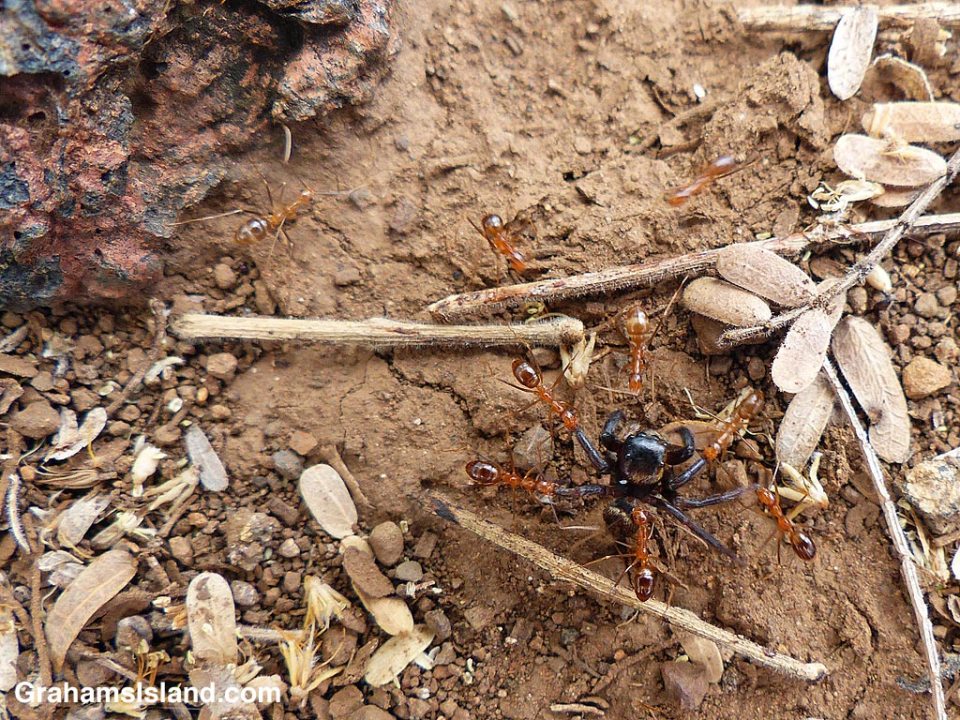
I noticed this spider moving across a dirt road in a most peculiar way. A closer look showed the reason why. This group of ants was taking it home, but not in a warm and fuzzy kind of way.
The ants were moving at a pretty good speed, which was impressive considering there were several of them involved and all pointing in different directions. After a few moments, they scuttled over the side of a rock and out of sight.
The victim looks like some kind of jumping spider.
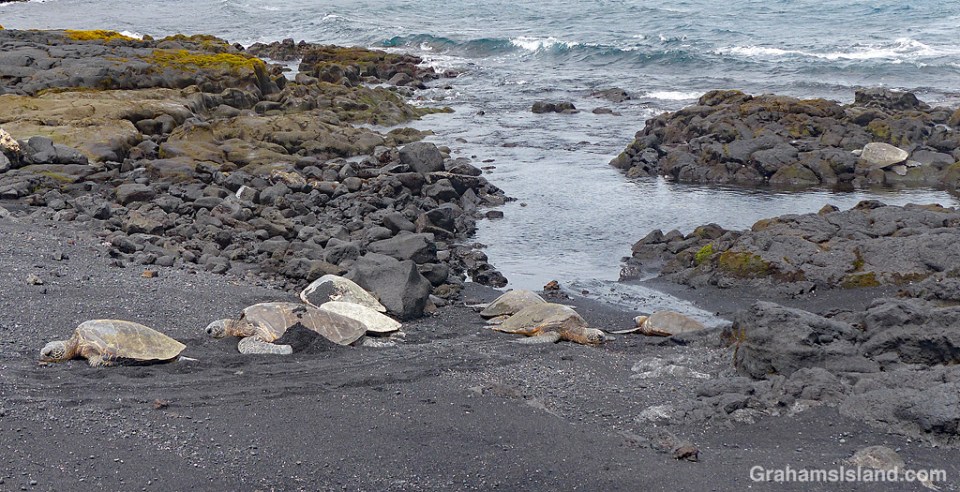
Turtles are creatures of the water. The only reason they have to venture ashore is to lay eggs, but in Hawaii, green turtles like to find a beach and spend a lazy day basking in the sunshine. This helps them conserve energy and keeps them safe from sharks.
On the Big Island there are a number of places where turtles are frequently seen on shore. One of them is Punalu’u Beach Park, on the Kau coast, which has a lovely black sand beach ideal for getting a bit of rest. Well, it would be ideal except for that most annoying and obtuse of creatures, the human.
There are apparently large numbers of people who don’t know how to read the numerous signs telling them to keep their distance from the turtles. There are a fair number of people who think the world would be a better place if only there existed a photo of them sitting beside or on top of a turtle.
These days, park staff or volunteers tape off the area where the turtles are resting. This seems to help. The bottom photo was taken from behind the tape with a moderate telephoto lens so it’s not like anyone’s being deprived of getting a good view.
Posted in response to this week’s Sunday Stills challenge on the theme of ‘Lazy Days.’ See more responses here.

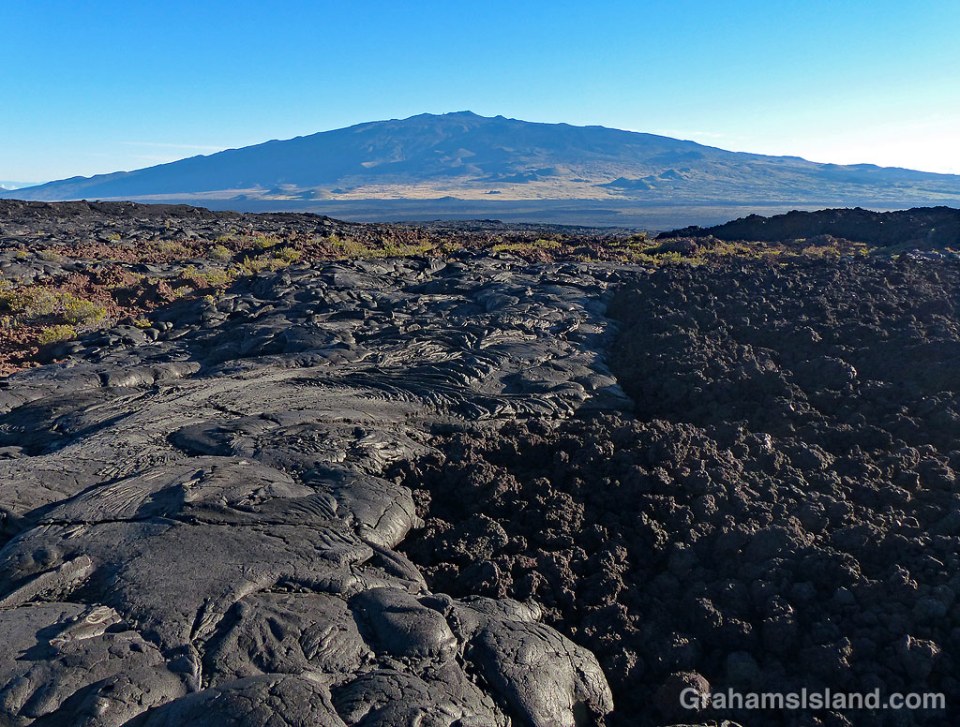
This photo shows the two main types of lava found on the Big Island. On the left is pahoehoe lava and to the right, a’a lava. They’re noticeably different. Pahoehoe lava is typically rounded and smoother, and the height of the flow is quite modest. A’a flows are characterized by a rough, clinker surface and the flow height is greater. Both types of lava can be produced by the same eruption and even in the same flow, depending on conditions.
Pahoehoe flows occur when lava is hot and fluid. Typically, pahoehoe flows result from an eruption that outputs lava at a lower rate, has a lower flow rate and a slower moving flow front. The slower movement of the flow allows a skin to form on the surface and this insulates the lava within. The flow is actually made up of a large number of ‘toes.’ Each toe flows for a short time, a matter of minutes. When it stops, the lava inside causes the toe to expand until the skin cracks and releases a new toe.
A’a flows are more viscous, but with a higher flow rate and faster flow front. The lava in the center of the flow is very dense with a layer of rough clinker on top. As the flow advances, the front tumbles over itself breaking into more rough pieces.
It’s easy to see from the photo that walking is much easier over pahoehoe lava than a’a lava. That’s when it’s cooled of course. When it’s red hot and flowing, it’s best not to get too close.
This flow was on the north side of Mauna Loa, looking across to Mauna Kea.
For a more thorough description of the difference between a’a and pahoehoe lava, go to http://volcano.oregonstate.edu/book/export/html/131
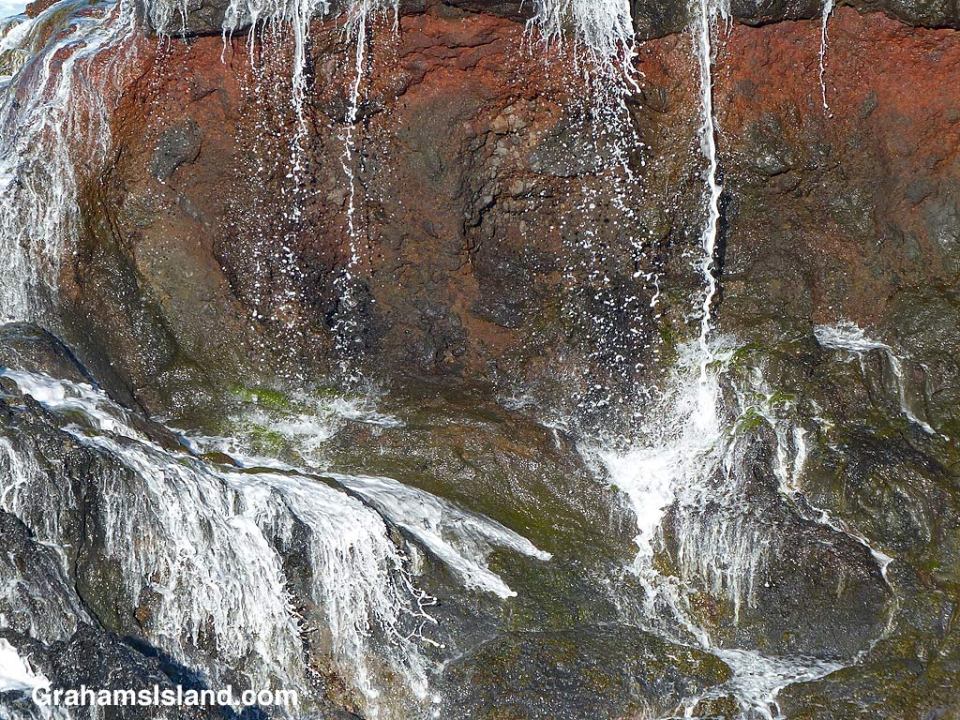
A breaking wave cascades down a colorful rock face on the coast.

