Tag Archives: Beaches

Loretta Lynn house at Kiholo

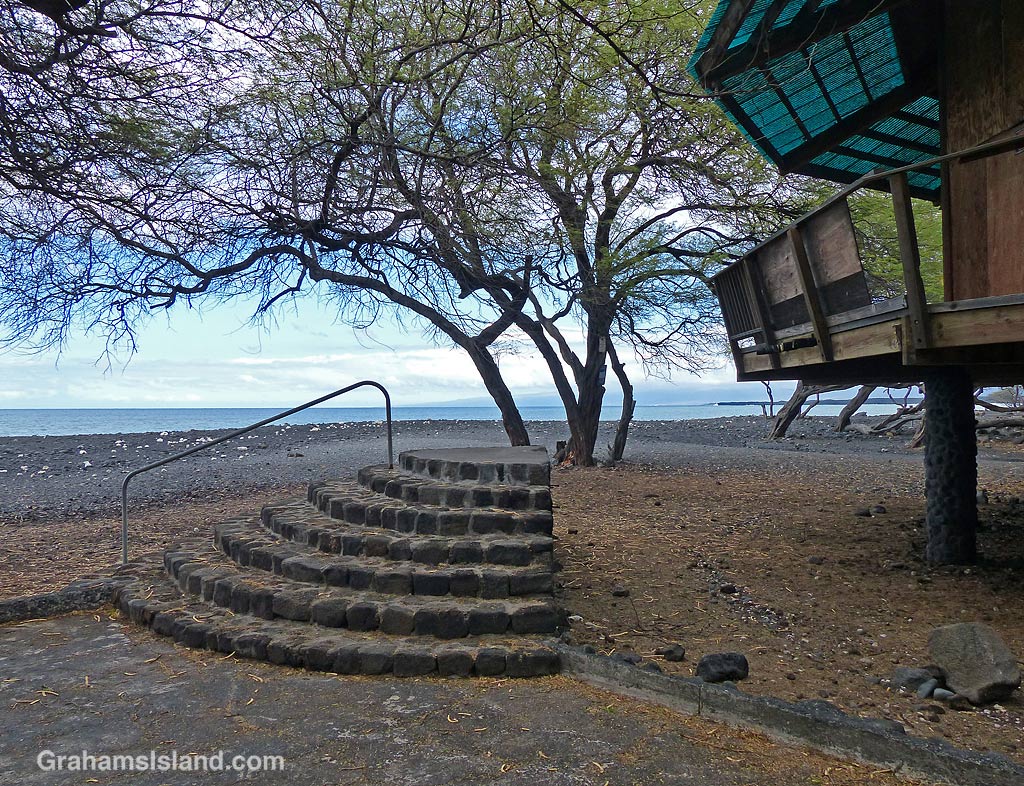
A couple of weeks ago, in her Squares challenge, Becky posted about a set of semi-circular steps here. That same day, I went for a walk down at Kiholo and took these photos of a similar set of steps there. These steps, though, don’t go anywhere, at least not right now.

The steps used to connect to the house, which was built by (or more accurately, for) country singer, Loretta Lynn. But the house hasn’t been used in many years. In 1999, a landowner in the area bought it, and he subsequently traded it to the state for some land behind his property, where he wanted to build a caretaker’s house. He didn’t get as much land as he wanted because the state considered the house, not just worthless, but also a liability, because it had no water, electricity, or sewer connections. Since then, the house has sat empty.

More recently, Hui Aloha Kīholo, a non-profit organization with the goal of protecting and perpetuating the natural and cultural resources at Kīholo Bay, has reached agreement with the state to take over the house for use as its headquarters. The group hoped to raise the funds to start work on restoring the house in 2020, but we all know what happened to everyone’s plans last year. Perhaps, in the none too distant future, those steps will be reunited with the house, and it will come to life again. It’s certainly a wonderful location.

For more information about Hui Aloha Kīholo, go to https://www.huialohakiholo.org/.
For an article about the organization and its plans for the house, go to https://www.konacoffeeandtea.com/blog/hui-aloha-kiholo-giving-tuesday.

A couple of goats at the beach

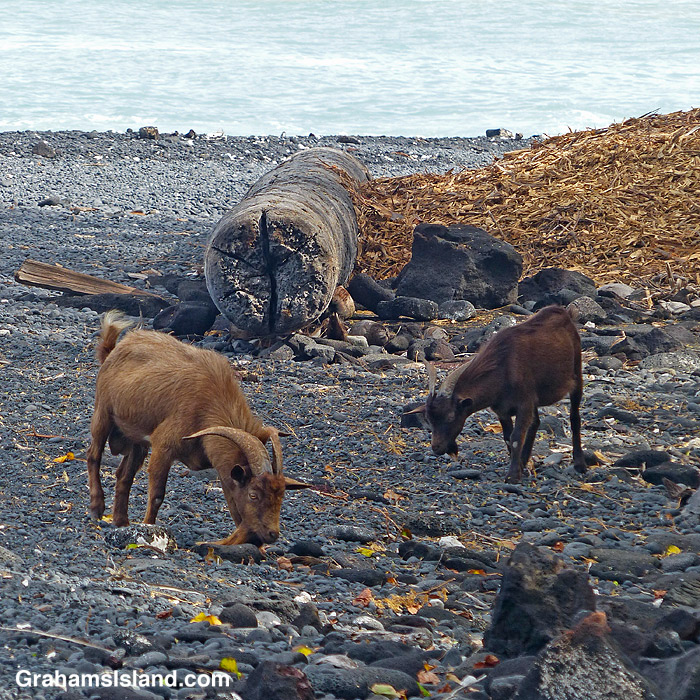
I saw these two goats foraging along the beach at Kiholo Bay. There’s slim pickings to be had, but there are no shortage of goats in that area so they must be finding something somewhere.

Posted in response to Becky’s January Squares challenge theme of ‘Up.’ See more responses here.

Uplifting moments from 2020

This week’s Sunday Stills challenge theme is ‘Your 2020 Retrospective.’ See more responses here. Also posted in response to Becky’s January Squares challenge theme of ‘Up.’ See more responses here.

In this retrospective I’ve focused on events and photos that were uplifting for me during the difficult year that was. Most of these photos haven’t run before, but were taken at the same time as those in posts that ran in 2020. Links to the original posts are at the end of the captions.

Hapuna Beach

This week’s Sunday Stills challenge theme is ‘Winter Wonderland.’ See more responses here.

We do get snow here on the Big Island, on the summits of Mauna Kea and Mauna Loa, but there’s none up there right now. However, for those knee deep in snow, shrouded in freezing fog, or sliding on icy sidewalks, I thought these photos might seem like something of a winter wonderland.

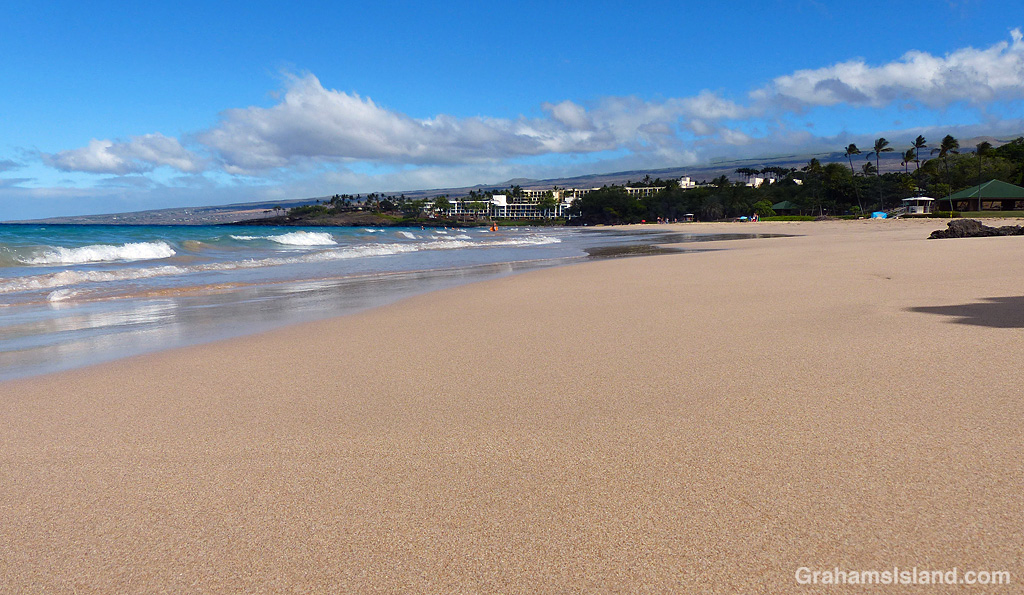
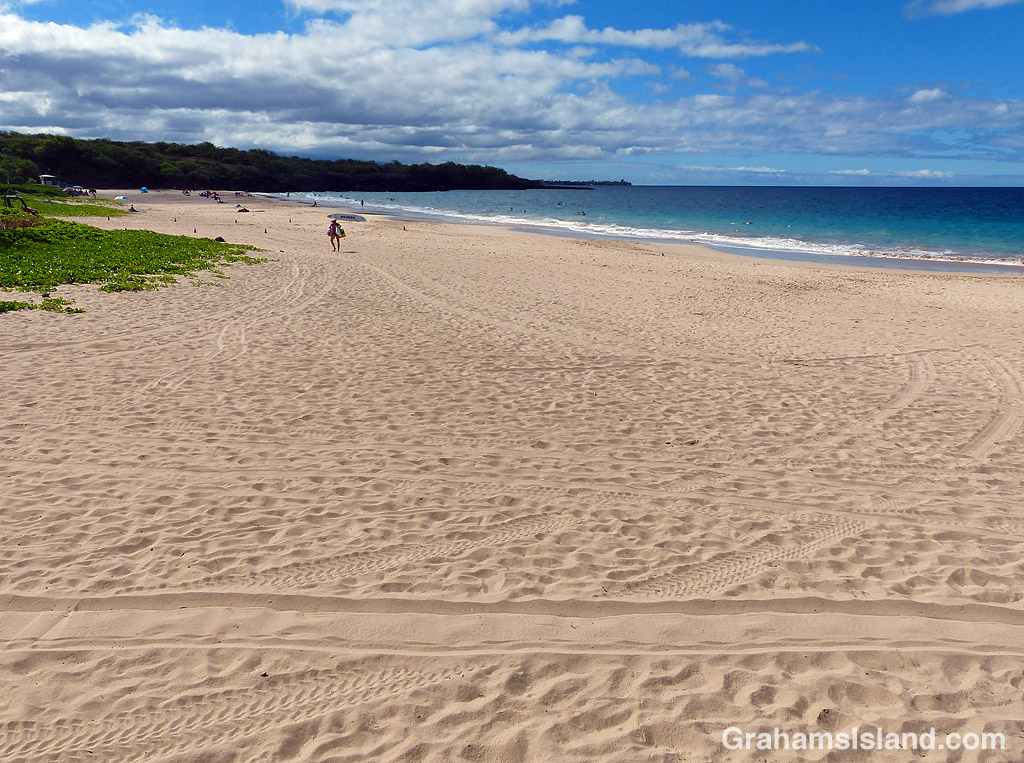
Hapuna beach (officially Hapuna Beach State Recreation Area) regularly features on lists of the world’s best beaches. It’s a long stretch of golden sand across the head of a wide bay with fairly protected waters. Swimming is good, but when waves do roll in, surfers take over.

The top two photos show the view from the south end of the beach. In the second photo, the line of greenery jutting into the beach represents the edge of the State Recreation Area. North of there is Hapuna Resort, which is private, but the beach is still open to the public. The bottom photo shows the view from the north, looking south. The tracks in the sand are from vehicles used in beach maintenance or by the lifeguards who patrol the beach.

Water inlet

Behind the beach at Anaeho’omalu Bay are two fishponds, Kahapapa and Ku’uali’i. These ponds are typical of the kind that form behind a beach, which protects them from the ocean waves. The ponds are connected to the ocean by this channel, which allows was to come and go with the tides. A sluice gate was used to prevent fish using the channel as an escape route.

Where natural ponds weren’t available, they were created by enclosing areas with rock walls. I featured one such fishpond here.

In Hawaiian history, fishponds were very important. In such an isolated community it was important to have reliable food supplies. The ponds provided this, supplementing fish caught in the ocean. Many ponds have disappeared due to development, volcanic activity, tsunami, and the like. But the ones that survive are a bit of living history, used now more for education than for food.

For more information about Hawaiian fishponds go here.

ʻAnaehoʻomalu Bay beach

This week’s Sunday Stills challenge theme is ‘Beautiful Beaches.’ See more offerings here.

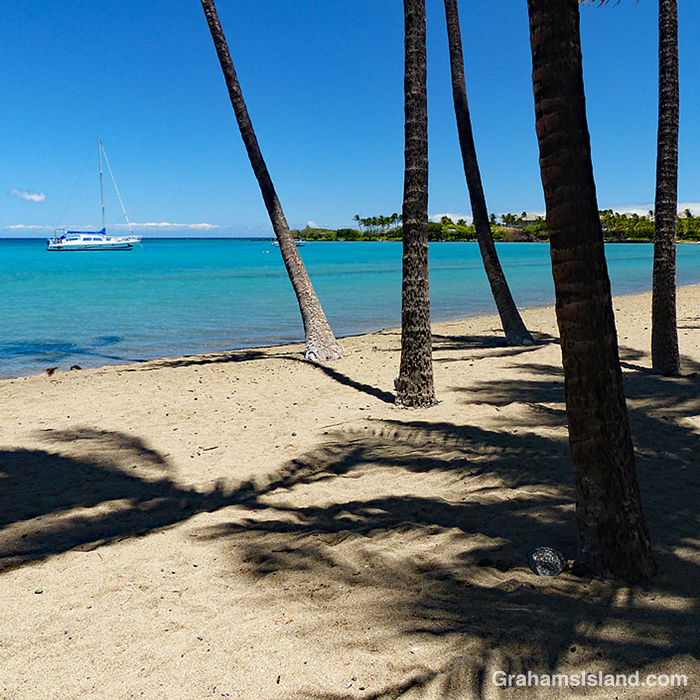
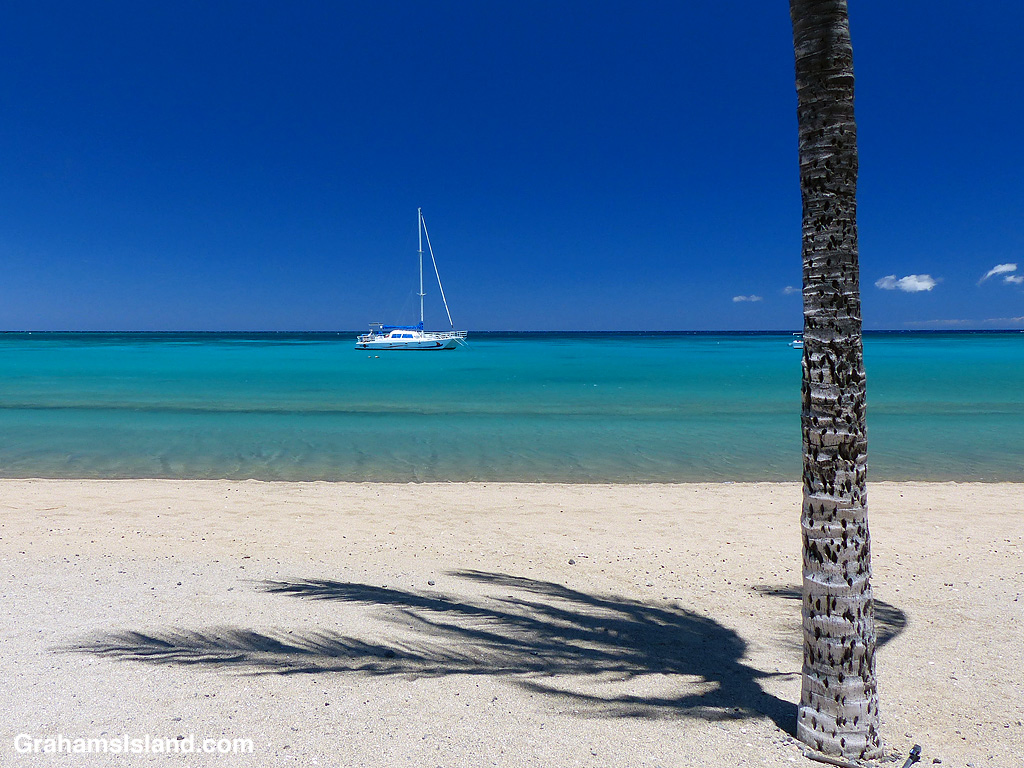
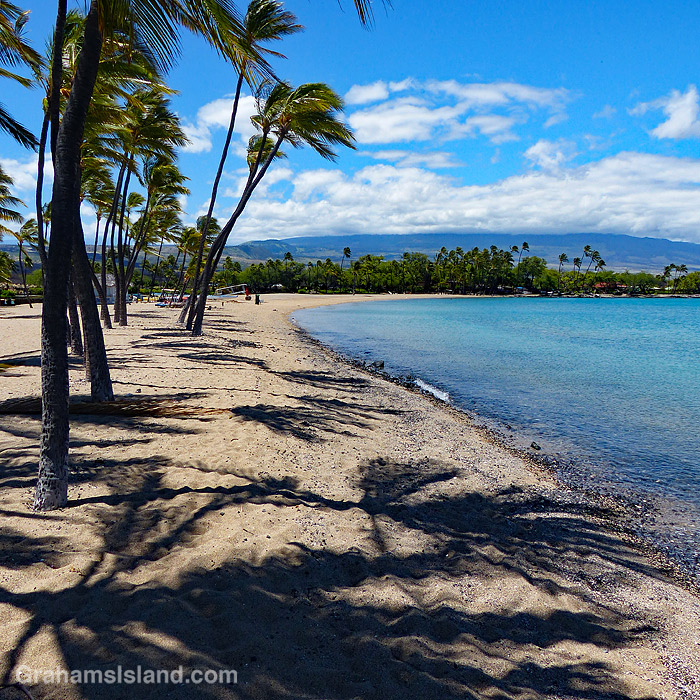
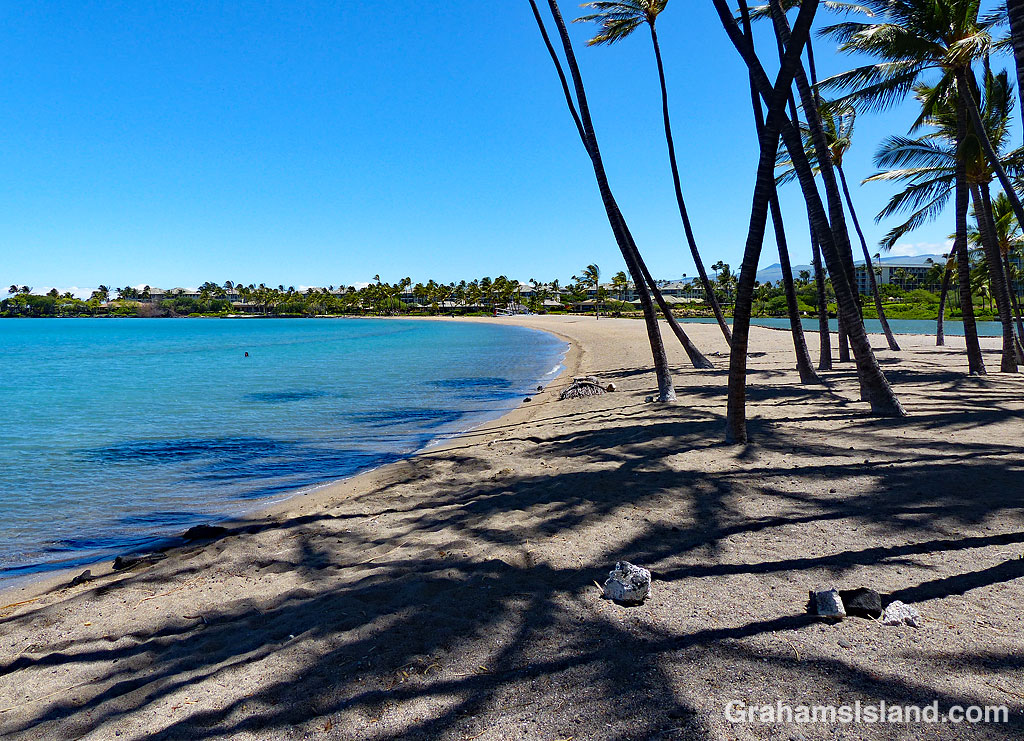
ʻAnaehoʻomalu Bay, at Waikoloa Resort, is often referred to as A Bay for reasons that aren’t hard to figure out. In normal times this is a very popular spot. The beach is a long curve of pale sand with palms at either end. It’s popular with sunbathers, swimmers and snorkelers. There’s also a restaurant and bar at one end of the beach, facilities nearby, and shops not far away. And Ocean Sports operates various cruises out of the bay on a catamaran or glass-bottomed boat.

There’s a hike I like to do, which goes south from A Bay, and on previous visits I’ve skirted the crowds which are usually found there. However, these are not normal times. On my last visit I headed north. There was one person in the water, two on the beach. The ocean lapped gently against the shore. An offshore breeze rustled the palm fronds. Usually when I hike places like this, I’m an aberration with shoes and a fanny pack, marching through swathes of bikinis and board shorts and roasting flesh. On this occasion, I was an aberration just by being there.

Search helicopter over Mau’umae Beach

I saw this Hawaii County Fire Department Search and Rescue helicopter flying over Mau’umae Beach, just south of Kawaihae. I think it was just on a training exercise, but we have had a run of missing fishermen and free divers so it might have been associated with one of those searches.

The body of one fisherman was located submerged along the coast, but no trace of the others has been found yet, to my knowledge. The standard practice on the Big Island is to search for three days. If nothing is found by the end of that time, then they call it off.

There are strong currents around the island and if a swimmer or fisherman is injured in the water, it’s easy for them to be swept out to sea, where the chances of finding them diminish rapidly. Sad as it is when a body is recovered, it’s almost harder when nothing is found and there is no sense of closure for families and friends.