Tag Archives: Friendly Friday

A walk through downtown Honolulu

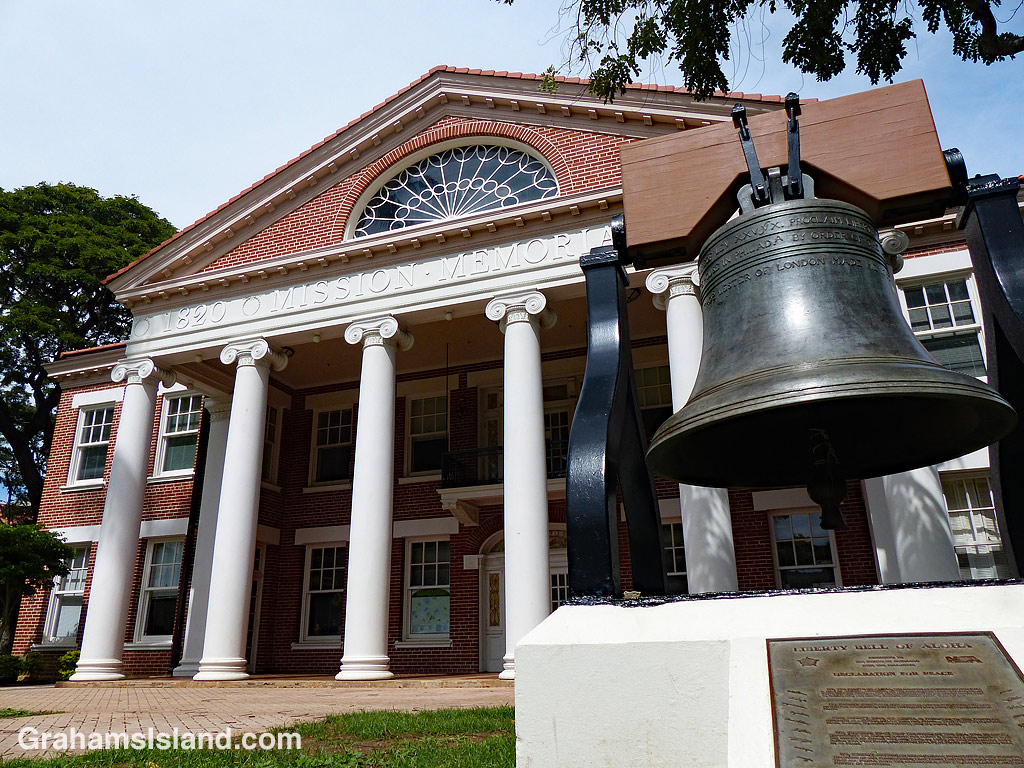
The Mission Memorial Building was built to commemorate the 100th anniversary of Protestant missionaries in Hawaii, something of a mixed blessing for the locals.
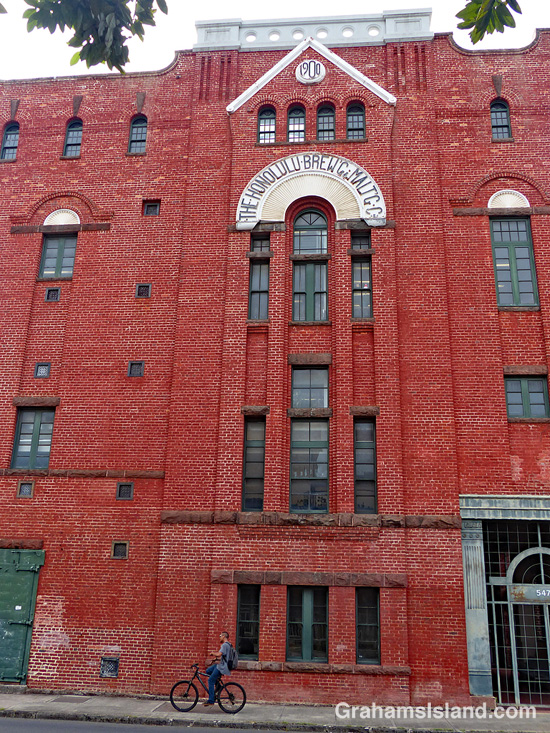
The lovely red brick Hawaiian Brewing Company building.

This week’s Friendly Friday challenge theme is ‘Photo Walk.’ (See more responses here.) I thought of a few options, but my visit to Honolulu last year seemed to fit the bill. After I’d conducted my business there, I spent the rest of my time on a photo walk through downtown.

I’ve posted some photos from this walk before. To see them just scroll to the bottom of the page and click on ‘Honolulu’ in the tags.

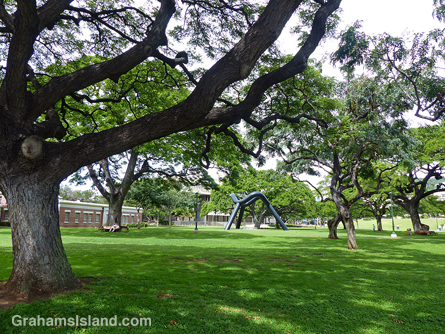
The Sky Gate sculpture was built to celebrate the celestial event known as “Lahaina Noon,” which is when the sun is directly overhead and vertical objects cast no shadow. This occurs twice a year in Hawaii, usually in May and July. In the case of this sculpture, the wavy top casts a perfectly round shadow on the ground.
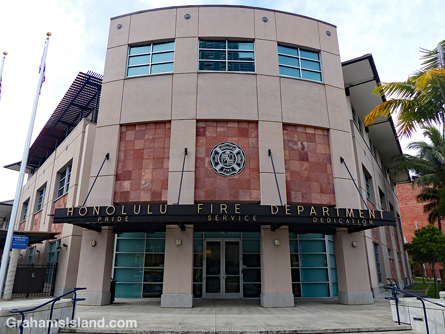
The art deco entrance to the Honolulu Fire Department headquarters complex.
These water fountains at the Hawaii State Capitol building are shaped like hibiscus blooms, which are the state flower.
Two contrasting tower buildings with a plane flying overhead.
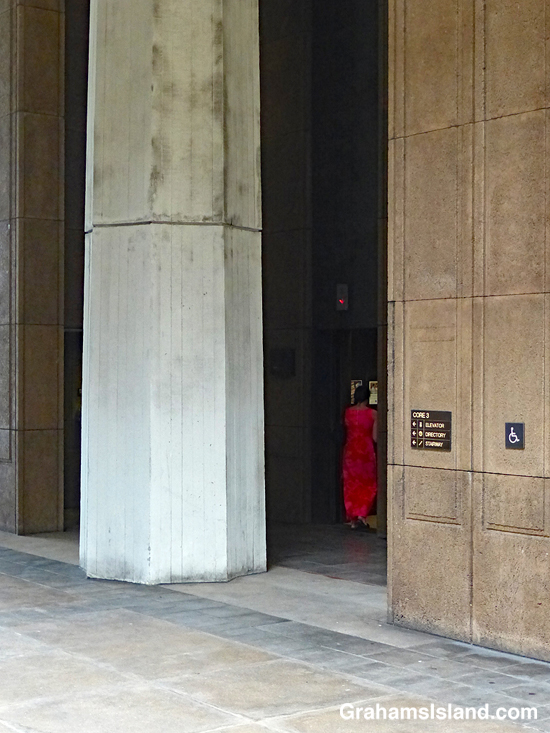
A woman in red enters an elevator at the Hawaii State Capitol building.
Little Bo Peep has sheered her sheep apparently.
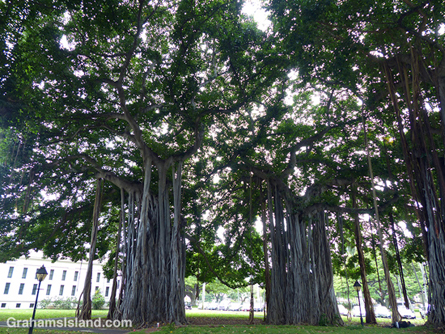
Huge banyan trees in the grounds of ‘Iolani Palace.
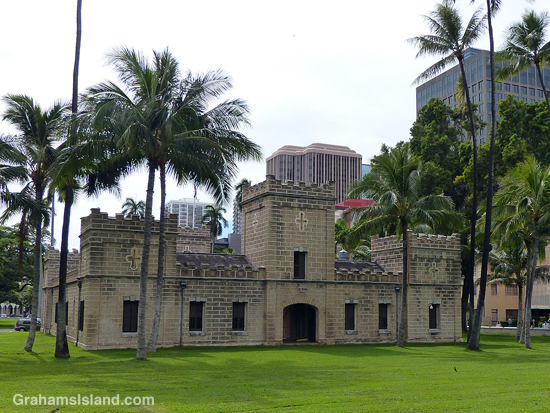
‘Iolani Barracks housed the Royal Household Guard.
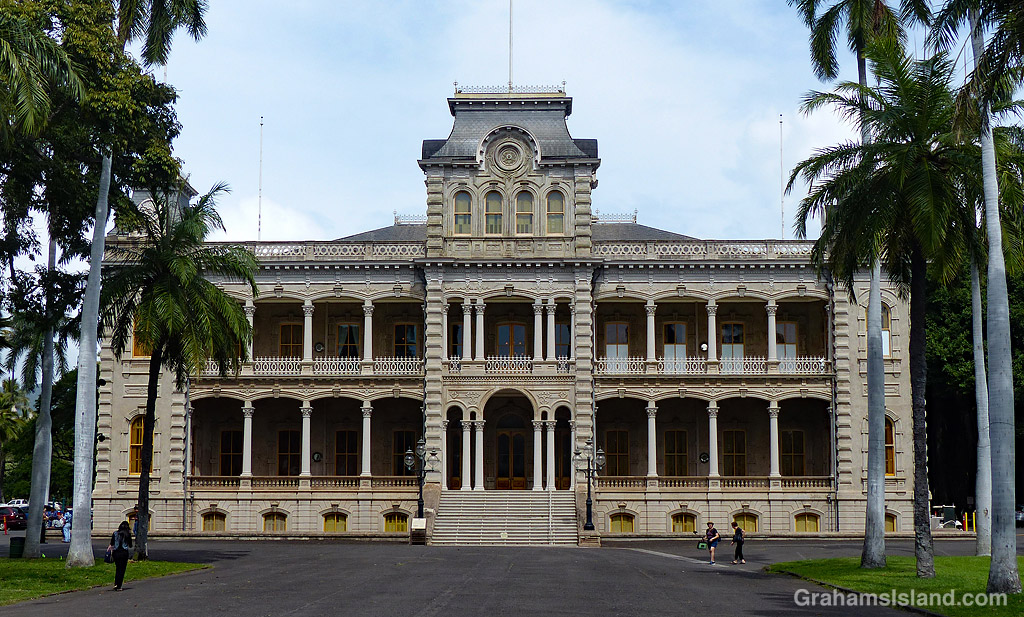
‘Iolani Palace was the home of Hawaiian royalty until they were overthrown by American businessmen backed by the U.S. military.
This was something of a mixed blessing for the locals.

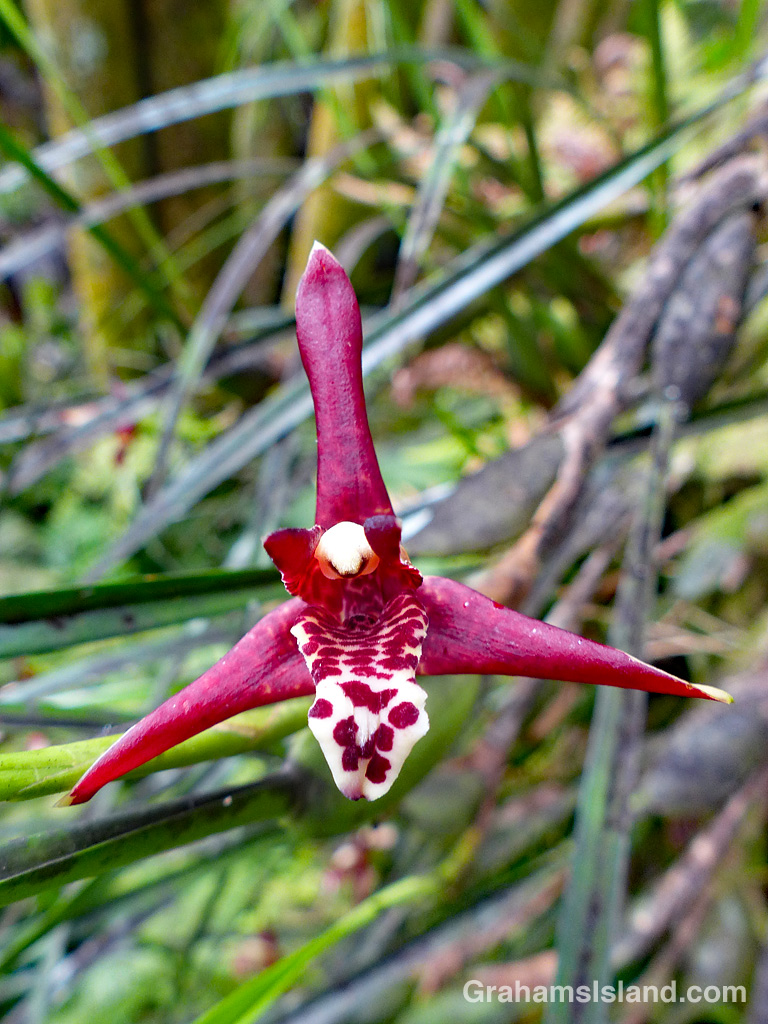
Coconut orchid

A coconut orchid at Hawaii Tropical Botanical Garden

Coconut orchids (Maxillaria tenuifolia) are originally from Central America. They’re noteworthy for their flowers’ blood red color and a coconut scent. I admit, I didn’t detect much scent, but my sense of smell is not exactly acute. The flowers bloom in spring for a week or more.

I saw this orchid at Hawaii Tropical Botanical Garden during a visit with Terri, from Second Wind Leisure Perspectives, who was visiting the Big Island for a week. Terri hosts the Sunday Stills challenge and her theme this week, coincidentally, is ‘Tropical.’ See more responses here.

We had a good stroll around the garden taking the usual slew of photos. Though I’m a regular visitor to the garden I always see new things, and this coconut orchid was one. For more information about Hawaii Tropical Botanical Garden, go to htbg.com.

Also posted in response to this week’s Friendly Friday challenge on the theme of ‘Feelings of Spring.’ See more responses here.

When worlds collide

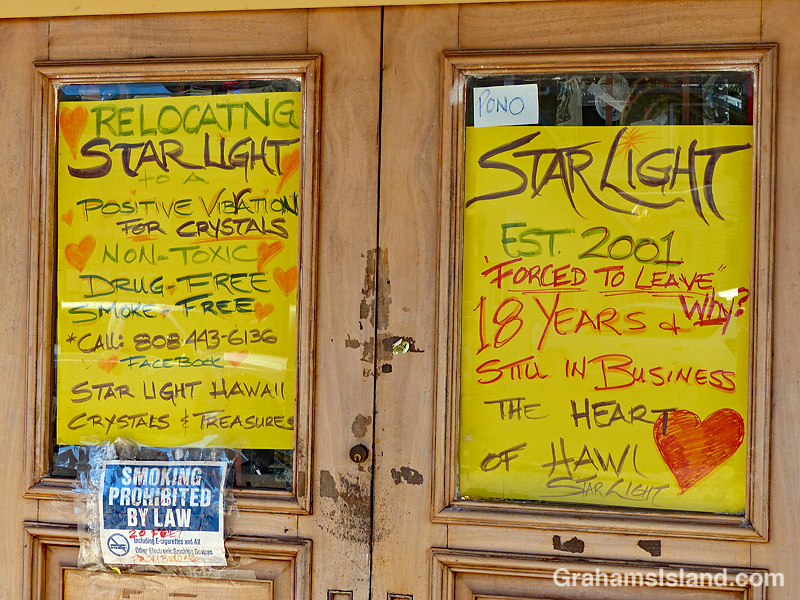
Two stores in Hawi in a dispute.
A store in Hawi in a dispute with its neighbor

These two stores have been neighbors for a while in downtown Hawi. Star Light features ‘Crystals & Treasures’ and ‘Spiritual Guidance Readings & Sessions.’

Hawaii Cigar & Ukelele is a new combination at this spot, but the cigar part of it has been there since I’ve lived here and probably for much longer. In the last few months the store has been promoting its CBD (Cannabidiol) products and it might be this that has fractured the fraught relationship between these neighbors.

Hopefully, the pending relocation will leave all parties happy and the spirit of aloha will return to the downtown area.

Posted in response to this week’s Friendly Friday challenge on the theme of ‘Story.’ See more responses here.

Highway Department mistakes

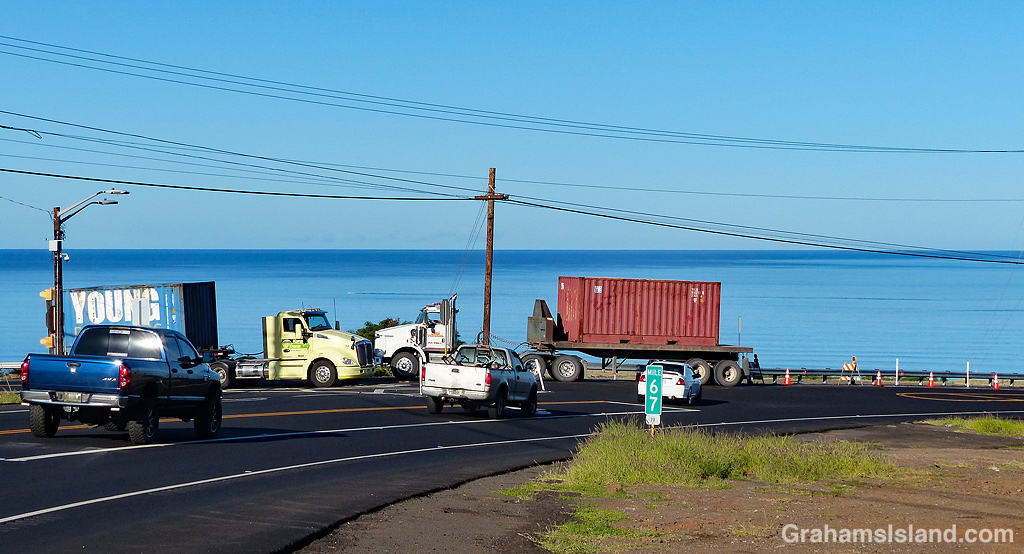
This is the highway intersection about a mile east of Kawaihae. It’s the junction of three roads, Kawaihae Road coming down from Waimea, Akoni Pule Highway from Hawi and North Kohala, and Queen Kaʻahumanu Highway (better known as ‘Queen K’) from Kailua Kona.

It’s always been a problematic junction because Kawaihae Road and Queen K are part of the main loop road around the island, but the right of way at this junction was the Kawaihae Road to North Kohala road. Traffic would get backed up on Queen K, particularly in the afternoon, and accidents were common. Compounding the problem was that the road from Kawaihae carried a lot of trucks coming to or from the port there.

So earlier this year a revision of the intersection was started. A right turn lane was added to Queen K, for traffic going up the hill to Waimea, and a right turn lane was added Akoni Pule Highway for people headed south. (There was already a left turn lane on Kawaihae Road for people going south.)

Don’t worry if this makes no sense, because it makes no sense. What was being set up seemed doomed to failure.

The problem was that the new right turn lane from Kawaihae onto Queen K was fitted with a yield sign. This meant traffic from Waimea, turning left onto Queen K had to give way to traffic heading up the hill, but had the right of way over traffic turning south.

The first accident happened before the intersection was finished. Someone failed to make this right turn and plowed into the guard rail opposite. Shortly after this, two cars collided in the middle of the junction. There were more near misses and accidents.

The yield sign was changed to a stop sign. This helped, but did nothing to stop the confusion of drivers coming down from Waimea. White poles were added to the lane divider for the right turn lane from Kawaihae. Bumps were placed in the other lane for traffic going up the hill. The accidents continued, as did the near misses.

These photos show that right turn lane coned off, as the powers that be have decided to take out the right turn lane. So what we have managed here is several months of work and adjustments has caused a bunch of accidents and near misses and now a good portion of that work is going to be undone and returned to its original unsatisfactory configuration. Your tax dollars at work!

It’s not been a great period for the highway department. A major project saw the main road north of Kailua Kona to the airport widened from two to four lanes. This was delayed for several months because plans given to the road construction company failed to include right turn lanes into Kaloko-Honokohau National Historical Park. The problem here was that it’s national historical park because there are a lot of Hawaiian artifacts in the area, so a new archeological study had to be carried out.

And my personal favorite was the construction of a new highway south from Kailua Kona, intended to relieve traffic congestion in that area. The new highway connected to a previously confusing and dangerous ‘Y’ layout, that became a four-way intersection complete with traffic lights. It was opened with much fanfare and the only issue was that people, tourists and locals alike, had no clue where they were supposed go because there was no signage showing which road went where. Yes, that’s an exaggeration. There was one sign, left over from the previous configuration of the intersection, that now directed people in the wrong direction.

And the moral of this story is that, if you visit the Big Island, please drive with caution.

Posted in response to this week’s Friendly Friday challenge on the theme of ‘Mistakes.’ See more responses here.


Humpback whale tail slaps

Humpback tail slap

Humpback whale tail slapThis week’s Friendly Friday challenge theme is ‘Climate Change.’ (See more responses here.) Living on an island in the middle of the Pacific Ocean makes climate change a relevant topic. Our weather is affected, our wildlife is impacted, our food supplies could be disrupted. But I’ve chosen to picture something obvious and current – humpback whales.

I posted (here) about the decline in the number of humpbacks coming to Hawaii to breed and calve, an estimated drop of 50- to 80-percent over the last four years. I expect that decline to extend to this year’s numbers.

I’ve lived here for seven whale seasons and the drop in numbers from the first couple of years to now is visible and obvious. January through March are supposed to be the height of whale season, but the number of whales here is dropping. I spend a lot of time in the island’s prime whale viewing area and already they are few and far between.

Each year, NOAA conducts a whale count on the last Saturday of January, February, and March. Last year, at the count site I attended, we saw no whales in March – none. This was unprecedented. I wouldn’t be surprised if this month’s count repeats that result and I certainly don’t expect them to see more than two or three whales.

A conference in Honolulu last fall attributed the drop in the number of whales visiting Hawaii to warmer waters in Alaska affecting the whales’ food supply. Those waters are warming because of climate change. So what will happen? Well, my belief is that people make money off activities that cause climate change and the best/only way to change that is to make those activities less profitable or to make it more profitable to be engaged in activities that combat climate change. An alternative is to have people become less geared to making obscene amounts of money, but that, I think, is wishful thinking indeed.

In these photos, a humpback whale slaps its tail, one of several common humpback activities that are monitored during the NOAA whale counts.

Humpback tail slaps

First Big Island visit

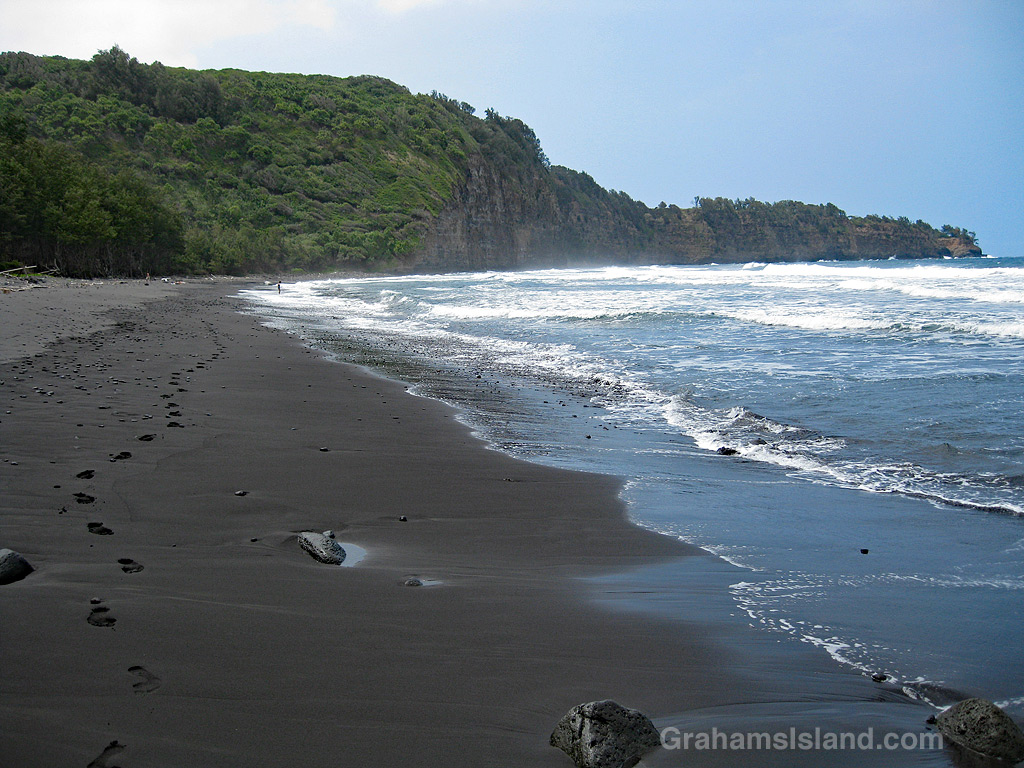
Pololu beach

Turtle at PunuluuTropical foliageLava flowingThis week’s Friendly Friday challenge theme is ‘Turning point.’ (See more responses here.) Since this is a photo blog about the Big Island it seems appropriate to post some photos from my first visit here in 2010, a visit which was the catalyst for the move to the island. There was no ‘ah ha’ moment, but these photos give a general idea of some of the things that appealed.

The top photo is Pololu beach on the North Kohala coast. Second photo is a Hawaiian green turtle resting on the black sand beach at Punalu’u County Beach Park. Third photo is tropical foliage next to a small cascading stream. Fourth photo shows some small lava breakouts in the flow that was active at that time. Conveniently, that activity was about 100 yards from the parking area and only 10 feet or so beyond where I was standing. The bottom photo is a view of Two Step, a popular snorkeling spot, from Pu’uhonua o Hōnaunau National Historical Park.

Two Step from Place of Refuge

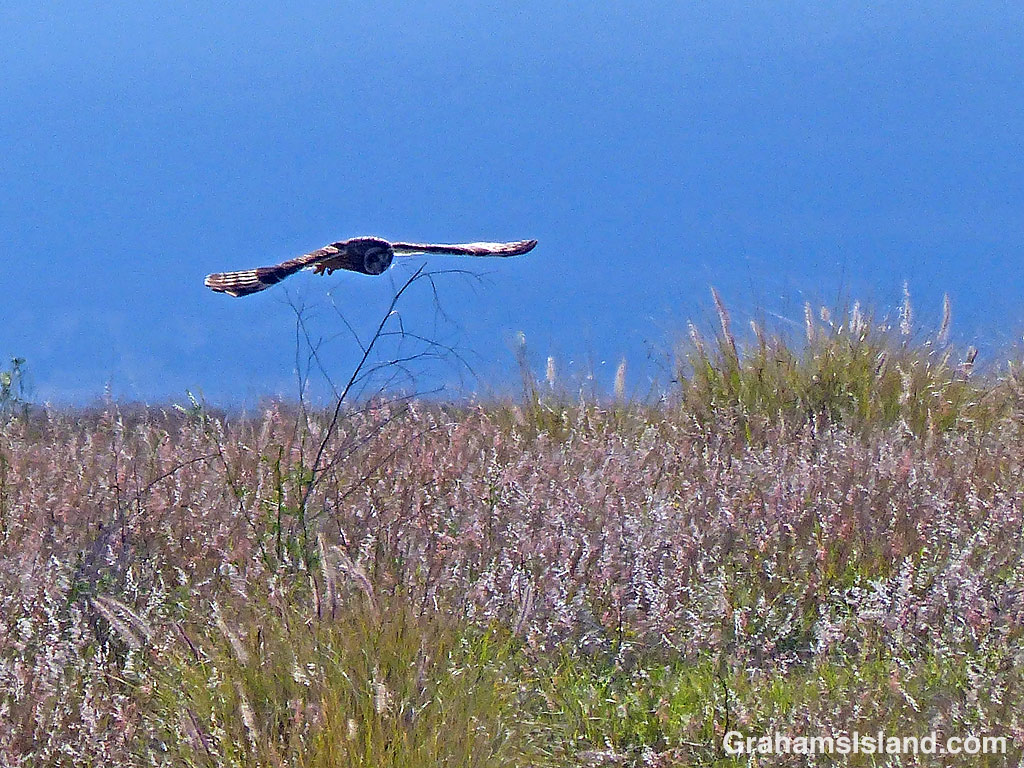
A pueo flying

Pueo flying

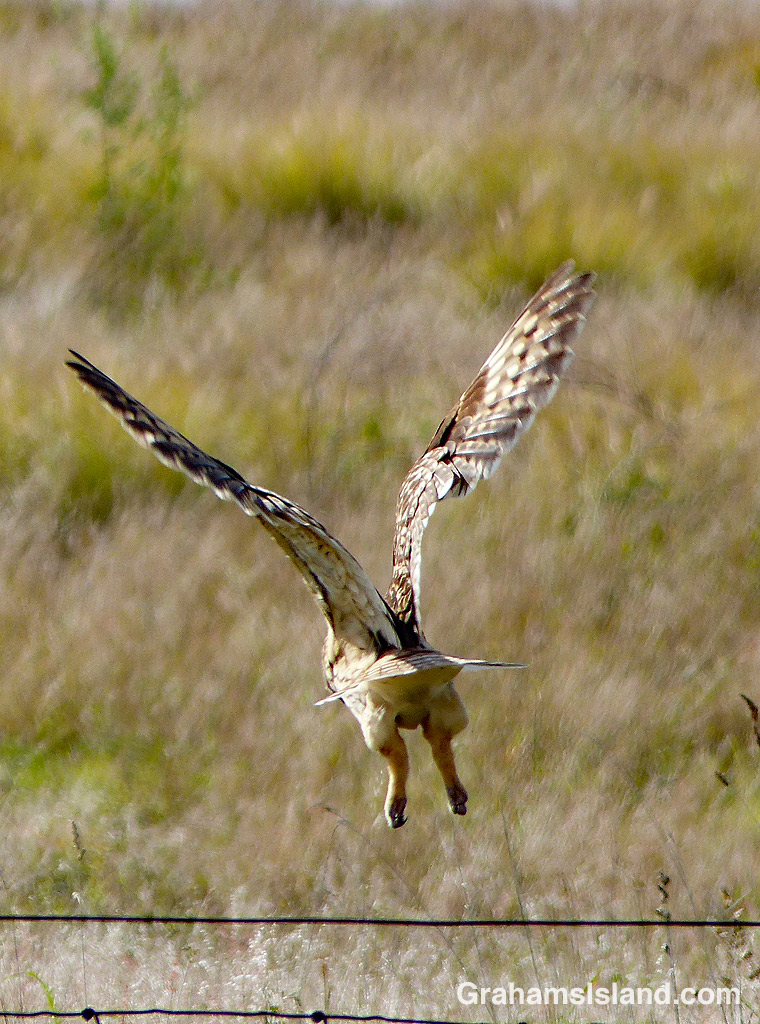
Pueo take offPueo hoveringThis post is in response to two photo challenges, which I could say is killing two birds with one stone, but given the subject matter, that would be most inappropriate. This week’s Sunday Stills challenge theme is ‘Flight’ (see more responses here), and this week’s Friendly Friday challenge theme is ‘Dreamy’ (see more responses here).

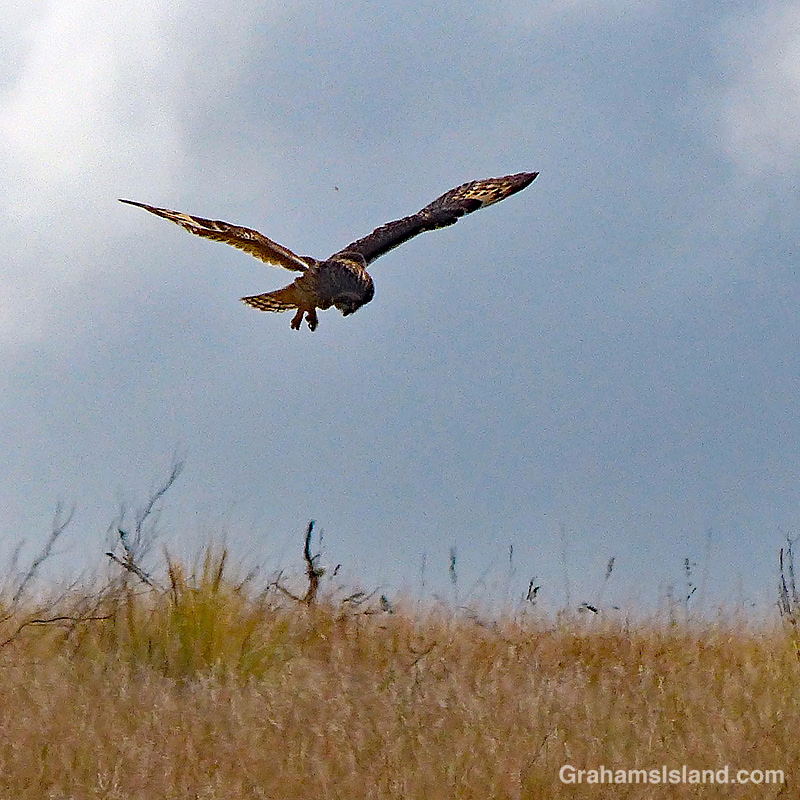
The ‘flight’ response is more immediately obvious. This is a pueo (Hawaiian short-eared owl) flying. In the top photo it’s cruising over pastureland. In the middle is its initial launch into the air. Below that, hovering above something promising in the grass. And at the bottom, a dive to take a better look.

These photos also work for the ‘dreamy’ response for two less apparent reasons. The first is that I’ve always had flying dreams, less frequently these days, but still every now and again. The thought of gliding above the landscape, as in the top photo, is very pleasing for me. The second reason is that seeing pueo is still a somewhat surreal, dreamy event. Owls are often nocturnal, but pueo are active during the day. In the air they are accomplished fliers, gliding, hovering, diving with little apparent effort. At rest, they look very dignified as they sit, keeping watch, head swiveling a disconcerting 360°.

These photos are of the same pueo, seen on a recent drive along Old Saddle Road, southeast of Waimea. I’ll post other photos of this bird once I’ve had time to go through them, but seeing it was a great, chance encounter at the end of my best ever day for seeing pueo.

Pueo dives

Brown water

Brown water

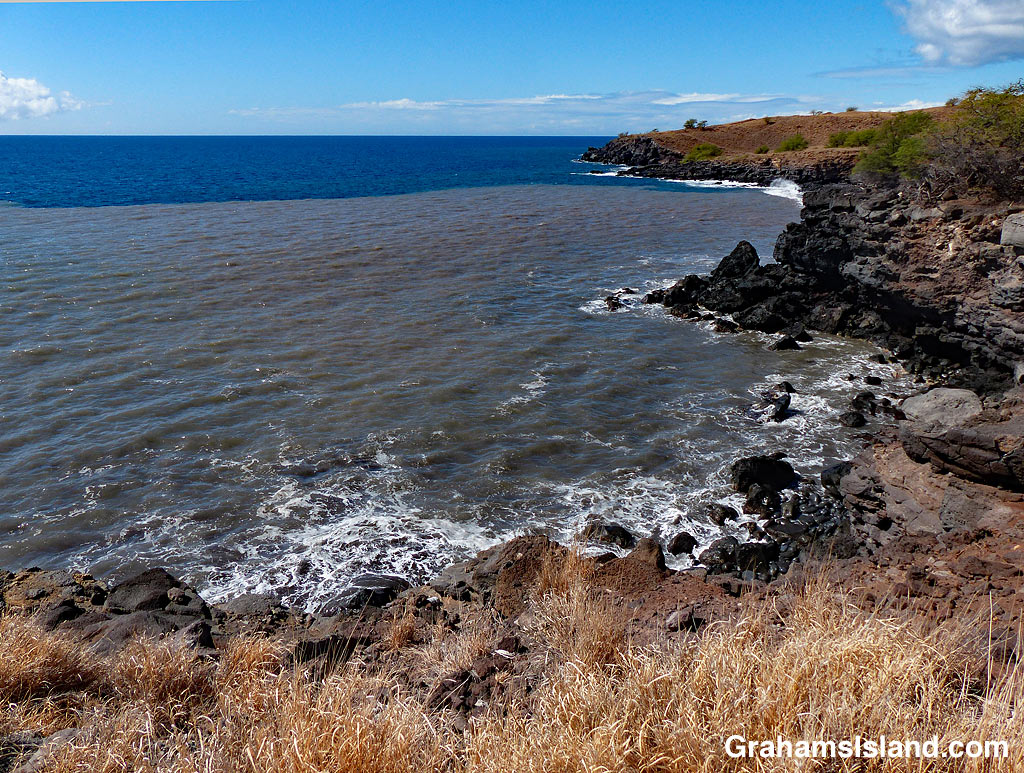
After something of a dry spell, during which I was able to drive my truck out of the yard without sliding about, there’s been a lot of rain lately. My truck is back to sliding, but that’s a minor issue compared with what happens to all that rainfall.

What happens is that the rain hits the land and runs downhill. It channels into dry gullies. If the rain is heavy enough, flash floods occur and wash all before them – dirt, rocks, trees. But any kind of heavy or prolonged rain will wash earth and debris down the gullies. All those gullies lead to the ocean, channeled under roads by culverts (bottom photo).

When the runoff reaches the ocean, it forms a distinct area of dirty brown water in the blue Pacific Ocean (top photo). The contrast is striking and easily visible from miles away. Over time, the brown and blue water will begin to mix until the delineation is gone, but part of that process is the dirt from the brown water settling to the ocean floor.

This kind of runoff is one of many threats to coral reefs around the Big Island. It’s not just dirt in the runoff, but also pesticides and other chemicals that can be washed down into the reefs, damaging the coral. There are hundreds of gullies and only a few places have erosion prevention measures to help mitigate this pollution.

So while Hawaii may be considered paradise, it has its share of challenges. And the problems associated with runoff and pollution are more visible and obvious than most.

Posted in response to this week’s Friendly Friday challenge on the theme of ‘Contrasts.’ See more responses here.
Brown water and culvert