Tag Archives: Hawi

Signs: Ironman advice

Signs-Ironman advice

During last month’s Ironman race, these cyclists had committed some sort of misdemeanor, probably following too close, on their way to Hawi, and had been pulled over to serve a 5-minute penalty. But what I liked about this scene was the sign in the background reading ‘Exertion plus perspiration equals inspiration.’ I suspect many of the Ironman participants might have thought the sign should have read ‘Exertion plus perspiration equals pain.’

Incidentally, that bright neon sign was a source of great community consternation when it went up. Some locals thought it was OK. Others thought it was a blight on the community and a sign of the impending apocalypse. It’s been in place a few months now and the hubbub seems to have subsided. I have to say though that the neon colors are still as garish as they ever were.

Ironman 2018

Ironman winner Patrick Lange
Ironman cyclist leaving Hawi
Ironman cyclists
Ironman cyclist in blue

Saturday saw the running of the 40th edition of the Ironman World Championships in Kailua Kona. This is the event featuring a swim of 2.4 miles, a bike ride of 112 miles, and a run of 26.2 miles. As in previous years, I participated in this event by walking out to the main road and taking photos, whenever possible from a nice shady spot.

Actually, this year’s race was run in prime conditions for the athletes. It was overcast with occasional light rain and only a gentle breeze from time to time. Consequently many records were set, including new course records for both men and women.

The top photo shows men’s winner and defending champion, Patrick Lange of Germany, zipping by on his way back towards Kona. Second photo, Great Britain’s Susie Cheetham heads out of Hawi. Third photo, Dan Plews of NewZealand (1685) leads Robin Schneider of Germany (2310), and Neil Eddy of Great Britain (2070). These three finished the bike leg in fairly close proximity, but after the marathon run, Plews finished 21 minutes ahead of Eddy and 45 minutes ahead of Schneider. Fourth photo, Jodie Robertson of the U.S.A demonstrates the importance of color coordination while cycling. Bottom, a large group of riders roll into Hawi, the turnaround point of the bike leg.

For more information about Ironman, go to Ironman.com.

Ironman group

Egrets and turbines

Egrets and turbines

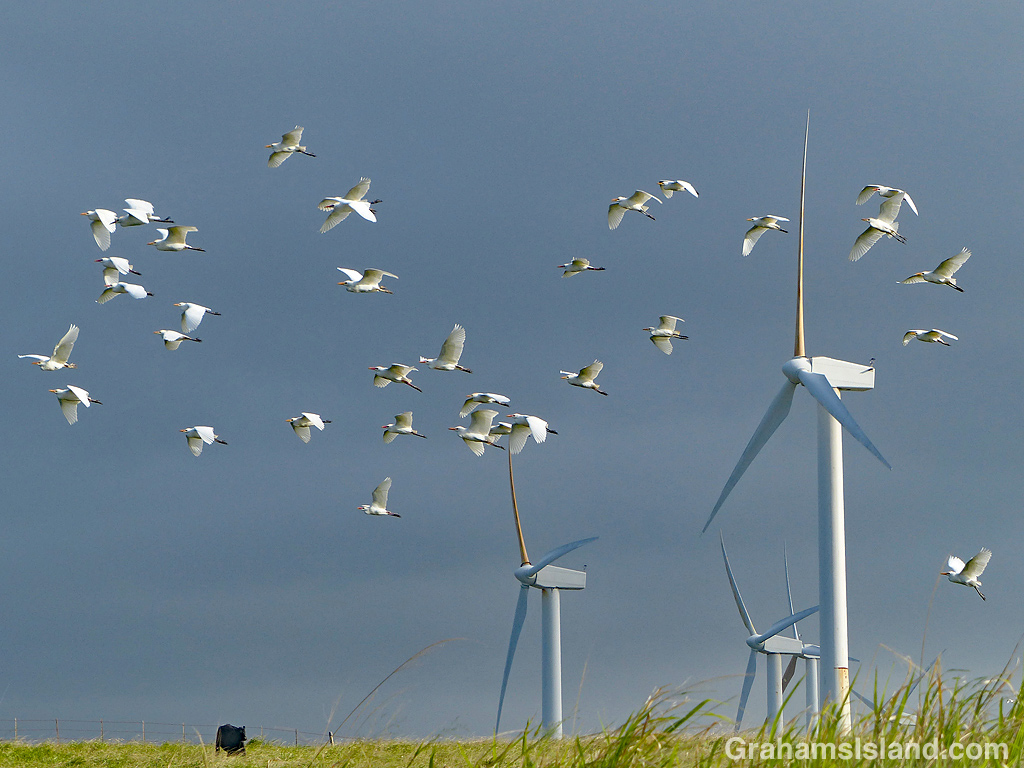
Today marks the 1,000th post on this blog. To mark the occasion I looked for a suitably appropriate subject and couldn’t find anything! So instead I chose this photo since it featured a couple of subjects I must have seen a thousand times.

I pass the turbines at Hawi Wind Farm on my way to the part of the coast where I regularly walk. And I’ve seen an awful lot of cattle/horse/sheep/goat/lawn mower egrets since they are omnipresent. Plus I have a soft spot for them.

In this photo, a flock of egrets is on a mission to get from one pasture to another one. They aren’t the most graceful of flyers, but en masse I find they make a very pleasing sight.

Tenting for termites

Tented for termites

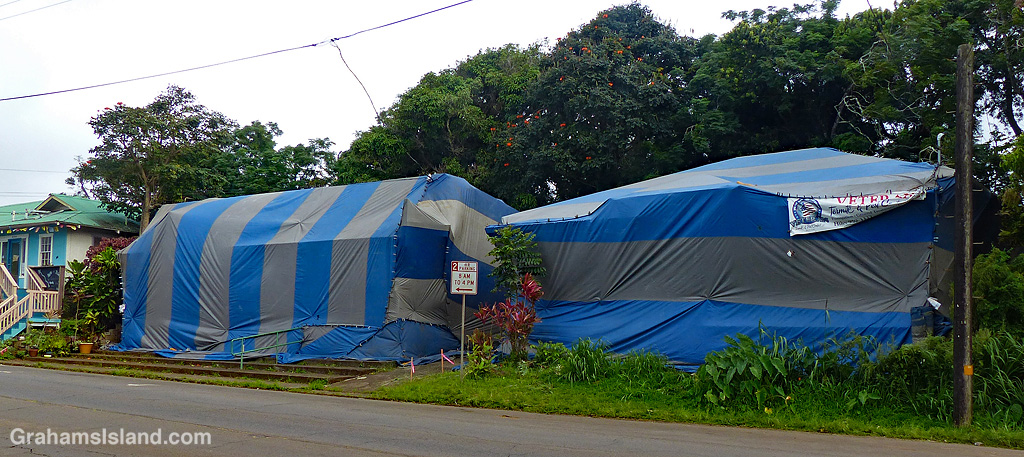
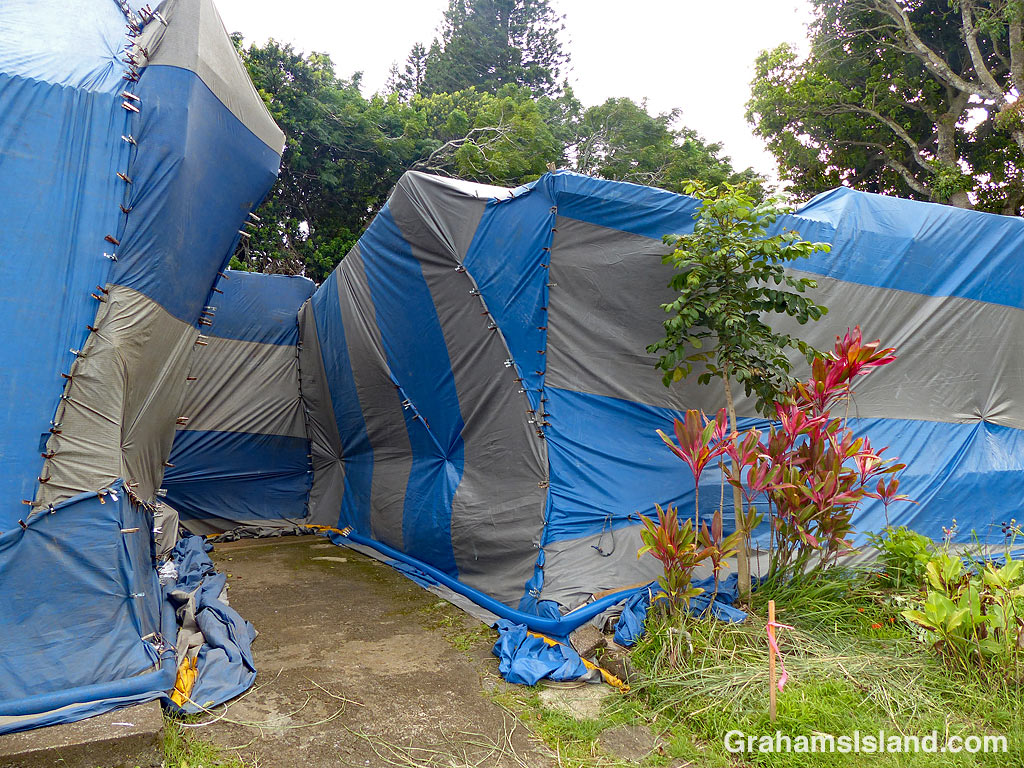
No, it’s not the circus come to town. These tents are for a more macabre purpose, the termination of termites.

As in most warm climates, termites are a problem here. Houses, especially older ones, are easily colonized. Without treatment, the occupying termites will consume wood from the inside, leaving a thin membrane as protection. Infested wood might look fine, but a gentle push on the surface will go right through two or three layers of paint to the termites’ cavern inside.

Besides leaning against a wall and going right through, a prime indicator of termites is small mounds of little round pellets below a pinprick hole in a wall or piece of furniture. These are termite fecal pellets, which the worker termites clear out of the nest from time to time.

Another indicator of the presence of termites is to turn a light on and find a horde of them flying around the room. Around here, May is the prime time for this activity. These flying termites are fertile males and females, leaving the nest they grew up in to find a place of their own and start a new colony.

As unpleasant as it is to find a room full of flying termites, it’s even worse to wake up and see countertops littered with discarded wings, a sure sign that these fertile termites have moved in to a new spot.

So tenting for termites is common practice here. The structure is covered with nylon sheeting until it is completely sealed and then a fumigant is pumped in. The tent usually remains on overnight. After the tent is removed, the house has to sit empty a while for the gas to dissipate. It’s not wise to go back in too early or one could find oneself joining the termites. Typically it can be two or three days before a home can be reoccupied.

Tenting for termites is effective but it has downsides. It works for drywood termites, but not subterranean termites since they live outside the house and just dine inside. There are also environmental concerns about the process. And while fumigation works, there’s no guarantee that a new colony of termites won’t move in just as soon as the gas has cleared.

Tenting for termites

Wind turbines crank out the power

Wind turbines Hawi and Mauna Kea

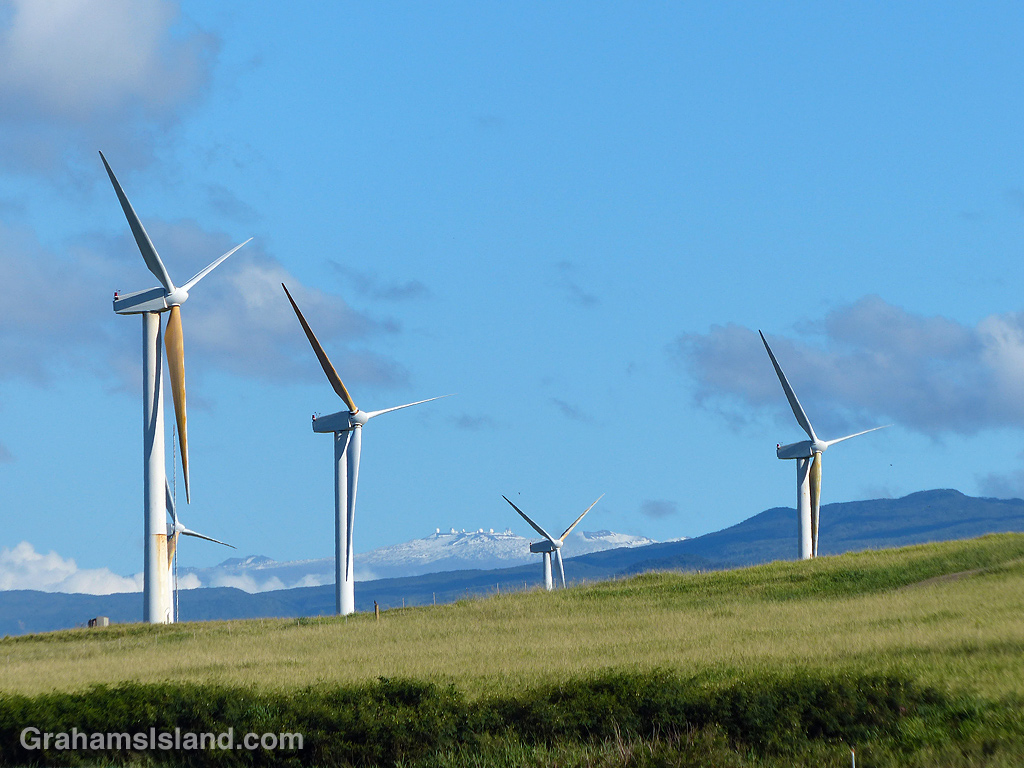
This week’s Sunday Stills challenge is ‘Drunk with .…’ I thought about a photo of my liquor cabinet, but settled instead for ‘Drunk with Power,’ a reasonable choice in these turbulent times.

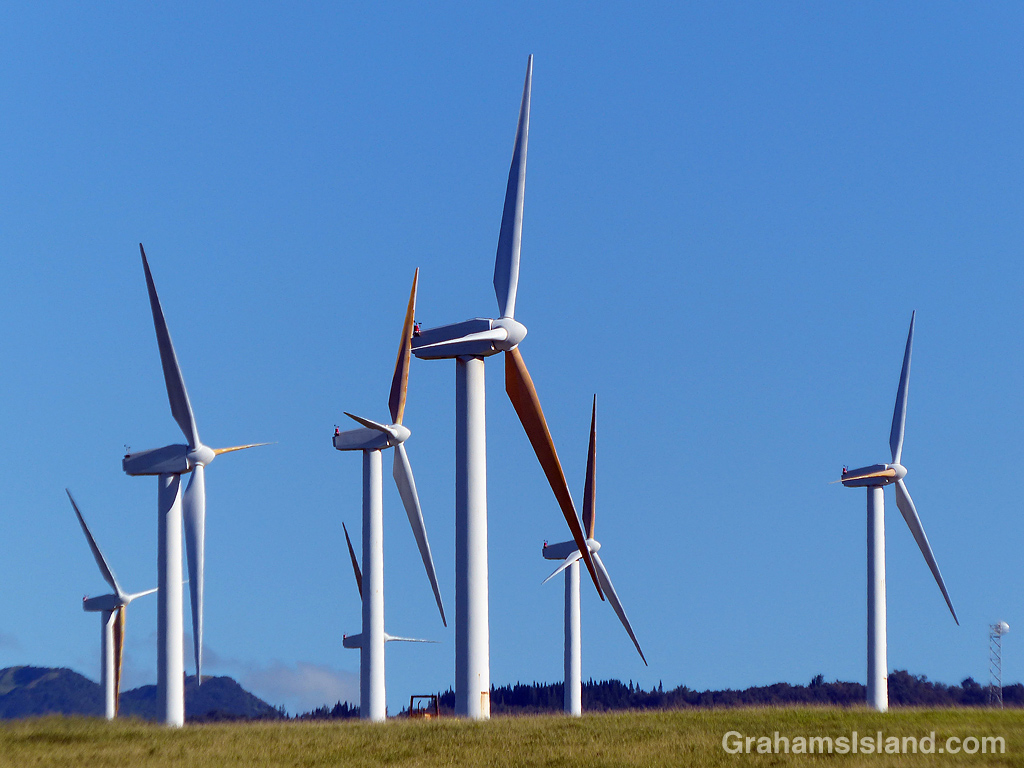
Hawi Wind Farm began operations in 2006 and has 16 turbines churning out 10.56 MW. This power is supplied to Hawaii Electric Light Company, which runs the power grid on the island.

My interest in the wind farm is mostly visual. I like the patterns that the turbines make, and every once in a while the telescopes of Mauna Kea can be seen in the distance.

See more Sunday Stills responses here.

Wind turbines Hawi

Gnat cloud

Gnat cloud and wind turbine

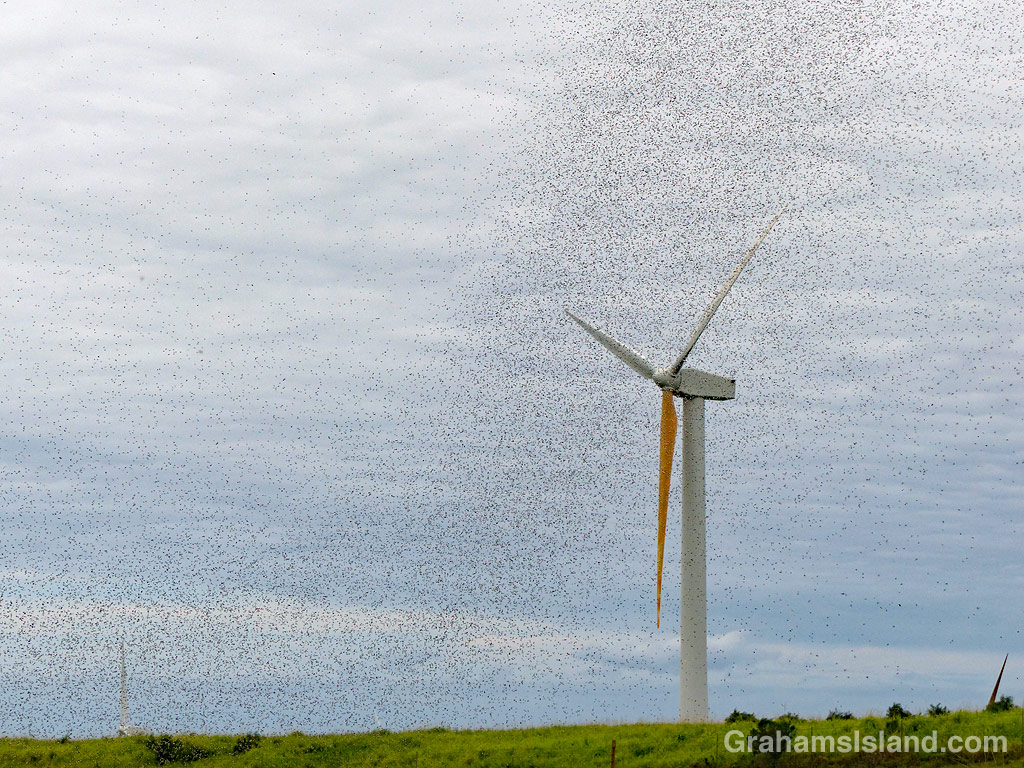
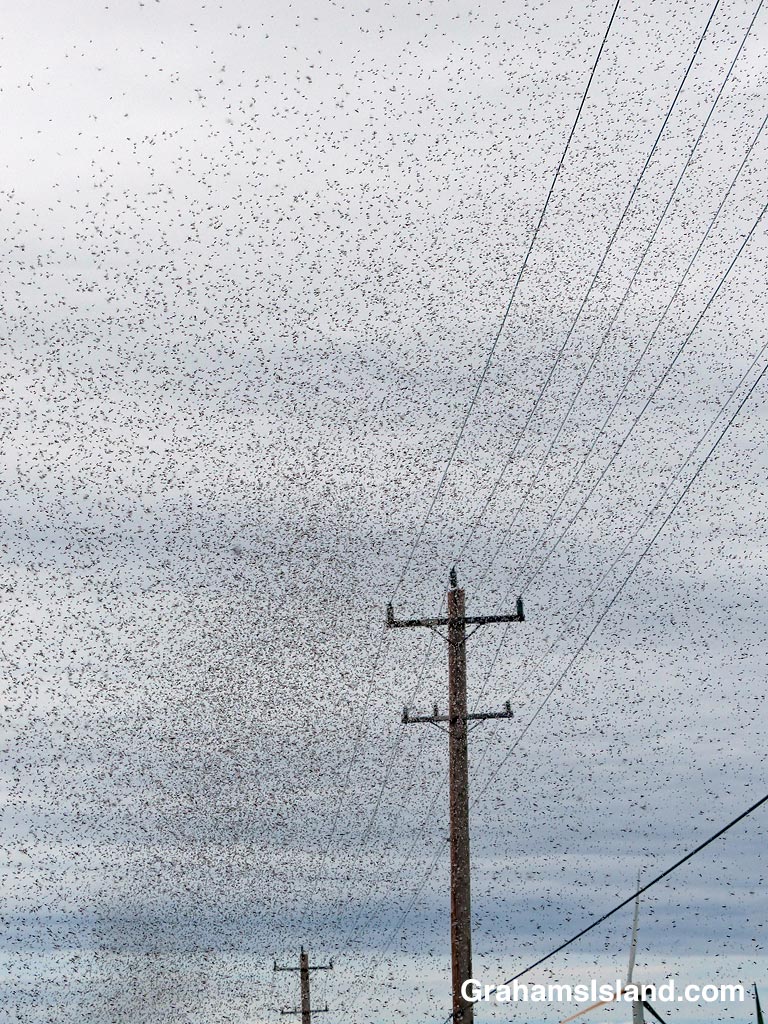
Gnat cloudDriving past Hawi Wind Farm, I unexpectedly ran into several clouds of gnats. I quickly rolled up the windows on my truck, not needing a cab full of gnats to influence my driving. Sometimes the clouds blended and made one big gathering, and I was reminded of murmurations of starlings, though perhaps not as dramatic.

It’s the first time I’ve seen anything like this since I’ve lived here. The clouds are made up of male gnats hoping to snag a mate. The large numbers give them visibility so that the females can spot them. Of course, that doesn’t explain how the males can spot the individual females when they show up. Hmmm.

Posted in response to this week’s WordPress Photo Challenge ‘Unlikely.’


Hawi Post Office mural

Murals tell stories and this one, on the side of the Hawi Post Office building, tells the story of North Kohala’s sugar plantation era. The mural was painted by students from Kohala High School working with staff, faculty and community members.

For more information about the mural, go to kohalamountainnews.com/2017 and click on the May edition.

Posted in response to this week’s WordPress Photo Challenge to be a visual storyteller.

Stampede

When I’m out walking I often pass fields of cattle. In general they either stare dolefully or run off when I look at them. Recently though, I was walking alongside one field and, at my appearance, the cattle ran to one side of the field, formed a group and then thundered down the hill toward me. When they got close, they did a U-turn and shot back up the hill.

Next day they did the same thing, but this time instead of the U-turn they stopped just across the hedge from me and stared. All the running about had stirred up the cattle egrets that invariably accompany them and that’s when I took this photo. I particularly like the devilish horns of the one animal peering out from the crowd.

I moved on and the cattle followed. We repeated this a couple of times before they decided they’d had enough.

On the third day, my appearance provoked only dull stares. Obviously the thrill of my presence had gone.