This week’s Sunday Stills challenge theme is ‘Double Trouble.’ See more responses here.
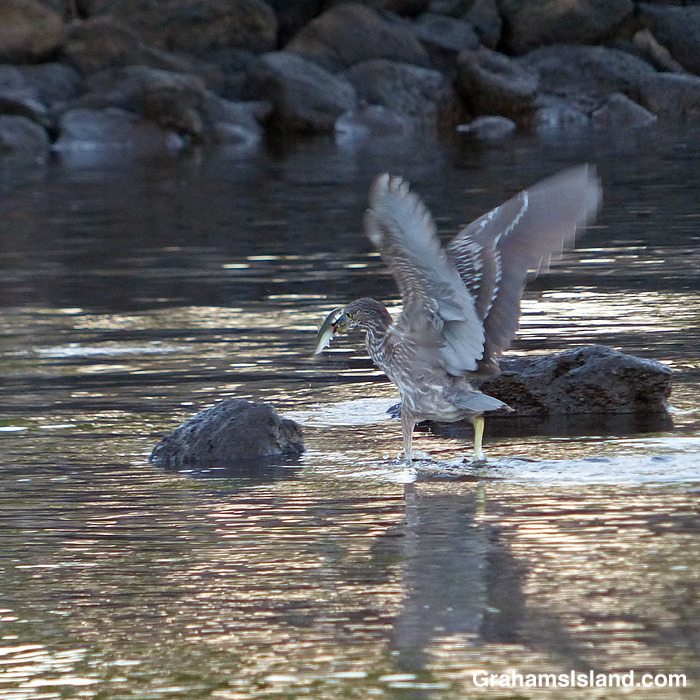
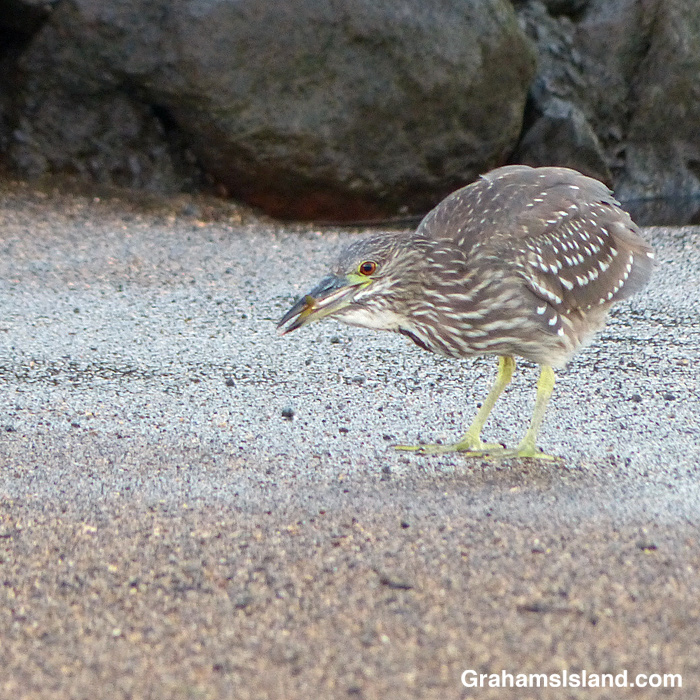
A pair of juvenile Black-crowned Night Herons spell trouble for small fish living in the pool behind Pelekane Beach in Kawaihae.
Giant Porcupinefish can inflate themselves into a ball. When they do so, long spines along the back become raised and stick out, making them an extremely unpleasant proposition for any predator. Oh, and they’re poisonous, too. Trouble, indeed.
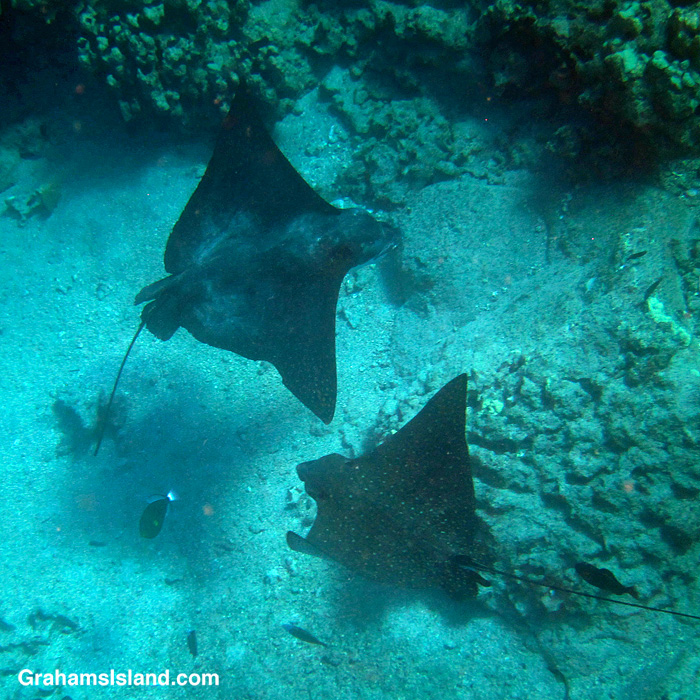
Spotted Eagle Rays hunt for molluscs and other creatures hiding in the sand. They root out prey with their duck-like bills.
Wild pigs can dig up a garden in no time, searching for worms and the like, but they go bananas over fallen fruit. These two were slurping down fallen mangoes.
This cow looked very suspicious of these cattle egrets, especially the one on its back. But they weren’t up to any trouble, just waiting for the cow to start grazing again and stir up some insects for them.
The Gold Dust Day Gecko on the left isn’t licking the paint. He’s sticking out his tongue and leaning to make his body look bigger in a challenge to the other gecko. The other one was singularly unimpressed and chased off his adversary.
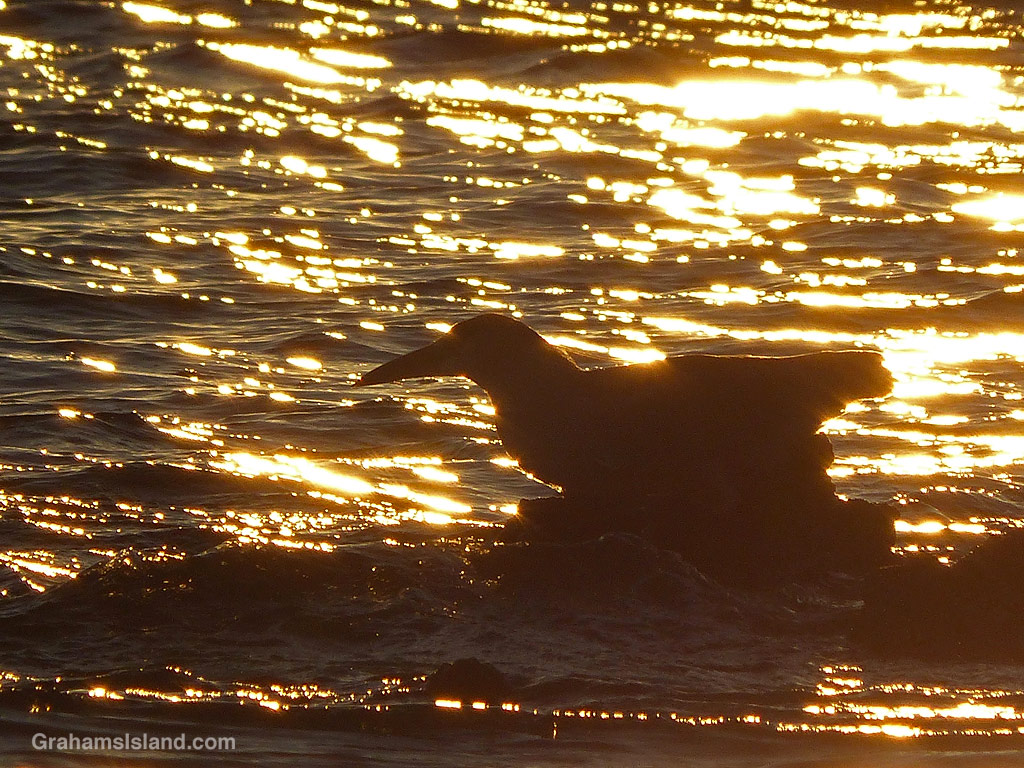
January: High surf crashes ashore in North Kohala. (link)
This week’s Sunday Stills challenge theme is ‘Your 2022 Year-in-Review.’ See more responses here. Like last year, I’ve gone with a favorite photo from each month of 2021, with a caption and link to the post the photo first appeared in.
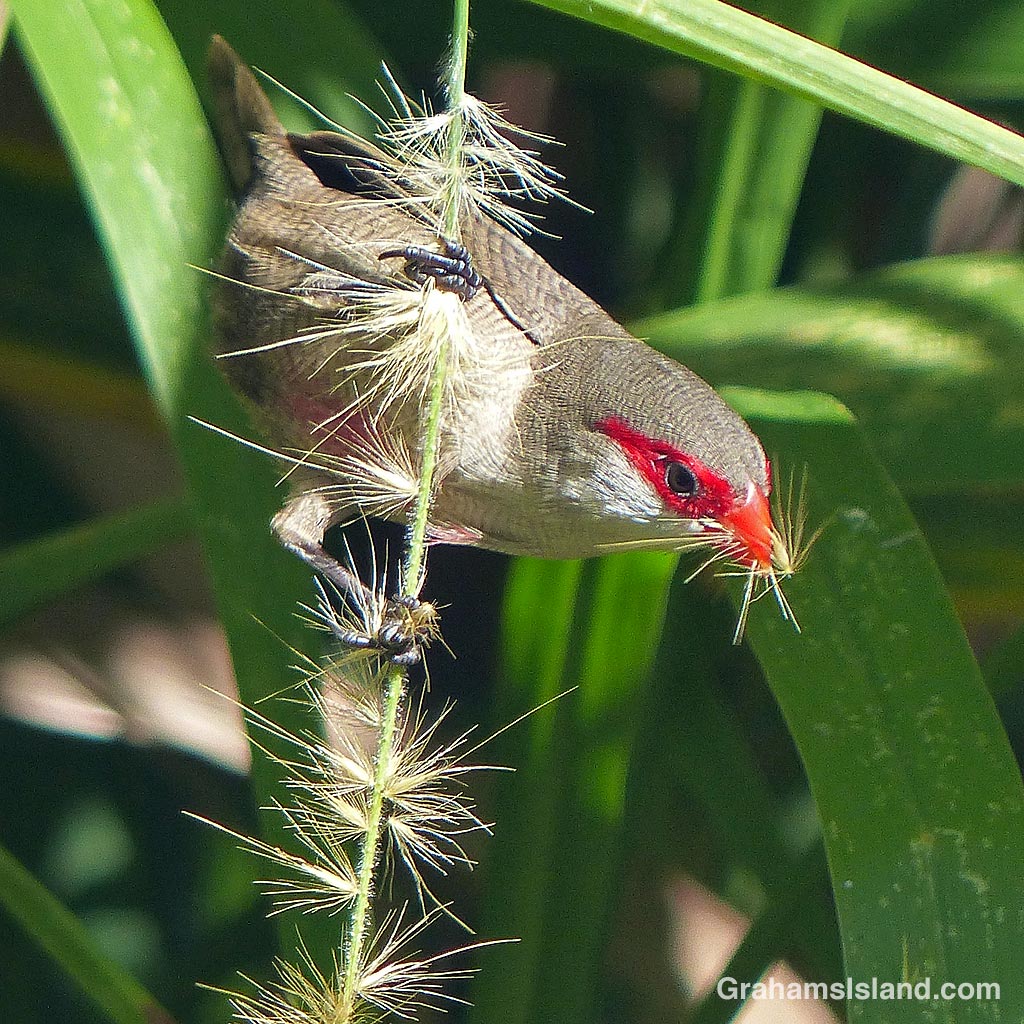
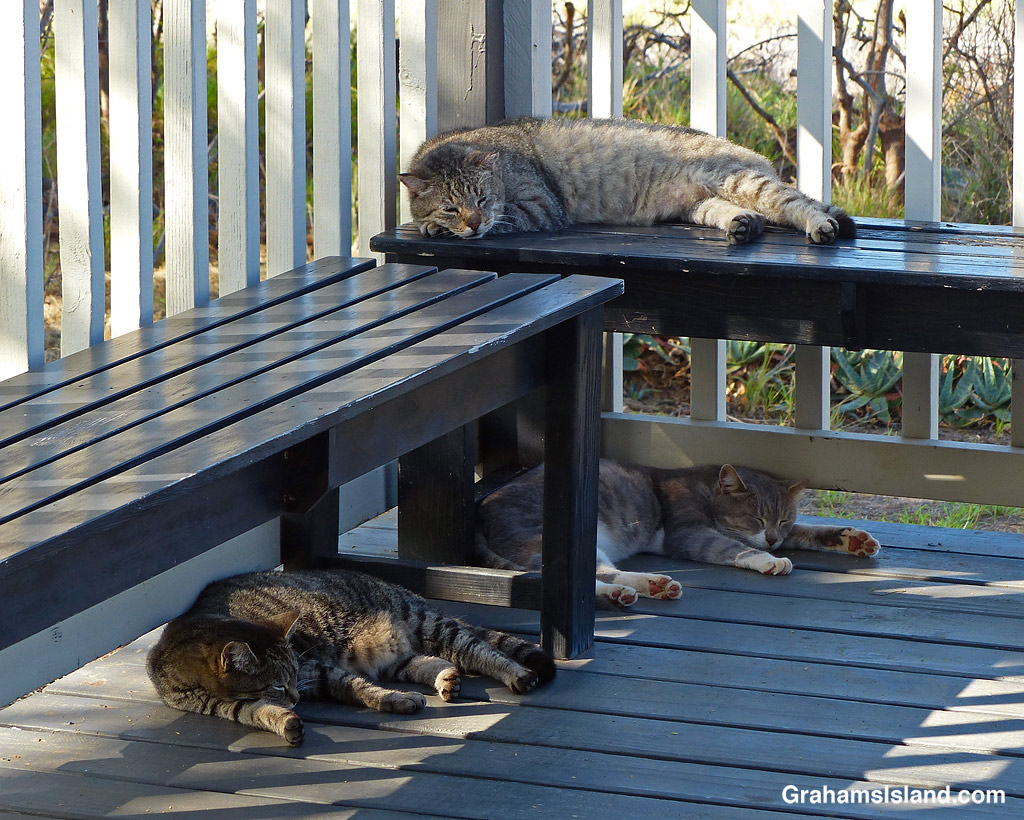
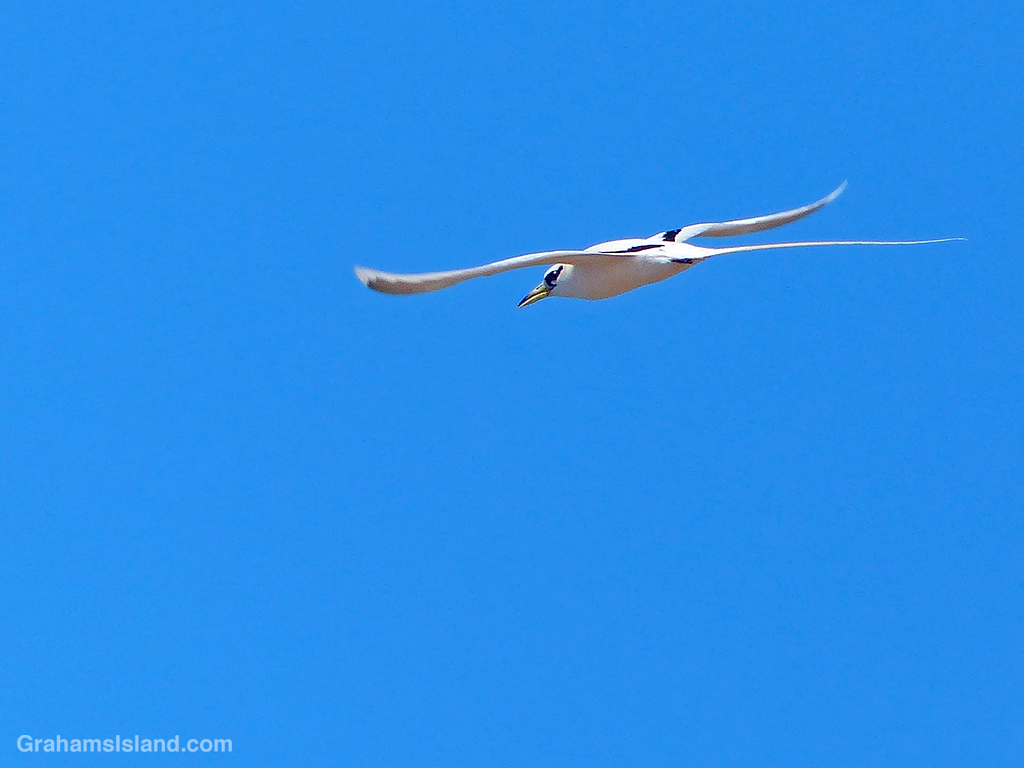
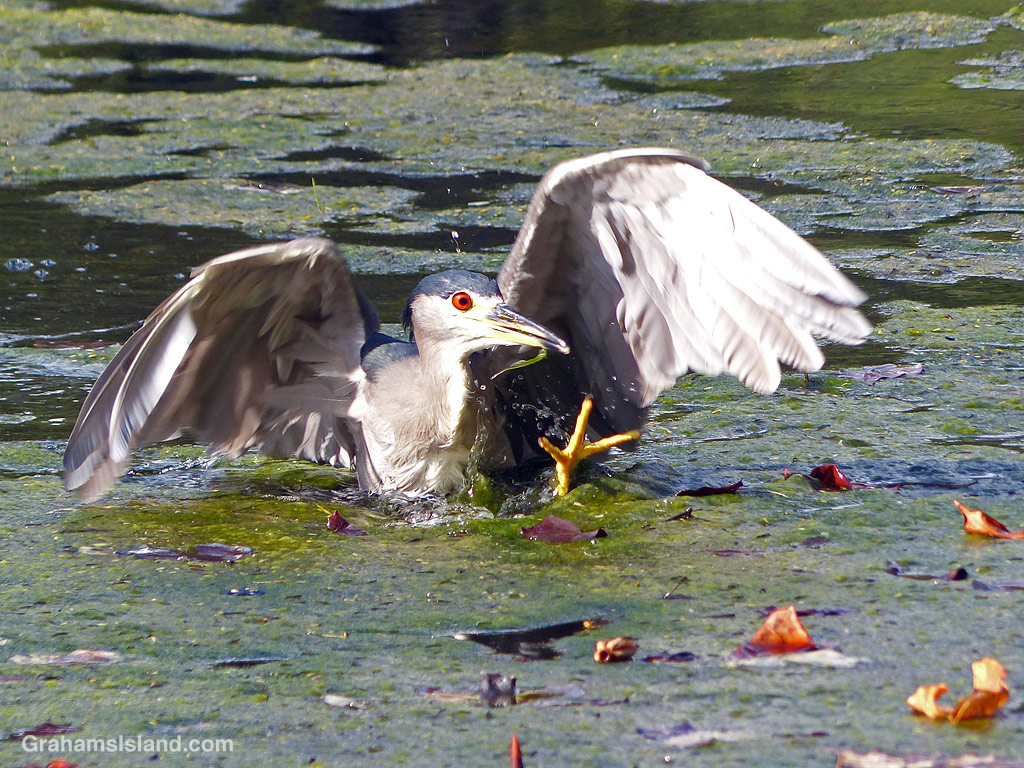
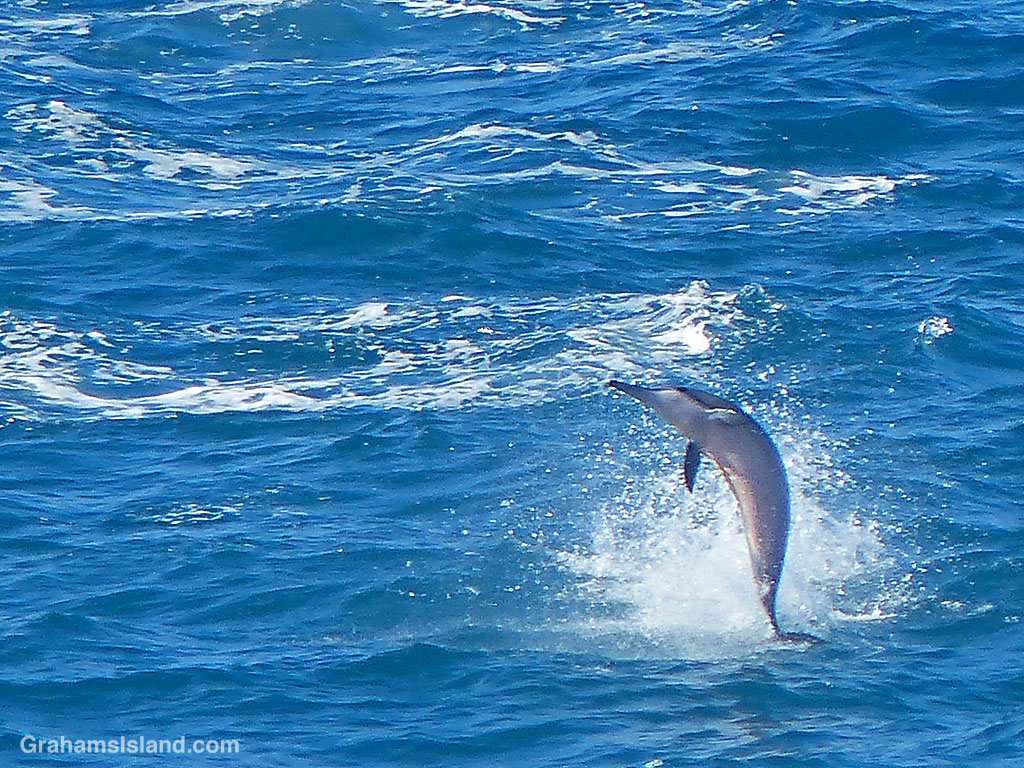
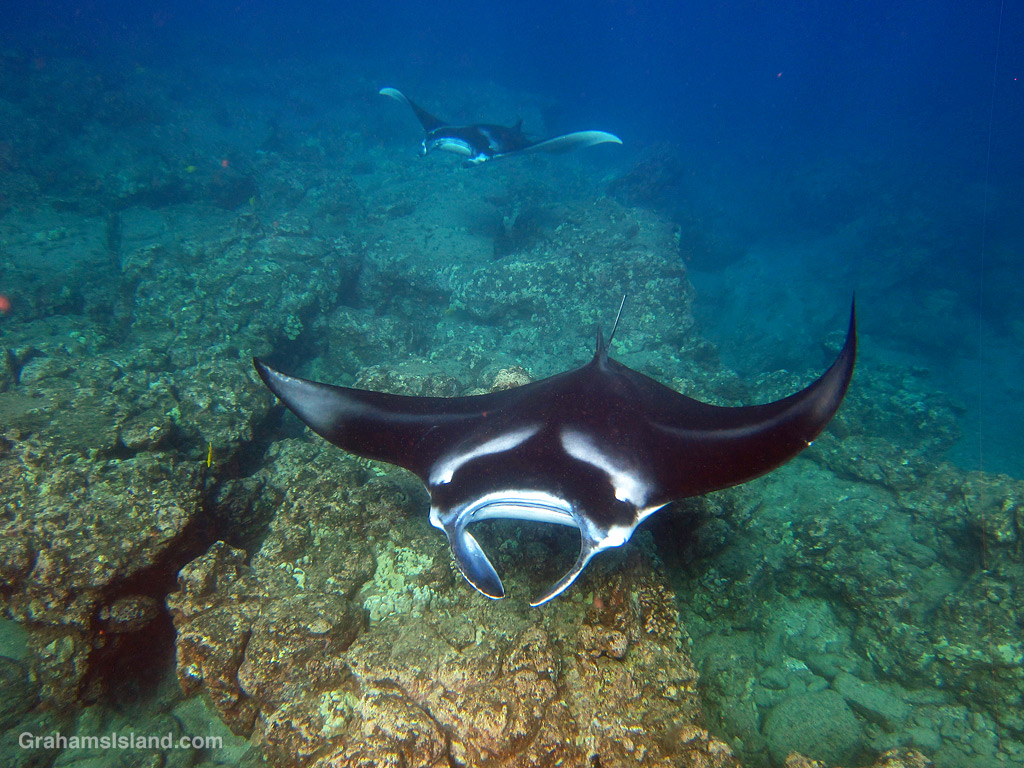
February: A Common Waxbill grabs a mouthful of seeds. (link)March: A Monarch Butterfly on a bougainvillea. (link)April: A Green Turtle swims by. (link)May: A trio of cats hard at work! (link)June: How to keep birds off your car. (link)July: The green sand beach near South Point. (link)August: A White-tailed Tropicbird glides by. (link)September: A Black-crowned Night Heron struggles to get out of a pond. (link)October: A Spinner Dolphin leaps from the water off North Kohala. (link)November: A pair of Manta Rays swims toward me. (link)December: Mauna Loa erupted for the first time in 40 years, capturing attention and changing the weather. (link)
Recently, I was down at the lagoon behind the beach at Pelekane Bay in Kawaihae. I was engaged in one of my favorite activities – failing to get photos of dragonflies in flight!
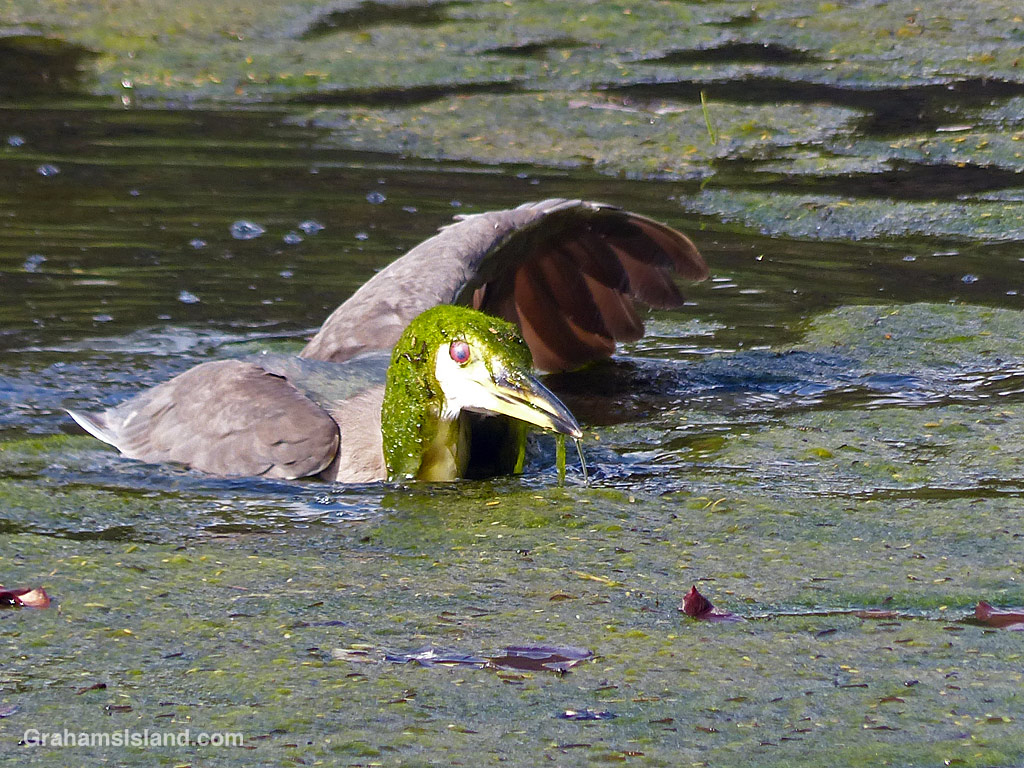
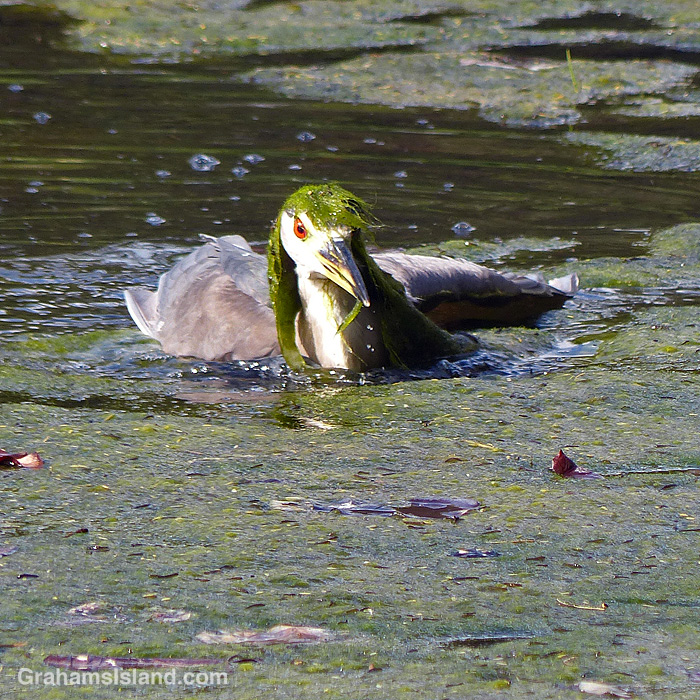
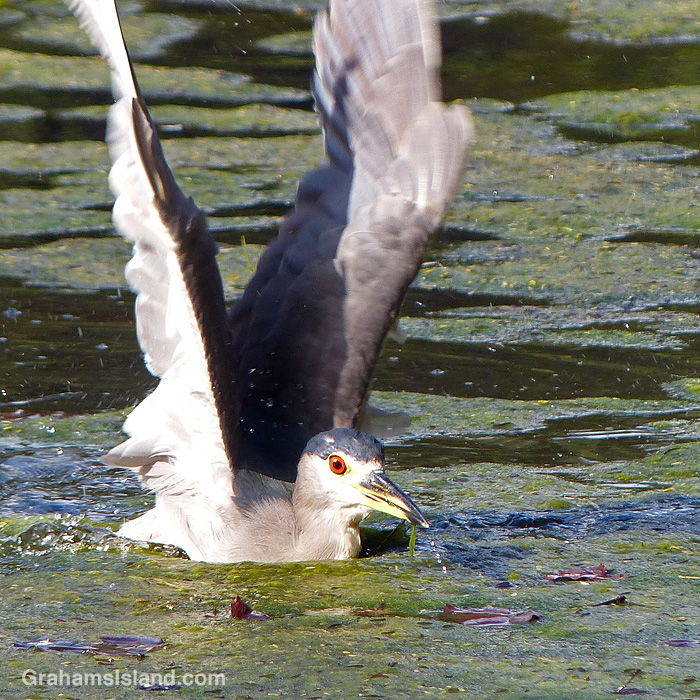
When I heard a loud plop behind me, I turned to find this scene. This Black-crowned Night Heron had dropped into the algae-covered water, probably after a fish. I don’t think it caught anything, but when it popped up again it sported a rather fetching green hairdo. Even after it had shed that, it still found the process of getting out of the water was hard going, with a lot of flapping and splashing producing little result.
Eventually the bird reached dry land and resumed a watchful pose, apparently none the worse for its ordeal.
Recently, I was walking around the fishponds at Mauna Lani when I came to a small cafe that was closed. I walked to the back of it, hoping for views to the fishpond behind. What I found was a couple of people staring up into a tree where a lot of loud squawking was going on.
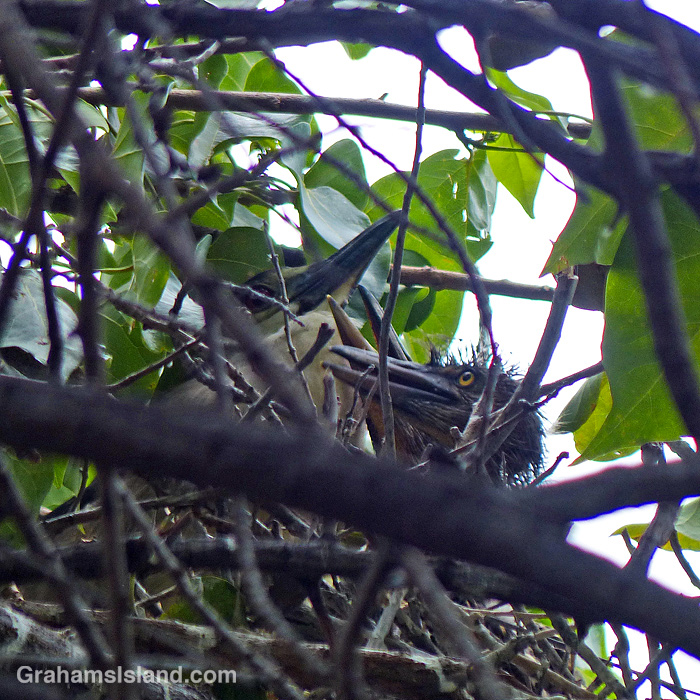
When the people moved on, I spotted the source of the noise. It was the nest of a Black-crowned Night Heron, high up in the tree, and occupied by an adult bird and two chicks. The two chicks, as might be expected, were the source of all the noise, demanding food and jabbing their dangerous-looking beaks at the parent. Eventually, the adult bird moved out of the nest to nearby branch. The chicks tried to follow, but weren’t agile enough to do so without risking falling from the tree.
I took a few photos, but the tangle of branches made it difficult to know if the birds were in shot, let alone in focus. So I was happy to get this photo, which captures something of the scene. When I saw it, for some reason the expression that popped into my head was, ‘a face only a mother could love!’
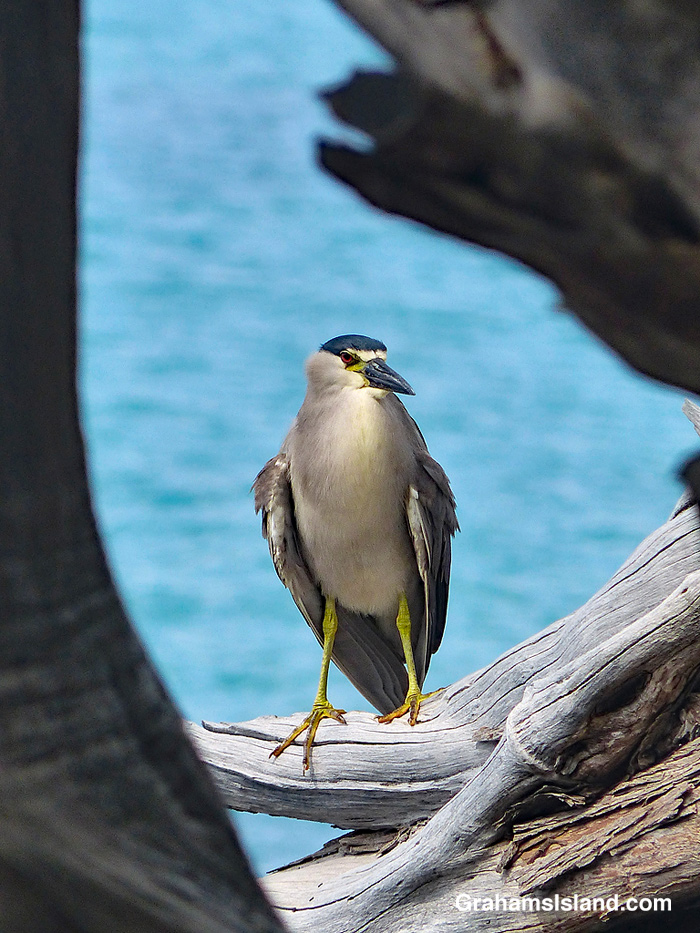
I saw this adult black-crowned night heron in a watchful pose on the edge of the lagoon behind the beach at Kawaihae. I liked how the stick matches the heron’s colors. It looks like it could be the antenna of the heron’s fish detector instrument.
I was running early to work recently, so I decided to stop in Kawaihae, as I often do. With more time, I’d have gone for a walk along the coast, but I had only 15 minutes so I plumped for a visit to the south end of the harbor to see if there were any herons around.
I found two there, but one quickly disappeared. The other stood on a rock in shallow water, a popular fishing spot for them. I took a few photos and noticed the heron leaning forward. It had spotted something. An instant later, it plunged into the water and then emerged with a fish on its beak. It returned to the rock and paused. The fish appeared to be impaled on the heron’s beak, but extracting the beak risked losing the fish before it could be eaten.
A moment later, the heron hopped over to the small beach where I was. There, it popped the fish into the air and swallowed it in one slick movement. This whole sequence took less than three minutes. The heron stayed on the beach and I returned to my car and headed off to work, very glad that I’d stopped by.













 Graham's Island