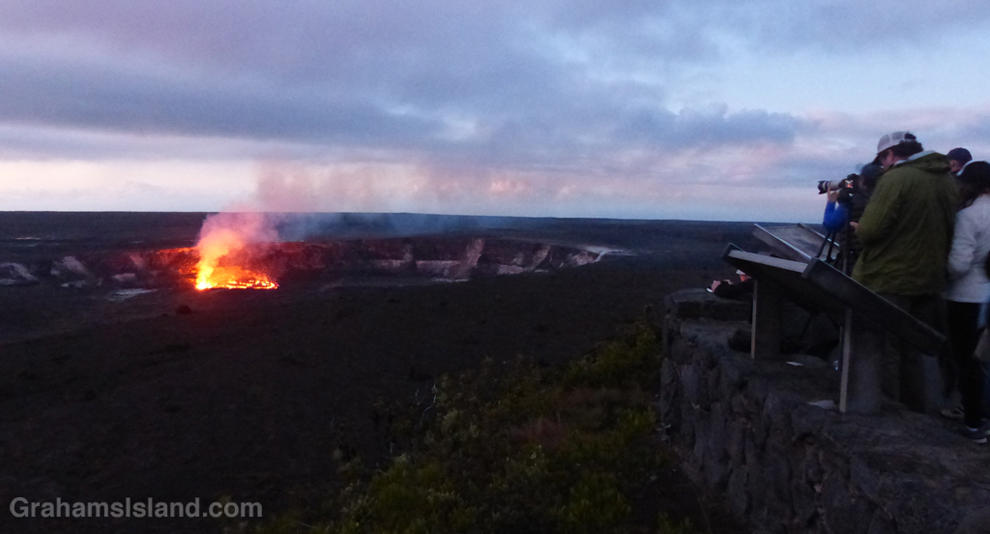
Daybreak reveals onlookers gathered at the Jaggar Museum viewing point in April 2016 (Original post here).
This week’s Sunday Stills challenge theme is ‘Iconic Places and Spaces.’ See more responses here.
I wasn’t sure what to post for this, but Kilauea is about as iconic as anything on the island, so I thought I’d post some photos from volcanic activity that I’ve seen since I moved here. Captions on the photos with a link to the original post.
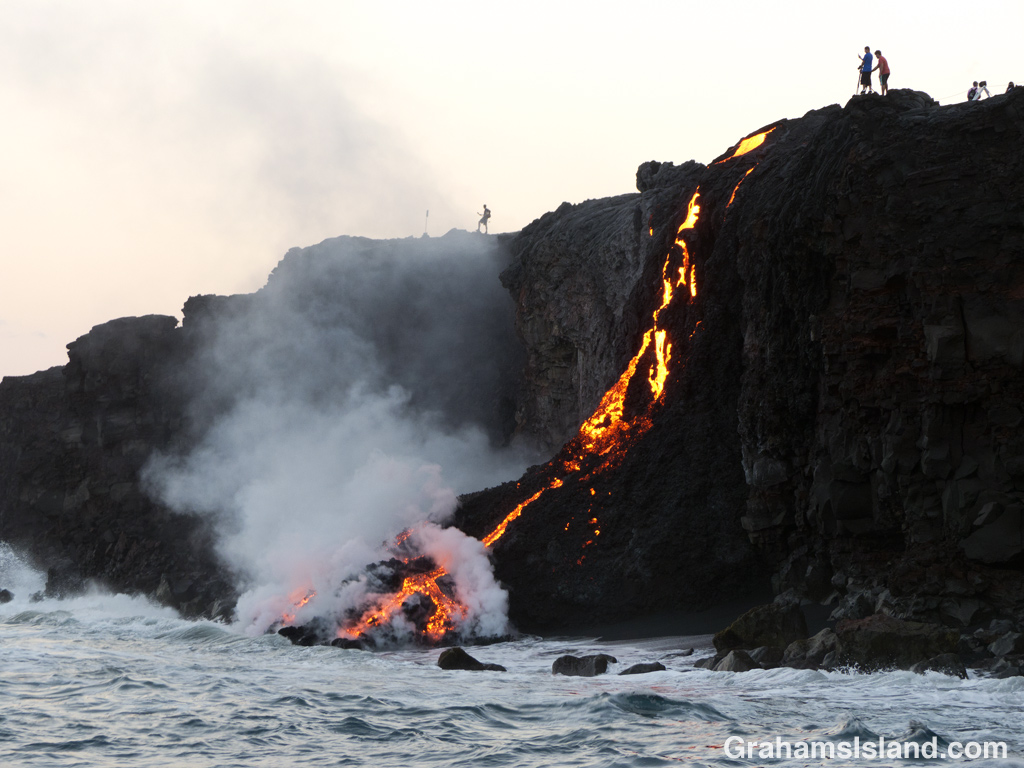
Lava from the Pu’u O’o vent reaches the ocean in July 2016 (Original Post here).
A hike to the July 2016 flow revealed surreal scenes like this one (Original post here).
This fire hose of lava was a short-lived feature of the 2016 flow (original post here).
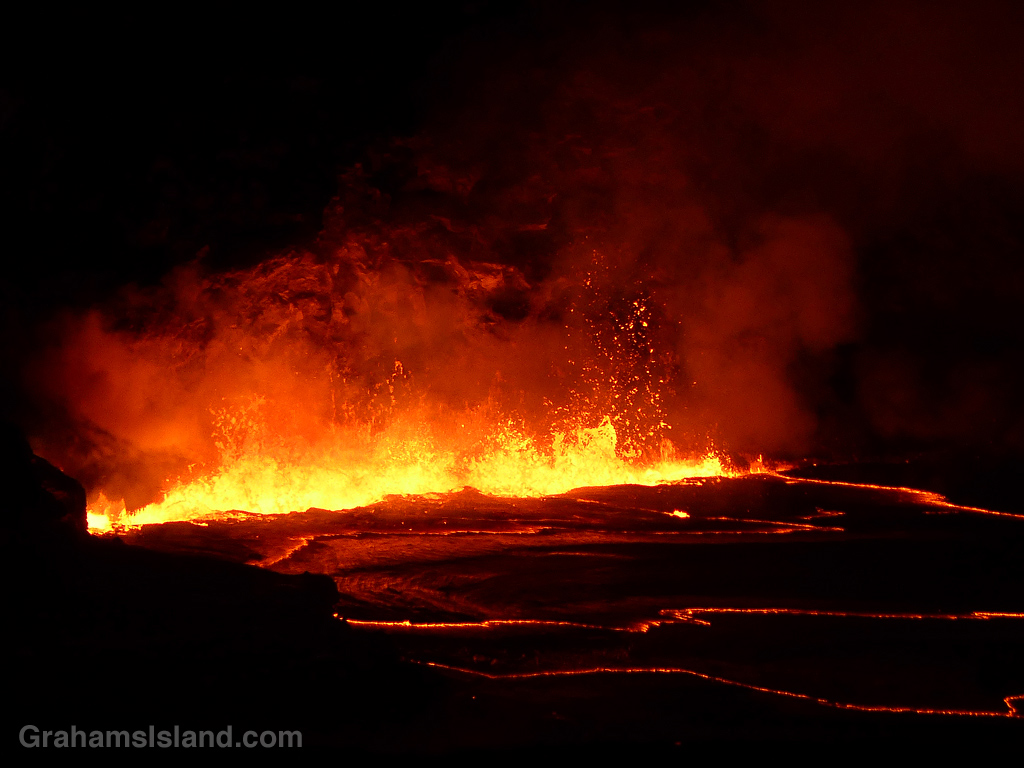
In April 2018, lava in Halema’uma’u Crater spilled onto the crater floor. (Original post here).
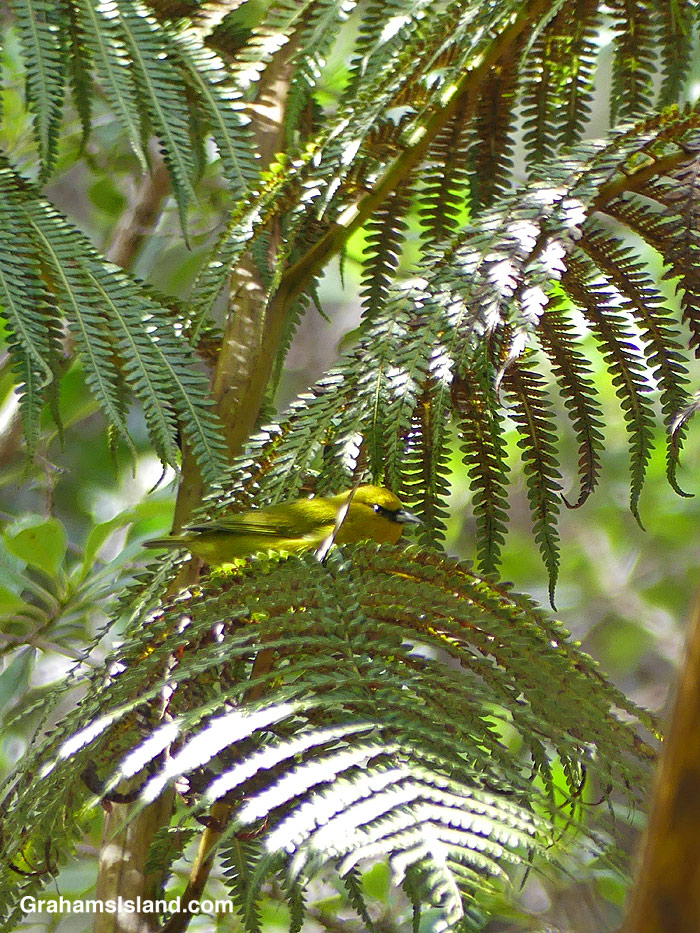
The Hawaii Elepaio is a small, endemic bird found only on the island of Hawaii, though it has close relatives on Oahu and Kauai. It’s found mostly in the higher elevation forests on the island. This one was on the Pu’u O’o Trail off Saddle Road, a good spot for seeing these birds, at an elevation of more than 5,000 feet.
The Elepaio is a member of the flycatcher family and feeds on insects it catches on the wing or by probing tree trunks and branches.
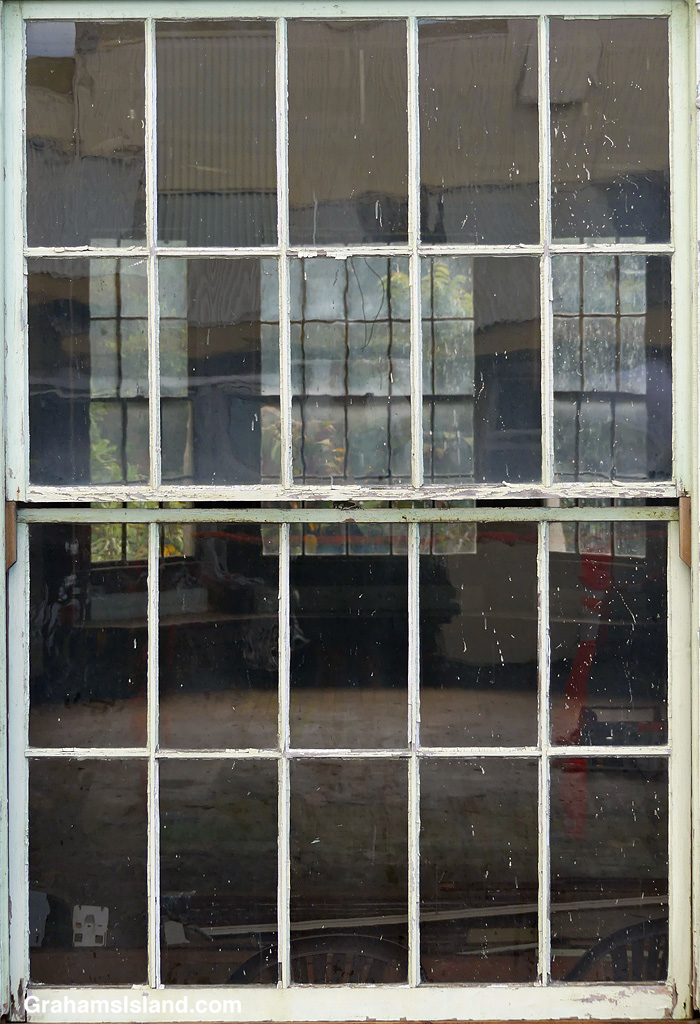
Looking out through a window at Pepeiao Cabin in Hawaii Volcanoes National Park.
This week’s Sunday Stills challenge theme is ‘Through a Window.’ See more responses here.
A variety of photos this week, with captions on the photos.
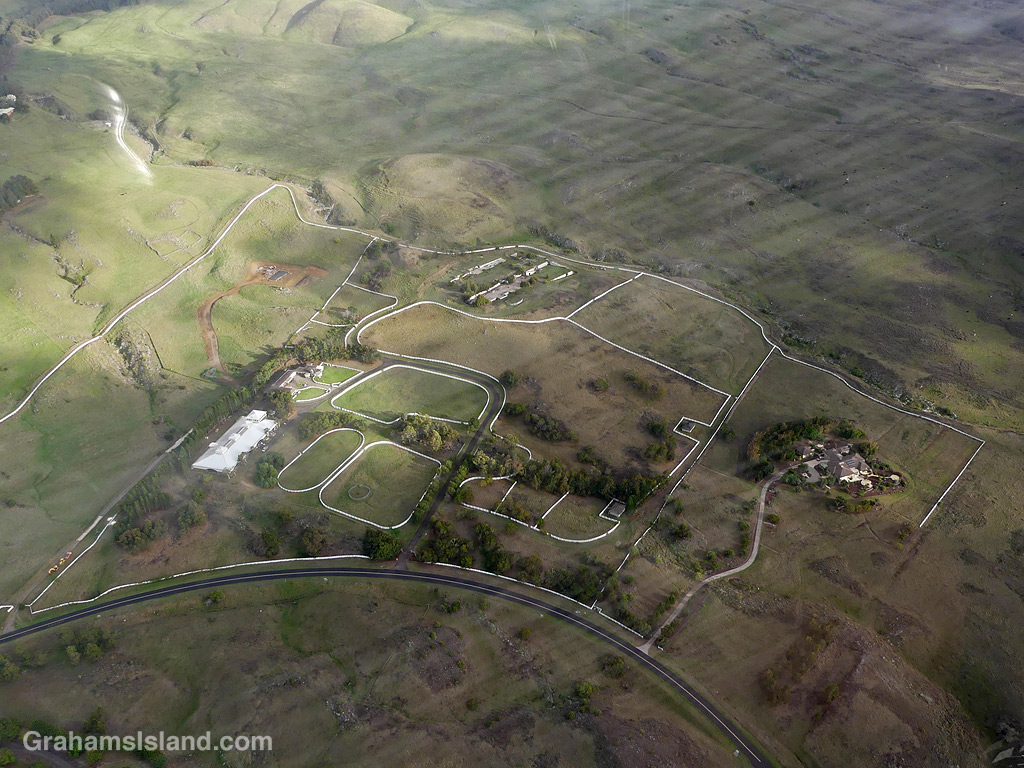
A pair of Common Waxbills seen through the bathroom window. It’s a good vantage point for watching and photographing birds, so long as I remember to clean it once in a while.Looking through a window into the old Bond Library in Kapaau, currently in the process of renovation.Looking out from my old truck on the drive down to Upolu Airport.A view of Kohala Ranch through a helicopter window. I like how the white fencing stands out.
A look through new windows at a construction project at Hapuna. Sadly, one of the new windows already had something go through it.
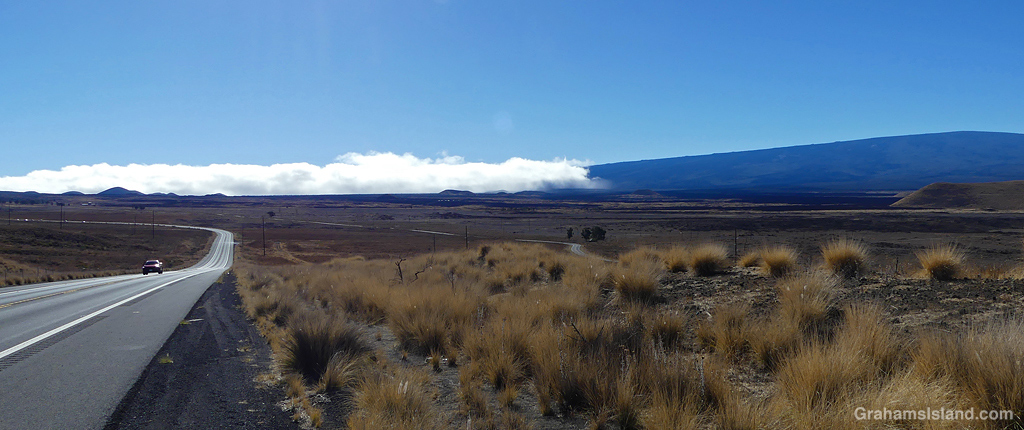
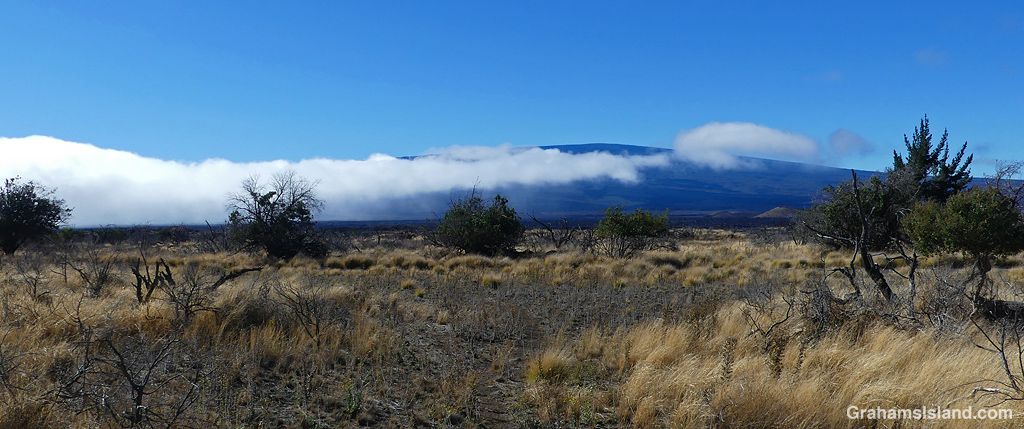
The Big Island’s weather is greatly influenced by northeast trade winds blowing up against Mauna Kea and Mauna Loa and dumping generous quantities of rain on the wet east side. Not much of this moisture reaches the much drier west side.
On a recent hiking trip to the saddle between Mauna Kea and Mauna Loa, I saw a visual example of what goes on. Cresting a hill, I saw a bank of cloud rolling in from the east. My hike was somewhere under that cloud. When I got closer to that wall of cloud, I could see it fading as it pushed to the west.
My hike started under gray skies, with some light rain, but on this day, the clouds did not keep building. Instead, they burned off somewhat so that it was dry and quite hot by the time I returned to my car, such is the fickle nature of Big Island weather.
Recently, while waiting to visit my dentist, I walked the trail in the Waimea Nature Park, also known as Ulu La’au. The trail follows the Waikoloa Stream for about a mile from the town center down toward the ocean. It’s a work in progress, with volunteers removing invasive species and planting native and canoe plants in their place.
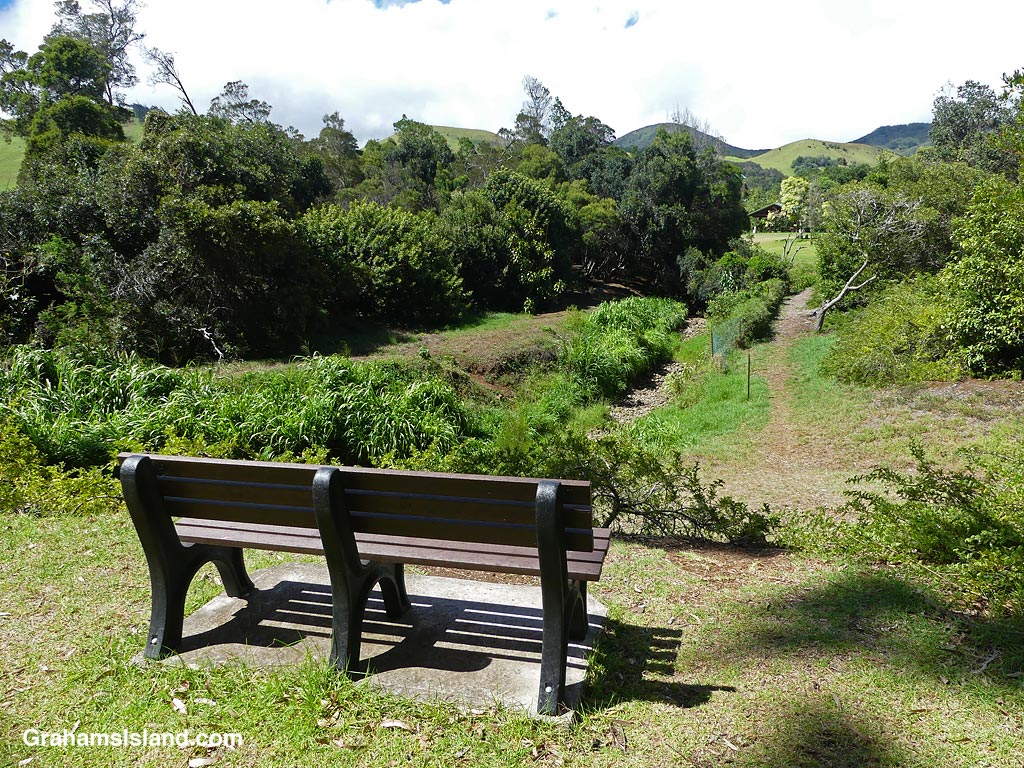
On my walk, the Waikoloa Stream had water in it, but not much. I think it would be fun to walk there after a heavy rain. But one thing I liked was the abundance of benches, some of which offered nice views of the park, the stream, and the hills surrounding the town.
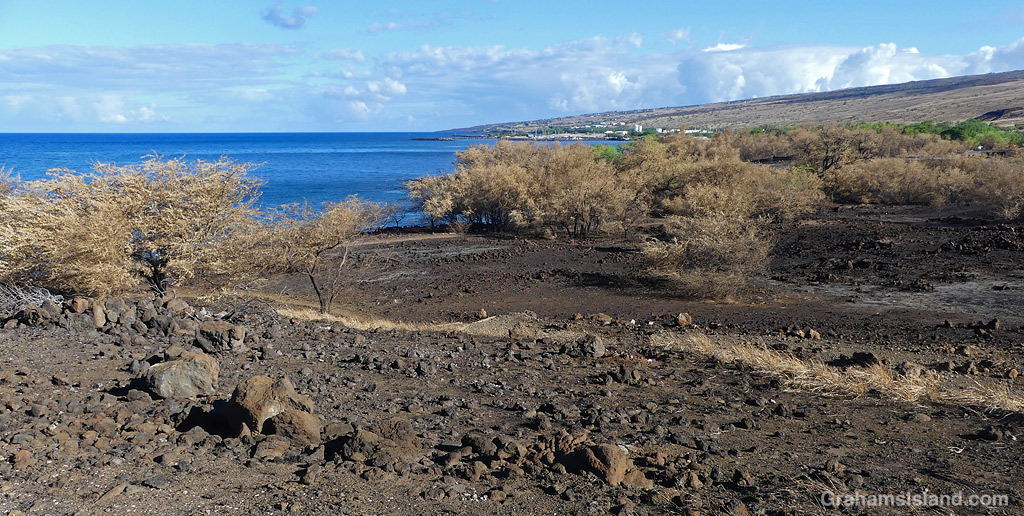
A few days ago, I headed out on the trail from Spencer Beach Park to Mau’umae Beach Beach. I was curious to see how far last month’s brush fire, that burned near Mauna Kea Resort, had reached down by the ocean. A hundred yards into the walk the answer became clear. It reached the shore. Spencer Beach Park was untouched, but the woods on the edge of the park are one tree deep in places.
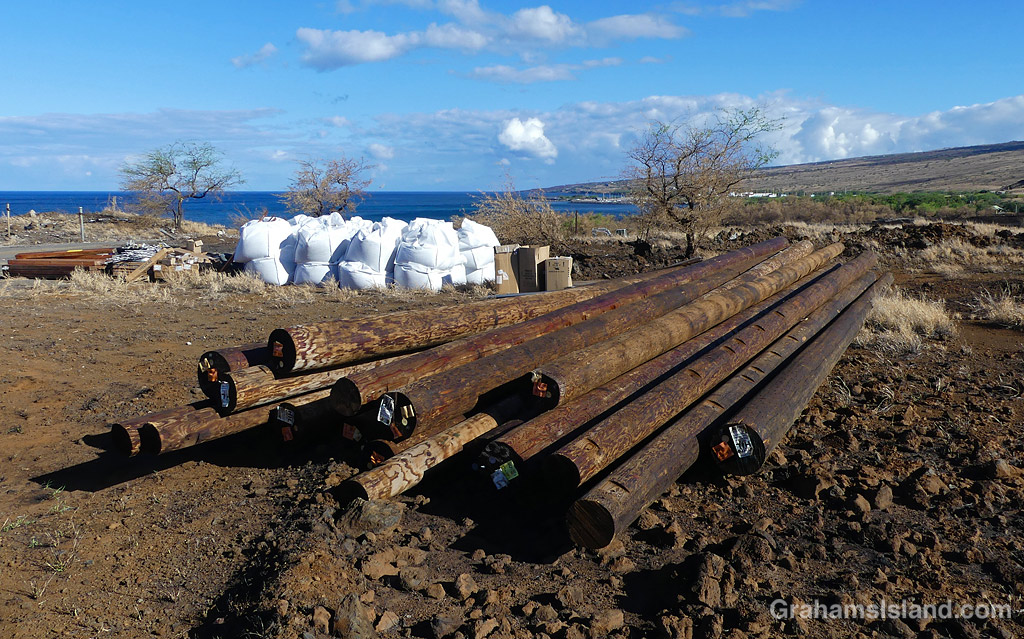
I walked back to Spencer on the service road, a quarter mile inland. The power line ran along the ground or was draped in blackened trees. There was a clump of poles and other supplies in one spot, ready for restoring service.
The vehicle access road to Mau’umae Beach beach is closed now, as two small wooden bridges were destroyed in the fire. Currently, and for the foreseeable future, the only access to the beach will be along the coast trail from Spencer. It’s only a 15 minute walk, but that’s often enough to discourage people from going there.