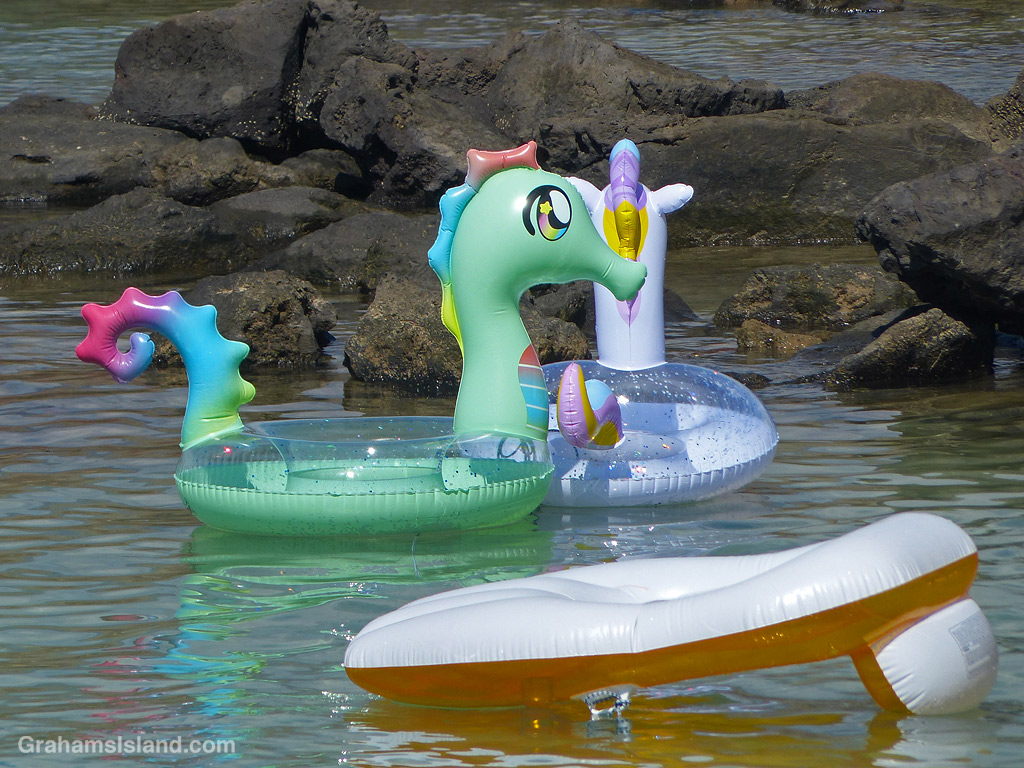
The ocean is full of strange, but colorful sea creatures including these seen in the sheltered waters of Kawaihae.

The ocean is full of strange, but colorful sea creatures including these seen in the sheltered waters of Kawaihae.
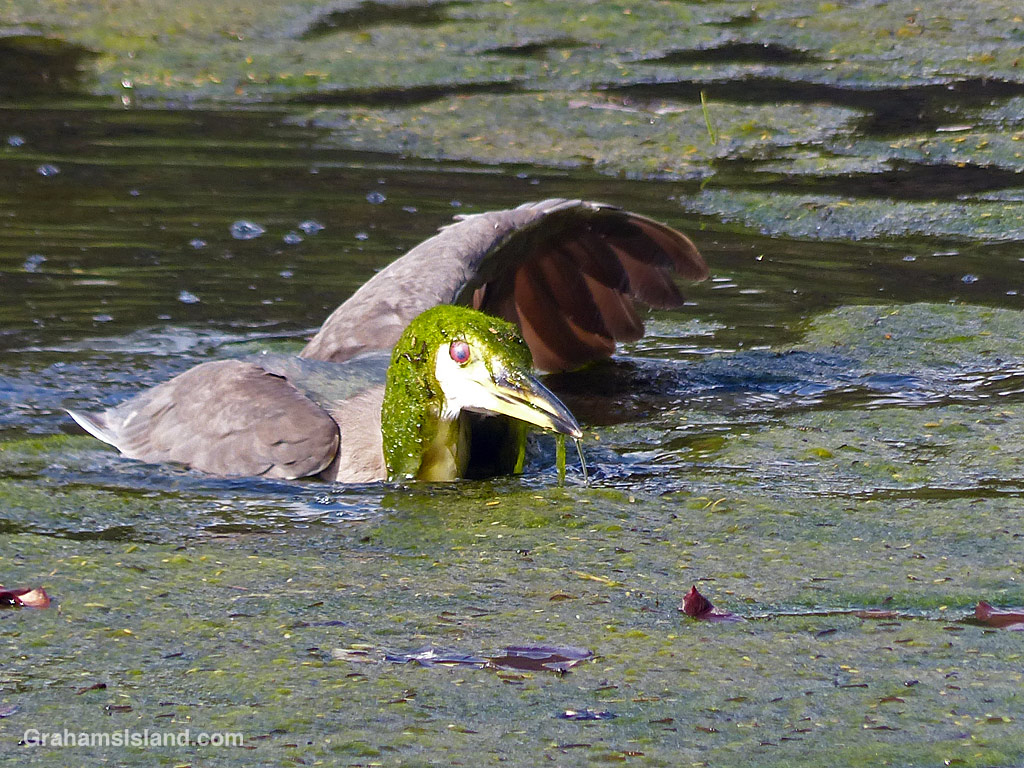
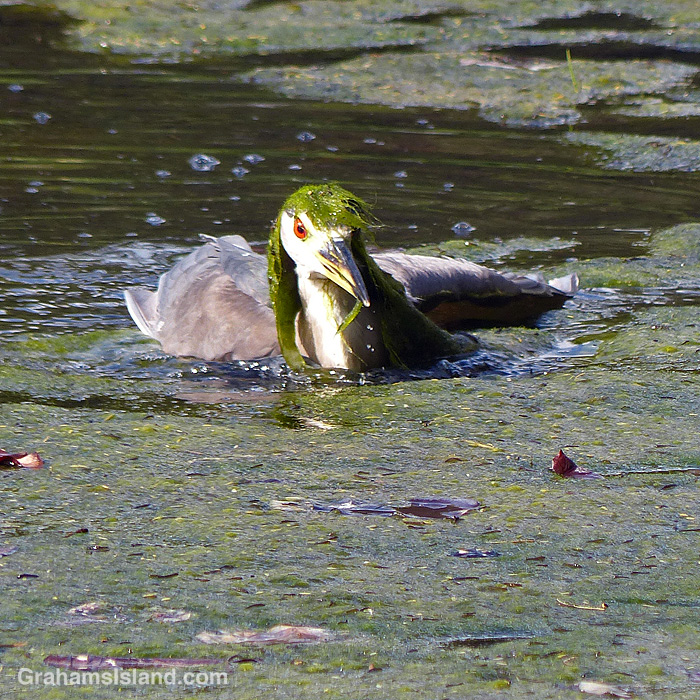
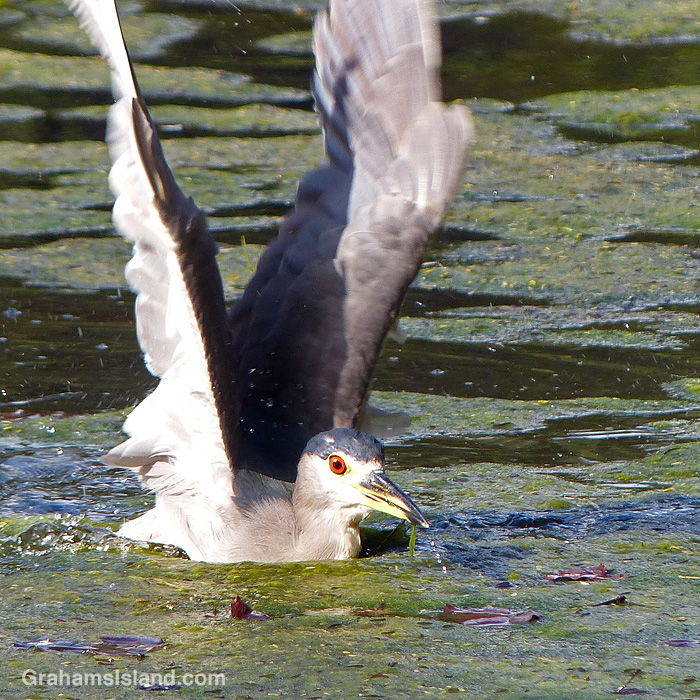
Recently, I was down at the lagoon behind the beach at Pelekane Bay in Kawaihae. I was engaged in one of my favorite activities – failing to get photos of dragonflies in flight!
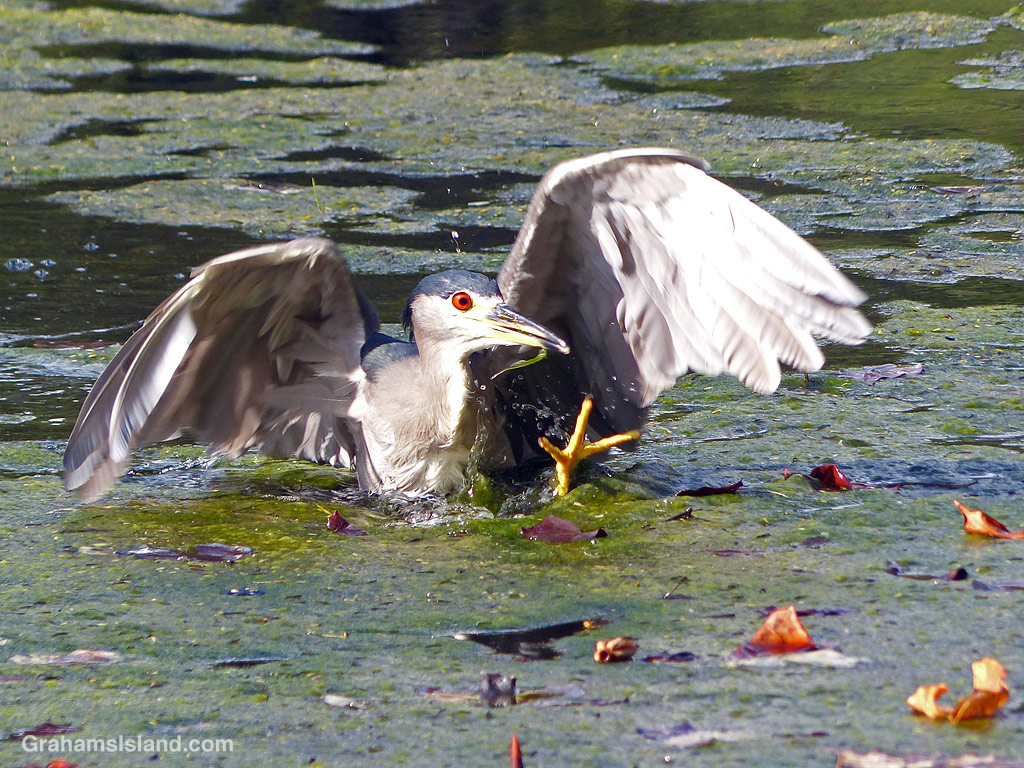
When I heard a loud plop behind me, I turned to find this scene. This Black-crowned Night Heron had dropped into the algae-covered water, probably after a fish. I don’t think it caught anything, but when it popped up again it sported a rather fetching green hairdo. Even after it had shed that, it still found the process of getting out of the water was hard going, with a lot of flapping and splashing producing little result.
Eventually the bird reached dry land and resumed a watchful pose, apparently none the worse for its ordeal.
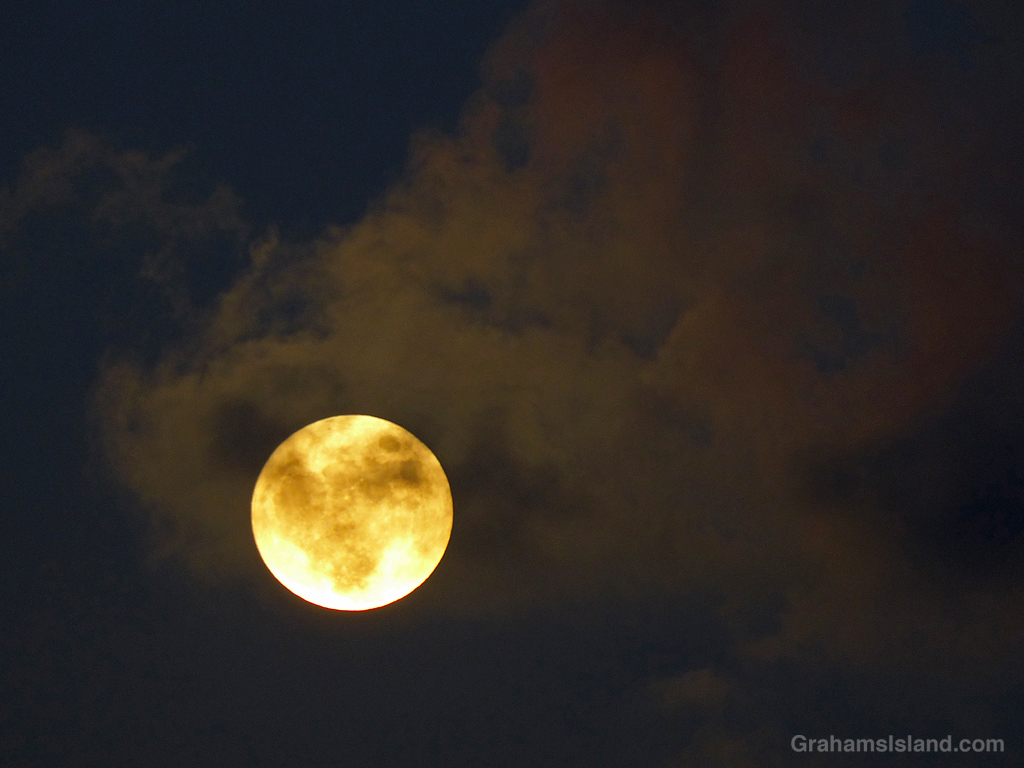
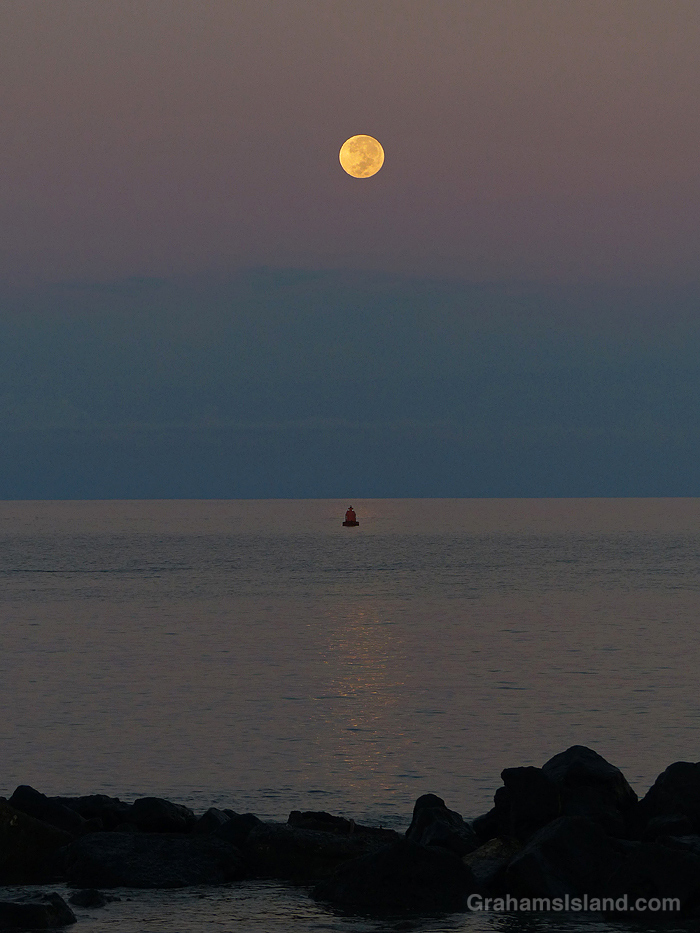
A couple of photos of the last full moon, rising (top) and then setting the next morning.

These robust steps lead into the water at the small park between the Port of Kawaihae and its small boat harbor. They’re nice and wide so surfers can get in and out on their way to the surf break in the vicinity. I was hoping that a large shape might pass by the steps, which is not unreasonable since there are a lot of sharks in this area.
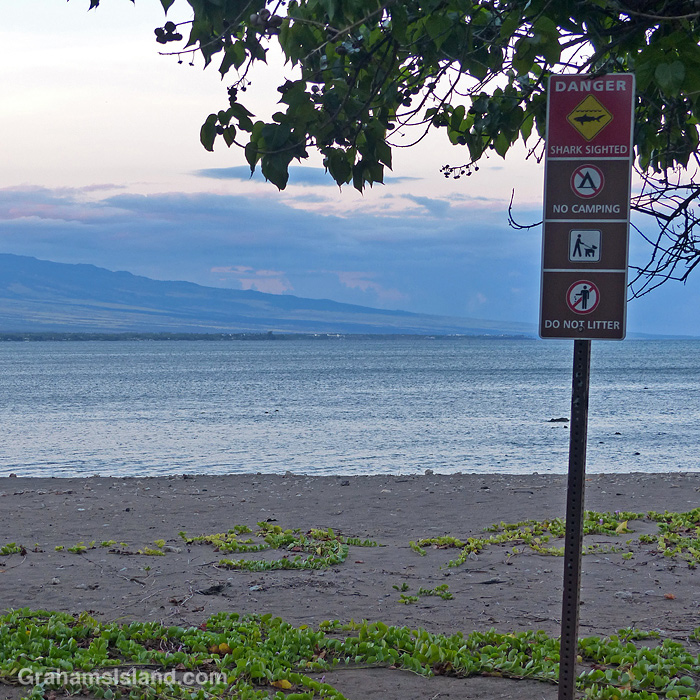
This sign stands behind the little beach below Puʻukoholā Heiau at Kawaihae. Typically, When a shark is sighted, a temporary warning sign is put up, then removed after a few days. This sign is permanent. The reason for this is that beyond this beach is Pelekane Bay and that’s the site of an underwater heiau dedicated to sharks.
This heiau, called Hale o Kapuni, was built by a chief for whom sharks were considered carriers of the spirits of his ancestors. Human sacrifices were carried out on the beach and afterwards, the bodies were believed to have been placed at the heiau for the sharks. Those days are long gone, but the bay and surrounding area is still home to a large population of sharks, hence the sign.
For more information, go to https://www.nps.gov/puhe/index.htm

A tug brings its barge to a stop before positioning it alongside the wharf at Kawaihae for unloading. This is an almost daily, early morning occurrence. In the background is Mauna Loa, which is Hawaiian for ‘long mountain.’
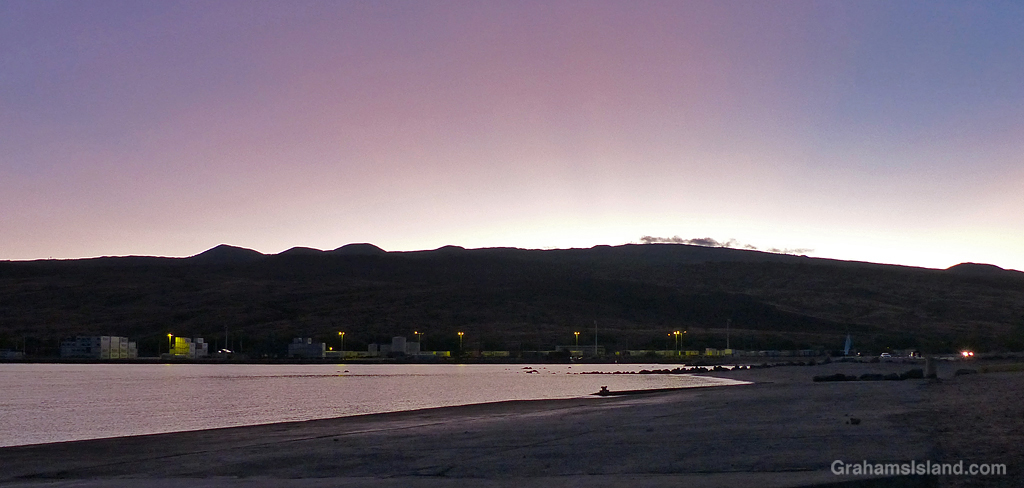
Soft early morning light illuminates the harbor at Kawaihae.
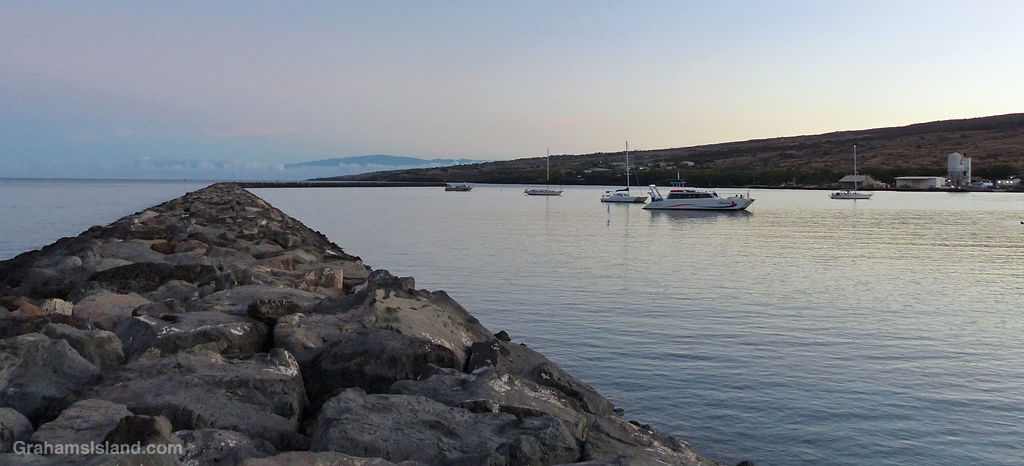
This view of the breakwater at Kawaihae makes it look like one could walk to Maui. I wouldn’t advise it!

