Tag Archives: Lava

Sriracha the Bengal tiger

Sriracha, a female Bengal tiger, paces at Pana‘ewa Rainforest Zoo in Hilo.

This week’s WordPress photo challenge is to choose your favorite photo taken in 2017. I’m going with a photo that I haven’t posted before (though below I offer a few of my favorites that have run).

This is Sriracha, a female Bengal tiger and cousin of Tzatziki, a white male tiger. Both can be found at Pana‘ewa Rainforest Zoo in Hilo. What I like about this photo is those huge paws, the quiet movement, and the sense of great power that could be uncoiled at any moment.

For more information about Pana‘ewa Rainforest Zoo & Gardens, go to hilozoo.org.

As far as favorite photos already posted are concerned, I offer a few here:

Top. A gold dust day gecko drinking from a bird of paradise flower is a blaze of color (posted here).

Second. This photo captures the awesome spectacle of the lava firehose from Kilauea Volcano pouring into the ocean (posted here). Currently, while the flow is still active, lava is no longer entering the ocean.

Third. I was happy to snap the moment a passion vine butterfly laid an egg (posted here). This was taken on the same day as the gecko photo above, so a banner day for me.

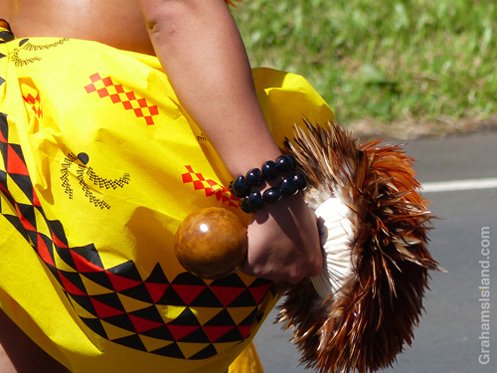
Fourth. I like all the photos in this post for their color and how they capture something of this most Hawaiian of dance (posted here).

Finally, I love this gargantuan blenny for its name, and was very pleased to get this photo, since the fish is apt to dart away and the shallow water was rocking (posted here).

Kilauea Iki Crater trail

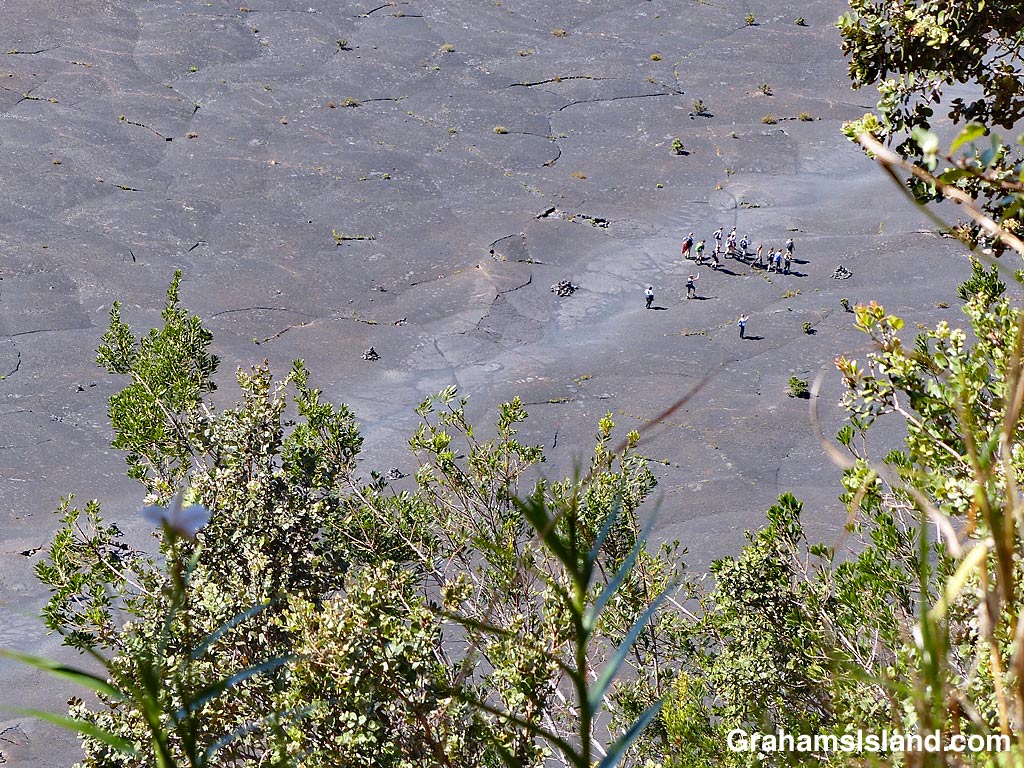
A group of people, looking very small, walk the trail across Kilauea Iki Craterfloor.A group of people, looking very small, walk the trail across Kilauea Iki Craterfloor.

These views of the trail across Kilauea Iki Crater, taken from the rim of the crater, give some idea of the scale of Kilauea Volcano.

Above, a group of people, looking very small, walk the trail across the crater floor.

To the left, smoke and gases from the active vent in Halema’uma’u Crater can be seen. Halema’uma’u Crater is part of the Kilauea Caldera which is much, much bigger than Kilauea Iki Crater. And, yes, that same group is still visible on the trail in this second photo, along with several others hiking the trail.

For more information about Hawaii Volcanoes National Park, go to nps.gov/havo/. For more information about Kilauea Volcano and it’s eruptions, go to hvo.wr.usgs.gov/kilauea/history/main.html.

Kona lava tube

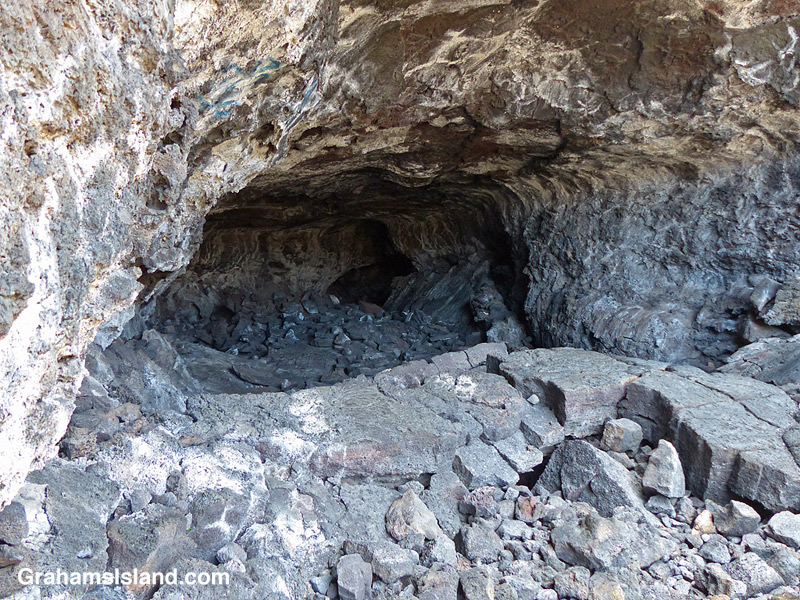
The lava tube north of Kailua Kona Airport.The lava tube north of Kailua Kona Airport.

Probably the most visited lava tube on the Big Island is Thurston Lava Tube in Hawaii Volcanoes National Park. However, the most easily accessible might be one just a couple of miles north of the airport at Kailua Kona.

Just off the main highway, it’s not unusual to see a line of vehicles pulled over and people scrambling over the lava. There’s a well worn path leading down to the entrance of the tube and enough headroom to make access easy. However, it’s worth noting that there are piles of rock strewn around from ceiling collapses and the whole area looks crumbly. I certainly wouldn’t want to be down there during an earthquake. Enter at your own risk!

Fire from the volcano

Lava from Kilauea’s Pu’u O’o vent pours into the ocean.Lava from Kilauea’s Pu’u O’o vent pours into the ocean.Lava from Kilauea’s Pu’u O’o vent pours into the ocean.

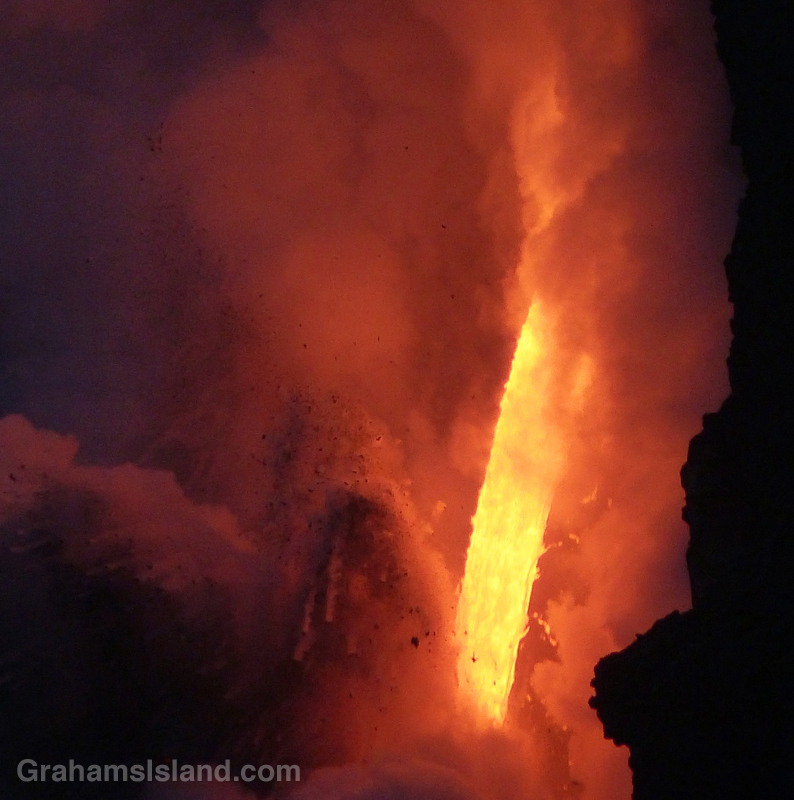
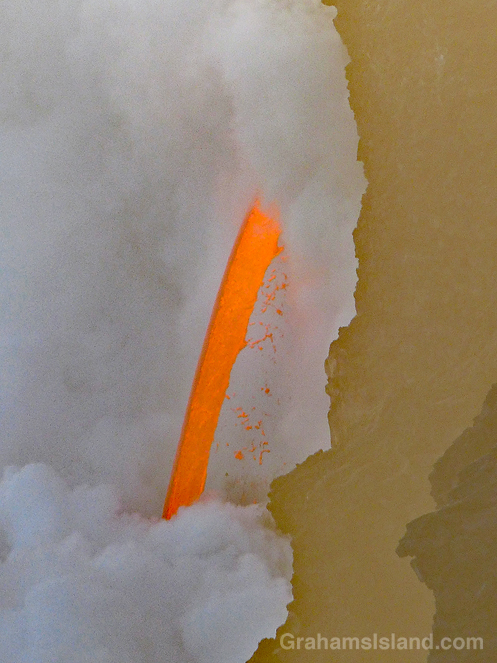
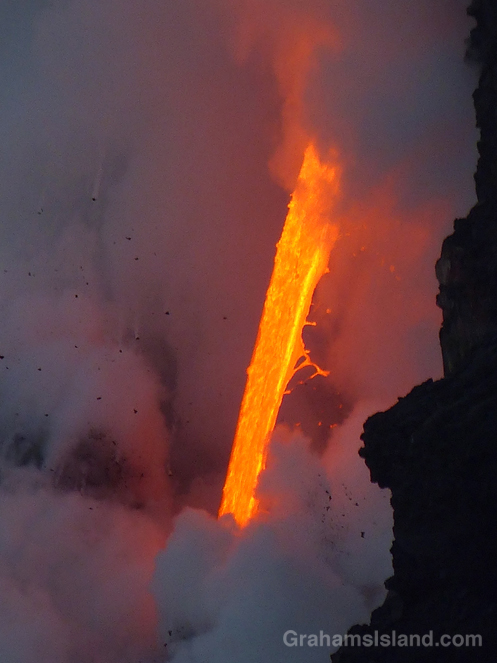
Since the theme of this week’s WordPress photo challenge is elemental, I thought I’d pull out a few more photos from my visit, earlier this year, to the lava flow from Kilauea’s Pu’u O’o vent.

This is the closest we get to seeing fire from the earth’s core, a roaring torrent of molten lava. Since I took these photos there have been cliff collapses that have ended this firehose effect. But the lava continues to flow and has formed a good-sized delta at the foot of the cliff. This delta is crossed by several large cracks, which run parallel to the coast. This means the whole delta is likely to collapse into the ocean in the near future, probably in explosive fashion.

Could be time for another visit!

Lava from Kilauea’s Pu’u O’o vent pours into the ocean.Lava from Kilauea’s Pu’u O’o vent pours into the ocean.

Helicopters circle Pu’u O’o vent

Tour helicopters circle Pu'u O'o vent on the Big Island of Hawaii

During a recent hike on the Nāpau Trail in Hawaii Volcanoes National Park, one accompaniment was the throb of helicopter engines. The active flow from Pu’u O’o vent, and its ultimate outpouring into the ocean, is a great attraction for visitors and locals alike.

One way of seeing these events is on a helicopter tour and, as I sat at the Nāpau overlook, I noticed there was a clear order to those helicopter visits. A pair would arrive from the west, one a bit behind the other. One would circle the vent, the other visit the ocean entry. Then they’d switch. After 10 or 15 minutes, the two helicopters would head off to the northeast and soon after, the next pair would arrive.

For more information about Hawaii Volcanoes National Park, go to nps.gov/havo/.
 For more information about Kilauea Volcano and it’s eruptions, go to hvo.wr.usgs.gov/kilauea/history/main.html.