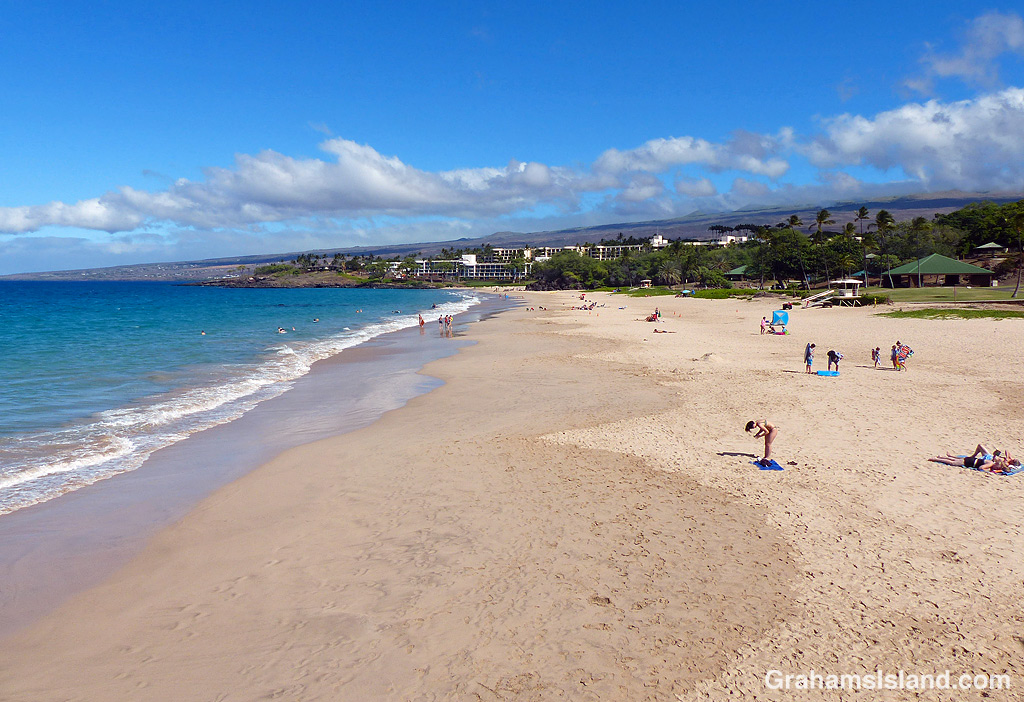
Hapuna beach under blue skies on a typically warm, sunny day.
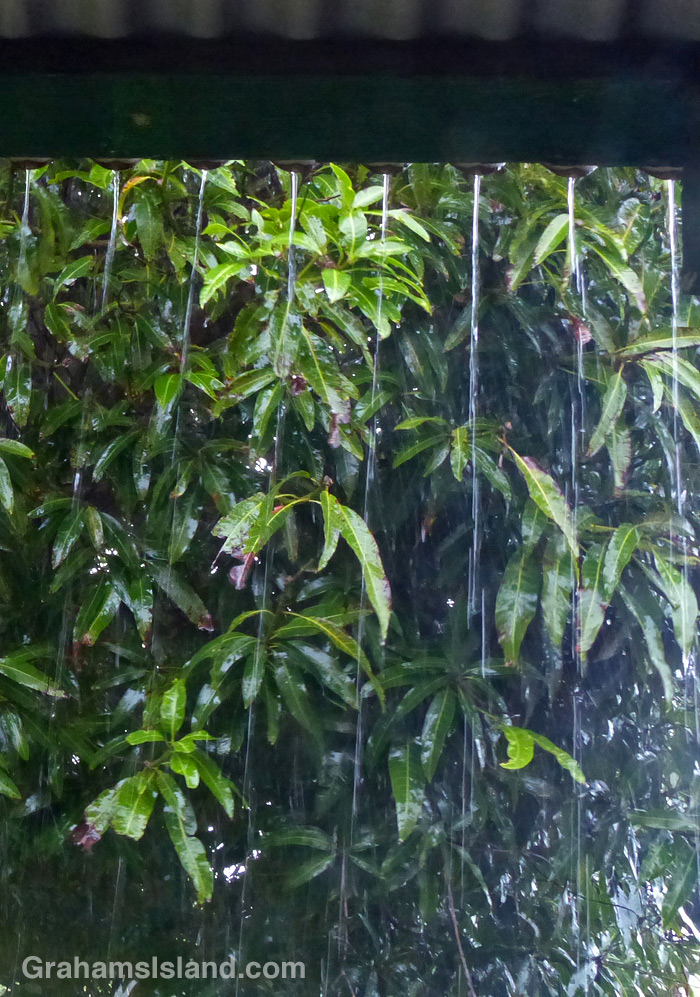
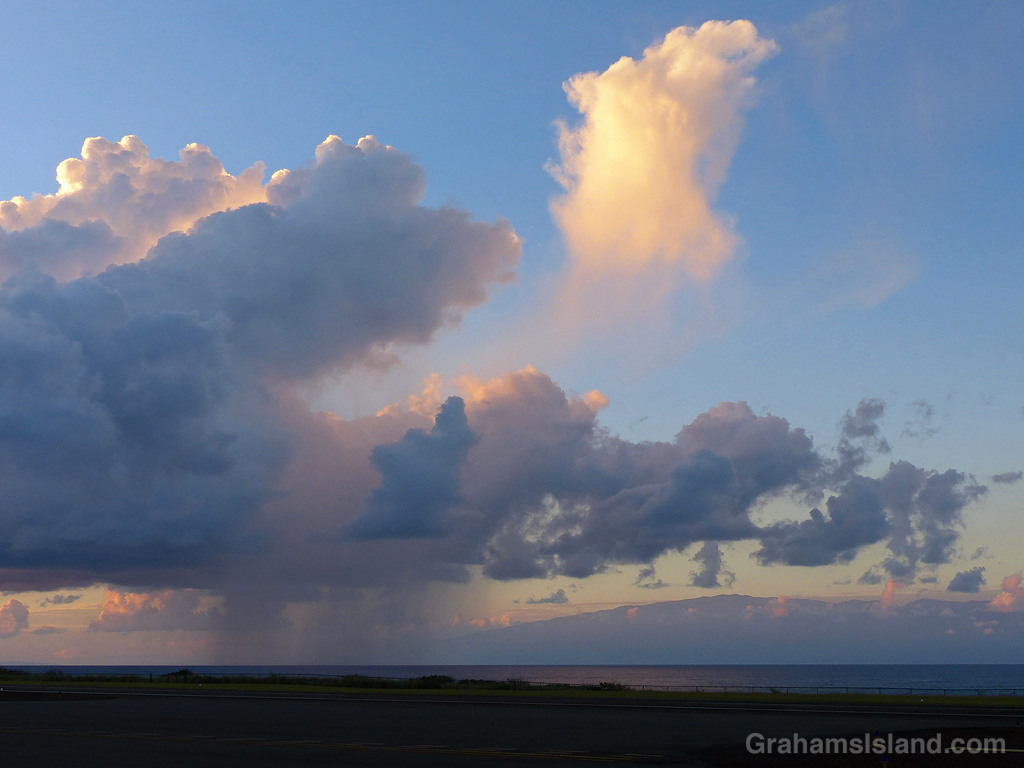
When it rains, it can rain hard.
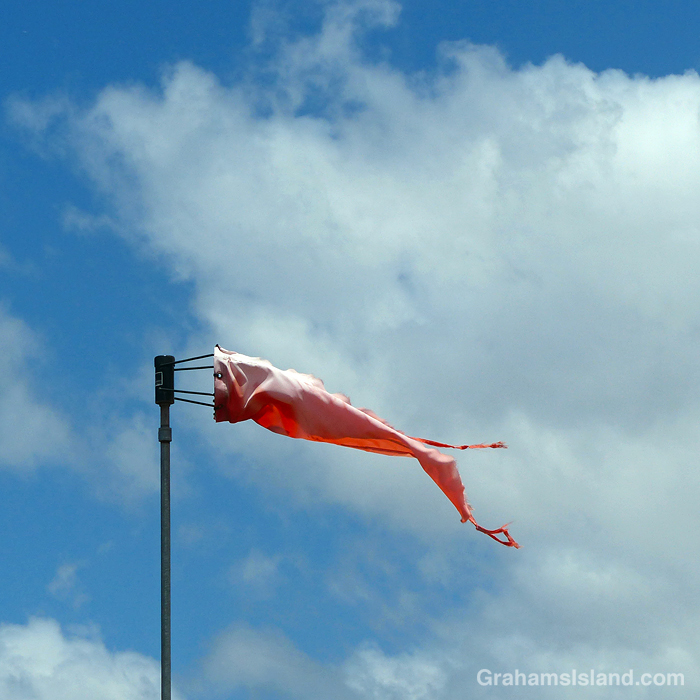
The wind and sun can be hard on things, even a windsock.
This week’s Sunday Stills challenge theme is ‘Weather.’ See more responses here. Last month, I did a post about our local weather here. Weather in one place can be very different from another place just a few miles away.
The basics are that the east side of the island is wetter and cloudier, the west side, sunny and dry. Both sides are warm, but not as hot as they might be thanks to the prevailing northeast trade winds, though they’re not as consistent as they used to be. Paradoxically, the driest places on the island are also the coldest, the summits of Mauna Kea and Mauna Loa, which are usually above the clouds.
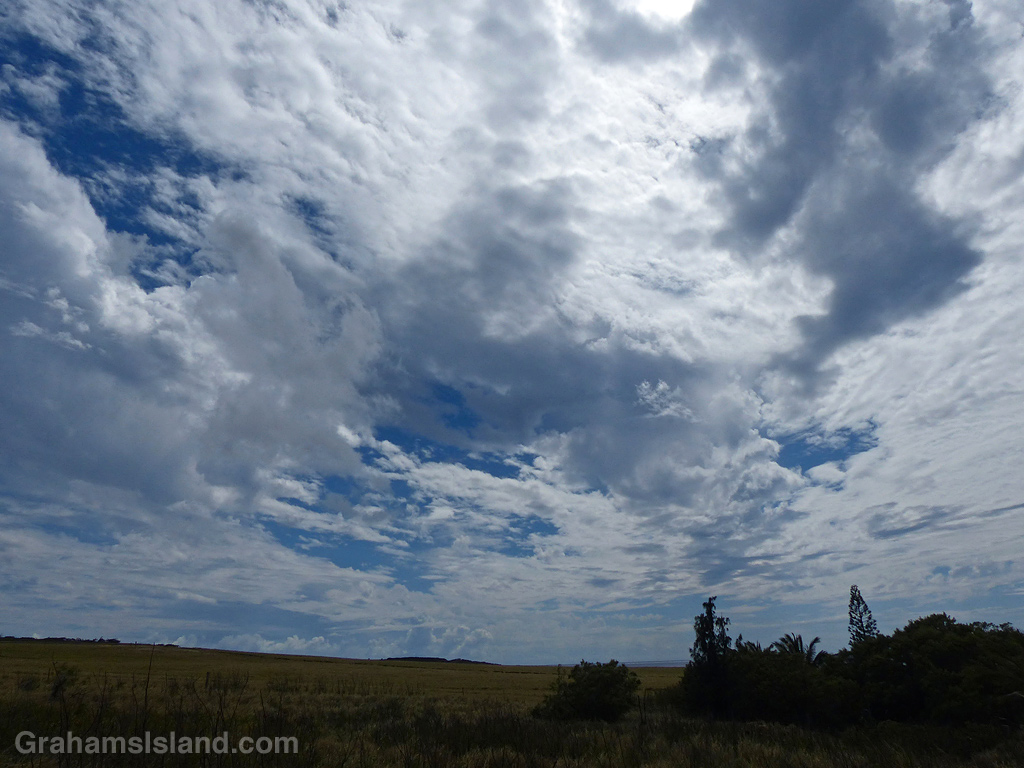
So here are a few photos illustrating some of the varying weather we get, even if it wasn’t forecast.
Clouds tend to build during the day, sometimes bringing rain, sometimes just the threat of it.The ʻAlenuihāhā Channel between Maui and the Big Island can be windy and wet as clouds and rain funnel through.
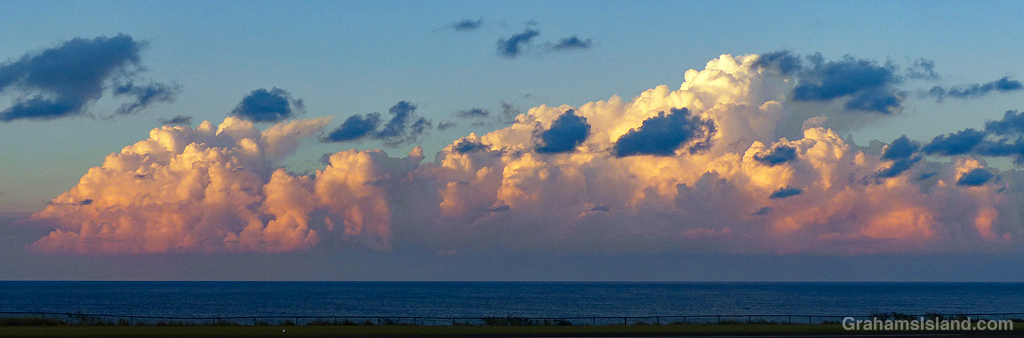
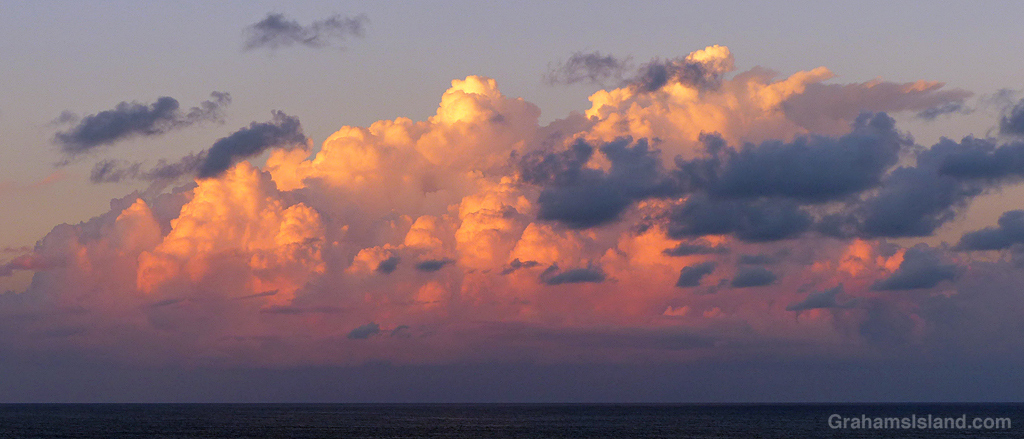
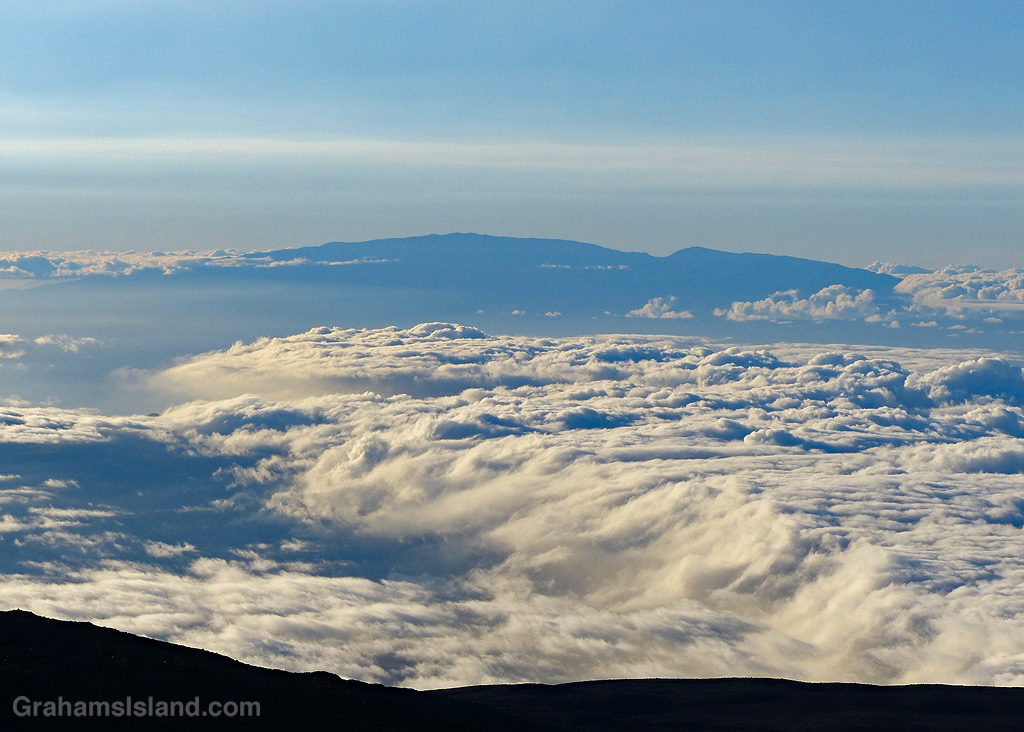
I saw these clouds piled up over the ʻAlenuihāhā Channel, between the Big Island and Maui, late one afternoon. They look dramatic, though the weather was really quite peaceful.
This week’s Sunday Stills challenge theme is ‘Things that are white.’ See more responses here.
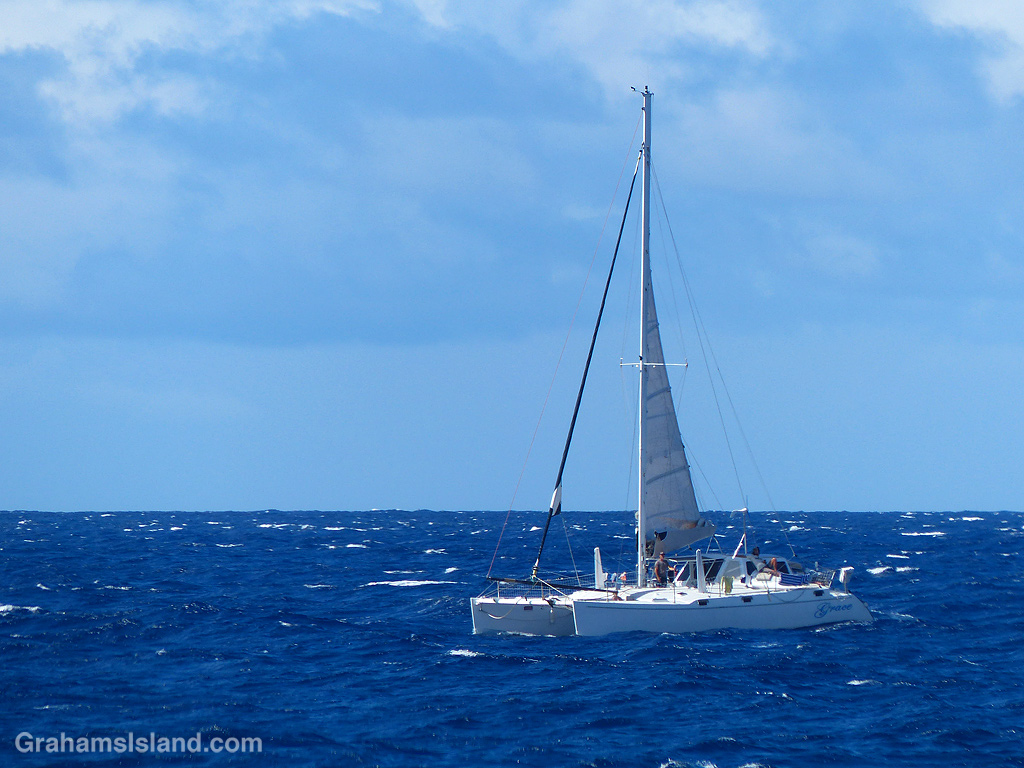
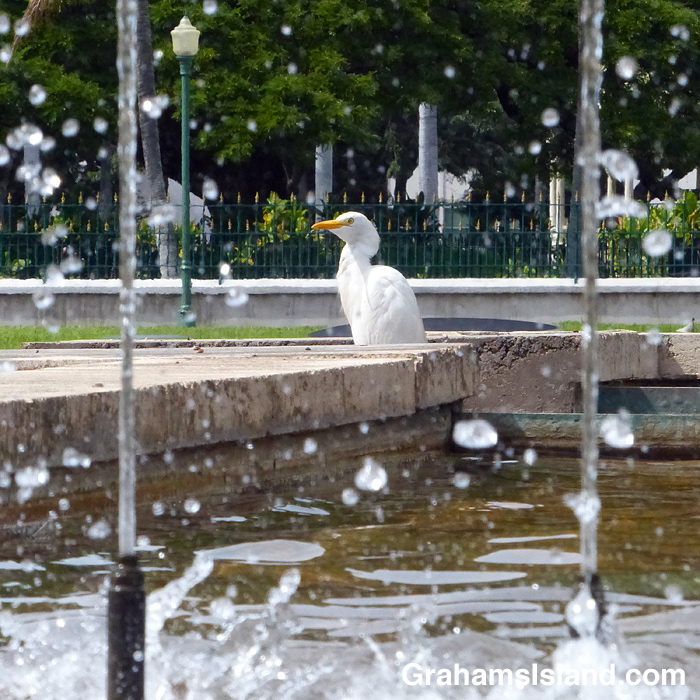
The top photo features a white catamaran with white sails, cruising on a white-capped ocean. The second photo is a cattle egret in a water fountain. The third photo shows a thick layer of white clouds between the Big Island and Maui, as seen from Mauna Kea.
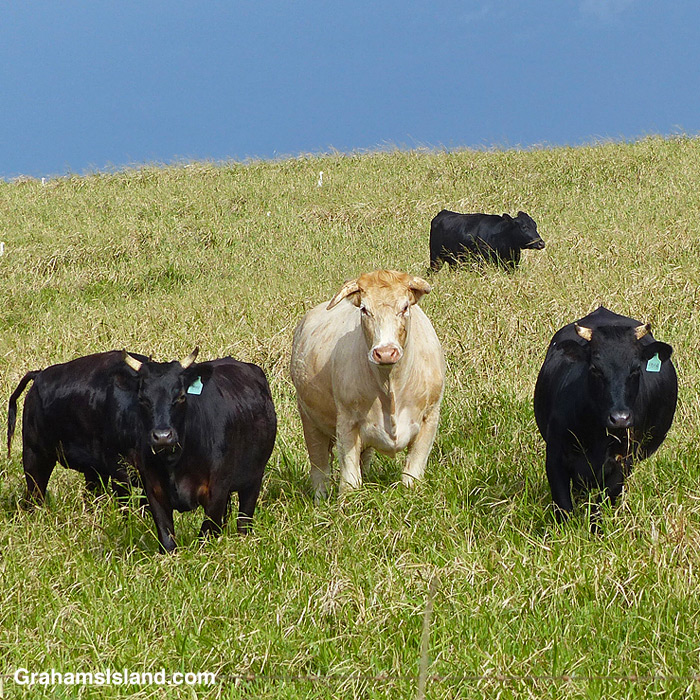
There are dairy cows and beef cattle here. Some are bigger than others.
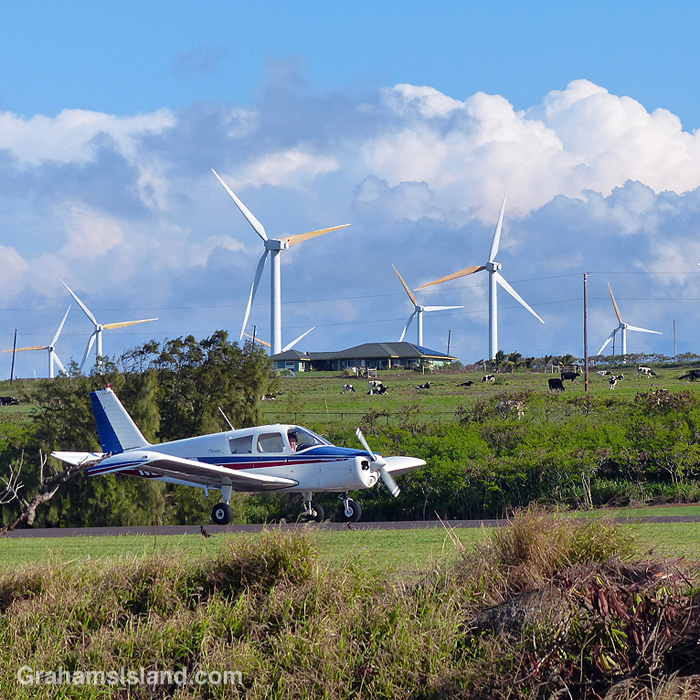
I often see sheep or cows on the road. These were trotting past the wind farm.
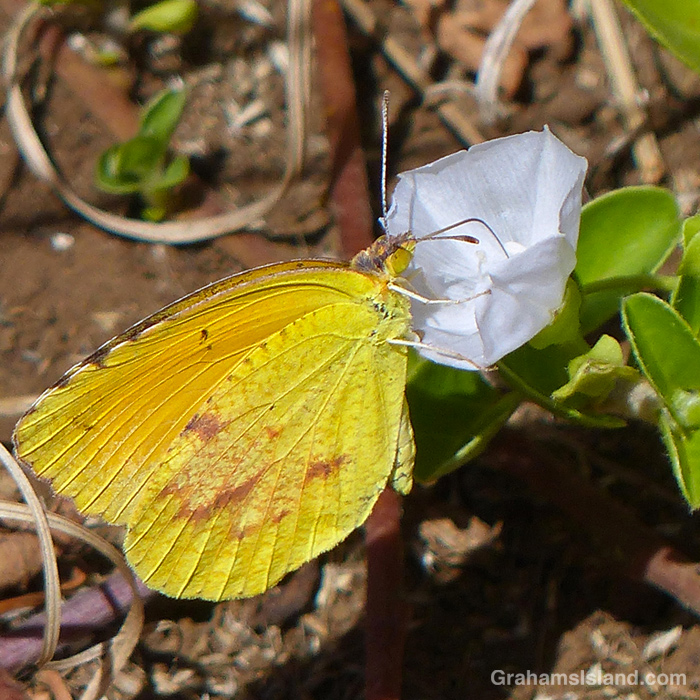
A sleepy orange butterfly on the flower of a native Jacquemontia sandwicensis vine.
A pair of nenes walk along the road outside the airport fence.
The newest addition to the landscape is this alien-looking sugar cane harvester.
Horse riders on the road along the coast.
Upolu is a good place to watch the sunset.
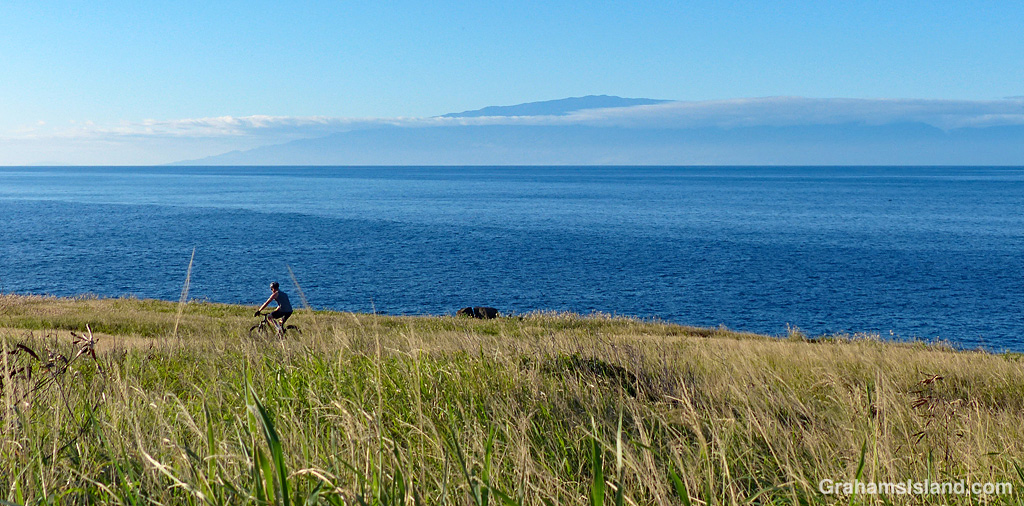
The view from Mo’okini Heiau towards a cloud-covered Maui.
A view of Maui from the top of the road to Upolu Airport.
This week’s Sunday Stills challenge theme is ‘Your Favorite Landscape.’ See more responses here.
When I think of the landscape at Upolu, it includes both the ocean that borders it and the skies above. They are, in my mind, integral to the place. But here, I’ve focussed on the land, a relatively small area of a few square miles where I walk most days. It’s rural, agricultural, and coastal. It’s historic and modern. It’s also a place I never return from feeling disappointed. There’s always something of note that I see or that happens when I’m there.
Also posted in response to Becky’s January Squares challenge theme of ‘Up.’ See more responses here.
As the sun sets on this strange, unhappy year, here’s a photo of a more tranquil sunset. The long, low island on the left is Kahoʻolawe, with Lānaʻi visible just to the right of it. The southern coast of Maui is on the right.
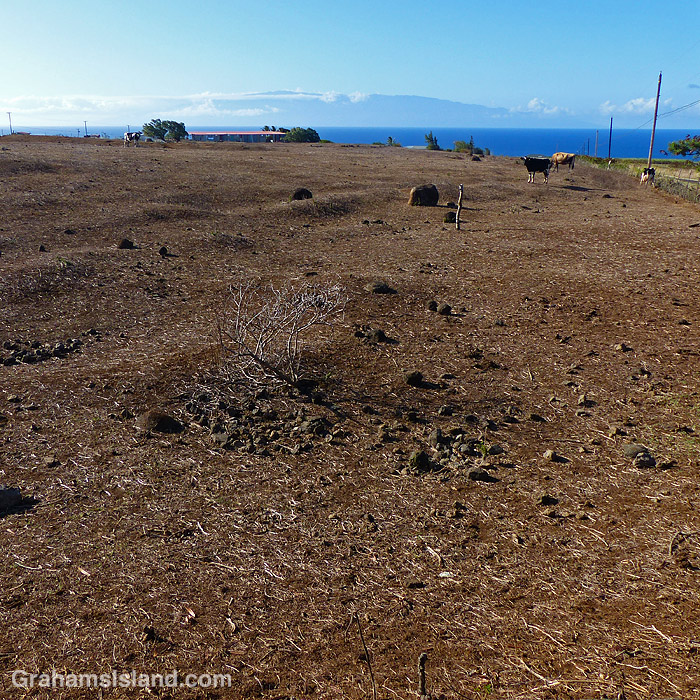
A couple of days ago I posted an image of an irrigation unit used in one of the local dairy’s fields (here). This is the same kind of field but without irrigation. There were more cows in this field than blades of grass because it’s been so dry in this part of the island.
Ironically, since I took this photo three days ago, we’ve had a couple of days of fairly solid rain and this field is already showing a tinge of green where new grass is coming through. However, the last time it was this dry, after it rained the first things to spring up were weeds which basically choked out the grass.
Posted in response to Becky’s October Squares challenge theme of ‘Kind.’ See more responses here.
This week’s Sunday Stills challenge theme is ‘Freedom.’ See more offerings here.
When Terri posts the Sunday Stills challenge themes for the month ahead, I usually check out what’s coming up. That way I can see what photos I have that fit the themes, or come up with ideas for what I could shoot.
When June’s themes were posted, my first thought for this one was of flying. Since the earliest of times, people have looked to the skies, watched birds, and envied their freedom of flight. Of the various birds I see here, the great frigatebird most epitomizes that freedom. These large birds cover great distances, gliding effortlessly across the sky, rarely flapping their wings but using the wind to maximum advantage.
I picked a couple of photos from my archives, expecting to use them since I hand’t seen any frigatebirds for many weeks. But a couple of days later, I saw one, though I didn’t get any good photos. That’s the other thing about these birds: they seem to have a knack for sneaking up on me, so that I usually notice them disappearing into the distance.
Over the next week or two, I saw a few more birds in similar situations. Then, one day, as I neared the coast below Upolu Airport, I saw a frigatebird flying into a strong wind. By the time I had my camera ready, it was again getting smaller. Still, I took photos and as I did so I saw a second bird, then a third. They continued heading east and I carried on down to the coast.
I hadn’t been there more than a couple of minutes when one of the birds shot by in front of me. It was pointing east, but heading north of west riding the stiff northeast trades that were blowing. A second followed, then a third, and a fourth that I hadn’t seen before. I expected them to quickly disappear on the wind, but once over the water, they regrouped and held their position, circling and gliding up and down. Then I noticed them edging back into and across the wind, heading my way. Slowly they came closer, still appearing to make little effort.
Eventually, the four of them passed directly overhead, the lowest maybe 20 feet above me. Almost immediately they turned and slipped back they way they came, only this time they kept going, gliding sideways in the general direction of Maui. I watched until I couldn’t see them anymore. The whole episode probably lasted no more than 15 minutes, but it seemed to last much longer.
I’m not much of a poetry buff, but these birds made me think of the opening lines of a poem called High Flight, written in 1941 by John Gillespie Magee Jr. when he was 19 and a pilot in the Royal Canadian Air Force, stationed in England. They read: Oh! I have slipped the surly bonds of Earth And danced the skies on laughter-silvered wings.