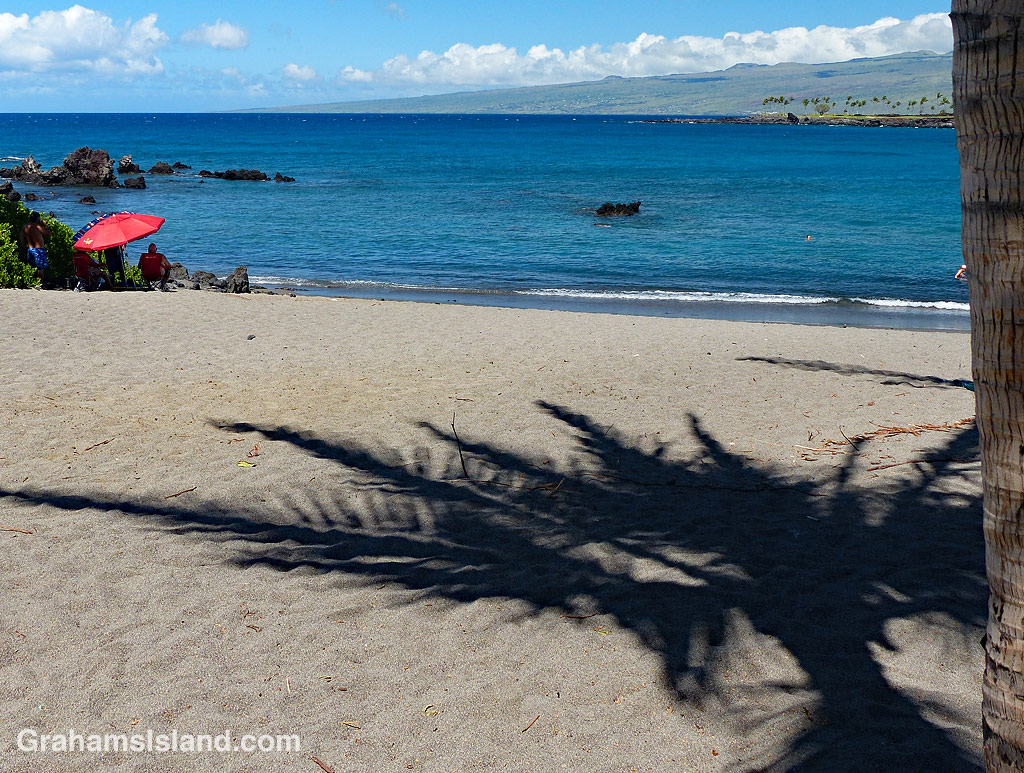
Honoka’ope Bay, located in Mauna Lani Resort, is also known as Black Sand Beach though, as this photo shows, the sand is not particularly black. It is, however, a protected bay with decent snorkeling much of the time. And regardless of the color of the sand, it’s a splendid spot to hang out and quietly broil in the sun.
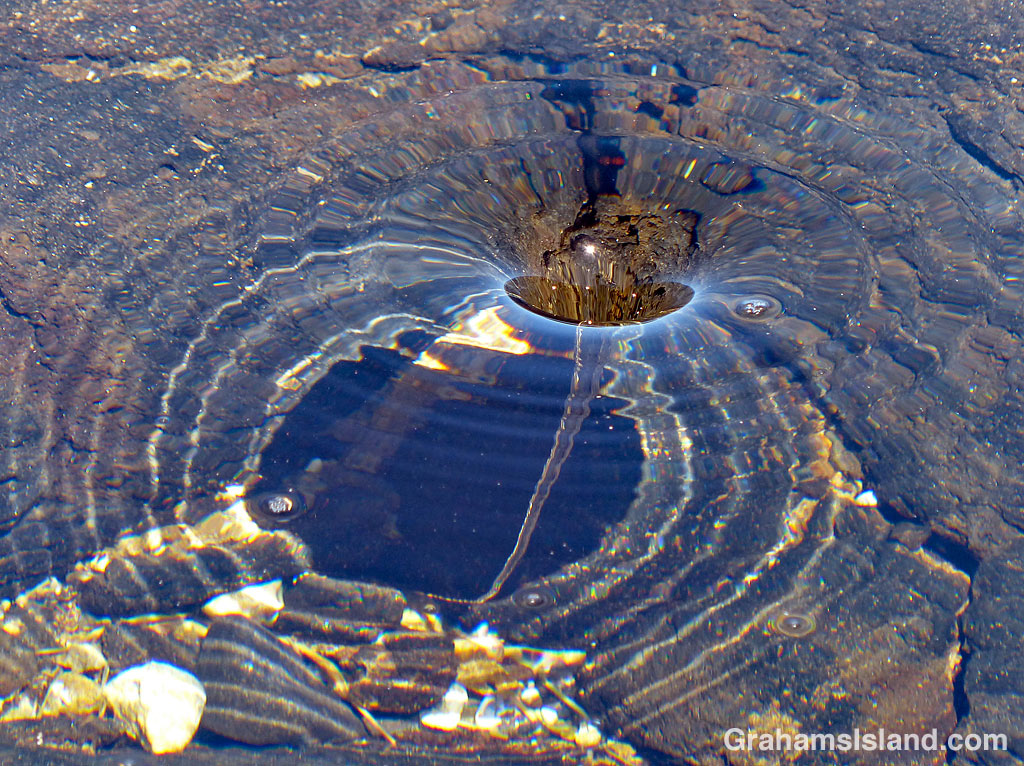
I watched this little whirlpool come and go in a tide pool, its state varying with the influx of water from the ocean. Sometimes it disappeared altogether, but usually returned.
What first drew my attention was not the whirlpool itself, but the shadow on the floor of the tide pool, which varied from fairly circular to heart-shaped.
This week’s Friendly Friday challenge theme is ‘Alternative Version.’ See more responses here.
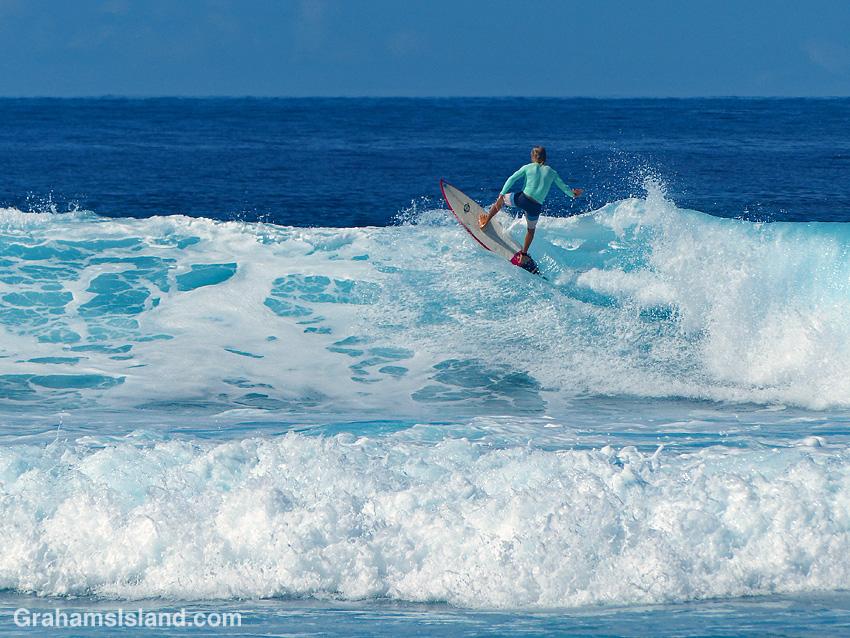
Surfing originated in Hawaii and is a quintessential Hawaiian activity. When the surf’s up, so is absenteeism at the workplace. For last week’s challenge, I posted a photo of surfers waiting for a wave.
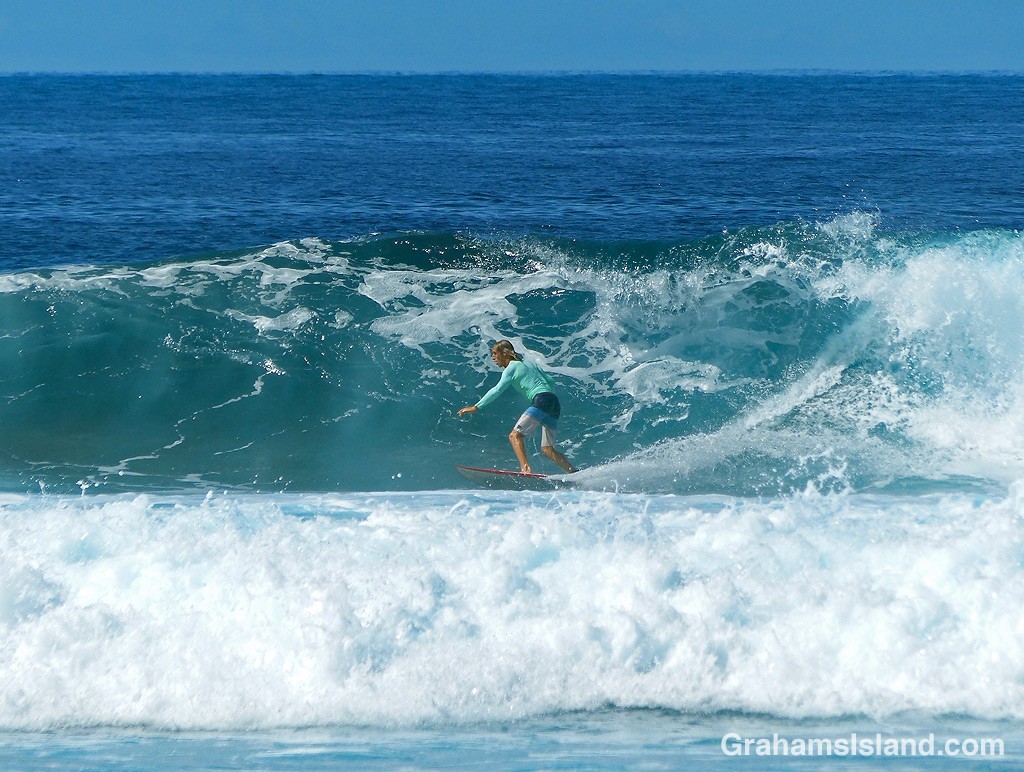
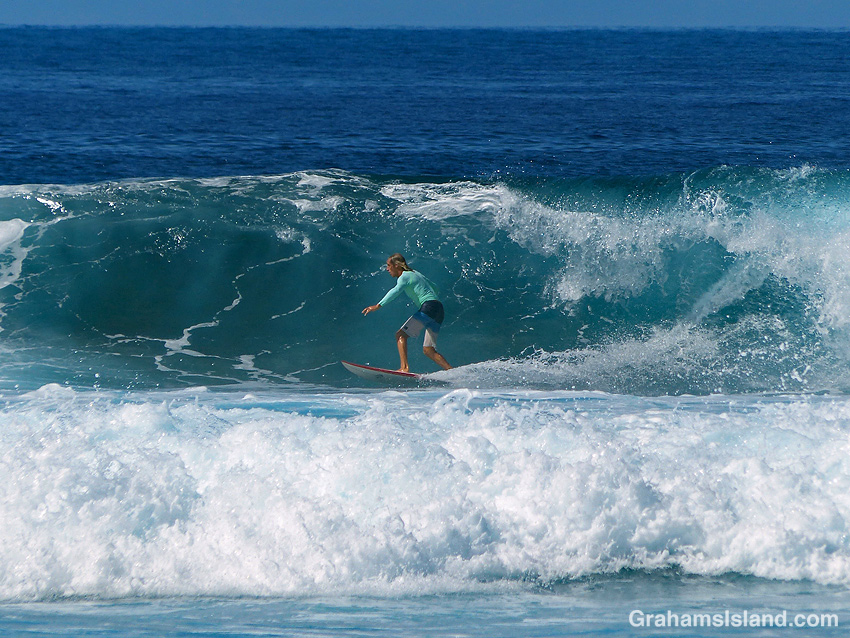
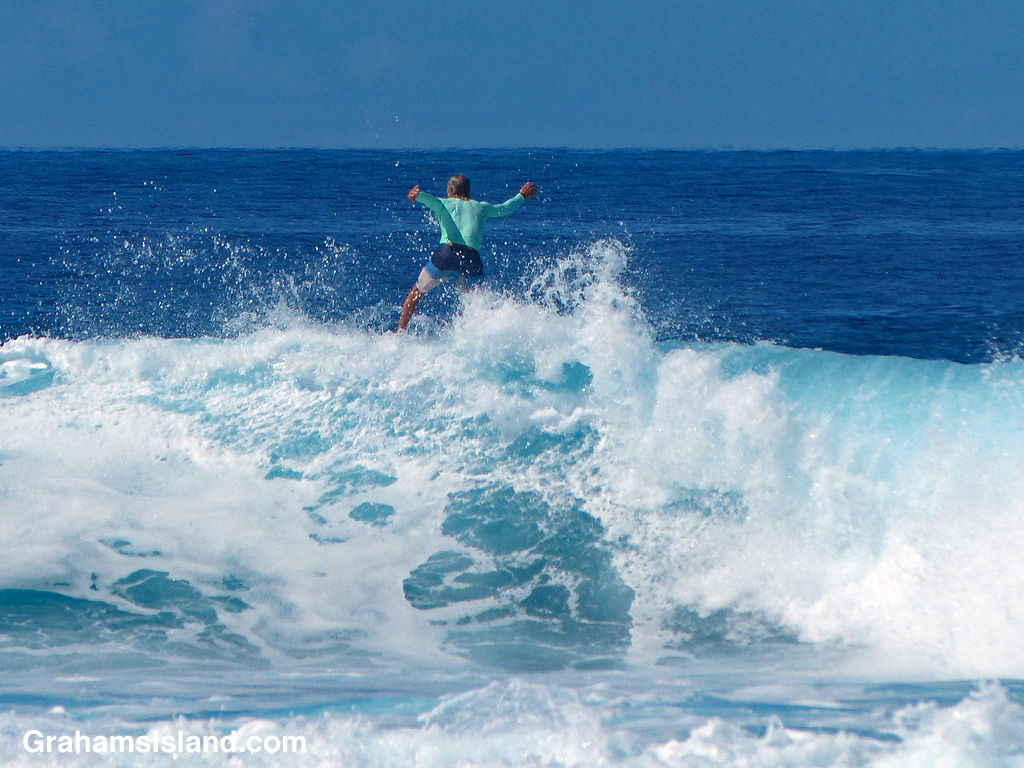
This week, I’m posting photos of one of those surfers catching a wave. In the photos, the surfer cuts a curve down the face of a wave, zips along its base, and then climbs up the face again. At the top, he jumps off, no doubt to wait for the next wave he can catch.
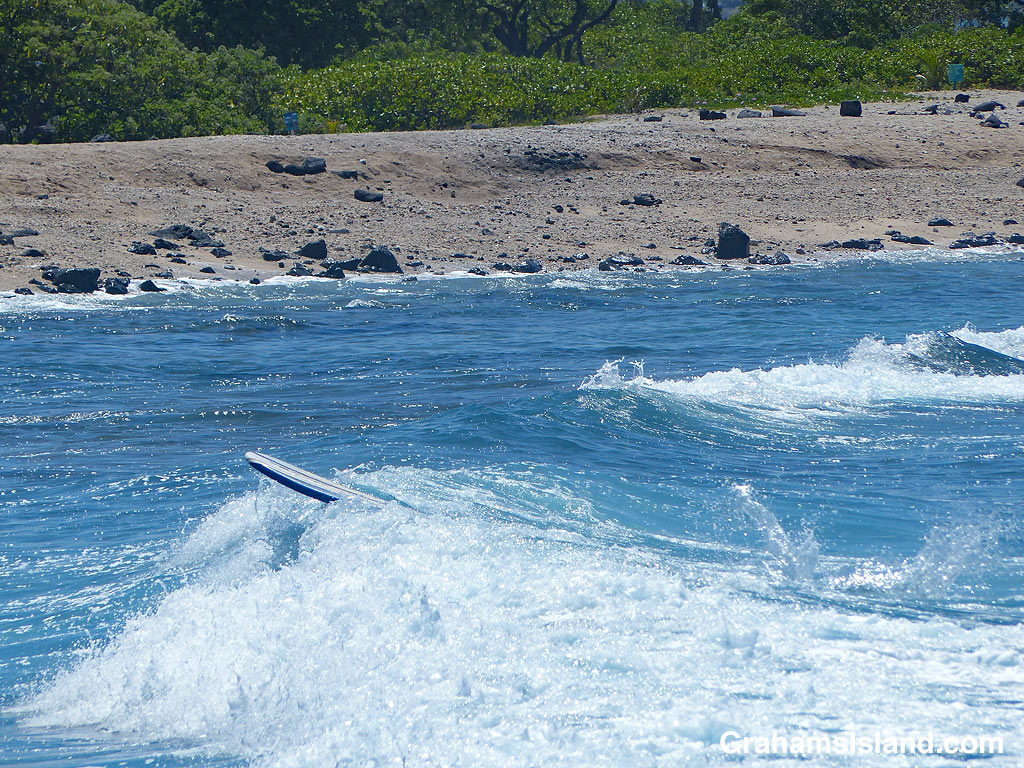
And the alternative version? Wipeout! In the bottom photo an unoccupied surfboard heads to shore, still tethered to the ankle of the out-of-sight surfer who wiped out moments before.
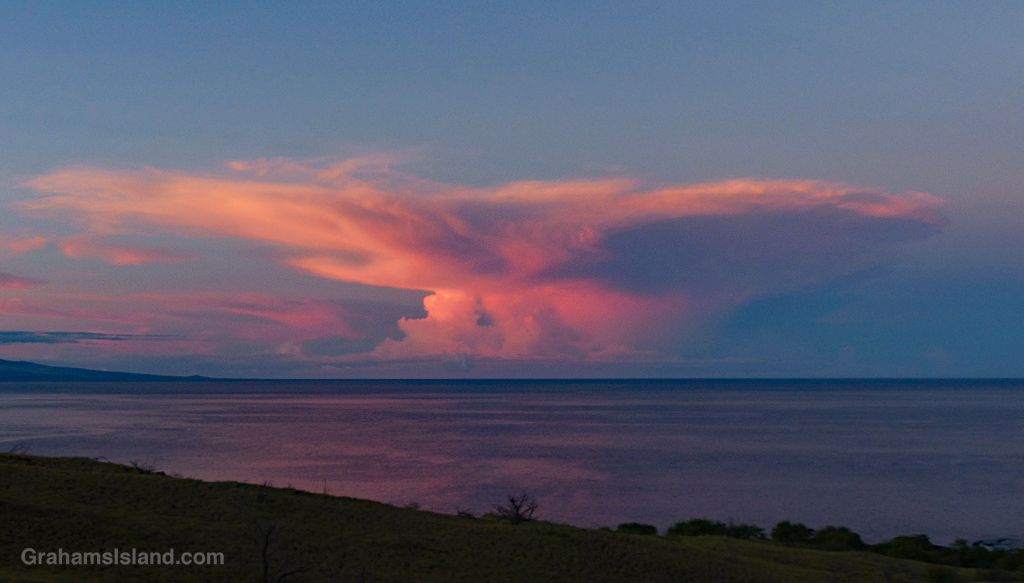
A few days ago, on my way to work, I rounded a corner and saw a bolt of lightening. It was the first of several, none of which I was able to capture on camera. But as the sky lightened, I got a better view of the thunder cloud producing the fireworks.
I was happy to see the cloud catch the early morning light and take on some vivid coloring, which I was able to photograph.
This week’s Friendly Friday challenge theme is ‘blue.’ See more responses here.
Here in Hawaii, blue sky and blue water dominate, especially along the coast. Fishermen are at the forefront of those who get to see these things the most, or they would be if they were around. This scene is typical: blue sky, blue water, a fishing pole, but no fisherman. No doubt resting somewhere in the scant shade provided by the trees.
This week’s Sunday Stills challenge theme is ‘Our National Parks.’ See more responses here. There are two national parks on the island. One is Hawaii Volcanoes National Park which encompasses Kilauea Volcano and Mauna Loa Volcano. The other is the somewhat lesser known Pu’uhonua o Hōnaunau National Historical Park, which is also known as Place of Refuge.
There are two parts to the park, which are separated by an imposing rock wall. On the inland side of the wall are the grounds where Hawaiian royalty made their home. The water side of the wall was the place of refuge. Anyone who had broken the law or kapu faced the death penalty, but if they could reach a place of refuge they would be forgiven by a priest and allowed to return to their normal lives.
At one end of the wall is the Hale o Keawe temple, surrounded by ki’i (wooden statues). This structure houses the bones of many Hawaiian royalty or ali’i, which are believed to give the place great power or mana.
For more photos and information on this site about these parks, click on the tags for Pu’uhonua o Hōnaunau National Historical Park or Hawaii Volcanoes National Park at the bottom of this page.
For more information about Pu’uhonua o Hōnaunau National Historical Park, visit https://www.nps.gov/puho/index.htm. For more information about Hawaii Volcanoes National Park, go to nps.gov/havo/.
These two photos were taken at different times, different years in fact, of one of the beaches at Kaloko-Honokohau National Historical Park. The park is just north of Kailua Kona, the largest population center on the west side of the island. It’s a park I visit at least two or three times a year because it’s easily accessible and is a good place to see turtles, on the beach or in the water, and also birds on ’Aimakapa Fishpond, on the inland side of the sand.
The top photo looks north (that little lump on the wet sand is a resting green turtle). The bottom photo looks south (those little white specks are people). The thing is, these two photos are how the beach looks every time I visit. A few people will walk along it, but most go to the more protected beach at the south end of the park. And this situation is similar to many on the Big Island. If you’re willing to walk a quarter or half mile from any beach nearest the parking lot, then peace and solitude is almost certainly yours.
A small catamaran cruises through the waters off the Kona coast, its triangular sails harnessing the wind to keep it moving on course and away from rocks inshore.
Posted in response to this week’s Sunday Stills challenge on the theme of ‘Triangles.’ See more responses here.



 Graham's Island