
Yellow Tangs nibble on coral heads on the steep slope down to deep water at Two Step, a popular snorkeling spot in South Kona.

Yellow Tangs nibble on coral heads on the steep slope down to deep water at Two Step, a popular snorkeling spot in South Kona.

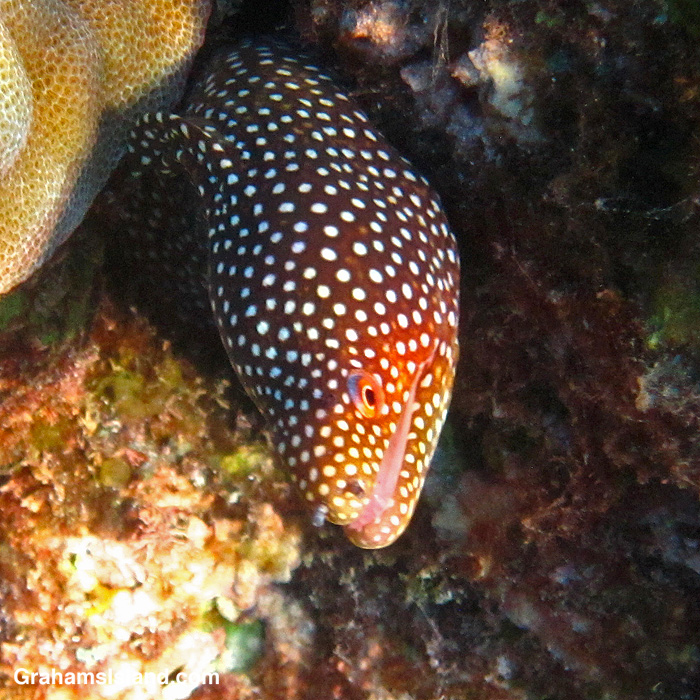
At one of my regular snorkeling spots, there’s a spot I call The Eel Motel. It’s a little hole in the rock, which is often occupied by a small Whitemouth Moray Eel or Yellowhead Moray Eel. On this visit, the former was home.
In the top photo, the eel’s head is on the left and its tail on the right. Even though the eel has its mouth closed, the white tip to the tail is another sure identifier. I drifted above it, taking photos, while its head twisted back and forth keeping track of me.
The markings on these eels can vary quite a bit, one of which is a full spread of bold white spots, such as these.
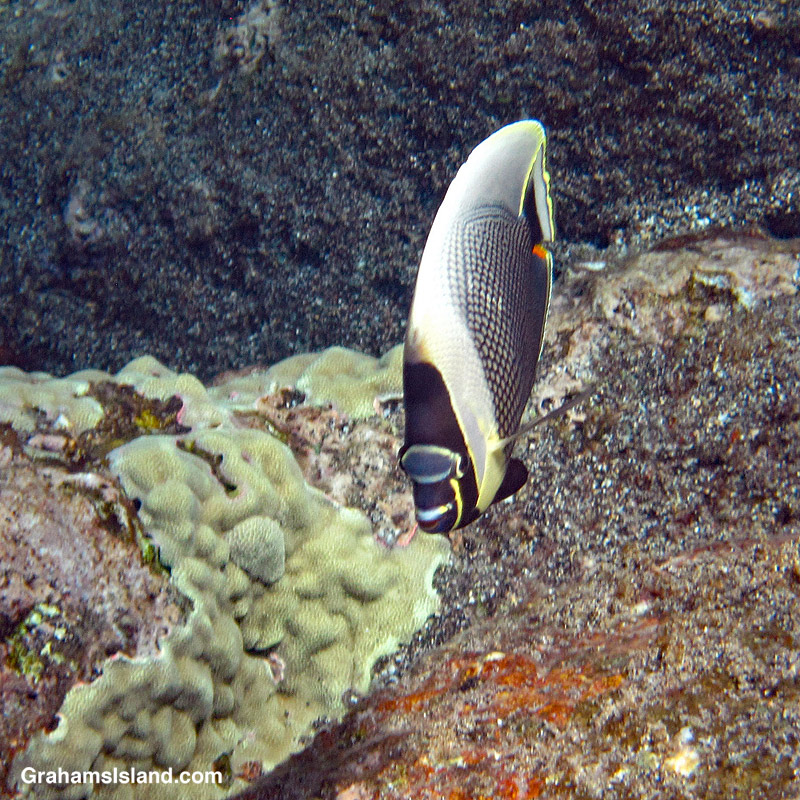
These butterflyfishes are easily recognizable because of their distinctive black coloring. This one came over to check me out and, as most fish are wont to do, quickly got bored with me!

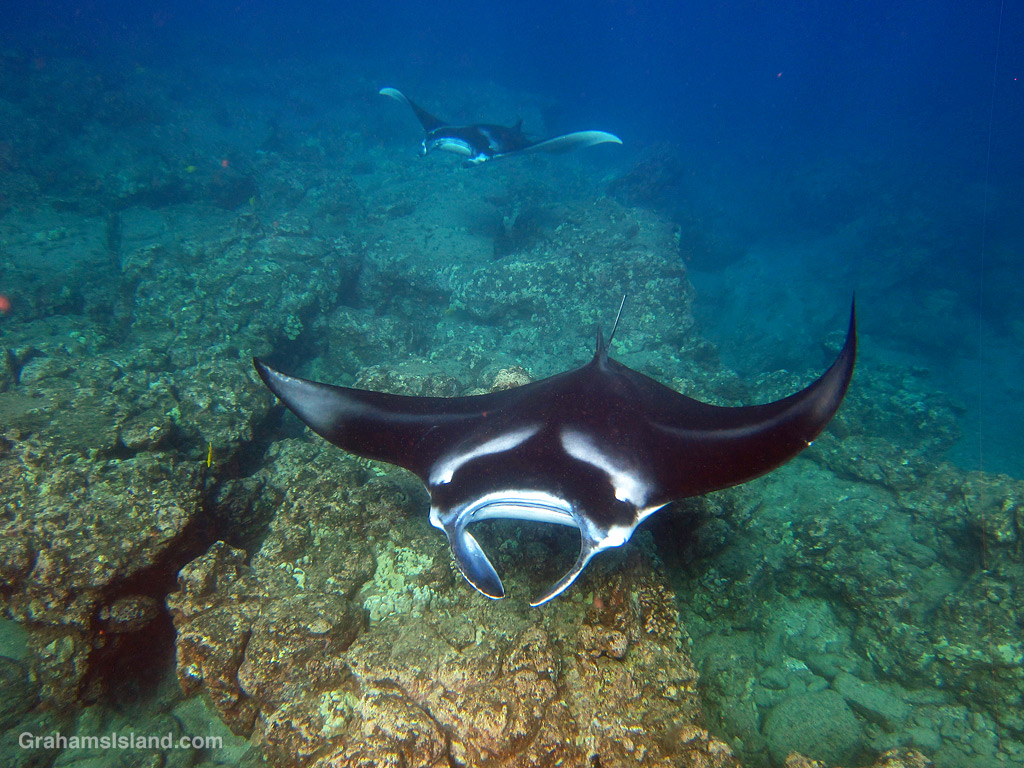
Yesterday, my wife and I hadn’t been in the water long when we saw large shapes ahead. There were two manta rays in fairly shallow water that was a bit churned up and cloudy. I took photos, but wasn’t optimistic they’d turn out in the conditions. The mantas swam away and we followed at a distance. There’s no point chasing mantas. Like most things in the water, they can put on a burst of speed that would leave us far behind.
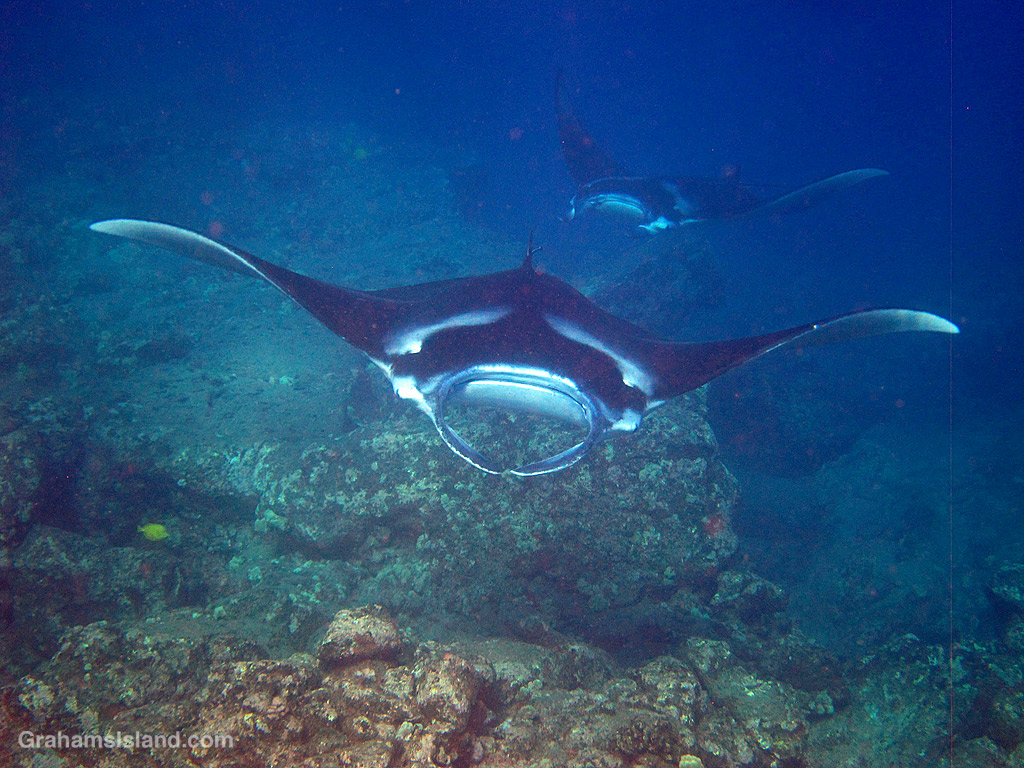
The mantas didn’t go far before they curled around and came back towards us. The water was clearer in this area and sunlight illuminated them as they headed our way. The lead manta was quite a bit bigger than the other one, probably around a 14-foot wingspan. They passed close beneath us, then turned again, looped around and headed back. They did this back and forth three times before finally moving on.
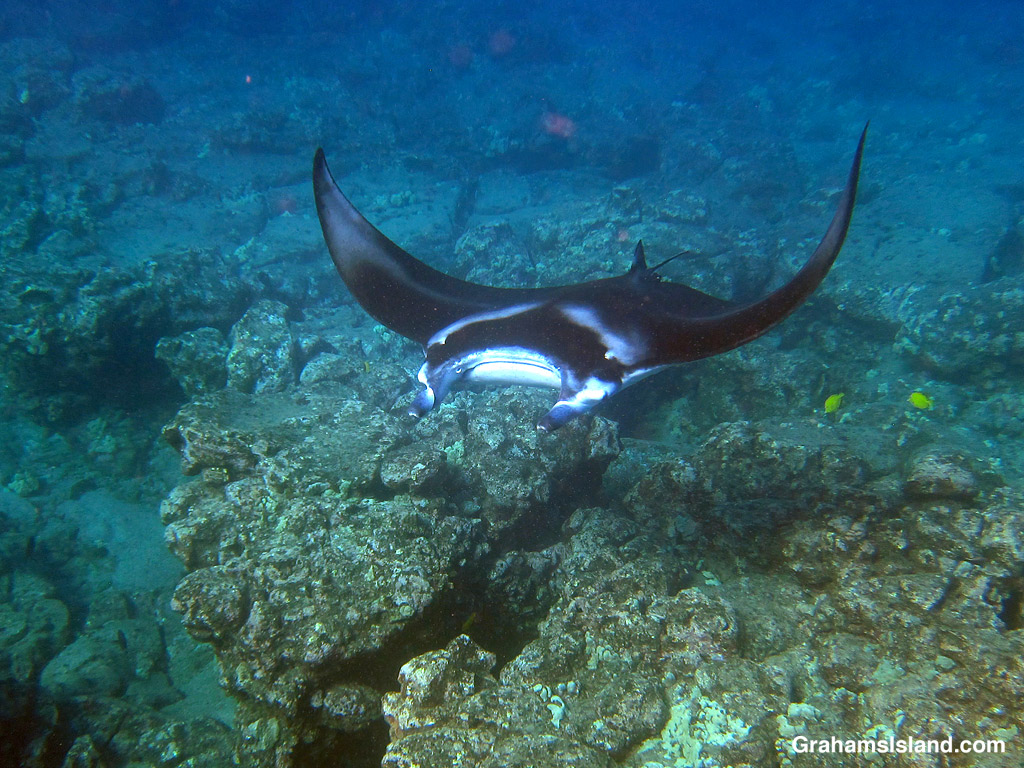
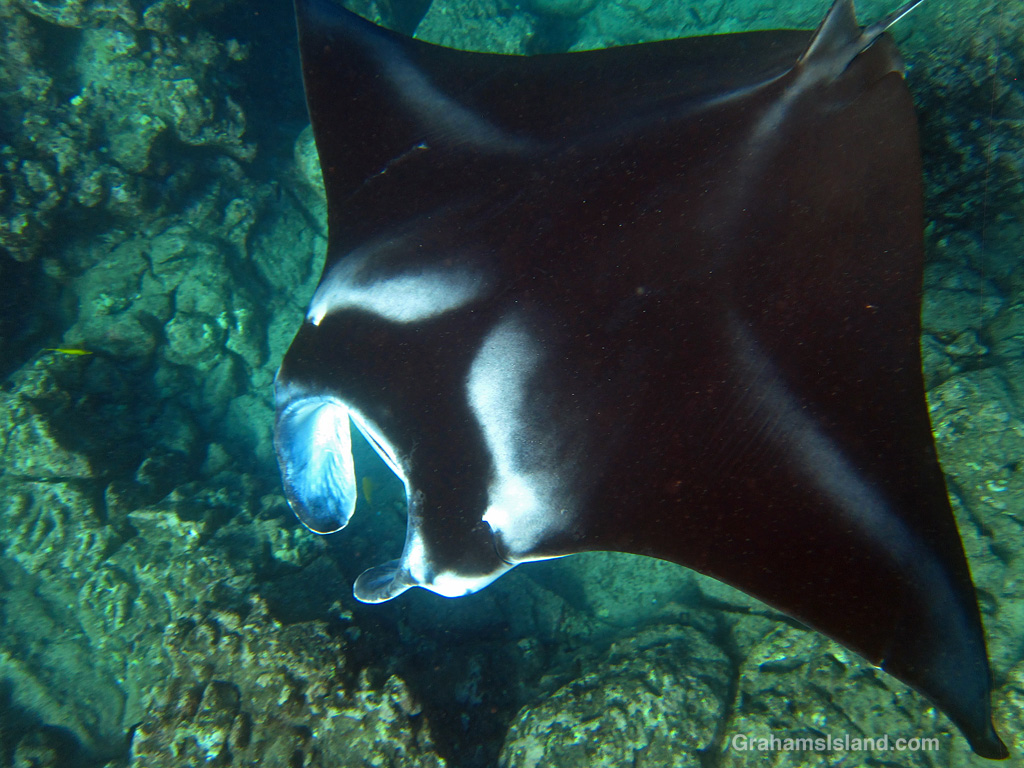
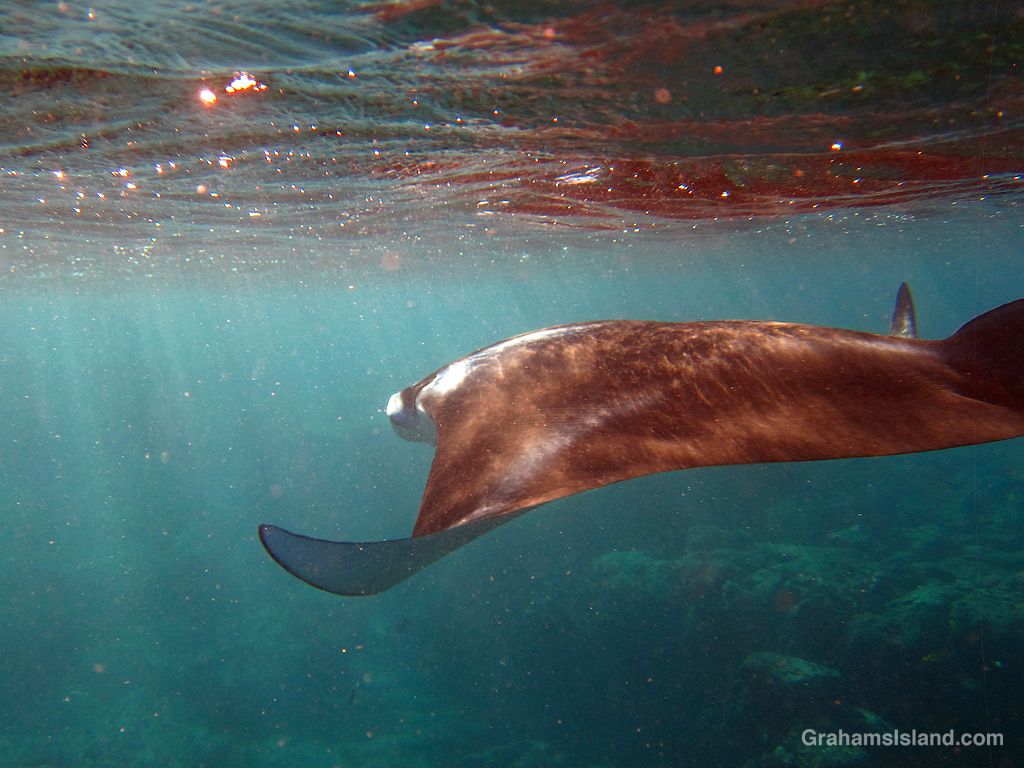
Later, when I was coming back, I saw the big manta again. It was in deeper water that was more cloudy so I didn’t get photos, but I watched as it did a couple of loop de loops and some sharp banking and turning. It just seemed to be having a fun day in the ocean and in doing so, made it a fun day for us, too.
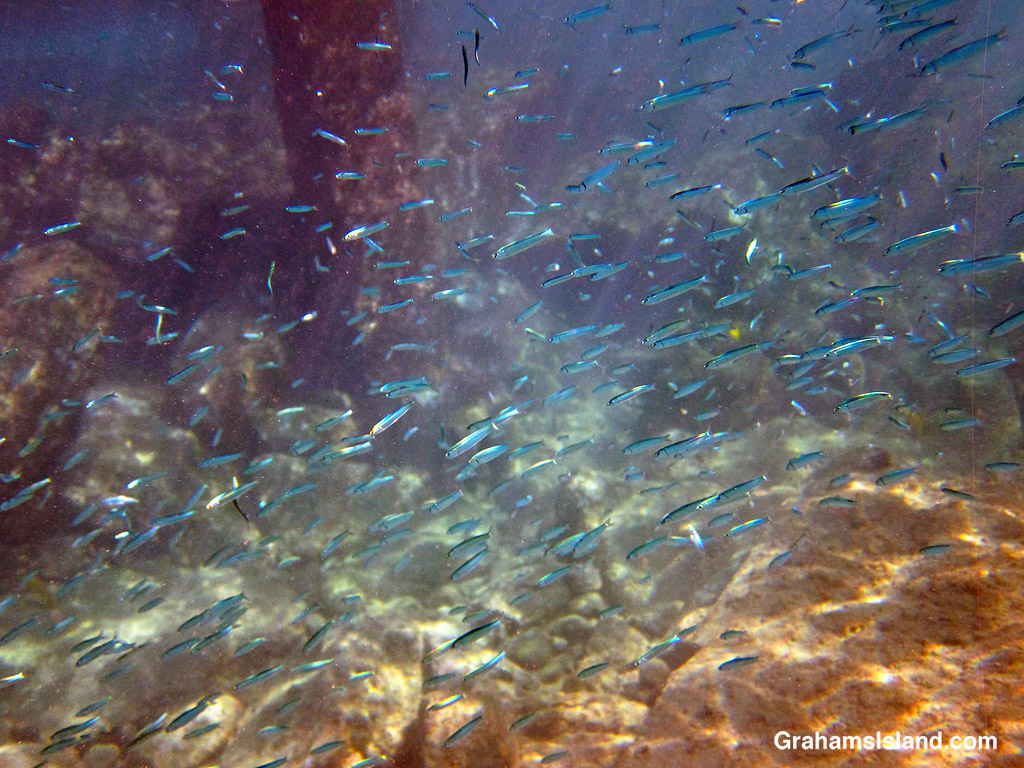
Recently, I’ve been seeing more Hawaiian Silversides, though not as many as in 2020. Still, there have been big enough schools of these little fish that sometimes I’ve found myself engulfed by them, zipping around in that wonderfully coordinated way that fish have.

I saw this scene almost immediately after getting in the water, the bright red catching my eye. At first I thought it was some kind of garish fishing lure, snagged in the rocks. Then I saw other details and figured it must be some kind of marine invertebrate and probably a molt.
When I got home, checked the photos, and consulted my marine invertebrates book, I realized it was the molt of a Red Reef Lobster. Its sensory hairs can clearly be seen on the claw. These lobster are active at night and so rarely seen, but they can live in shallow waters and they molt every 6 weeks or so.
I doubt I’ll ever see a live Red Reef Lobster, so this is probably as close as it gets.


When I get to the end of a swim, I keep looking around because, as the water shallows, it’s possible to see a wide variety of fish and marine invertebrates.
Recently, I was about 10 feet from my exit point when I saw the Devil Scorpionfish in the photos. That’s right, there’s a fish in the top photo and it’s not the Bright-eye Damselfish on the left. The second photo gives a better view, where the fins stand out a bit and a flash of orange can just be seen on the left pectoral fin. A Devil Scorpionfish will flash these orange fins, probably as a warning to predators, since it has venomous spines.
Don’t feel bad if you can’t find the fish in the top photo. I wouldn’t have spotted it if it had been stationary, but in the shallow water, I noticed a small movement and quickly realized what I was looking at. I’ve seen a Devil Scorpionfish in this area before so this might be the territory of this same fish.

I’d just got in the water recently when I saw this Whitemouth Moray Eel hunting with some Bluefin Trevallies. The trevallies carried on, but the eel was torn between joining them and retreating into the crack it was emerging from. In the end it did neither and I got a few photos before carrying on with my swim.
 Graham's Island