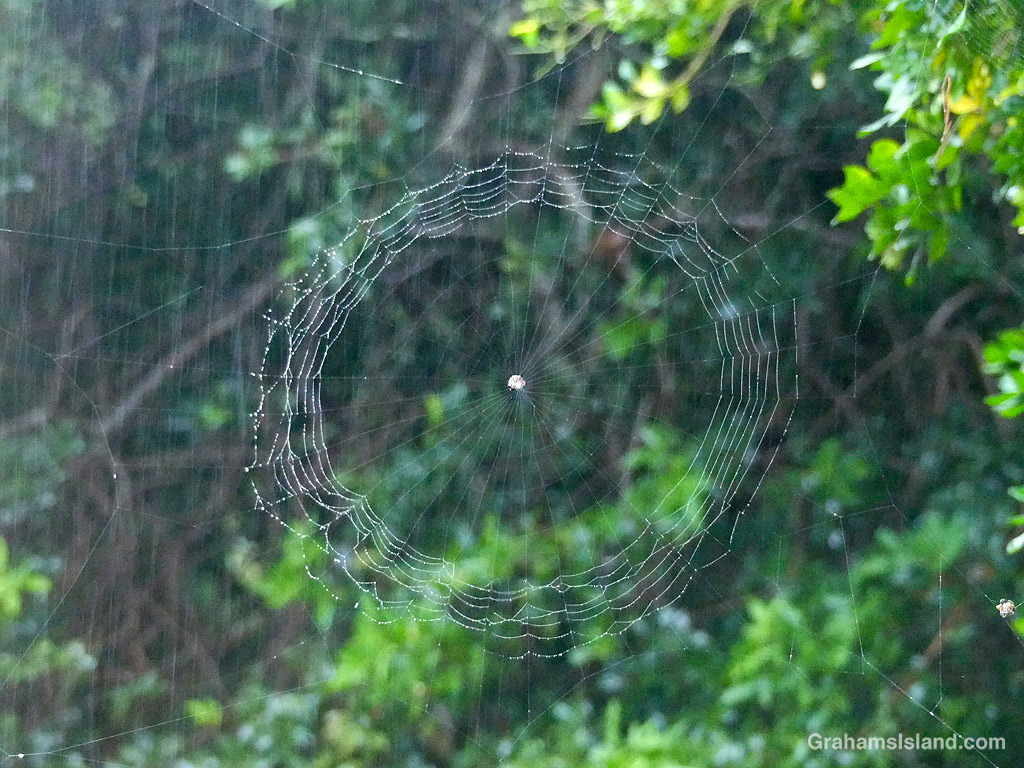
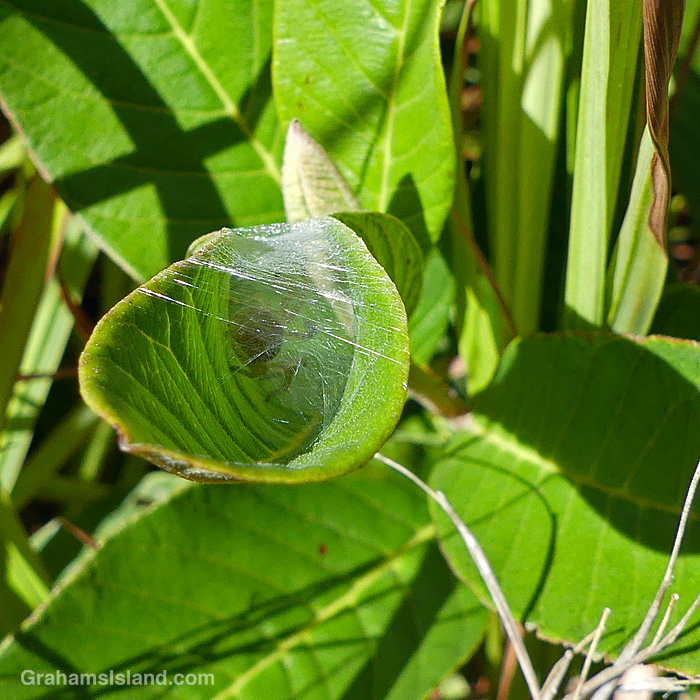
On a recent rainy morning I saw this web outside the window. The spider was hunkered down in the center and did not appear much interested in finishing the job. Perhaps it was holding a tiny unseen placard demanding better working conditions.

On a recent rainy morning I saw this web outside the window. The spider was hunkered down in the center and did not appear much interested in finishing the job. Perhaps it was holding a tiny unseen placard demanding better working conditions.
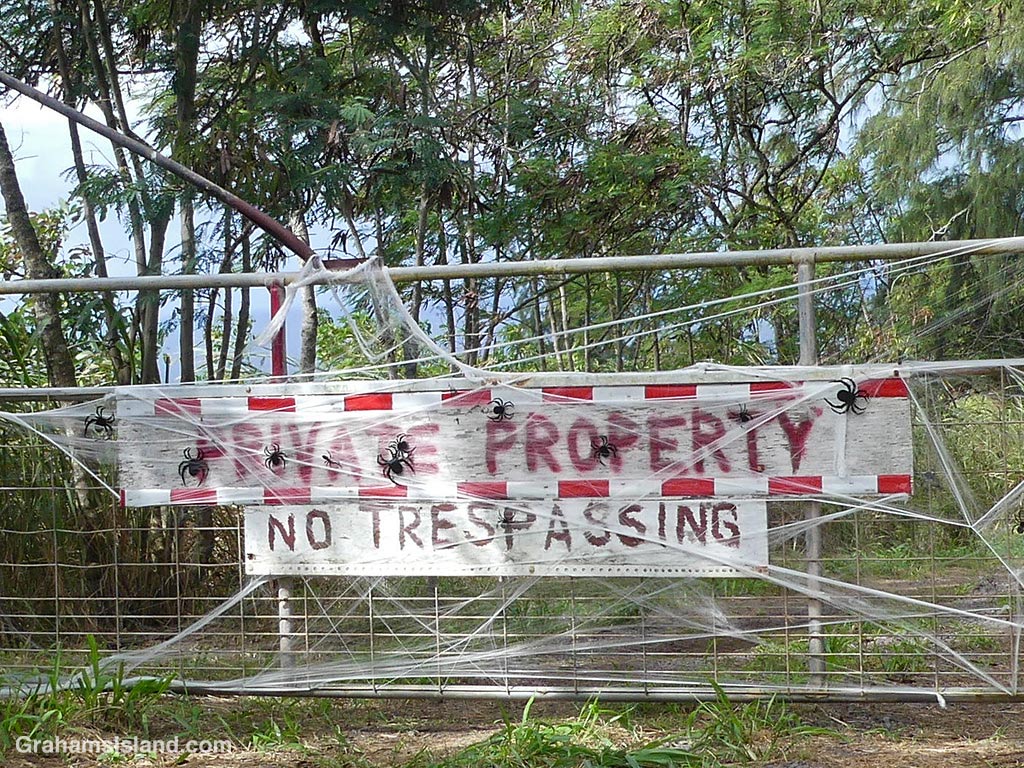
Seems like the webs and spiders would be enough to keep most people out. Happy Halloween.
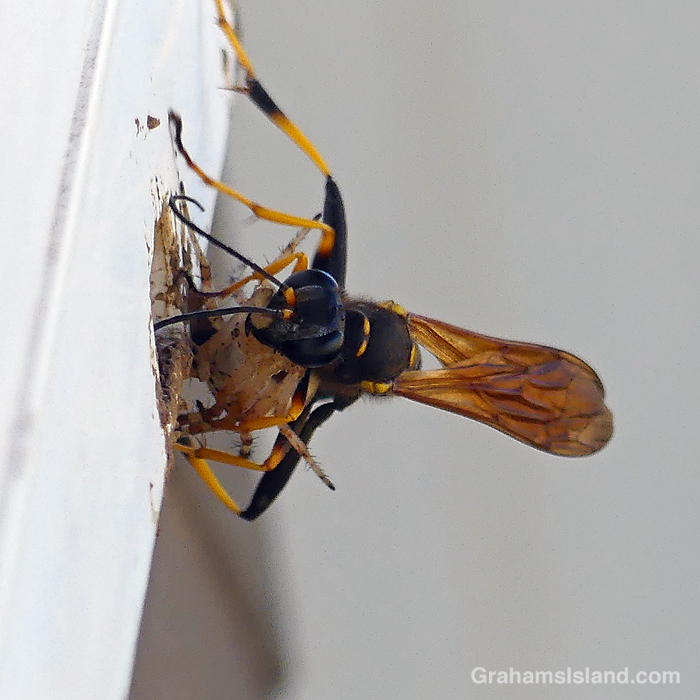
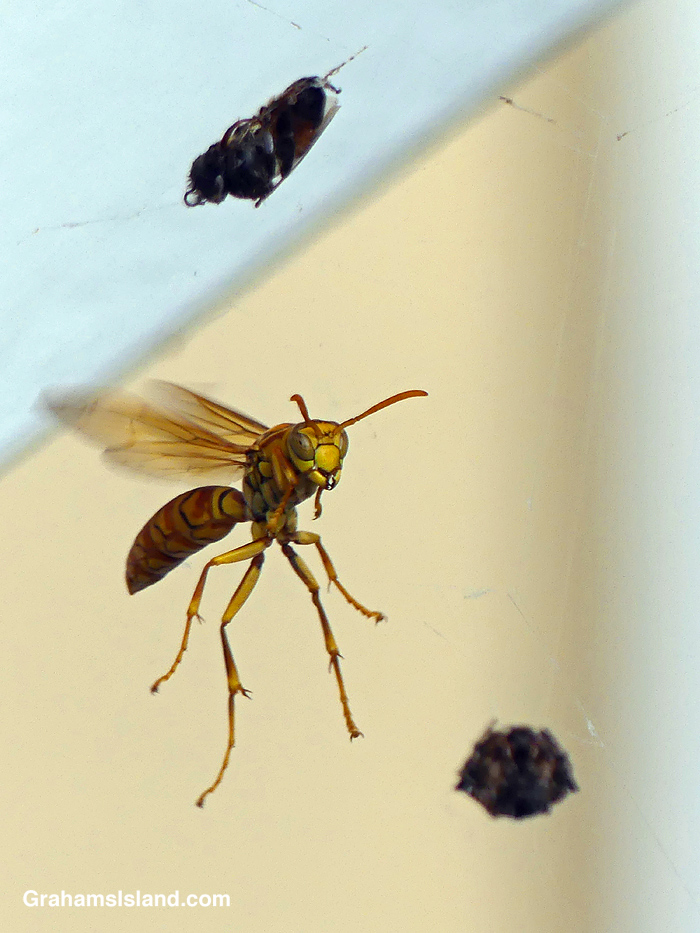
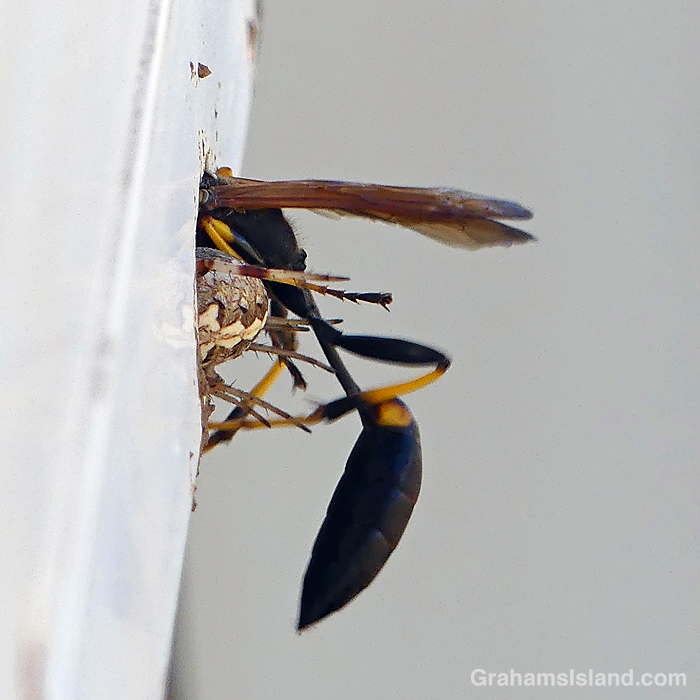
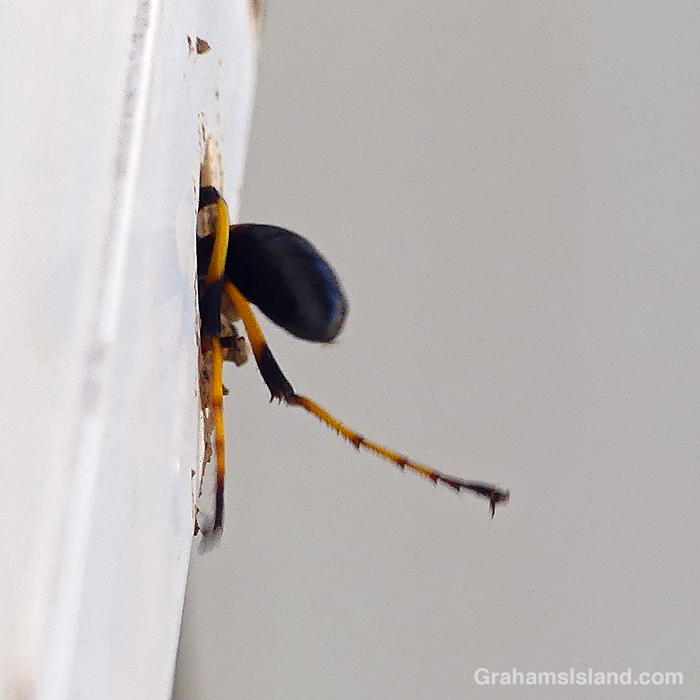
At work recently, I was alerted to the presence of an odd wasp, with a ‘sac’ under its body, trying to get into a small hole in the window frame. I grabbed my camera, opened the window, and took photos.
It quickly became clear that the ‘sac’ was a spider, and not a tiny one either. What was less clear was whether the wasp would succeed in its quest. I assume the hole is a drainage outlet, but what the wasp was up to was less clear. A little research cleared that up.
The wasp is a Yellow-legged Mud-dauber Wasp (Sceliphron caementarium). Not sure what kind of spider it is, but I do know its days are numbered. Sadly for the spider, it will not be a swift end. According to Wikipedia, “After building a cell of the nest, the female wasp captures several spiders. The captured prey are stung and paralyzed before being placed in the nest (usually 6-15 per cell), and then a single egg is deposited on the prey within each cell. The wasp then seals the cell with a thick mud plug. After finishing a series of cells, she leaves and does not return.” Notice that the spider is paralyzed, not dead. Got to have fresh food for the kids!
Posted for Becky’s Squares: Seven. See more responses here.

This week’s Sunday Stills challenge theme is ‘Great Outdoors Month.’ See more responses here.
I did this hike, at Hawaiʻi Volcanoes National Park, quite a while ago, but for one reason or another the post never came together and then went missing in my files! This hike started from the lookout at the end of Hilina Pali Road. A few years back, I did a different hike from this starting point that almost did me in (here). This time, having learned from that experience, I stayed on top of the pali (Hawaiian for cliff). My destination was Pepeiao Cabin (pronounced ‘pay-pay-ow’), about five miles away, though the trail is the Ka’u Desert Trail, part of which I’ve hiked from the other end (here).
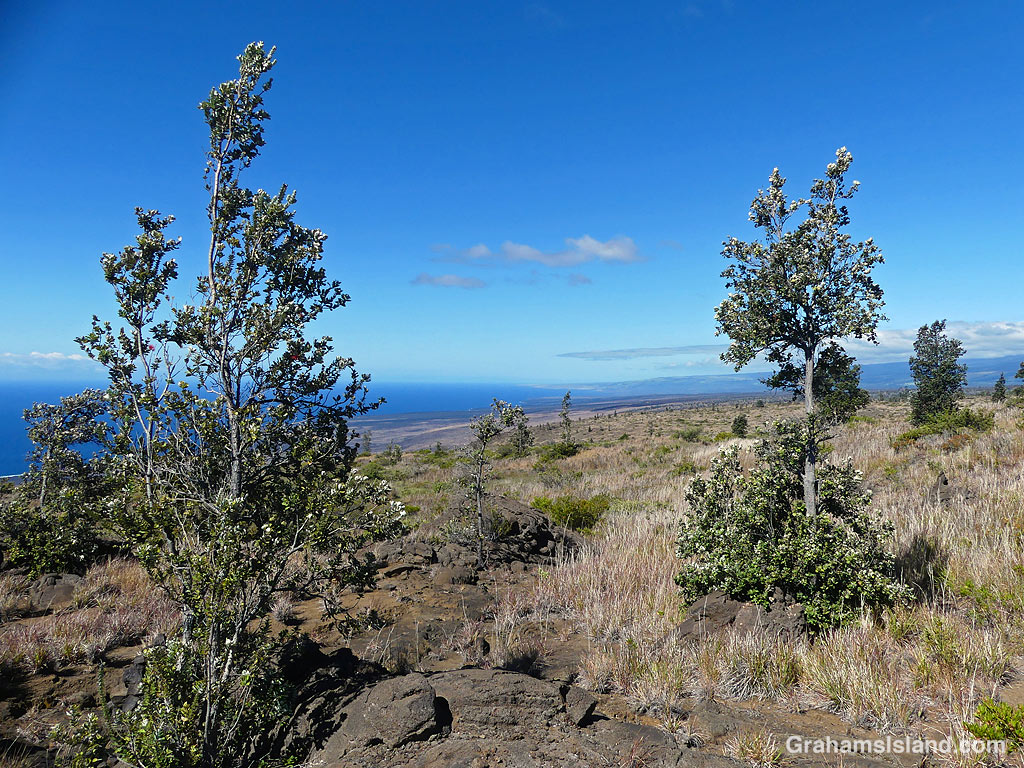
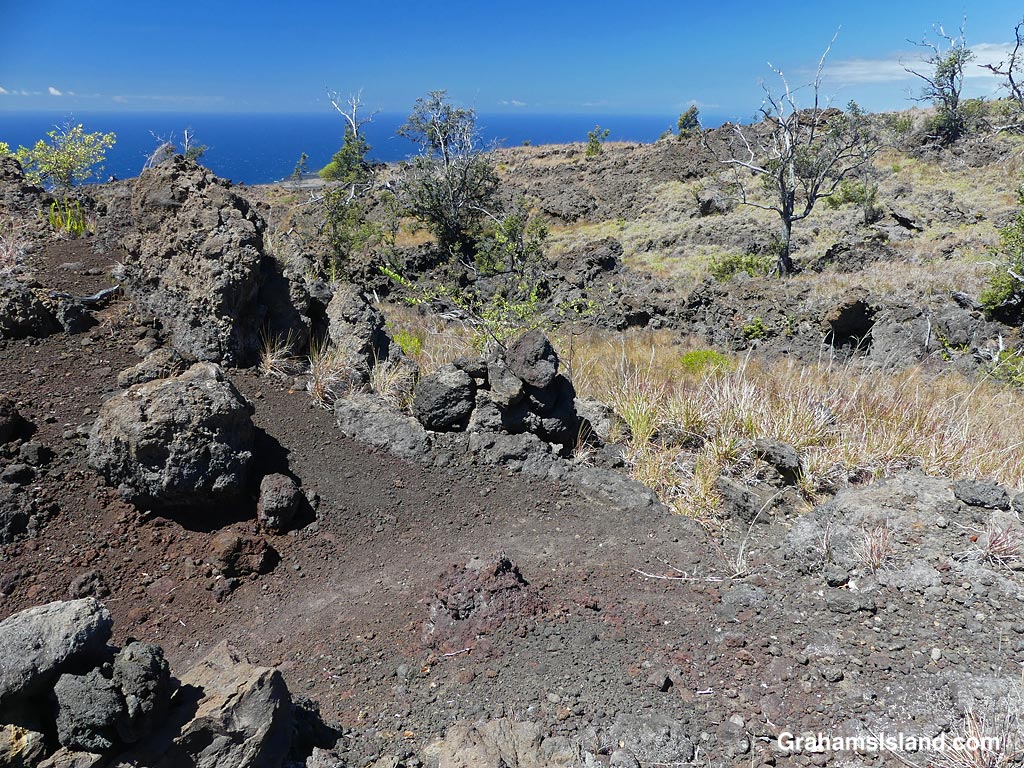


The day was sunny, but not too hot, and with a nice breeze for the most part. The elevation drop (and gain on the return) is only around 500 feet so it wasn’t too strenuous, and the trail was fairly easy to follow. It passes through grassy areas and across lava flows, and is well-marked with cairns. Ohia trees dot the landscape, along with a variety of shrubs and other flowers. I didn’t see too many birds, but there was a decent show of butterflies and bugs. The views were splendid, down to the coast or upslope towards Mauna Loa.
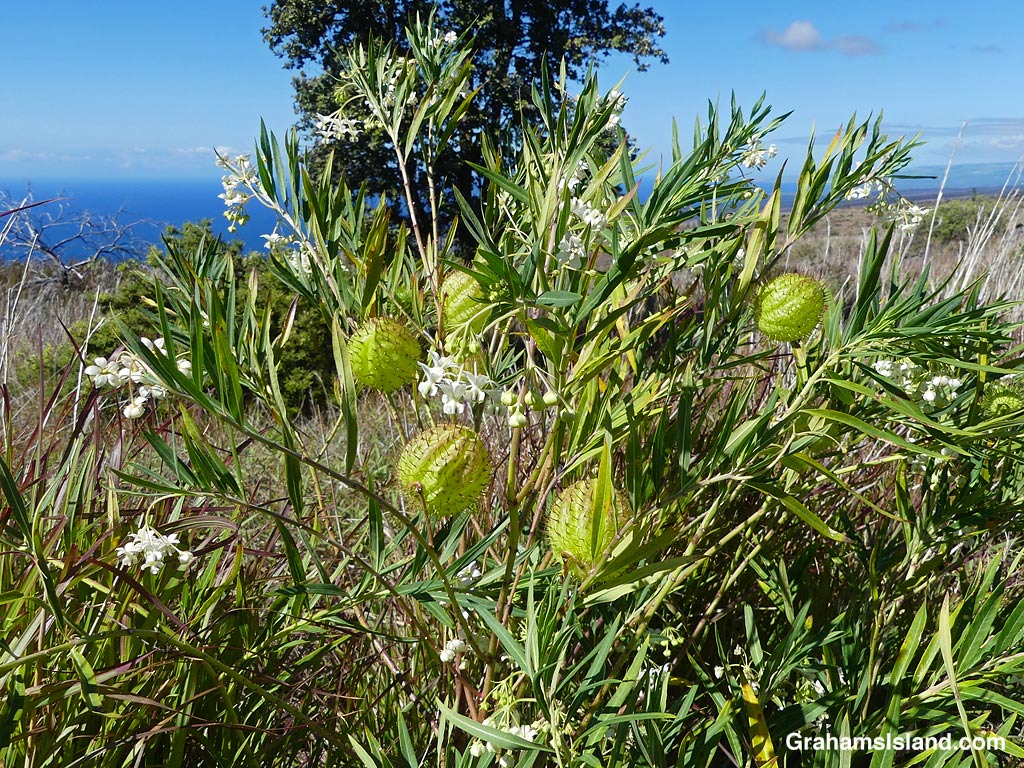
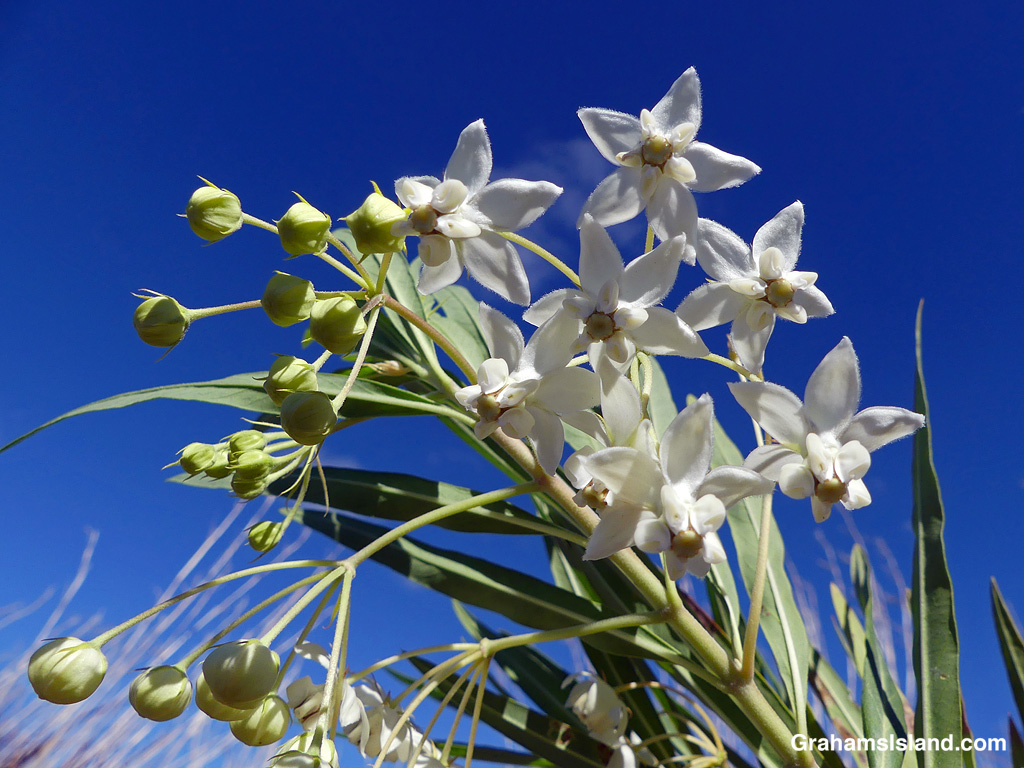

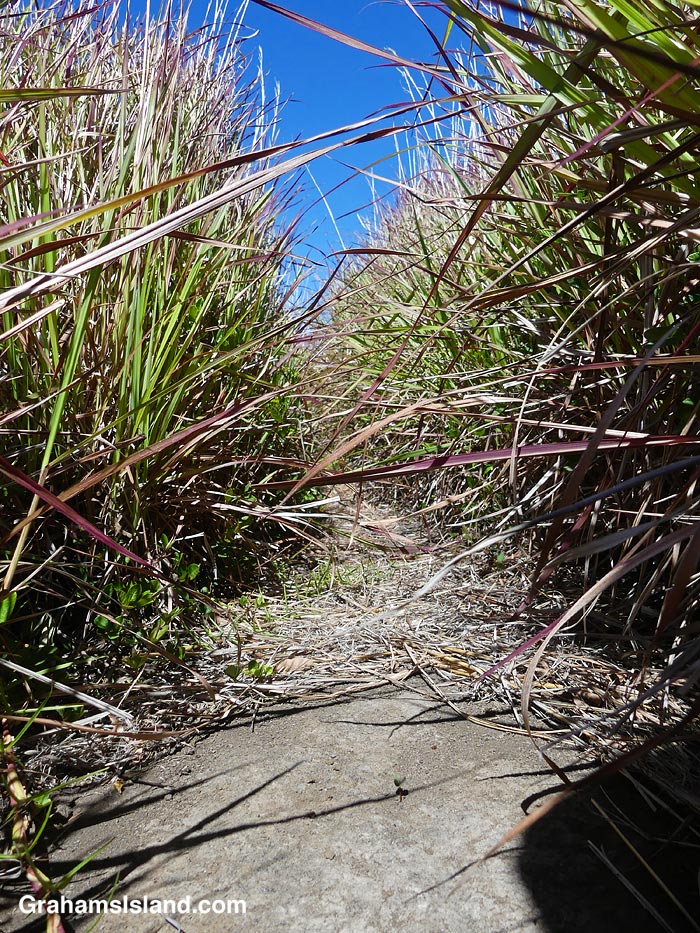
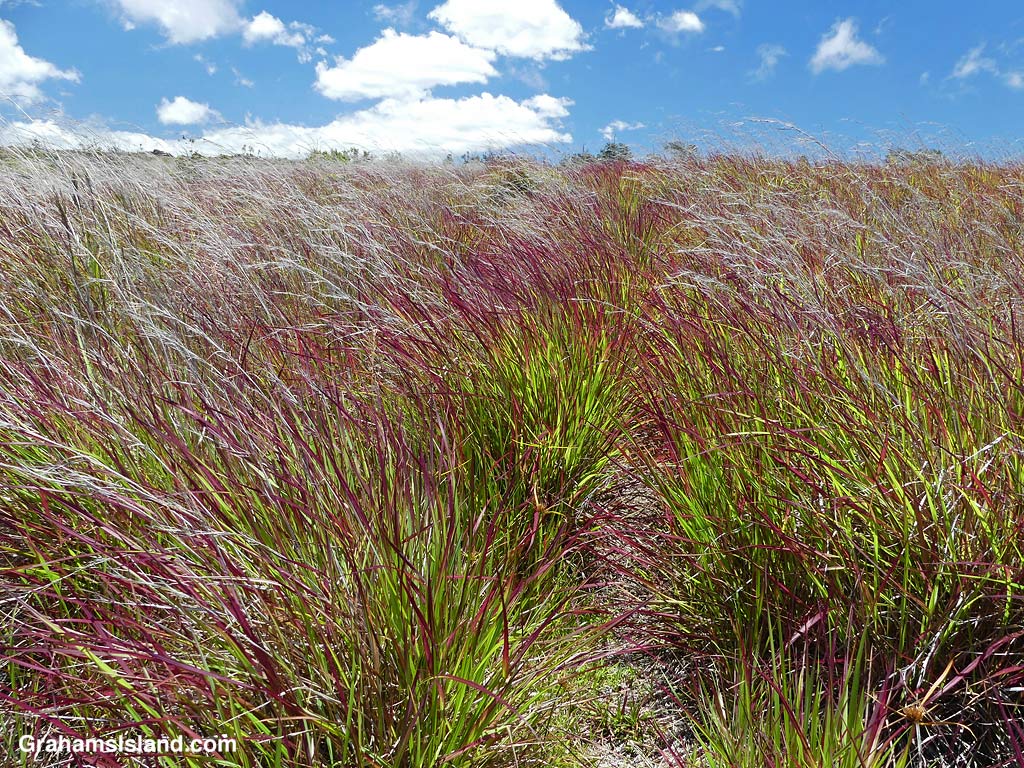
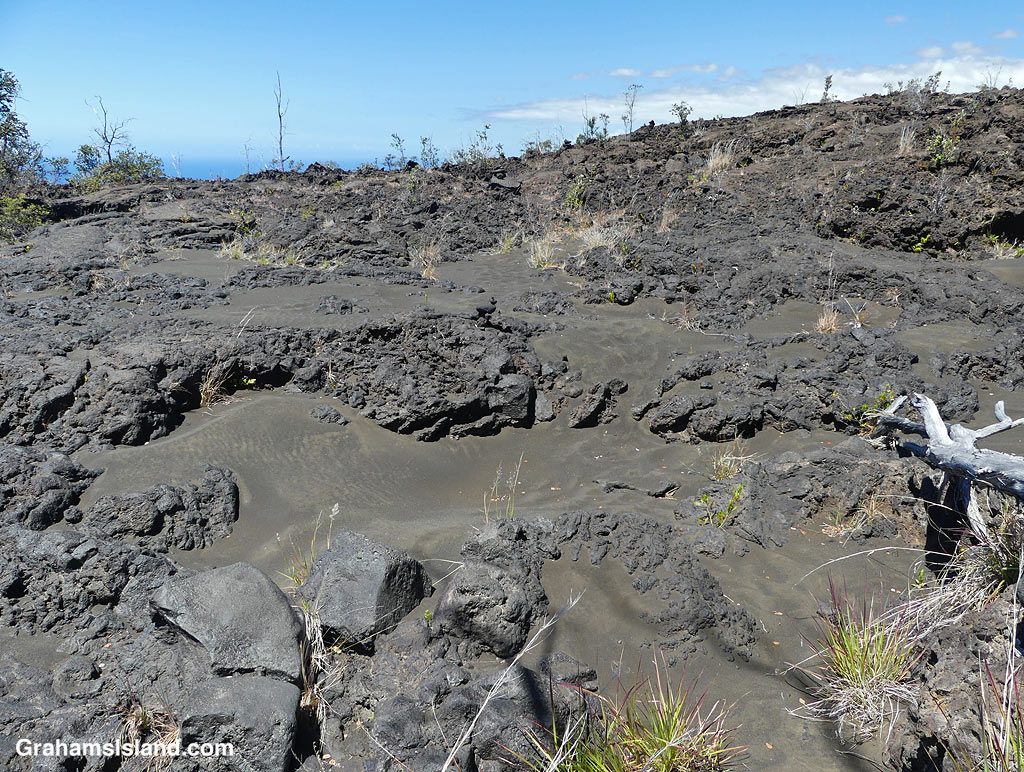
All the backcountry trails I’ve hiked in the park have featured something particularly unusual and interesting. On this hike, I was amazed by the substantial areas of sand on the trail or alongside it. This certainly didn’t get there from the beach, since the elevation is around 2,000 feet. My assumption is that it’s just volcanic rock broken down by rainfall, but just not washed down to the coast. Some of the sand was grassed over and it was like walking through dunes on the coast!
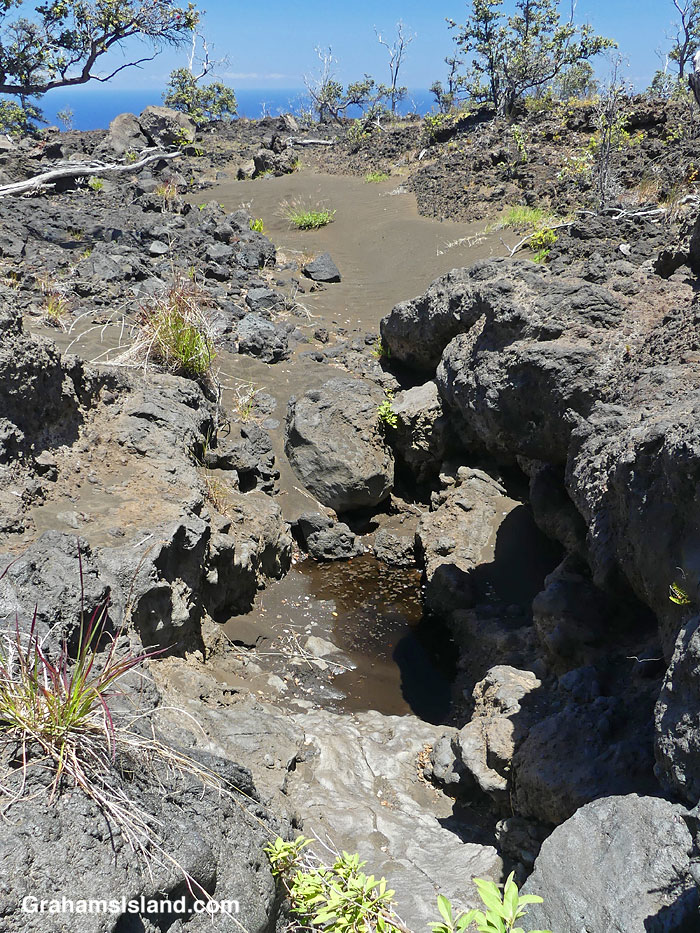
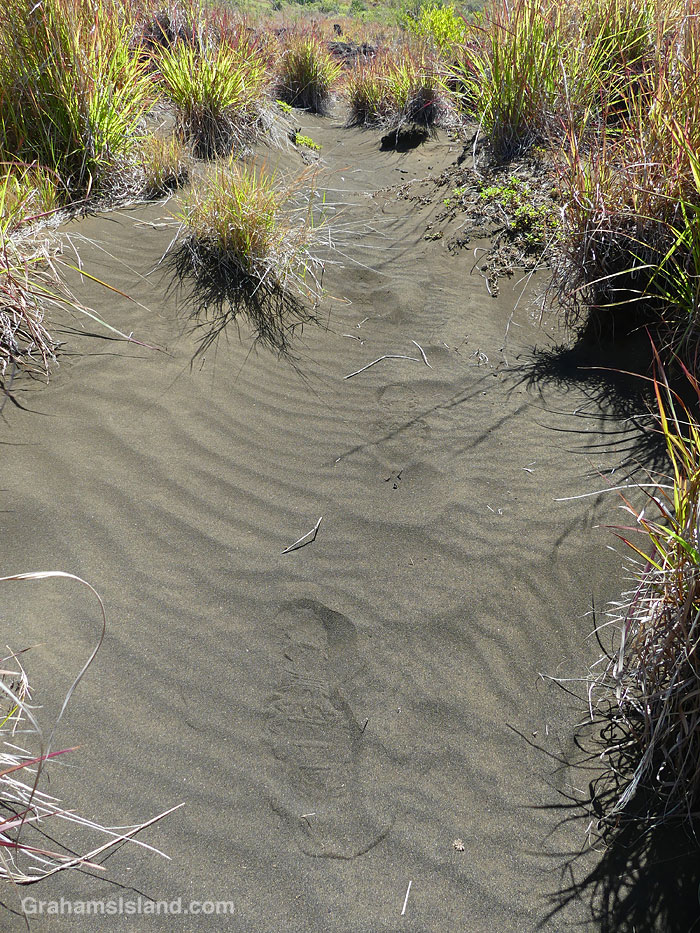


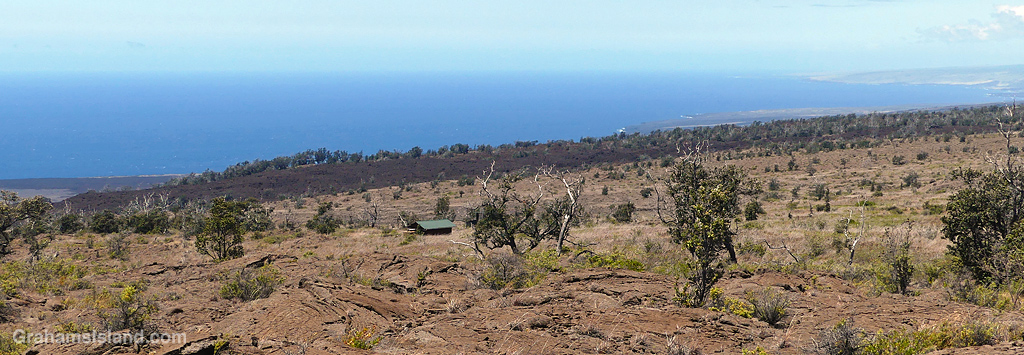
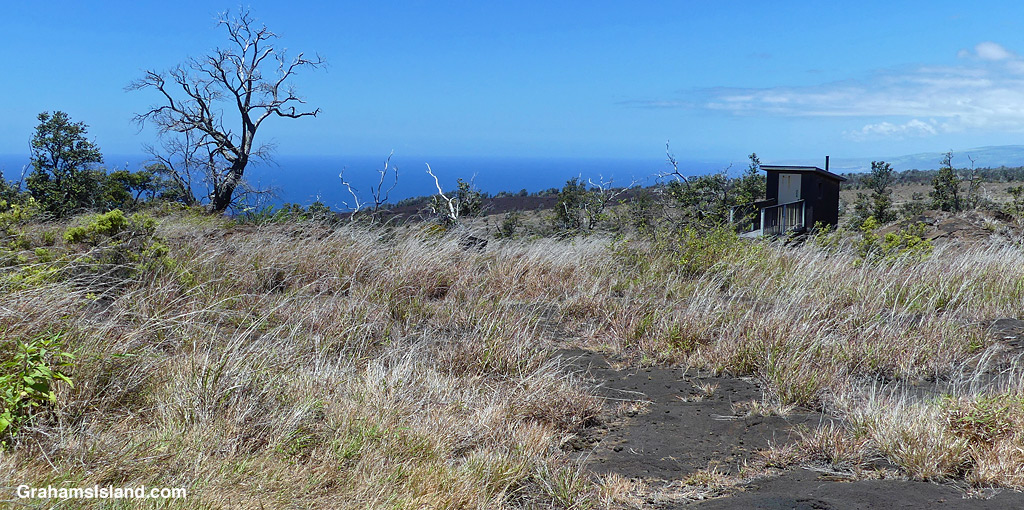
Eventually, I reached Pepeiao Cabin. There are several of these backcountry cabins in the park, and they require a permit to stay at them. This one was typically rustic, with a catchment water tank that may or may not contain water, depending on the weather and use. There’s also an outhouse with a splendid view. Inside, the cabin was basic, but the kind of place I’d be happy to stay in if it was raining outside.

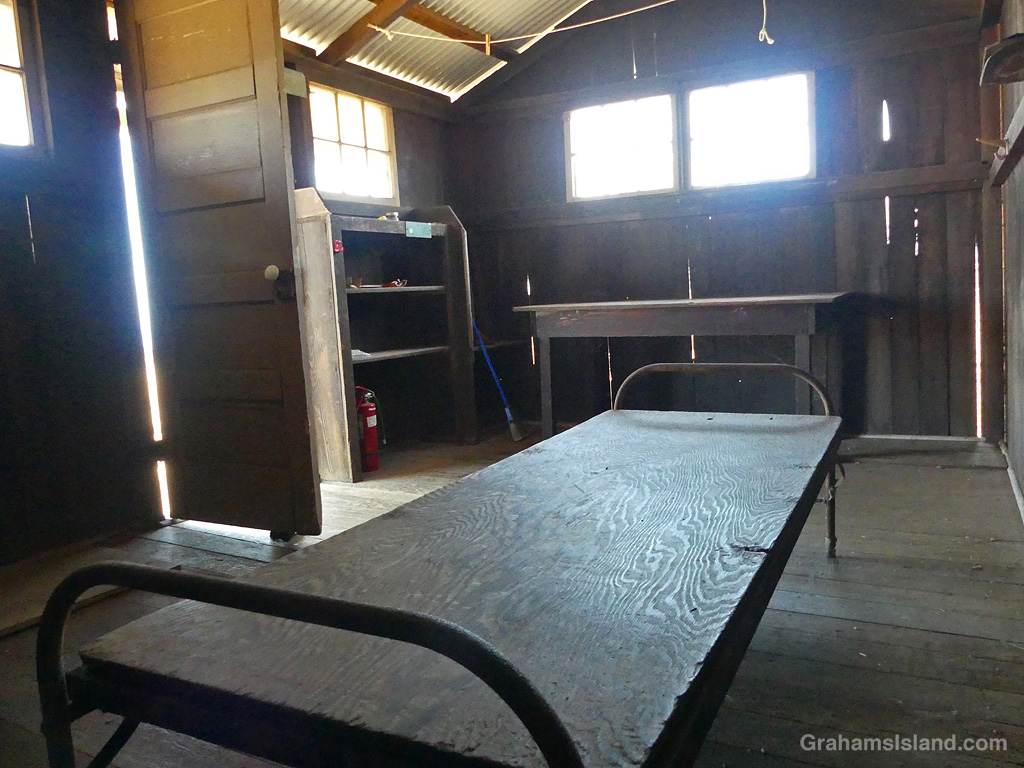
After I got back, I saw that the park website says “Pepeiao is in the southwestern reaches of Hawaiʻi Volcanoes National Park backcountry. The cabin is no longer safe for use and visitors should plan on tent camping.” I was a bit surprised because I’ve certainly stayed in plenty of less salubrious accommodations in my day!
Also posted for Jo’s Monday Walk. See more responses here.

The idea of The Numbers Game is to enter a number into the search bar of your computer and then post a selection of the photos that turn up. This week’s number is 140. Captions are on the photos.
You can see more responses here.



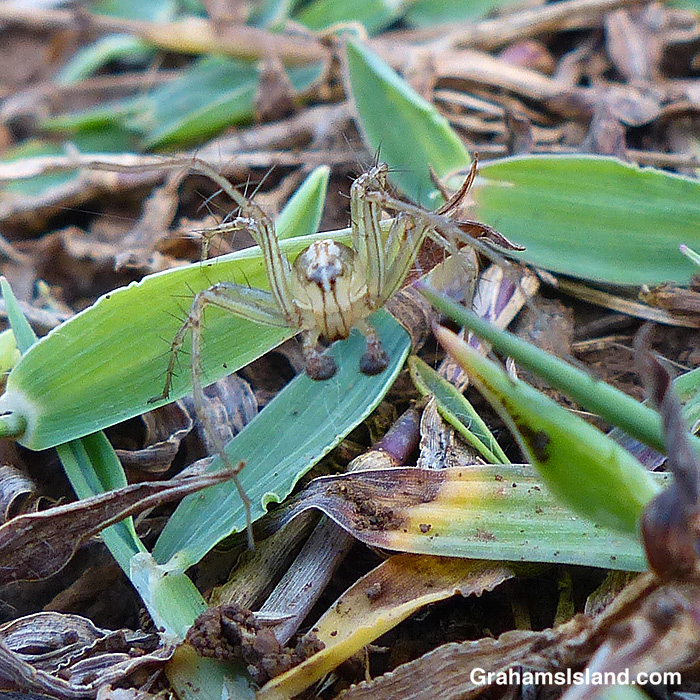
Crab spiders are small, but they build good-sized webs. They’re also not territorial, which means they’re fine having other crab spiders for neighbors. When there’s a lot in one area, walking around becomes a bit of a challenge. I’ve wrapped webs around my head so many times it’s amazing I haven’t turned into a spider myself!

I saw this female Hawaiian Garden Spider scooting up a strand of her web during a welcome rain shower. She stopped just before reaching the top and was soon the recipient of drops of water dripping from the roof. When the rain passed, she carried on up to the gutter.
I think she was getting some water to drink and possibly enjoying having a little wash. It’s been very dry here lately and water has been in short supply for the local wildlife.

The house where I live is ready for Halloween thanks to the generous numbers of spiders living around it. By the front steps, there’s a small Hawaiian Garden Spider and several crab spiders.
One day, I came home and saw a wasp flying close to the various webs. I thought it was dicing with danger, but soon saw that wasn’t the case. Instead, it would approach a web and bob its head toward the spider. It didn’t seem to be a terribly threatening act, though perhaps it was from the spiders perspective. The wasp didn’t push home an attack, but would instead fly away, settle for a bit, and preen itself.
The garden spider didn’t seemed to be bothered by the attention, but the crab spiders would drop suddenly on a strand of silk, before returning to their web as soon as the wasp moved on. I watched these maneuvers for five or ten minutes before heading inside. No webs were damaged, no spiders hurt, and I still don’t know what was really going on!




 Graham's Island