Tag Archives: Sunday Stills

Big Island bodies of water

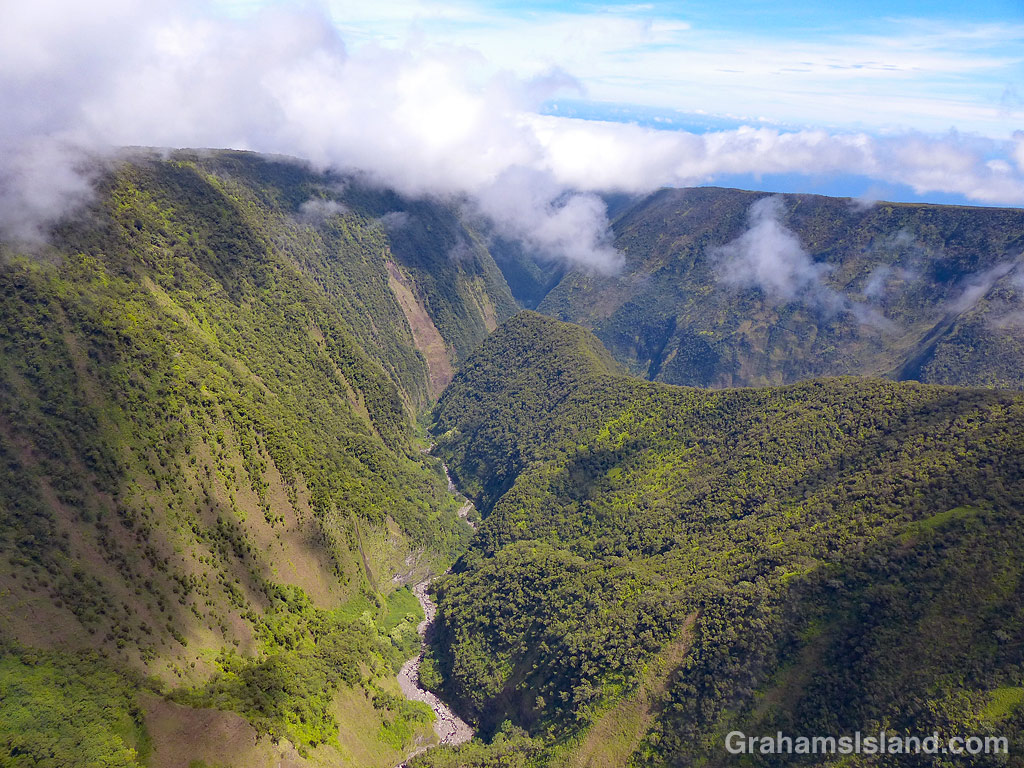
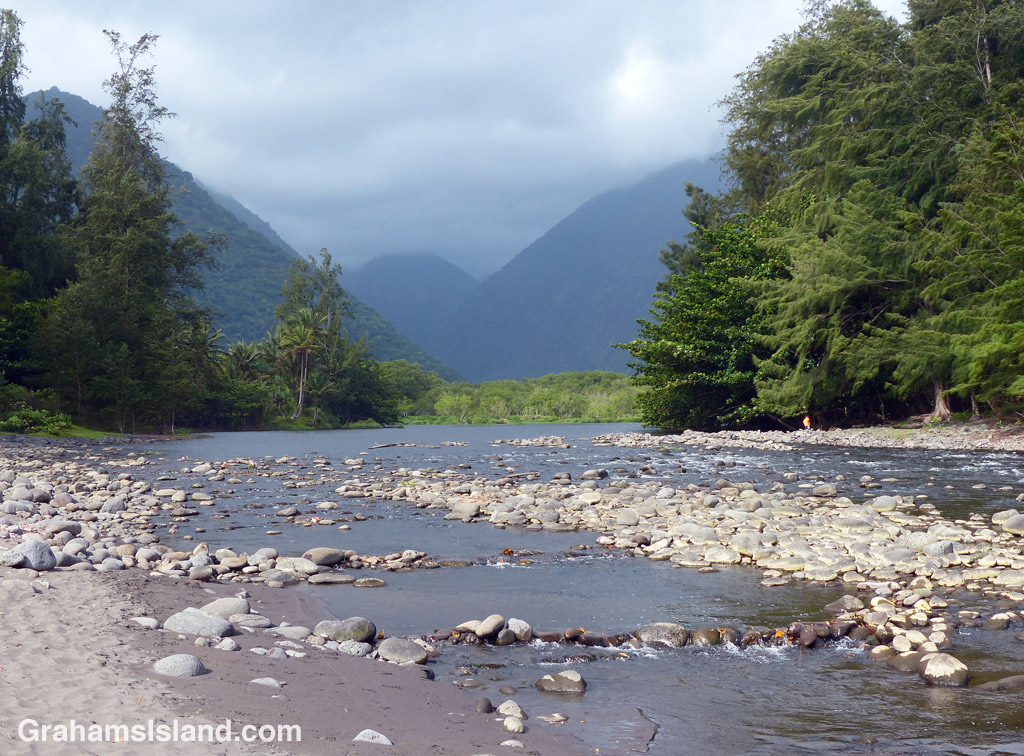
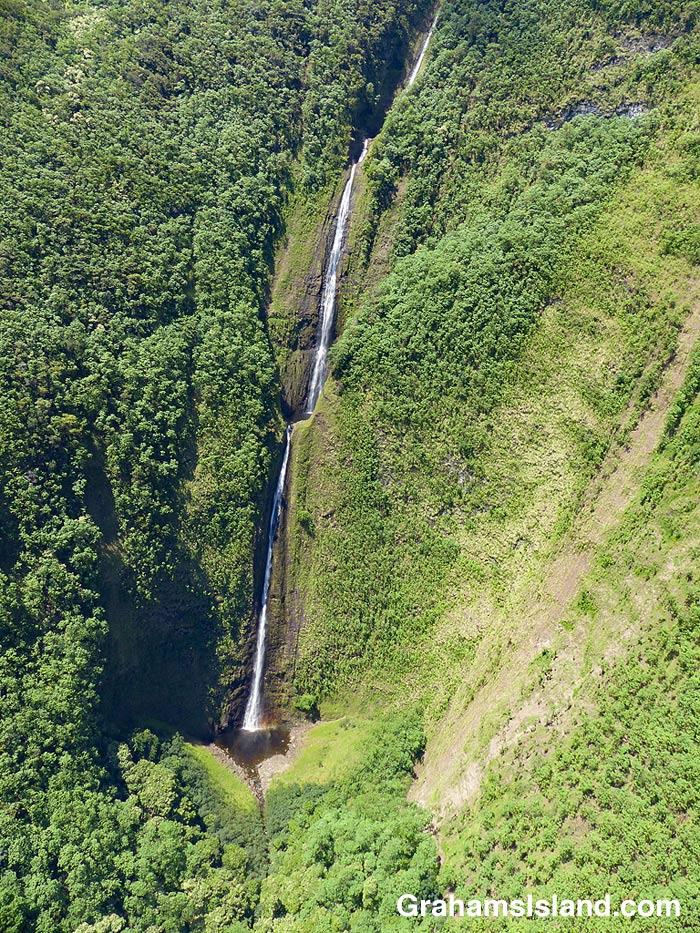
A view of Waipi'o Valley taken from the mouth of the river
Waipi’o Valley
Kohala waterfall
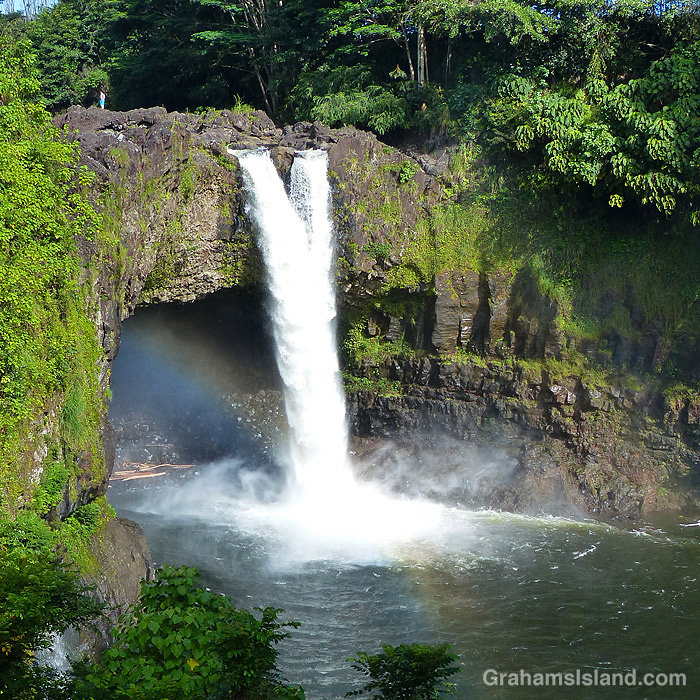
Rainbow Falls, Hilo
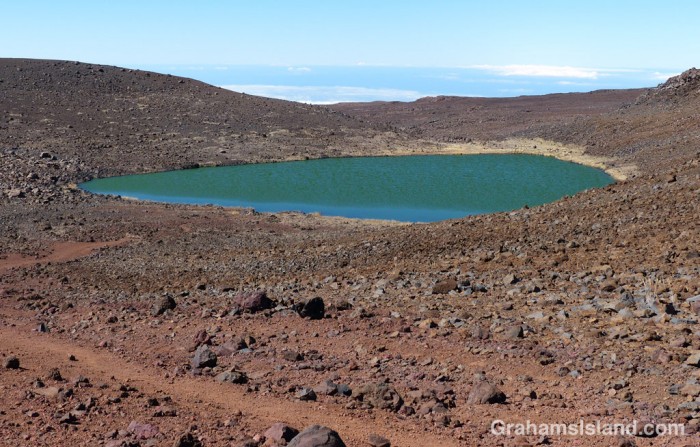
Lake Waiau.

This week’s Sunday Stills challenge theme is ‘Bodies of Water.’ (See more responses here.) Last Sunday, I posted photos of the Kohala valleys. This week, I’m posting a bit about what goes on in them and elsewhere on the island.

The top photo is shows the mouth of the Waipi’o River looking back toward the cloud shrouded Kohala hills. The river, is fed by water passing over Hi’ilawe Falls and other waterfalls deep in the fingers of the valley. Like all water courses on the Big Island, its flow is greatly increased by the often heavy rainfall.

The second photo shows a waterfall, farther down the coast, cascading into a pool at the bottom before flowing out to the ocean. Some of these waterfalls drop more than a thousand feet. Some cascade into valleys, some directly into the ocean. During dry spells, the water flows are greatly reduced and many falls, those that are entirely rain fed, disappear for a while. When rains are heavy, the water flow is so great that some falls blend together to form a sheet of falling water.

On the east side of the island is Wailuku River, the longest river on the island. This flows down to the ocean in Hilo, and on its way, tumbles over the aptly named Rainbow Falls (third photo). The falls and rainbows are best seen in the early morning. This stretch of the river is very dangerous with flash floods being common. People get swept away here every year.

Finally, the bottom photo shows the biggest lake on the island, which can be found at the top of Mauna Kea! Lake Waiau is fed by rainwater and snow melt, mostly in the winter. That it exists at all is something of a mystery. The ground on Mauna Kea is highly permeable, and it’s not fully understood what the layer is beneath Lake Waiau that enables it to retain water. Lake Waiau is not just the biggest lake on the island, it’s the only one. Green Lake, the biggest lake previously, disappeared during Kilauea’s 2018 eruption (photos and story here).

Kohala valleys

This week’s Sunday Stills challenge theme is ‘Mountains and Valleys.’ See more offerings here.

Kohala Volcano is the oldest volcano on the Big Island and has long been extinct, having last erupted around 120,000 years ago. Since then, the various processes of erosion, from rainfall to landslides, have carved deep valleys into the volcano. Waipio, the easternmost of these valleys, is accessible by vehicle (4-wheel drive only), horseback, or on foot. It has permanent inhabitants so access within the valley is restricted.

The other valleys are most easily seen from the air, along the Kohala coast. The top photo shows Waimanu Valley. This can be accessed by foot from Waipio, after a long and arduous hike, and permits are available for camping there. Waimanu River can be seen on the far side of the valley and is one last obstacle to be crossed to reach the camp site, which is in the strip of land between the river and the ocean. The steep sides are typical of these valleys and another consideration to keep in mind when thinking about hiking here.

The middle photo shows a fairly typical view directly into one of the valleys from the ocean. Again, notice the steep valley sides and the abundance of foliage, evidence that this is the wet side of the island.

The bottom photo shows valleys cutting through the mountain farther inland. There’s little or no water running in this view. A few valleys have spring-fed streams, but most depend on rain for water flow. However, when it does rain, it can rain long and hard. Flash floods are common. It’s not a shock when campers in Waimanu Valley are cut off and unable to make the return hike.

I’ll do another post about the water courses for next week’s Sunday Stills challenge.

For more information about Hawaii’s volcanoes, go to https://www.lovebigisland.com/hawaii-blog/hawaii-volcano-history/.

ʻAnaehoʻomalu Bay beach

This week’s Sunday Stills challenge theme is ‘Beautiful Beaches.’ See more offerings here.

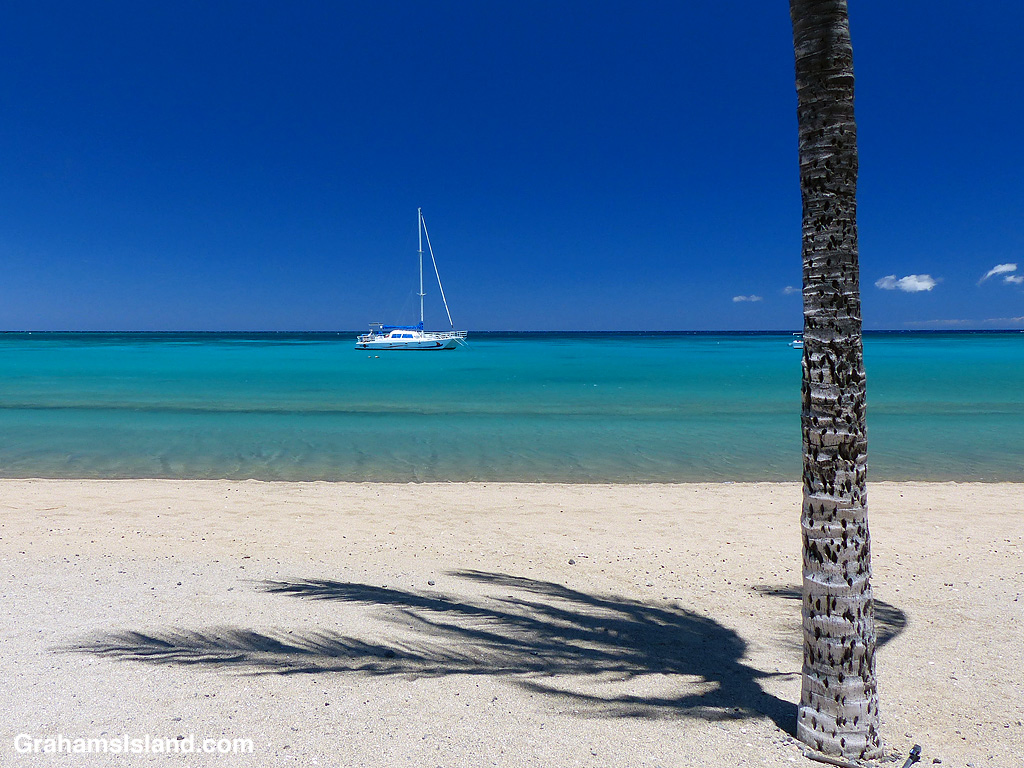
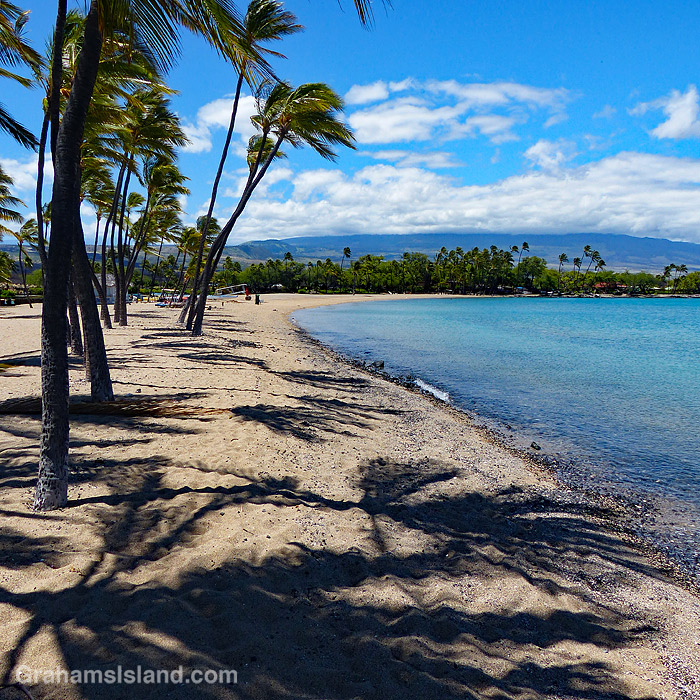
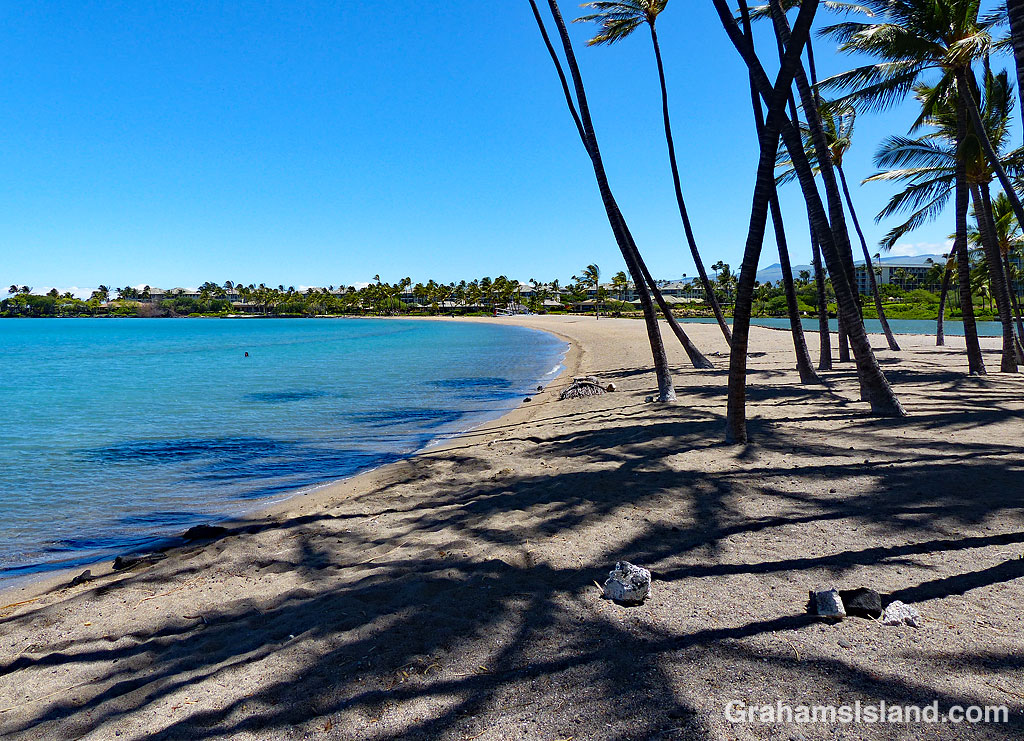
ʻAnaehoʻomalu Bay, at Waikoloa Resort, is often referred to as A Bay for reasons that aren’t hard to figure out. In normal times this is a very popular spot. The beach is a long curve of pale sand with palms at either end. It’s popular with sunbathers, swimmers and snorkelers. There’s also a restaurant and bar at one end of the beach, facilities nearby, and shops not far away. And Ocean Sports operates various cruises out of the bay on a catamaran or glass-bottomed boat.

There’s a hike I like to do, which goes south from A Bay, and on previous visits I’ve skirted the crowds which are usually found there. However, these are not normal times. On my last visit I headed north. There was one person in the water, two on the beach. The ocean lapped gently against the shore. An offshore breeze rustled the palm fronds. Usually when I hike places like this, I’m an aberration with shoes and a fanny pack, marching through swathes of bikinis and board shorts and roasting flesh. On this occasion, I was an aberration just by being there.

Yellow tang

This week’s Sunday Stills challenge theme is ‘Yellow.’ See more offering’s here.

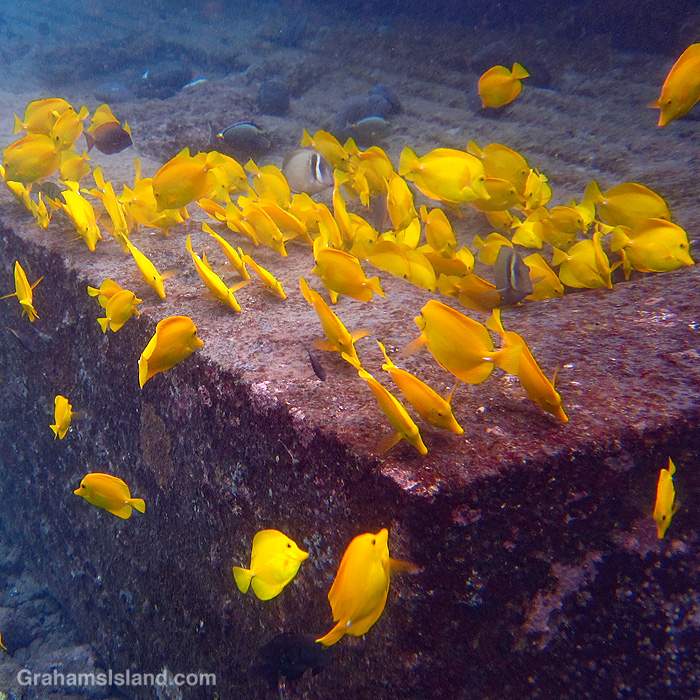
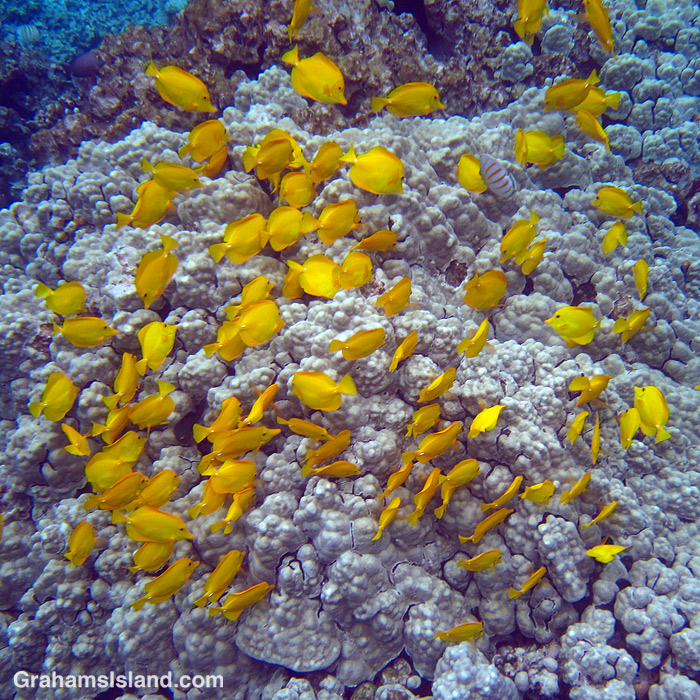
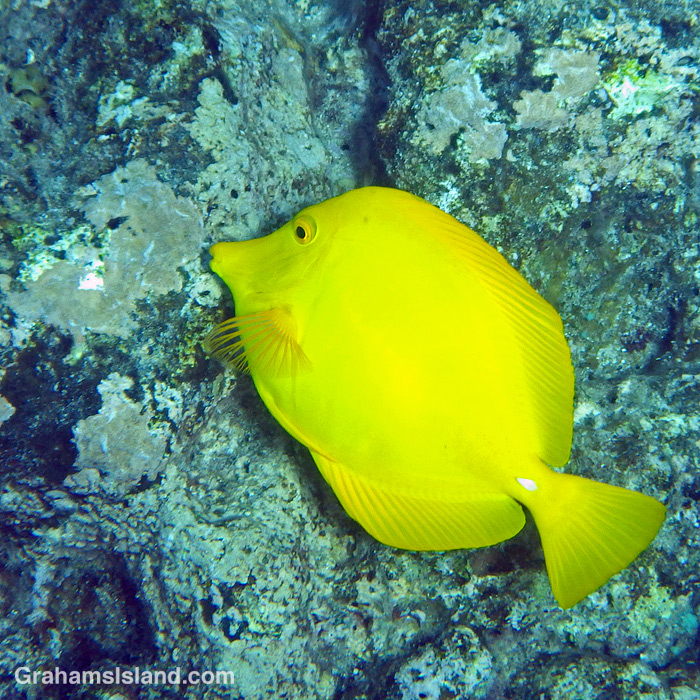
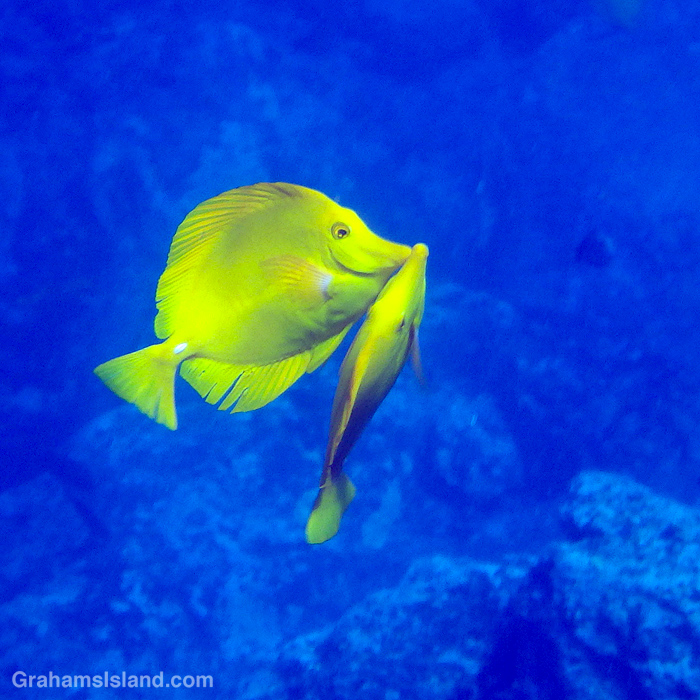
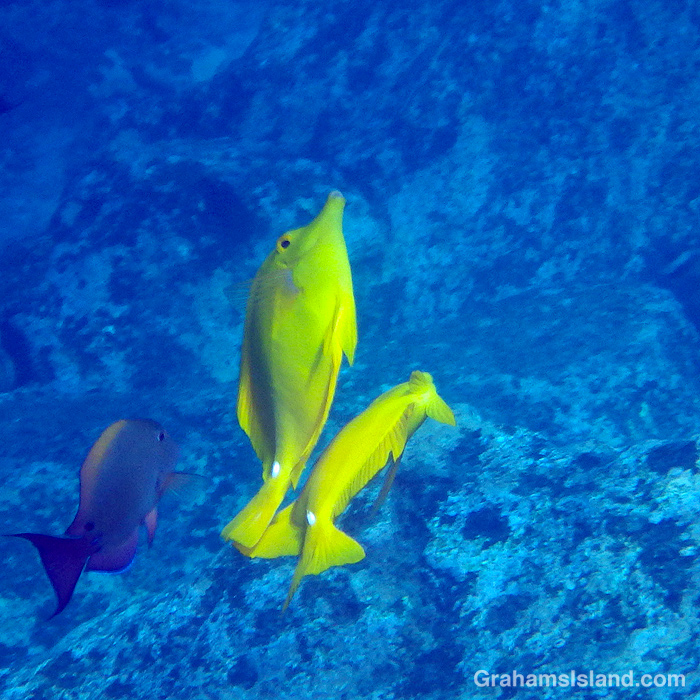
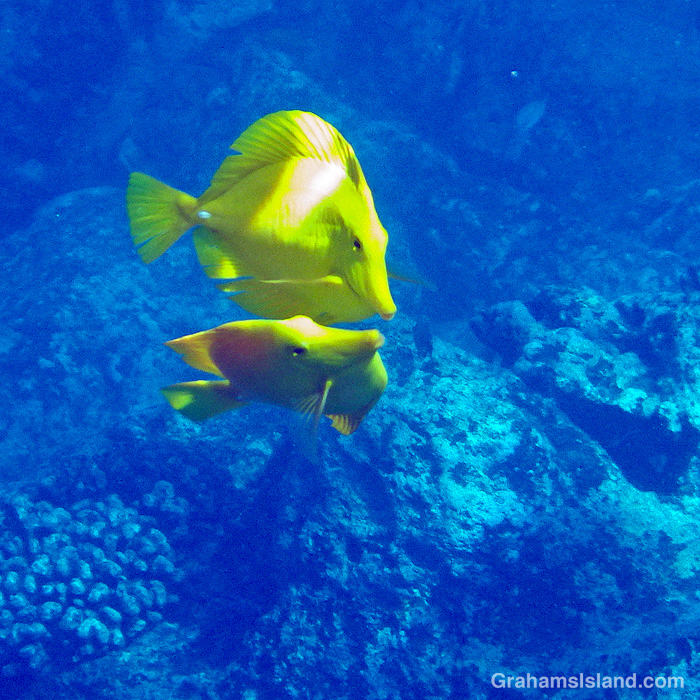
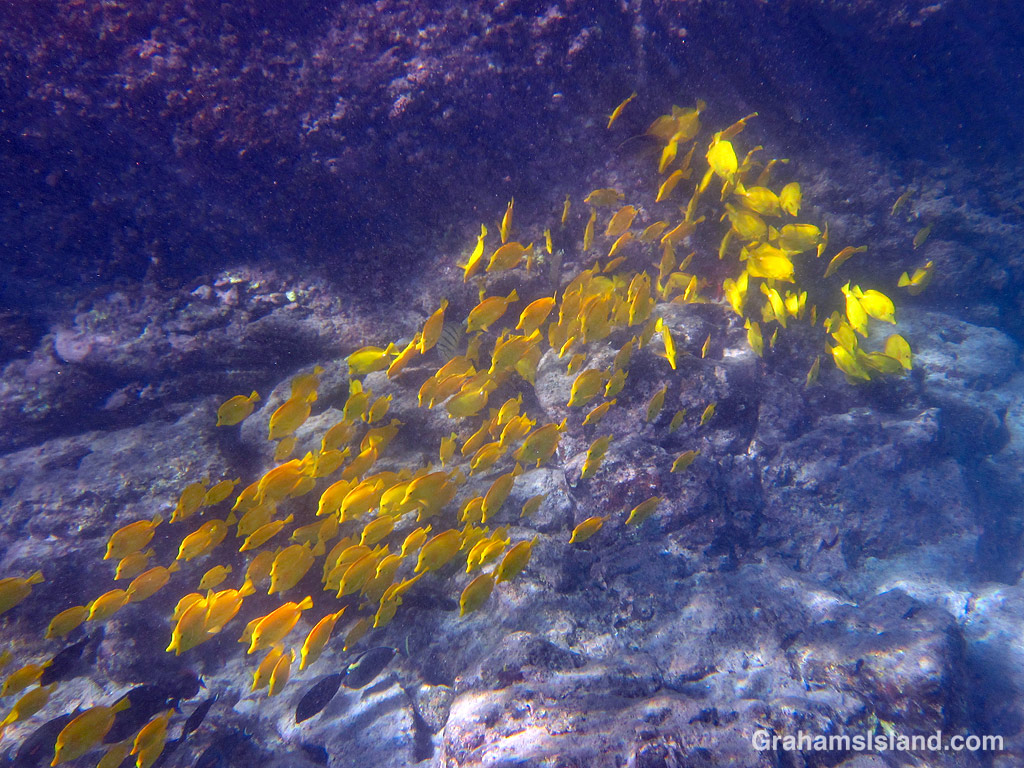
I thought I’d try the WordPress gallery feature for this post, which features yellow tangs, the first fish everyone notices in Hawaii. These bright yellow fish putter about in fairly shallow water, sometimes singly or in pairs, but often in large groups. They feed on algae, and occasionally can be seen cleaning turtles for this purpose. Unlike some fish, juveniles look the same as mature yellow tangs so shoals often contain a variety of sizes. The lower three photos show a pair of yellow tangs engaged in what I think is some kind of mating ritual.

Yellow tang are long-lived fish. They can live to be 20 or 30 years old. They’re also fish that are very popular in the aquarium trade but, since they don’t breed in captivity, all aquarium fish are collected from the wild. Currently, there’s a moratorium on the aquarium fish collection trade here, because of concerns about fish stocks and the sustainability of the practice.

Also posted in response to Becky’s July Squares challenge theme of ‘Perspective.’ See more responses here.

Yellow tang in Hawaii

Praying mantis

This week’s Sunday Stills challenge theme is ‘Wild and Weird.’ See more responses here.

No matter how you look at them, there’s something wild and weird about praying mantises. They look like Popeye with that spindly body and bulging forearms (no pipe though). Parts of them look like they came off the production line with some assembly still required. They remain motionless for long periods, watching, waiting. When they do move, it’s with a constant back and forth motion to sneak up on prey. Then they strike like a cobra and make short work of their victims.

And yet I find that despite all this weirdness, there’s something endearing about them. They put up with intrusive photographers and they keep still for them. What’s not to like.

Also posted in response to Becky’s July Squares challenge theme of ‘Perspective.’ See more responses here.

Ocean, sky, clouds, and noddys

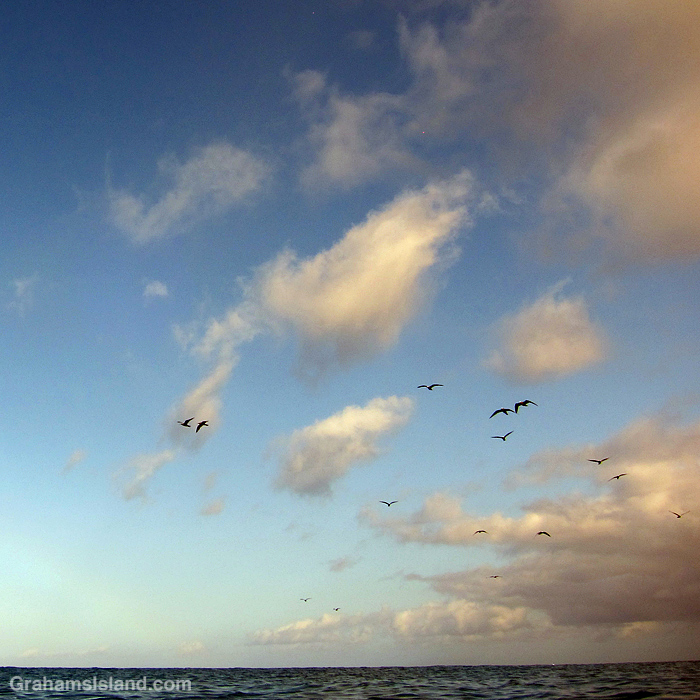
Yesterday, I was processing photos I’d taken over the past few days. When I saw this one, I thought, ‘I could have used that on Sunday,’ when responding to the Sunday Stills challenge theme of ‘Sky’ (more responses here), and Becky’s July Squares challenge theme of ‘Perspective’ (more responses here).

Usually, when I’m in the water, my focus is on spotting fish. But I also look around with my head above water and, one morning, I saw this flock of Hawaiian noddys wheeling back and forth over the ocean. Just after I took this photo, they flew directly overhead before gliding away to the south.

The night sky

This week’s Sunday Stills challenge theme is ‘Sky.’ See more responses here.

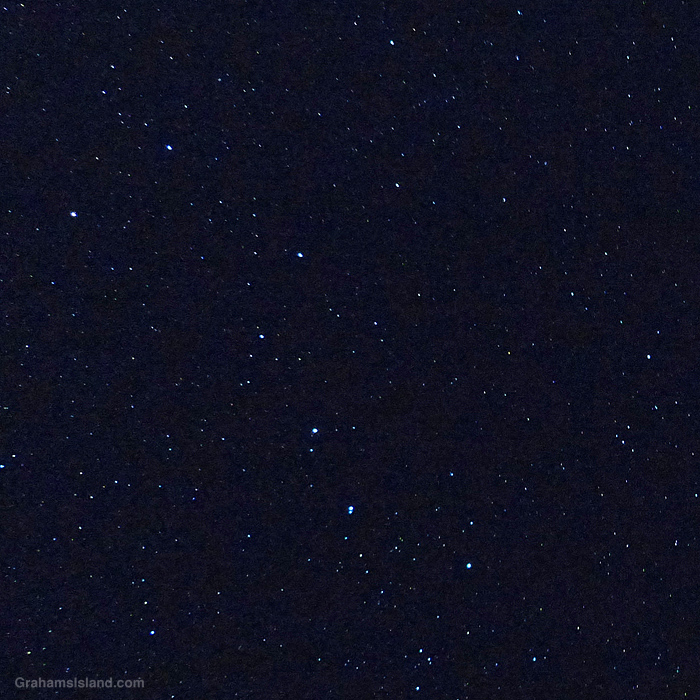
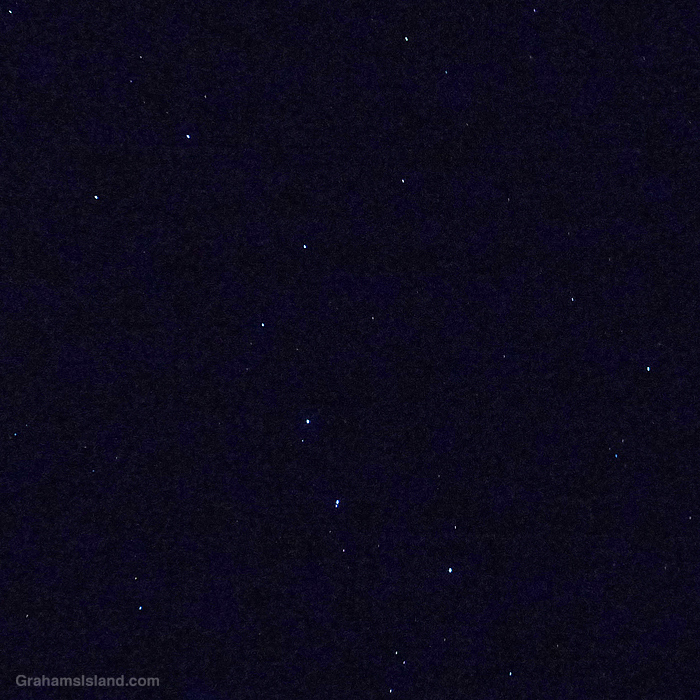
My camera isn’t the greatest for taking photos at night, but I’m not smart enough to stop doing so. In part, that’s because, on a clear night, the sky over the Big Island is a veritable star-spangled banner, as in the top photo. But slow the shutter speed down a tad and, as less bright stars fail to register, Ursa Major comes to the forefront. Also known as the Big Dipper, the Plough, and several other names, it’s one of the most recognizable constellations out there, at least in the Northern Hemisphere.

Also posted in response to Becky’s July Squares challenge theme of ‘Perspective.’ See more responses here.

Work in progress

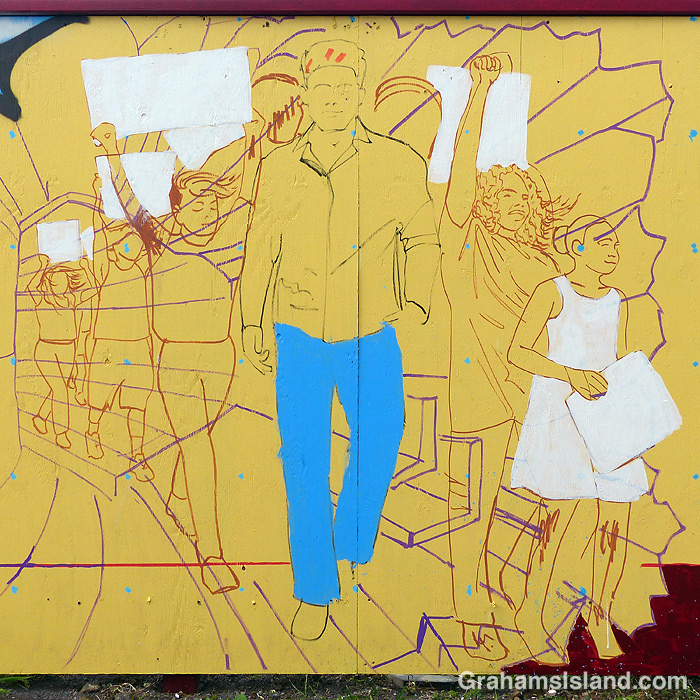
Last year, a commercial building in the center of Hawi burned down. Some time after the fire, the site was cleared down to the concrete slab. I’m not sure what the long term future of the site is, but currently there’s a food truck operating there.

The area is surrounded by a short, solid wooden fence and on the panels of the fence, some artwork has been started. On one section, the artist has lined out perspectives for the figures to be painted there. The full image on this section of fence is below.

Posted in response to this week’s Sunday Stills challenge theme is ‘Perspectives’ (see more responses here), and Becky’s July Squares challenge theme of ‘Perspective’ (see more responses here).