Tag Archives: Sunday Stills

Dawn chorus

This week’s Sunday Stills challenge theme is ‘Awakening.’ See more offerings here.

Around here, awakening is usually courtesy of the dawn chorus. That occurs when the birds themselves awaken and announce to the world that they made it through the night. Pretty much every bird species that lives within earshot takes part, but there are some standouts.

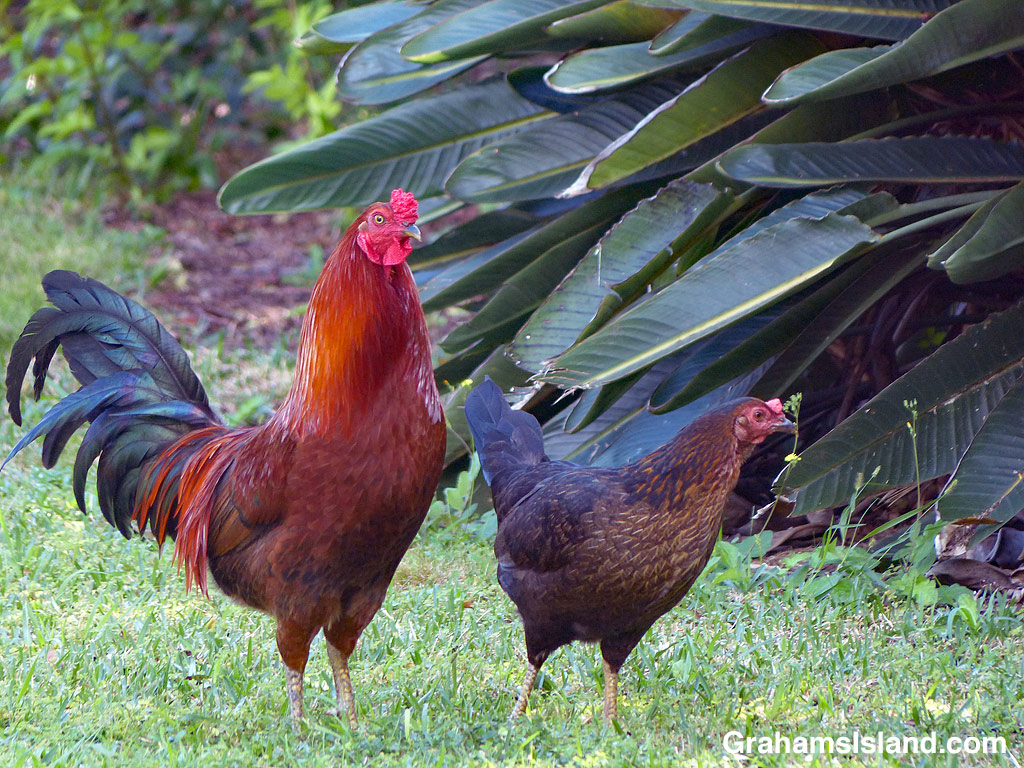
Roosters (above) are the traditional greeter of the new day and that’s true here, though it has to be noted that they’re equally likely to sound off at any time of the day or night. This neighborhood used to be rooster-free for several years. Then one wandered in from across the road and now there are several in the vicinity. One in particular keeps trying to make my yard part of its territory. I am resolved to prevent this.

Gray francolins (right) are smaller than roosters but might be even louder. Their call has a little wind up before soaring to full screech. It gets people’s attention at any time of day, but at 5:30 in the morning it’s more effective than mainlining caffeine.

The northern cardinal (below) is a smaller bird still but, from its typically high perch, its variety of powerfully-sung songs tend to ride over everything. But rest assured, the other birds contribute, from the red-billed leiothrix, to Japanese white-eyes, to an assortment of finches, they make sure that I’m up to greet the sunrise, whether I want to or not.

Kilauea lava

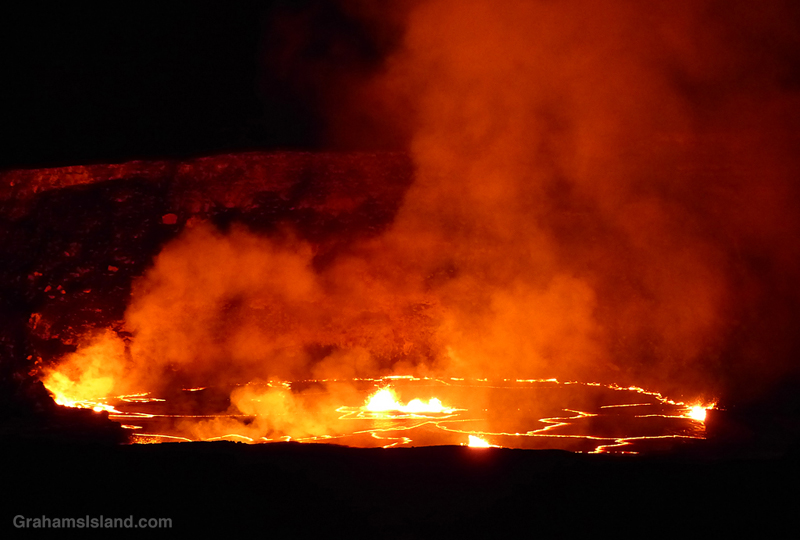
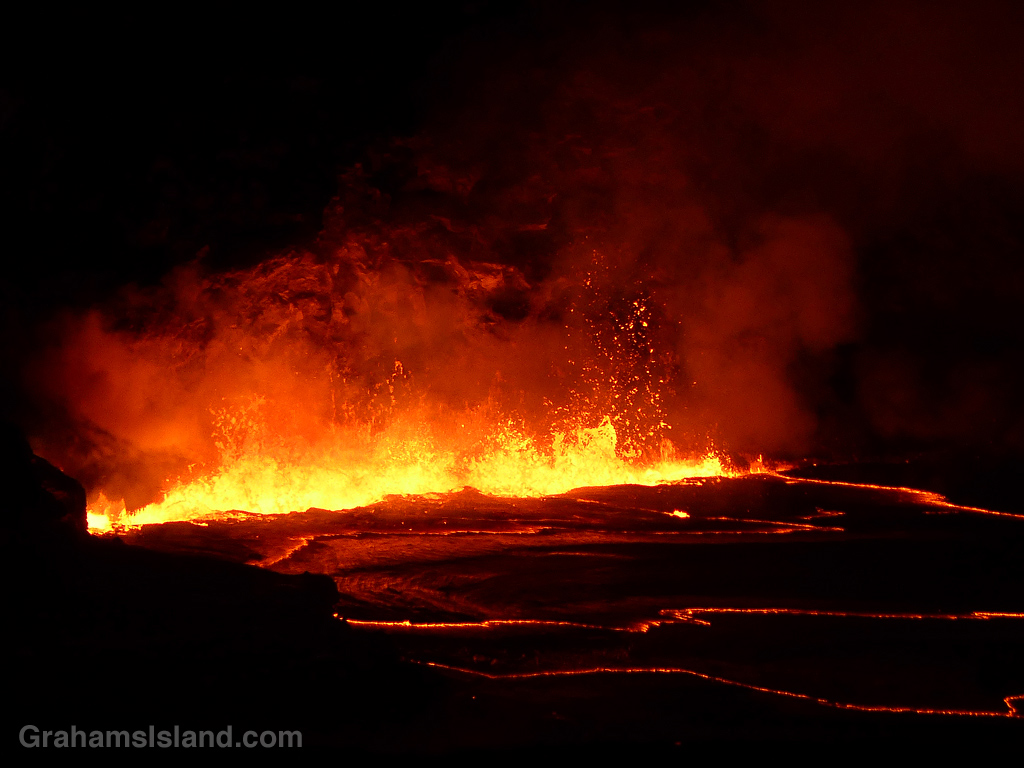
Lava fountains flare up alongside the rim of the active vent in Halemaʻumaʻu Crater at the summit of Kilauea Volcano.
The walls of the crater illuminated by the lava.

This week’s Sunday Stills challenge theme is ‘Mother Earth.’ See more offerings here.

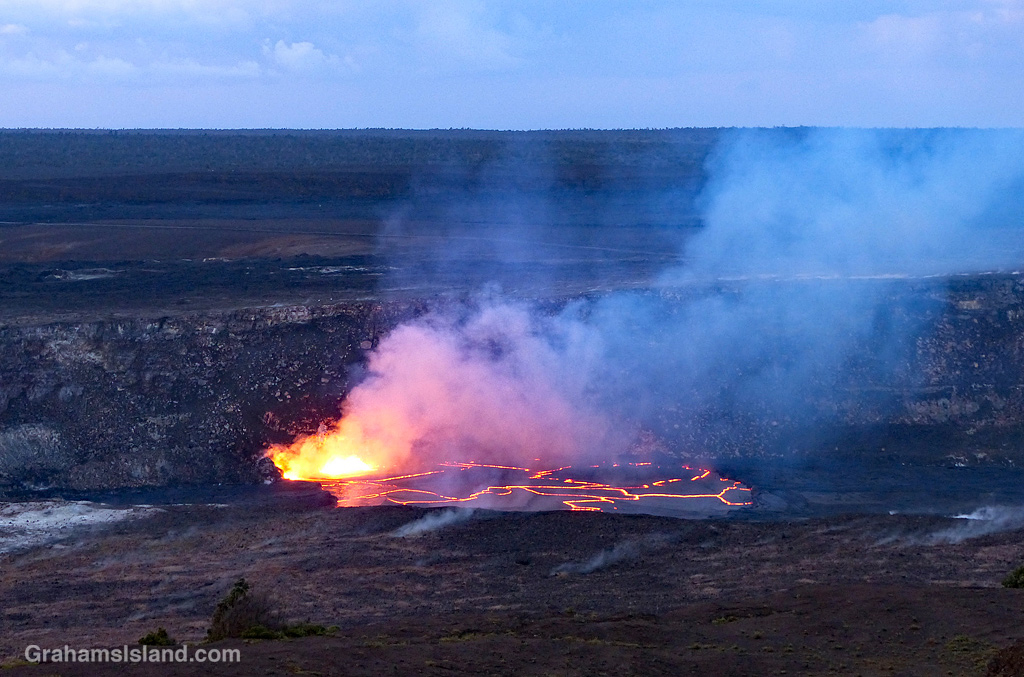
The Big Island is home to Madame Pele, who in Hawaiian culture is the goddess of volcanoes. She is the creator of new land as well as a destroyer. These photos were taken on April 24, 2018. (An account of that visit, and more photos, can be found here.) On May 1, the lava in the lake began to drop. Within a week, it had dropped more than 700 feet and continued falling. Lava had also disappeared from Pu’u O’o, the other active vent on Kilauea.

The drop in lava levels was due to magma in the system moving down the east rift zone of the volcano where it emerged in a series of vents in Leilani Estates, a housing subdivision in the southeast part of the island. This new eruption lasted until late August, 2018, since when the volcano has been quiet.

While there has been no visible activity, below ground, magma has been moving through the system, notably into Kilauea’s summit chamber. It’s surely only a matter of time before Madame Pele makes her presence known again on one of the world’s most active volcanoes.

The early morning light shows the crater and land around Halemaʻumaʻu Crater. This is a scene that no longer exists. Since this photo was taken, not only is the vent no longer active, but the crater floor has collapsed numerous times and the walls have also subsided in places.

Flowers at Hawaii Tropical Botanical Garden

This week’s Sunday Stills challenge theme is ‘Fantastic Florals.’ See more offerings here.

This seemed like a good theme to post a few photos, of different colored flowers, from my last visit to Hawaii Tropical Botanical Garden, back in February.

Top photo: It took me a while to identify this as Petrea volubilis, also known as purple wreath, queen’s wreath, and sandpaper vine, because the long blue parts are actually calices, not petals. The flowers are the smaller darker blue centers most easily seen on the blooms to the left side.

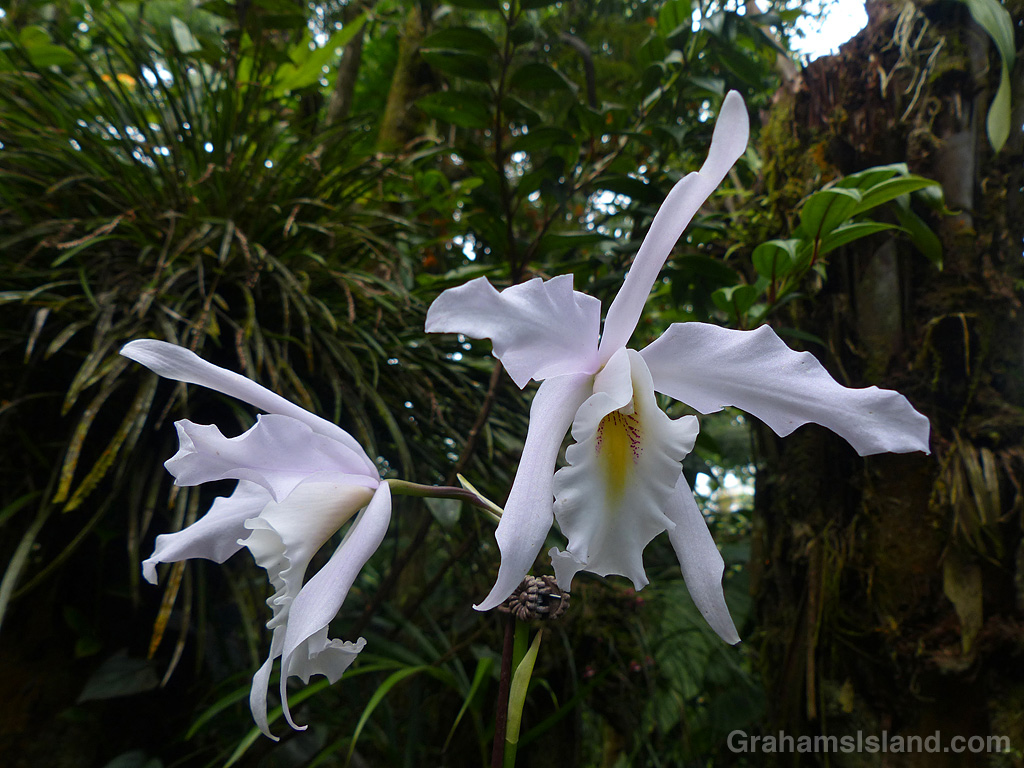
Second Photo: A lavender version of the cattleya maxima orchid was first found in Ecuador in 1777. The yellow stripe down the center of the lip is characteristic of all forms of cattleya maxima, of which this alba variation is one. For more information about the history of cattleya maxima, visit chadwickorchids.com/content/cattleya-maxima.

Third photo: Yellow plume flower (Justicia aurea) is a blaze of color in a sea of green.

Fourth photo: Yes, there are green flowers, including this Anthurium ‘Princess Alexia Jade.’

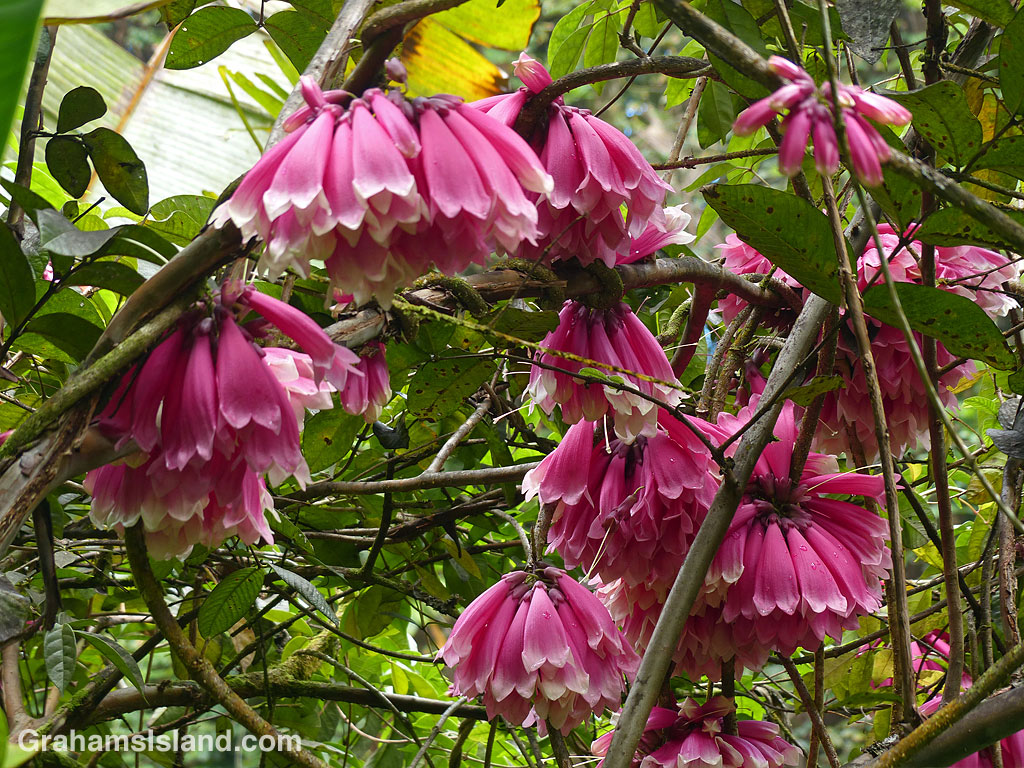
Bottom: New Guinea Trumpet Vines (Tecomanthe dendrophila) produce a fantastic array of white-tipped pink flowers.

For more information about Hawaii Tropical Botanical Garden, go to htbg.com.

Upolu

I call this spot Fran Point since that’s the name on the cross in this photo. Here, a rainbow arches over the coast and the surf rolling in.
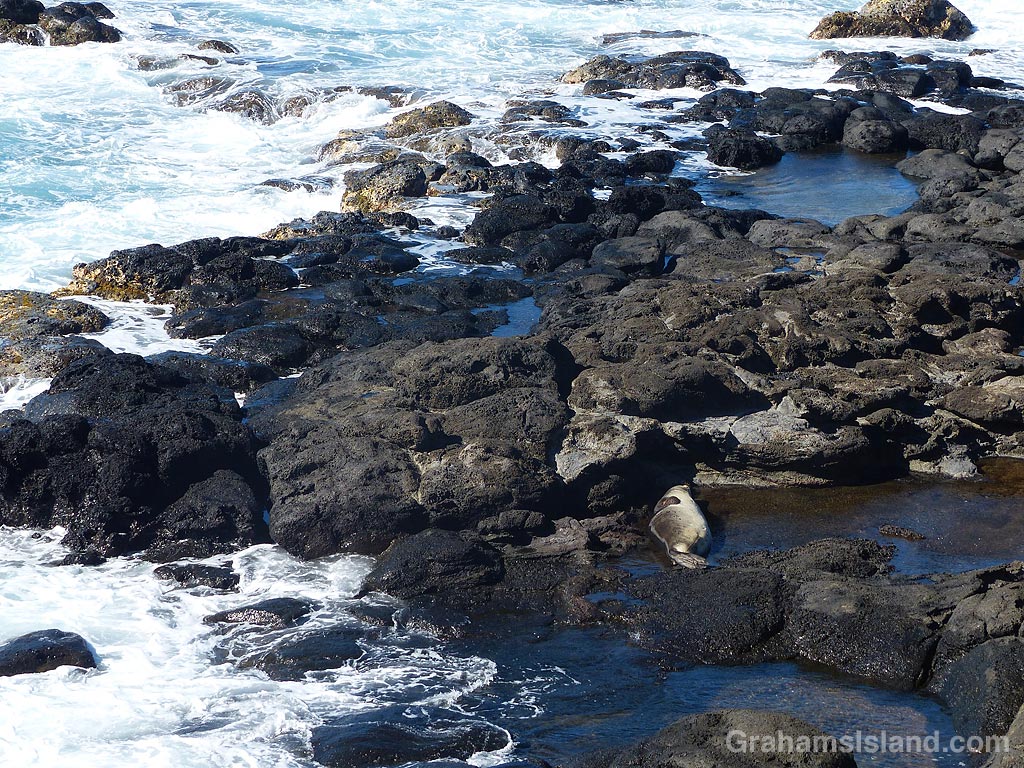
An endangered Hawaiian monk seal rests in a tide pool along the rocky shoreline.
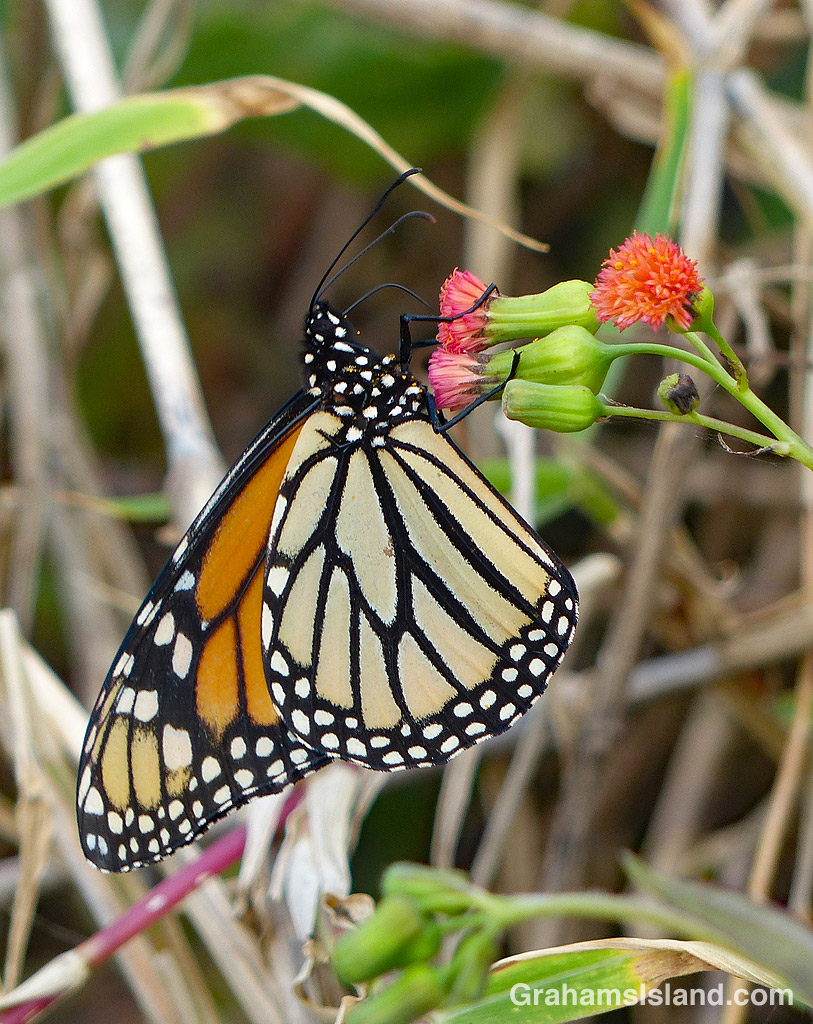
A monarch butterfly on a tasselflower.

This week’s Sunday Stills challenge theme is ‘Favorite Place.’ See more offerings here.

I could think of several places on the Big Island that would fall into the category of favorite place. Hawaii Tropical Botanical Garden, Hawaii Volcanoes National Park, Palila Forest Discovery Trail, the ocean – all these are places I return to. But the coast at Upolu is where I go for exercise and to enjoy the ever-changing scene there.

This stretch of coast features scenic high cliffs interspersed with lower areas where tide pools nestle among the rocks. Often, there’s a great view of Maui across the ʻAlenuihāhā Channel. In those waters I look for humpback whales, turtles, monk seals, and once, even a passing shark. Up in the air I might see anything from plovers to noddys to great frigatebirds. On land, there’s an assortment of birds, bugs and butterflies to be seen, as well as horses, cattle, and the occasional wild pig.

Sometimes, it’s hot and dry, but usually there’s a decent breeze, occasionally strong enough to make me lean into it while blown dirt sandblasts my legs. Sometimes, I get caught in the rain, but when I do, I’m usually dry again by the time I get back to my truck.

I’ve lived here seven years now and I never tire of going down there and looping around the fenced airstrip, wondering what I’ll see.

A bristle-thighed curlew strides along the edge of the airstrip at Upolu.
A humpback whale cruises no more than 50 feet offshore. This was one of a pair that I saw just this past week. I suspect they were a male and female, with the male interested in mating before heading north to Alaska. Not only was this as close as I’ve seen whales, but it was the first time, from land, that I’ve heard a whale do anything other than blowing. In this case, the pursuing whale made a deep, two-toned mooing sound as it went by.

Green anole

This week’s Sunday Stills challenge theme is ‘Green Macro or Close-Up.’ See more offerings here.

Here’s a green anole (Anolis carolinensis) perched on a green ti leaf so that I could take its photo (possibly). Light greens in the sun, dark greens in the shadow. With all this, I can forgive the anole its powder blue eye-shadow.

Ohia Lehua flower

This week’s Sunday Stills challenge theme is ‘Country or State Flower.’ See more offerings here.

The country flower for the USA is the rose and I don’t have photos of those. The state flower for Hawaii is the hibiscus and, while I have lots of those, they’re all of Chinese hibiscus (Hibiscus rosa-sinensis). The state flower is the native yellow hibiscus (Hibiscus brackenridgei) and I have none of those. The native hibiscus is not often seen in the wild and is currently considered an endangered species, but it is used as an ornamental in domestic gardens.

Having struck out on the two proper responses to this challenge, I’ve chosen to post photos of the official flower of the Big Island, the red ʻōhiʻa lehua (Metrosideros polymorpha). A member of the myrtle family, ʻōhiʻa lehua is endemic to Hawaii. It’s one of the first trees to colonize lava flows. It’s able to survive in such a tough environment because its roots grow down into lava tubes and other voids in the lava and tap into the moisture there.

Recently, ʻōhiʻa trees have been attacked by a fungus which can cause the trees to die within a very short time. This disease, known as Rapid ‘Ohi’a Death, is caused by two new types of Ceratocystis fungus.

Mauna Kea telescopes

This week’s Sunday Stills challenge theme is ‘Near and Far.’ See more offerings here.

The photo above shows a distant view of some of the telescopes atop Mauna Kea, silhouetted against an early morning sky. Below is a closer look at the Gemini Northern Telescope, which sits a little way north of the summit of Mauna Kea.