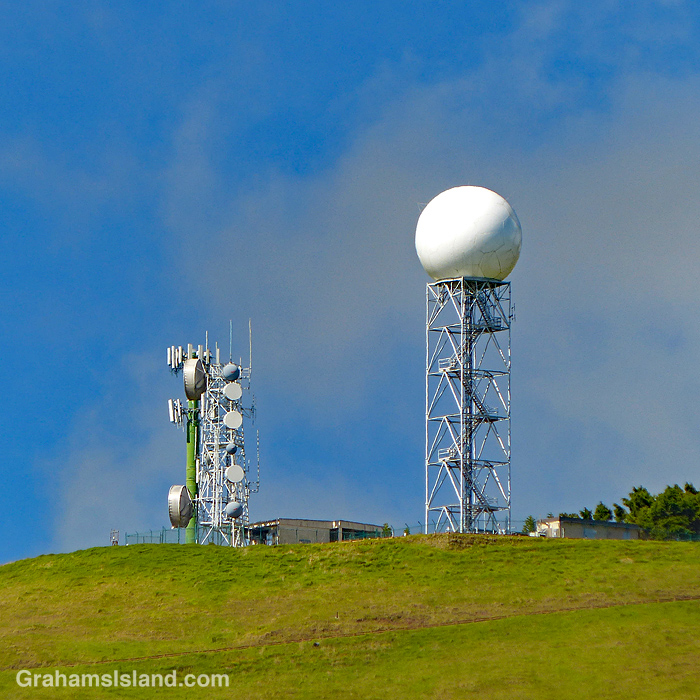
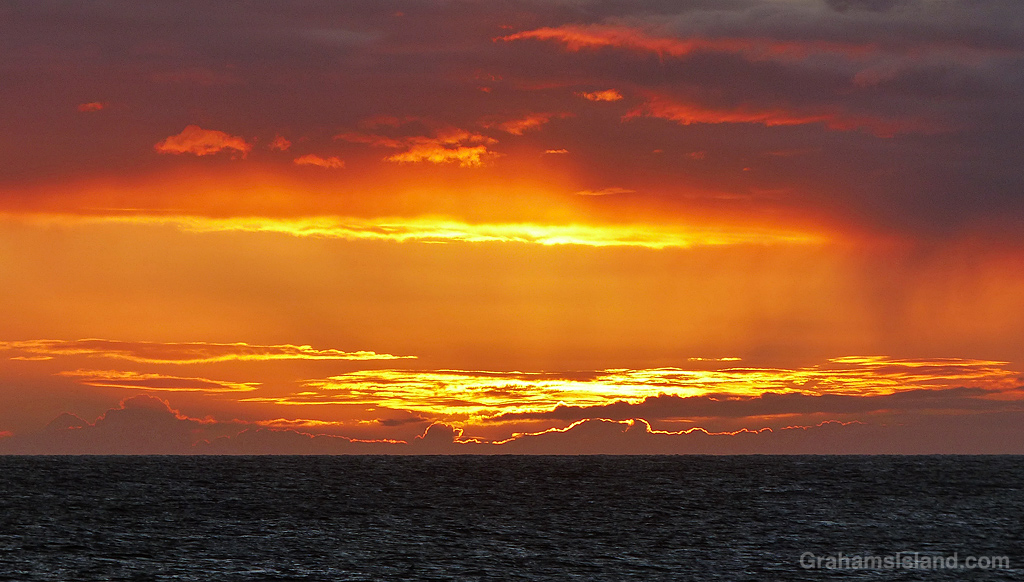
This week’s Sunday Stills challenge theme is ‘Towering.’ See more responses here.
Up near the top of Kohala Mountain is this array of towers. They sit in the middle of pastureland, surrounded by cattle and horses. The one with the large white ball on top is NEXRAD, the Next Generation Weather Radar, which provides current time information showing where clouds and rain are moving through the area. It’s also a navigation aid to local pilots who refer to it as the golfball.
The cattle don’t have access to the information from the golfball, but they know that when they’re wet, it’s raining, and when they’re dry, it’s not, and really that’s all anyone needs to know.
This week’s Sunday Stills challenge theme is ‘Inside.’ See more responses here.
I have a ladder I keep in a shed. Lately, I’ve had to access the attic on a regular basis (rat problems!) and have to bring the ladder inside to do so. I’ve learned from experience that, while in the shed, the ladder is home to a variety of creatures, mostly geckos. So before I bring it in the house I do my best to shake out the residents. Almost always, one or two will leap to safety. However, sometimes it’s not until I have the ladder in the house and set up that the more tenacious geckos make a break for it.
I’ve had a spate of this happening, which has resulted in a boost in the numbers of nocturnal house geckos inside. This, in turn, has resulted in territorial clashes between the geckos.
What does this have to do with jars of pasta? Well, at one end of this shelf is a cupboard which is home to one of the resident geckos. The other end of the shelf falls into the realm of a house gecko that lives in a closet in the next room. Into this setup, up above the jars, stumbled one of the new geckos. When it got too close to one end, the cupboard gecko chased it away. It ran to the other end where the closet gecko chased it back. Back and forth it went with the other geckos closing in with each pass. Soon the three of them were very close together.
At this point, the new gecko scurried down the wall in amongst the jars. This left the two resident geckos facing off in close proximity. Cupboard gecko charge the other one, but ran right past while closet gecko just looked bemused. Problem was, now they were both separated from their respective territories by the other gecko. A series of feints and scampers ensued before they regained their own homes.
In the meantime, the new gecko kept a low profile down amongst the pasta jars. That’s when I took this photo, as it was tentatively checking to see if the coast was clear.
This week’s Sunday Stills challenge theme is ‘Winter.’ See more responses here.
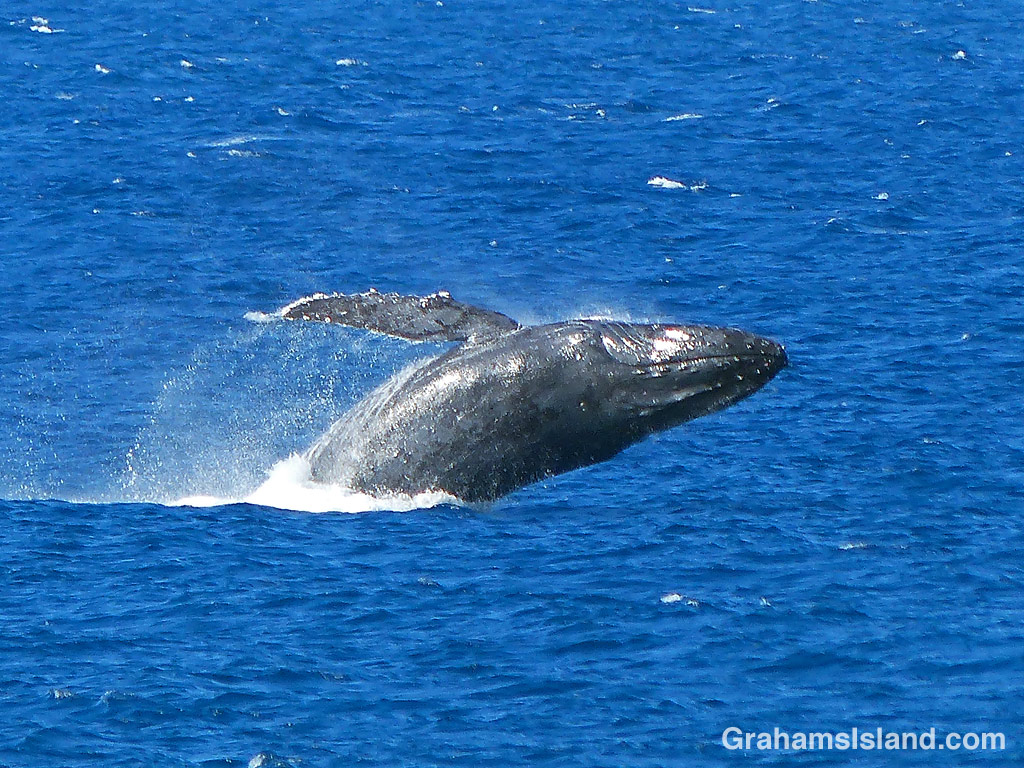
There are seasons in Hawaii, but they’re not as markedly different as they are on the mainland. So when it comes to a seasonal challenge theme I tend to fall back on migratory creatures. When it comes to winter, I think of humpback whales.
Humpbacks spend their summers in Alaska, which is their prime feeding ground. They come to Hawaii to calve and to mate. The first humpbacks arrive in Hawaii in October or November, but the high season for them is January through March. They can be seen anywhere around the island, but the prime viewing spots are on the more sheltered west side, from Kailua Kona all the way up to Upolu, at the island’s northern tip.
This week’s Sunday Stills challenge theme is ‘From Your Window.’ See more responses here.
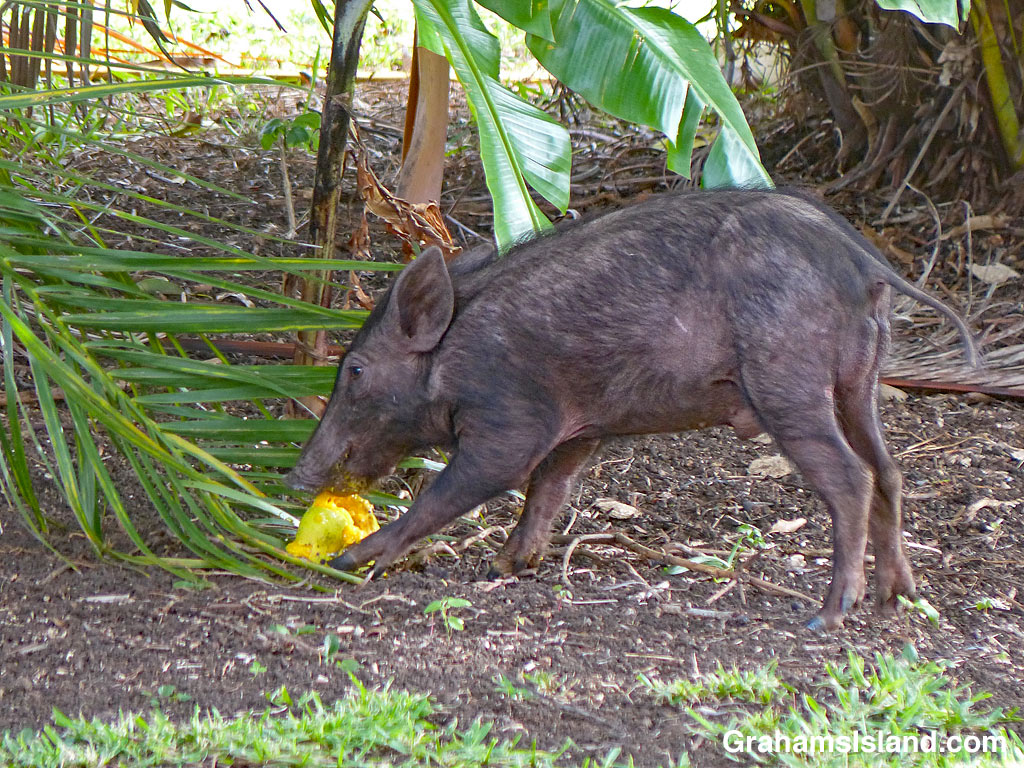
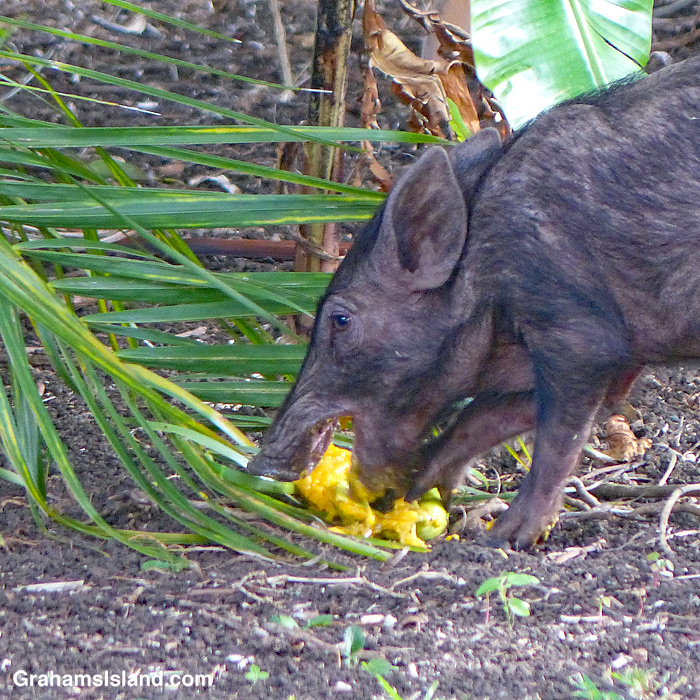
There’s a very large mango tree in the yard, which is an erratic producer of fruit. Some years, there’s not much. Other years, the tree looks like an overdecorated Christmas tree. In those times, it’s best not to spend much time under the tree, particularly when it’s windy, because the thud of fruit hitting the ground is frequent (though, standing under that tree is risky any time, since large branches are prone to breaking off).
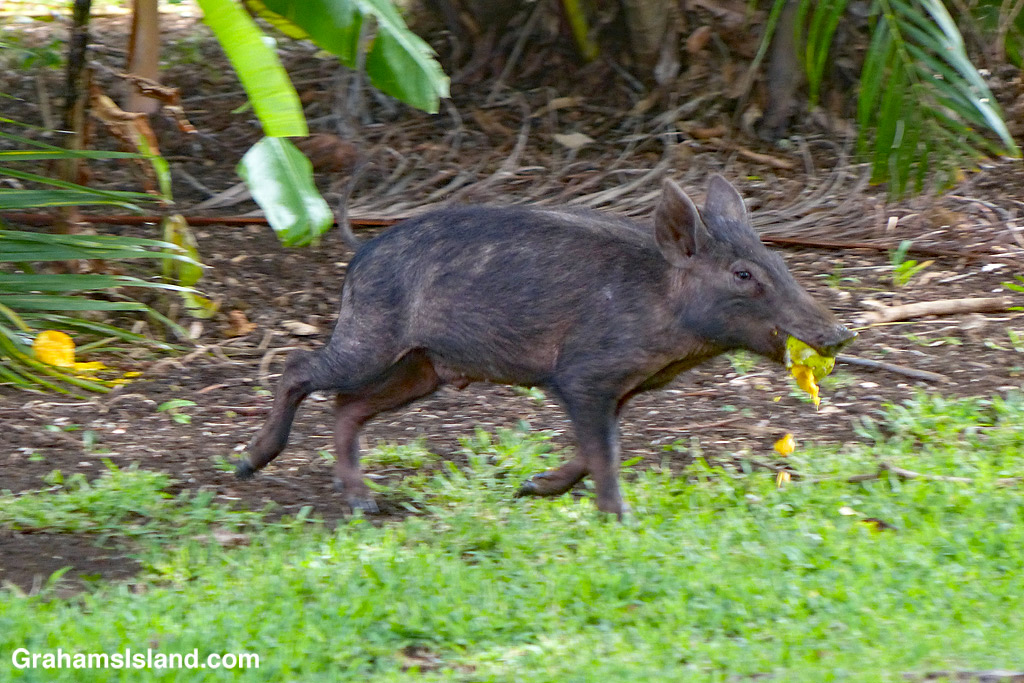
When fruit does start to fall, wild pigs move in. There are always windfalls available and the pigs love this easily-accessed treat. The pig population around here varies, mostly depending on whether hunters are active in the area. Pigs are nocturnal, so do most of their foraging at night, but the younger ones are more likely to venture out in daylight hours, either because they haven’t yet learned how dangerous that is, or because it’s harder for them to get a look-in when the big pigs are around.
This year, there have been as many as nine pigs in the yard at one time, but this younger pig was out by itself. As there were quite a few mangos on the ground, it was being quite choosy as to which ones to eat. Hard ones will be shunned, unless that’s all there is. This mango was just right, and the pig was tucking in until something disturbed it and it ran off, but not without its prize.
Mostly the pigs are a source of entertainment and don’t bother me. The exception is when they roam past the bedroom window in the middle of the night and get into arguments, grunting and squealing. They also have a very ripe smell, which drifts in through the open window. Fortunately, they’re easy to disperse. I just do my large, angry dog impersonation, consisting of a few loud barks, and they disappear like they’ve been shot out of a cannon.
This week’s Sunday Stills challenge theme is ‘Bodies of Water.’ (See more responses here.) Last Sunday, I posted photos of the Kohala valleys. This week, I’m posting a bit about what goes on in them and elsewhere on the island.
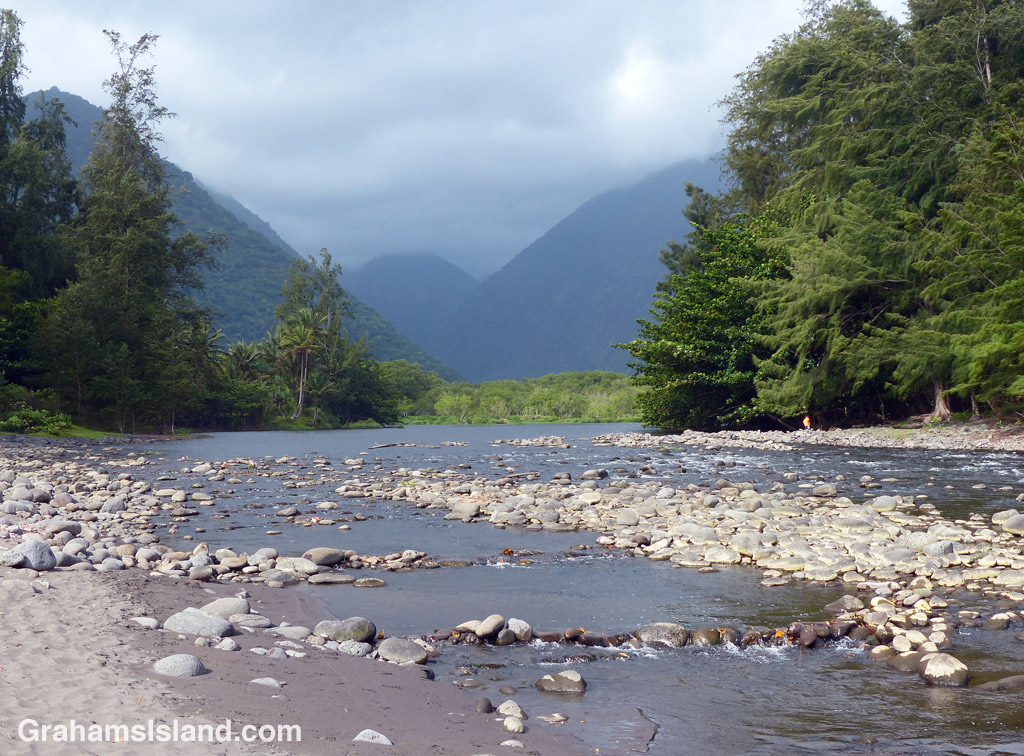
The top photo is shows the mouth of the Waipi’o River looking back toward the cloud shrouded Kohala hills. The river, is fed by water passing over Hi’ilawe Falls and other waterfalls deep in the fingers of the valley. Like all water courses on the Big Island, its flow is greatly increased by the often heavy rainfall.
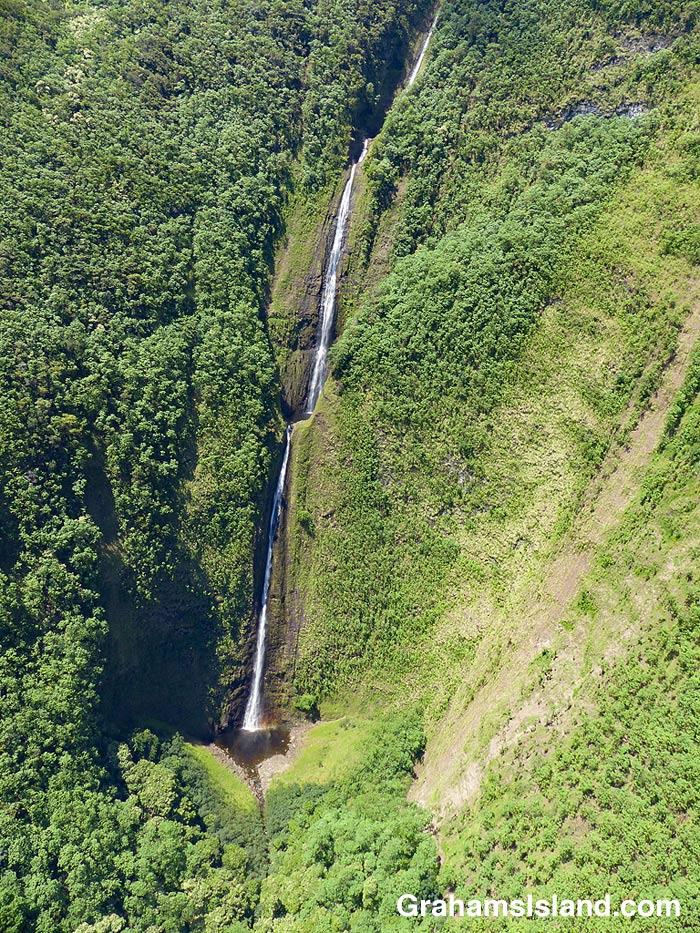
The second photo shows a waterfall, farther down the coast, cascading into a pool at the bottom before flowing out to the ocean. Some of these waterfalls drop more than a thousand feet. Some cascade into valleys, some directly into the ocean. During dry spells, the water flows are greatly reduced and many falls, those that are entirely rain fed, disappear for a while. When rains are heavy, the water flow is so great that some falls blend together to form a sheet of falling water.
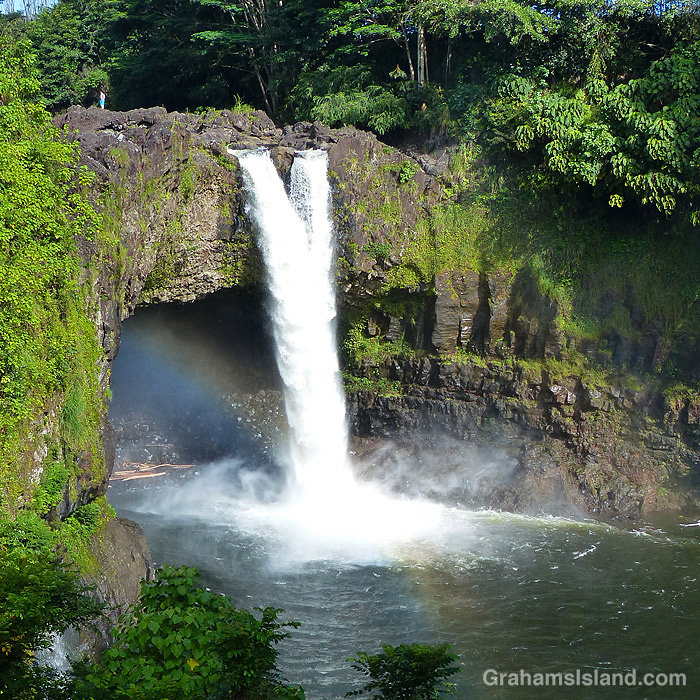
On the east side of the island is Wailuku River, the longest river on the island. This flows down to the ocean in Hilo, and on its way, tumbles over the aptly named Rainbow Falls (third photo). The falls and rainbows are best seen in the early morning. This stretch of the river is very dangerous with flash floods being common. People get swept away here every year.
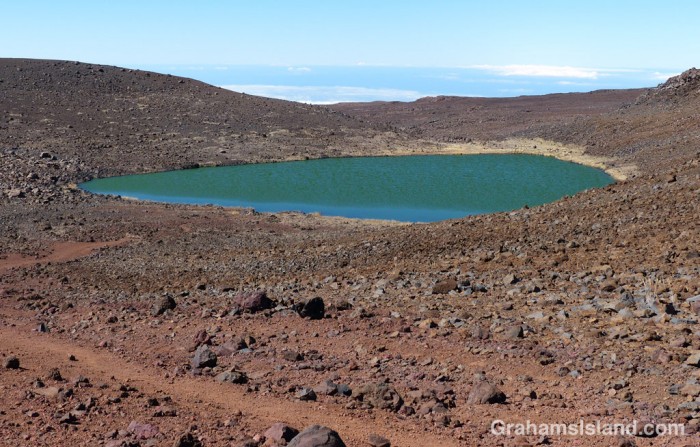
Finally, the bottom photo shows the biggest lake on the island, which can be found at the top of Mauna Kea! Lake Waiau is fed by rainwater and snow melt, mostly in the winter. That it exists at all is something of a mystery. The ground on Mauna Kea is highly permeable, and it’s not fully understood what the layer is beneath Lake Waiau that enables it to retain water. Lake Waiau is not just the biggest lake on the island, it’s the only one. Green Lake, the biggest lake previously, disappeared during Kilauea’s 2018 eruption (photos and story here).
This week’s Sunday Stills challenge theme is ‘Mountains and Valleys.’ See more offerings here.
Kohala Volcano is the oldest volcano on the Big Island and has long been extinct, having last erupted around 120,000 years ago. Since then, the various processes of erosion, from rainfall to landslides, have carved deep valleys into the volcano. Waipio, the easternmost of these valleys, is accessible by vehicle (4-wheel drive only), horseback, or on foot. It has permanent inhabitants so access within the valley is restricted.
The other valleys are most easily seen from the air, along the Kohala coast. The top photo shows Waimanu Valley. This can be accessed by foot from Waipio, after a long and arduous hike, and permits are available for camping there. Waimanu River can be seen on the far side of the valley and is one last obstacle to be crossed to reach the camp site, which is in the strip of land between the river and the ocean. The steep sides are typical of these valleys and another consideration to keep in mind when thinking about hiking here.
The middle photo shows a fairly typical view directly into one of the valleys from the ocean. Again, notice the steep valley sides and the abundance of foliage, evidence that this is the wet side of the island.
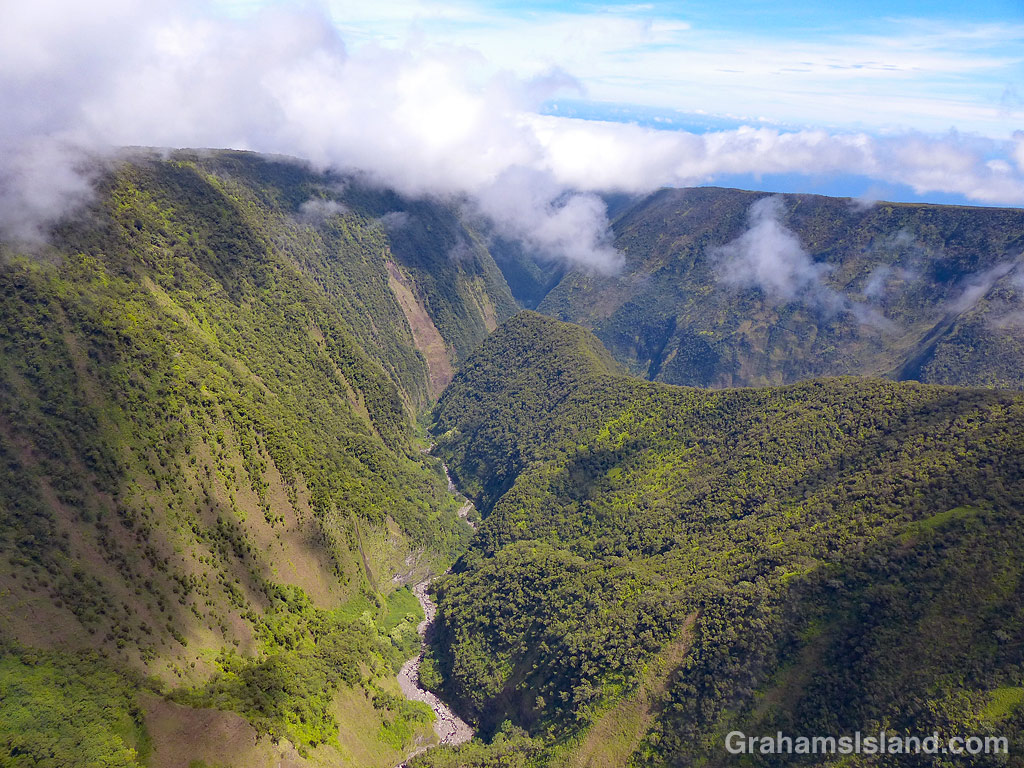
The bottom photo shows valleys cutting through the mountain farther inland. There’s little or no water running in this view. A few valleys have spring-fed streams, but most depend on rain for water flow. However, when it does rain, it can rain long and hard. Flash floods are common. It’s not a shock when campers in Waimanu Valley are cut off and unable to make the return hike.
I’ll do another post about the water courses for next week’s Sunday Stills challenge.
This week’s Sunday Stills challenge theme is ‘Beautiful Beaches.’ See more offerings here.
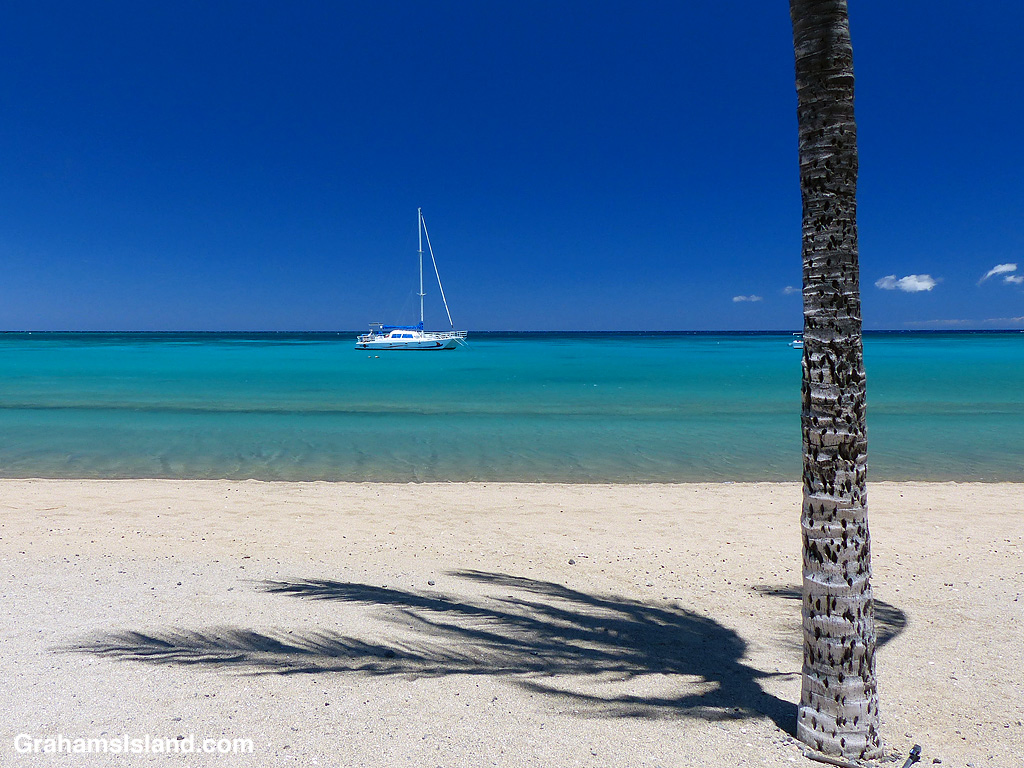
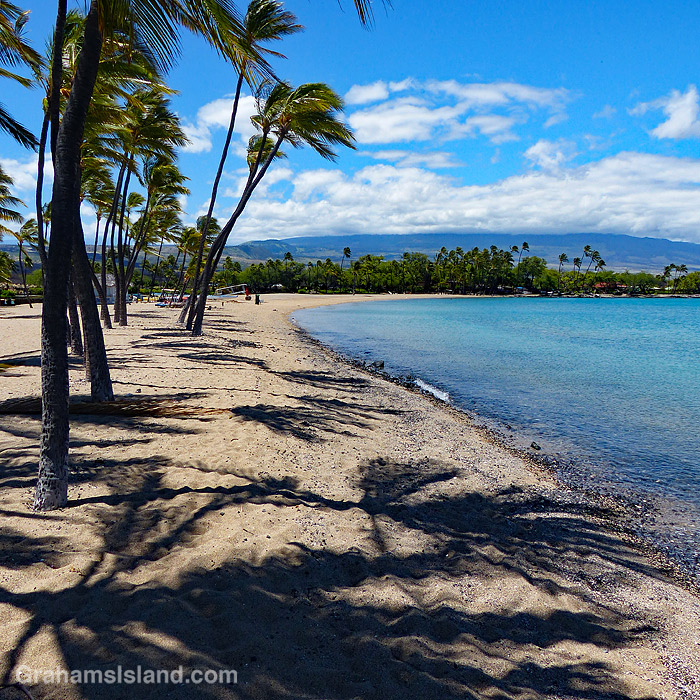
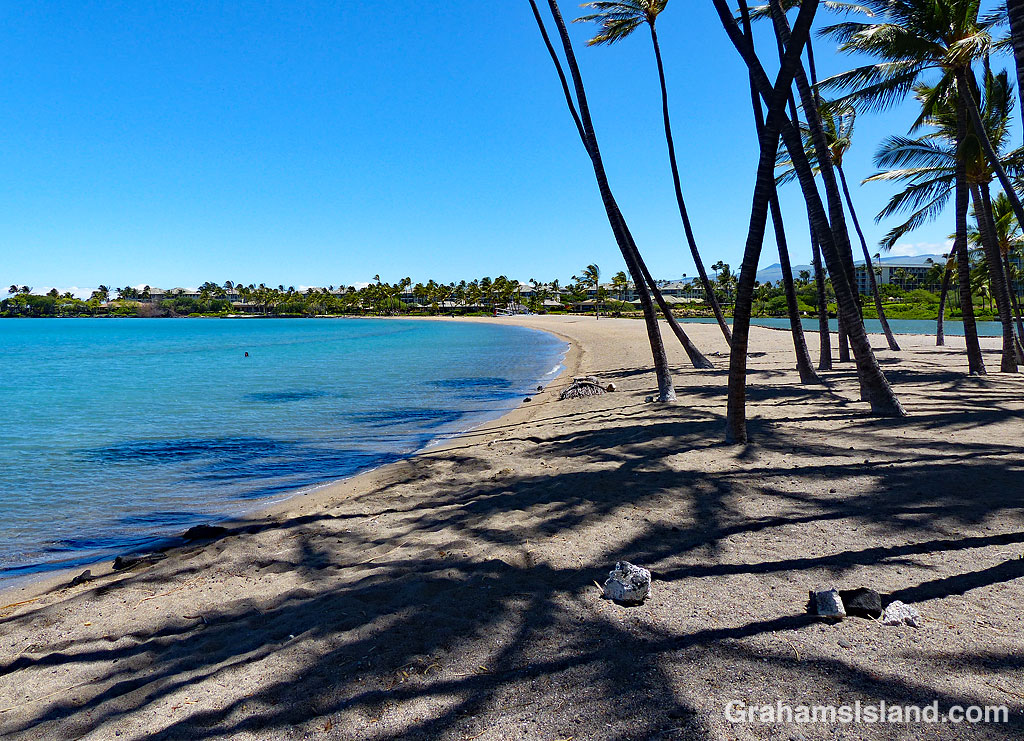
ʻAnaehoʻomalu Bay, at Waikoloa Resort, is often referred to as A Bay for reasons that aren’t hard to figure out. In normal times this is a very popular spot. The beach is a long curve of pale sand with palms at either end. It’s popular with sunbathers, swimmers and snorkelers. There’s also a restaurant and bar at one end of the beach, facilities nearby, and shops not far away. And Ocean Sports operates various cruises out of the bay on a catamaran or glass-bottomed boat.
There’s a hike I like to do, which goes south from A Bay, and on previous visits I’ve skirted the crowds which are usually found there. However, these are not normal times. On my last visit I headed north. There was one person in the water, two on the beach. The ocean lapped gently against the shore. An offshore breeze rustled the palm fronds. Usually when I hike places like this, I’m an aberration with shoes and a fanny pack, marching through swathes of bikinis and board shorts and roasting flesh. On this occasion, I was an aberration just by being there.