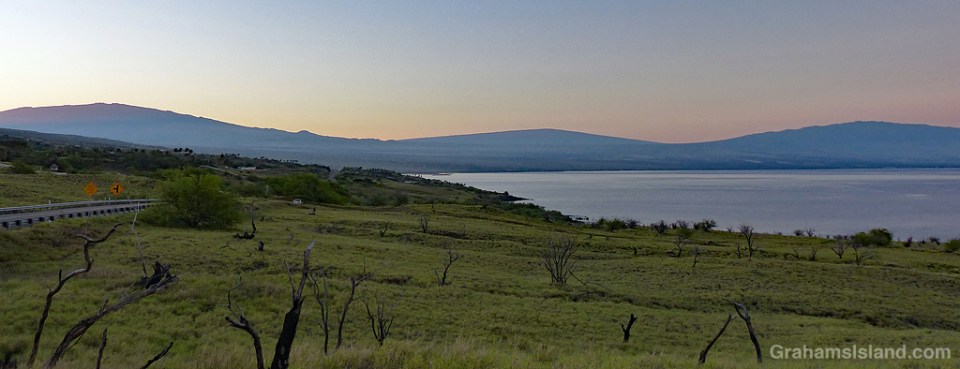
Three of the Big Island’s volcanoes – from left, Mauna Kea, Mauna Loa, and Hualalai – seen as daylight suffuses the sky.
Posted in response to this week’s Sunday Stills challenge on the theme of ‘Daylight.’ See more offerings here.

Three of the Big Island’s volcanoes – from left, Mauna Kea, Mauna Loa, and Hualalai – seen as daylight suffuses the sky.
Posted in response to this week’s Sunday Stills challenge on the theme of ‘Daylight.’ See more offerings here.
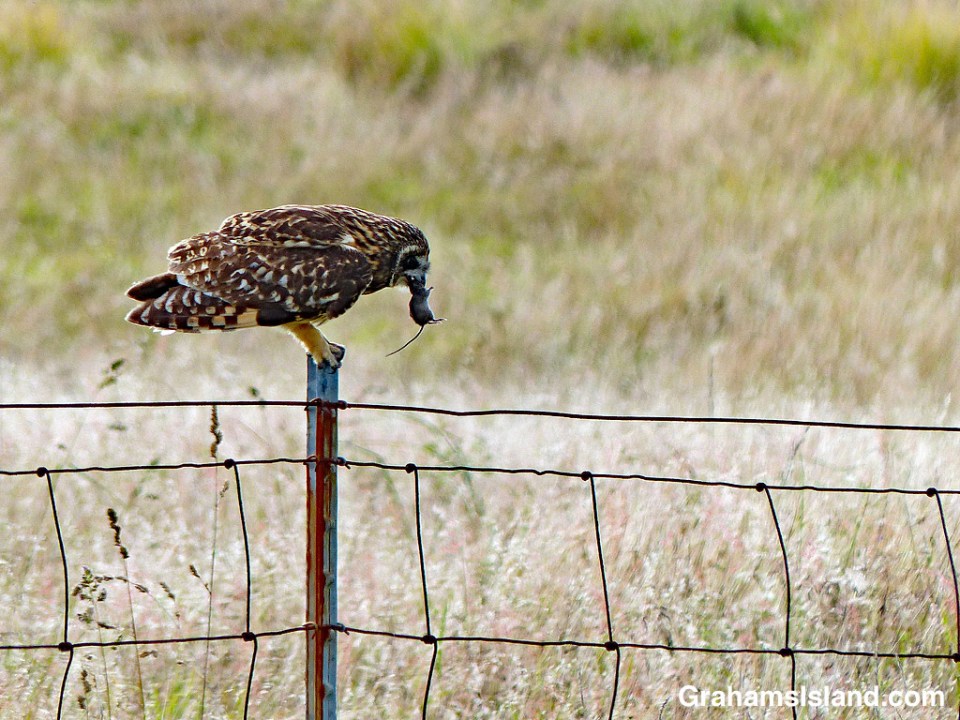
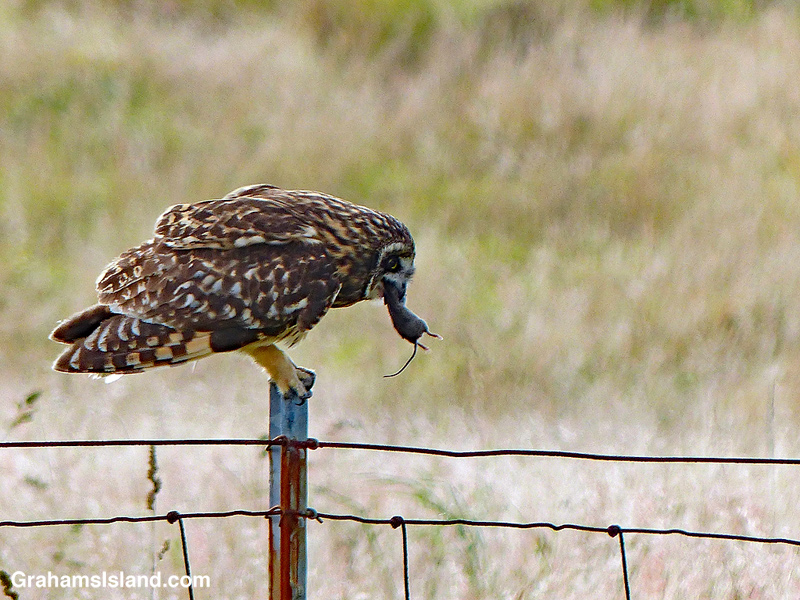
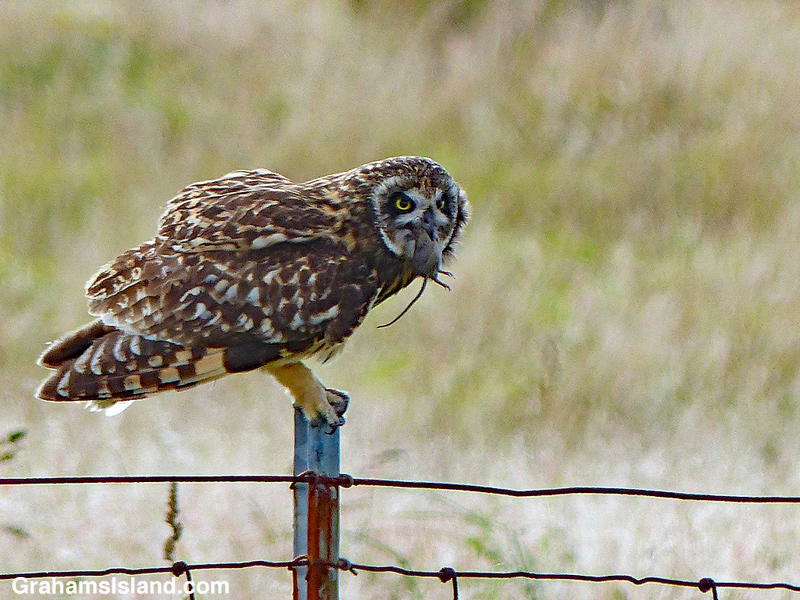
 Last week’s Sunday Stills challenge theme was ‘Flight’ and I posted photos of a pueo flying here. This week’s Sunday Stills challenge theme is ‘Wildlife’ (see more offerings here) and, in an audacious move, I’m posting photos of the same bird.
The photos were taken along Old Saddle Road. It’s a prime area to see pueo (Hawaiian short-eared owls) and when I drive this road, I’m something of a menace to other cars since I spend a good deal of time looking at the sky rather than the road. When I do spot a pueo I tend to veer suddenly onto the grassy verge. This is OK assuming there’s a grassy verge and not a deep channel caused by water runoff.
The day I saw this bird had been a good day indeed. Many pueo had been spotted, several photographed, and no accidents caused. Nearing the end of the prime spotting area, I noticed a bird flying over a pasture. I bumped onto the grass and stopped just in time to see the pueo disappear over a ridge. As I waited to see if it might reappear, I looked across the road and saw this pueo perched on a fence post directly across from where I parked. Sometimes it’s better to be lucky than smart.
I grabbed my camera, eased the window down, trying to make as little noise as possible, and took a few shots. I needn’t have worried. This pueo seemed quite attached to its spot, perched on a metal fence post. It wasn’t about to move just because someone across the road kept making clicking noises. As cars passed, the bird’s head swiveled to follow their progress, then returned to its surrounds. It kept looking down, sometimes leaning forward with a more intense stare.
Suddenly, the pueo plunged into the grass and disappeared from view. Moments later, it flew up again and landed back on the post. This time it wasn’t alone. Hanging from its beak was a mouse. It wasn’t dead, but its future looked bleak. The pueo juggled it briefly, working it into the right position. Then, in a couple of quick gulps, the mouse disappeared, only the tip of its tail hanging out of the pueo’s mouth. Moments later, that too was gone. The pueo hung around for a while longer before taking off to try its luck hunting from the air.
I was struck by the poise of this large bird, perched on a small metal post, while it scanned its surroundings and ate its meal. Look at those talons gripping the post. Not something I’d want around my head. The same goes for its beak.
I’m easily charmed by cute geckos and awed by giant humpbacks, but there’s a reason for the ‘wild’ in wildlife. It’s a critter eat critter world out there and sometimes it can be almost as dangerous as civilization.
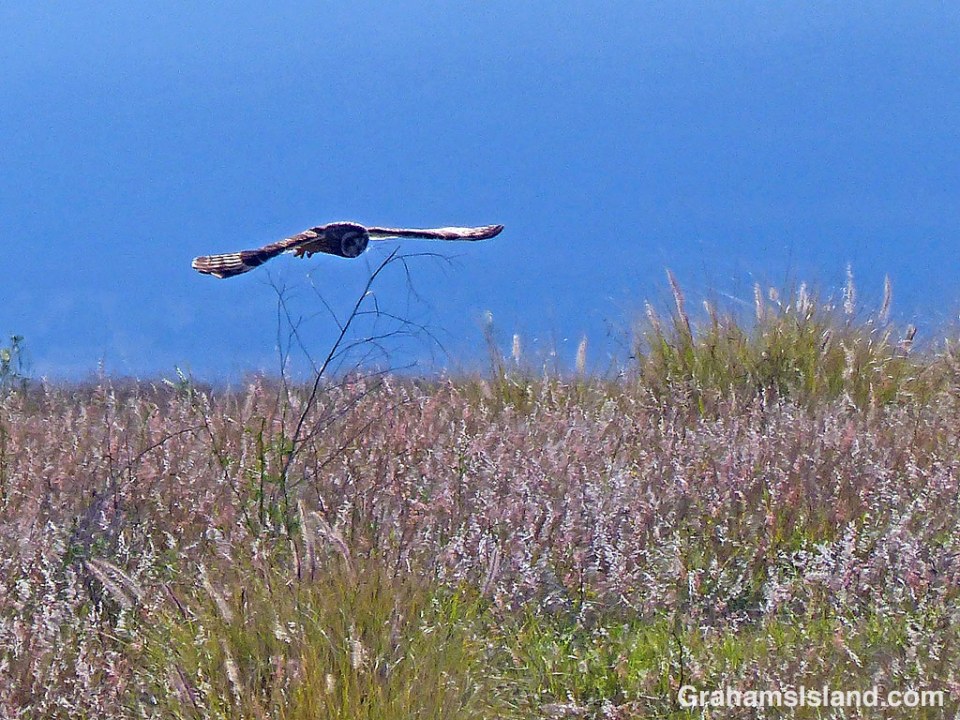
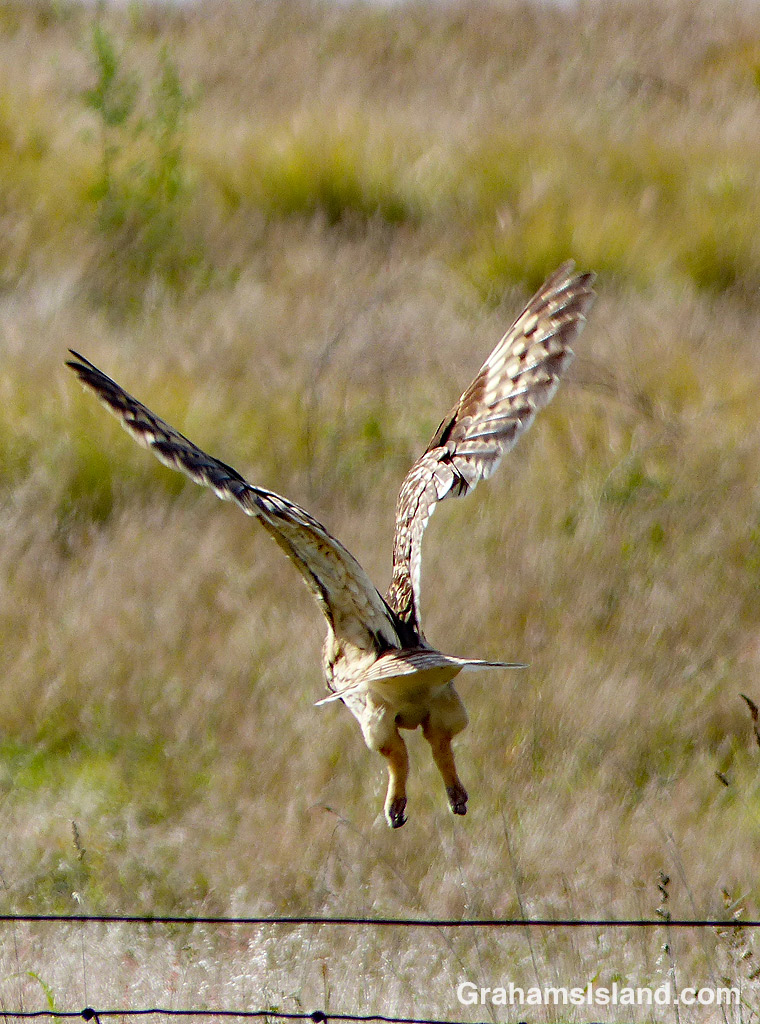
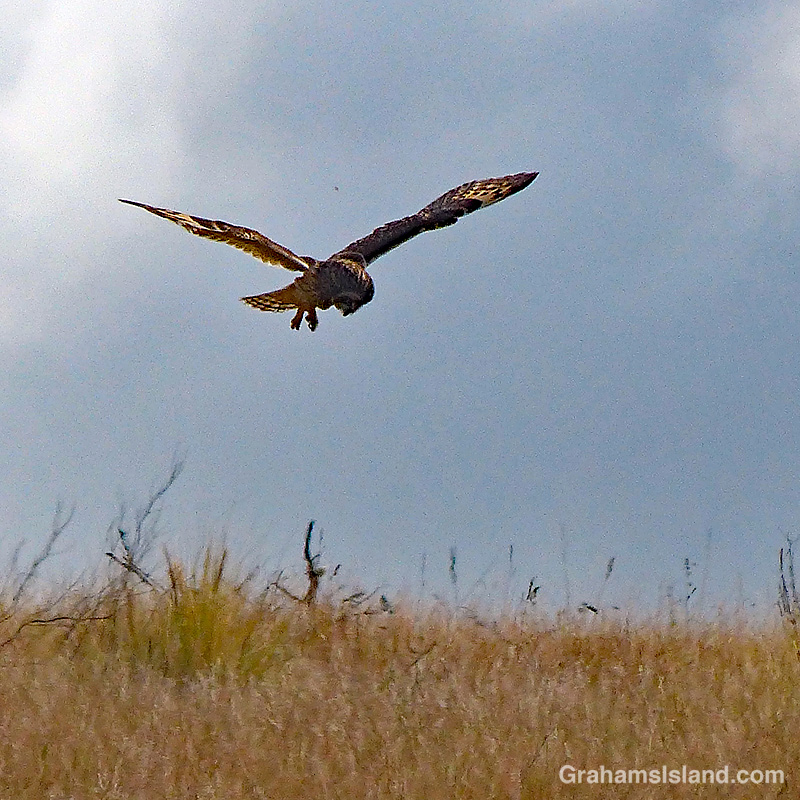 This post is in response to two photo challenges, which I could say is killing two birds with one stone, but given the subject matter, that would be most inappropriate. This week’s Sunday Stills challenge theme is ‘Flight’ (see more responses here), and this week’s Friendly Friday challenge theme is ‘Dreamy’ (see more responses here).
The ‘flight’ response is more immediately obvious. This is a pueo (Hawaiian short-eared owl) flying. In the top photo it’s cruising over pastureland. In the middle is its initial launch into the air. Below that, hovering above something promising in the grass. And at the bottom, a dive to take a better look.
These photos also work for the ‘dreamy’ response for two less apparent reasons. The first is that I’ve always had flying dreams, less frequently these days, but still every now and again. The thought of gliding above the landscape, as in the top photo, is very pleasing for me. The second reason is that seeing pueo is still a somewhat surreal, dreamy event. Owls are often nocturnal, but pueo are active during the day. In the air they are accomplished fliers, gliding, hovering, diving with little apparent effort. At rest, they look very dignified as they sit, keeping watch, head swiveling a disconcerting 360°.
These photos are of the same pueo, seen on a recent drive along Old Saddle Road, southeast of Waimea. I’ll post other photos of this bird once I’ve had time to go through them, but seeing it was a great, chance encounter at the end of my best ever day for seeing pueo.

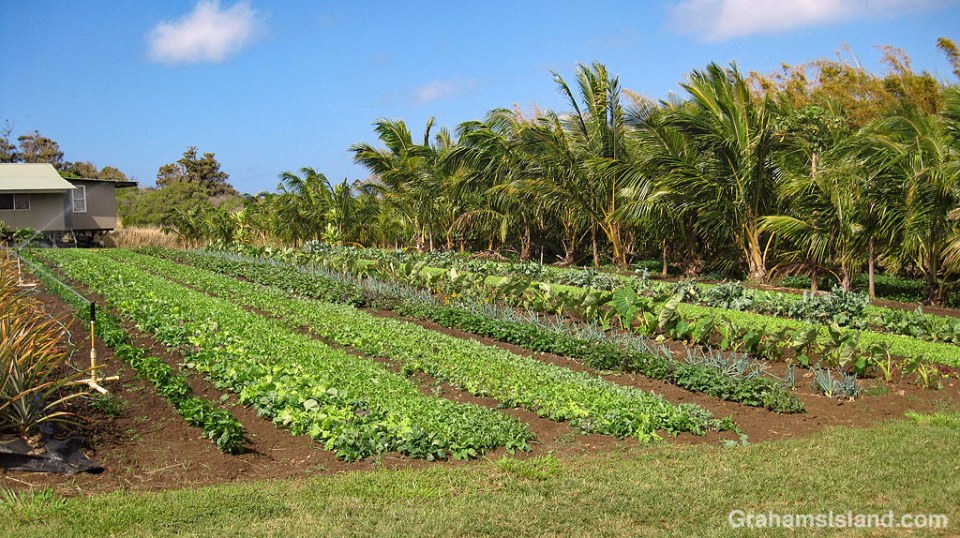
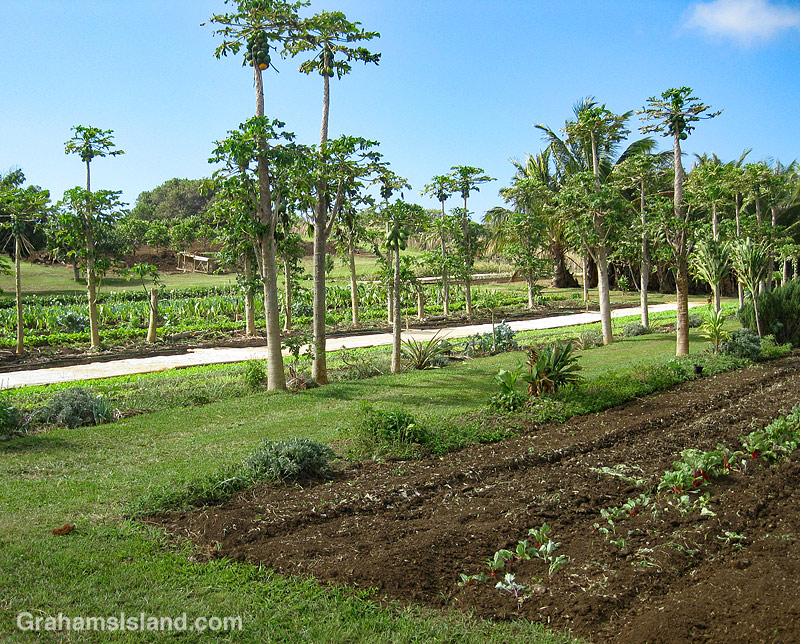 One of the vulnerabilities of living in the middle of the Pacific Ocean is that any big disruption of commerce, here or on the mainland, due to natural disaster or otherwise, could result in shortages here. Toilet paper and Spam would likely be the first things to be snapped up, but basic foodstuffs would soon follow. Having a variety of productive farms on the island would be a big help in such a situation.
Sage Farms, an organic farm that’s been in business here for 20 years, is one such enterprise. Their fruits and produce are available in local stores and farmers’ markets. The farm is one of a network of small growers in the area whose goal is to make the Big Island less dependent on imports from the mainland.
It might seem like farming would be easy in Hawaii. Most things grow readily, but that also includes weeds. In addition, pests also thrive and can be voracious. Currently, rat lungworm is a big concern. Recently, students at Kohala Middle School showed that a slug which carries rat lungworm parasites is now established in this area. This slug is just the latest challenge to the farmers of the area and the island in general.
Posted in response to this week’s Sunday Stills challenge on the theme of ‘Fresh.’ See more offerings here.
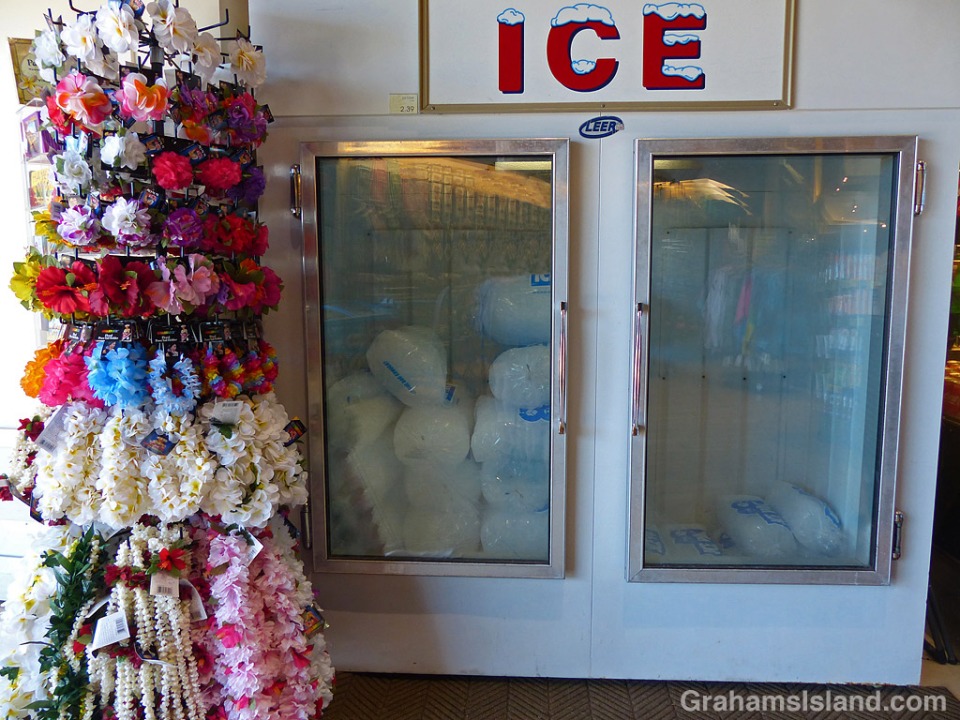
 This week’s Sunday Stills challenge theme is ‘Frozen.’ (See more responses here.) Usually, when I post in response to a challenge, I hunt through my files to see what I have that fits. With this theme, I thought about a photo of snow on Mauna Kea, but I had none in my files and Mauna Kea was bare. While much of the U.S. battles winter blasts of one kind or another, Hawaii chugs along in its usual warm to very warm range. Last week, an unusual north wind dropped temperatures into the low 60s and – gasp – even the 50s. Oh, how we whined about the cold. But, ‘frozen?’ No.
So I thought of a few options and went out to see what I could shoot. Luckily, my first stop at a local grocery store met my needs. Most gatherings in Hawaii are outdoors and while barbecues feature in most of them, coolers are a must for all. Going to the beach? You’ll need a chair, towel, and cooler. To the local park? Picnic fixings, games for the kids, and a cooler. In your own backyard? Barbecue and cooler. And when I say cooler, it’s usually plural.
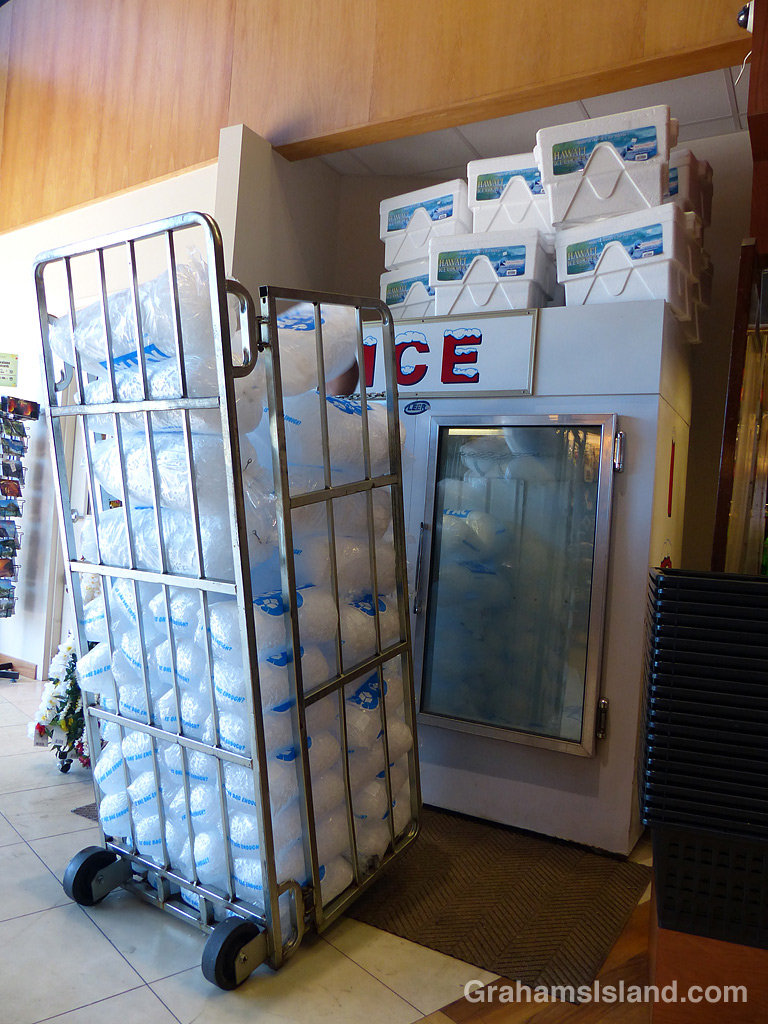
All those coolers need ice and most stores have ice freezers to meet those needs. This one was handily placed next to a display of silk flower leis, a Hawaiian party accessory. And, as if that wasn’t enough, moments after I took the first photo, the ice delivery man wheeled in fresh supplies and gave me a look, wondering why this strange person was taking photos of his freezer.
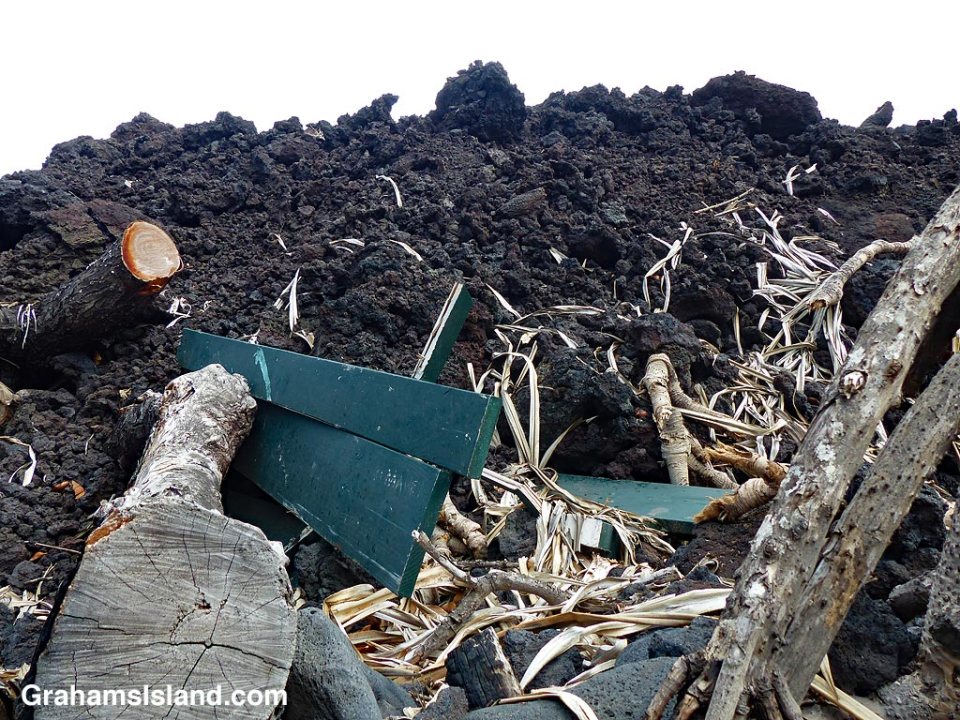
Yesterday I posted here about revisiting Pohoiki, also known as Isaac Hale Beach Park. Today, in response to this week’s Sunday Stills challenge on the theme of ‘Fire,’ (more responses here) I’m posting a couple more photos from that visit. Being perverse, I’ve chosen photos with no fire in them.
The top photo shows where the flow from the 2018 Kilauea eruption came to a halt, in the park’s picnic area. It has swallowed up one of the picnic tables, as well as some surrounding trees. What I find interesting about this is that neither the table, nor the trees, caught fire. I think this is because, by this time, the supply of lava had already stopped reaching the extremities of the flow and, consequently, those areas had already cooled considerably to below the temperature needed to cause combustion.
The bottom photo has a simpler, fire-related appeal. It could easily be captioned, ‘the barbecue pit meets the mother of all barbecues.’


 The recent lunar eclipse occurred last Sunday evening here in Hawaii. When the moon rose at 6:02 p.m. (five minutes before sunset) the eclipse was already well underway. Where I was watching, the sky was hazy so the moon wasn’t very clear. It then disappeared into a bank of clouds and I considered heading for home. But the cloud bank wasn’t huge and was drifting away from the area I was watching.
Sure enough, a little before 7 p.m., the now fully-eclipsed moon slid above the clouds into a beautiful starlit night. I took some photos where I’d set up, down by the coast, and then headed into Hawi to see what it looked like there.
Above is a view from downtown Hawi (not exactly hopping at 7:20 on Sunday night). The second photo is the moon soon after it rose above the clouds before the sky was fully dark. Below is the night sky with the moon in the bottom left and Orion at the top right.
Why the grand name for this eclipse? The moon was closer to the Earth than normal so it seemed bigger and brighter than usual, which is known as a supermoon. Because this was a total eclipse it gave the moon a red tint, which is known as a blood moon. And January’s full moon is sometimes called a wolf moon. Voila – a super blood wolf moon.
Posted in response to this week’s Sunday Stills challenge on the theme of ‘Night,’ (See more responses here.) and this week’s Friendly Friday challenge on the theme of ‘Coral-ish colors.’ (See more responses here.)

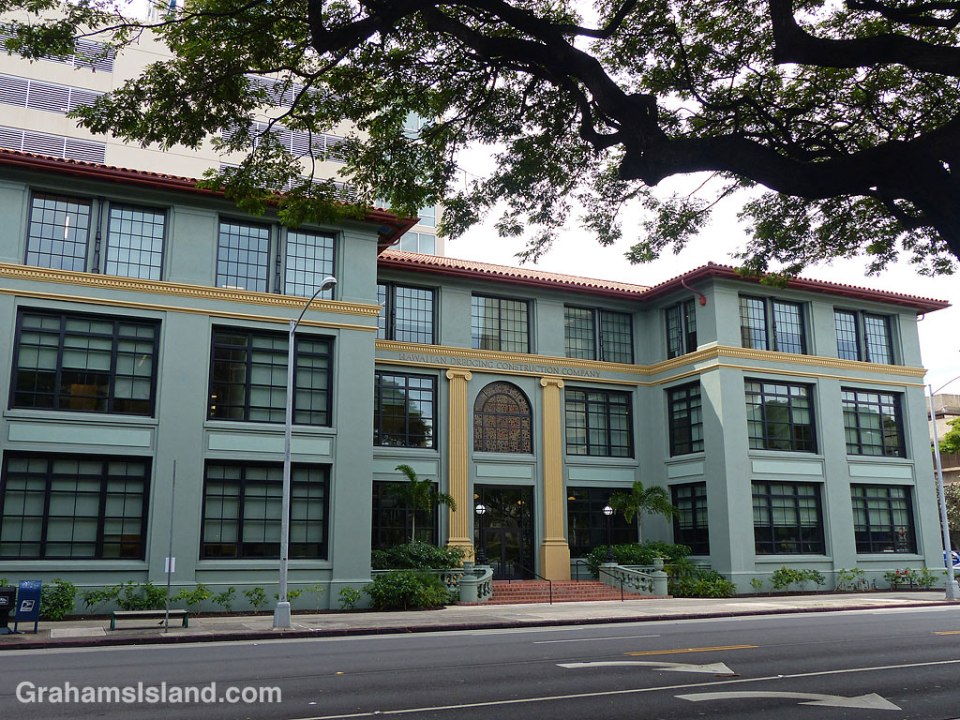
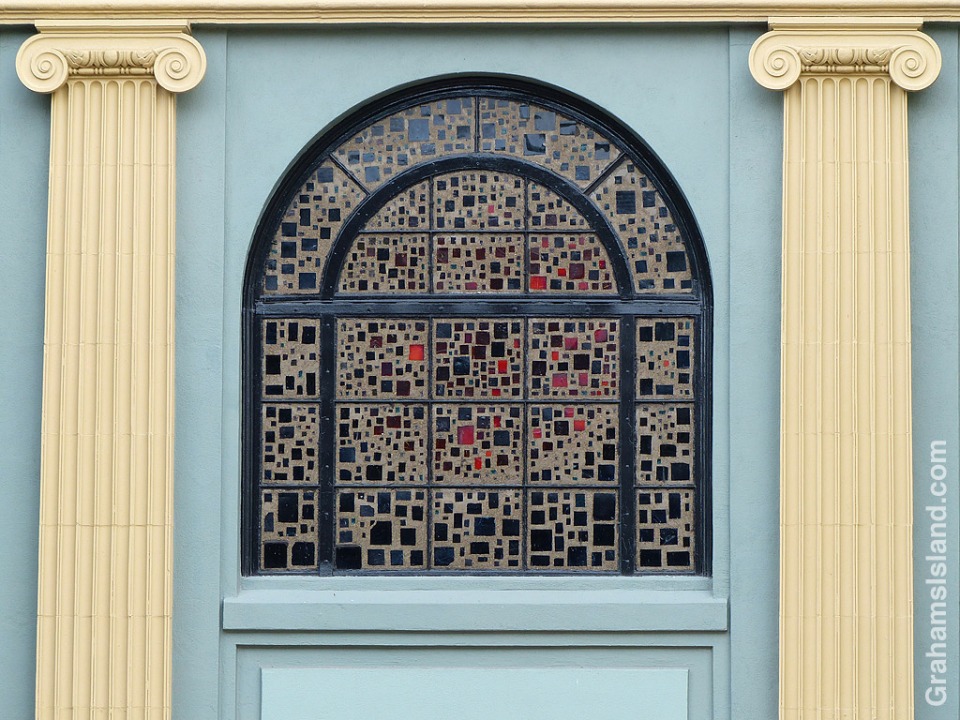 This week’s Sunday Stills challenge theme is ‘Window.’ (See more responses here.) I thought I’d post some photos from my trip to Honolulu last year since the city is full of interesting buildings and is window rich.
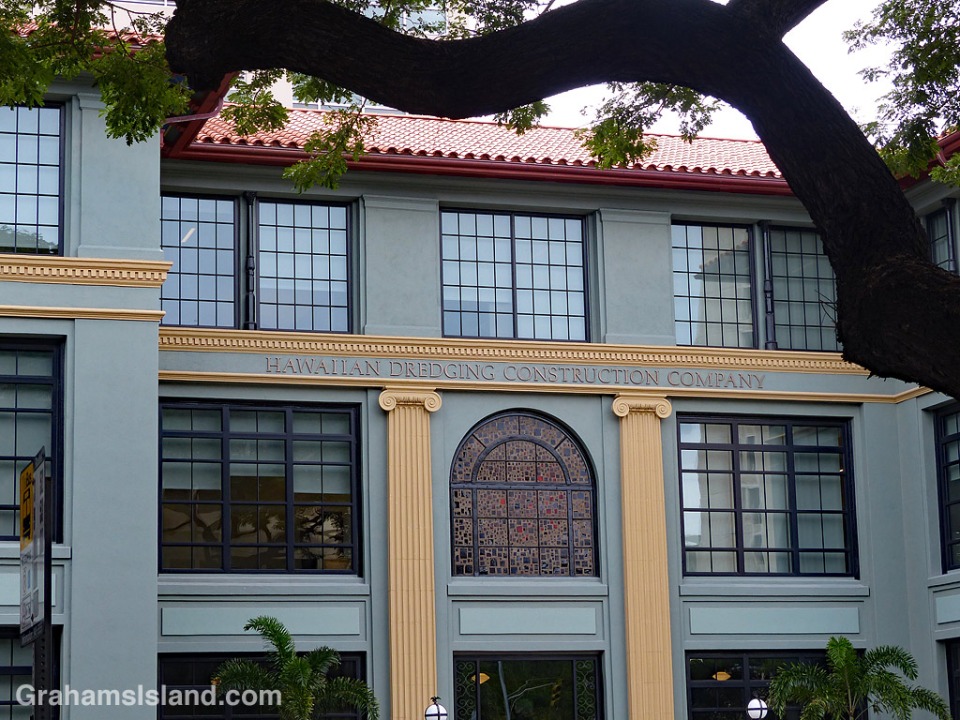
This one is the Hawaiian Dredging Building. It was built in 1929 for the Pacific Commercial Advertiser, which later became The Honolulu Advertiser. That newspaper ceased publication on June 6, 2010 when it was merged with The Honolulu Star-Bulletin and became The Honolulu Star-Advertiser. For most of its history the building was known as the News Building or the Advertiser Building.
The Hawaiian Dredging Construction Co. purchased the building in 2016 and, following an extensive renovation, made it the company’s headquarters and renamed it the Hawaiian Dredging Building. The distinctive mosaic window above the entrance is a notable feature of the building.
 Graham's Island