
The plumage of birds at rest often has a wonderful layered look to it. This zebra dove is no exception.

The plumage of birds at rest often has a wonderful layered look to it. This zebra dove is no exception.
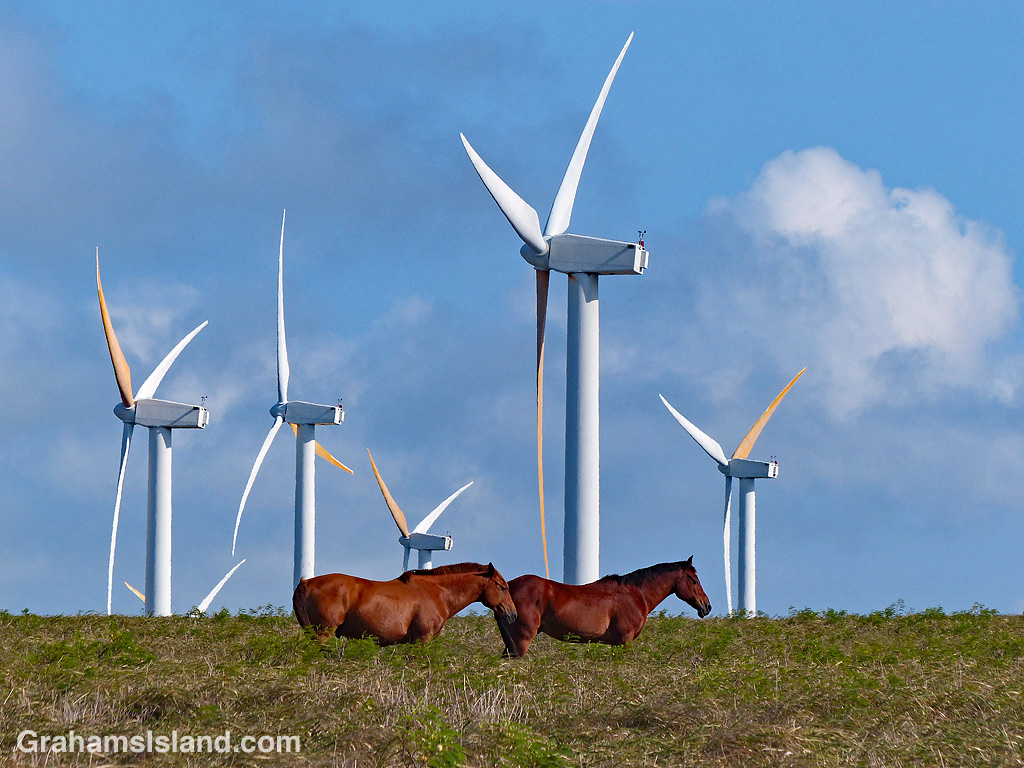
This pair of horses stood motionless for a long time while the turbines of Hawi Wind Farm whirled in the background. Don’t know what they were waiting for.
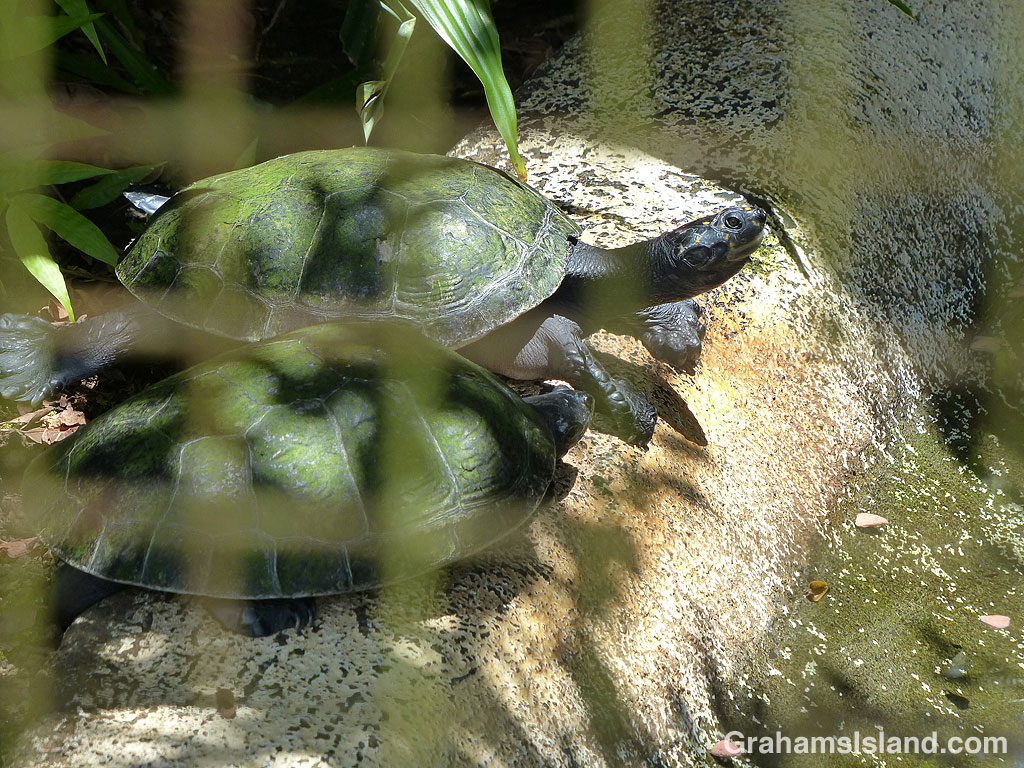
This pair of yellow-spotted Amazon river turtles were waiting for something at Pana‘ewa Rainforest Zoo & Gardens. Perhaps they were plotting a breakout, figuring out how to cut through the mesh, before making a plod for it.
For more information about Pana‘ewa Rainforest Zoo & Gardens, go to hilozoo.org.

I saw my first lizardfish just a few weeks ago, noticing unusual marking on the rocks at a spot I often check out. Flipping through the pages of my fish book, it was fairly easy to figure out what I’d been looking at. Since then, I’ve been looking out for them and have seen several, a case of knowing what to look for I think.
Lizardfish, like hawkfish, flounders and octopuses, are better spotted on the move before they settle and blend in. I saw this reef lizardfish just as it plunked into this spot and froze. As I drifted around above it, it remained motionless, waiting for me to go away. When I did so, I saw the lizardfish shoot off and hide on a different slab of rock.

This female Hawaiian garden spider (Argiope appensa) waits in the center of her web. I love her jewel-like appearance.

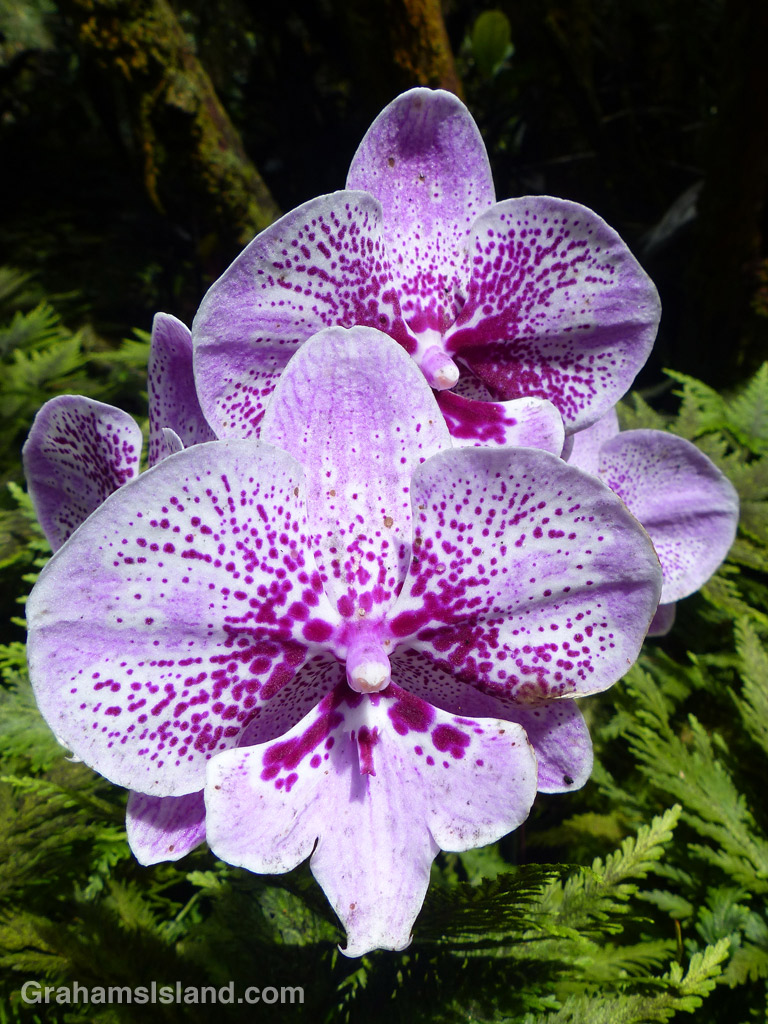
Orchids have a unique flower structure, which this Phalaenopsis orchid shows off.
They’re bilaterally symmetrical, the left and right halves being mirror images. The column in the center of the flower is a fusion of the male and female parts. They have three petals in an inner whorl and three sepals, usually as big as the petals, in an outer whorl.
The lower petal is the lip on which pollinators land. When the flower is in the budding stage, this lip starts out at the top. In most orchids, as the flower opens, it rotates until the lip is at the bottom, a process called resupination. Not all orchids do this. Some remain in the original upside down position and some rotate a full circle until they’re back where they started.

Last year, when I went on the Kama‘āina Observatory Experience, I visited a couple of telescopes. One of them was the James Clerk Maxwell Telescope, a single-dish telescope dedicated to detecting submillimetre radiation.
One of the things I liked about that telescope was the structure of the supporting framework. It reminded me of something found at Ikea, but on a giant scale. If I’d been involved in putting it together, at the end of the day, when congratulations were being bandied about, I’d have been the one saying, “Er, I’ve got a rod and three little hexagonal nuts left over. Where do they go?”
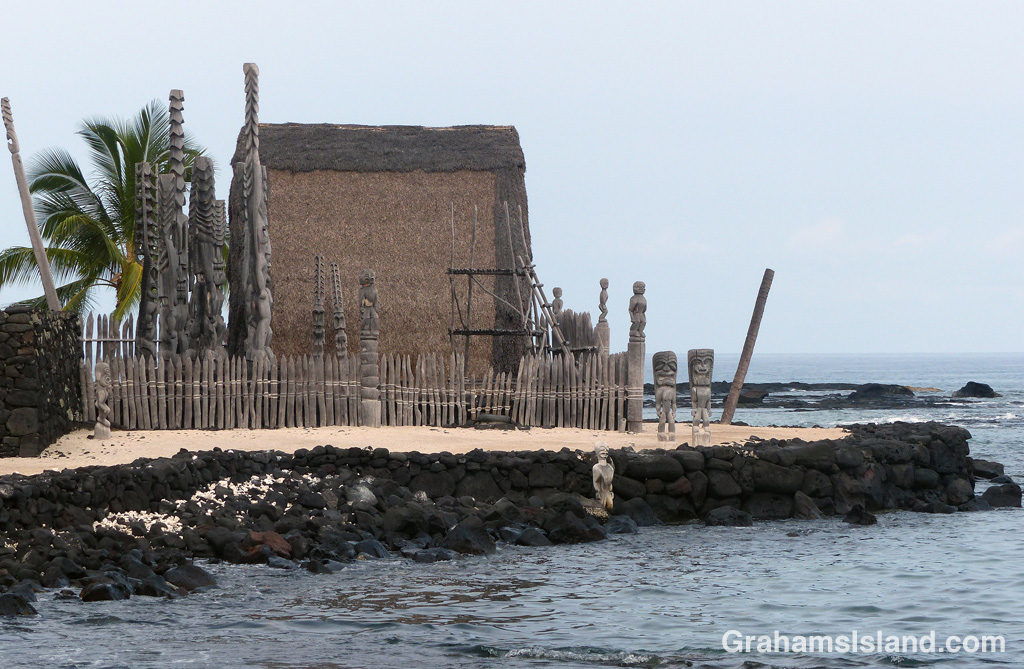
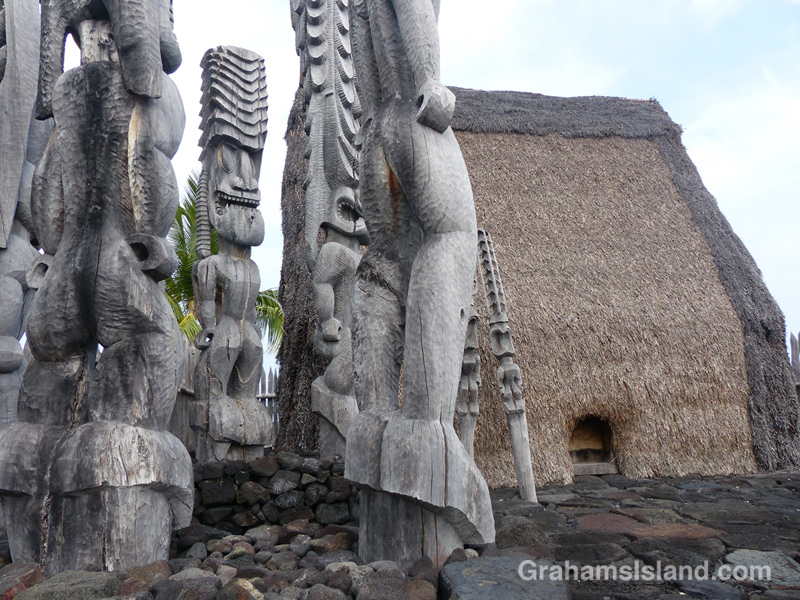
Pu’uhonua o Hōnaunau National Historical Park sits on the coast south of Kealakekua. It features a huge masonry wall that encloses the pu’uhonua or place of refuge. As the name indicates, this was a place that offered sanctuary to those who had broken sacred laws (kapu) or been defeated in battle. If they reached this place, they would be spared, absolved by a priest, and allowed to return home.
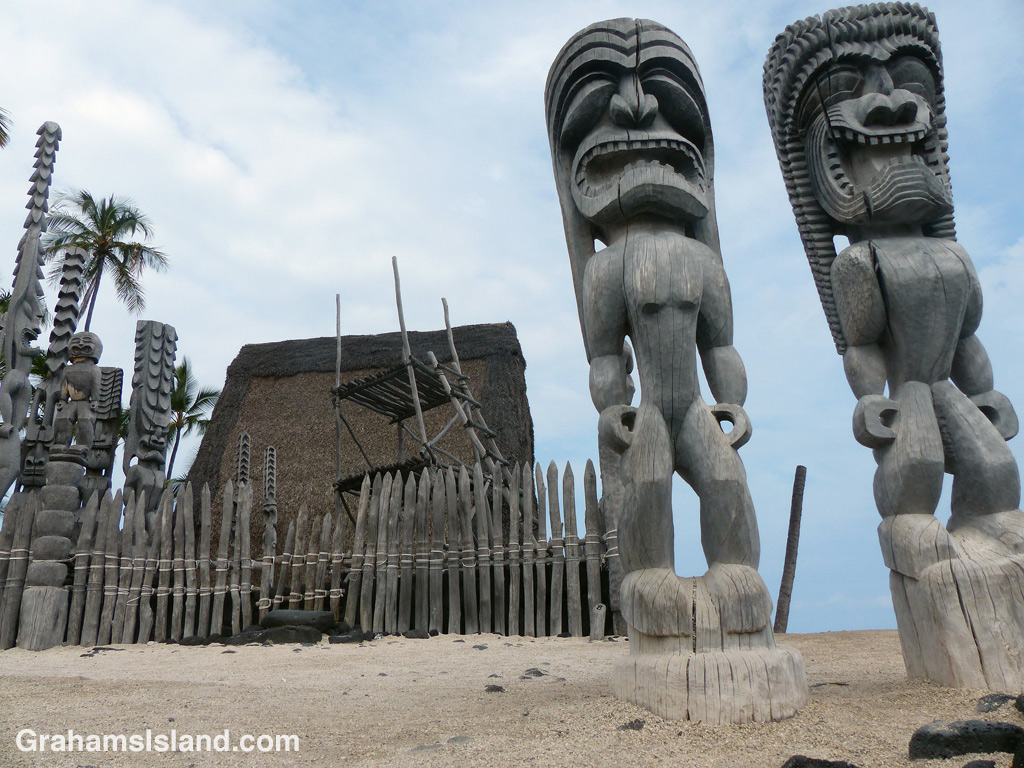
A large portion of the remainder of the park is known as the Royal Grounds where Hawaiian royalty (ali’i) lived. Hale o Keawe sits on the edge of the pu’uhonua and is a heiau that housed the bones of 23 of those ali’i. This gave the heiau tremendous mana, or spiritual energy. The wooden statues are ki’i representing Hawaiian gods. It’s an important structure, both culturally and historically.
For more information about Pu’uhonua o Hōnaunau National Historical Park, visit https://www.nps.gov/puho/index.htm.
 Graham's Island