Astelia Menziesiana is an endemic plant that can grow as an epiphyte, as in this photo, or in the ground. It does best in cool temperatures, which is where these plants were found at around 6,000 feet in the area between Mauna Loa and Mauna Kea, but can also grow in warmer temperatures. Plants are either male or female and both have flowers, but only the female produce berries.
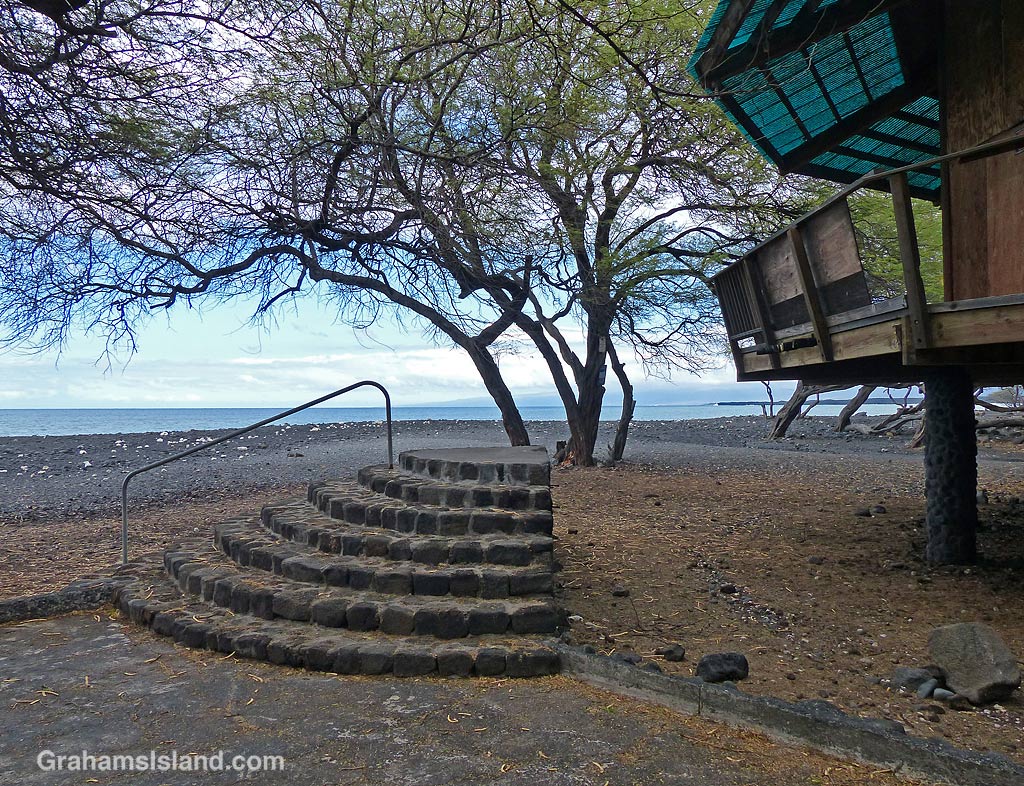
A couple of weeks ago, in her Squares challenge, Becky posted about a set of semi-circular steps here. That same day, I went for a walk down at Kiholo and took these photos of a similar set of steps there. These steps, though, don’t go anywhere, at least not right now.
The steps used to connect to the house, which was built by (or more accurately, for) country singer, Loretta Lynn. But the house hasn’t been used in many years. In 1999, a landowner in the area bought it, and he subsequently traded it to the state for some land behind his property, where he wanted to build a caretaker’s house. He didn’t get as much land as he wanted because the state considered the house, not just worthless, but also a liability, because it had no water, electricity, or sewer connections. Since then, the house has sat empty.
More recently, Hui Aloha Kīholo, a non-profit organization with the goal of protecting and perpetuating the natural and cultural resources at Kīholo Bay, has reached agreement with the state to take over the house for use as its headquarters. The group hoped to raise the funds to start work on restoring the house in 2020, but we all know what happened to everyone’s plans last year. Perhaps, in the none too distant future, those steps will be reunited with the house, and it will come to life again. It’s certainly a wonderful location.
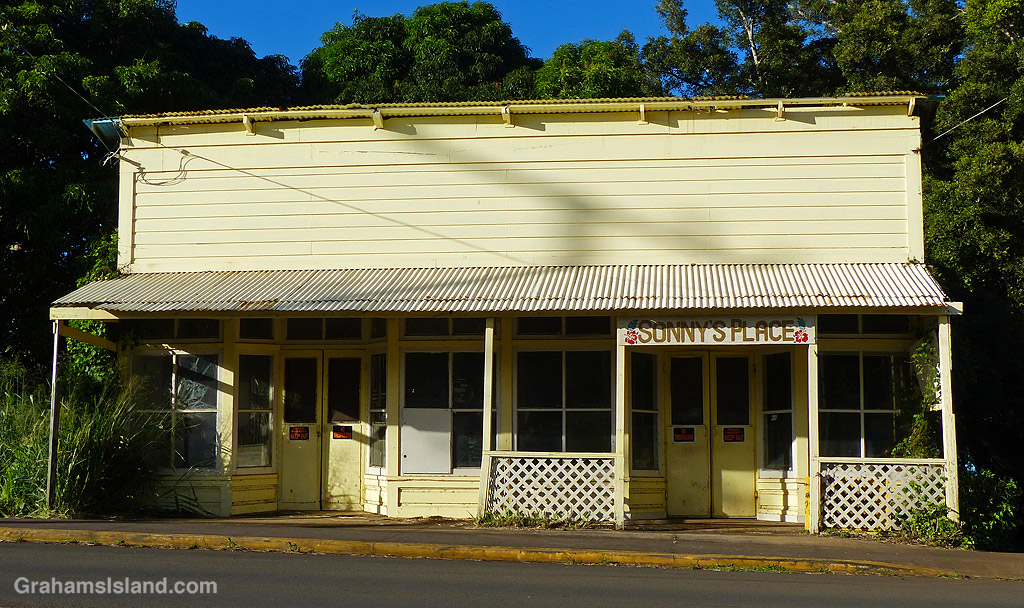
When I moved to Hawaii, this building looked pretty much like this. The only difference was that Sonny’s Place, a restaurant, was a going concern. Not that I ever saw anyone going in or out. Indeed, I never saw any activity there at all except for the occasional sighting of a cat in the window.
It’s not a going concern today, though I honestly don’t know when that change took place. One thing’s for certain, the transition made no difference to the appearance of the place.
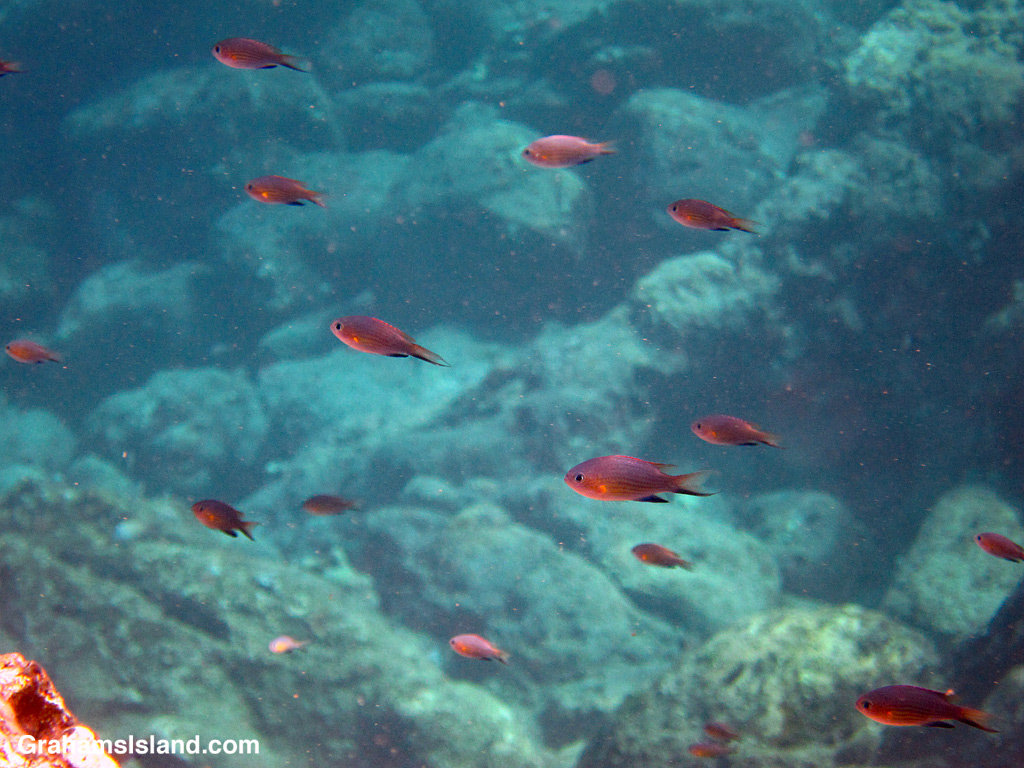
These small damselfishes are often seen, but less often noticed, if that makes sense. They gather around coral heads but are quick to disappear when approached. At some point I realized that I’d seen these fish often but didn’t actually know what they were. Now I do!
The happy domestic scene in the top photo is posted for Bushboy’s Last on the Card photo challenge. See more responses here.
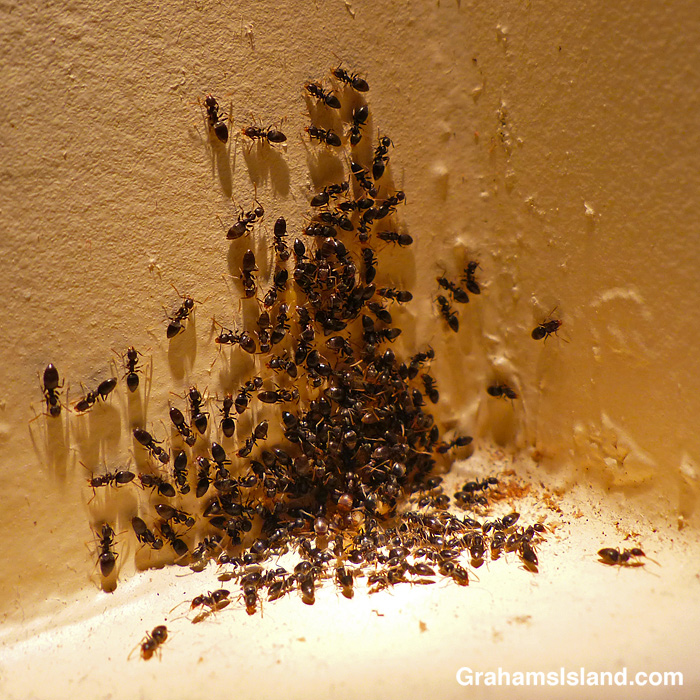
I noticed this gathering yesterday afternoon and I’m not entirely sure what’s going on. Usually when ants find something to eat, they head back to the nest to spread the good news and in short order a line of ants is traveling back and forth to harvest their bounty. But these ants just seemed to be milling about in this area. There appears to be a blob of something that is their focus, but what it is I don’t know, though the second shot gives a bit better view.
Likely, it will be one of those situations where, when the morning rolls around, the ants have disappeared leaving no trace. If not, and they’re still there, well that’s slightly worrying.
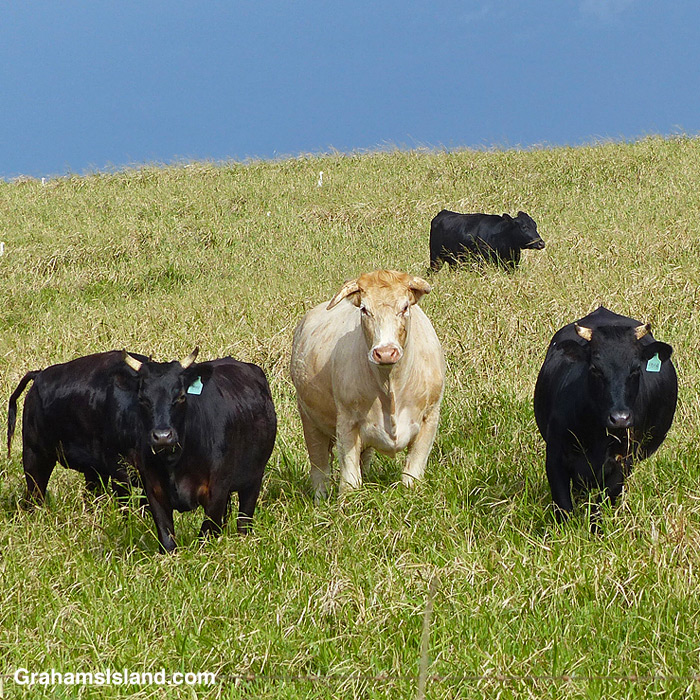
There are dairy cows and beef cattle here. Some are bigger than others.
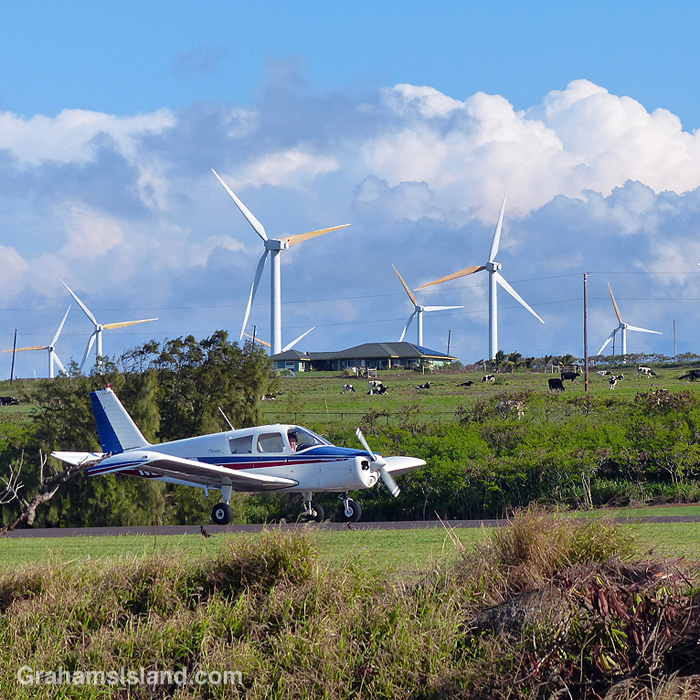
I often see sheep or cows on the road. These were trotting past the wind farm.
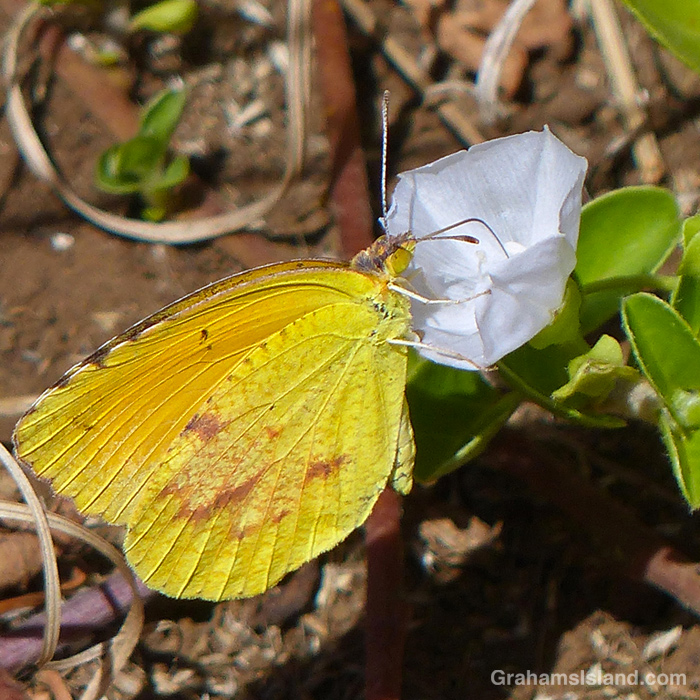
A sleepy orange butterfly on the flower of a native Jacquemontia sandwicensis vine.
A pair of nenes walk along the road outside the airport fence.
The newest addition to the landscape is this alien-looking sugar cane harvester.
Horse riders on the road along the coast.
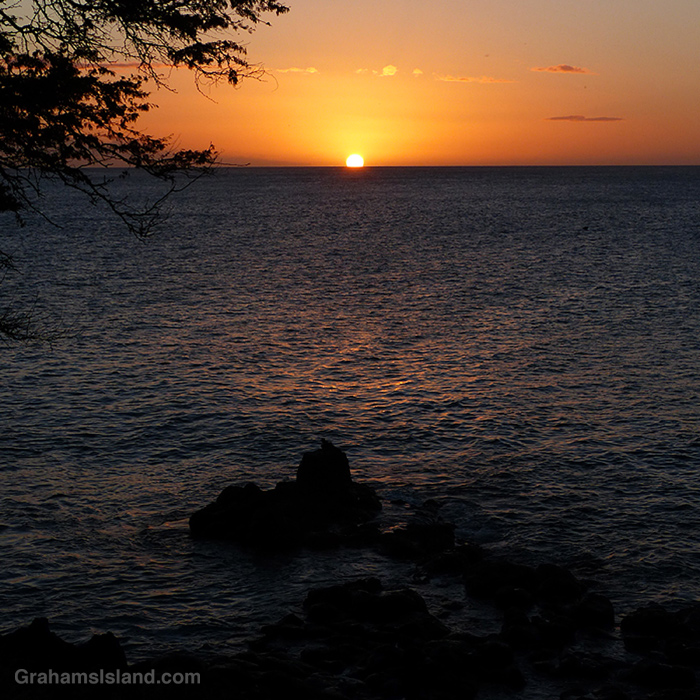
Upolu is a good place to watch the sunset.
The view from Mo’okini Heiau towards a cloud-covered Maui.
A view of Maui from the top of the road to Upolu Airport.
This week’s Sunday Stills challenge theme is ‘Your Favorite Landscape.’ See more responses here.
When I think of the landscape at Upolu, it includes both the ocean that borders it and the skies above. They are, in my mind, integral to the place. But here, I’ve focussed on the land, a relatively small area of a few square miles where I walk most days. It’s rural, agricultural, and coastal. It’s historic and modern. It’s also a place I never return from feeling disappointed. There’s always something of note that I see or that happens when I’m there.
Also posted in response to Becky’s January Squares challenge theme of ‘Up.’ See more responses here.
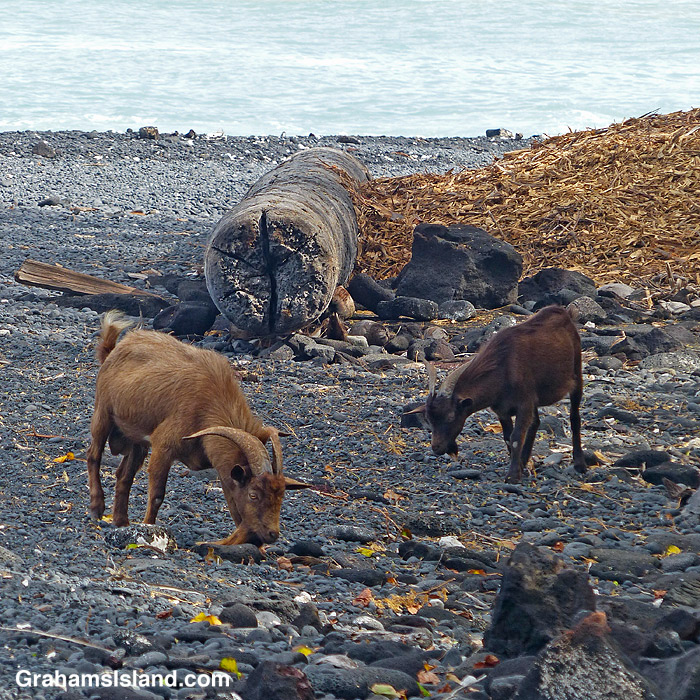
I saw these two goats foraging along the beach at Kiholo Bay. There’s slim pickings to be had, but there are no shortage of goats in that area so they must be finding something somewhere.
Posted in response to Becky’s January Squares challenge theme of ‘Up.’ See more responses here.