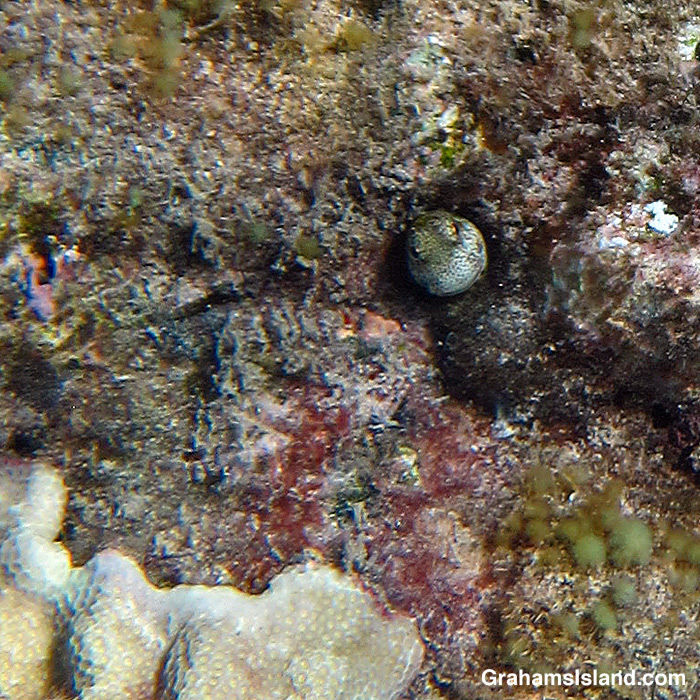
I spotted this little blenny out in the open, but as I raised my camera it shot away into its hole in the rock. I was impressed by its lightning speed, but more so by its ability to back into its hole at that speed.
I think this is probably a Bullethead Blenny, though it’s hard to make that determination from this photo.
I like taking photos of the different kinds of fish that gather, sometimes in the same general area every day. This group caught my eye for the Bluestripe Snappers with their beautiful blue stripes on yellow bodies.
During some recent swims, I’ve been lucky enough to see this small Spotted Eagle Ray. It doesn’t tend to hang about, so the encounters have been fleeting, but the ray looks in great condition, which is always good to see.
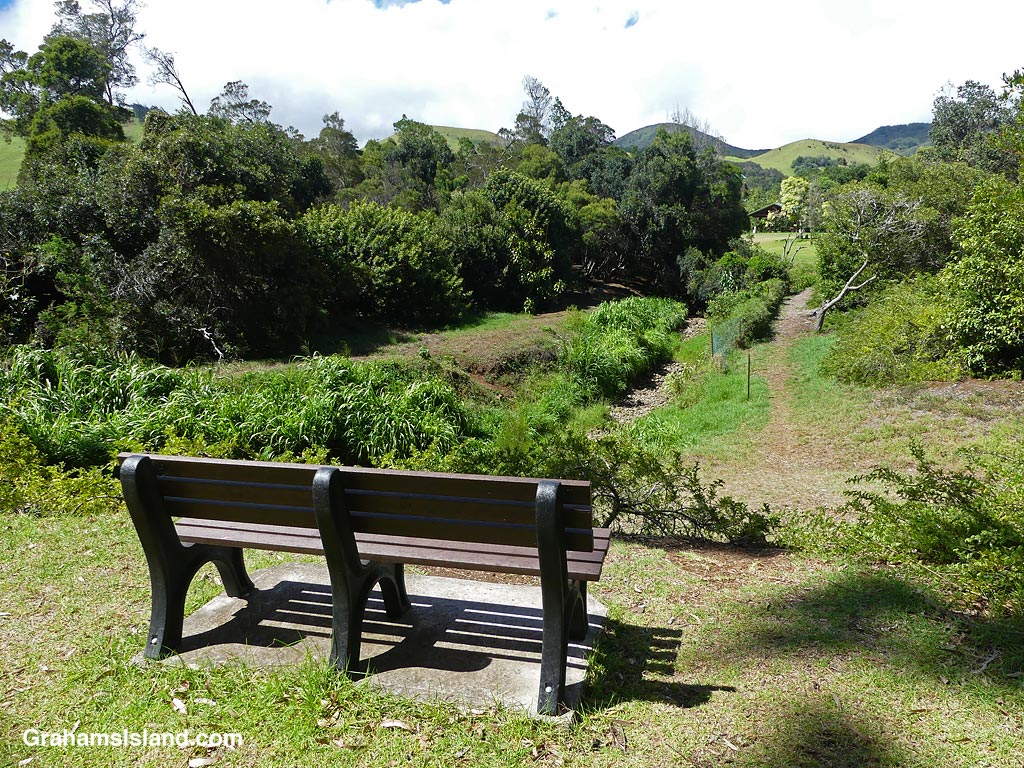
Recently, while waiting to visit my dentist, I walked the trail in the Waimea Nature Park, also known as Ulu La’au. The trail follows the Waikoloa Stream for about a mile from the town center down toward the ocean. It’s a work in progress, with volunteers removing invasive species and planting native and canoe plants in their place.
On my walk, the Waikoloa Stream had water in it, but not much. I think it would be fun to walk there after a heavy rain. But one thing I liked was the abundance of benches, some of which offered nice views of the park, the stream, and the hills surrounding the town.
I was going through photos, sorting out what to post this week, when I came across this one. My immediate thought was that this should definitely have been included in yesterday’s Sunday Stills post, and its theme of Orange. Well, it’s a day late, but not a dollar short, so here it is. See more responses here.
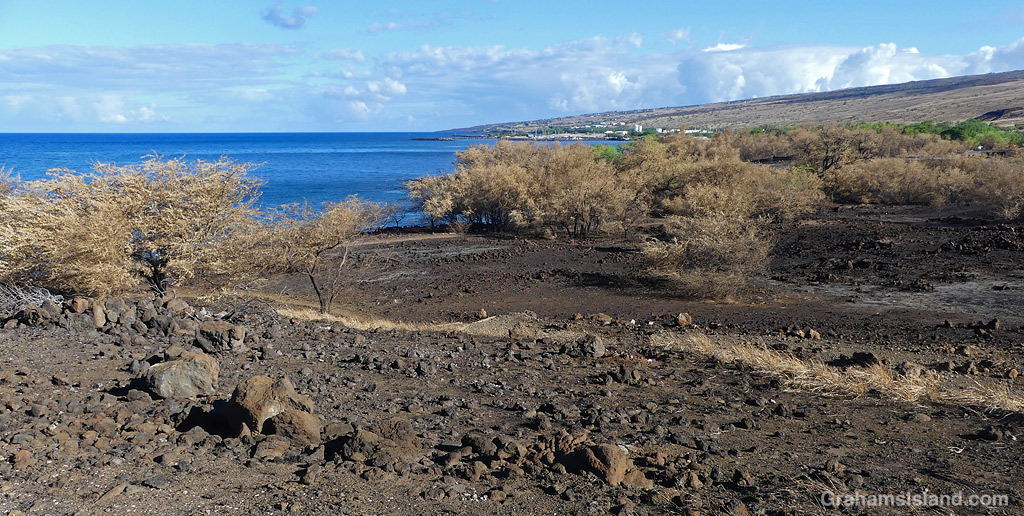
A few days ago, I headed out on the trail from Spencer Beach Park to Mau’umae Beach Beach. I was curious to see how far last month’s brush fire, that burned near Mauna Kea Resort, had reached down by the ocean. A hundred yards into the walk the answer became clear. It reached the shore. Spencer Beach Park was untouched, but the woods on the edge of the park are one tree deep in places.
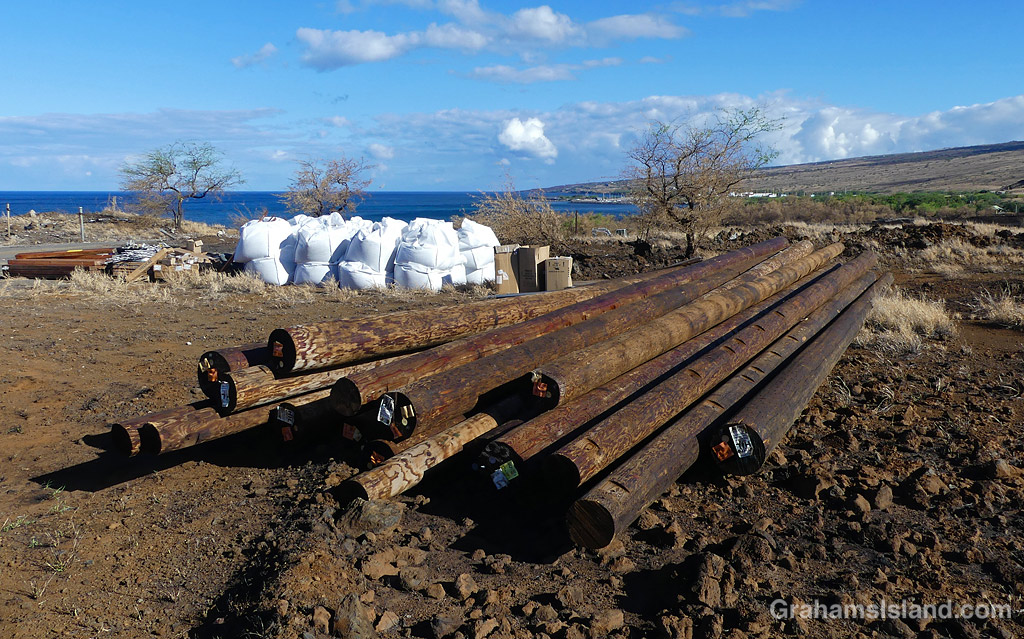
I walked back to Spencer on the service road, a quarter mile inland. The power line ran along the ground or was draped in blackened trees. There was a clump of poles and other supplies in one spot, ready for restoring service.
The vehicle access road to Mau’umae Beach beach is closed now, as two small wooden bridges were destroyed in the fire. Currently, and for the foreseeable future, the only access to the beach will be along the coast trail from Spencer. It’s only a 15 minute walk, but that’s often enough to discourage people from going there.
A week or so ago, I was snorkeling when I happened to glance behind me and saw I was being followed by the local barracuda ohana. Ohana is the name for family in Hawaiian and these were Great Barracudas, which sometimes congregate together in this way. I think they follow people swimming in the hope that they’re spear fishing, and might catch something which they can steal. I offered no such rewards, so they soon moved on.
I see 10 in this photo, but I counted a dozen in the water, and there might have been more. They were all what I call small barracudas, perhaps a foot to 18 inches in length. The biggest around here get to be three- to four-feet long and much bigger around.
Reticulated Butterflyfishes are among the easiest fish to identify with their array of white spots on black, and other notable markings.
The same cannot be said for Brown Surgeonfishes. Mostly brown, with a tinge of lavender and some dull spots on the face, this is a fish that’s often overlooked. But according to my fish book, it boasts a couple of noteworthy accolades.
The first is that, back in 1993, “the biggest species of bacteria known to science had been discovered in the gut of this surgeonfish.” It notes that the bacteria was about the size of a hyphen in a newspaper article, which is a pretty good size actually.
The other distinction is that a study, by Roland and Marie-Louise Bauchot, of the brains of Hawaiian reef fishes, declared that the smartest fish on the reef is none other than the little Brown Surgeonfish.