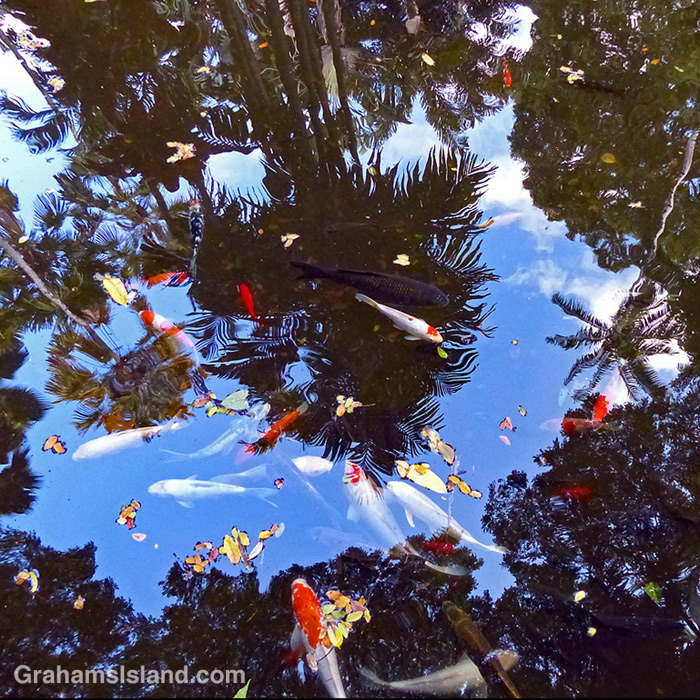
Koi swim in the still waters of Lily Lake at Hawai’i Tropical Bioreserve & Garden. For more information about Hawai’i Tropical Bioreserve & Garden, go to htbg.com.
Posted in response to Becky’s July Squares challenge theme of ‘Trees.’ See more responses here.
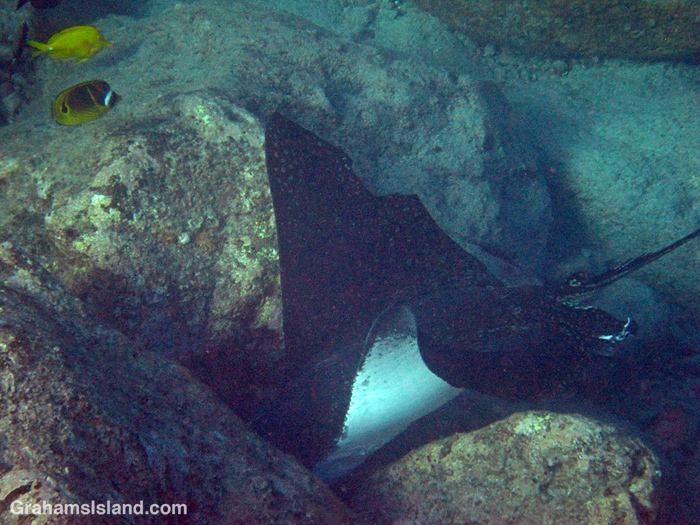
On a morning swim with my wife a couple of days ago, we were lucky enough to see a spotted eagle ray cruising around looking for breakfast. It stopped often, to probe the sand and rocks for food, and was successful at least once, since it emerged from its efforts chewing and swallowing. This eagle ray looked a bit battered, with damage to its tail fins and a chunk missing from its right wing, but it didn’t seem to be affected by this at all.
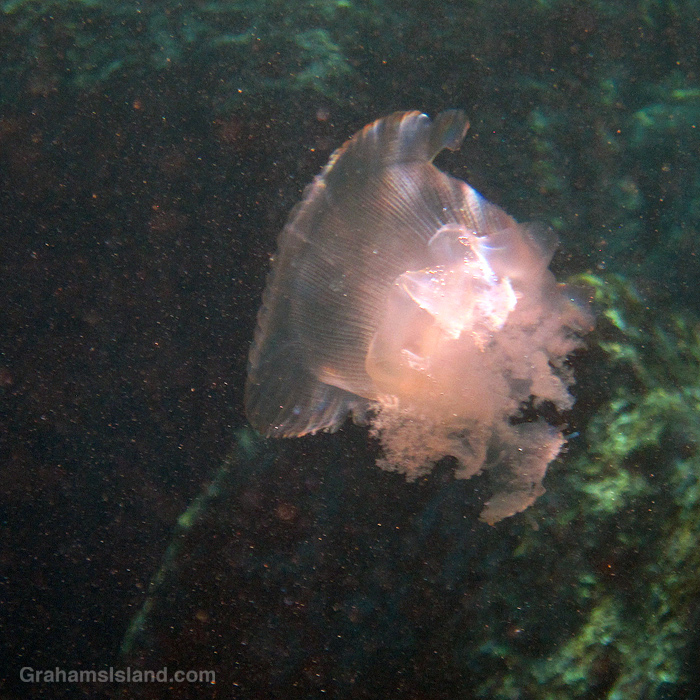
As we continued swimming, I saw the ray heading the same way. For a while it followed us, got ahead, then we followed it. On the way we saw a couple of flowery flounders, a couple of day octopuses, a crowned jellyfish as roughed up as the ray, and an oriental flying gurnard. It’s not a great photo of that, but it’s the first one I’ve seen here.
Oriental flying gurnard
Crowned Jellyfish
Flowery flounder
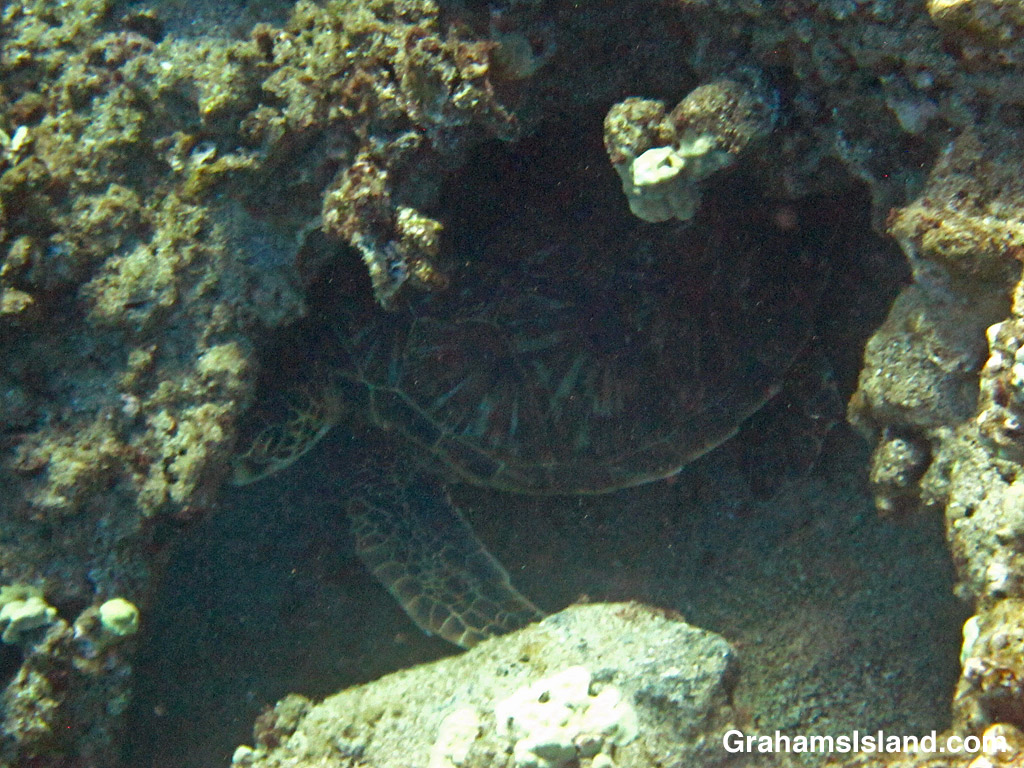
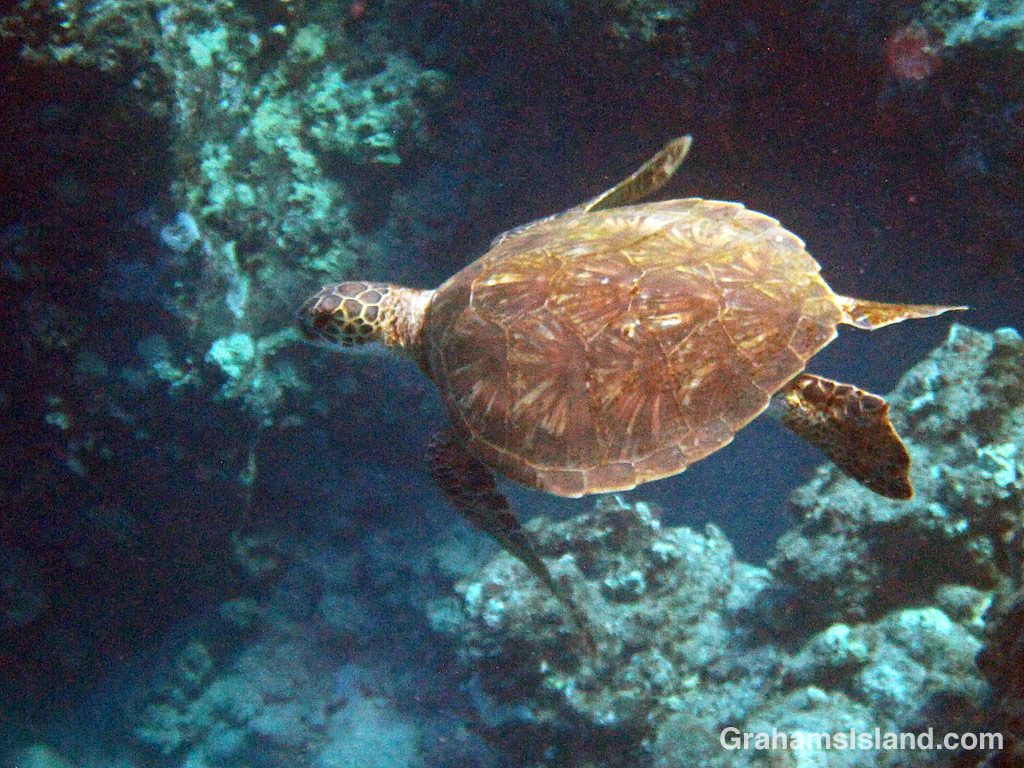
Near the spot where we planned to turn around and head back, I passed over a hole in the rocks and, glancing down, saw the distinctive shape and colors of a green turtle. I think it must have chosen this spot to take a rest, but my appearance startled it and it clambered out of the hole and swam away.
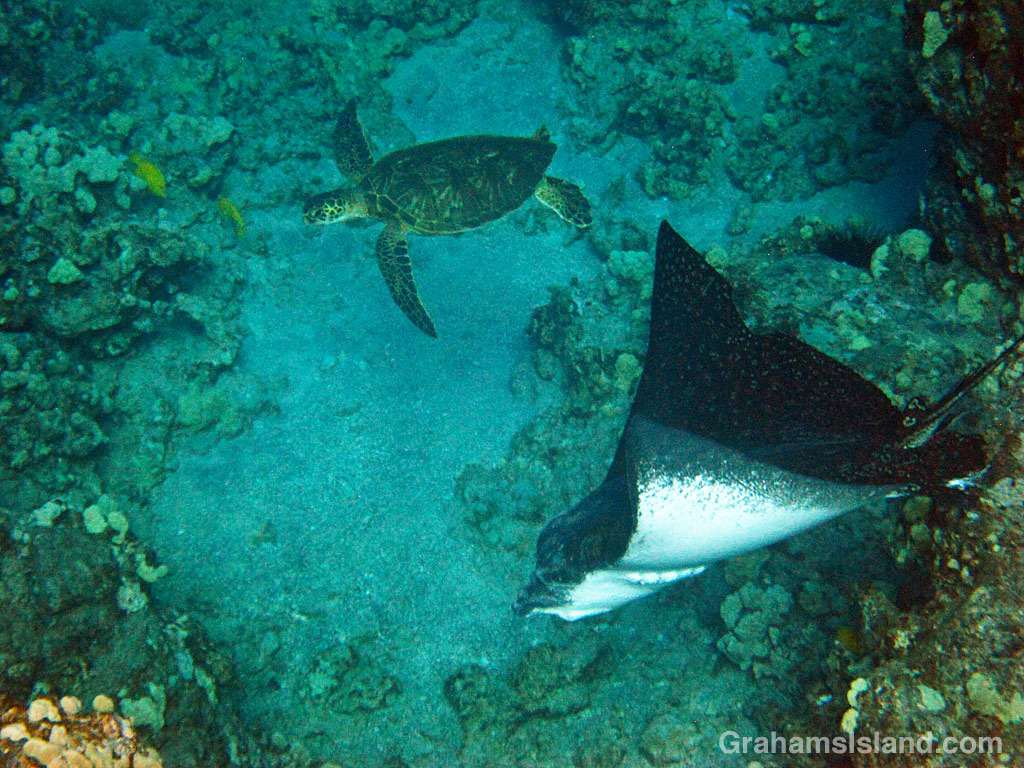
Shortly after that, the turtle encountered the eagle ray. The two of them crossed paths a couple of times before going their separate ways.
This week’s Sunday Stills challenge theme is ‘Great Outdoors.’ See more responses here.
In Hawaii, people spend a great deal of time outdoors. It’s common for people to have an outdoor kitchen, sometimes their only kitchen, sometimes a second one where a barbecue is the featured cooking apparatus. Carports often feature chairs and tables with cars parked elsewhere. The lanai, or deck, is as well-used as any room in the house.
Outdoor activities are popular here, too. Many involve the ocean and its inviting water: swimming, snorkeling, paddling, and of course surfing. Plenty of people go fishing and hunting, longtime sources of food for the table.
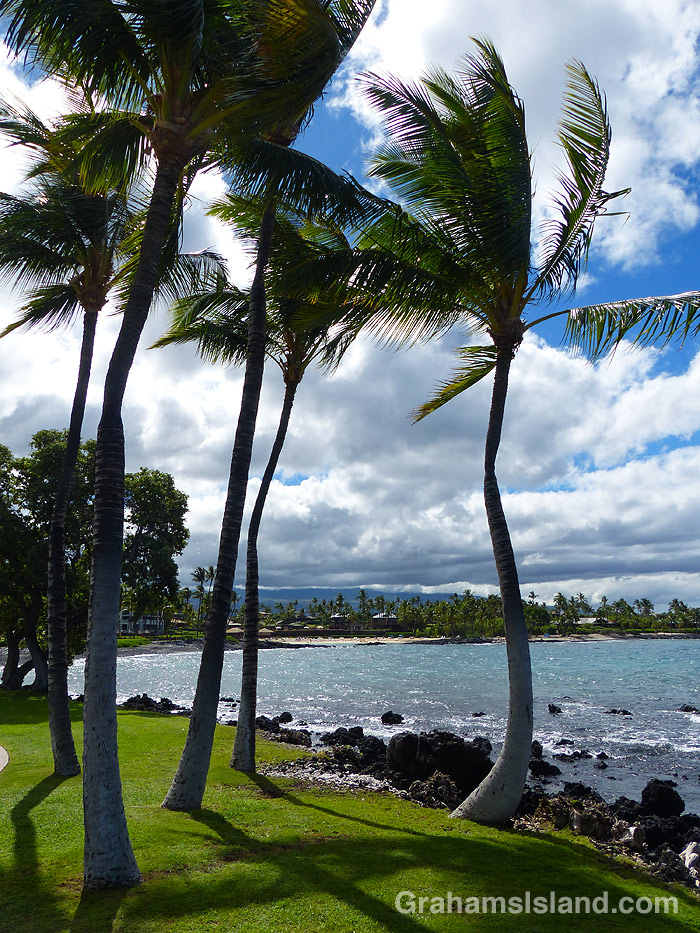
Palm trees on the coast.
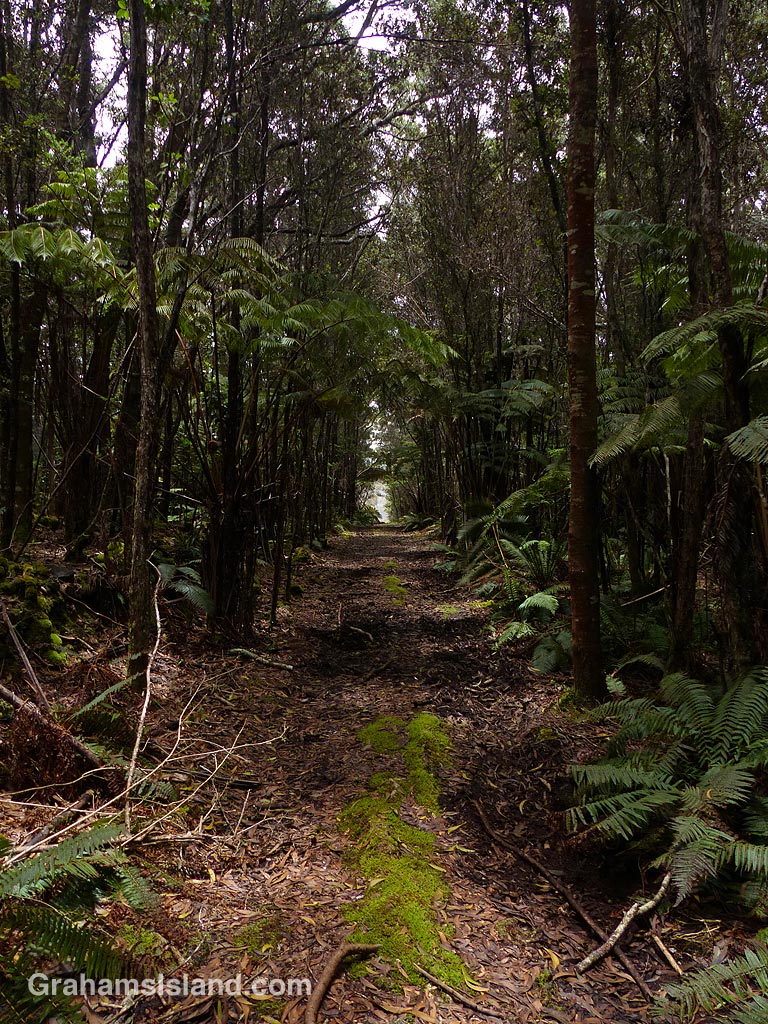
A trail through the woods.
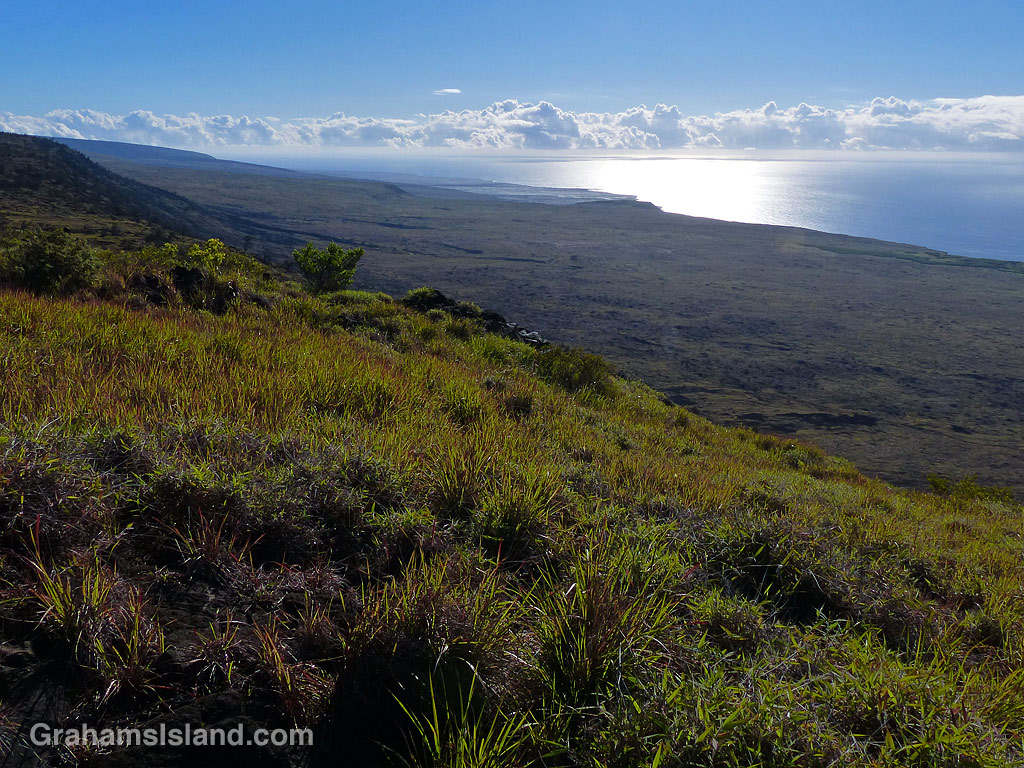
A view from the Hilina Pali Trail.
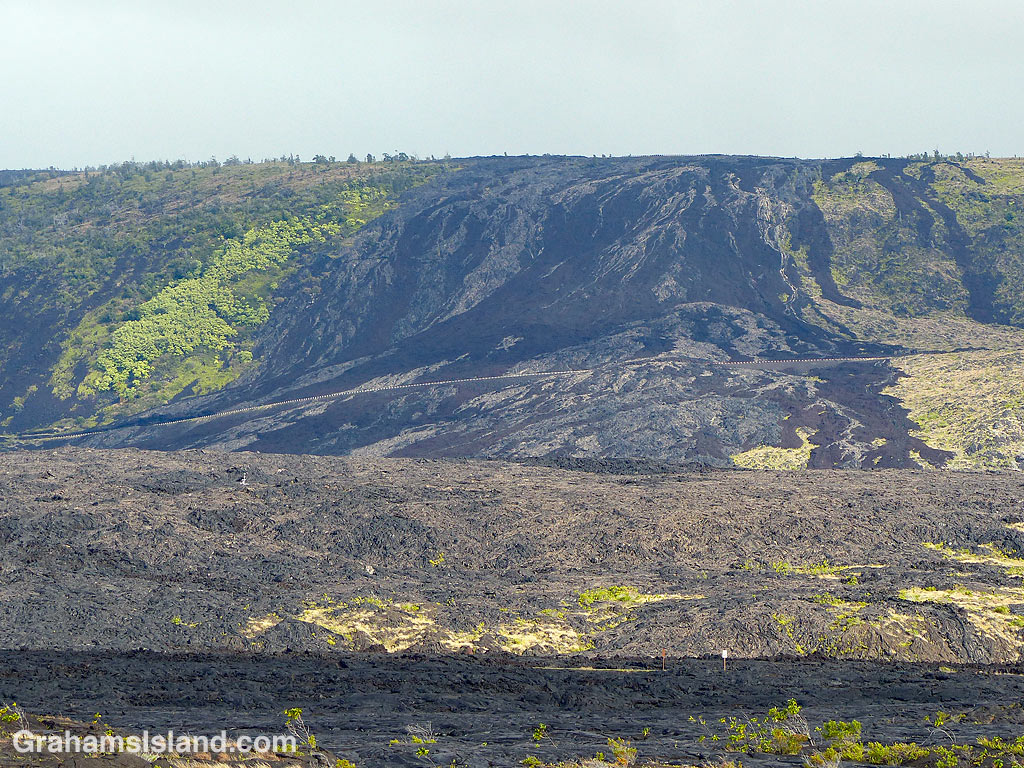
View of an old flow over Holei Pali.
For me, experiencing the great outdoors primarily involves hiking and snorkeling. Hiking isn’t especially popular here, especially along the coast where it can get quite hot. I get strange looks when I hike the length of popular beaches togged out in hiking gear, including shoes, hat, and fanny pack loaded with water. For most, the beach is a place for stretching out and broiling in the sun, not actively working up a sweat.
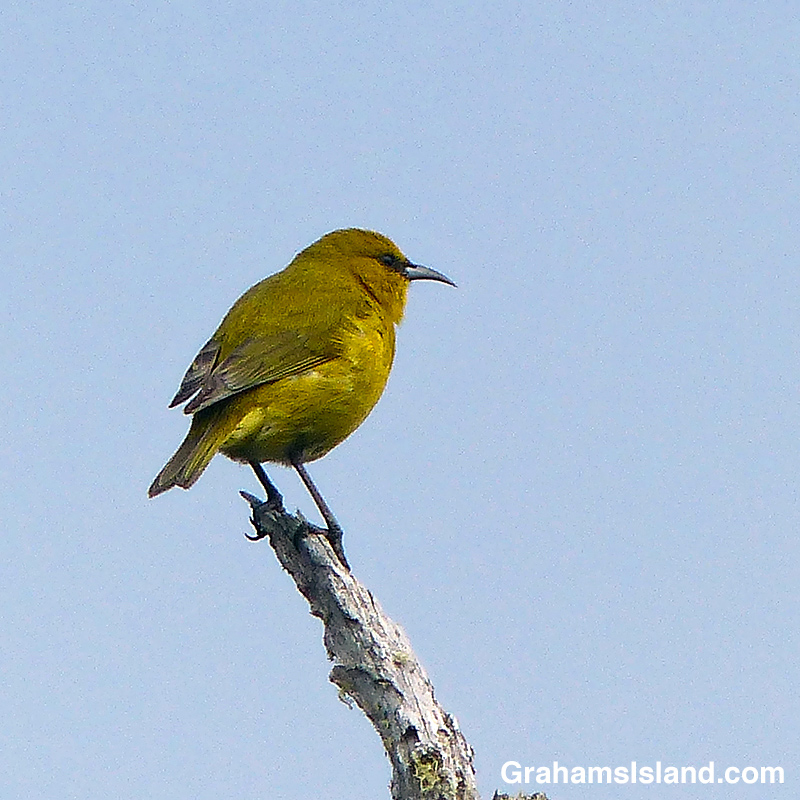
Hawaii Amakihi
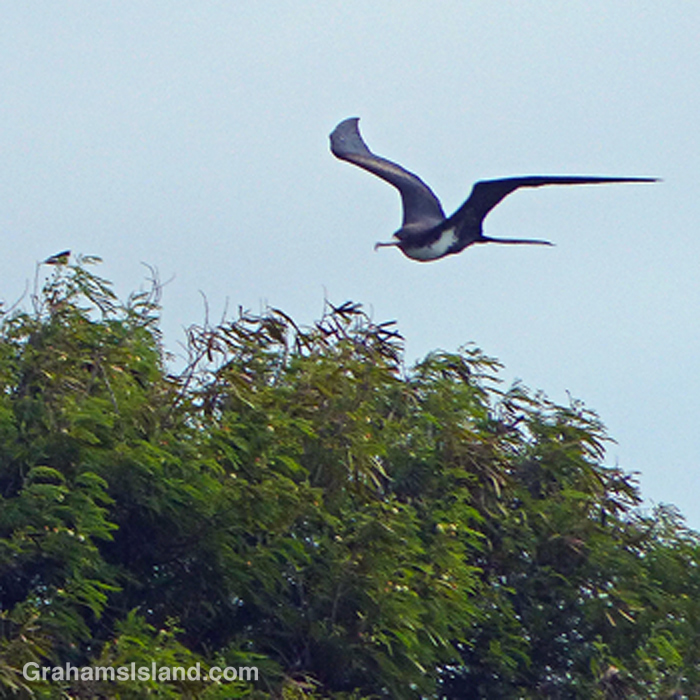
Great Frigatebird
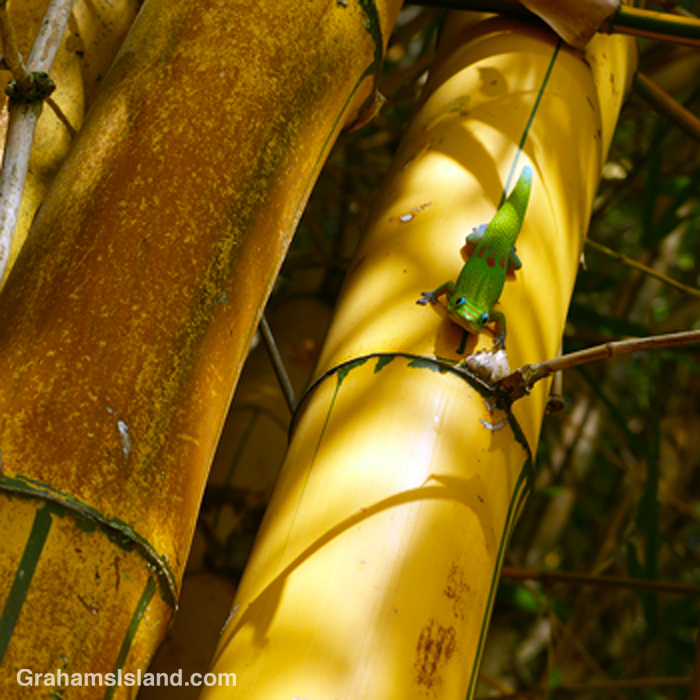
A gecko on yellow bamboo.
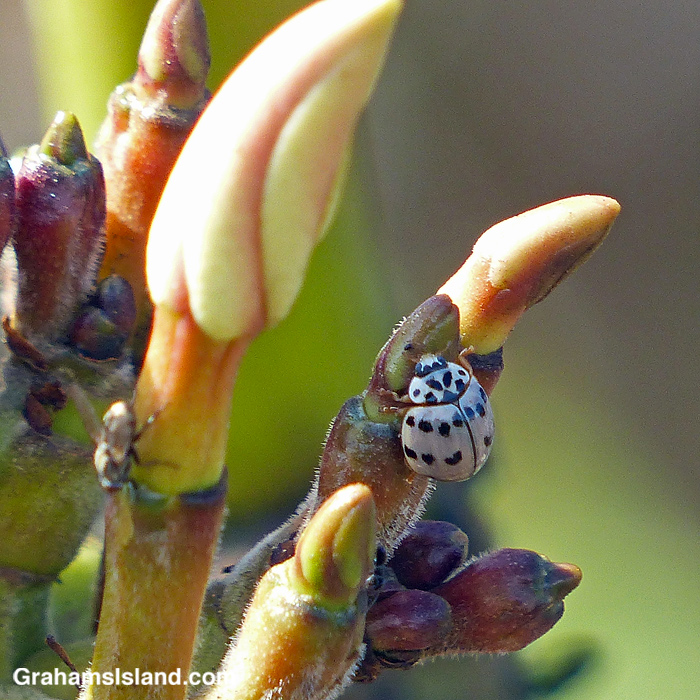
An ashy grey lady beetle on Plumeria.
The vast majority of photos on this blog are taken in the great outdoors. These photos are a small selection of things I’ve seen while out and about, from sweeping views to birds and bugs.
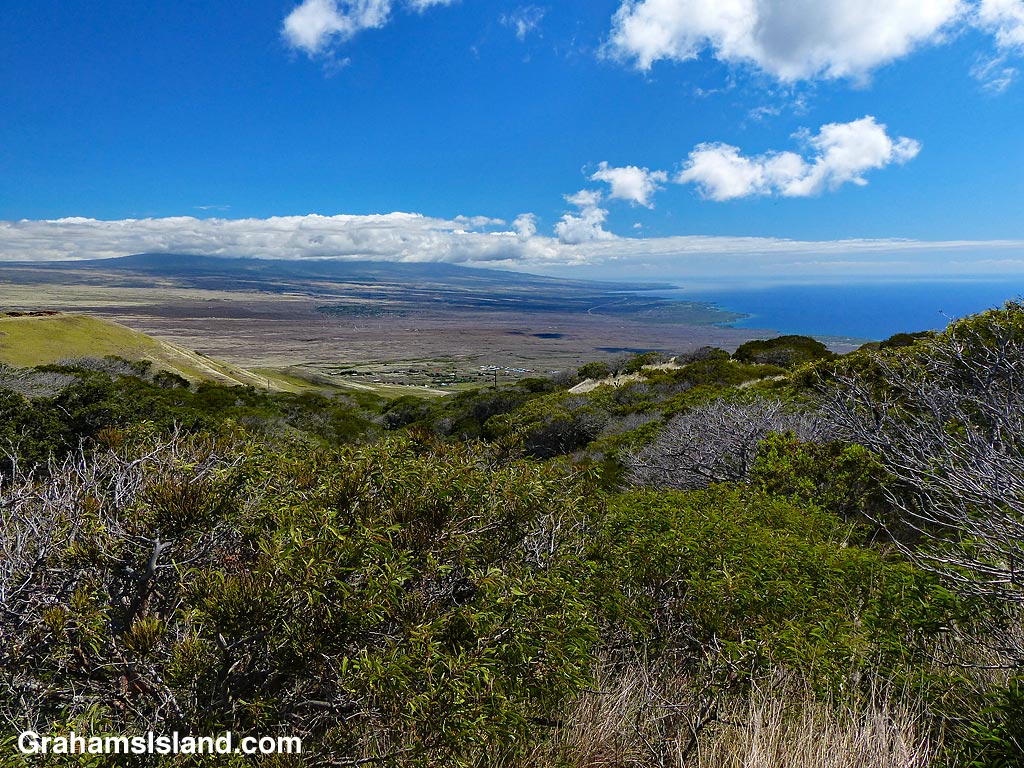
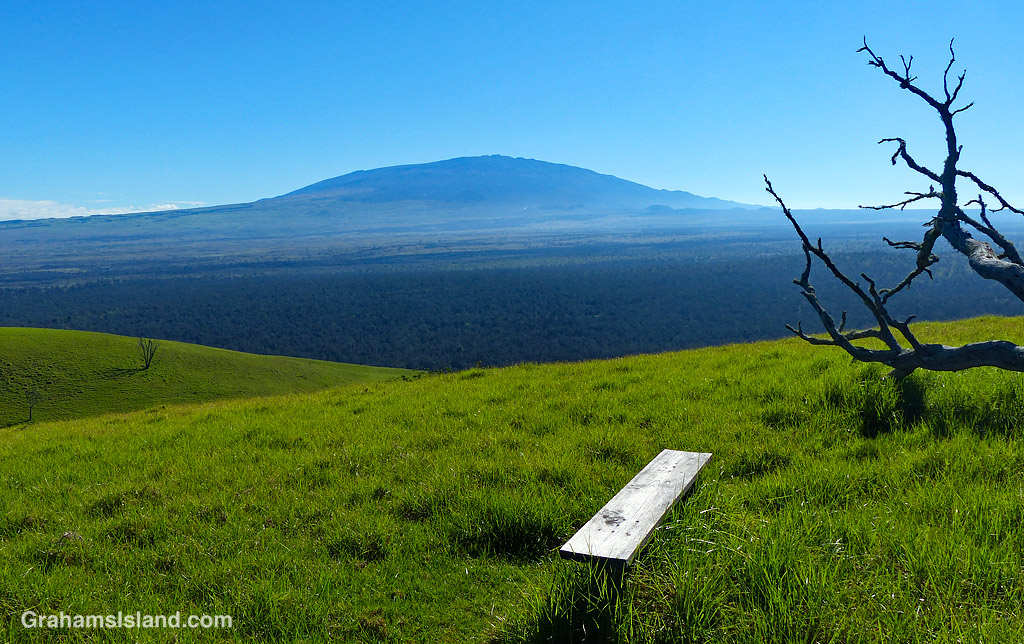
A view of the south Kohala Coast from Koai’a Tree SanctuaryA view of Mauna Kea from Pu’u Wa’awa’a.
I encountered this Gosline’s fang blenny recently while snorkeling. It seemed to be curious about me, swimming in my direction and then turning away. Perhaps it was thinking about taking a bite out of me, because that’s what these fish do. They bear a resemblance to juvenile Hawaiian cleaner wrasses, which clean larger fish. These blennies use this similarity to sneak in and take a bite out of the bigger fish.
And what about the name? These blennies have fangs on their lower jaws that they use to bite the inside of the mouth of any predator that grabs them. It’s usually enough to cause the predator to spit them out.
The reddish color of this day octopus is an indication that I had startled it. If it felt threatened, it would turn white. I like how the patterns on the rock it’s on looks like sucker marks from its tentacles.
Cushion stars (Culcita novaeguineae) look just like their name implies – small but comfy-looking cushions that would not look out of place on your couch. However, these cushions would move around on their little tube feet, which might be a bit disconcerting.
They come in several colors including red, yellow, and tan and there’s often quite a bit of variety in their markings. Cushion stars feed on living coral, which they eat by pushing their stomach out and consuming the coral where it sits.
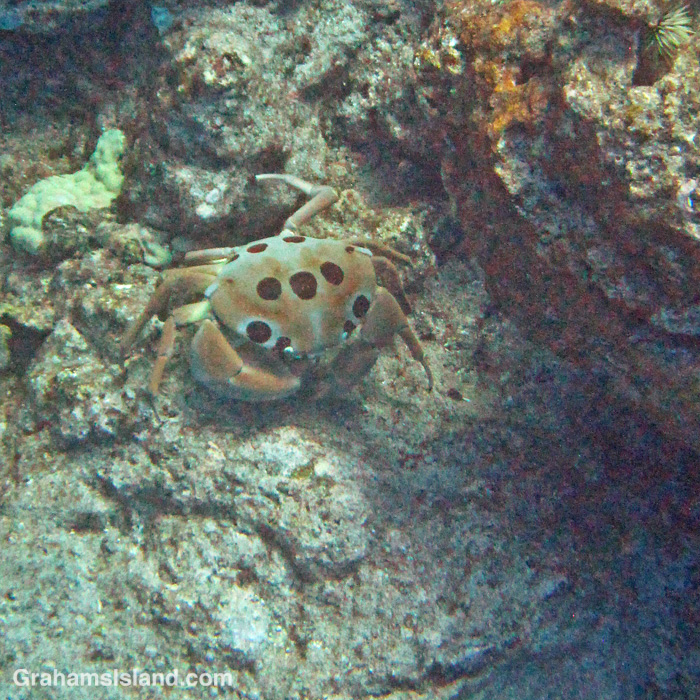
I’ve only seen one or two seven-eleven crabs (Carpilius maculatus) before, and not for several years. My wife had never seen one. One reason for this is that the crabs are active at night. But we saw this one a few days ago, scuttling over the rocks and sand. It was quite early in the morning, so the crab was probably headed for its home.
These crabs are quite large and have the distinctive markings that give it its name. There are the two spots alongside each eye and three across the center of the shell. Four more spots are less obvious on the back edge of the shell.
In Hawaii, these crabs are called ‘alakuma. Legend has it that a god caught an ‘alakuma, but the crab struck back and drew blood. This happened a second time, before the god finally snagged the crab. But the crab’s descendants continue to bear the markings of the god’s bloody fingerprints.







 Graham's Island