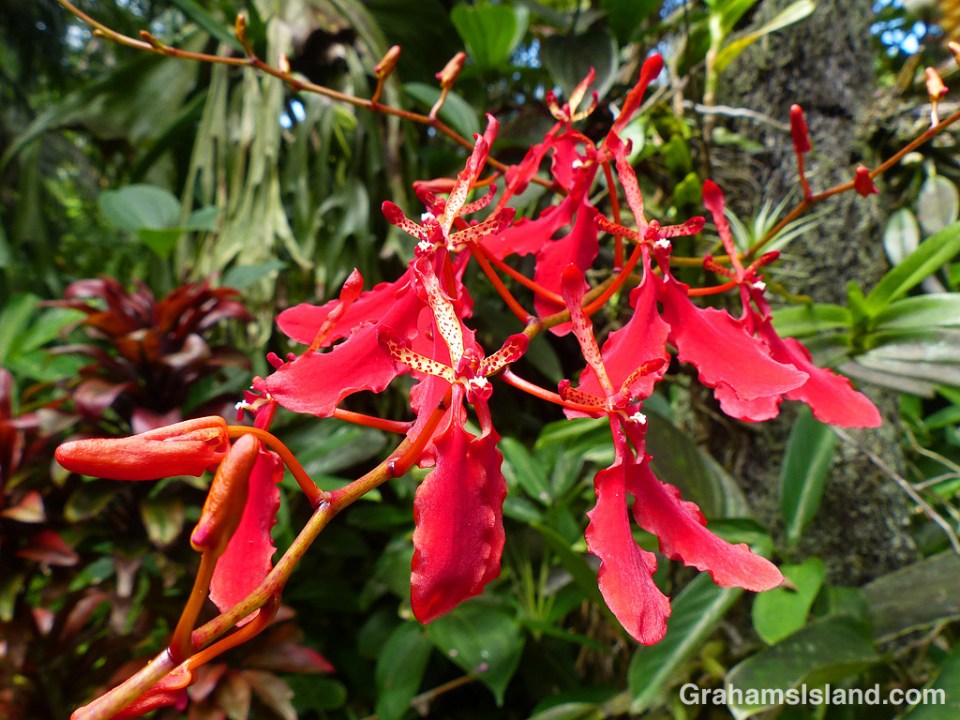
Renanthera imschootiana orchids are from southeast Asia. This one was at Hawaii Tropical Botanical Garden.
For more information about Hawaii Tropical Botanical Garden, go to htbg.com.

Renanthera imschootiana orchids are from southeast Asia. This one was at Hawaii Tropical Botanical Garden.
For more information about Hawaii Tropical Botanical Garden, go to htbg.com.
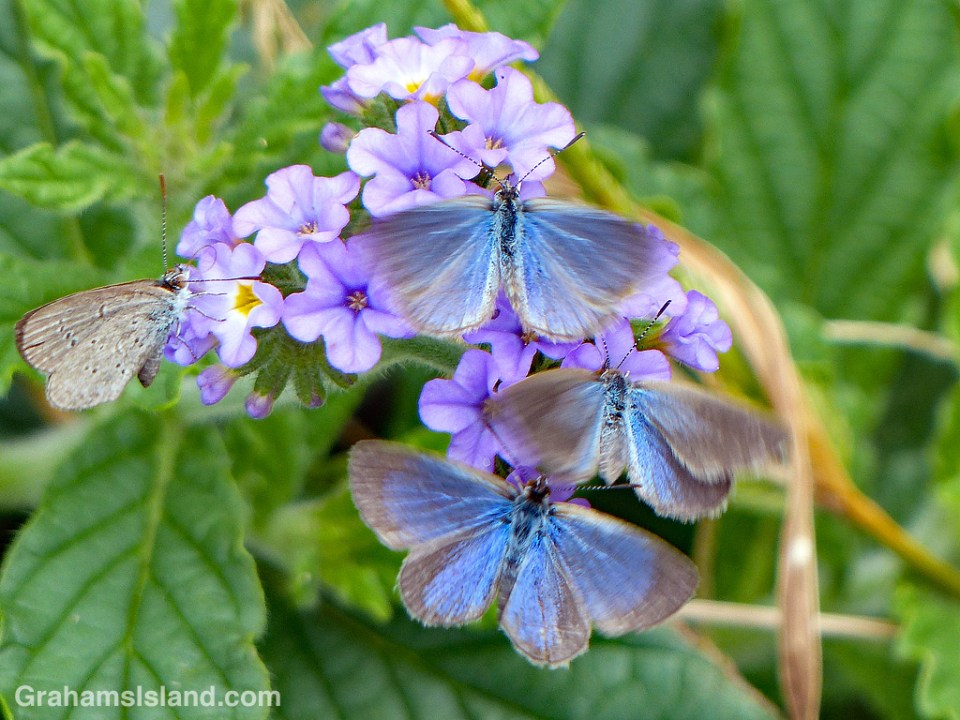
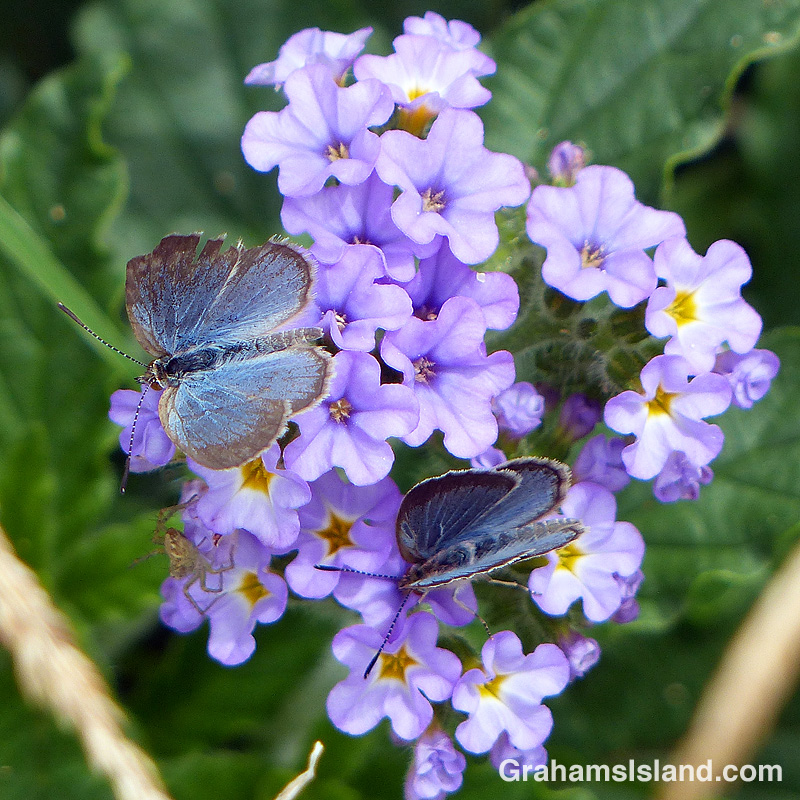 The lesser grass blue butterfly (Zizina otis) was first seen in Hawaii on Oahu in 2008 (for an article, or most of an article, about the find, click here). They’re now well established on the Big Island as well.
Lesser grass blues are very small, with a wingspan no more than ¾-inch. With wings folded up they’re the size of a small fingernail. They also fly close to the ground, within a foot or two.
Lately, I’ve been seeing them in large numbers on these blue heliotrope (Heliotropium amplexicaule) flowers. When I say ‘seeing them,’ what I mean is that when I walk past a patch of these flowers, a host of lesser grass blues will flutter up from the flowers, dance around in a tizzy for a few moments, and then settle back down again. When they do this, it’s like blue confetti being thrown (a few inches) into the air.
I’ve tried to capture this image with my camera, but haven’t been able to (and I’ve taken LOTS of photos). The butterflies are so small, I’m tall, and the effect is fleeting. But the top photo gives an idea of what’s going on, with three lesser grass blues homing in on the small blue heliotrope flowers while a fourth has already found a spot.
It wasn’t until I processed the photos at home that I noticed the spider in the second photo. I don’t know what it made of all the butterfly activity. I hope they weren’t its prey.
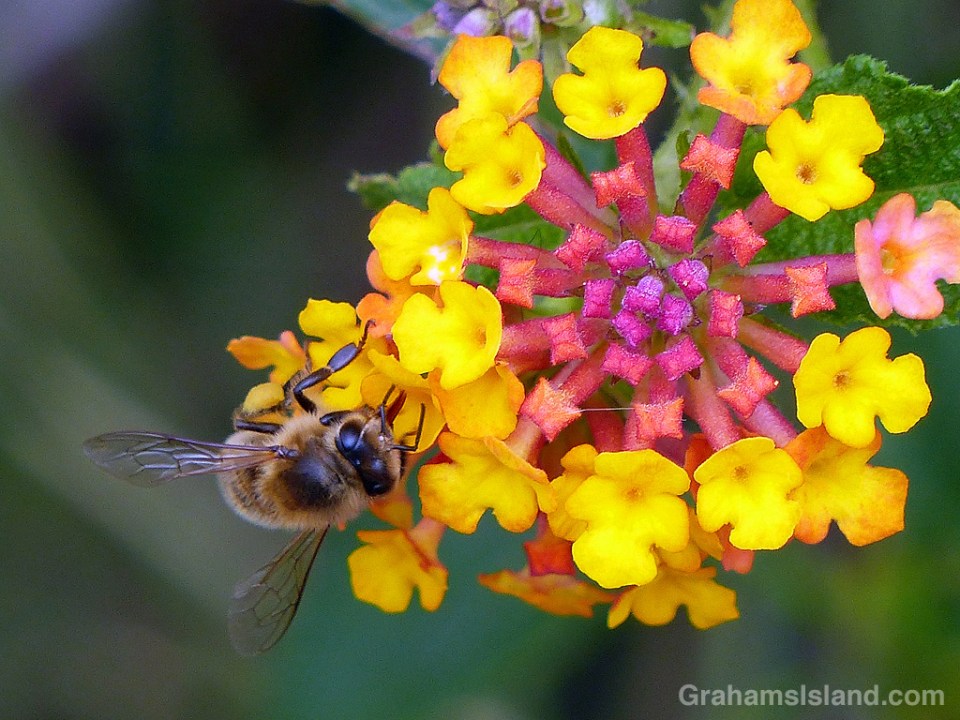
Lantana is such a colorful flower – pink and purple, yellow and orange (and invasive here, but let’s not talk about that). Curiously, it doesn’t seem all that popular with bugs, at least by my observations. But at certain times I see butterflies very interested and on this occasion, several bees were going from bloom to bloom.
Posted in response to this week’s Sunday Stills challenge on the theme of ‘Macro-Photography of Anything.’ See more responses here.
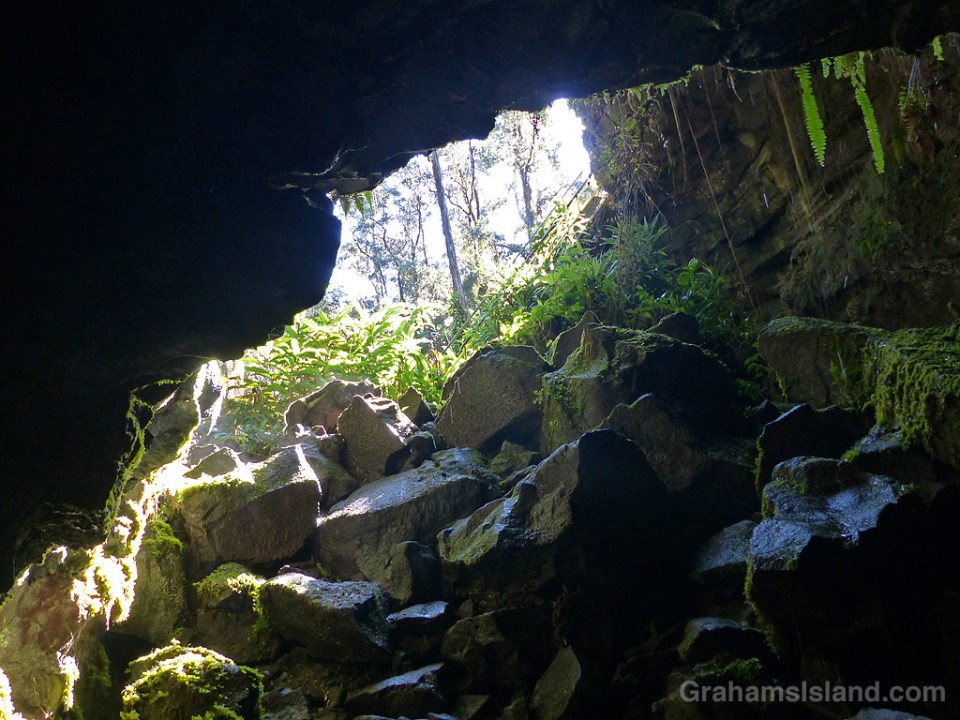
 Kaumana Caves State Park is a small park west of Hilo. Besides the usual park facilities, the main attraction is the caves. The caves are actually a lava tube, created by a flow from Mauna Loa in 1881. They’re accessed through the large opening where a section of the tube collapsed, so the two caves are at opposite ends of this opening.
My understanding is that the caves go on for quite a way, but one is not supposed to go much beyond the entrances because it is, officially, private property after that. It’s also very dark and claustrophobic, so that was enough for me.
The photos show – Above: A view from mouth of the southern cave; Middle: The staircase down to the caves; Below: Foliage that’s grown in the open portion of the tube. The cave entrances are the dark areas at the edge of these photos.
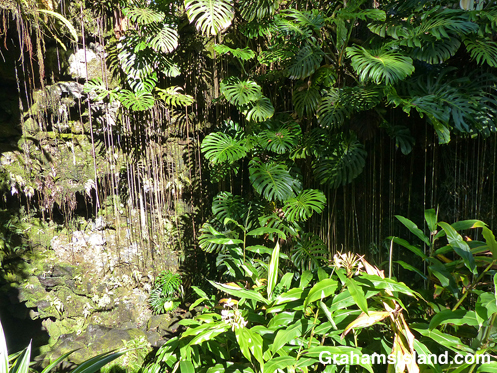
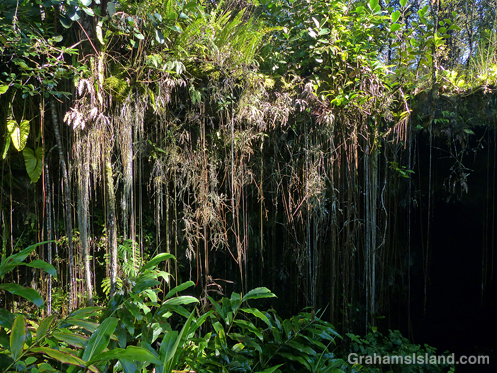
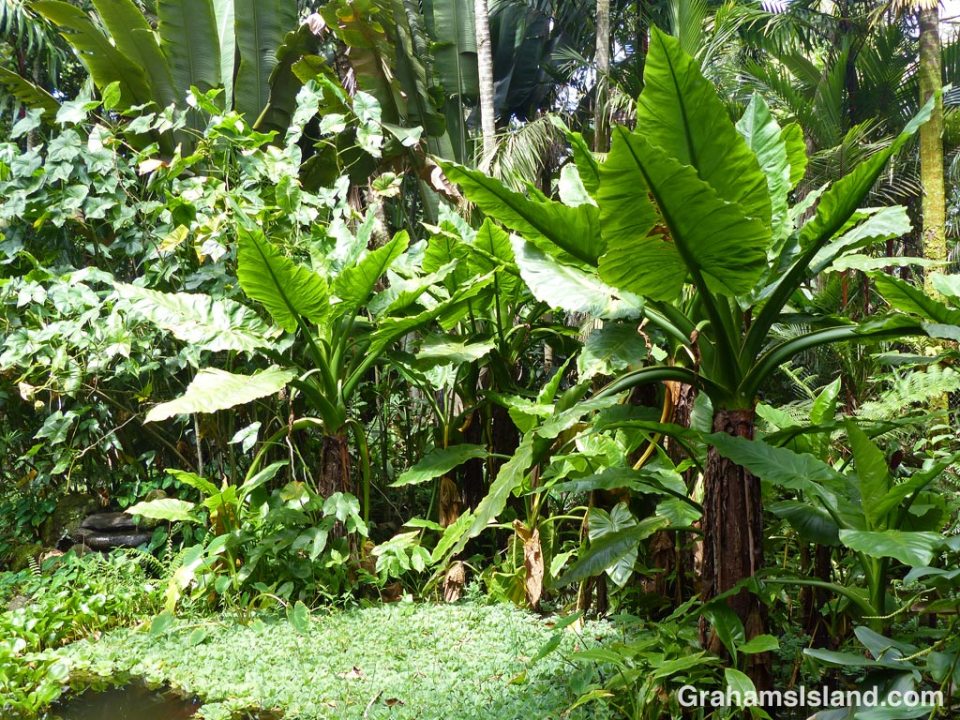
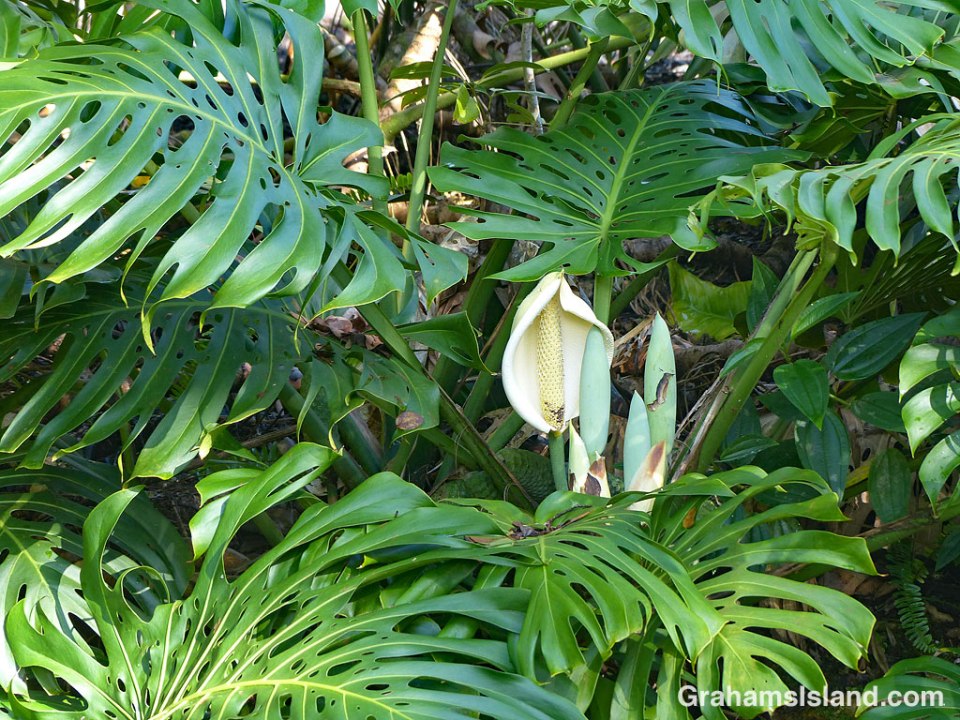
 I live in a pretty green area of the Big Island, but I always enjoy a visit to the much wetter east side. The extra rain allows the tropical foliage to run amok. Trees and shrubs compete for space and light, and vines run everywhere – along the ground and up tree trunks. It’s a riot of many shades of green and leaves of every size, from tiny ground covers to giant bananas to the distinctive leaves of a monstera deliciosa surrounding its flower (below).
Posted in response to this week’s Sunday Stills challenge on the theme of ‘Plant Life.’ See more responses here.
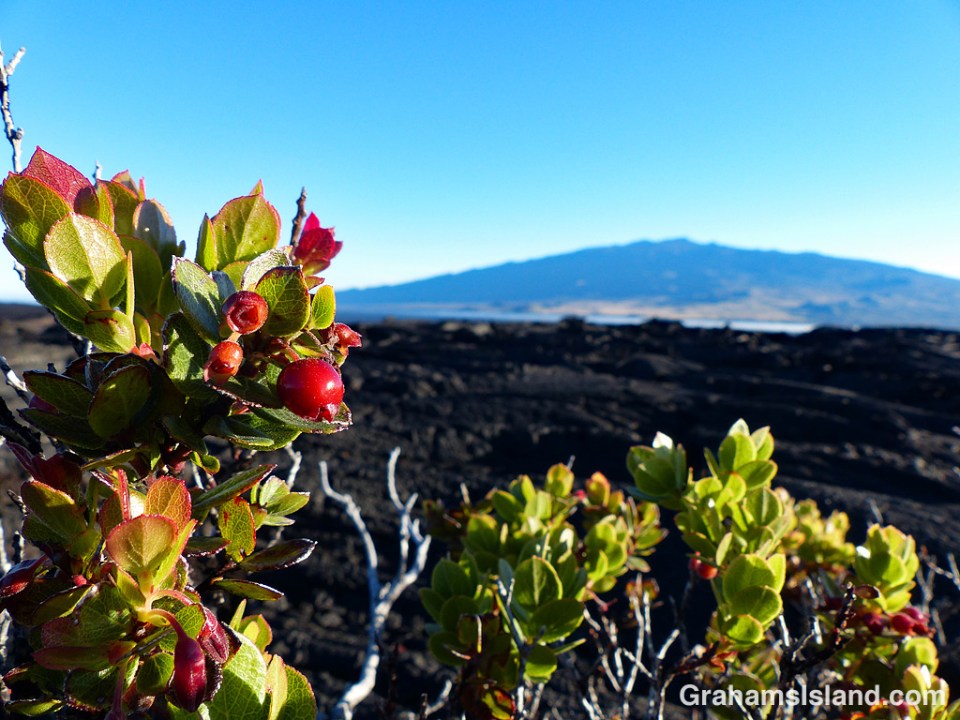
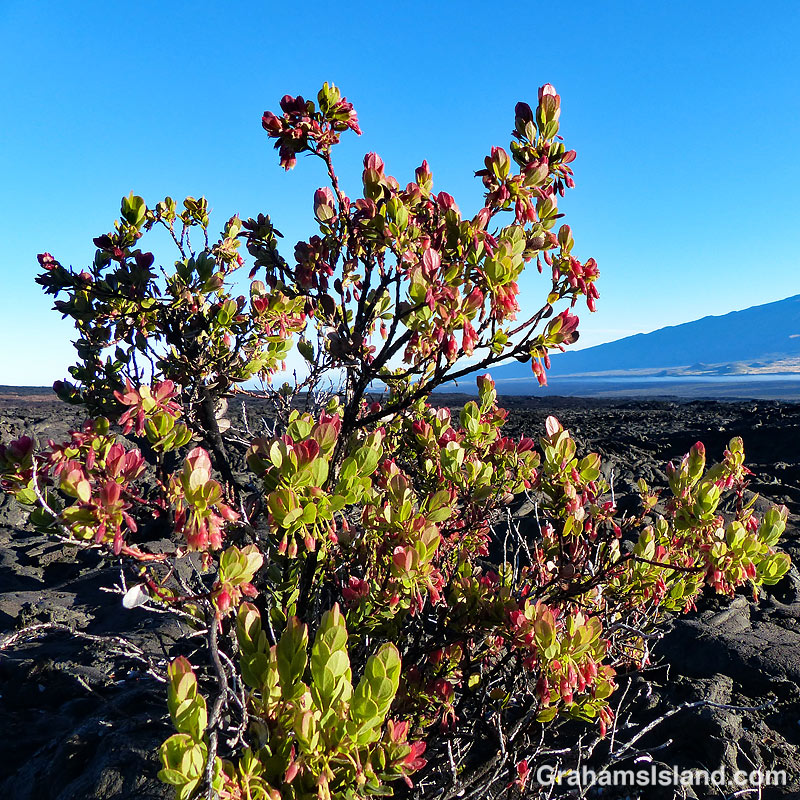
Ohelo ‘Ai (Vaccinium reticulatum) is an endemic plant also known as Hawaiian blueberry. It’s seen here growing on the inhospitable slopes of Mauna Loa, with Mauna Kea in the background.
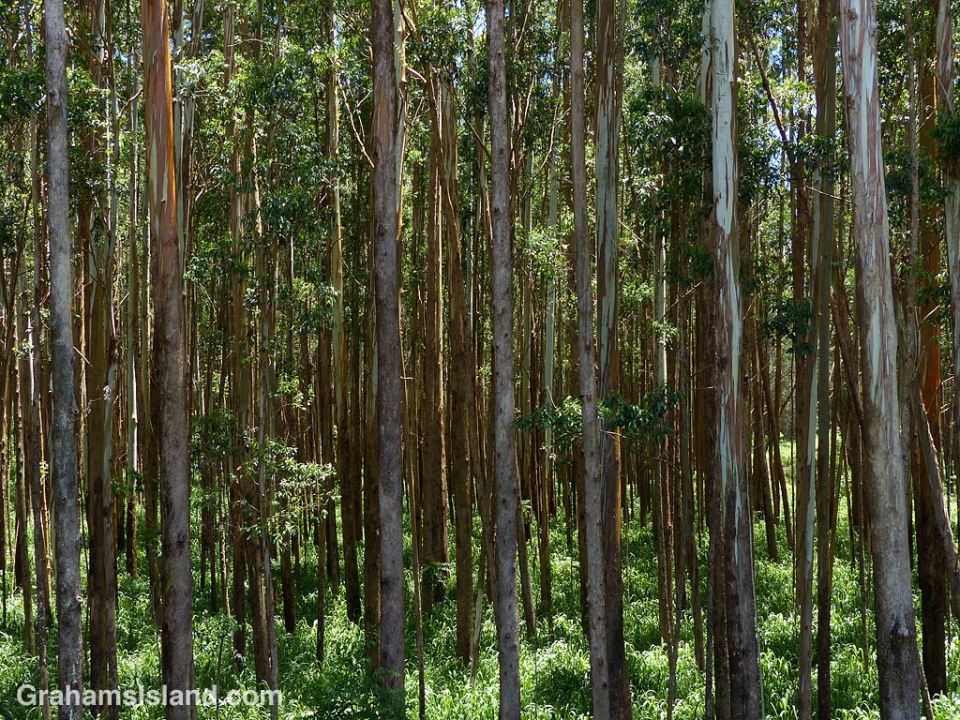
The Hamakua coast of the Big Island is the site of extensive eucalyptus forests. These tall, fast-growing trees are grown for export to Asia. Harvested trees are trucked to the west side port of Kawaihae and stored there until the next ship comes in.
However, last year, the company running the operation decided not to renew its lease. Since then, the landowners have been casting around for a new business to carry on the work, so far without success. So the trees continue to grow, making a pleasing sight with their dappled trunks catching dappled sunlight.
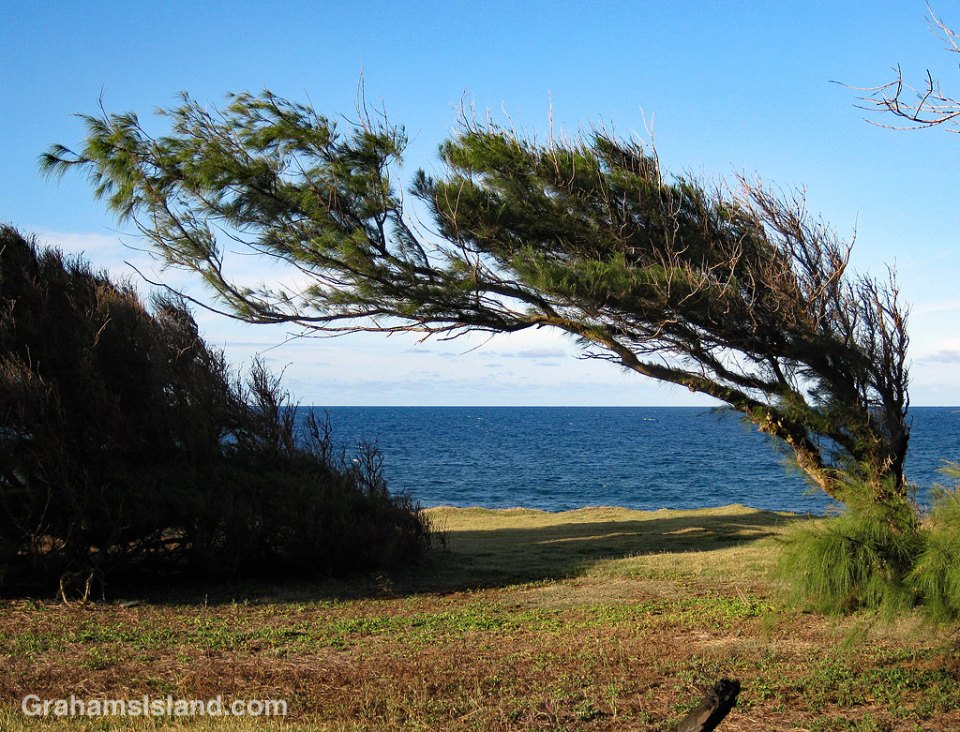
Northeast trade winds are Hawaii’s air conditioner, moderating what would otherwise be much hotter temperatures. The North Kohala coast is a spot where the winds whistle ashore. They can be very strong, but if you want to know how strong, the surest way is to ask a tree. This one is near the Kauhola Point light.
Posted in response to this week’s Sunday Stills challenge on the theme of ‘Wind.’ See more responses here.
 Graham's Island