Category Archives: Hawaiian History

Royal feathers

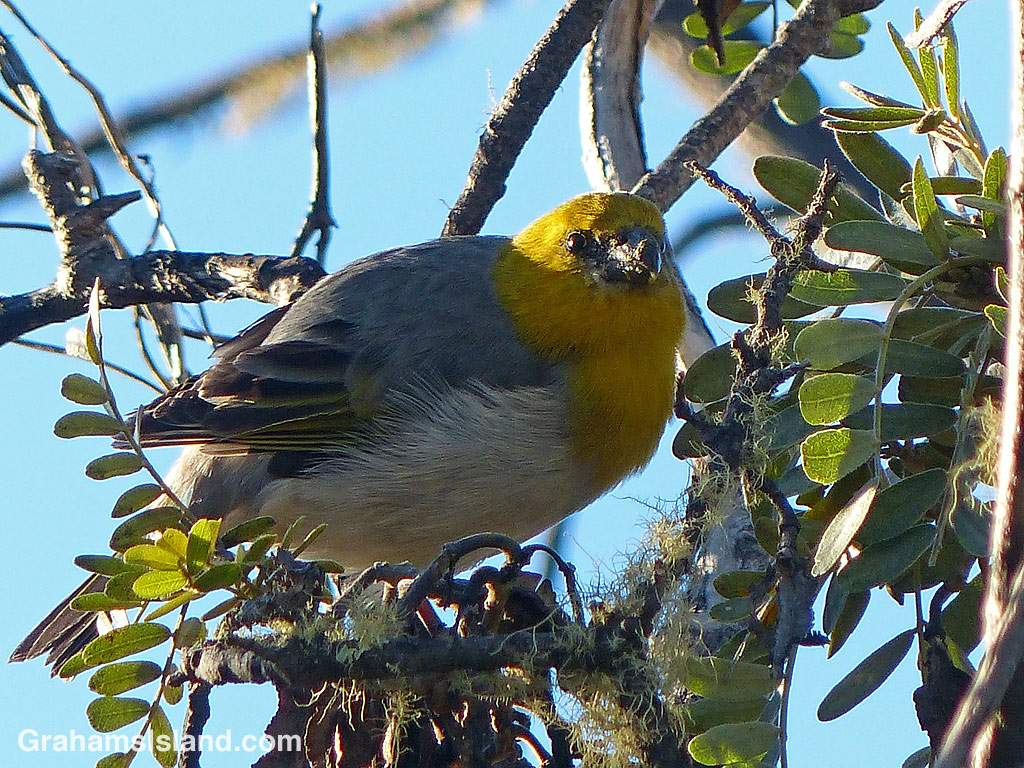
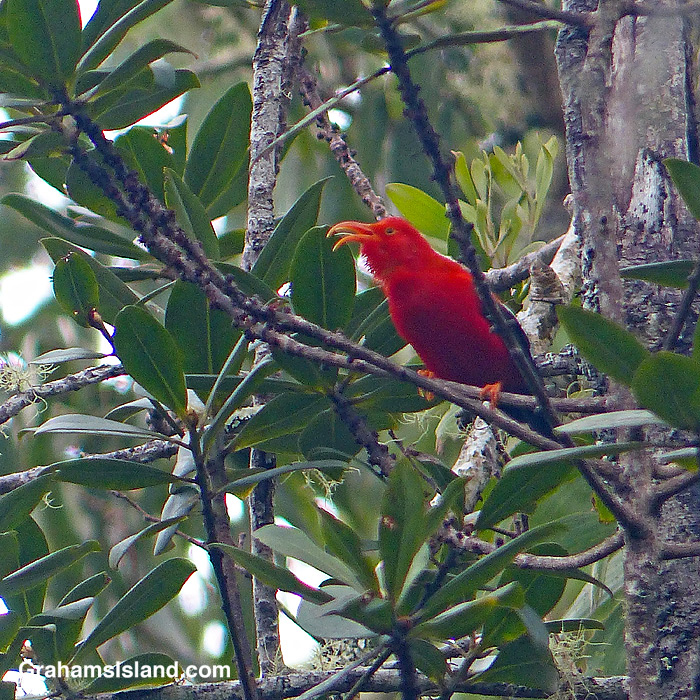
An endemic I'iwi bird in Hawaii

This week’s Sunday Stills challenge theme is ‘Feathers.’ See more responses here.

When the Polynesians first came to Hawaii, they brought with them many plants and animals for use in their new home. They also brought with them their traditional skills, one of which was feather work. Feathers were made into capes and helmets, as well as used in standards and staffs. These feathered items were mostly reserved for Hawaiian royalty, the ali’i, and were considered a status symbol, showing how powerful they were.

Red and yellow were the main colors used so the I’iwi (pictured) and Apapane were coveted for their red feathers, while yellow feathers came from Ō’ō and Mamo birds. These latter two birds are now extinct, but not because of feather collecting. Introduced predators and diseases, together with loss of habitat, are the primary causes.

Also posted for Becky’s Squares: Simply Red. See more responses here.

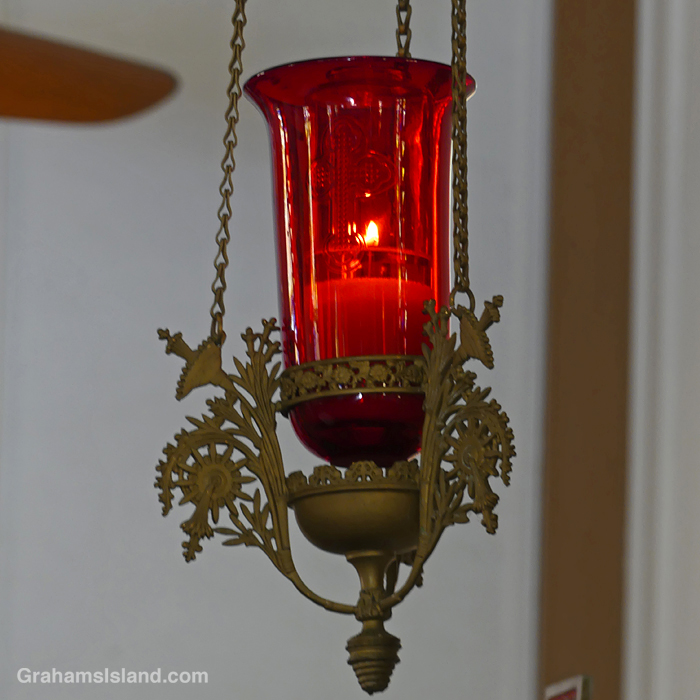
Sacred Heart Catholic Church

The doors of Sacred Heart Catholic Church in Hawi, Hawaii

This week’s Sunday Stills challenge theme is ‘Red, White, & Blue.’ See more responses here.

When I went to photograph the red doors of the Sacred Heart Catholic Church in Hawi, I noticed a door was open. There was a sign asking that visitors maintain an atmosphere of reverence, which I do in churches, so in I went.

There was no one inside so I took my time wandering around. It’s not a huge church, but is obviously well looked-after. I was immediately struck by the colorful stained glass windows portraying biblical scenes. There were many nice details that I appreciated, even if I’m not a religious person, and as with almost all churches, it was calm and quiet.

The church was built in 1925 and is celebrating its centenary this year.

Also posted for Becky’s Squares: Simply Red. See more responses here.

Sacred Heart Catholic Church in Hawi, Hawaii

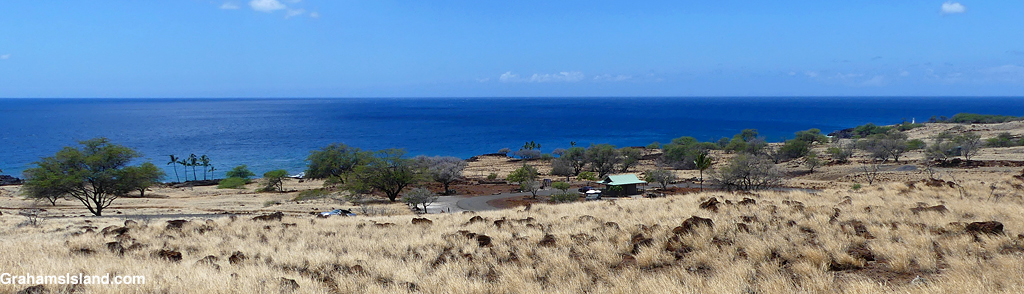
Flags at Lapakahi

Flags flying at Lapakahi in Hawaii

This week’s Sunday Stills challenge theme is ‘Flags.’ See more responses here.

In Hawaii, there are usually two flags flown. The top one here is the well-known national flag. The other is Hawaii’s state flag, the only state flag to contain the flag of another country. But how did the Union Jack get there?

This comes down to interactions, in the early days of western contact with Hawaii, between the British Royal Navy and King Kamehameha, who at that time ruled only the Island of Hawaii, not the whole island chain. Kamehameha already had already taken into his inner circle, and thought highly of, a pair of British sailors who acted as military advisors. Then, in 1794, Captain George Vancouver signed a pact with Kamehameha, which he thought ceded the island to Great Britain. That wasn’t how the Hawaiians interpreted it. They thought it established the island as a protectorate. However, one aspect of this exchange was that a British flag was given to the king and was used as a symbol for the kingdom after Kamehameha went on to unite all the Hawaiian islands.

There’s a story that, when the American war of independence with Britain broke out in 1812, Kamehameha did not want to offend either side and so he designed a flag that incorporated elements of both nations’ flags. However the new design came into being, it became the flag of the Hawaiian nation, though the number of stripes, the colors, and the size of the Union Jack often varied.

It wasn’t until 1845 that the current version became official, with the eight stripes representing the eight main islands of Hawaii.

Over the lava and through the woods

The Pu'u O'o Trail on the Big Island of Hawaii
Trails come in all shapes and sizes. Some meander through the woods.

This week’s Sunday Stills challenge theme is ‘Paths and Trails.’ See more responses here.

Pretty in pink

A Pink container in Hawaii
This shipping container, parked in Kawaihae, isn’t likely to blend into the background.

This week’s Sunday Stills color challenge theme is ‘Pink.’ See more responses here.

Hawai‘i Volcanoes National Park

A lava breakout from the Kilauea lava flow.
A lava breakout in a flow from Pu’u O’o covers the old coast road, which is now a trail (here).

This week’s Sunday Stills challenge theme is ‘Parks.’ See more responses here.

Hawai‘i Volcanoes National Park is the best known park on the island. It covers 354,461 acres, which includes, not just the Kilauea area, but up to the summit of Mauna Loa and down the southwest rift zone of that volcano. The park contains 106 miles of roads and 155 miles of marked trails, many of them well off the beaten track.

I’ve hiked a lot in the park, though I doubt I’ll ever cover all the trails, but these photos are from ones I’ve done with links to the original posts for those interested.

Also posted for Jo’s Monday Walk. See more responses here.

Hawaiian Crown Flowers

White Hawaiian Crown Flowers
A Hawaiian Crown Flower bush

Hawaiian Crown Flowers (Calotropis gigantea) came from India originally, and became popular here because they were favored by Queen Liliuokalani, the last ruler of the Hawaiian monarchy. The purple flower was the one first introduced here, back in the 1880s, with this white variety arriving some 30 years later.

The plant gets its name from the shape of the flowers, which are used in making leis. As members of the milkweed family, they also host Hawaii’s Monarch Butterflies. The plant has a milky sap that is toxic, but that Monarchs, and their caterpillars, are immune to. The caterpillars are voracious eaters, decimating the Crown Flower leaves, but the plant will bounce back after the caterpillars pupate. The plant is drought tolerant and does well on the dry side of the island here.

Hawaiian Crown Flower seeds

The Numbers Game #74

A monument commemorating Ikua Purdy, a Hawaiian paniolo
This statue in Waimea celebrates the role of paniolos in the region. (Original post here.)

The idea of The Numbers Game is to enter a number into the search bar of your computer and then post a selection of the photos that turn up. This week’s number is 195. Captions are on the photos. You can see more responses here.