I am particularly fond of any plant that comes with a little tag nearby to identify it. It makes life so much easier.
This is elephant’s ear (Alocasia Macrorrhiza), also known as giant taro. In Hawaii it is known as ‘Ape. I saw this at the Hawaiian Native Plant Garden at Kohanaiki Beach Park, just north of Kailua Kona.
Native to rainforests in Borneo and Australia, elephant’s ear spread to parts of Asia and the South Pacific. It was brought to Hawaii by the Polynesians who first settled the islands, and because of this, it is known here as a canoe plant, a plant brought in the first canoes. The plant is a source of starch from the corms. The leaves and stems of taro plants can also be eaten, but giant taro causes irritation because of calcium oxalate crystals in the sap.
This week’s Sunday Stills challenge theme is ‘Lines and Squares.’ See more offerings here.
This is one of the roads in Isaac Hale Beach Park at Pohoiki. This park is where last year’s lava activity came to a halt leaving a wall of lava making a border to the public area of the park. Walking beyond the ‘No Trespassing’ sign won’t result in your immediate arrest, but the powers that be don’t want people walking on the flow itself.
But this is a road after all and the sign makes it seem likely that someone driving here might continue on and run into the flow. Actually, this is entirely possible, given how some people drive around here.
Regardless of the intent, I like how the lines on the road disappear into the lava and the red squares are warning signs.
This week’s Friendly Friday challenge theme is ‘Alternative Version.’ See more responses here.
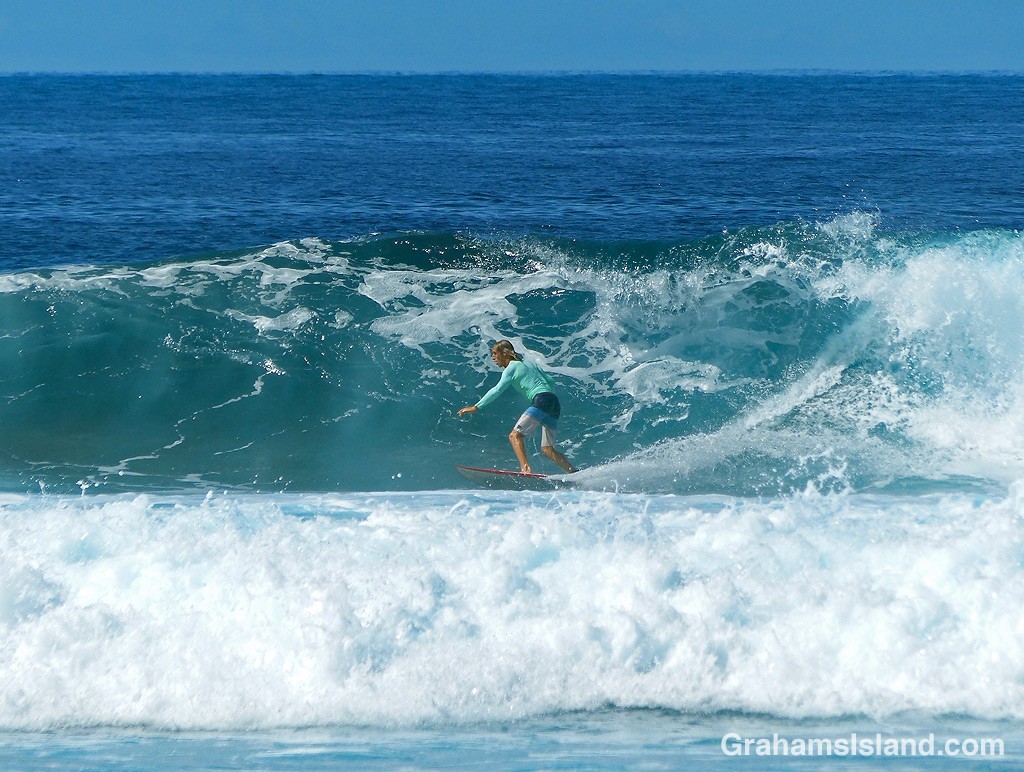
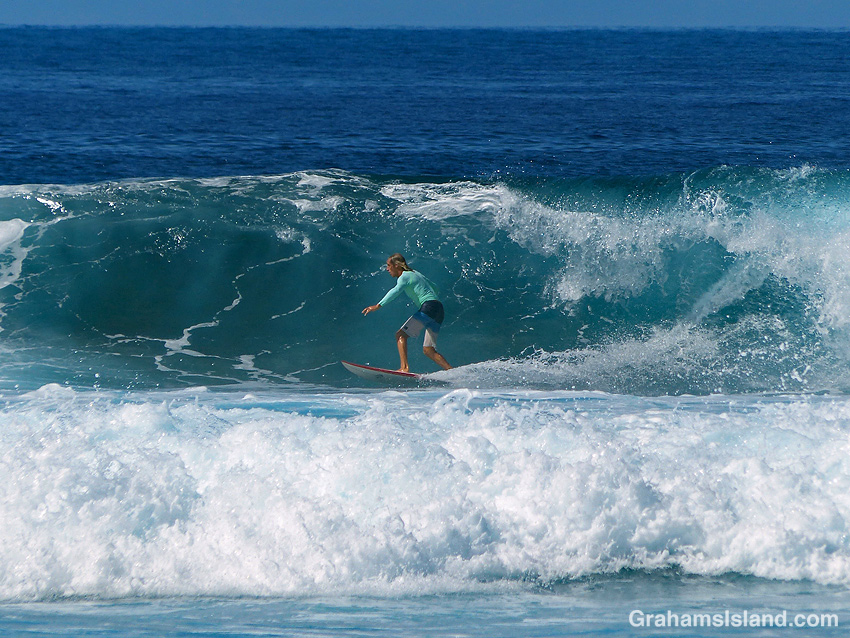
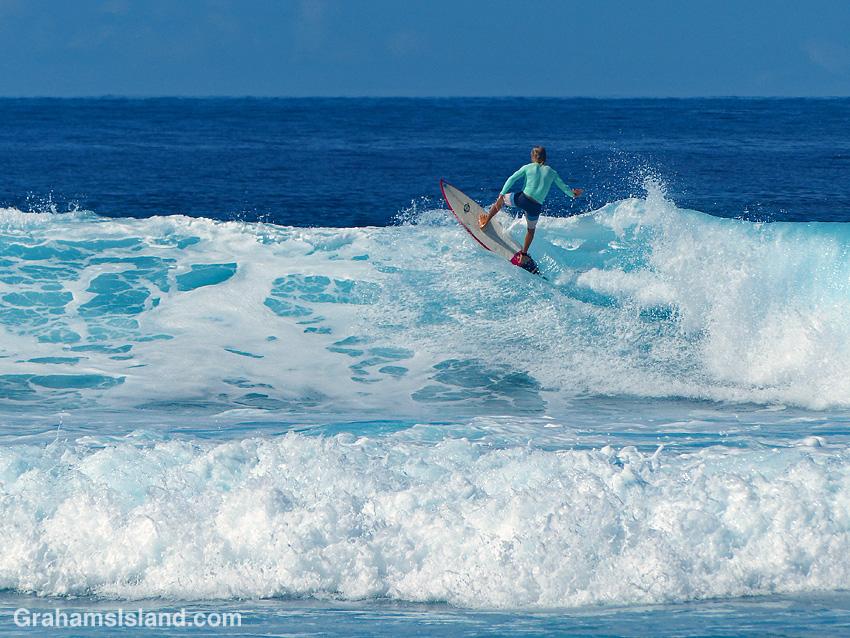
Surfing originated in Hawaii and is a quintessential Hawaiian activity. When the surf’s up, so is absenteeism at the workplace. For last week’s challenge, I posted a photo of surfers waiting for a wave.
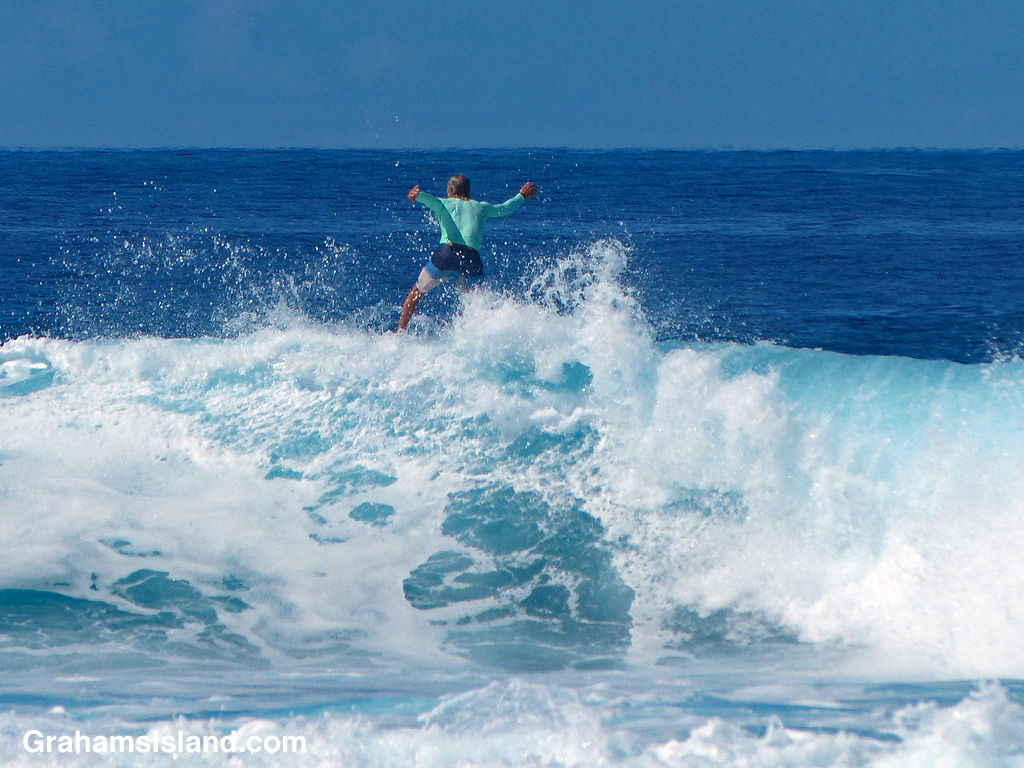
This week, I’m posting photos of one of those surfers catching a wave. In the photos, the surfer cuts a curve down the face of a wave, zips along its base, and then climbs up the face again. At the top, he jumps off, no doubt to wait for the next wave he can catch.
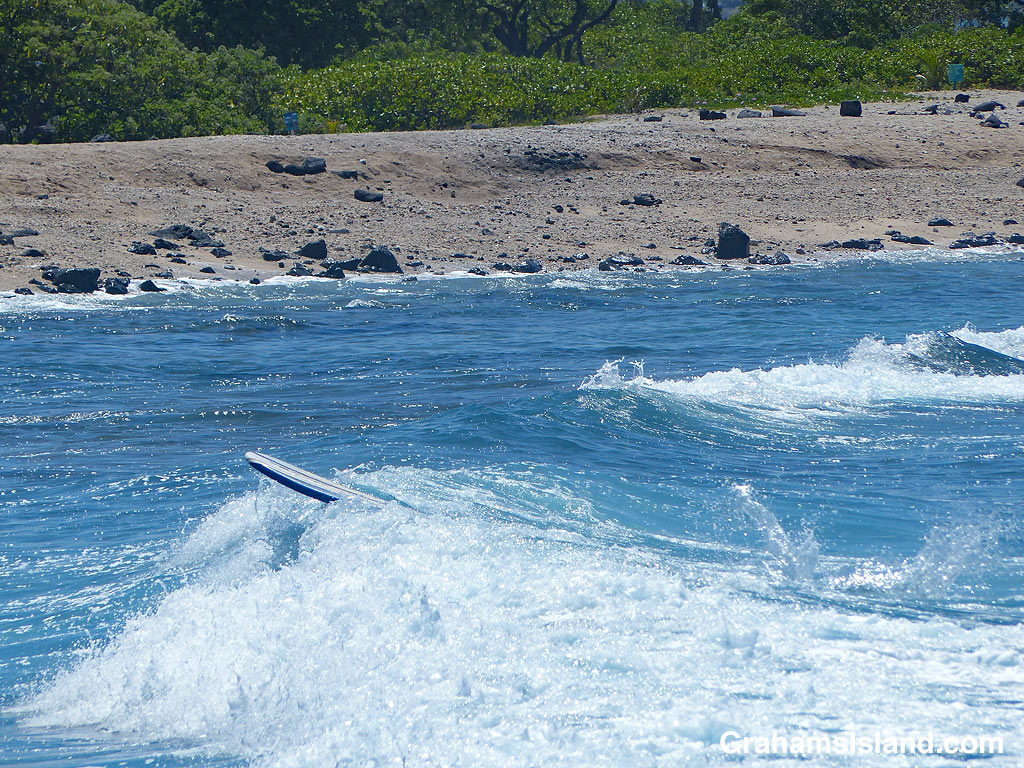
And the alternative version? Wipeout! In the bottom photo an unoccupied surfboard heads to shore, still tethered to the ankle of the out-of-sight surfer who wiped out moments before.
I recently went hiking in the Kalōpā State Recreation Area, not far from Honoka’a, on the northern end of the island. I’d been there before, but only to check it out, so this was an opportunity to explore the trails more thoroughly. One of the treasures of this area is that it features plants that were on the island before even the native Hawaiians arrived.
The recreation area is about 100 acres, and it neighbors the 500 acre Kalōpā Forest Reserve. At an elevation of around 2,000 feet, and on the wet side of the island, it’s cool and damp. There are a variety of trails that intersect and criss cross, which allows hikers options from short loops of less than a mile, to a 6+mile hike around the perimeter.
I took one of the longer routes and it reminded me greatly of hikes I’d taken back in the Pacific Northwest where I used to live. Light rain, water dripping from the overhead canopy, ferns bordering the trail, and tall trees stretching up into a grey sky. These were all features of those hikes. Only the species were different. Eucalyptus, ohia, and kopiko instead of firs and cedars.
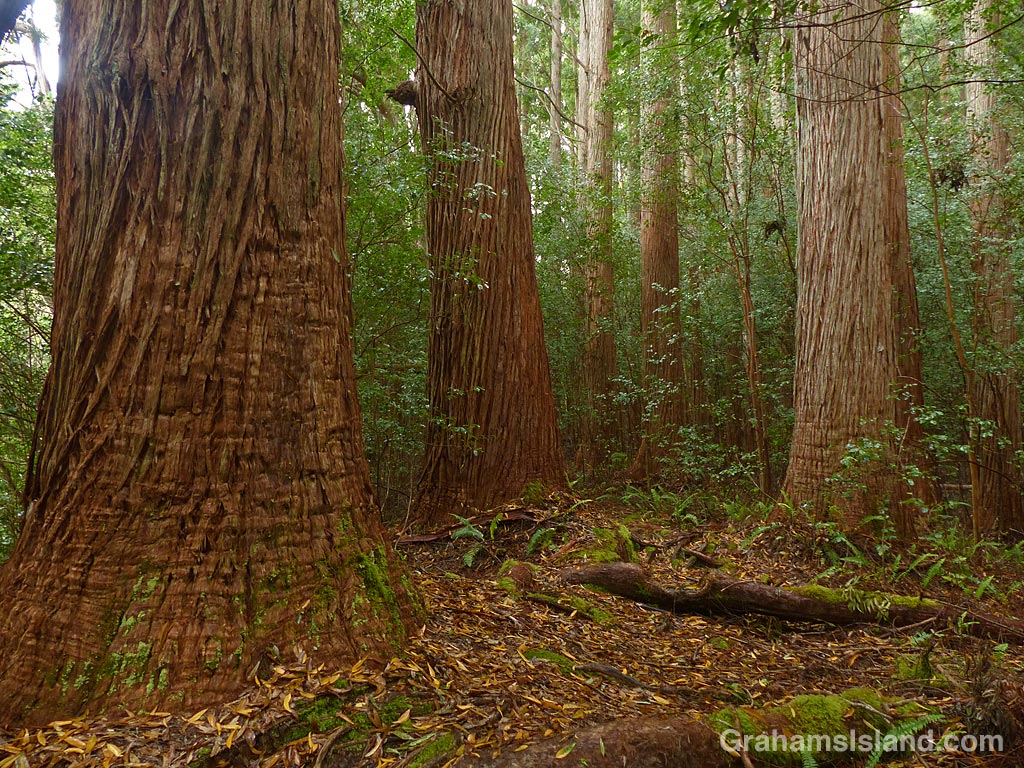
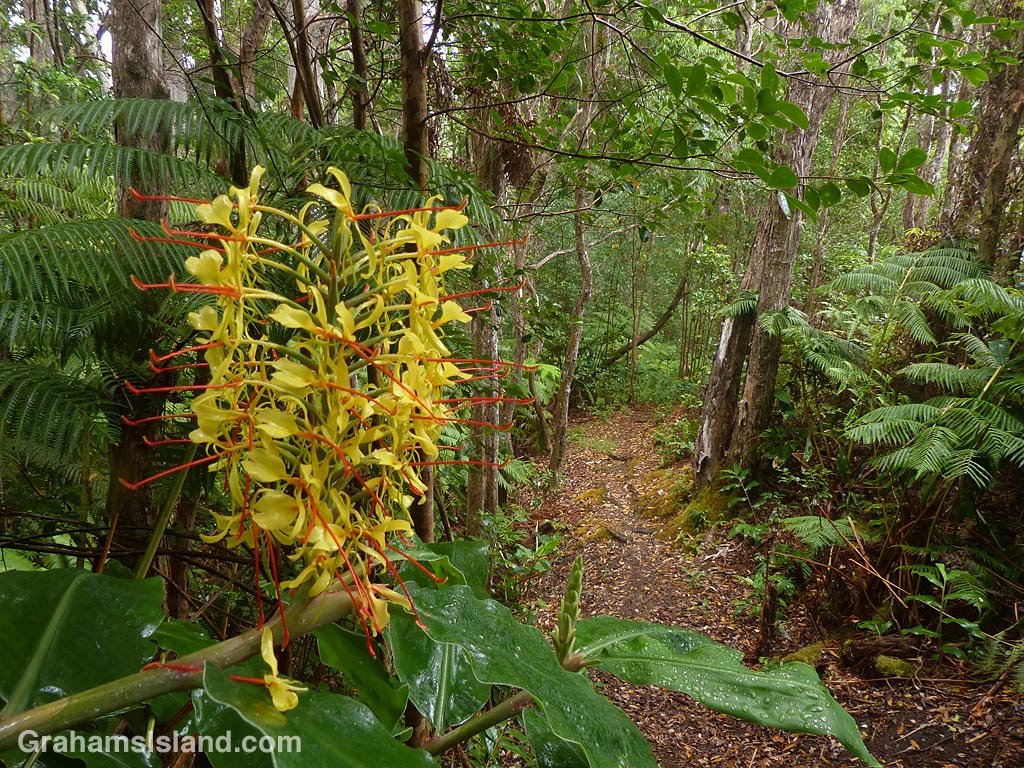
The photos show – Top: towering trees line the trail alongside Kalōpā Gulch. Above: A view down into Kalōpā Gulch. Flash floods often race down this gully so it’s a good idea to watch your step. Third photo: Strangler figs envelope native trees and take over resulting in weird, twisted shapes. Below: The old Jeep Road, bordered by invasive kahili ginger, cuts through the center of the area. It’s hard to imagine anyone driving this trail.
This week’s Friendly Friday challenge theme is ‘Balconies.’ See more responses here.
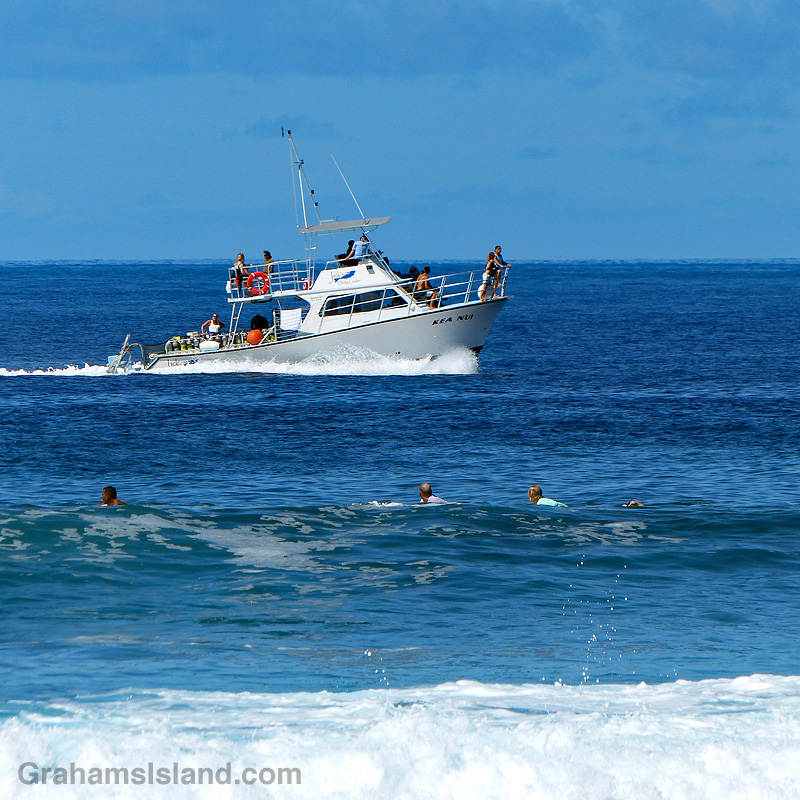
Not having any photos of balconies in the traditional sense, I thought I’d pop for a photo taken yesterday when I was down in Kailua Kona. Here, a powerboat heading north passes some surfers waiting for a wave.
The boat is taking people out to a dive, and like many of these kinds of boats this one has a couple of balconies (though they’re not called that in nautical language) where passengers can relax en route to the dive site.
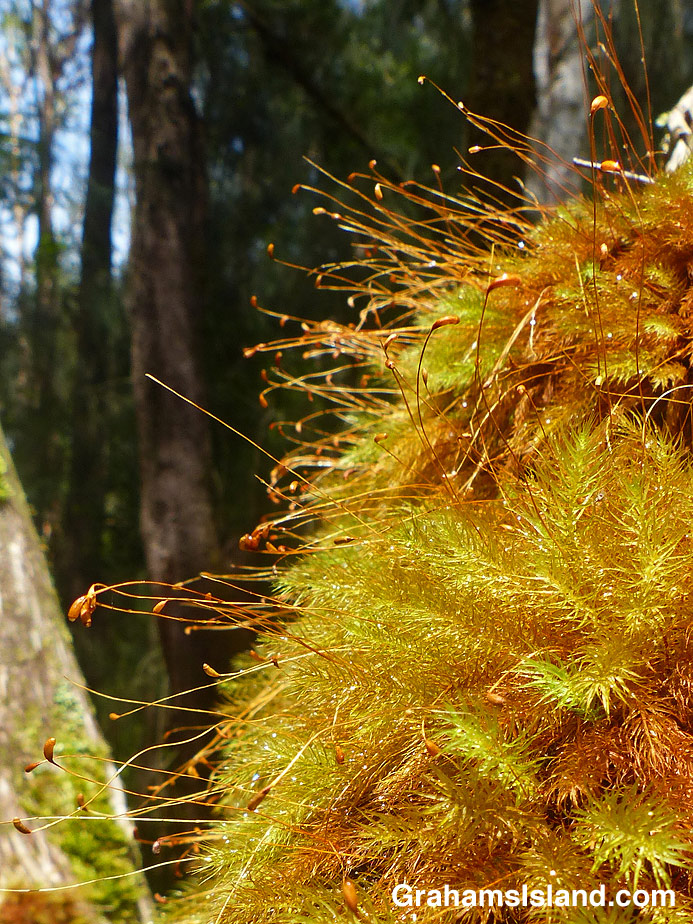
Moss grows on a tree in the Kalōpā State Recreation Area, on the northern end of the island. Hawaii might be in the tropics, but the elevation of Kalōpā, combined with it being on the wet side of the island, means it is home to vegetation more associated with my former home in the Pacific Northwest.
This week’s Sunday Stills challenge theme is ‘Our National Parks.’ See more responses here. There are two national parks on the island. One is Hawaii Volcanoes National Park which encompasses Kilauea Volcano and Mauna Loa Volcano. The other is the somewhat lesser known Pu’uhonua o Hōnaunau National Historical Park, which is also known as Place of Refuge.
There are two parts to the park, which are separated by an imposing rock wall. On the inland side of the wall are the grounds where Hawaiian royalty made their home. The water side of the wall was the place of refuge. Anyone who had broken the law or kapu faced the death penalty, but if they could reach a place of refuge they would be forgiven by a priest and allowed to return to their normal lives.
At one end of the wall is the Hale o Keawe temple, surrounded by ki’i (wooden statues). This structure houses the bones of many Hawaiian royalty or ali’i, which are believed to give the place great power or mana.
For more photos and information on this site about these parks, click on the tags for Pu’uhonua o Hōnaunau National Historical Park or Hawaii Volcanoes National Park at the bottom of this page.
For more information about Pu’uhonua o Hōnaunau National Historical Park, visit https://www.nps.gov/puho/index.htm. For more information about Hawaii Volcanoes National Park, go to nps.gov/havo/.
I saw this Hawaiian coot at Kaloko-Honokohau National Historical Park, north of Kailua Kona. It was puttering around in one of the inland lagoons, periodically diving for food, as it is in these photos.








 Graham's Island