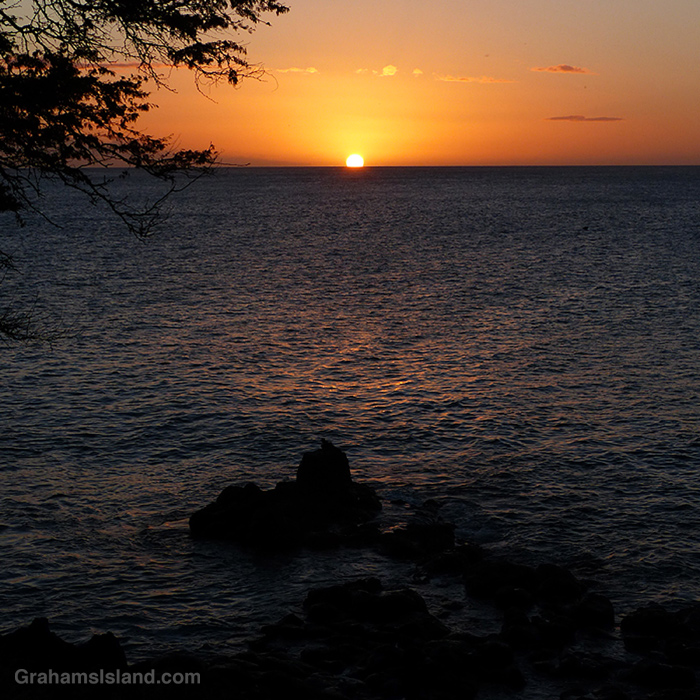
Here, the sun goes down off the North Kohala coast.
Posted in response to Becky’s January Squares challenge theme of ‘Up.’ See more responses here.

Here, the sun goes down off the North Kohala coast.
Posted in response to Becky’s January Squares challenge theme of ‘Up.’ See more responses here.
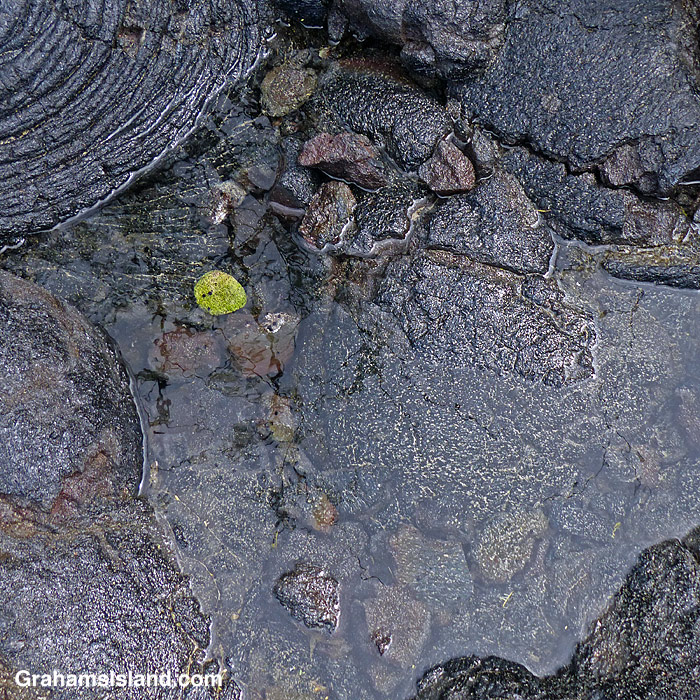
A small greenish rock stands out in a pool of dark lava.
Posted in response to Becky’s January Squares challenge theme of ‘Up.’ See more responses here.

The latest eruption of Kilauea Volcano continues. It’s settled down to being a fairly well-behaved eruption as these often do. Currently, lava is still pouring from a vent on the northwest side of Halemaʻumaʻu crater. It has formed a lake more than 200 meters deep, which continues to rise slowly.
This photo was from my trip down there in December. These two people were silhouetted by the glow from the eruption. To see what’s currently happening at the volcano go to https://www.usgs.gov/volcanoes/kilauea/webcams.
Posted in response to Becky’s January Squares challenge theme of ‘Up.’ See more responses here.
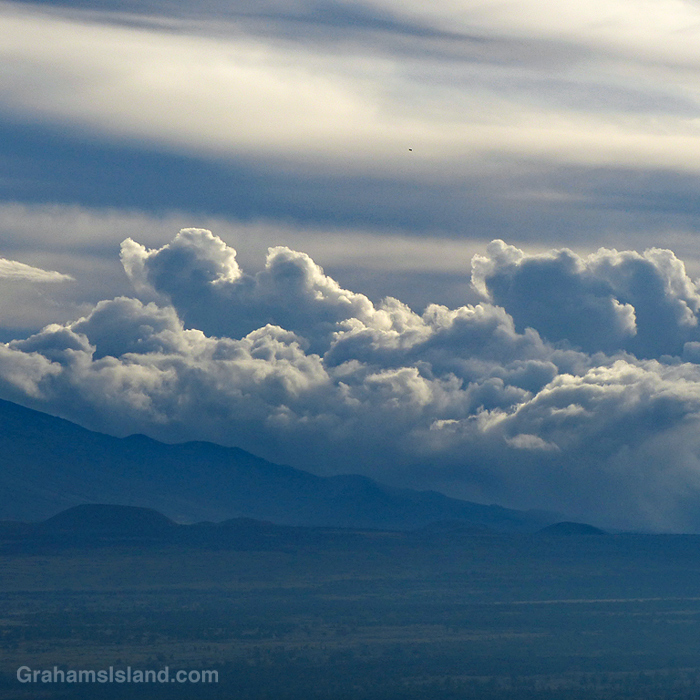
This week’s Sunday Stills challenge theme is ‘Fog and Clouds.’ See more responses here.
We don’t get a lot of fog here, but there’s no shortage of clouds. Here, clouds pile up as they hit the lower slopes of Mauna Kea.
Also posted in response to Becky’s January Squares challenge theme of ‘Up.’ See more responses here.
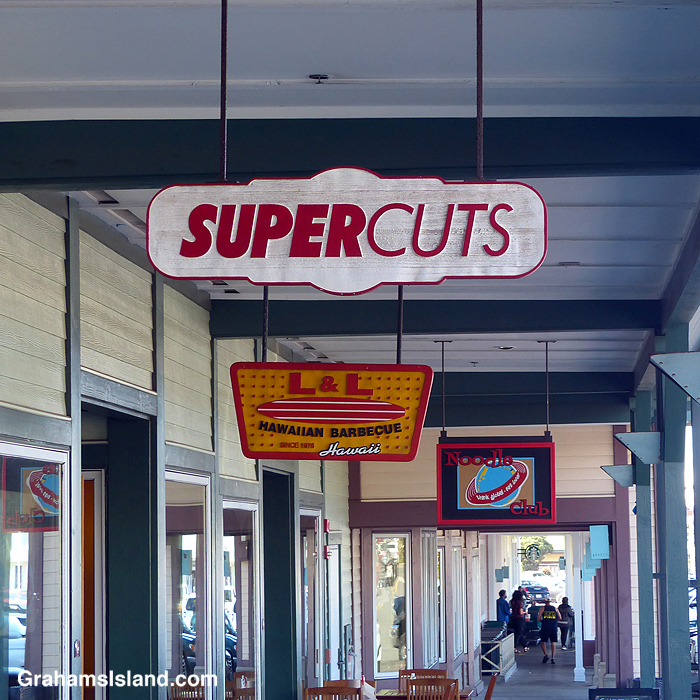
Here’s a little peek into the commercial world in Hawaii. These signs illustrate enterprises found here, probably a similar pattern to those in many parts of the world.
Supercuts is a national franchise with locations across the country and elsewhere. It’s a hair salon and, to be honest, I’m scared to go here for fear of getting my hair styled and smothered in ‘product.’
L&L Hawaiian Barbecue is a Hawaiian franchise that started in the islands but, like Supercuts, has spread nationwide and even internationally. I eat at L&L once in a while. It’s pretty good, some dishes better than others, the kind of place you know you can get a decent meal if you’re in a hurry.
Noodle Club is a local enterprise which, I confess, I haven’t been to. But I have been to Village Burger, operated by the same ownership, and they’re very good.
Posted in response to Becky’s January Squares challenge theme of ‘Up.’ See more responses here.

The headquarters of Parker Ranch, founded in 1847 and one of the biggest ranches in the USA, can be found in the bucolic town of Waimea. It’s the heart of cattle country on the Big Island and where there’s cattle, there’s cowboys, but not here. Here in Hawaii, the cattle are tended by paniolos. That’s because, when the cattle industry grew, ranch hands were needed.
The first three came from California, then part of Mexico. These three vaqueros (Spanish for cowboys) spoke español, but the theory is that, because the Hawaiian language couldn’t handle the word español, it was converted to paniolo. The name stuck.
Over time, the local Hawaiians learned the skills associated with handling cattle. So well did they do this that, in 1908, three of them were entered in the Frontier Days World Championship in Cheyenne, Wyoming. Not only were they a huge hit with the crowds, but they also won titles. Ikua Purdy won the world steer-roping contest and was later voted into the National Rodeo Cowboy Hall of Fame. To commemorate those achievements this monument was commissioned. It arrived on the island in 2003 and today stands next to the main highway, on the edge of the parking lot of Parker Ranch Center, a large (for Waimea) shopping complex in the center of town.
For more information about monument, go to https://paniolopreservation.org/a-monument-to-paniolo-pride/.
For a brief history of the Big Island’s cattle industry, go to https://www.bikemaui.com/hawaiian-paniolo-brief-history/.
Posted in response to Becky’s January Squares challenge theme of ‘Up.’ See more responses here.
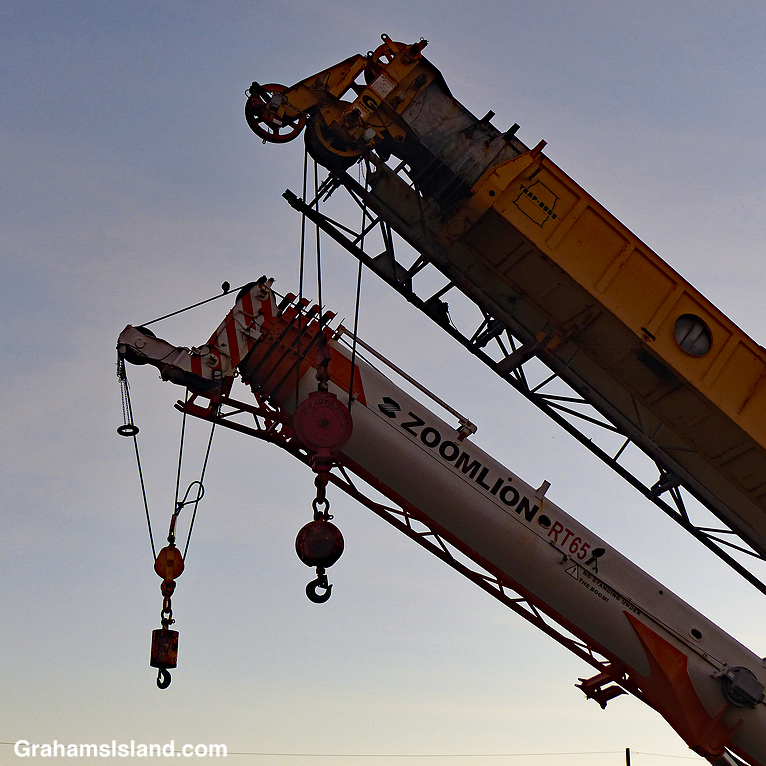
A couple of cranes ready for action at the port of Kawaihae.
Posted in response to Becky’s January Squares challenge theme of ‘Up.’ See more responses here.

This week’s Sunday Stills challenge theme is ‘Glacier Blue.’ See more responses here.
We’re a little short on glaciers here on the Big Island, but the color description made me think of Kiholo Bay, where fresh water intrusion gives the water a different look to most places around here. The bay is also a great place to see turtles, which can be seen in the water and hauled out on the shore to rest.
This turtle was swimming in the bay where the gently rippling surface gave it an abstract appearance as it came up for air.
Also posted in response to Becky’s January Squares challenge theme of ‘Up.’ See more responses here.

