This week’s Friendly Friday challenge theme is ‘Dramatic.’ See more responses here.
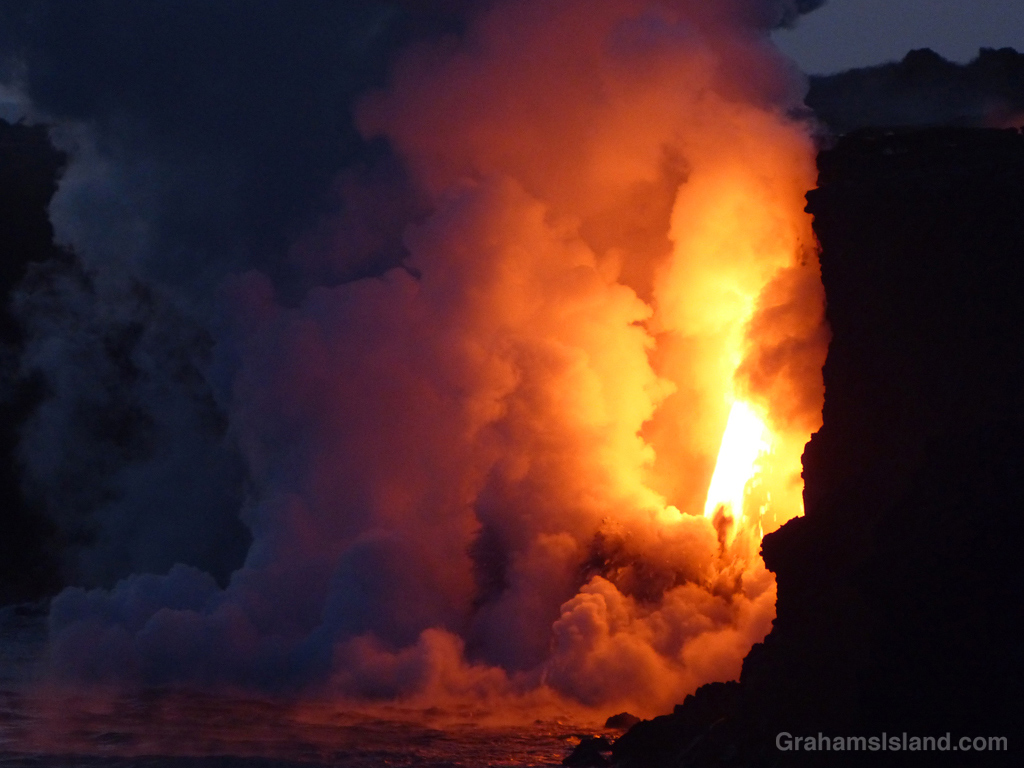
I’ve opted for a dip into the archives for this challenge. Two years ago, lava from Kilauea Volcano’s Pu’u O’o vent reached the ocean, tumbling down a cliff into the water. One day, the cliff collapsed, leaving the lava shooting out of a hole high up in the new cliff. This was called the firehose of lava because that’s what it looked like.
I first learned about it when I saw a video of the lava firehose on one of the news channels. What impressed me was that it was really hard to to see that it was a video. The flow was so strong and so consistent that it looked like a photograph. It was only by looking closely at the edges of the firehose that I could make out spatters of moving lava.
I headed down to the volcano, to take at look at this phenomenon, the day after I saw the video and was duly impressed by the dramatic scene. It was well worth the trip and well worth my quick visit. The following day another cliff collapse moved the firehose back and out of sight from the observation areas.
These are two photos from that visit. More photos can be seen in previous posts here, here, here, and here.
A small plane is battened down at Upolu Airport against the strong winds that blow along the coast here. In the background is the stormy ʻAlenuihāhā Channel and the island of Maui.
This sign guards what is presumably Hawaii’s heavy water plant, though why such a plant would be halfway up the side of Mauna Kea is a mystery. Or perhaps the sign is just a warning that it would not be a good idea to pick up the large water tank behind the sign. Either way, the sign made me smile.
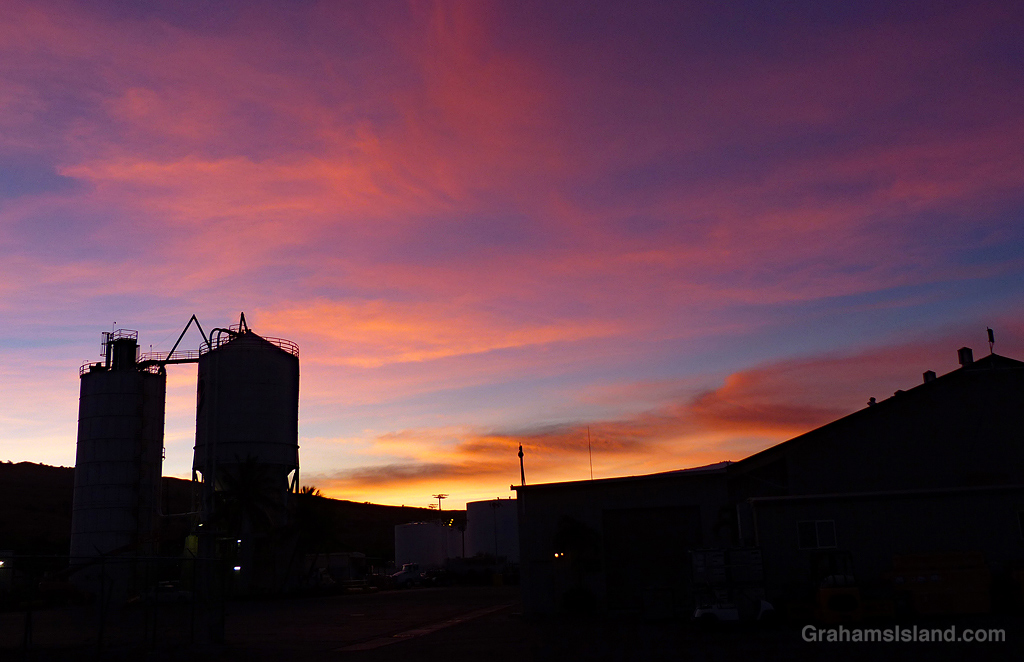
When people think about Hawaii, one of the things that comes to mind is wonderful sunsets and sunrises, such as this one, with the sun rising over the cement tanks. Well, maybe not that last bit, but that’s what’s happening here, the cement tanks in question being at the port in Kawaihae. And it was still a lovely sunrise.
Recently, I walked around the Palila Forest Discovery Trail on the slopes of Mauna Kea without seeing any palilas. The mamane seeds that they feed on were either dry and brown or just starting to form, so a return in a few weeks might bring more luck. But there were other birds flitting around, usually easier to hear than see, especially in some areas where the tangle of branches make it hard to see anything.
This endemic Hawaii Amakihi was one of them, but then it landed on part of a branch where I happened to have a clear view. I snapped two photos before it once more vanished. I like how this photo makes it looks like the bird is settled in for the long term rather than the momentary landing and take off that actually occurred.
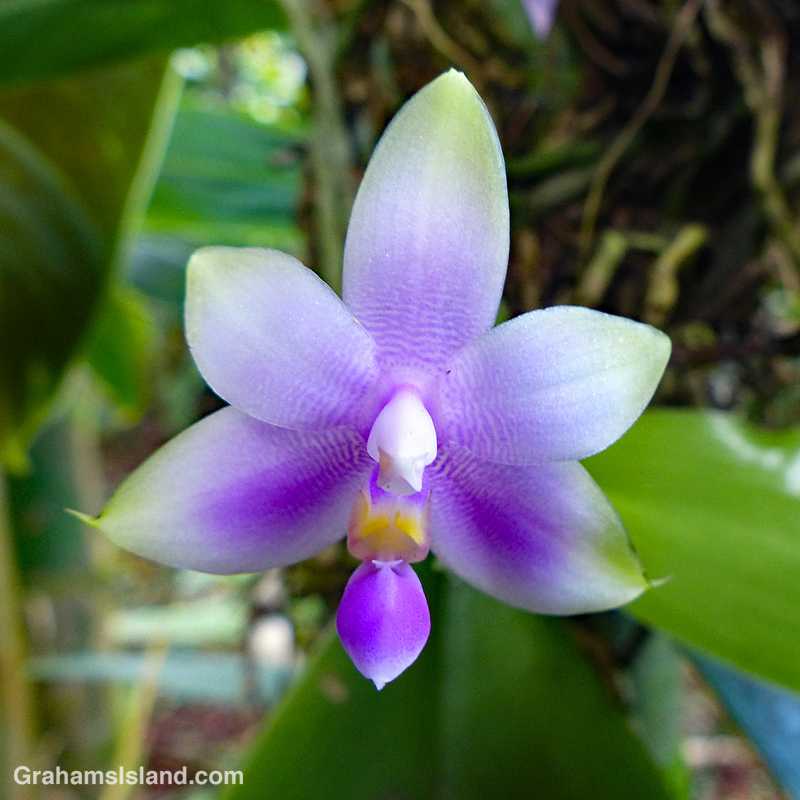
This orchid hails from Sumatra and other nearby islands. It’s notable for its small flowers, with a violet center fading to white. Some varieties, such as this one, also have green edging.
This one was at Hawaii Tropical Botanical Garden. For more information about Hawaii Tropical Botanical Garden, go to htbg.com.
This week’s Friendly Friday challenge theme is ‘Whereabouts.’ See more responses here. ‘Whereabouts’ means ‘the place or general locality where a person or thing is.’
My whereabouts are the Big Island, Hawaii, which is also the place where Captain James Cook, of the British Royal Navy, lost his life on February 14, 1779. He was killed by native Hawaiians with whom he was involved in a dispute over the loss of a cutter from one of his ships. I won’t go into a detailed history here, but more information about Captain Cook can be found at www.captaincooksociety.com/.
Captain Cook’s whereabouts were often uncertain, in that he was an explorer who visited unknown or little known places around the world. Not only did he sail to far flung places, but he made excellent, detailed maps and charts of the places he visited, which made him highly thought of in the British Admiralty, and which made it easier for future travelers to know their whereabouts.
Between 1768 and 1779 Cook made three voyages around the world. The first two focused on the search for the theorized southern super-continent of Terra Australis. The third was intended to find the Northwest Passage across the northern part of North America.
It was on this third voyage that Cook became the first European to officially visit Hawaii (as opposed to other European commercial ships that were believed to have been there before). He sailed on to the north to attempt (unsuccessfully) to fulfill his commission before returning to Hawaii.
This time he anchored in Kealakekua Bay on the Big Island (official name, Hawaii Island). He was well received, in part because his arrival coincided with a Hawaiian festival for the god Lono. After a month, Cook left to resume his voyage, but when one of his ships lost a mast, he returned to Kealakekua Bay.
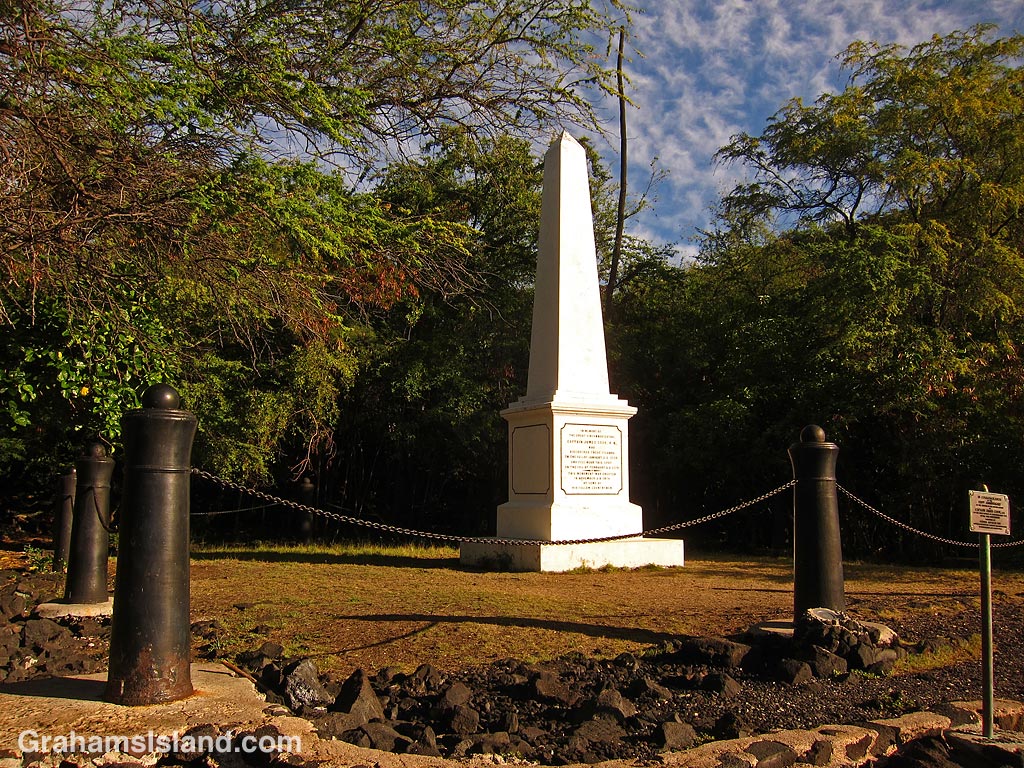
Unfortunately, by then the festival for Lono was over and his return was not greeted with the same enthusiasm. Soured relations led to several incidents culminating the theft of a ship’s cutter and the incident that led to Cook’s death. However, the killing of Cook did not diminish his standing in the eyes of the Hawaiians. In 1874, the Captain Cook monument was put in place and, in 1877, the land on which it stands was deeded to Britain by Princess Likelike as a sign of respect.
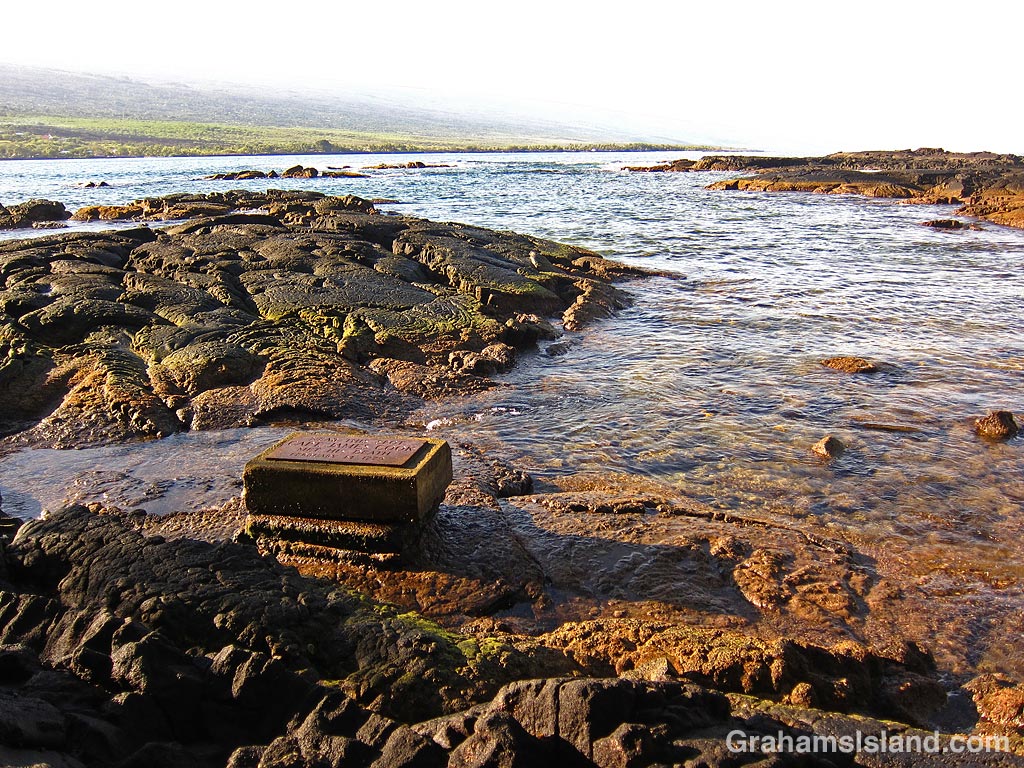
The top photo shows the monument, surrounded by a chain supported by twelve cannons from HMS Fantome. The second photo shows the inscription on the monument. I particularly like the bit about how he discovered these islands, islands which were occupied by a substantial population governed by an established royal line. The third photo is the plaque marking the spot where Captain Cook is believed to have been killed. Below is the location of that plaque in relation to Kealakekua Bay, which is the water beyond the rocks in this photo.
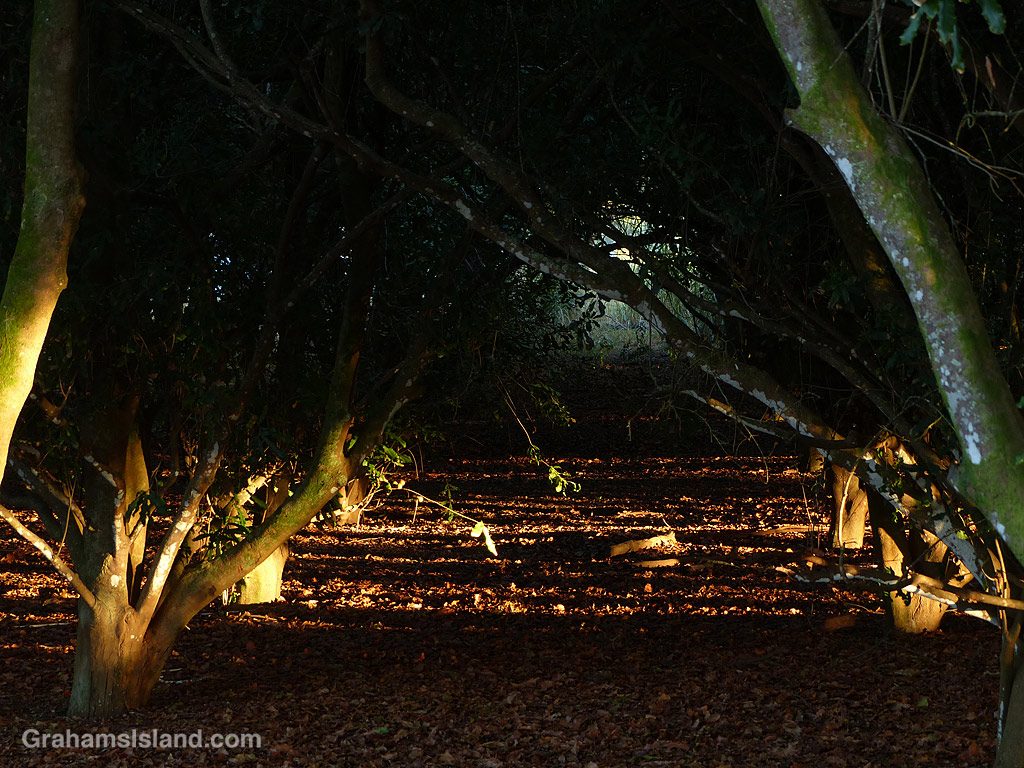
Just in time for Halloween is this photo of a neglected macadamia nut orchard. The trees have become so overgrown that no sunlight penetrates the dark interior except around sunset and sunrise, when it slants in, low to the ground.
Happily, work is underway to resurrect this orchard. While I was taking photos, workers gathering fallen nuts moved through the deep shadows, their low voices adding to the spooky nature of the scene.






 Graham's Island