Jacquemontia sandwicensis is a low-growing groundcover which requires little water and is salt tolerant, which makes it ideal for growing on the coast. The little blue or white flowers bloom year round. One of the morning glory family (Convolvulaceae), it’s endemic to Hawaii, where it’s known as Pāʻuohiʻiaka.
This is a view of an old, spherical water tank. It’s used for collecting rain water off the roof of the small building next to it. I liked the peeling paint and patina of the rust on the tank.
This week’s Friendly Friday challenge theme is ‘Mountain Top.’ See more responses here.
Mauna Kea is the highest mountain on earth, when measured from its base to its peak. It logs in at 33,476 feet, 13,803 of which are above sea level.
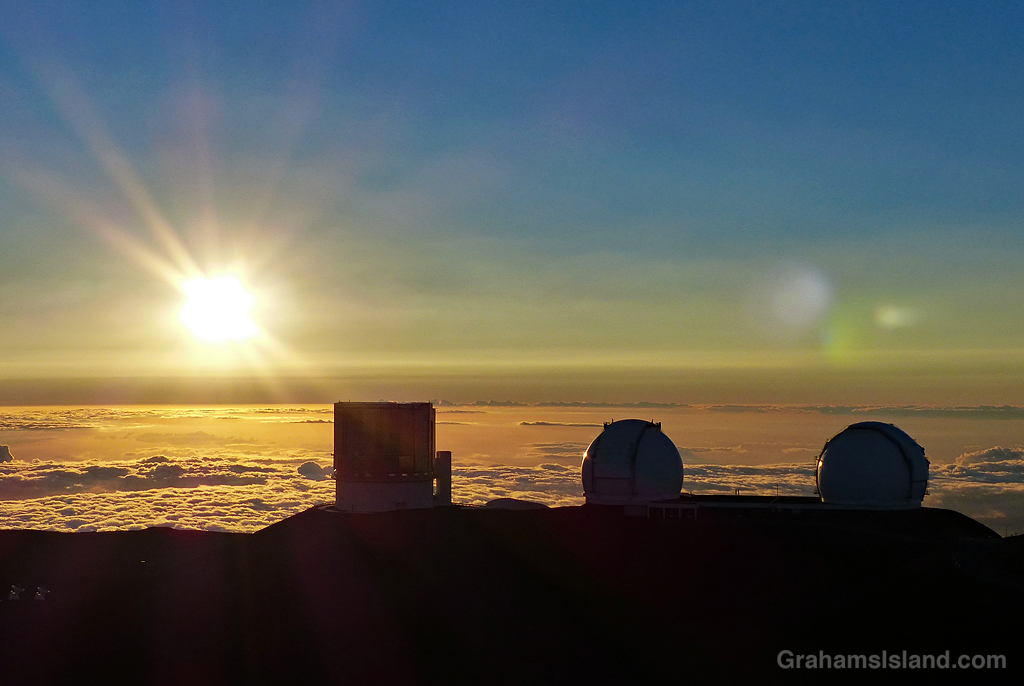
The top photo is a late afternoon view from near the summit of Mauna Kea, with the Subaru Telescope on the left and the two Keck Telescopes to the right. The top of the cloud layer lies a thousand or more feet below them, which is one of the reasons it’s such a prime site for astronomy.
The second photo is a view from Upolu, showing the summit with a lot of snow on it. While this photo was taken in February, the volcano is high enough that snow can fall at any time of year.
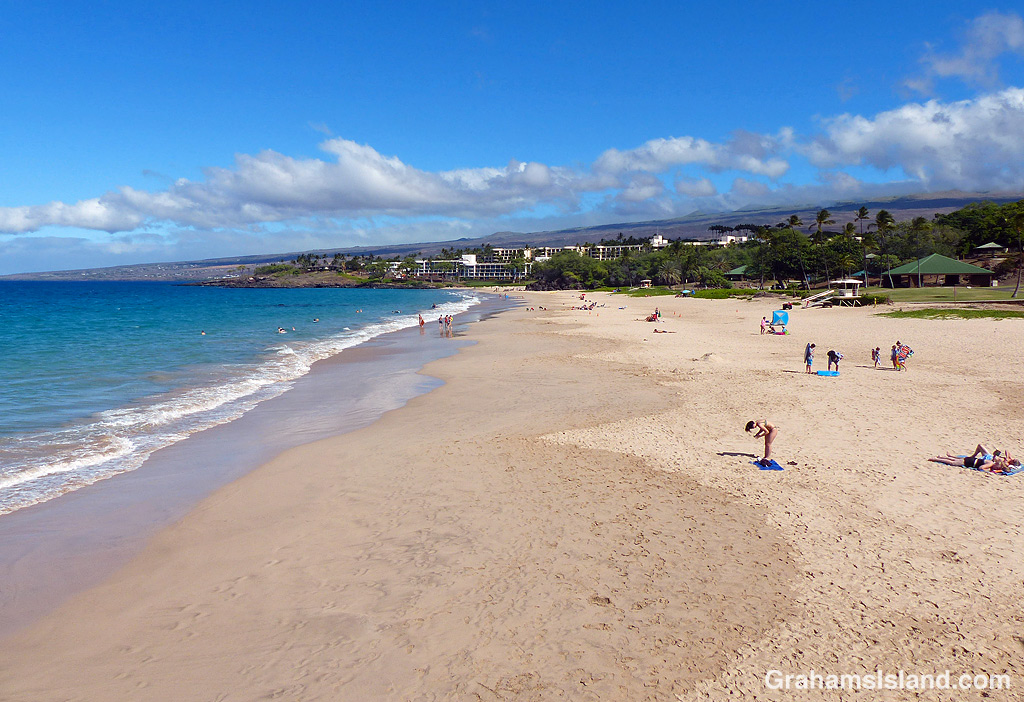
Hapuna beach under blue skies on a typically warm, sunny day.
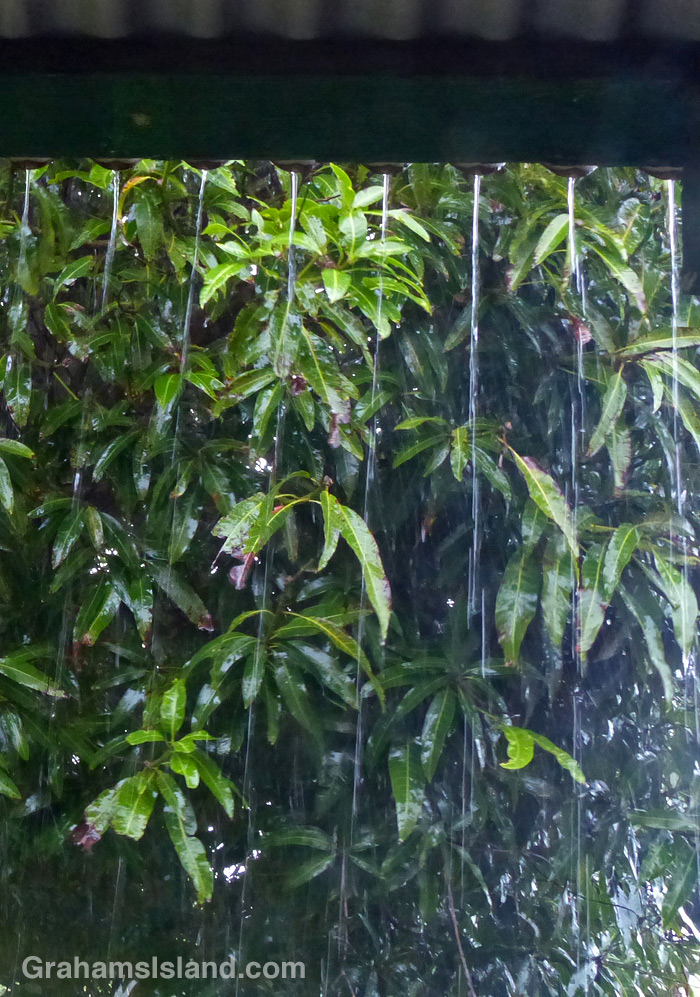
When it rains, it can rain hard.
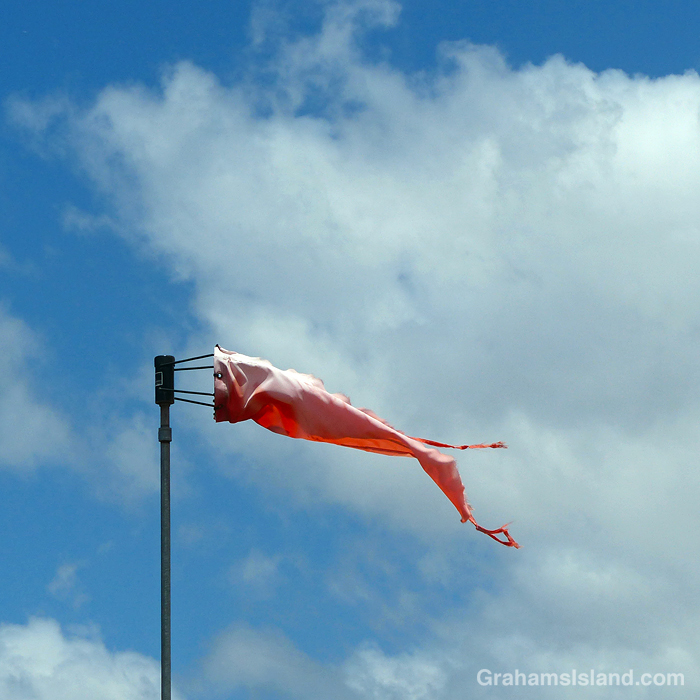
The wind and sun can be hard on things, even a windsock.
This week’s Sunday Stills challenge theme is ‘Weather.’ See more responses here. Last month, I did a post about our local weather here. Weather in one place can be very different from another place just a few miles away.
The basics are that the east side of the island is wetter and cloudier, the west side, sunny and dry. Both sides are warm, but not as hot as they might be thanks to the prevailing northeast trade winds, though they’re not as consistent as they used to be. Paradoxically, the driest places on the island are also the coldest, the summits of Mauna Kea and Mauna Loa, which are usually above the clouds.
So here are a few photos illustrating some of the varying weather we get, even if it wasn’t forecast.
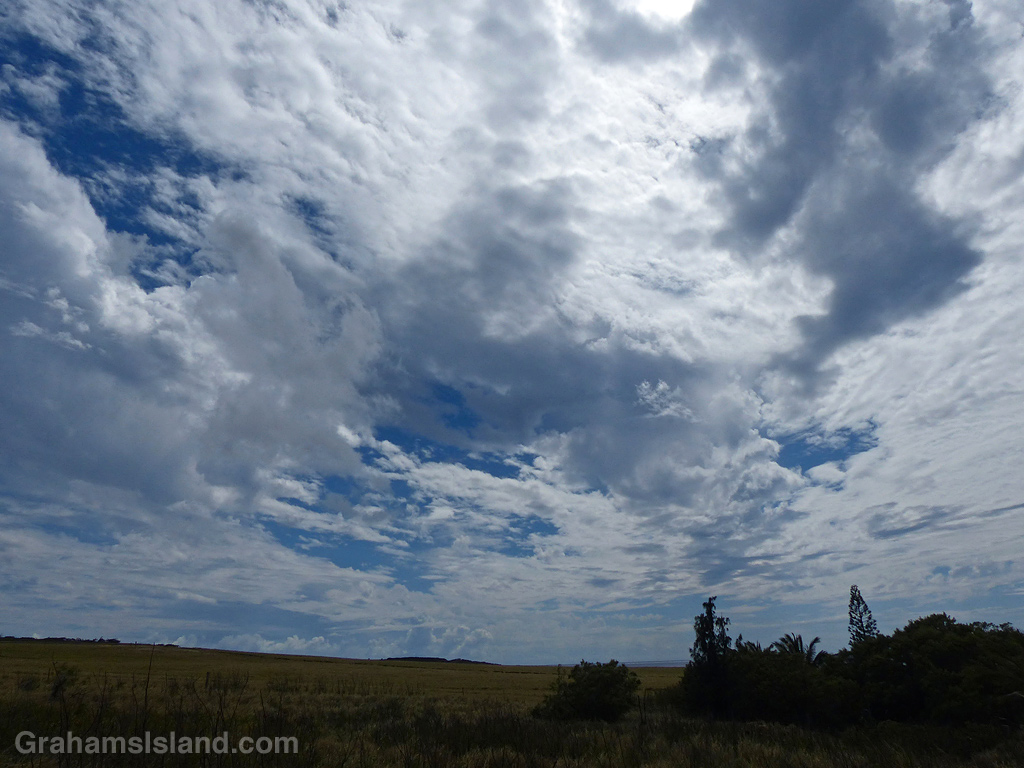
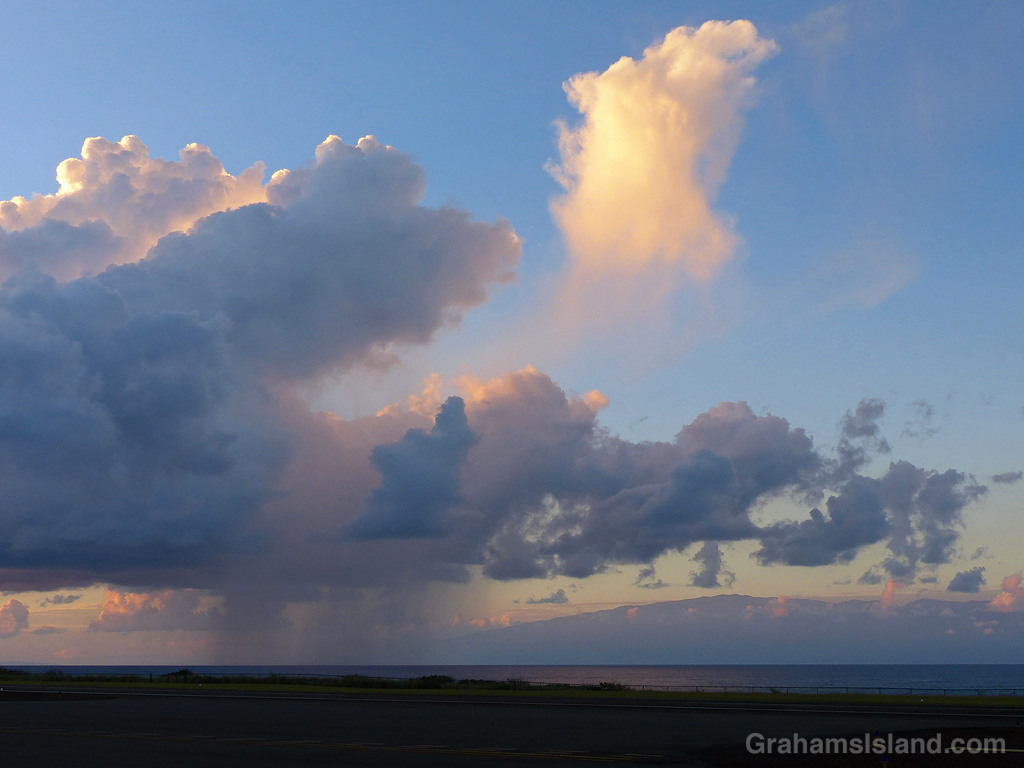
Clouds tend to build during the day, sometimes bringing rain, sometimes just the threat of it.The ʻAlenuihāhā Channel between Maui and the Big Island can be windy and wet as clouds and rain funnel through.
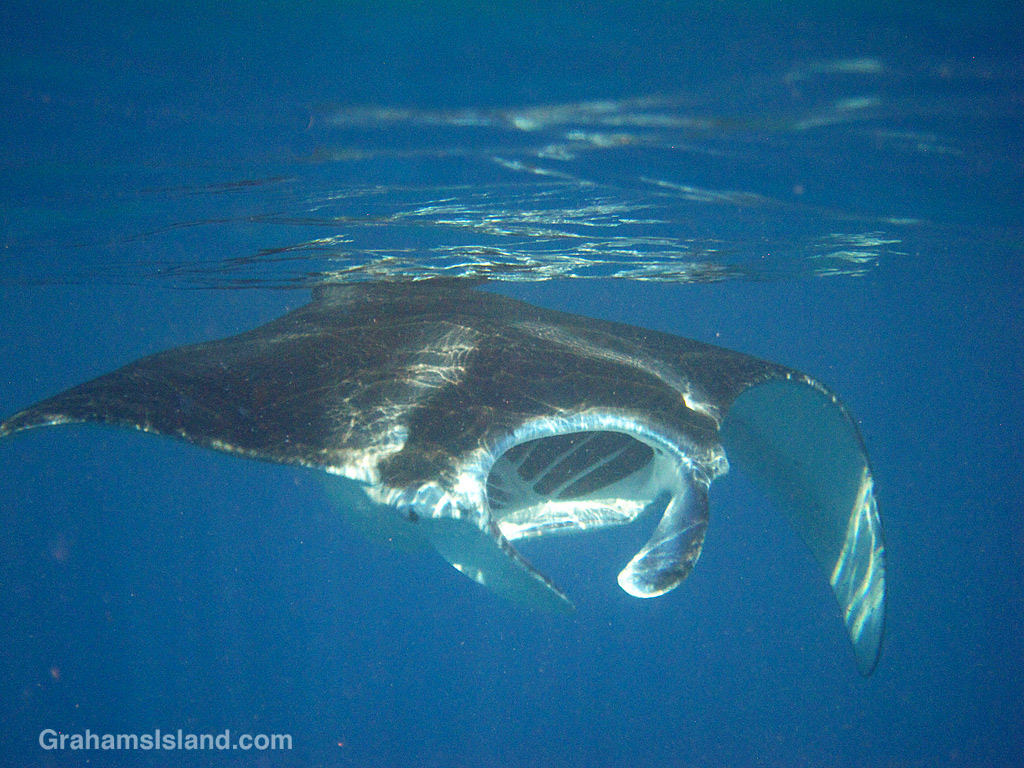
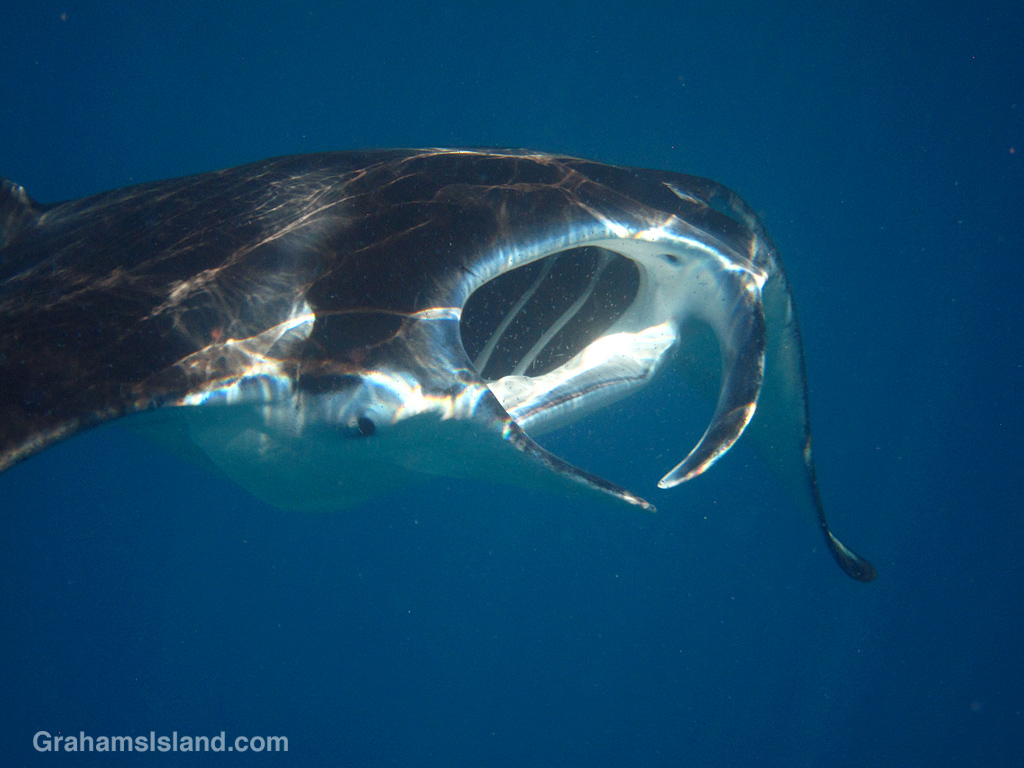
A manta ray approaches.A close up view.The spots on the underside are unique to each manta ray. This shot also gives a good view of the gill slits and cephalic flaps.
Yesterday, my wife and I went snorkeling at our usual spot. The visibility was pretty good so, on our way back, we decided to cross the bay and see how it was on the other side. The visibility got worse, not awful, but with more particles in the water.
Suddenly, I saw something large off to my left. I pointed to it and turned to my wife to see her pointing in the same direction. We’d seen this coastal manta ray at the same time. The ray was crossing in front of us and I snapped a couple of photos knowing they wouldn’t be good, but to at least have a record of the encounter.
A close up of the manta ray’s head.
The manta ray makes a turn.
The ray looked set to disappear into the murk, but then it turned and came back towards us. It passed in front of us again, turned again. Back and forth the ray went. On different occasions, it went by so close in front of each of us that we could have reached out and touched it. It was clearly as curious about us as we were entranced by it. Finally, it made one last pass and seemed to wave at us as it receded into the distance.
Mutual curiosity as manta ray meets snorkeler.The water was quite murky, so more distant photos show suspended particles.
The manta makes a dive and turn.
This was a smaller ray with maybe a 6- to 8-foot wing span and most of this time it was swimming near the surface, so we got great views of it. Manta rays are plankton feeders and have no poisonous spines so they’re amongst the least dangerous creatures in the ocean. I hadn’t seen one since last August so this made the occasion even more special for me.
After it left, we headed back in. It would have been hard to top that encounter.
Finally, the manta waves goodbye as it heads out into deeper waters.
This was going to be my last response to Becky’s April Squares challenge, but I punted it back a week. These are the beautiful, bright flowers of hibiscus tiliaceus, which is known as hau in Hawaii. It’s a canoe plant, brought to Hawaii by the early Polynesians, who used the wood in their canoes and the bark for cordage and medicinal purposes.
The flowers only last for a day, starting out yellow and becoming orange and then red as the day wears on. As the lower photo shows, different colored blooms can often be seen on the same plant depending on where they are in this progression. These were at Kohanaiki Beach Park.
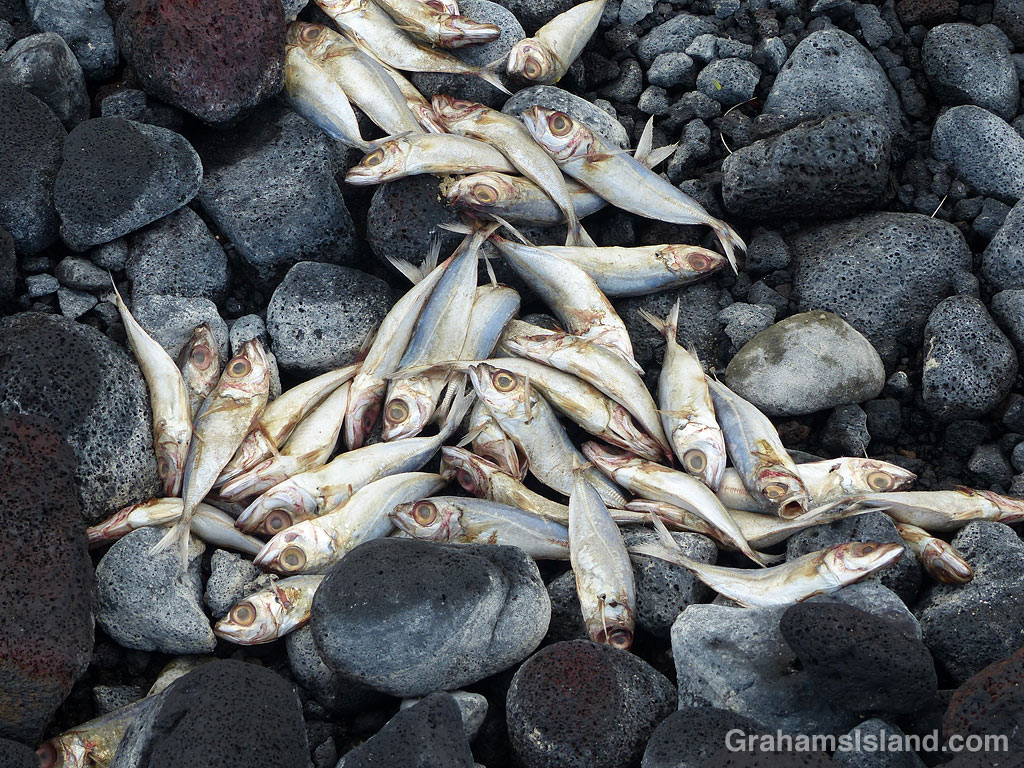
On a walk at Kiholo, I noticed a bit of a ripe smell in the air. When I got to the top end of the lagoon I found the reason for it. The shoreline was littered with clumps of these dead fish. There must have been several hundred of them all told. I don’t know the reason for the stranding, but the scene reminded me of images of fish markets or still life paintings.