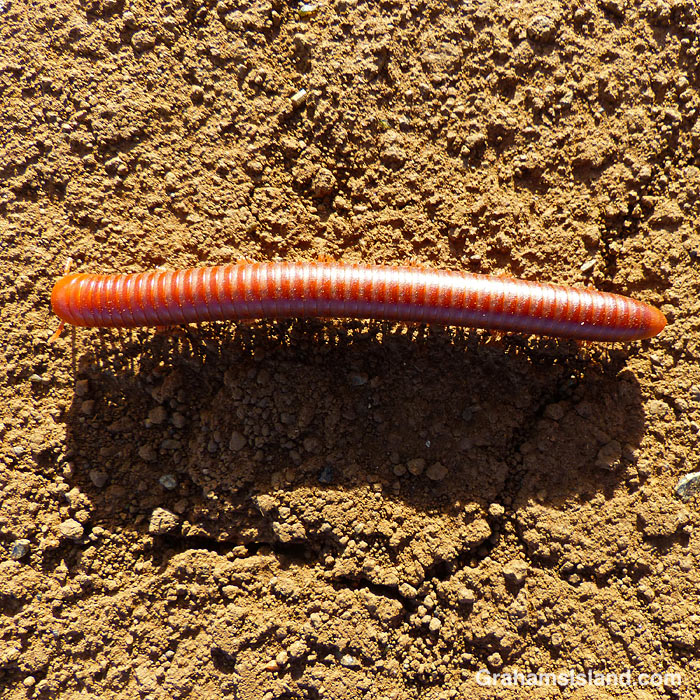
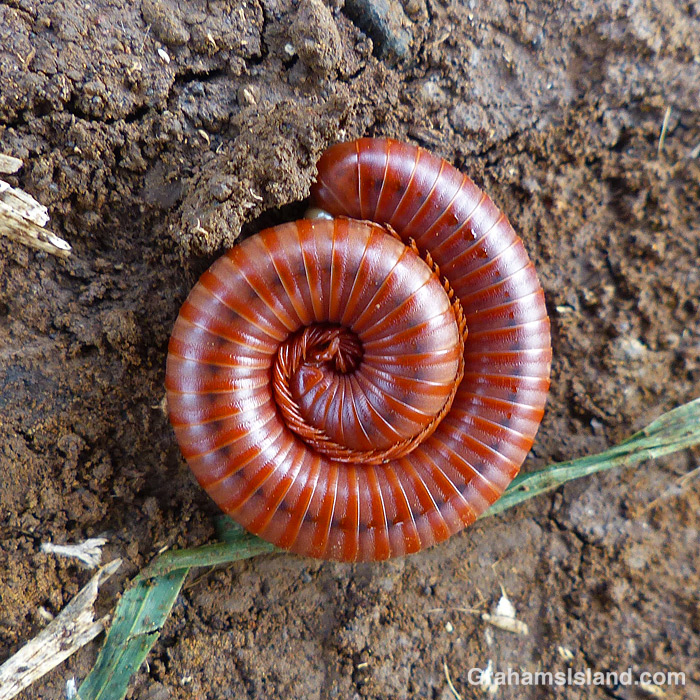
It’s run before but it’s possibly my favorite shadow photo, a Rusty Millipede crossing a dirt road late in the afternoon.
Posted for Becky’s Squares: Shadows. See more responses here.

It’s run before but it’s possibly my favorite shadow photo, a Rusty Millipede crossing a dirt road late in the afternoon.
Posted for Becky’s Squares: Shadows. See more responses here.

The idea of The Numbers Game is to enter a number into the search bar of your computer and then post a selection of the photos that turn up. This week’s number is 216. Captions are on the photos. You can see more responses here.




Centipedes have a modified pair of front legs behind the head, through which they inject their venom, so they don’t really bite, but sting. I have yet to be stung by a centipede, he says tempting fate, but I’m told that it’s extremely painful regardless of the size of the centipede.
This little centipede, which I was happy to spot outside the house, was probably no more than an inch long. But I was taking no chances and ushered it away from the house without getting too up close and personal.

I think this little millipede is one of the Spirobolellus species. I don’t see them often but they’re not uncommon. This one has a white and purple striped look and, of course, a whole lot of little legs.
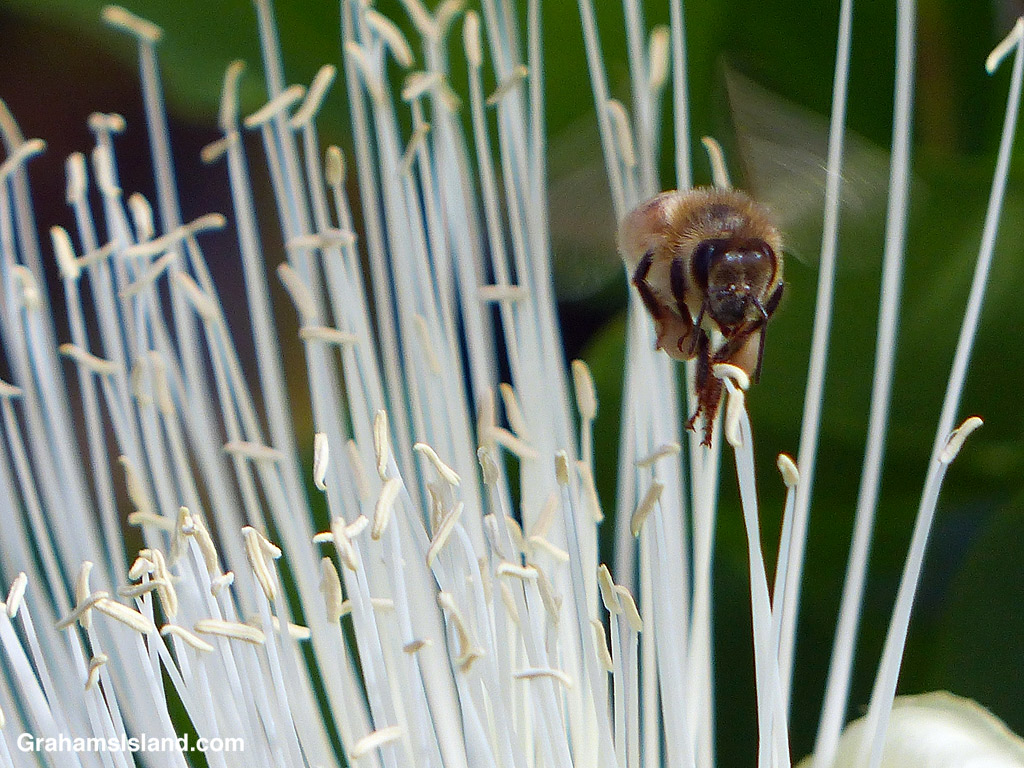
This week’s Sunday Stills challenge theme is ‘Summer Bugs.’ (See more responses here.) To the best of my knowledge, Hawaii’s bugs are pretty much the same year-round. Here are some of them.
The top photo shows a bee showing impressive balance on a maiapilo flower.
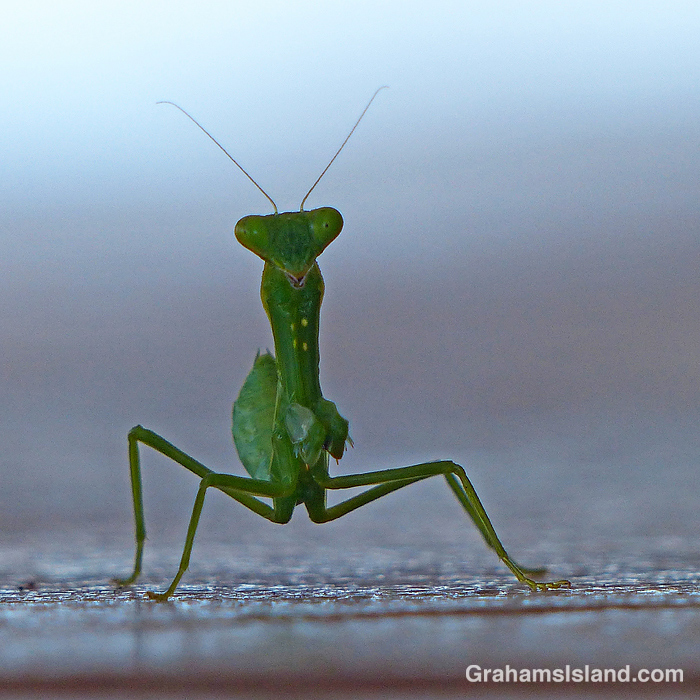
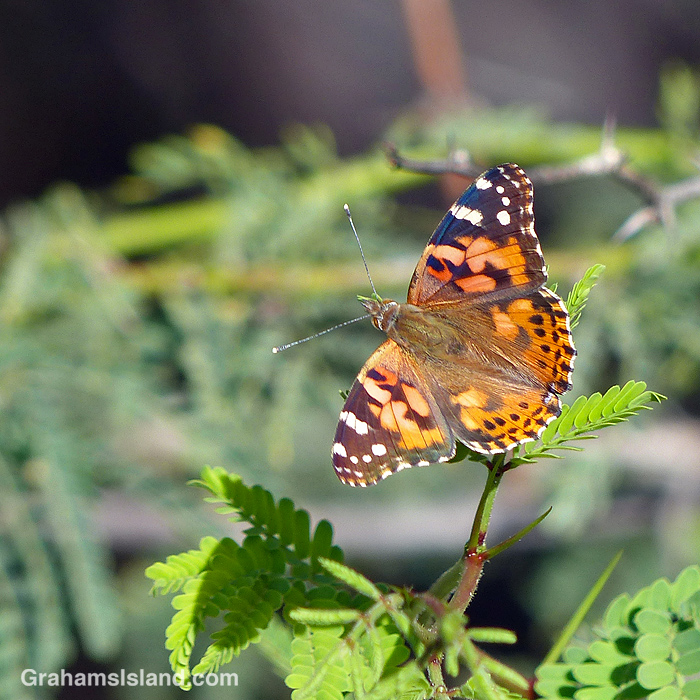
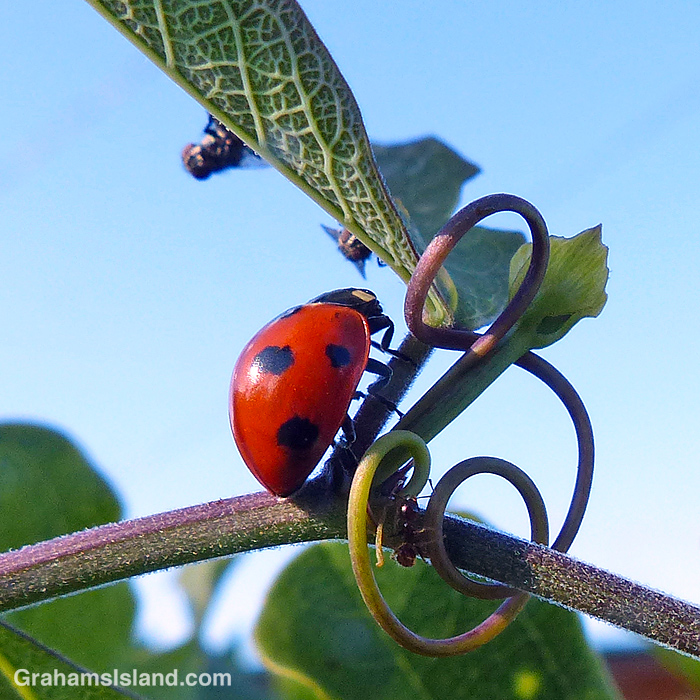
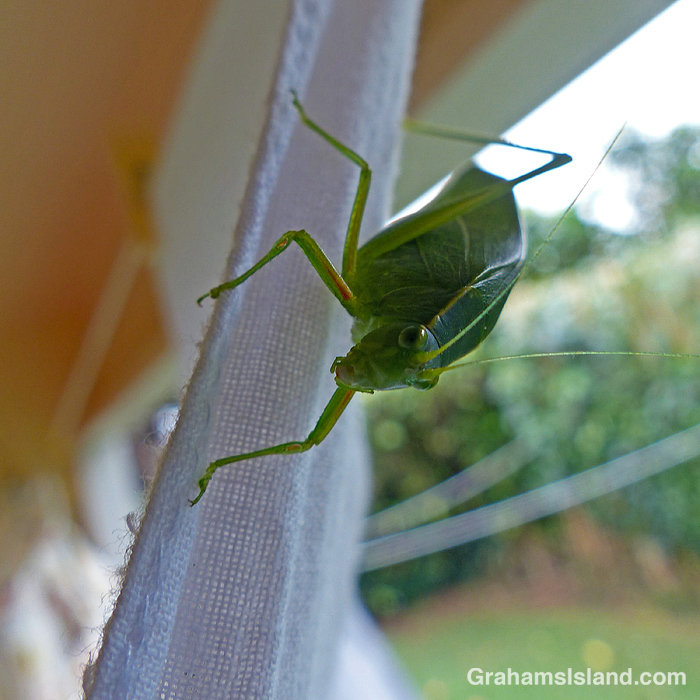
Next up, clockwise from top left: Getting down to eye level with a juvenile praying mantis. A painted lady butterfly on a kiawe tree. A katydid wondering what it’s done to deserve this much attention. A seven-spotted lady beetle being watched.
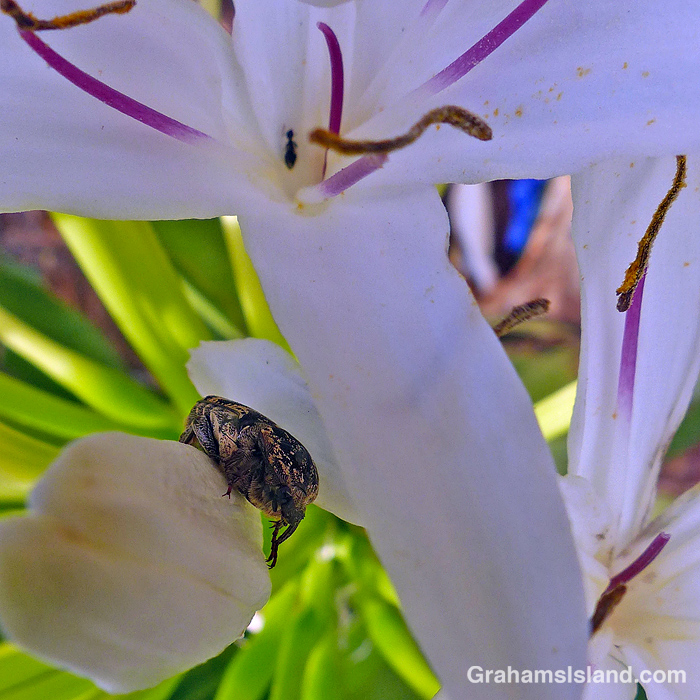
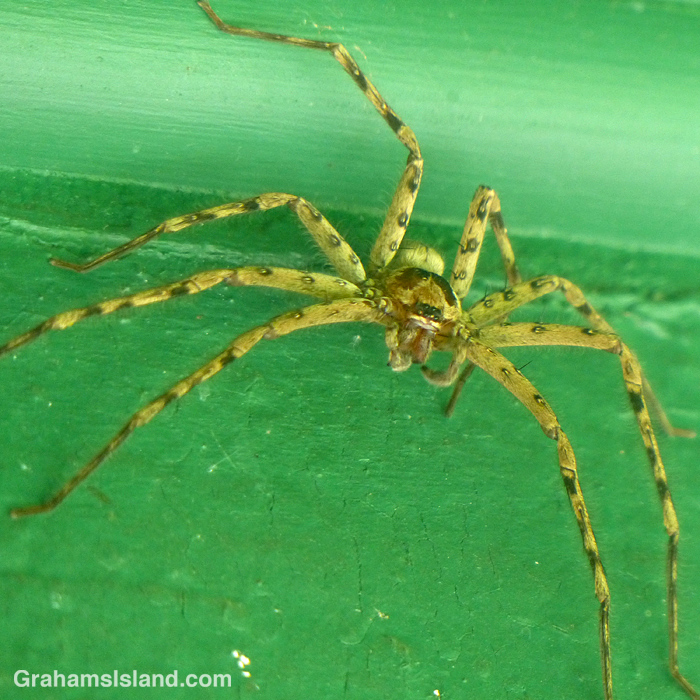
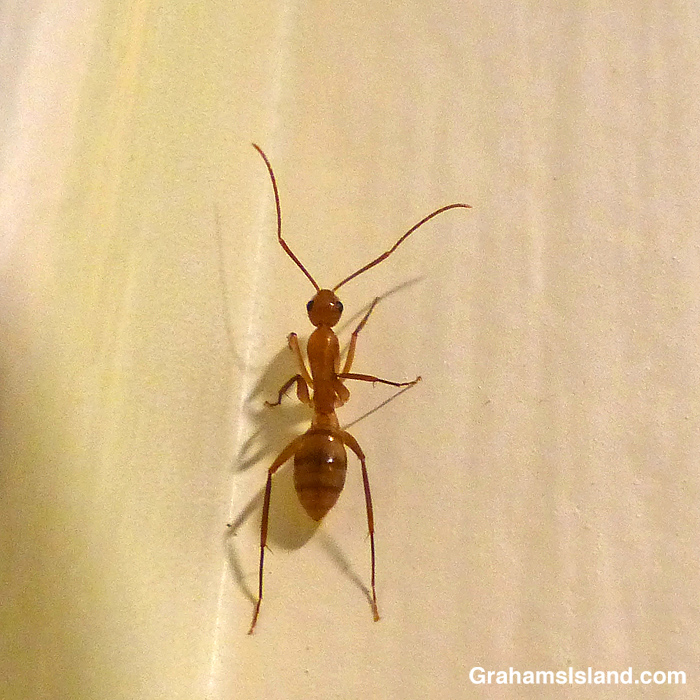
The final gallery: Top left: A mango flower beetle explores a spider lily. Top right: A watchful cane spider wondering if it should run, very fast, away. Bottom left: A Hawaiian carpenter ant (Camponotus variegatus), one of too many that have taken up residence in the house. Bottom right: A rusty millipede deciding that it’s all too much!
This week’s Sunday Stills challenge theme is ‘Oldie-but-Goodie or Favorite Photo.’ (See more responses here.)
This seemed like a good opportunity to run a few of my favorite photos from the first year of this blog.





I saw this pair of rusty millipedes mating on a dirt road. The male is on top and can be identified by a gap in his legs at his seventh body segment. The legs have been replaces by gonopods, the male’s sexual organ which he uses to transfer sperm to the female. The sperm comes from gonopores which are located in the third segment of the body, and it must be moved to the gonopods before mating.
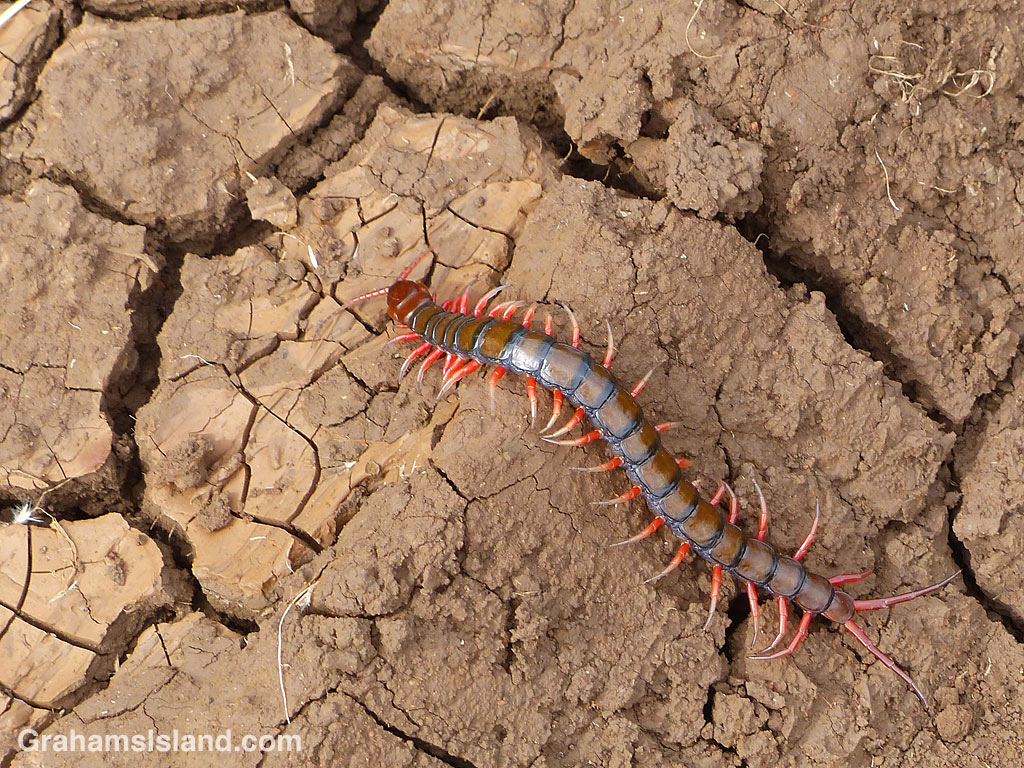
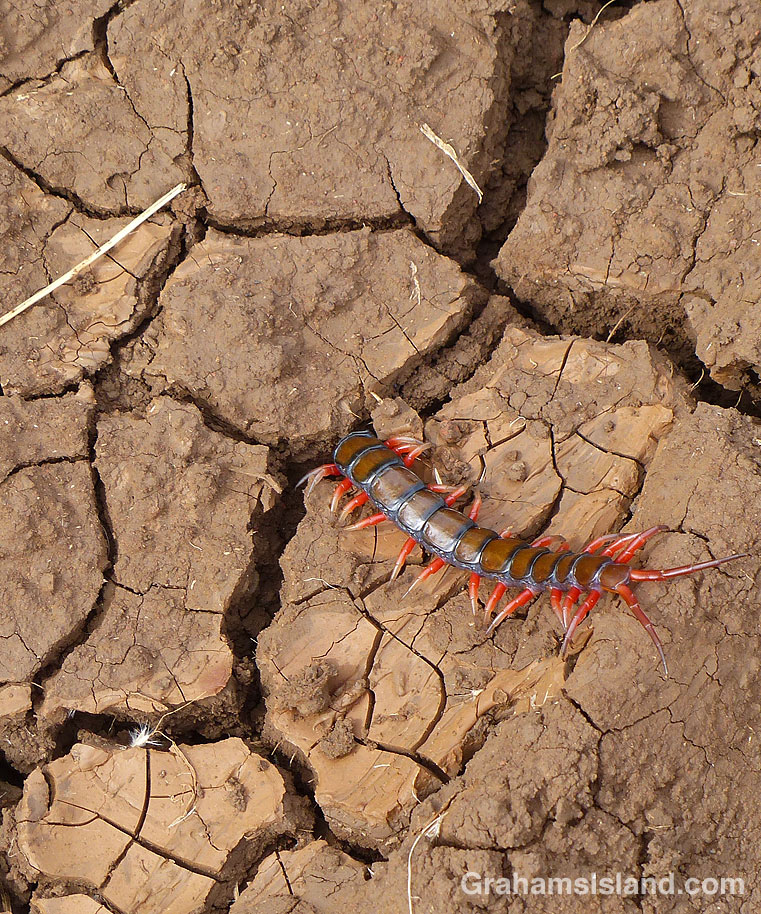 This centipede (Scolopendra subspinipes) is also known as the Vietnamese centipede, Asian forest centipede, and Chinese red-headed centipede, among other names. Some of these names are unprintable when uttered by someone who has just been bitten by one. The bite can cause extreme pain and can be dangerous if a person is allergic to the venom, but is not generally considered life-threatening.
The venom is delivered through a pair of modified legs, known as forcipules, located just behind the centipede’s head. For this reason, it’s useful to figure out which end is the head, but this isn’t always immediately apparent, as both ends have some similarity in appearance.
The centipede is the alpha creepy-crawly here in Hawaii. This one was about five inches long, but they can be much longer. (For anyone who has the nerve to read a story — and see a photo — about one of these that measured in at 14.5 inches long, click here.)
This was a good place to spot this centipede, outdoors on a dirt road. There are few worse feelings than spotting a centipede in the house, scurrying across the floor (they move fast), and disappearing into a tiny, inaccessible crack. This means that a general understanding that centipedes live in and around dwellings is replaced by the certain knowledge that there’s one in the same room.
Since most bites occur from unexpected encounters, such as when a centipede has crawled into someone’s shoe, or in a towel, or made itself comfy in a bed, when I see a centipede inside, I usually become more vigilant for a while.
I haven’t been bitten yet, but I know the chances are it won’t happen when I see a centipede, or when I’m being vigilant. It will be when I’m engrossed in something, such as writing on my computer, and I lean back and wonder, in a last moment of innocence, ‘what the heck is that tickling my neck?’ Aaaaaaargh.
 Graham's Island