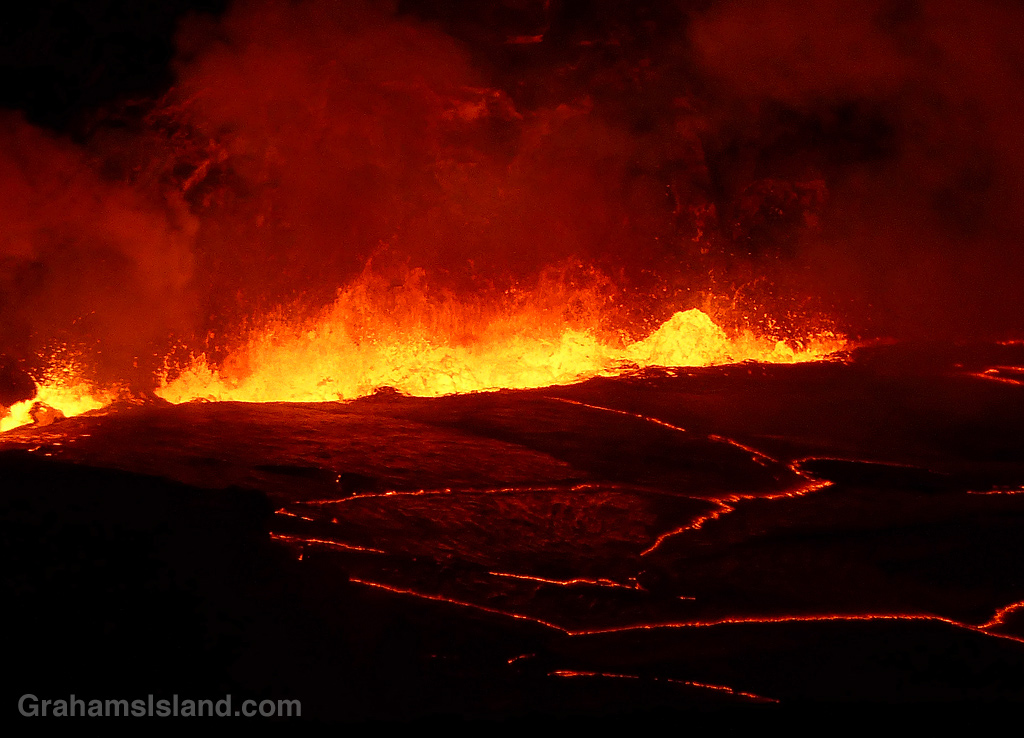
The idea of The Numbers Game is to enter a number into the search bar of your computer and then post a selection of the photos that turn up. This week’s number is 145. Captions are on the photos. You can see more responses here.
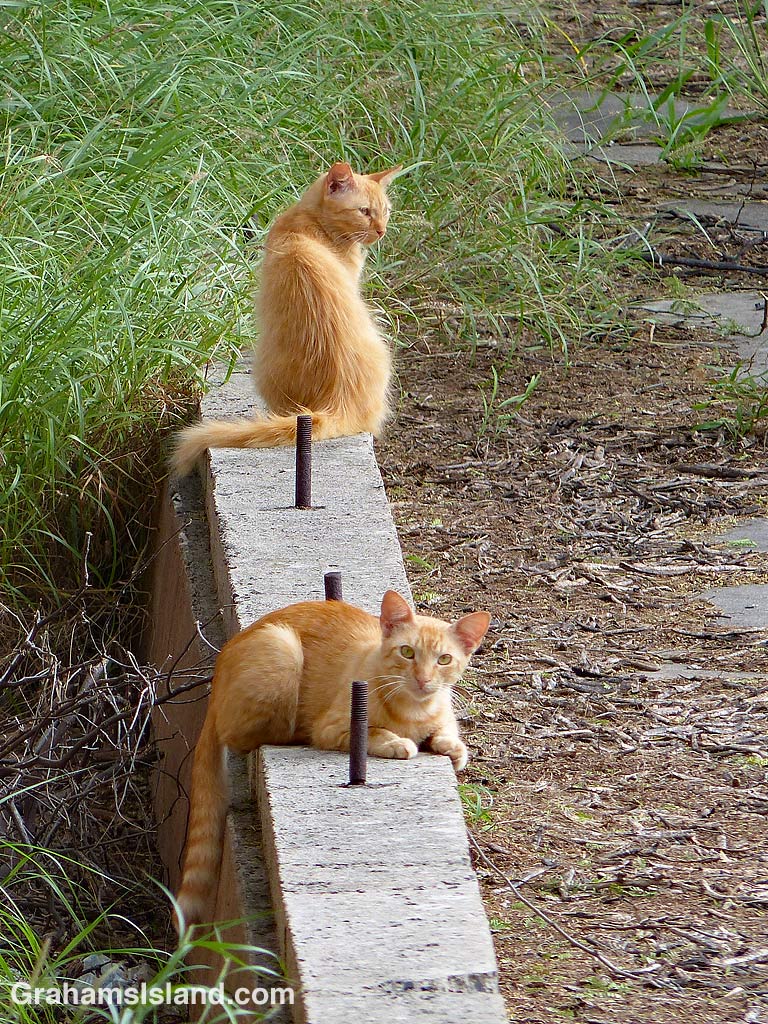
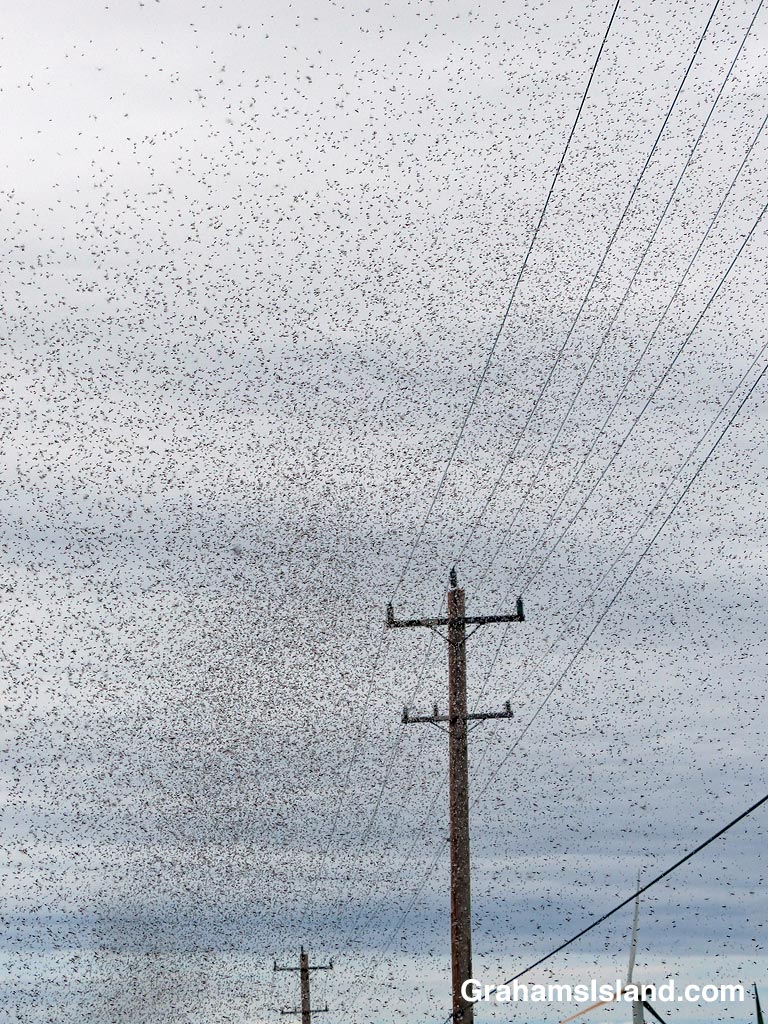
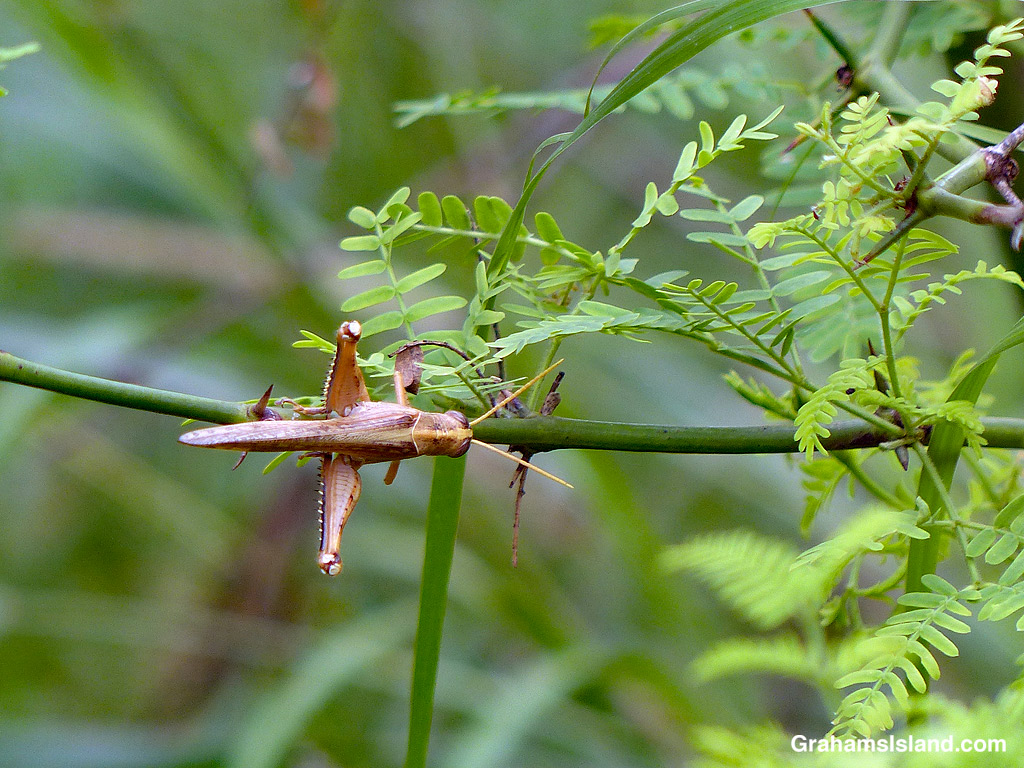
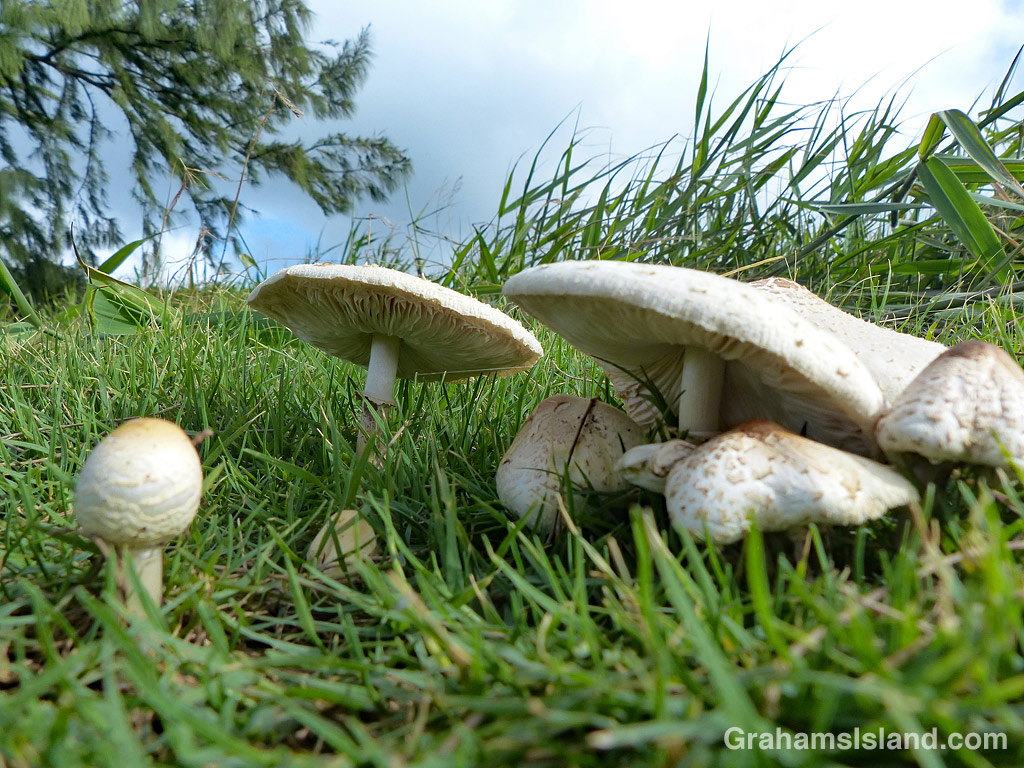
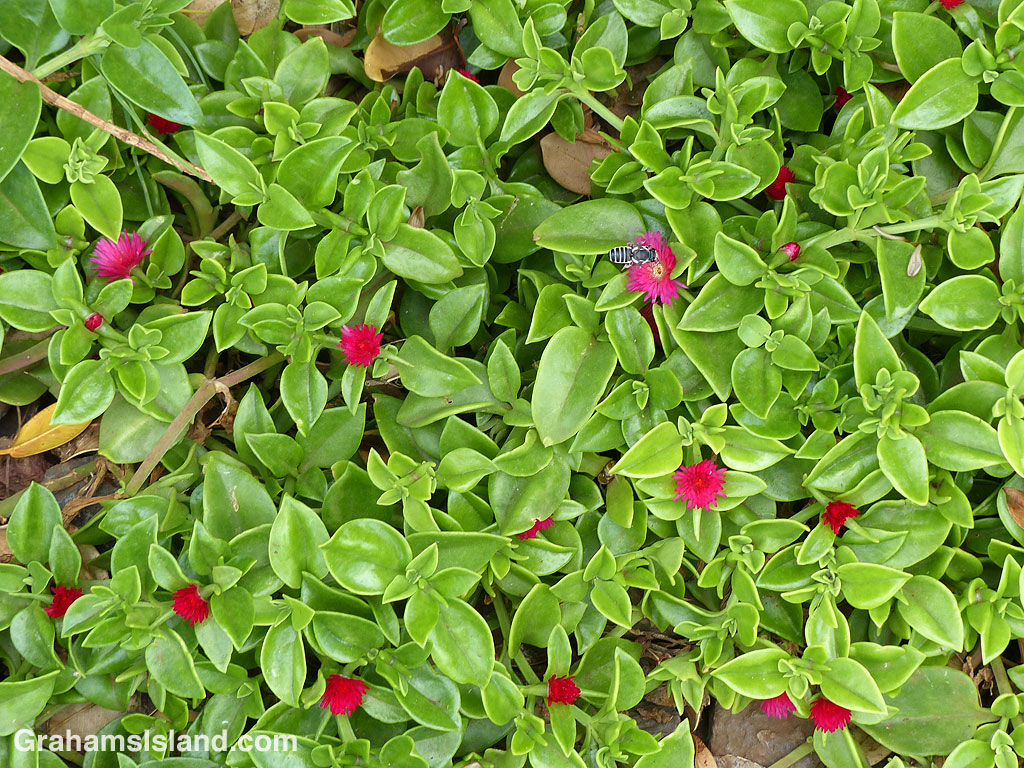


The idea of The Numbers Game is to enter a number into the search bar of your computer and then post a selection of the photos that turn up. This week’s number is 145. Captions are on the photos. You can see more responses here.

The idea of The Numbers Game is to enter a number into the search bar of your computer and then post a selection of the photos that turn up. This week’s number is 139. Captions are on the photos.
You can see more responses here.

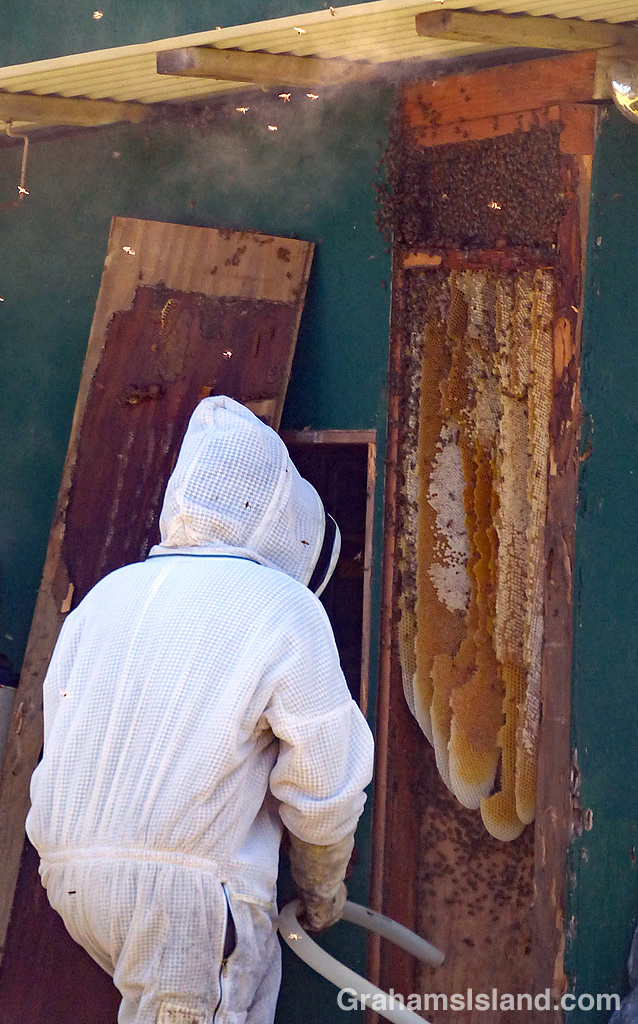


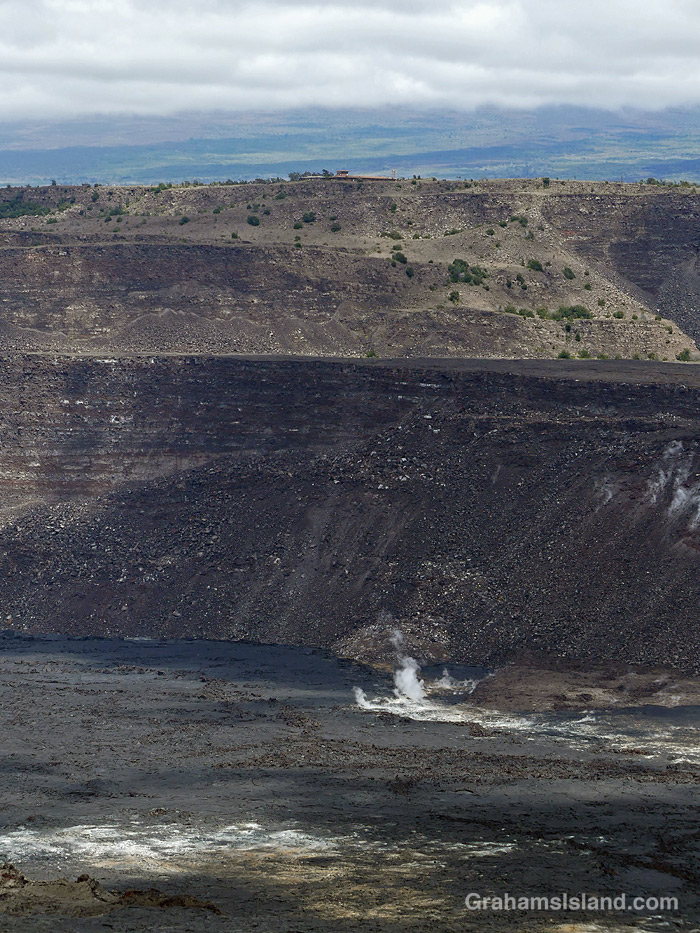
This week’s Sunday Stills challenge theme is ‘Earth Day.’ See more responses here.
My brother has been visiting from England and, a few days ago, we went down to Hawaii Volcanoes National Park to check out the scene. The volcano’s last eruption ended in September 2023, and it’s been mostly quiet since then.
We arrived to find the volcano socked in with clouds, but the next morning the skies had lifted and we got some great views. We started at Uēkahuna, a viewing area next door to the Jaggar Museum. The viewing area used to be at the museum, but that was badly damaged during Kilauea’s 2018 eruption and is currently in the process of being removed.
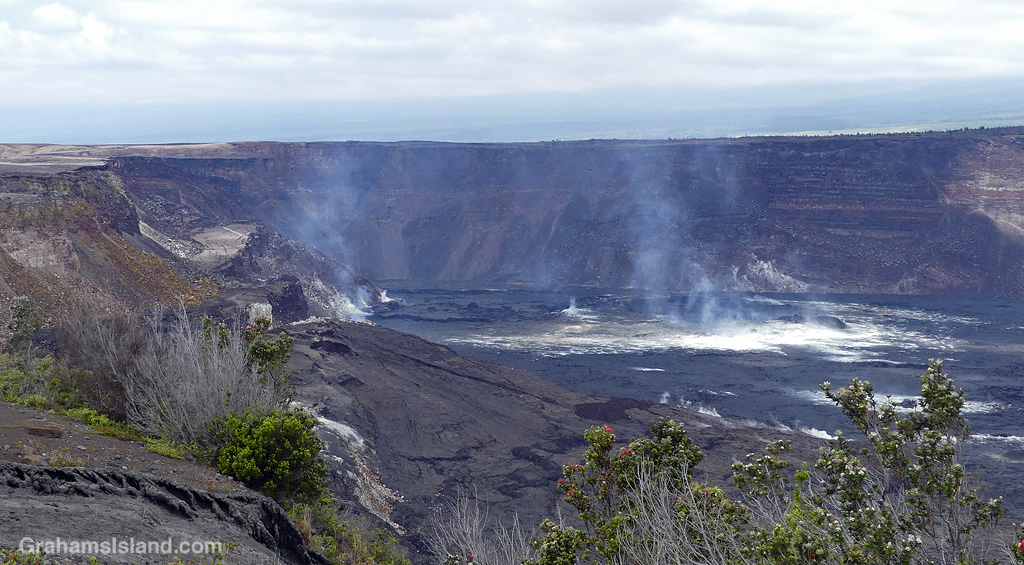
Halemaʻumaʻu crater is a pit crater within the larger Kilauea caldera. By the end of that 2018 eruption, the crater floor had collapsed into a deep pit. A small lake formed at the bottom, but that was boiled away and covered in the next eruption. Subsequent eruptions have continued this process of filling the collapsed pit. I hadn’t been down to view this area for quite a while and I was surprised at how much had been filled in. The whole floor was easily visible from the many viewpoints around the caldera, and while there’s no active lava to be seen, there’s plenty of steam rising.

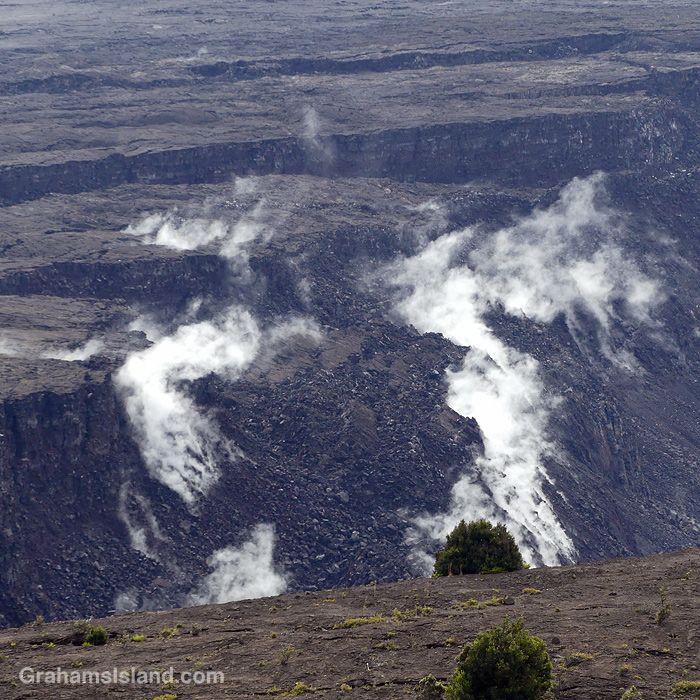
Ironically, yesterday I got an email from the U.S. Geological Survey announcing that ‘Increased seismicity over the past three weeks, indicates heightened activity. Updates will be provided daily while at a heightened state of unrest.’ In other words, watch this space!
For more information about Hawaii Volcanoes National Park, go to nps.gov/havo/.
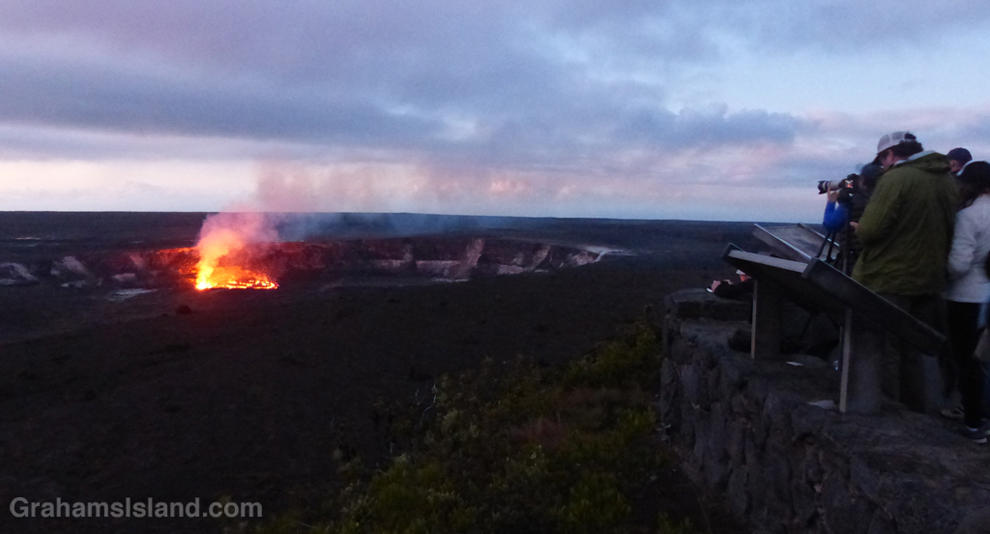
This week’s Sunday Stills challenge theme is ‘Iconic Places and Spaces.’ See more responses here.
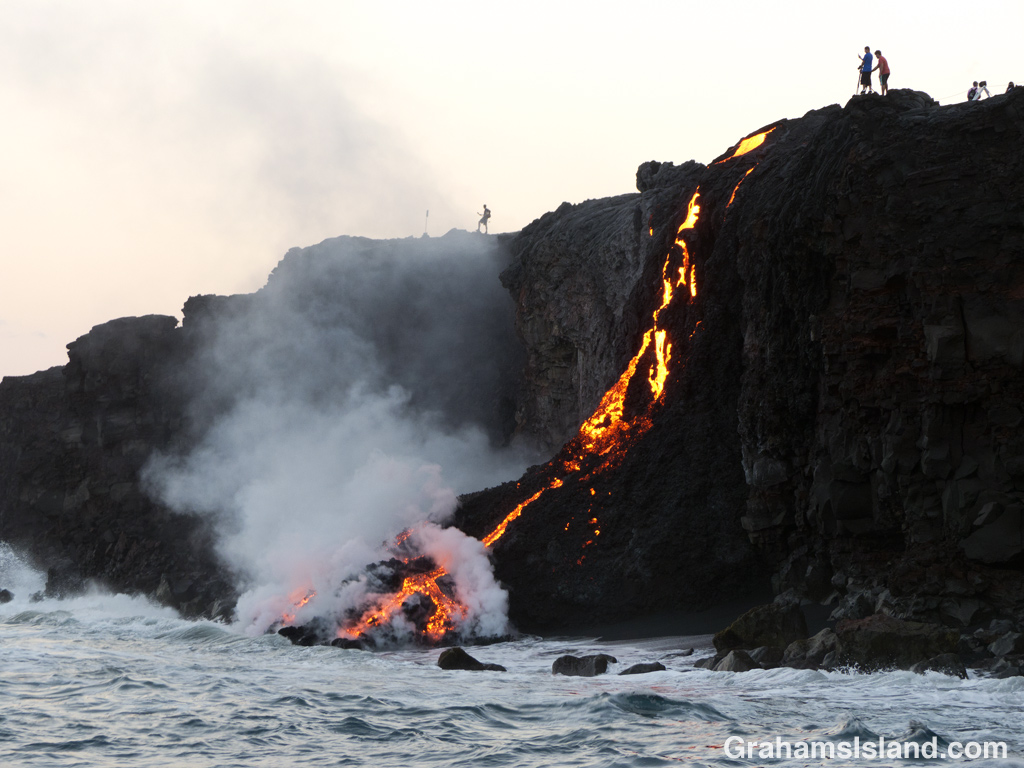
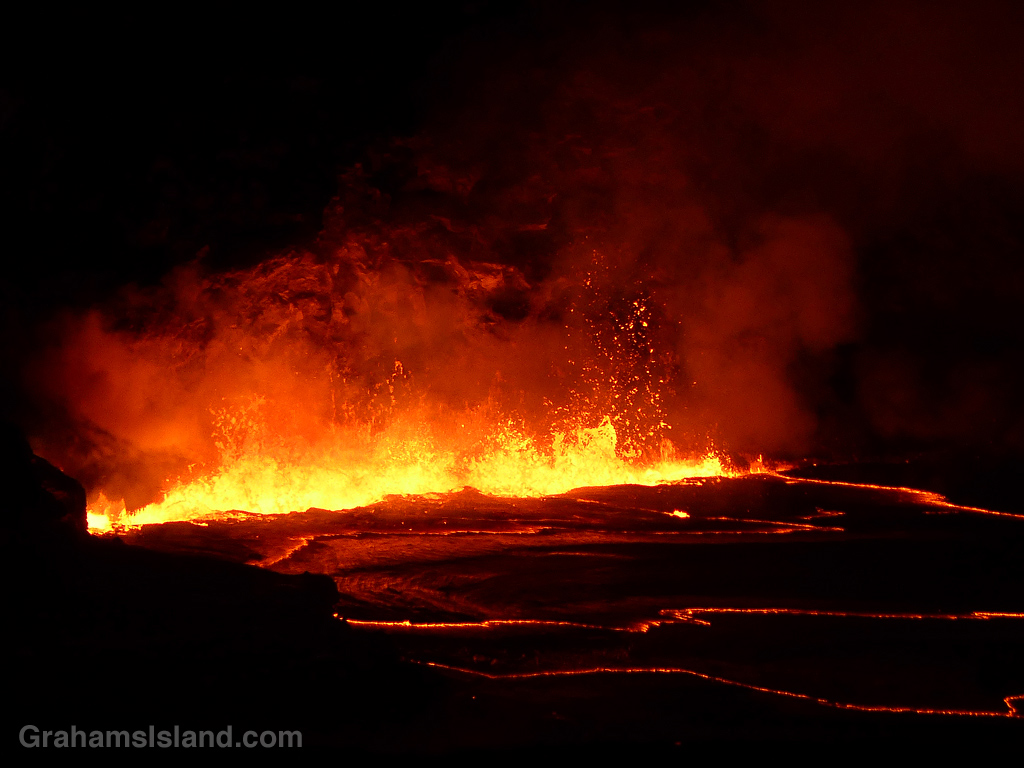
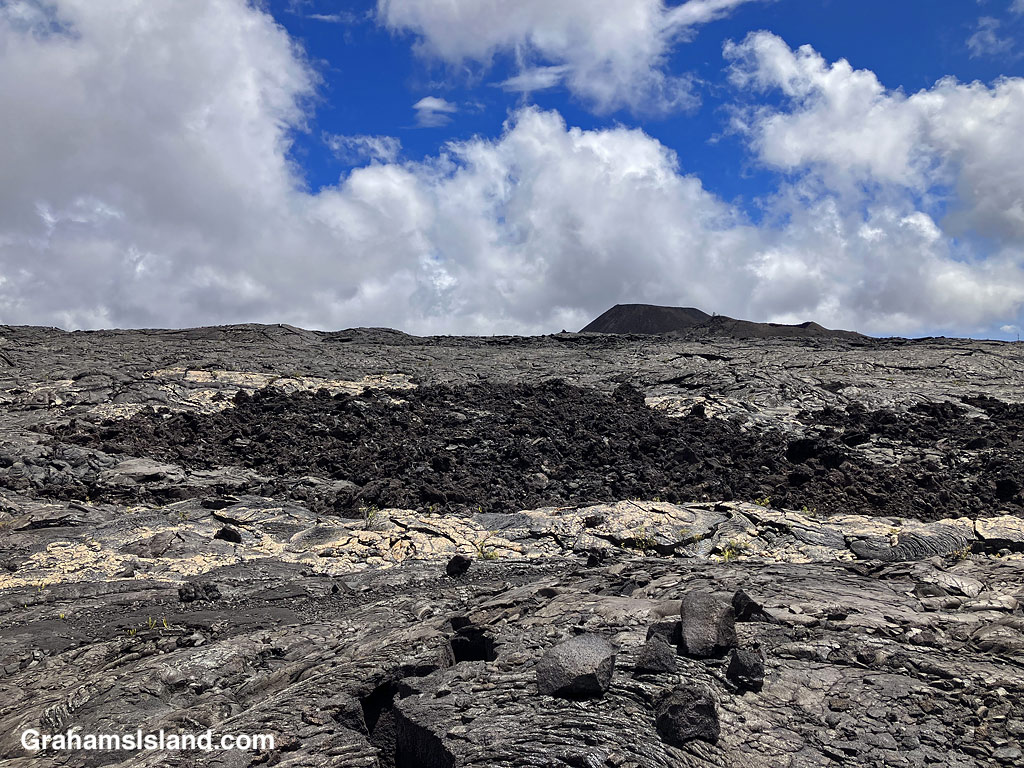
I wasn’t sure what to post for this, but Kilauea is about as iconic as anything on the island, so I thought I’d post some photos from volcanic activity that I’ve seen since I moved here. Captions on the photos with a link to the original post.


This week’s Sunday Stills challenge theme is ‘I’d Rather Be…’ See more responses here.
It had been a while since I went hiking, for various reasons, and it’s something I was missing, something I’d rather be doing. So last week, I headed down to Hawaii Volcanoes National Park to try the Ka’u Desert Trail. This backcountry trail has been on my list for a long time, but I had never done it before. For one thing, it’s about as far from my house as one can get on the island. For another, it’s directly downwind from Kilauea Volcano, so when the volcano is active and the trade winds are blowing, gasses blow across the length of the trail.
The latest eruption of Kilauea is currently either paused or over, so gas emissions are much reduced, and last week, the trade winds had given way to winds from the southwest. So off I went.


The trailhead is several miles west of the main entrance to the park, with a strip of parking along the highway. The first mile of the hike is also known at the Footprints Trail. It’s a sort of paved path that threads through ohias to a small building that houses footprints left by early Hawaiians in volcanic mud and ash. Alas, I couldn’t identify any footprints in the display. Shortly after the footprints, the path breaks out of the vegetation into open lava fields. This isn’t a tropical Hawaii walk, this a bleak hellscape Hawaii walk. Or is it?

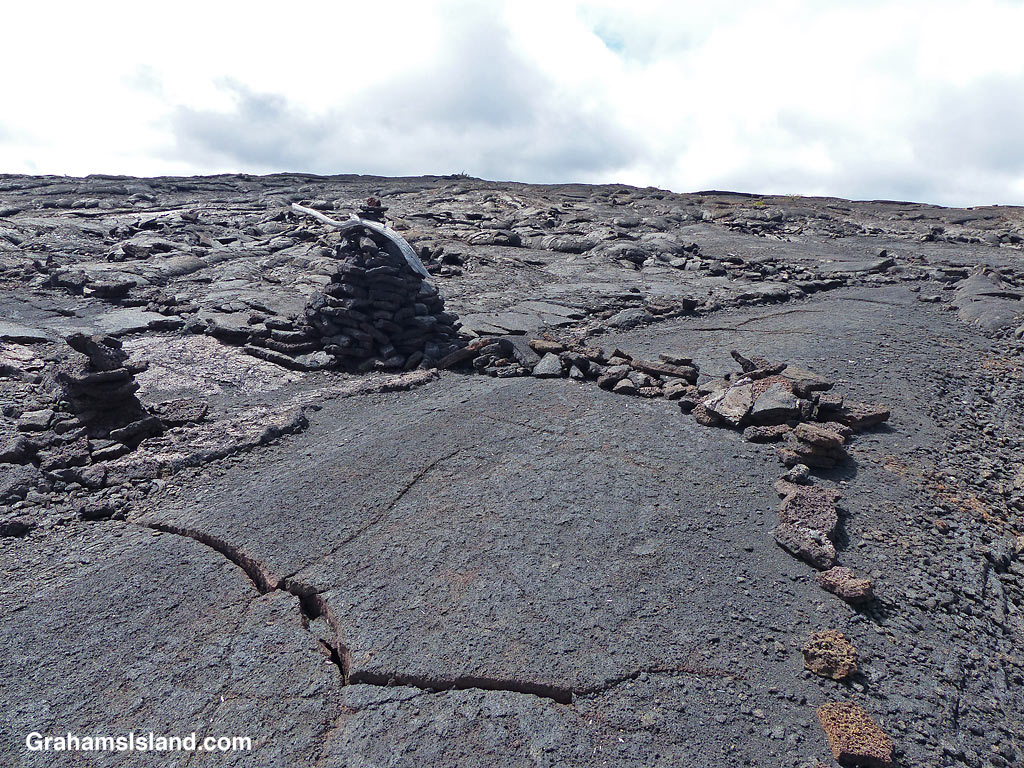
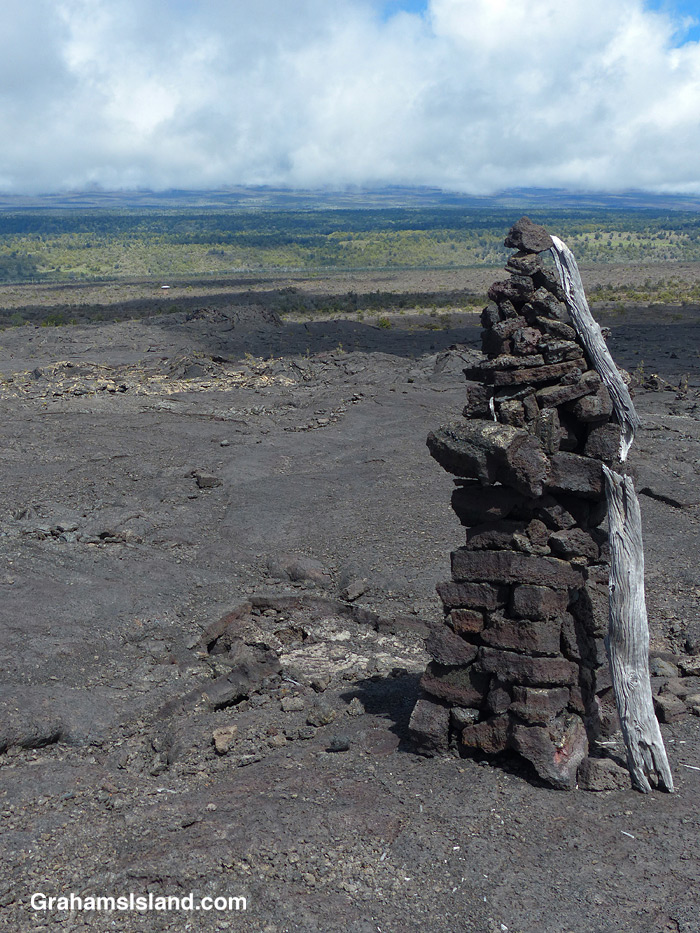
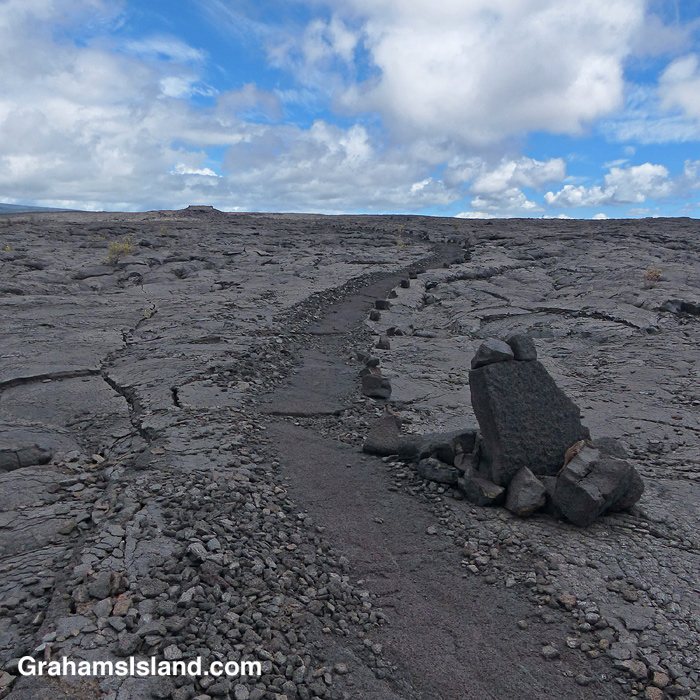
The trail ascends gently to the only junction for miles around, at Mauna Iki. To the left is a trail back towards the heart of the park. The Ka’u Desert Trail heads to the right and into backcountry wilderness. Mauna Iki was the site of an eruption in 1919 and the trail traverses the lava fields from this eruption.
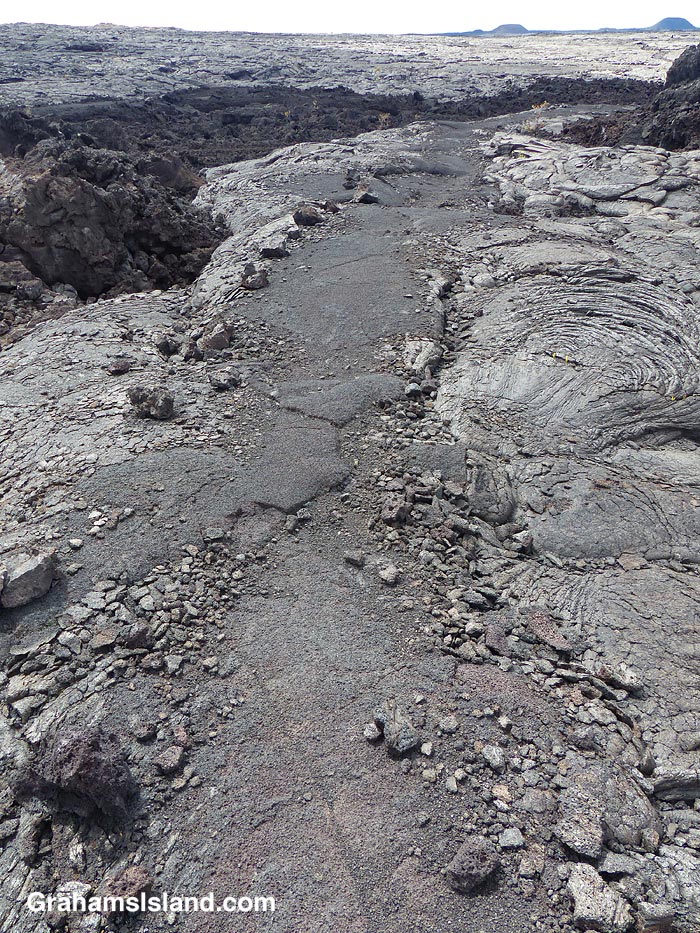

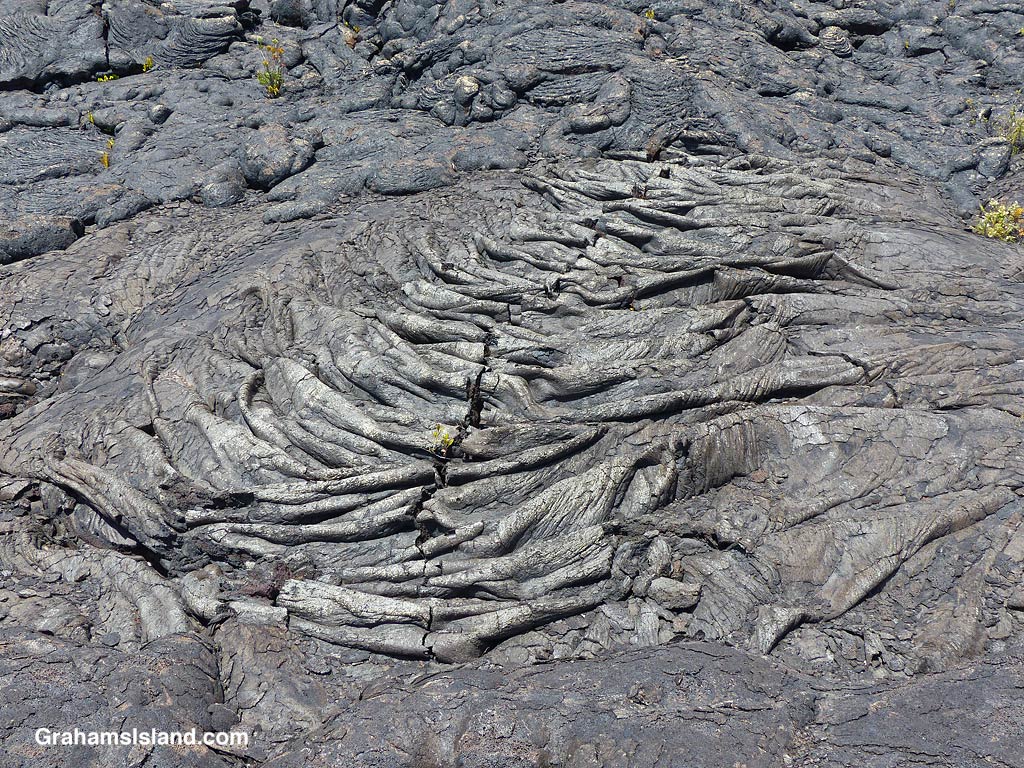
Much of the trail is over pahoehoe lava, which is rounded and much easier to walk on than jagged a’a lava. The trail is marked by cairns and single rocks placed alongside it. It’s pretty easy to follow with just one or two parts where attention has to be paid to make sure one doesn’t stray.

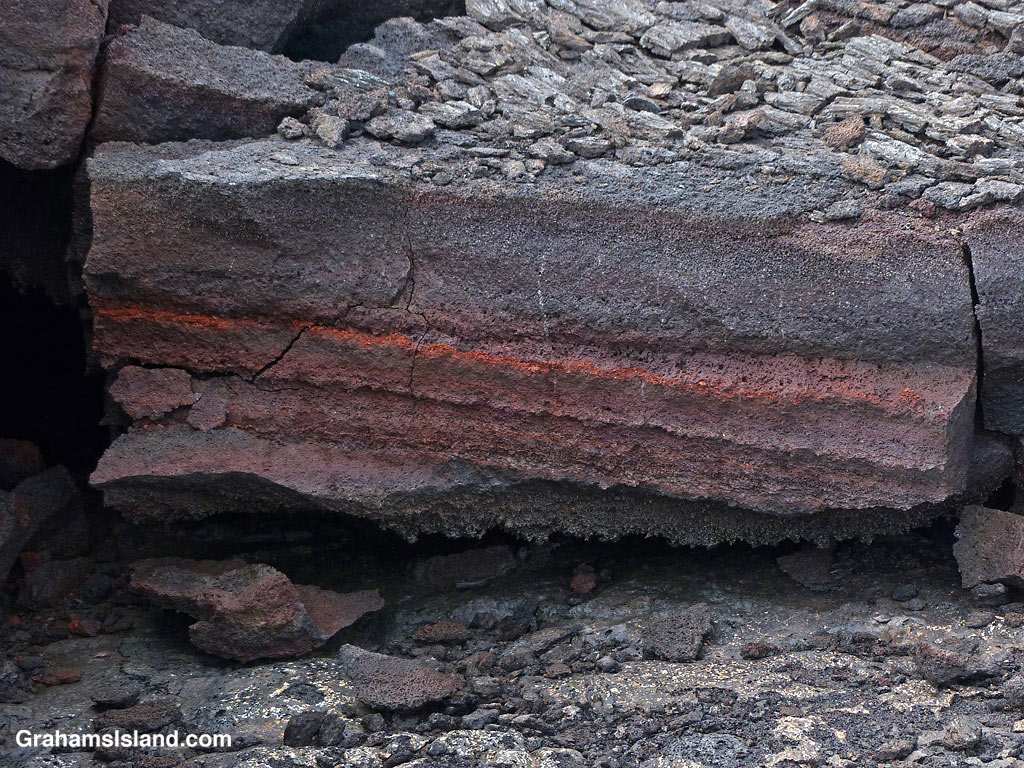


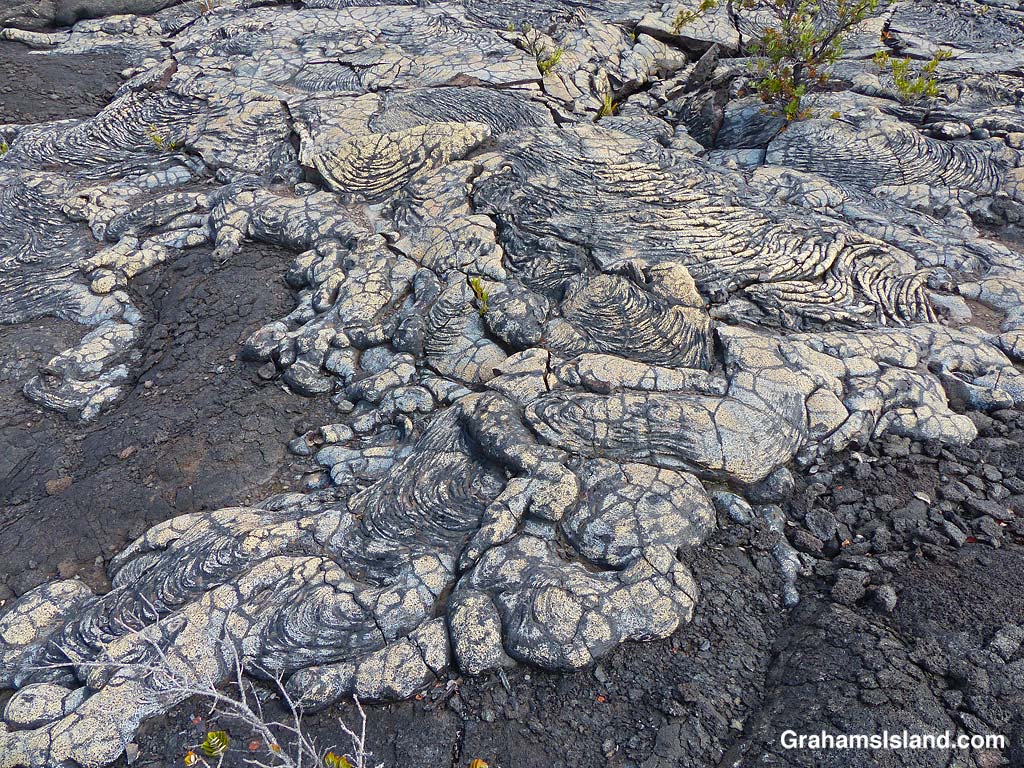

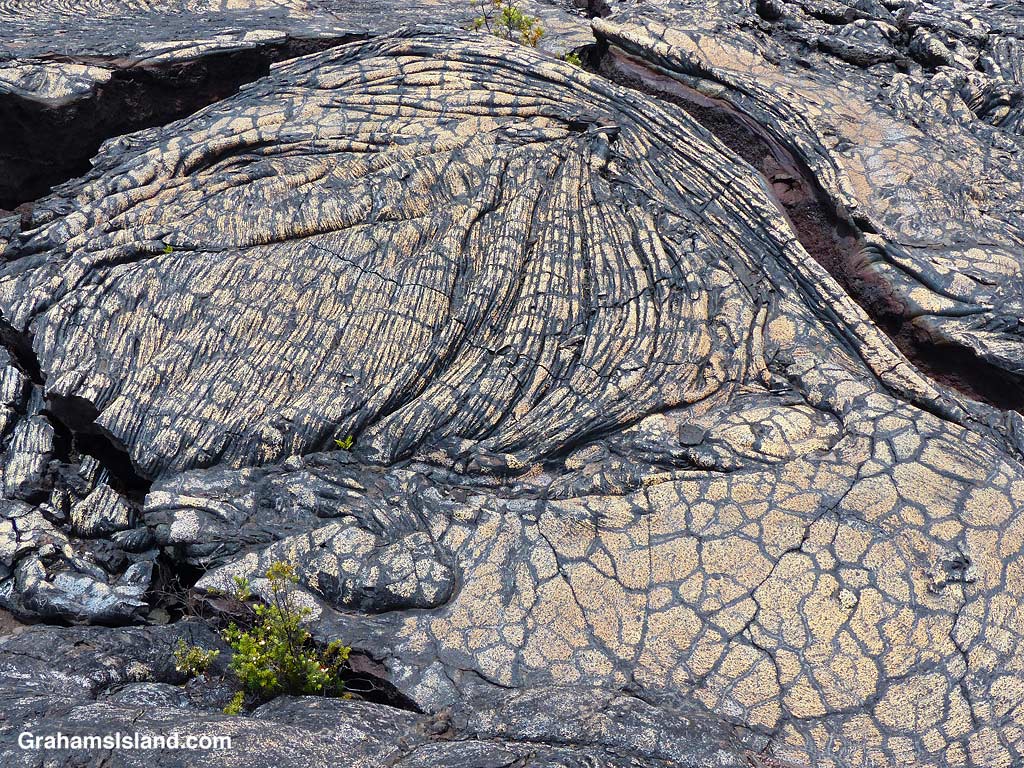

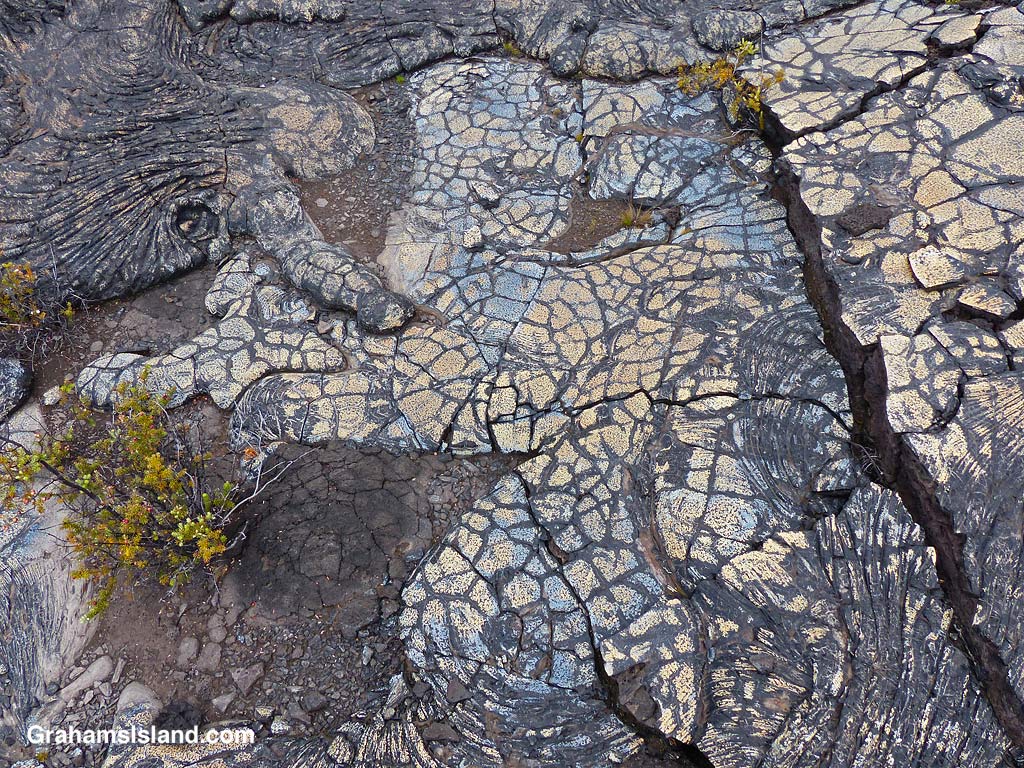
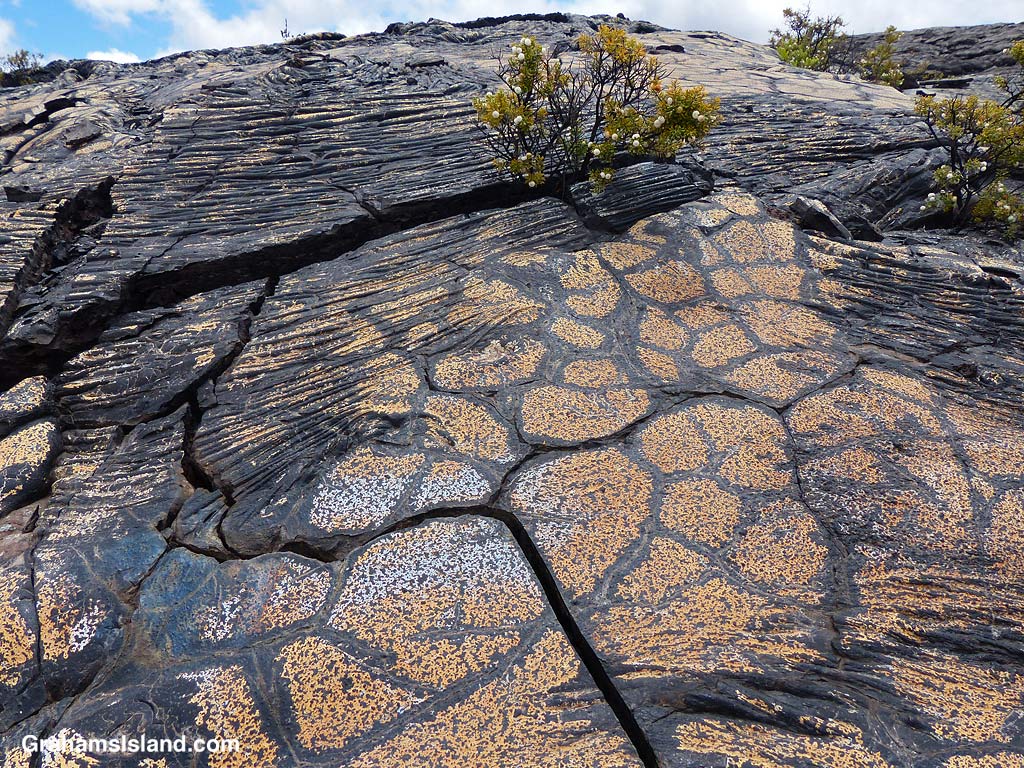
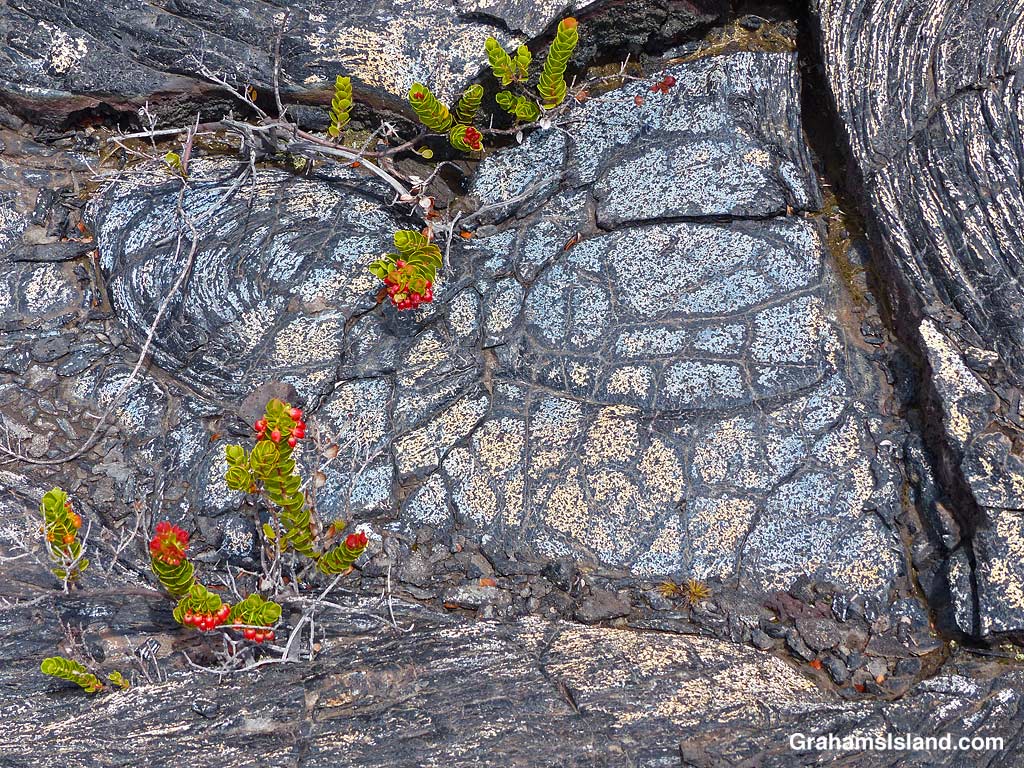


It wasn’t far along this part of the trail that I first encountered blue lava. That’s right, blue lava. Who knew? But not just blue. There’s bronze, pink, red, orange, gold, and who knows what. I’ve seen colorful lava on the Puna Coast Trail, but this was more varied and quite wonderful. In places the trail crossed this colorful lava and I felt bad for walking on it, though as I hiked I could see many more patches of color out in the lava fields. It’s not wise to leave the trail since there are many lava tubes, some with very thin ceilings.
This is an out and back trail and I turned around once I reached the Kamakai’a Hills, after about 5 miles. It’s another 2 or 3 miles to the next junction where there is a small cabin.
Also posted for Jo’s Monday Walk. See more responses here.
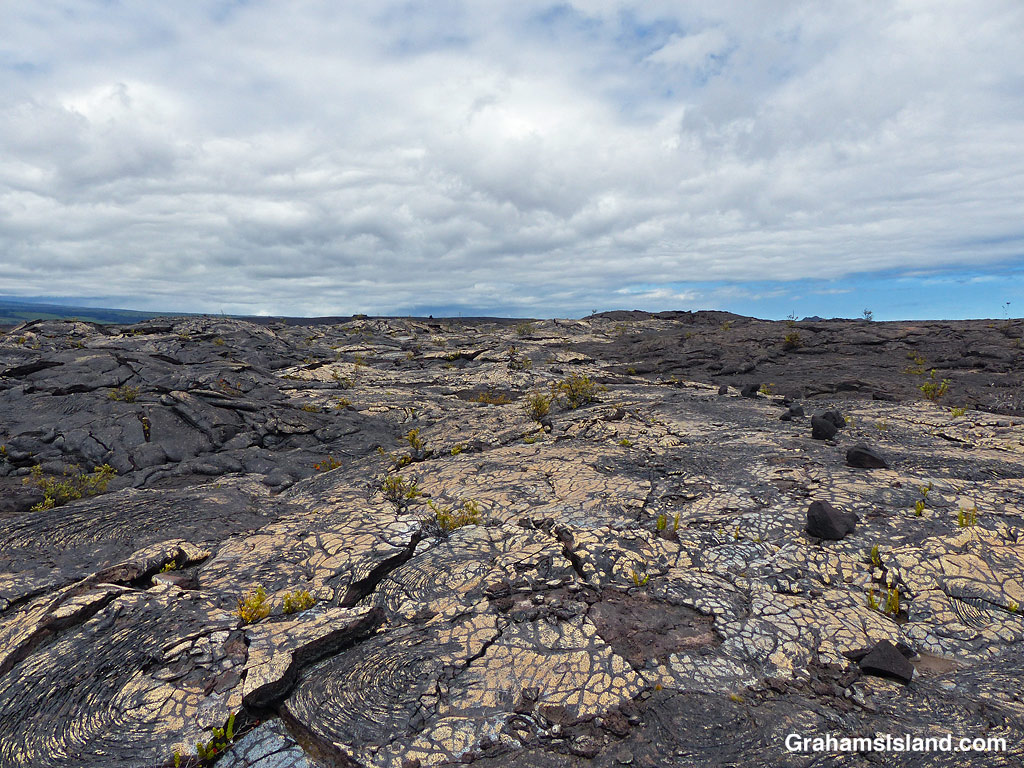

This week’s Sunday Stills challenge theme is ‘Silence.’ See more responses here.
The current eruption at Kilauea has been putting out a considerable amount of vog. This volcanic haze can make life difficult for people, causing respiratory and other medical complications. But it can also cause colorful skies.
I was driving home from work last week on a day when the vog was heavy and the sky glowed. There wasn’t much wind – another reason the vog has been hanging around – so the ocean was calm. I’d stopped to take photos once, but when I saw this little boat heading for this band of sunlight, I pulled over again.
I’d lucked into a quiet break in the traffic and was far enough from the coast that there was no sound from waves coming ashore or from the boat’s engine. I watched for a while until the boat crossed the glittering band, before returning to my car and heading home.

Recently, for this month’s Becky’s Squares theme of “Walking” (See more responses here), I’ve been posting some local walks. Today, I thought I’d revisit Hawaii Volcanoes National Park and one of my current favorite trails there.
The top photo is taken from the Byron Ledge trail which crosses the edge of the Kilauea Caldera to join the Halema’uma’u trail. From this junction, the original Halema’uma’u trail traverses the caldera to the edge of Halema’uma’u Crater. That trail has been closed since 2008 because the volcano has been, and currently still is, erupting there. Kilauea Caldera is large and the eruption is two miles from the trail in the top photo, but I always get a bit of a tingle from walking across the caldera floor so close to volcanic activity.
That’s not the only reason I like this trail though. It arrives at the caldera floor by winding down from the rim though some lovely tropical foliage and a moss-covered cutting through rocks that I always stop and photograph even though it doesn’t change from one visit to the next.


For more information about Hawaii Volcanoes National Park, go to nps.gov/havo/.

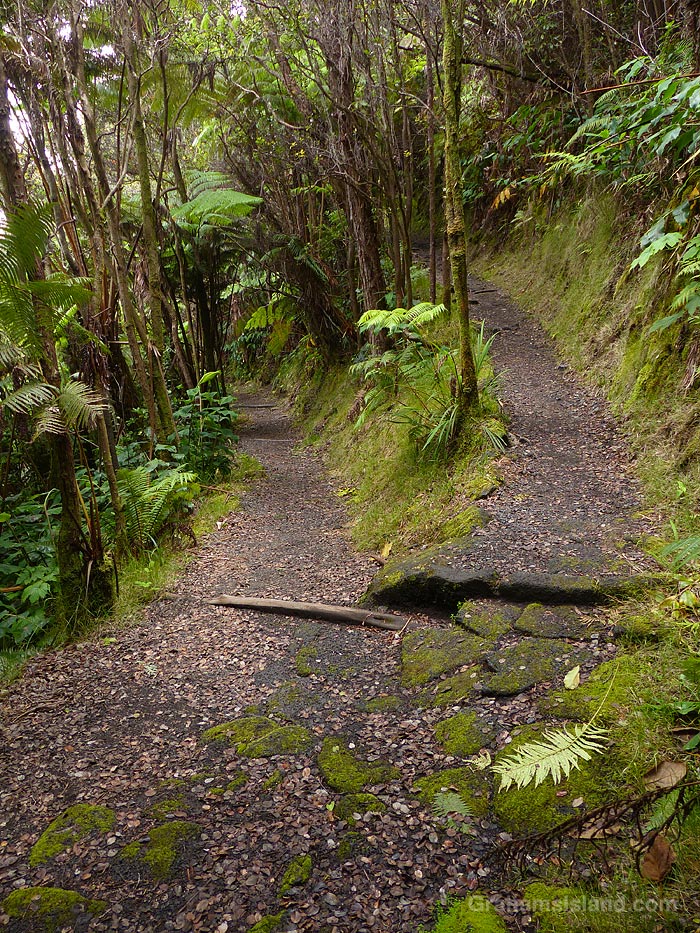
The Kilauea Iki Trail in Hawaii Volcanoes National Park is one of the most popular in the park, but I’ve never found it crowded when I’ve been there. It features two very different environments, the walk around the heavily wooded crater rim and the crossing of the barren lava on the crater floor, about 400 feet below.
Since the trail is a loop, one has to descend the steep crater wall at one end and climb up the equally steep crater wall at the other. At both ends, the trail is heavily switchbacked to make this possible. For the hiker, the positives of this are that the trail is less steep than a straight shot would be, and the switchbacks are good spots to take a break and get a variety of views.
For more information about Hawaii Volcanoes National Park, go to nps.gov/havo/. Posted for Becky’s Squares theme of “Walking” (See more responses here).


 Graham's Island