This week’s Sunday Stills challenge theme is ‘Things that are white.’ See more responses here.
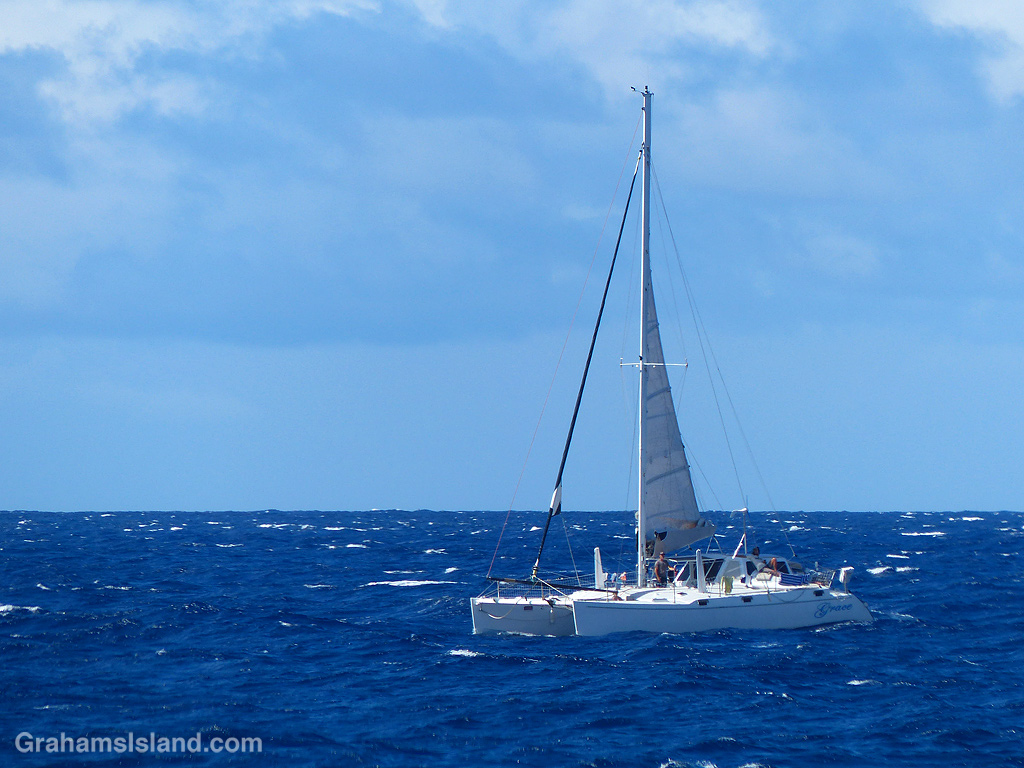
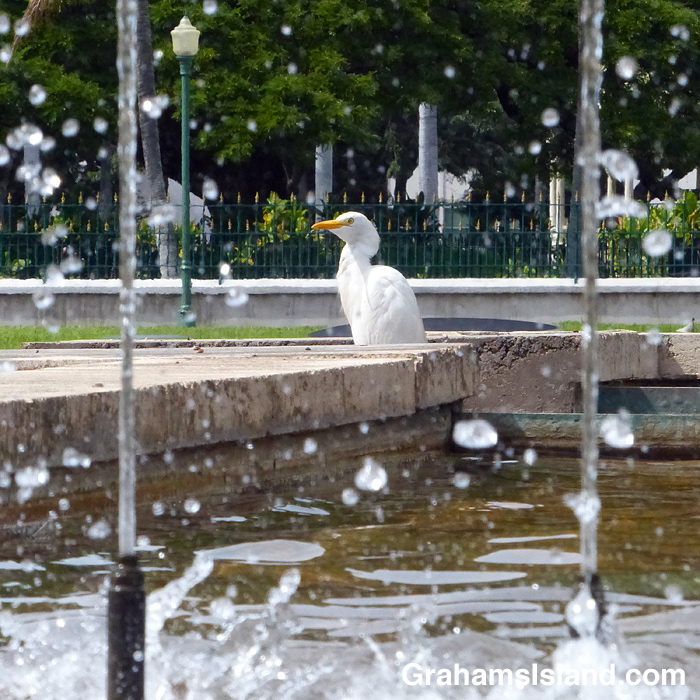
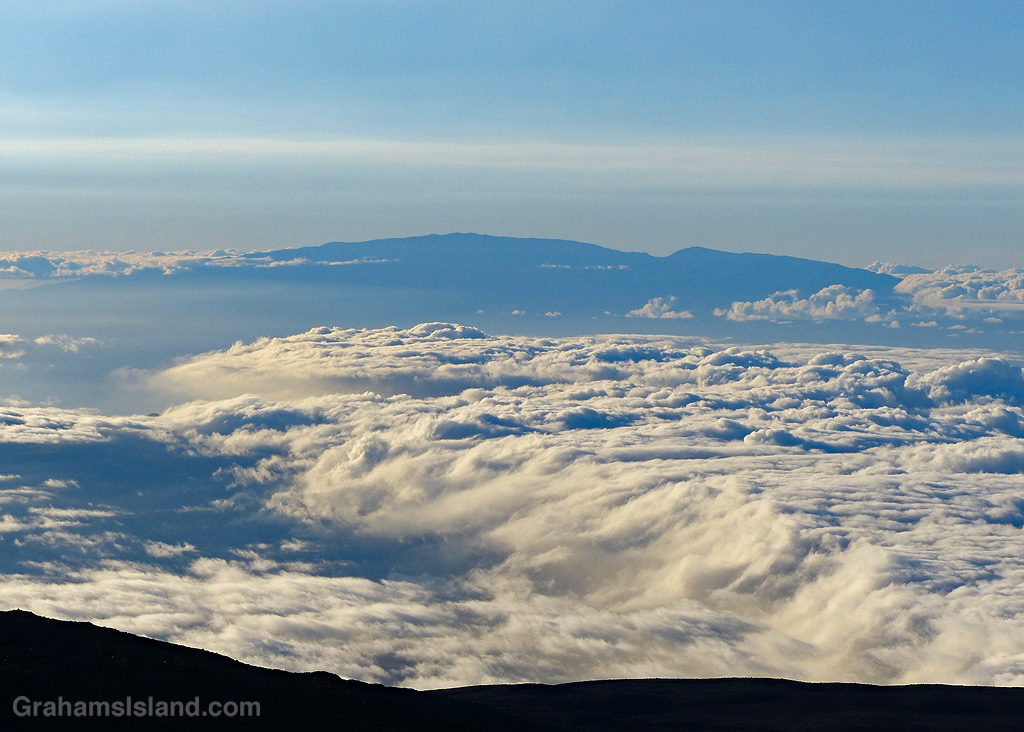
The top photo features a white catamaran with white sails, cruising on a white-capped ocean. The second photo is a cattle egret in a water fountain. The third photo shows a thick layer of white clouds between the Big Island and Maui, as seen from Mauna Kea.
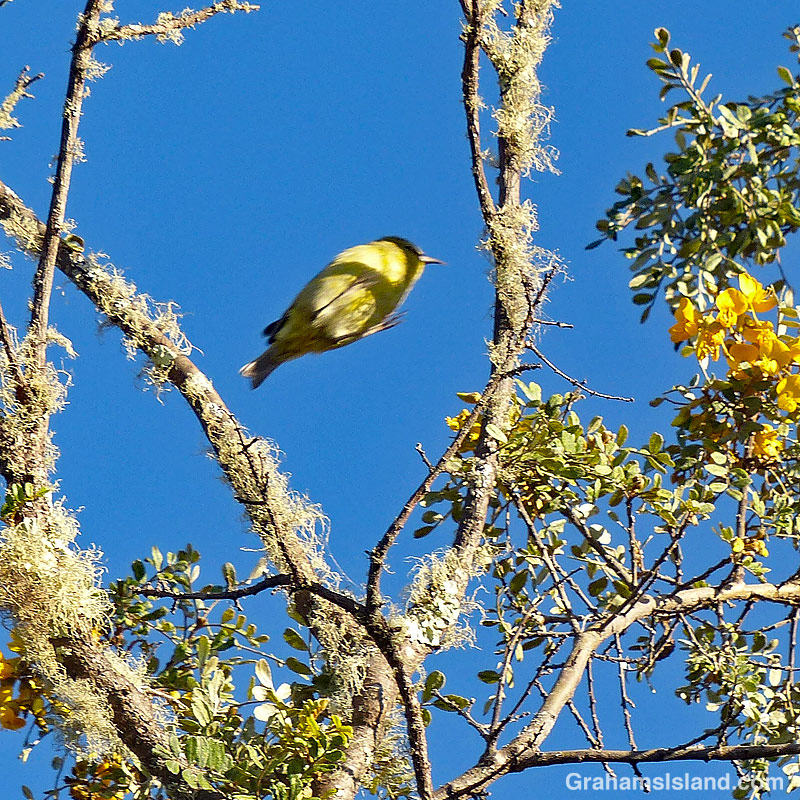
I was at the Palila Forest Discovery Trail, on the lower slopes of Mauna Kea, when I looked up and saw this Hawai’i amakihi, a native honeycreeper. When I got home, I was happy to find that one of my photos had caught the bird in mid hop, from one branch to another.
This week’s Sunday Stills challenge theme is ‘Weathered.’ See more responses here.
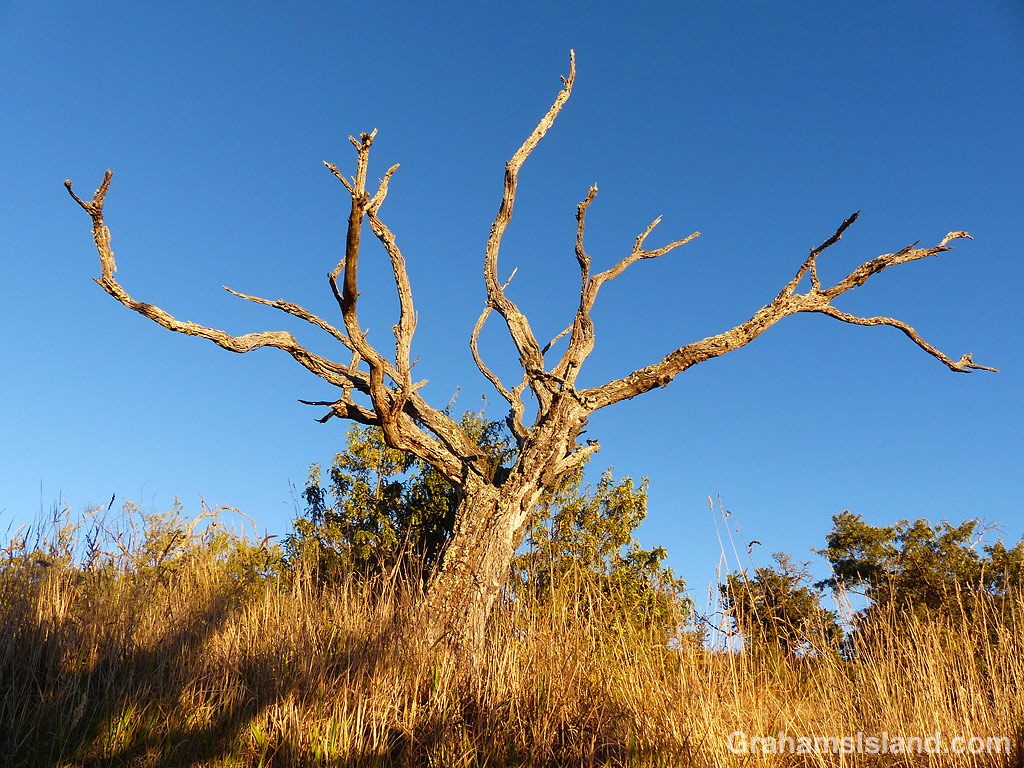
In the top photo, a dead tree on the lower slopes on Mauna Kea, stretches weathered branches toward the sky.
Second photo: Petroglyphs in Hawaii Volcanoes National Park have been weathered by years of sun and rain, but are still clearly visible.
Third photo: A cattle ranch alongside old Saddle Road includes this old structure bordering a stockyard.
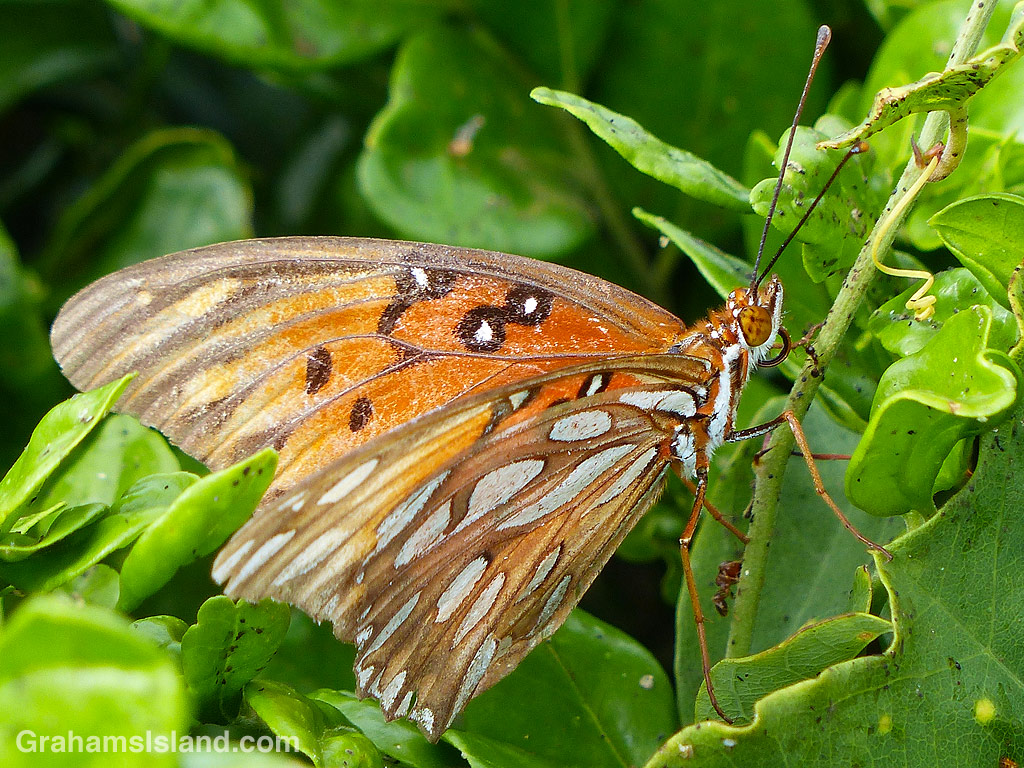
Bottom photo: Butterflies have a short lifespan, but in that time they can go from looking boldly marked and colored to very faded, with some looking like it’s a miracle they can fly at all.
For more information about Hawaii Volcanoes National Park, go to nps.gov/havo/.
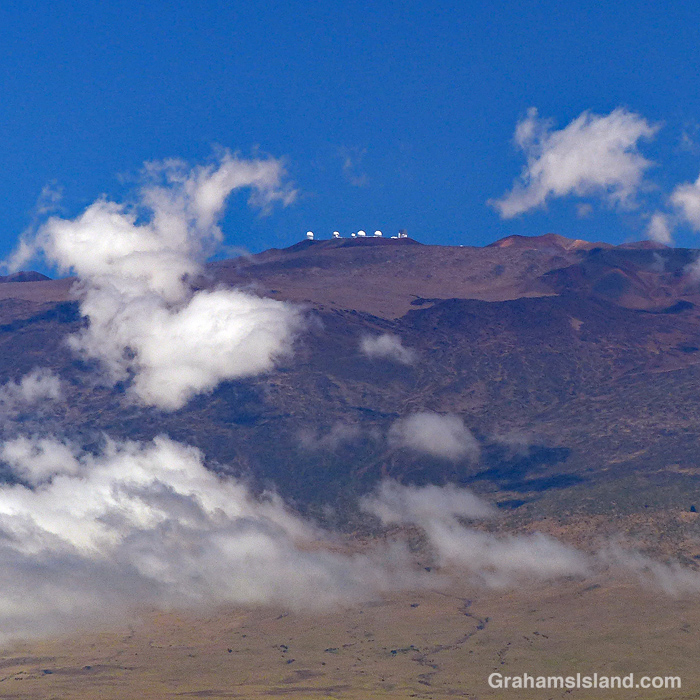
There are 13 telescopes atop Mauna Kea, but while they’re all one of a kind in that regard, they vary in how they make observations. Some collect visual light, some infrared. Others are used for radio astronomy. I’d go in to more detail about this, but the science is as far over my head as the telescopes are in this photo!
Posted in response to Becky’s October Squares challenge theme of ‘Kind.’ See more responses here.
In Hawaii, a pu’u is a hill. These are old cinder cones that dot the landscape from the coast to the top of Mauna Loa and Mauna Kea.
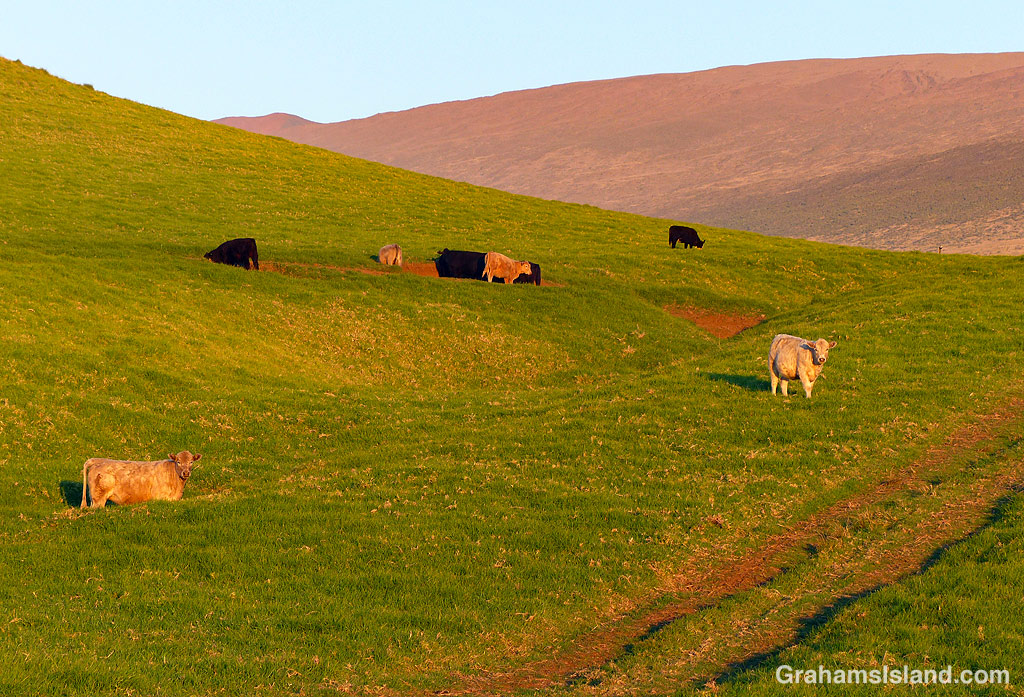
Along Old Saddle Road, the land and it’s pu’us are grass-covered. This pastureland is cattle, horse, and sheep country, with a lot of goats thrown in for good measure. The land is steep and and rough and the grass varied, but the rainfall is heavy enough that there’s a lot of it.
Old Saddle Road is one of my favorite drives on the island, particularly in the early morning (above) and late afternoon (below).
Posted in response to Friendly Friday challenge theme of ‘Splendour in the Grass.’ See more responses here.
This week’s Sunday Stills challenge theme is ‘Bodies of Water.’ (See more responses here.) Last Sunday, I posted photos of the Kohala valleys. This week, I’m posting a bit about what goes on in them and elsewhere on the island.
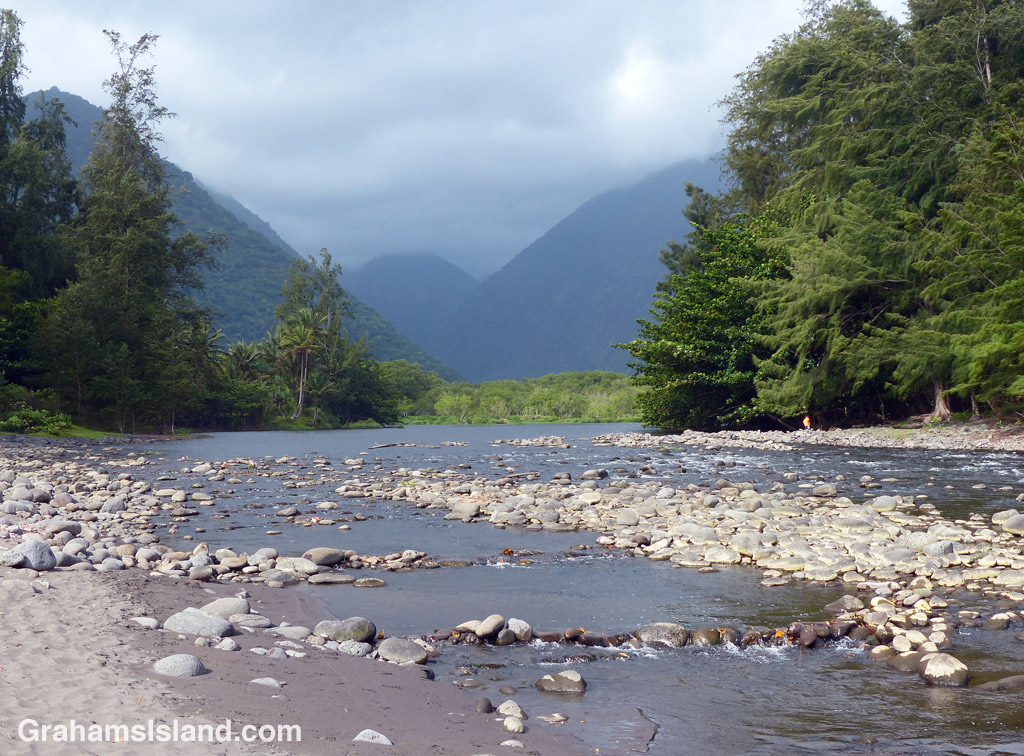
The top photo is shows the mouth of the Waipi’o River looking back toward the cloud shrouded Kohala hills. The river, is fed by water passing over Hi’ilawe Falls and other waterfalls deep in the fingers of the valley. Like all water courses on the Big Island, its flow is greatly increased by the often heavy rainfall.
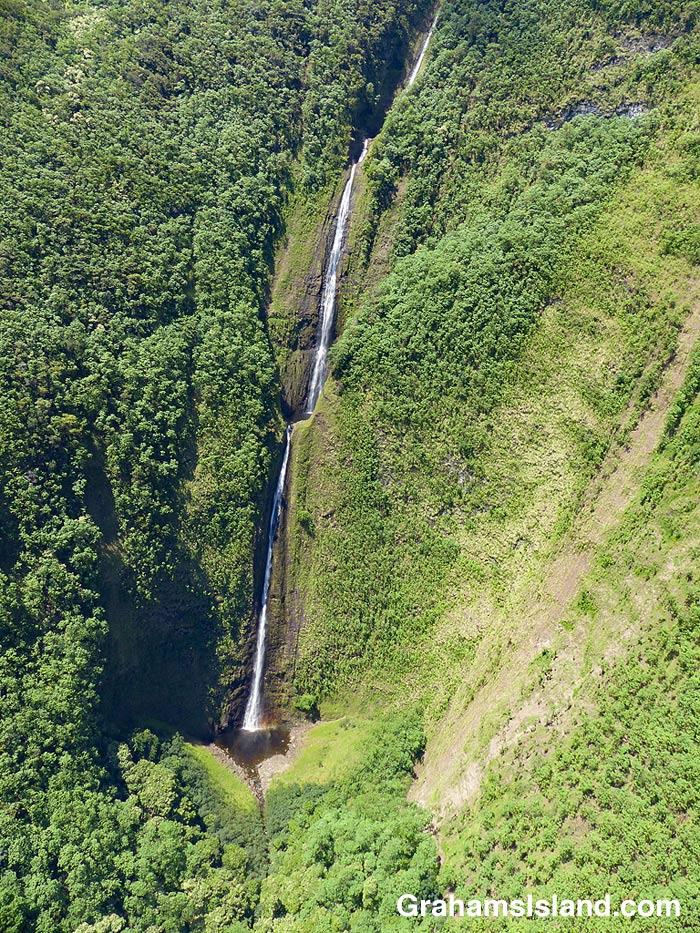
The second photo shows a waterfall, farther down the coast, cascading into a pool at the bottom before flowing out to the ocean. Some of these waterfalls drop more than a thousand feet. Some cascade into valleys, some directly into the ocean. During dry spells, the water flows are greatly reduced and many falls, those that are entirely rain fed, disappear for a while. When rains are heavy, the water flow is so great that some falls blend together to form a sheet of falling water.
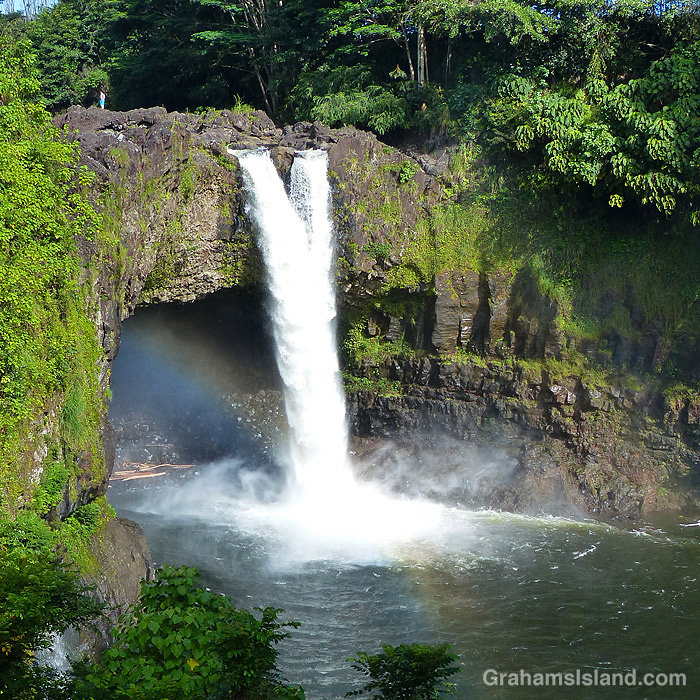
On the east side of the island is Wailuku River, the longest river on the island. This flows down to the ocean in Hilo, and on its way, tumbles over the aptly named Rainbow Falls (third photo). The falls and rainbows are best seen in the early morning. This stretch of the river is very dangerous with flash floods being common. People get swept away here every year.
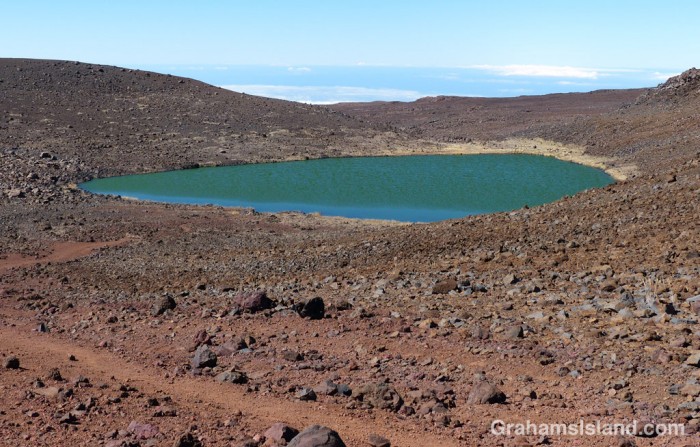
Finally, the bottom photo shows the biggest lake on the island, which can be found at the top of Mauna Kea! Lake Waiau is fed by rainwater and snow melt, mostly in the winter. That it exists at all is something of a mystery. The ground on Mauna Kea is highly permeable, and it’s not fully understood what the layer is beneath Lake Waiau that enables it to retain water. Lake Waiau is not just the biggest lake on the island, it’s the only one. Green Lake, the biggest lake previously, disappeared during Kilauea’s 2018 eruption (photos and story here).