Number four of my rainbow colors in response to Becky’s April Squares challenge theme of ‘Bright.’ (See more responses here.)
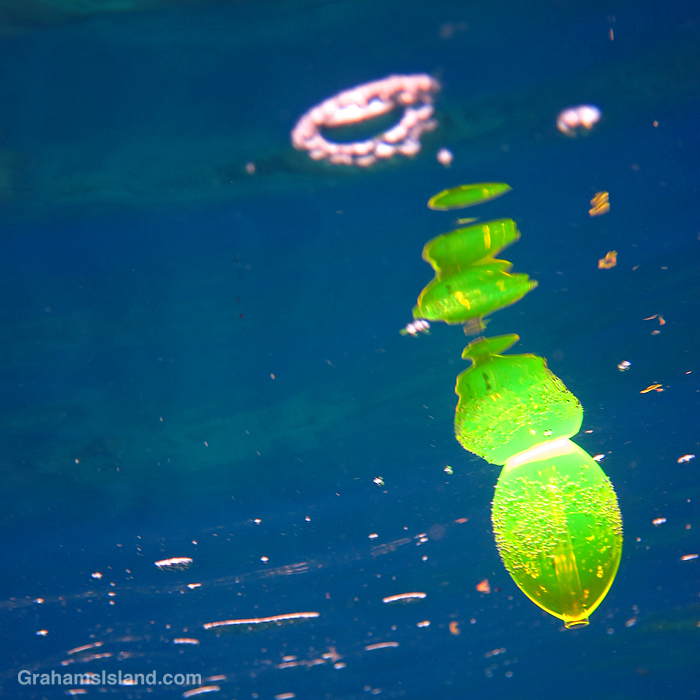
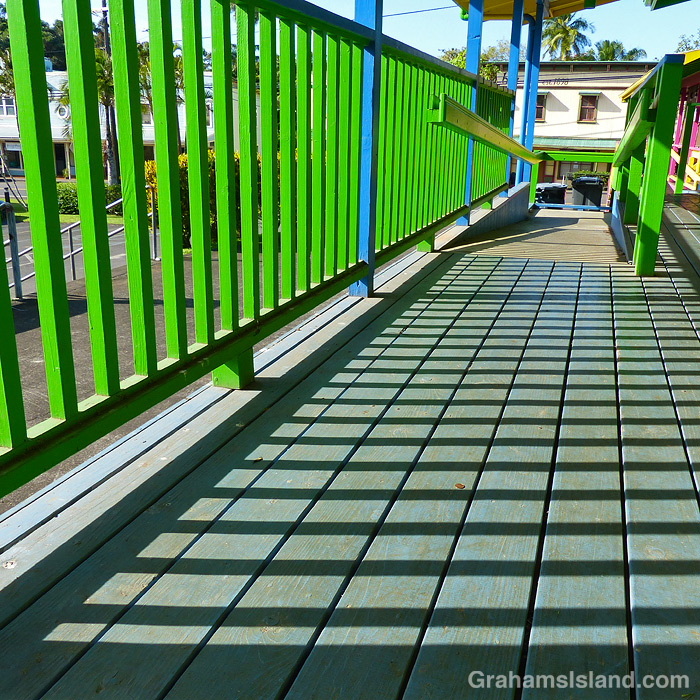
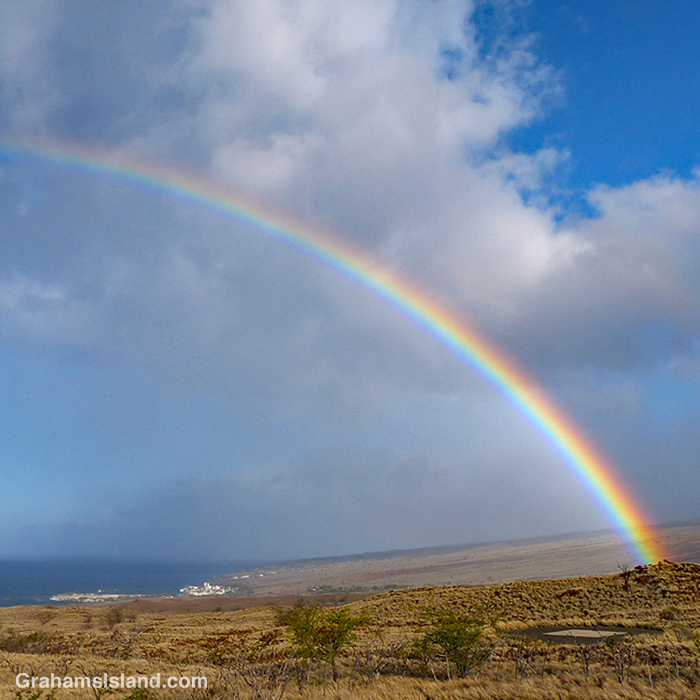
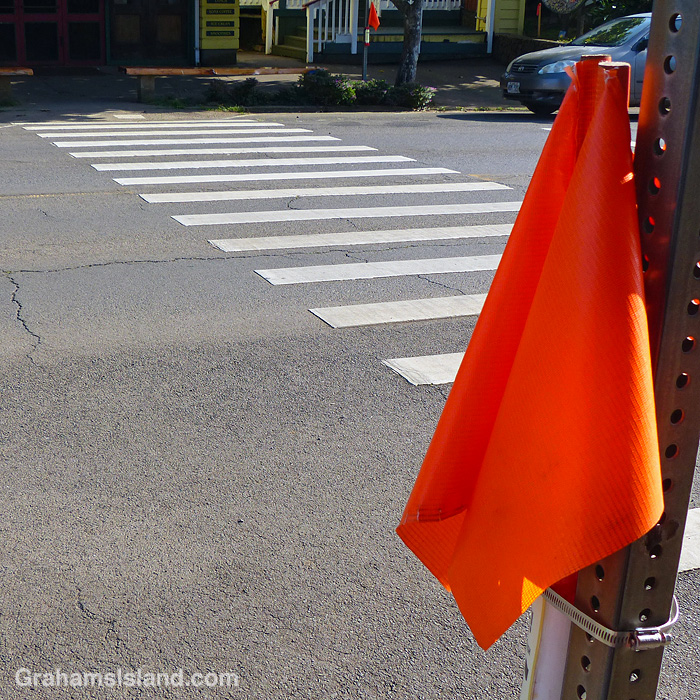
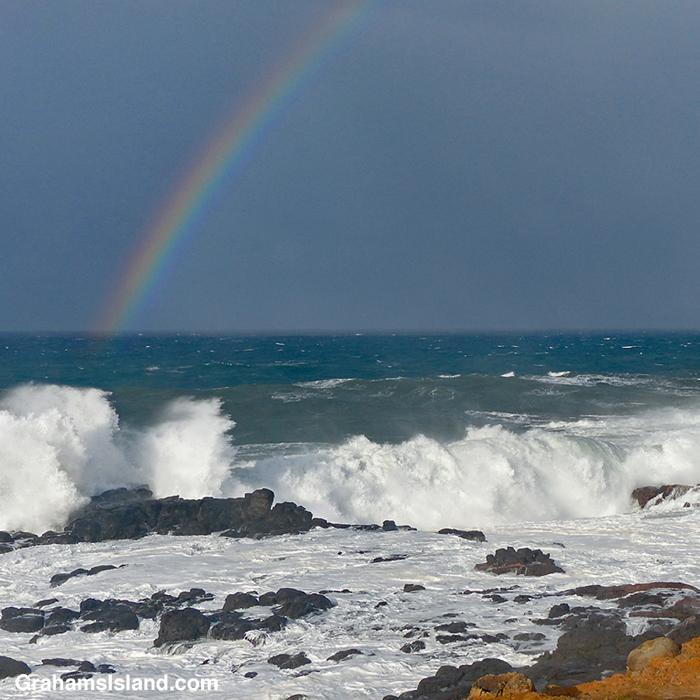
This rainbow soared over the tsunami siren above Kapaa Park on the Kohala coast. I found the stray float catching the sunlight as it drifted in the water. The buildings of the Kohala Town Center in Kapaau are painted in very bright colors, including this vibrant green railing.
The third of my rainbow colors in response to Becky’s April Squares challenge theme of ‘Bright.’ (See more responses here.)
Today’s rainbow was taken from Kohala Mountain Road and looks down towards the southern edge of Waimea.
In the middle, a bright yellow saffron finch perches on a bare branch of a plumeria. There were zero leaves on this tree and only a few budding flowers, such as the one next to the finch.
And finally, the yellow robe of the painted statue of King Kamehameha I in Kapaau.
This is the second of my little series of rainbow colors in response to Becky’s April Squares challenge theme of ‘Bright.’ (See more responses here.)
In the top photo, a rainbow arcs over the port of Kawaihae.
Below that are orange flags available for waving while crossing the street. I haven’t yet felt the need to use them, still being able to leap out of the way of drivers focused on their phones! Actually, drivers here are pretty good about stopping for people to cross the street. I’m more surprised by how many people will just step out into traffic 20 feet up from the crosswalk. Then they look aggrieved if you fail to stop instantaneously.
The bottom photo shows the lovely flower of the kou tree (Cordia subcordata). Kou is indigenous to Hawaii but is also a canoe plant, brought here by Polynesian settlers. It likes the sun and grows along the coast.
This month’s Becky’s Squares challenge theme is ‘Bright.’ (See more responses here.) Since I plan to post some bright colors in response, I thought I’d do that using a rainbow theme.
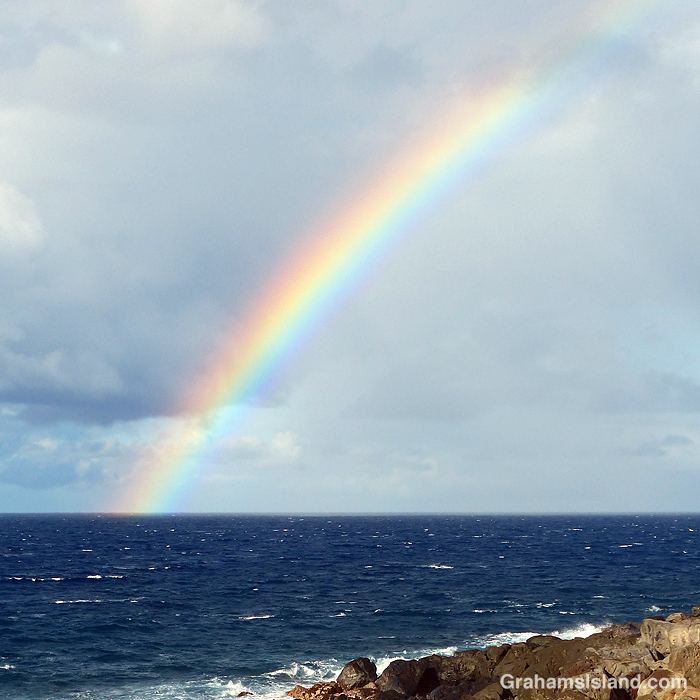
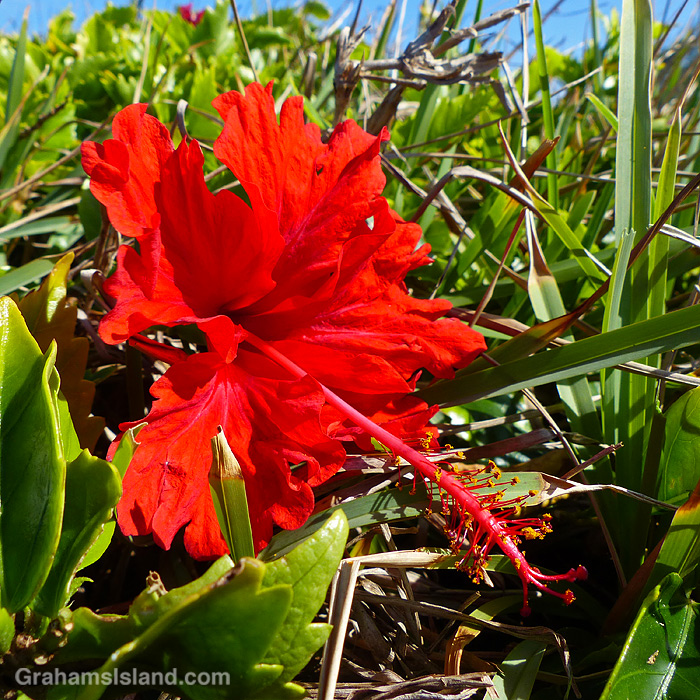
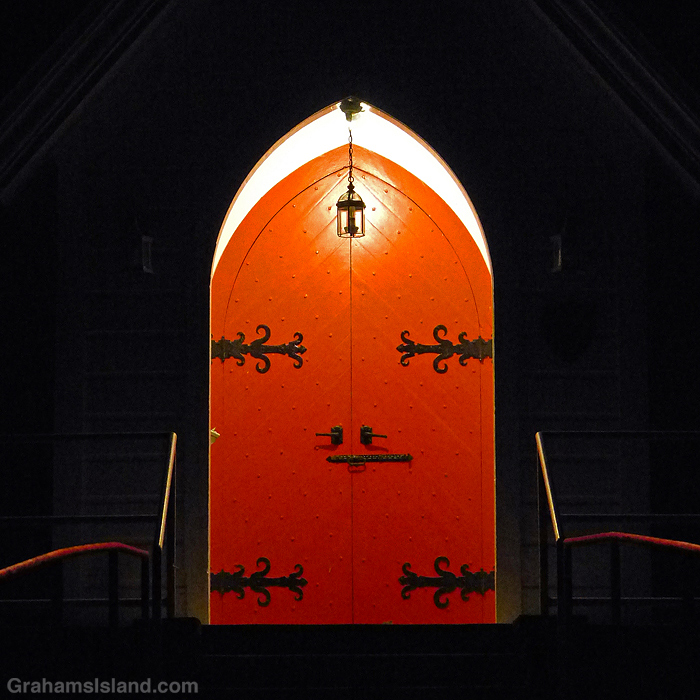
I’m starting with a rainbow off the north Kohala coast followed by a bright red hibiscus flower growing wild on that same coast. The third photo shows the front door of St. Augustine’s Episcopal Church in Kapaau, illuminated by a single bright light.
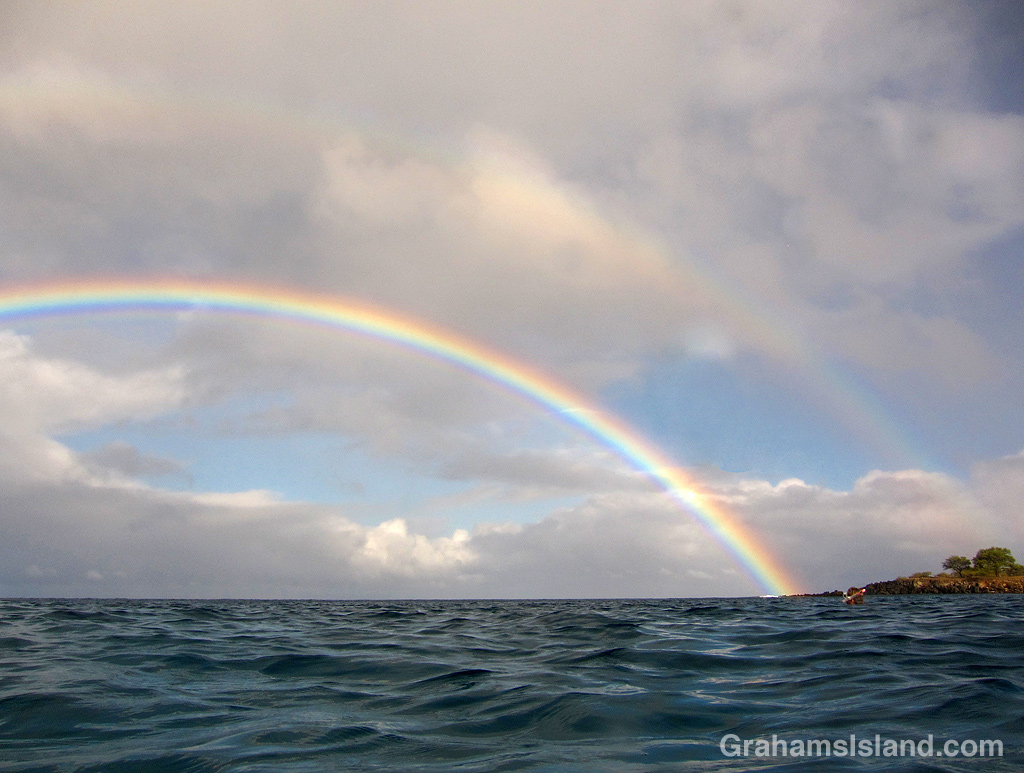
A rainbow arcs over a small red and white flag floating in the water. This flag is used in North America to indicate that there’s a diver or divers below and that boats should stay clear.
This week’s Sunday Stills challenge theme is ‘Bodies of Water.’ (See more responses here.) Last Sunday, I posted photos of the Kohala valleys. This week, I’m posting a bit about what goes on in them and elsewhere on the island.
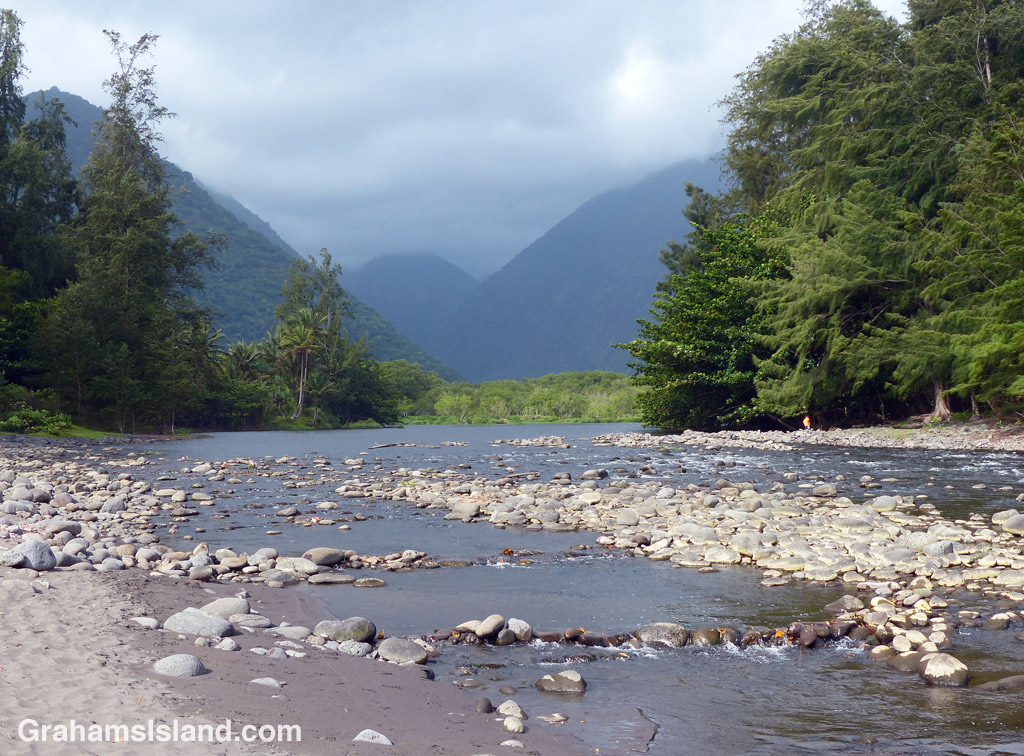
The top photo is shows the mouth of the Waipi’o River looking back toward the cloud shrouded Kohala hills. The river, is fed by water passing over Hi’ilawe Falls and other waterfalls deep in the fingers of the valley. Like all water courses on the Big Island, its flow is greatly increased by the often heavy rainfall.
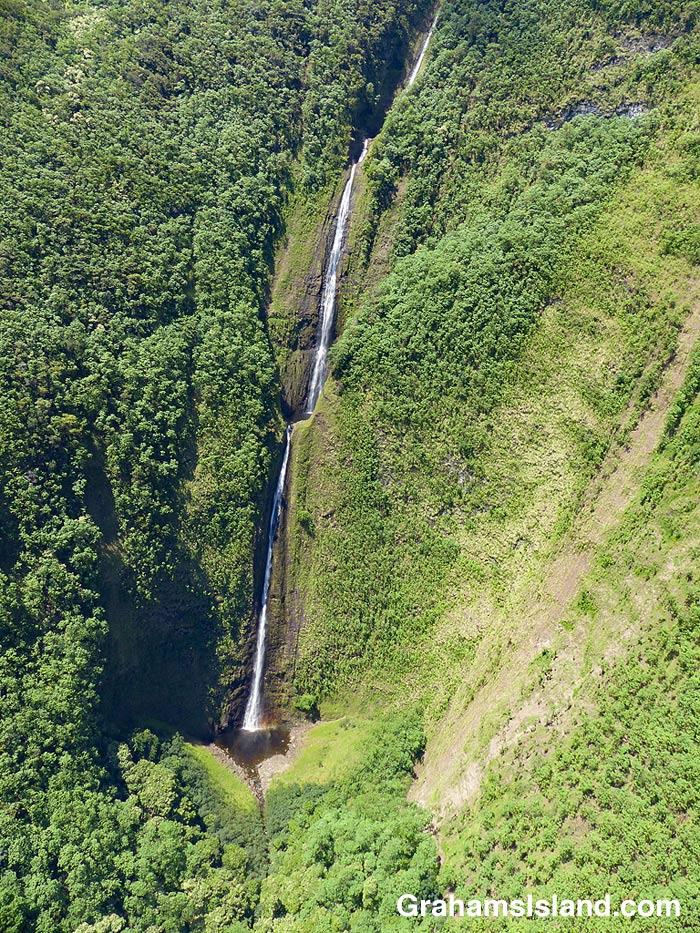
The second photo shows a waterfall, farther down the coast, cascading into a pool at the bottom before flowing out to the ocean. Some of these waterfalls drop more than a thousand feet. Some cascade into valleys, some directly into the ocean. During dry spells, the water flows are greatly reduced and many falls, those that are entirely rain fed, disappear for a while. When rains are heavy, the water flow is so great that some falls blend together to form a sheet of falling water.
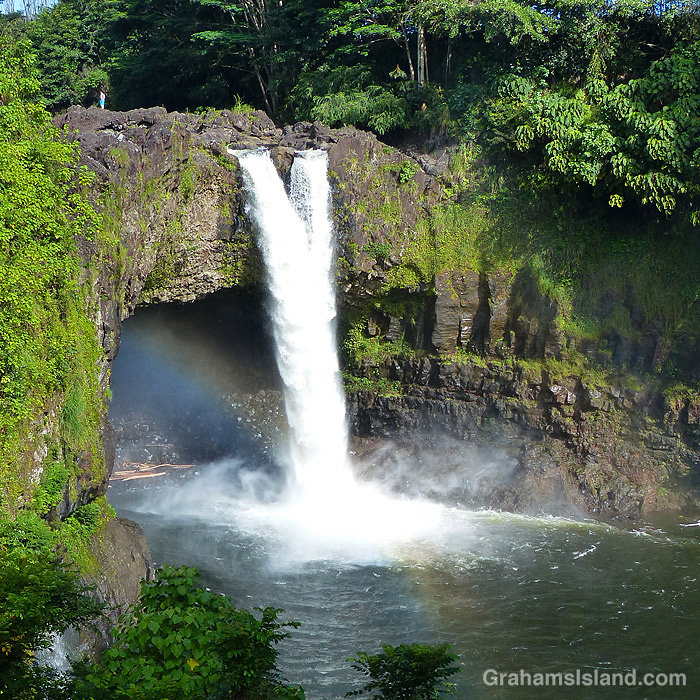
On the east side of the island is Wailuku River, the longest river on the island. This flows down to the ocean in Hilo, and on its way, tumbles over the aptly named Rainbow Falls (third photo). The falls and rainbows are best seen in the early morning. This stretch of the river is very dangerous with flash floods being common. People get swept away here every year.
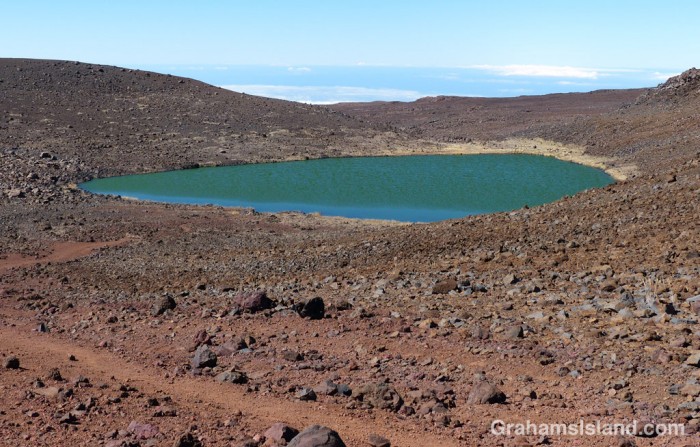
Finally, the bottom photo shows the biggest lake on the island, which can be found at the top of Mauna Kea! Lake Waiau is fed by rainwater and snow melt, mostly in the winter. That it exists at all is something of a mystery. The ground on Mauna Kea is highly permeable, and it’s not fully understood what the layer is beneath Lake Waiau that enables it to retain water. Lake Waiau is not just the biggest lake on the island, it’s the only one. Green Lake, the biggest lake previously, disappeared during Kilauea’s 2018 eruption (photos and story here).






 Graham's Island