This week’s Sunday Stills challenge theme is ‘Peek.’ See more responses here.
I had a couple of photos lined up for this, but a few days ago I was outside cleaning windows. (I do it annually, whether they need it or not!) I got distracted by a kerfuffle in the cane grass behind me. I thought I saw an anole, so dashed inside and got my camera. When I got back and peeked into the tangle mass of cane grass, I could see two anoles locked in mortal combat.
I was pretty sure this was two males fighting. Usually, when there’s a territorial dispute there’s a lot of puffing and posturing that resolves the issue. This time, the two anoles were similar sized and the challenge was on.
It was hard to get a clear view, but each anole had a grip on the other’s head. Both sported dark bruising from the encounter. They wrestled to gain the upper hand, jerking up and down the cane grass as they did so.
Eventually, they fell apart. It was hard to tell who was the winner, but since one of them left the scene, I figured the other had won or defended his territory. However, since he was staggering around like he’d just gone 15 rounds with Mike Tyson, the other one might want to regroup and see about coming out for round 2!
Punalu’u is one of the more popular places to visit on the Big Island. For one thing, it’s a black sand beach that’s easily accessible. It’s also a great place to see Green Turtles and sometimes Hawksbill Turtles. There’s picnic tables and restrooms, you can camp there, and it’s a beautiful stretch of coastline to wander along.
On my most recent visit, I was happy to see that the area where the turtles tend to rest has been more obviously identified with a rock wall and signs. This is part of the ongoing efforts to deter the ‘Let’s get a picture of little Billy riding the turtle’ crowd. Oh yes, they exist and, sadly, they’re nowhere near as endangered as the turtles. There is one turtle in this photo, but it looks like a rock.
Here’s a closer look.
And a close up (with a zoom lens), getting some much needed rest.
I really like Punalu’u, especially early in the day as this was. Later on, it can get very crowded.
Centipedes have a modified pair of front legs behind the head, through which they inject their venom, so they don’t really bite, but sting. I have yet to be stung by a centipede, he says tempting fate, but I’m told that it’s extremely painful regardless of the size of the centipede.
This little centipede, which I was happy to spot outside the house, was probably no more than an inch long. But I was taking no chances and ushered it away from the house without getting too up close and personal.
This bench, located on the shoreline just below the lighthouse between Mahukona and Lapakahi, is a memorial to Malcolm Davis. Malcolm was a North Kohala man who disappeared while freediving off this part of the coast in 2020. He was 20 years old and was never found.
It’s a lovely spot, with a view up and down the coast and across to Maui, a place to sit and watch the waves, a place for contemplation.
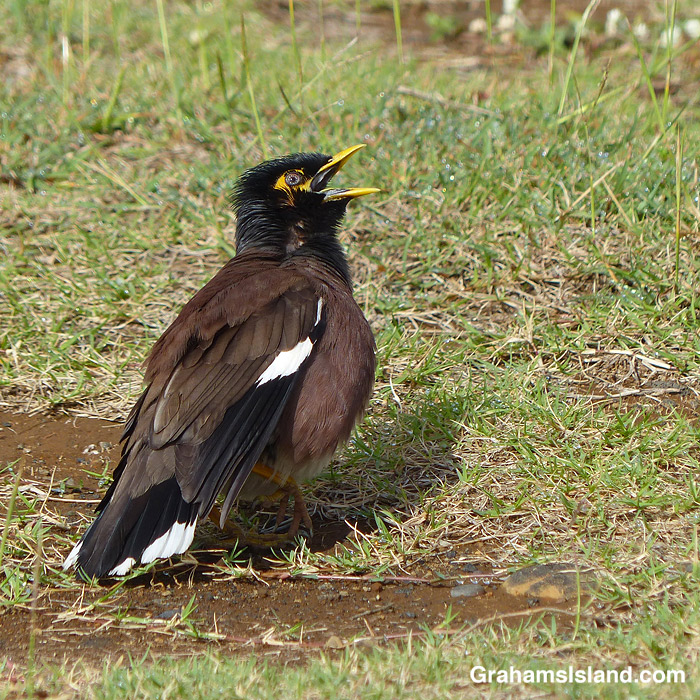
I saw this Myna at Punaluʻu Black Sand Beach Park. It was standing just as you see, before moving to do a bit of preening. Then it resumed this position. It repeated this process several times.
The bird was clearly waiting for mum or dad to return with food and, by golly, it wanted to be quite clear that it was ready and waiting to eat. Apparently, the parents weren’t overly impressed by this display, since they didn’t show up while I watched.
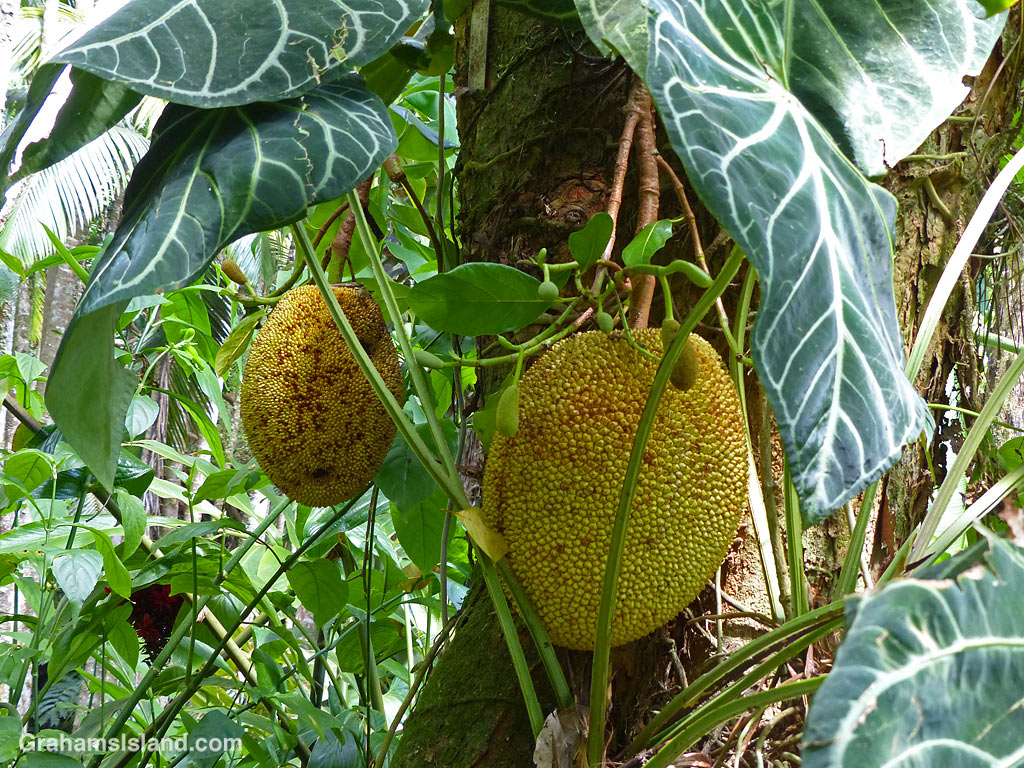
I saw these Jackfruits at Hawai’i Tropical Bioreserve & Garden. I took the photo because they were the biggest ones I’ve seen. When I got home and read up about them I discovered these are dainty by Jackfruit standards. Apparently, Jackfruits can weigh up to 120 pounds and can be three feet long and almost two feet around.
What this means is that is that the Jackfruit tree is not a tree to picnic beneath!
For more information about Hawai’i Tropical Bioreserve & Garden, go to htbg.com.
My lunch spot with a view of the Kamakai’a Hills and various kinds and colors of lava.
This week’s Sunday Stills challenge theme is ‘I’d Rather Be…’ See more responses here.
It had been a while since I went hiking, for various reasons, and it’s something I was missing, something I’d rather be doing. So last week, I headed down to Hawaii Volcanoes National Park to try the Ka’u Desert Trail. This backcountry trail has been on my list for a long time, but I had never done it before. For one thing, it’s about as far from my house as one can get on the island. For another, it’s directly downwind from Kilauea Volcano, so when the volcano is active and the trade winds are blowing, gasses blow across the length of the trail.
The latest eruption of Kilauea is currently either paused or over, so gas emissions are much reduced, and last week, the trade winds had given way to winds from the southwest. So off I went.
Signs explain the rich history and geology of the area.Tenacious Ohia trees grow in the lava.Ohia flowers are a magnet for bees……as are the native Ulei flowers.
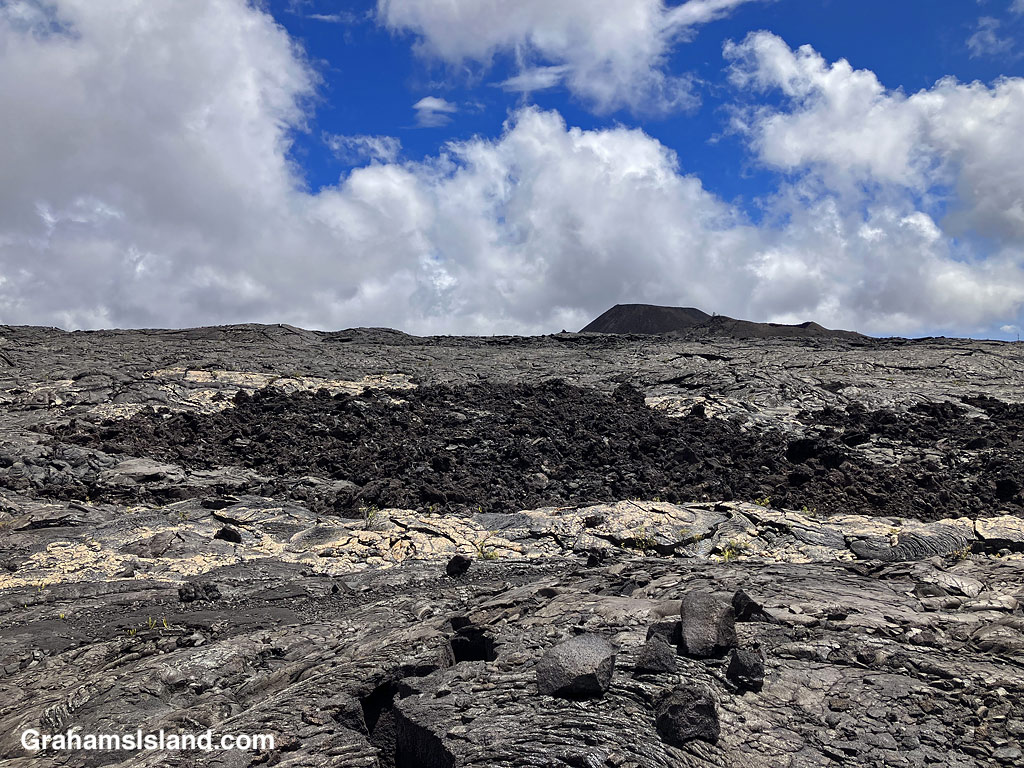
The trailhead is several miles west of the main entrance to the park, with a strip of parking along the highway. The first mile of the hike is also known at the Footprints Trail. It’s a sort of paved path that threads through ohias to a small building that houses footprints left by early Hawaiians in volcanic mud and ash. Alas, I couldn’t identify any footprints in the display. Shortly after the footprints, the path breaks out of the vegetation into open lava fields. This isn’t a tropical Hawaii walk, this a bleak hellscape Hawaii walk. Or is it?
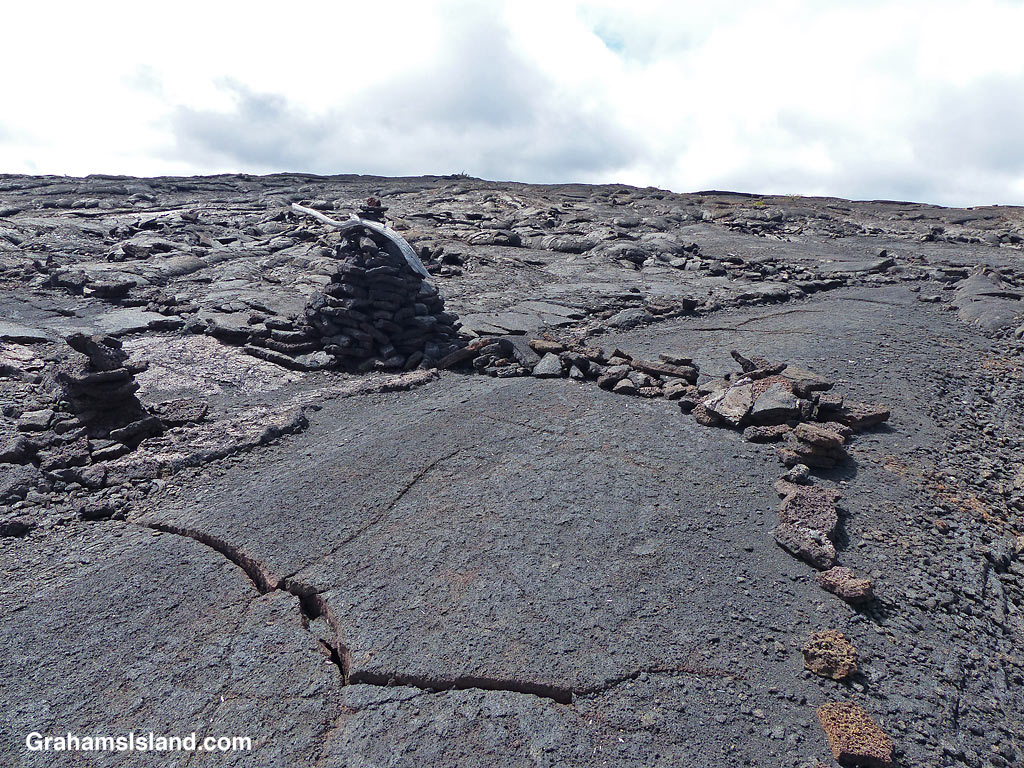
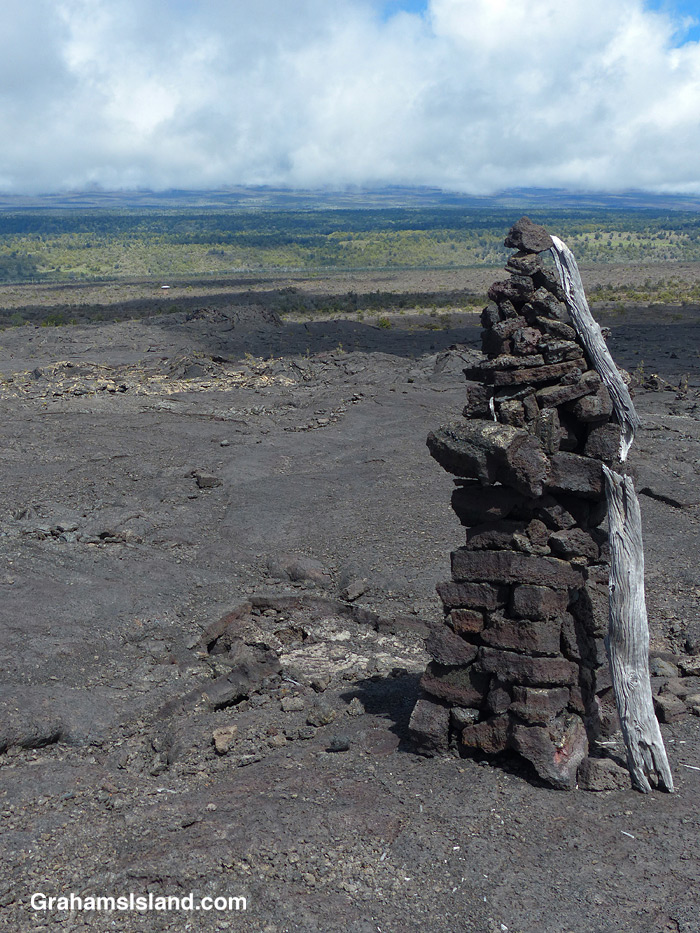
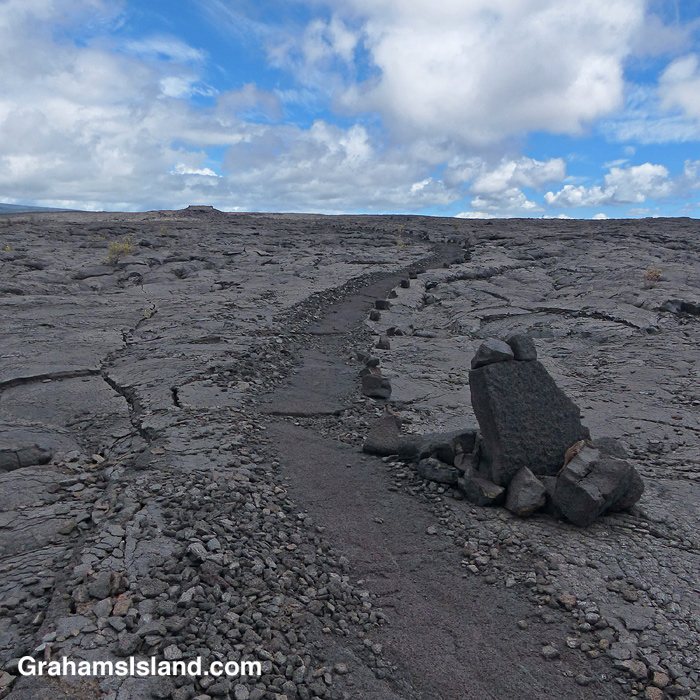
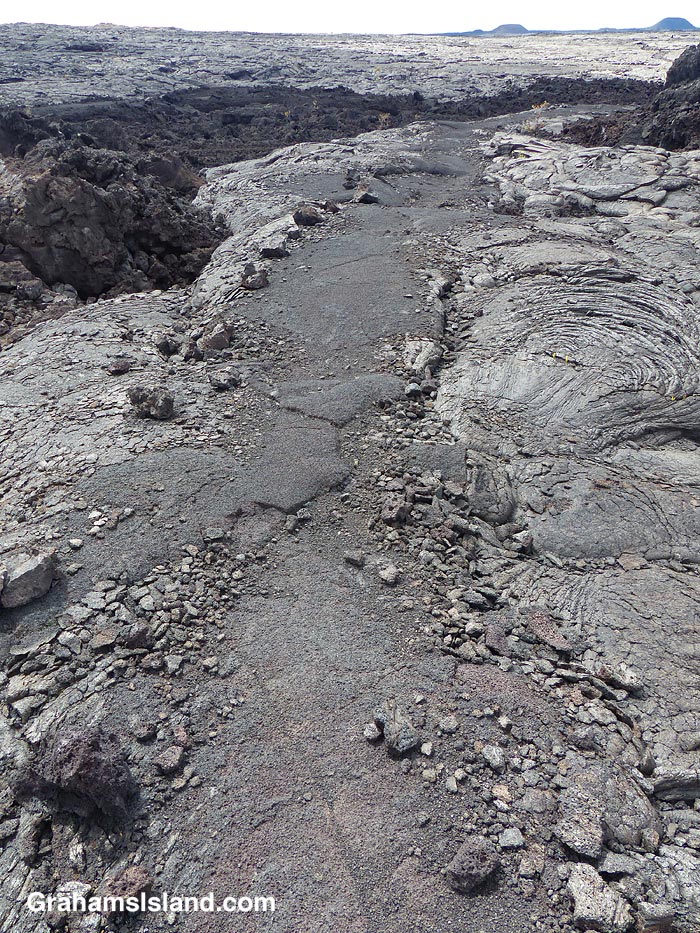
A view of the Kamakai’a Hills from the trail junction.The trail was rerouted here, from its previous path, for reasons unknown.Cairns mark the trail, some bigger than others.Walking on the trail removes the top, crumbly layer of pahoehoe lava.
The trail ascends gently to the only junction for miles around, at Mauna Iki. To the left is a trail back towards the heart of the park. The Ka’u Desert Trail heads to the right and into backcountry wilderness. Mauna Iki was the site of an eruption in 1919 and the trail traverses the lava fields from this eruption.
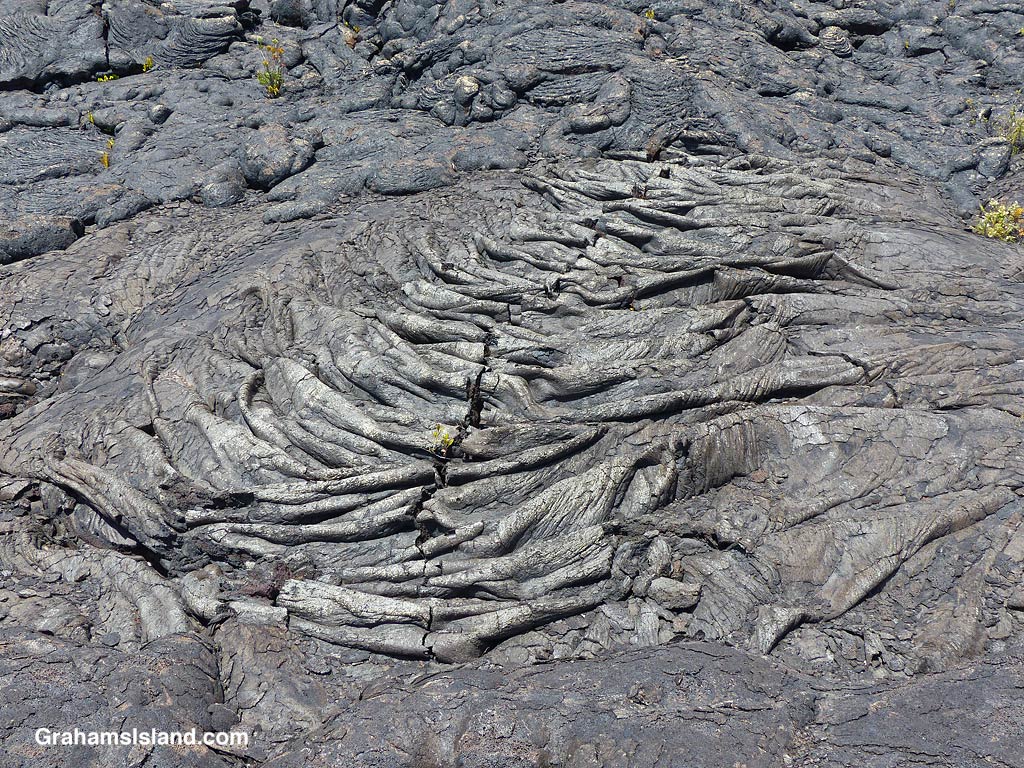
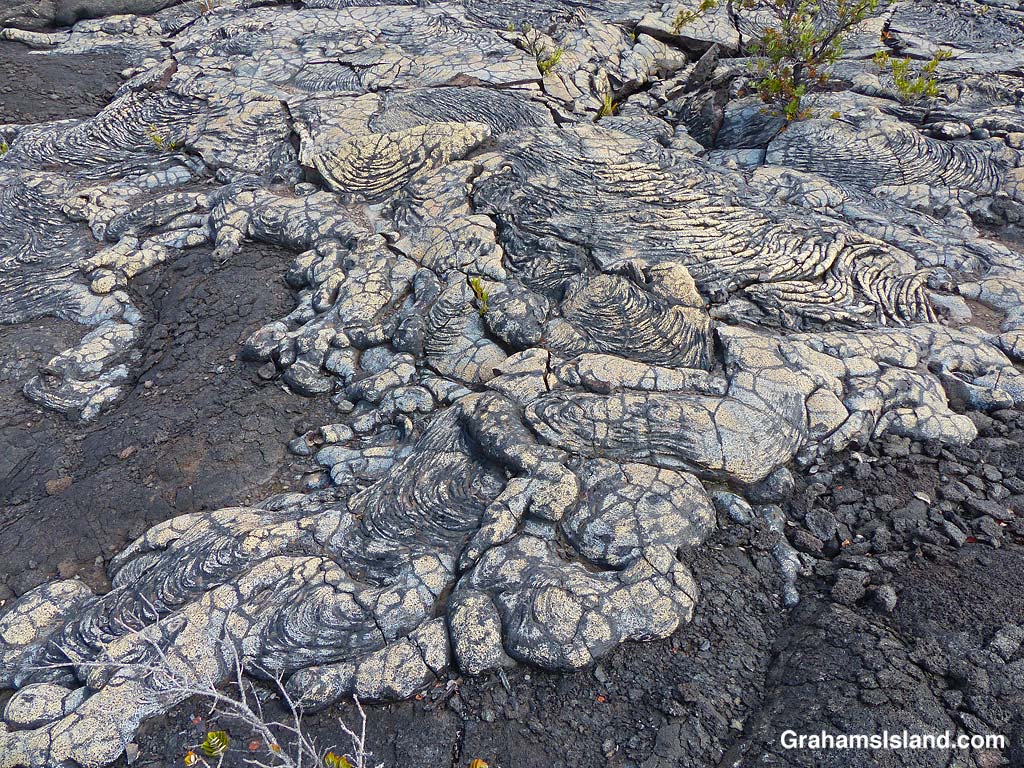
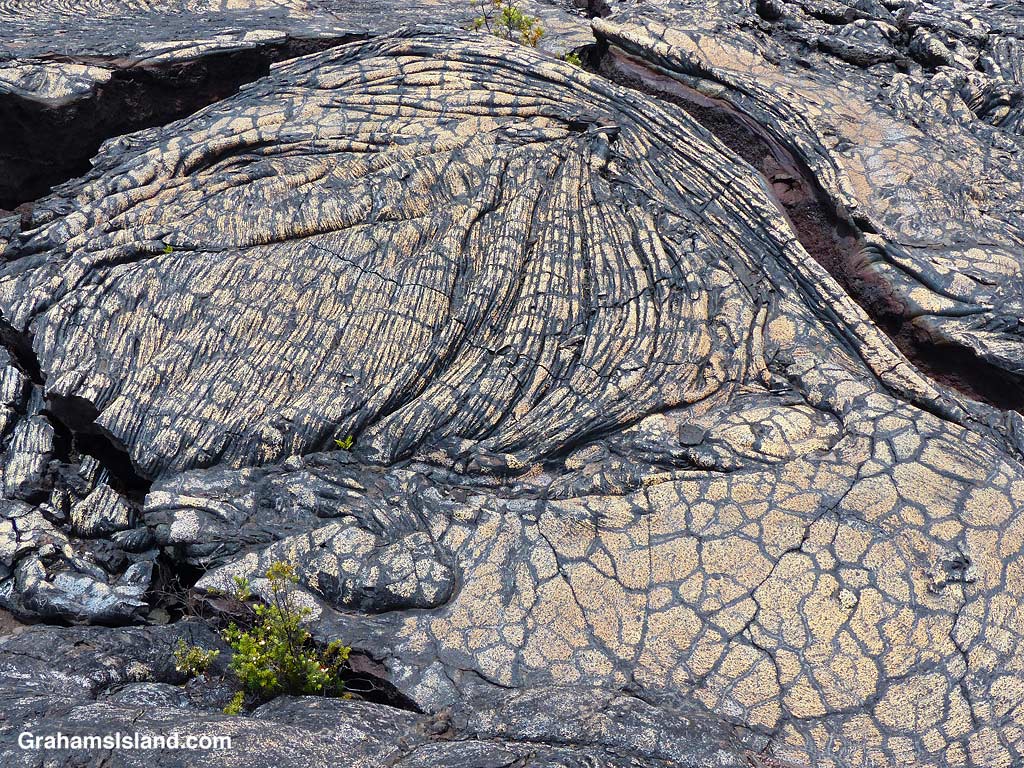
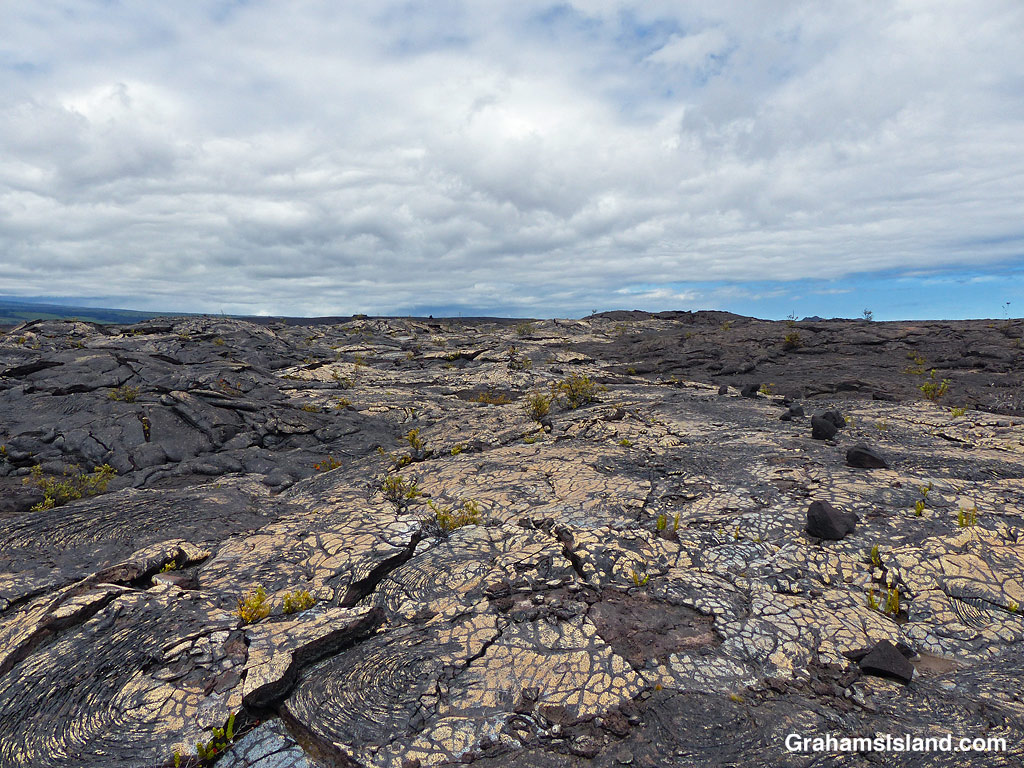
A’a and pahoehoe lava flows can be seen side by side.Gold colored ropey pahoehoe lava makes it look even more like ropes!The lava has many weird and wonderful folds and shapes.
Much of the trail is over pahoehoe lava, which is rounded and much easier to walk on than jagged a’a lava. The trail is marked by cairns and single rocks placed alongside it. It’s pretty easy to follow with just one or two parts where attention has to be paid to make sure one doesn’t stray.
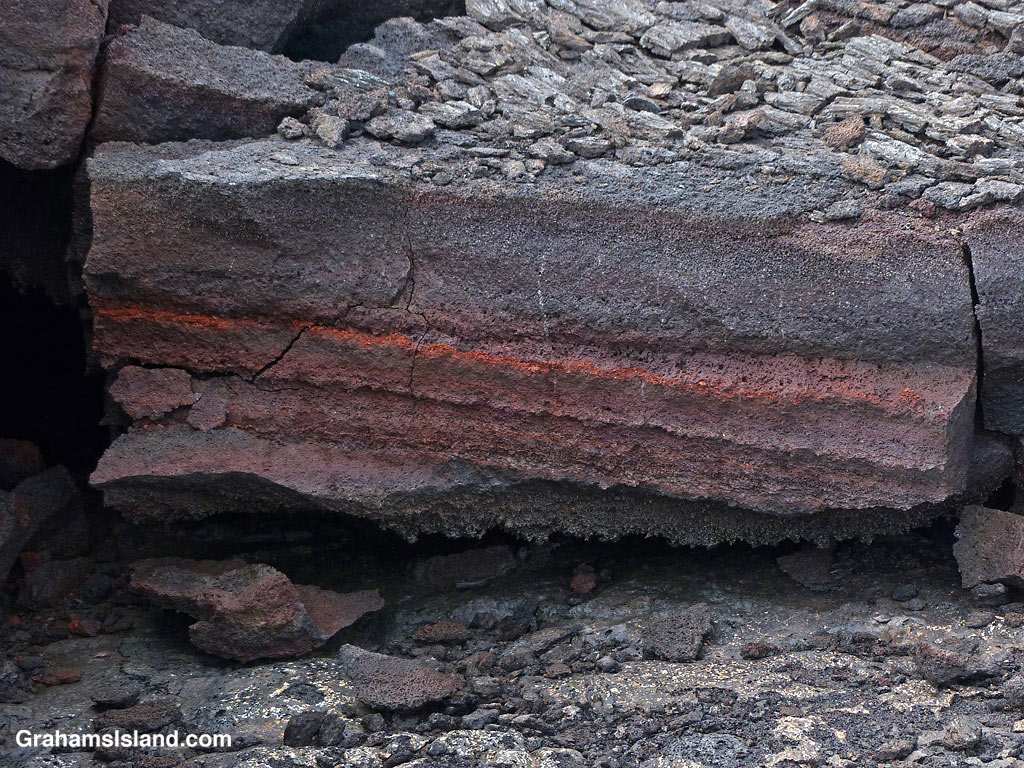
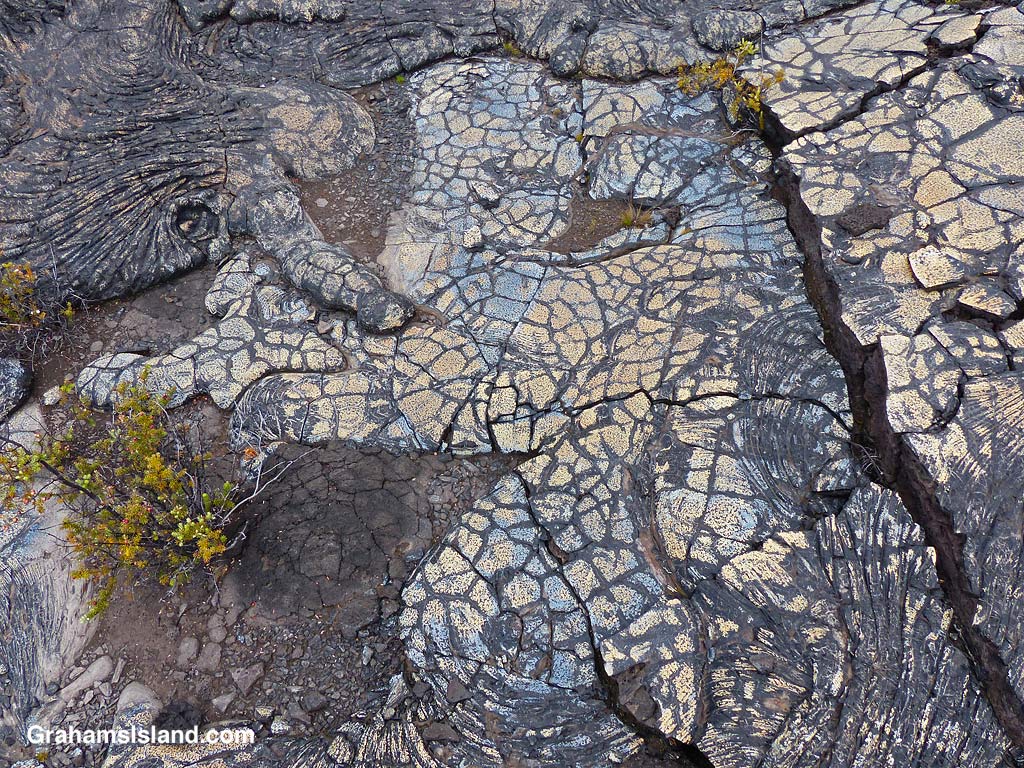
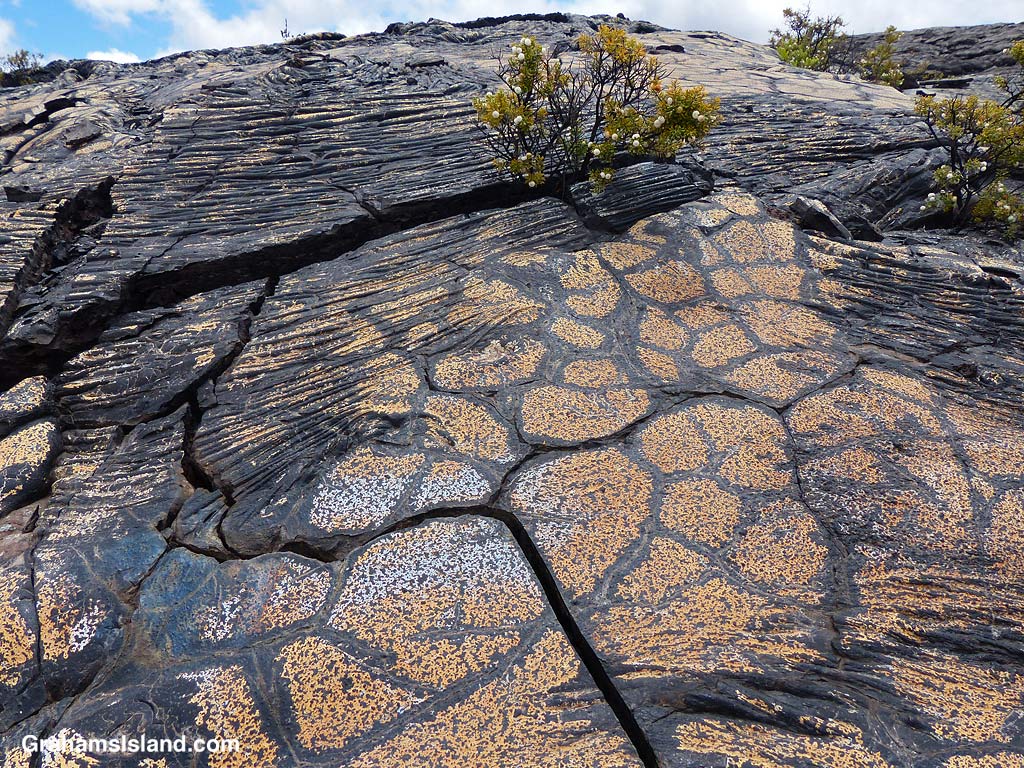
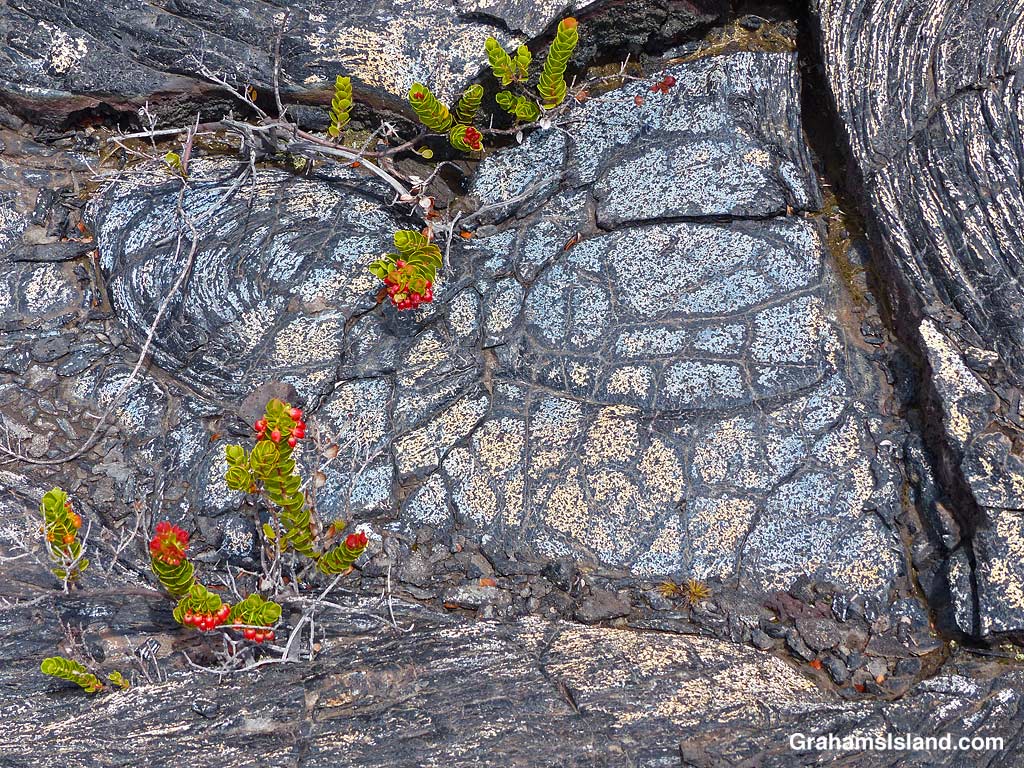
Bronze colored lava.Bands of red in the lava.A crack in the trail……revels shades of orange within.Blue and gold lava flow.Colorful and dramatic, but slowly nature returns.Colorful ropey pahoehoe lava next to smooth.Blue lava!The patterns and colors reminded me of Roman mosaic floors.Bold color and markings.Plants gain a toehold in the cracks and provide a splash of different colors.Don’t stray off the trail. There are holes and thin spots everywhere.Bright colors and bold shapes can be seen along a lot of the trail.
It wasn’t far along this part of the trail that I first encountered blue lava. That’s right, blue lava. Who knew? But not just blue. There’s bronze, pink, red, orange, gold, and who knows what. I’ve seen colorful lava on the Puna Coast Trail, but this was more varied and quite wonderful. In places the trail crossed this colorful lava and I felt bad for walking on it, though as I hiked I could see many more patches of color out in the lava fields. It’s not wise to leave the trail since there are many lava tubes, some with very thin ceilings.
This is an out and back trail and I turned around once I reached the Kamakai’a Hills, after about 5 miles. It’s another 2 or 3 miles to the next junction where there is a small cabin.
Also posted for Jo’s Monday Walk. See more responses here.
The trail crosses one of the fields of colorful lava.