This week’s Friendly Friday challenge theme is ‘Balconies.’ See more responses here.
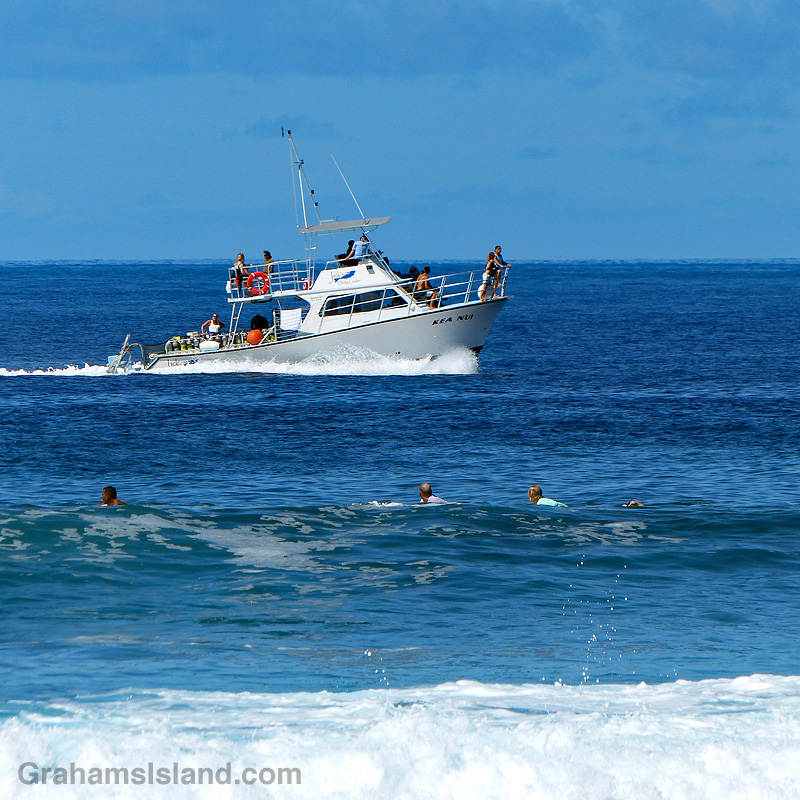
Not having any photos of balconies in the traditional sense, I thought I’d pop for a photo taken yesterday when I was down in Kailua Kona. Here, a powerboat heading north passes some surfers waiting for a wave.
The boat is taking people out to a dive, and like many of these kinds of boats this one has a couple of balconies (though they’re not called that in nautical language) where passengers can relax en route to the dive site.
This week’s Sunday Stills challenge theme is ‘Signs of Autumn.’ (See more responses here.) So here two photos of a stink bug. I think this is probably a four-humped stink bug or rough stink bug (Brochymena quadripustulata), but it could be a brown marmorated stink bug (Halyomorpha halys).
What does this have to do with ‘Signs of Autumn?’ Well, stink bugs start gathering around and inside homes in the fall. As natives of Southeast Asia, they’re sensitive to the cold and spend winter in a hibernation-like state called torpor. So in the fall, they’re looking for a suitable safe spot and a warm house fits that bill. They also have a tendency to gather in large numbers, so one stink bug could quickly be joined by many others.
Stink bugs don’t bite and they’re not dangerous, but they can release an offensive smelling liquid if threatened, hence their name. Because of this, they’re not exactly welcome house guests.
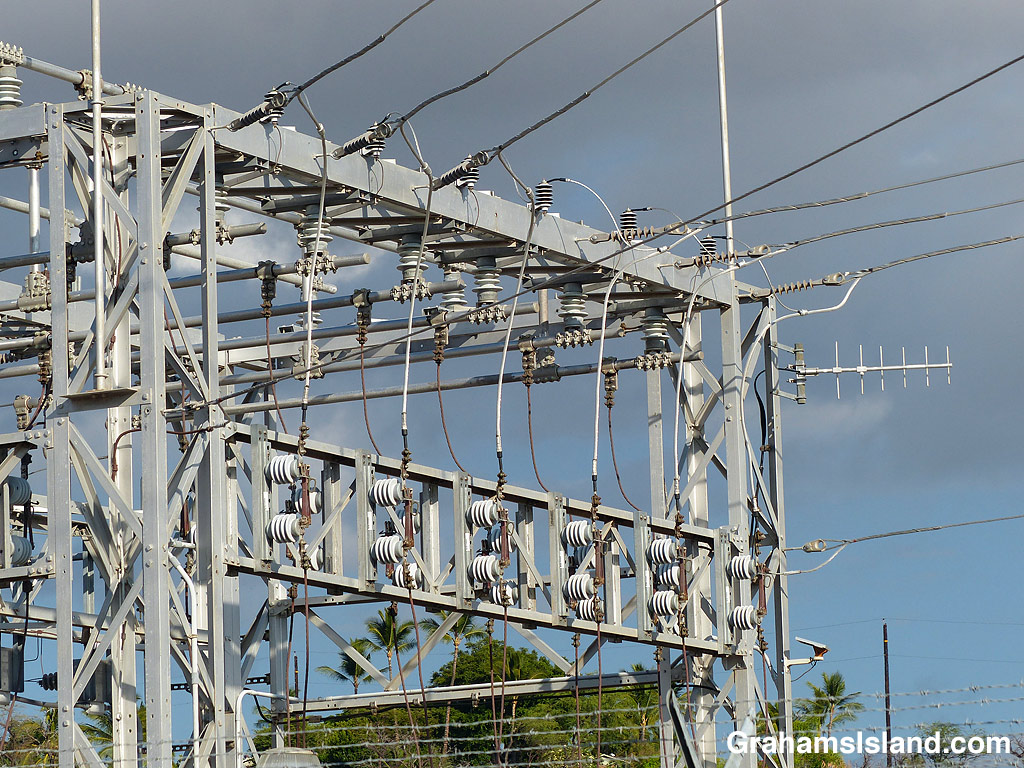
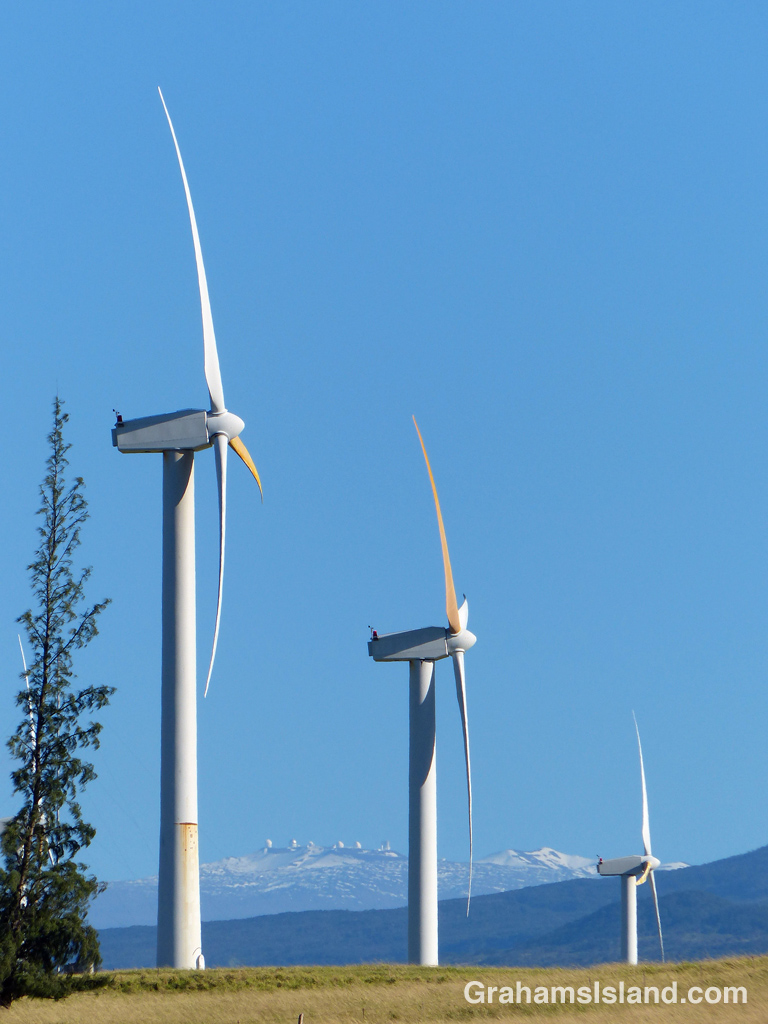
This week’s Friendly Friday challenge theme is ‘Electric.’ See more responses here. These three photos are quite different, but linked by this theme.
The top photo shows a view of an electric substation. I like the lines and shapes such facilities offer. But where does this power come from? A good deal is from oil fired plants, but Hawaii is working to get more of its electricity from locally sustainable sources.
In the middle is a view of Hawi wind farm, with Mauna Kea in the background. There are several wind farms of varying sizes in Hawaii including a few on the Big Island. Their contribution to the power grid is small, but growing. Solar power is also a big contributor, on an individual house basis or for whole communities (here).
One source that provided around 25% of the Big Island’s electricity was the Puna Geothermal Venture (PGV). Last year’s eruption shut them down, though, as the bottom photo shows, the flows mostly missed the plant itself. I think a couple of their wells were covered by lava, but most were spared. Currently, they’re in the process of restarting power production. Not everyone here is a fan of this power source. The same can be said about the Honua Ola bioenergy plant, which will generate electricity from burning eucalyptus chips, but which is still to become operational.
Canoe racing is part of a resurgence in traditional Hawaiian culture and activities. Before contact with western civilization, canoe racing was widely popular. But missionaries, who were among the early western arrivals on the islands, didn’t like the races and the gambling on them (along with pretty much every other enjoyable activity). Finally, Queen Ka’ahumanu, influenced by the missionaries, banned canoe racing.
In 1875, King David Kalakaua reinstated the sport, leading to renewed participation in the activity. These days, canoe racers come from all walks of life and take part in the sport for the exercise as well as the racing. Many of the boats, based on traditional designs, are made from fiberglass, but most canoe racing clubs have at least one canoe made from koa wood as it would have been in the old days.
In these photos, a group of local women train in a double-hulled canoe, zipping into Kawaihae Harbor ahead of one of the inter-island barges.
Posted in response to this week’s Sunday Stills challenge on the theme of ‘Sports or Hobbies.’ See more offerings here.
This week’s Friendly Friday challenge theme is ‘blue.’ See more responses here.
Here in Hawaii, blue sky and blue water dominate, especially along the coast. Fishermen are at the forefront of those who get to see these things the most, or they would be if they were around. This scene is typical: blue sky, blue water, a fishing pole, but no fisherman. No doubt resting somewhere in the scant shade provided by the trees.
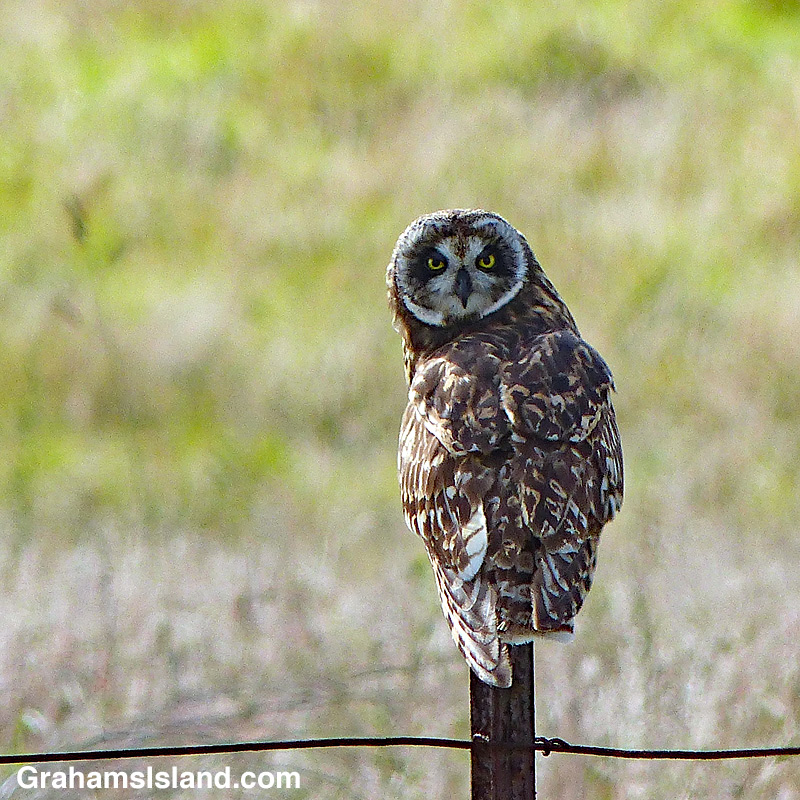
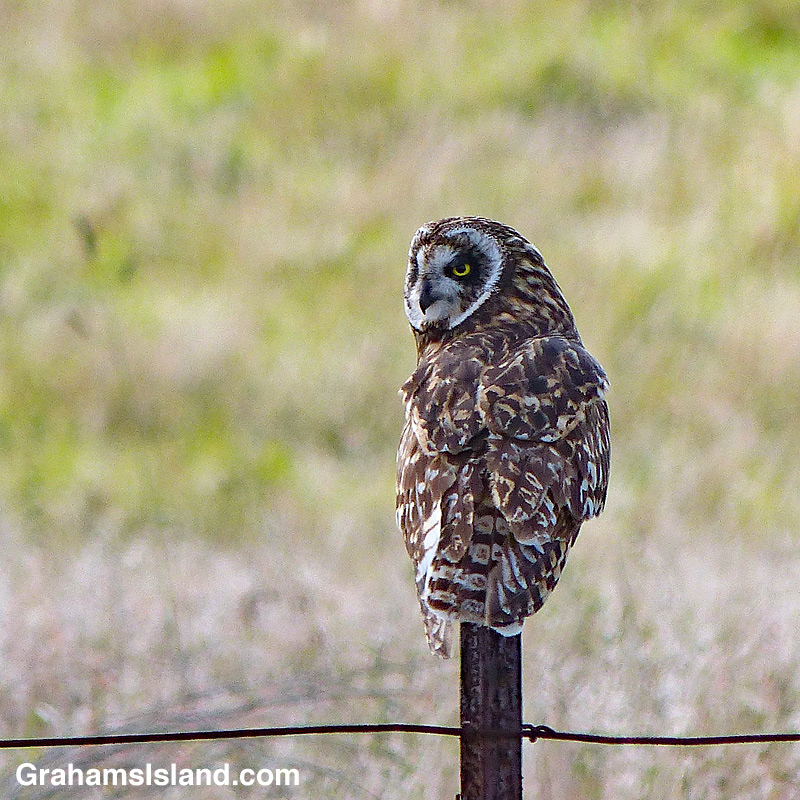
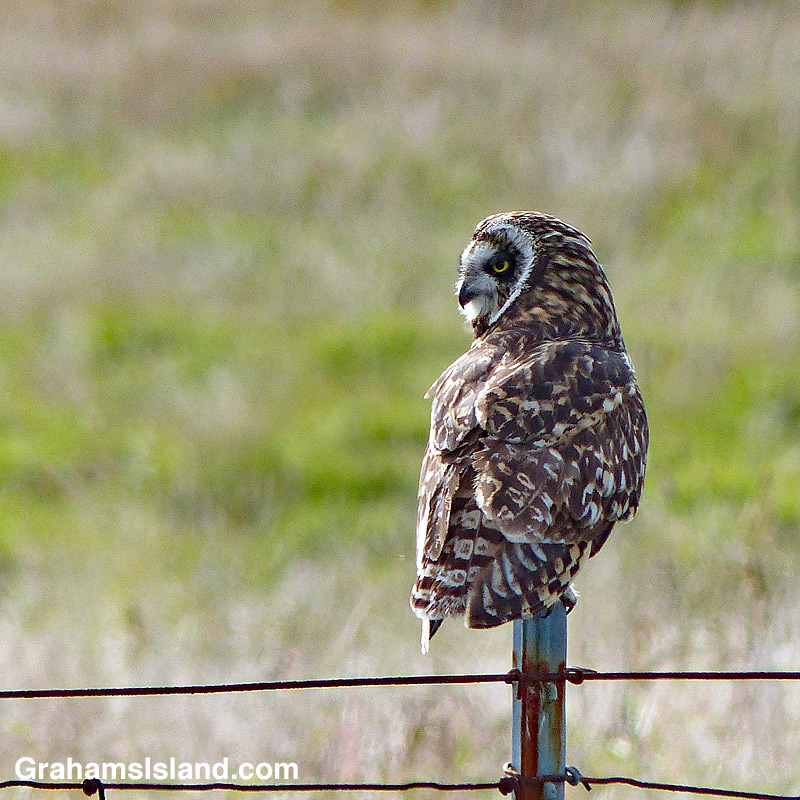
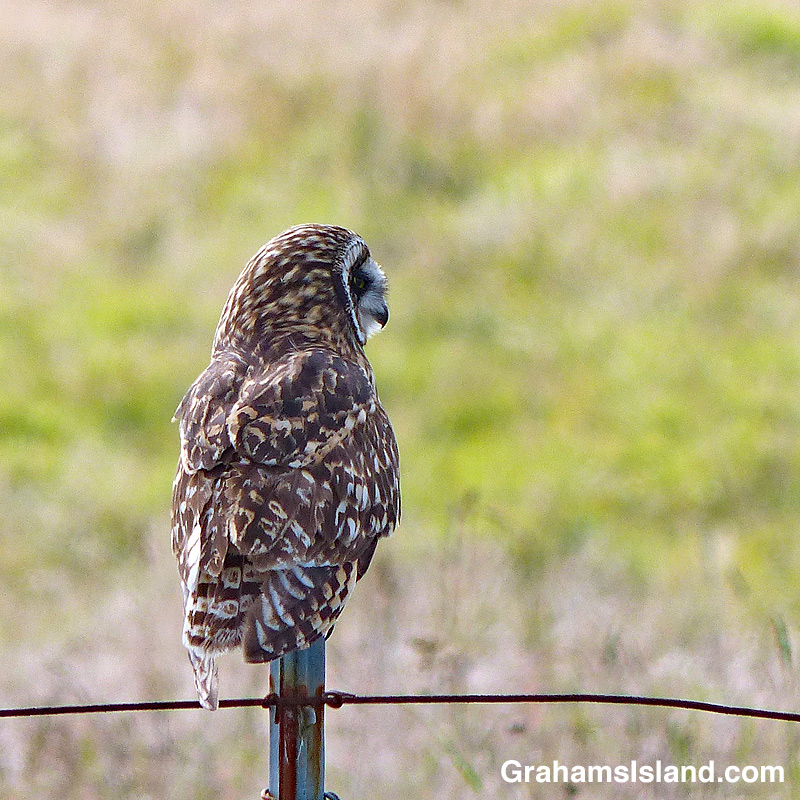
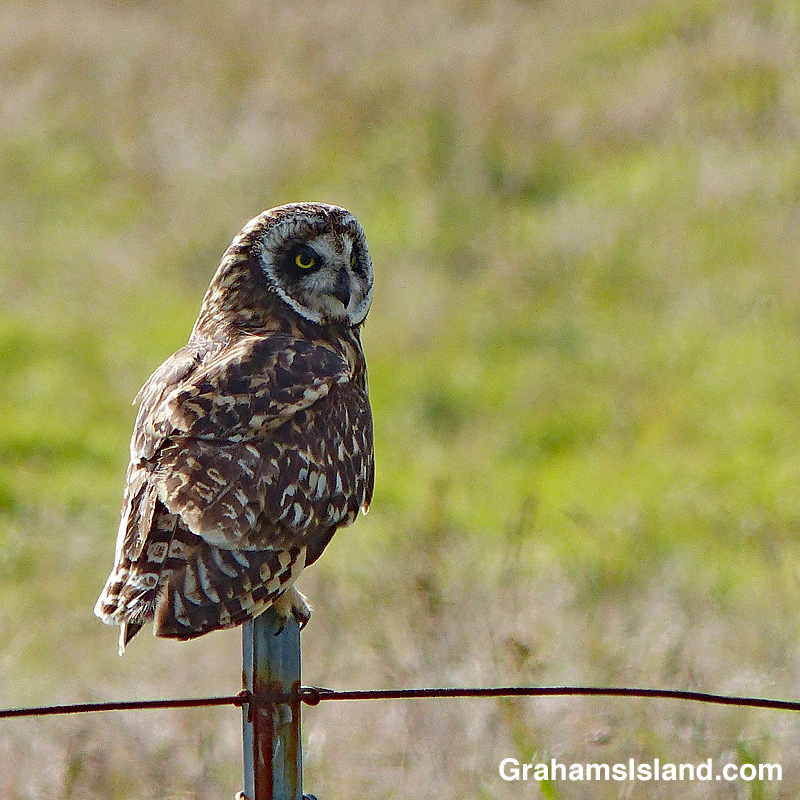
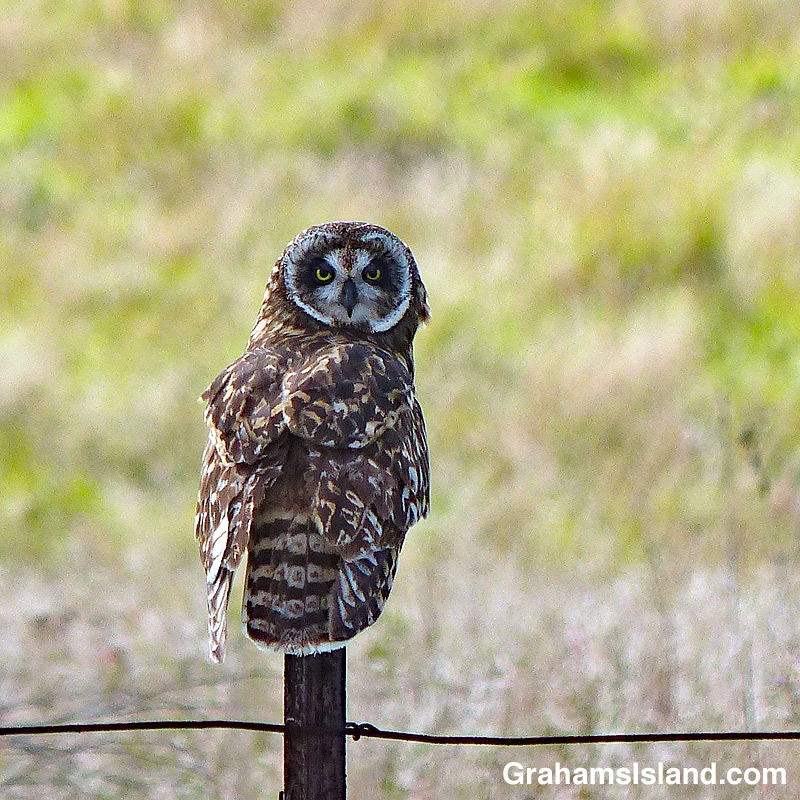
This week’s Sunday Stills challenge theme is ‘Layers.’ (See more offerings here.) I thought about the layering of bird feathers, in this case of a pueo (Hawaiian short-eared owl) surveying its surrounds, watchful for threats while also scanning for meal opportunities. Its diligence paid off shortly afterwards when it dove down and snagged a mouse (here).
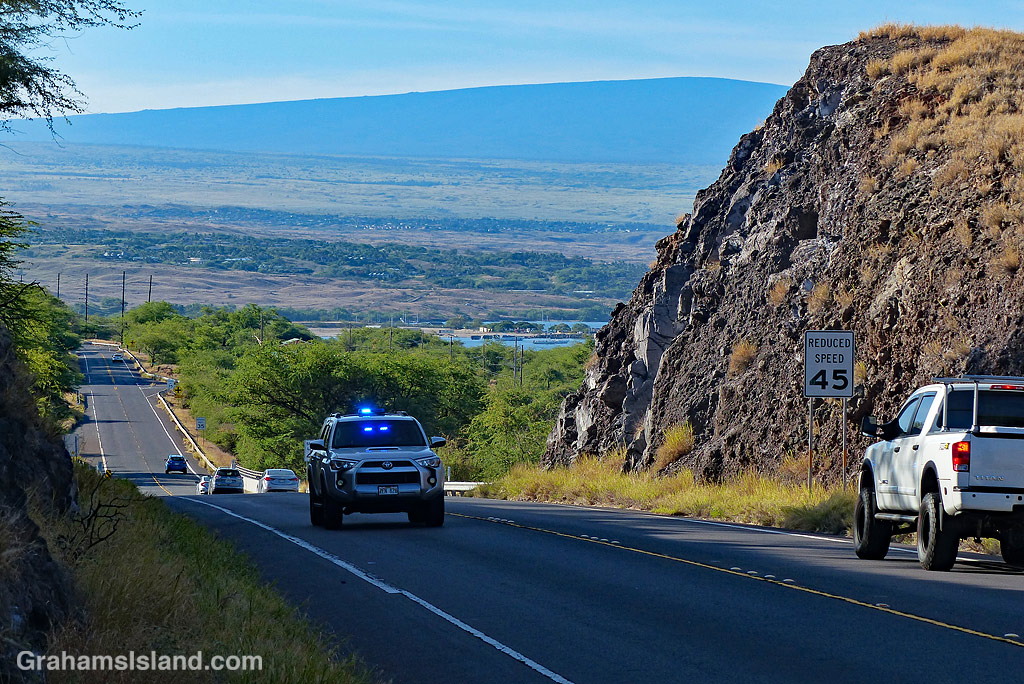
This week’s Friendly Friday challenge theme is ‘Ignored.’ (See more responses here.) Mulling this over on my drive to work, I thought about speed limits. Like all of you (I’m sure!), I drive at or below the speed limit, but there are lots of people out there who don’t, who just ignore the signs.
For example, in these photos, in the space of a couple of hundred yards, the speed limit drops from 55 mph, at the top of the little hill, to 45 mph, and then 35 mph at the bottom of the hill. There are people who actually slow to 35 mph by that point, and they run the very real risk of being plowed under by all the other drivers who routinely go 45 mph all the way into Kawaihae, and out again on the other side.
The truth is, driving 5 mph over the speed limit is generally considered acceptable here and won’t get you pulled over. Exceed that leeway and you’re taking a chance. And in Hawaii, the police are hard to spot. Most police officers drive their own cars with no markings and only a little blue light on top. When the police car in the bottom photo sped into view there was a blaze of brake lights from the vehicles heading down the hill. But it was on the way to some other, more important situation.
After I took the photos, I got back into my truck and somehow, and I can’t explain it, by the time I got to the bottom of the hill I was going 45 mph. First time for everything I guess.
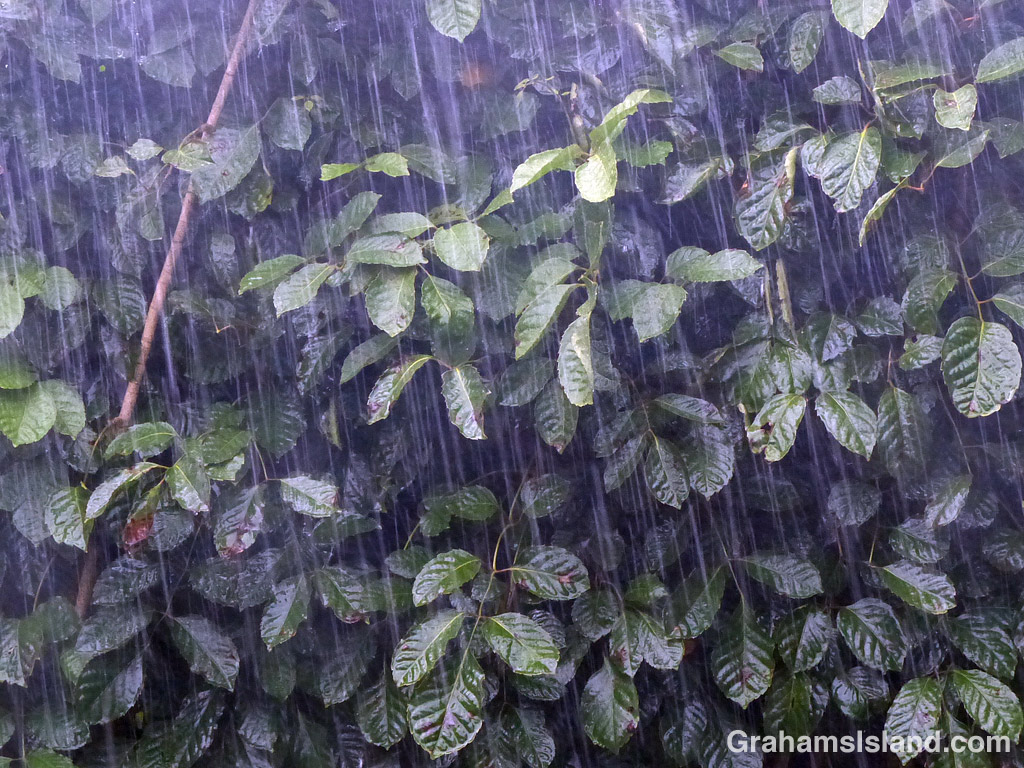
This photo is for those who believe the sun always shines in Hawaii. Not the case, and when it does rain, this being the tropics, it can be torrential. Here, rain sheets down in front of a panax hedge. Panax is widely used here for hedges, growing into a thick, dense barrier. It’s easy to grow, too. One just has to cut off a stick, push it into the ground, and a new plant will soon start growing.
Posted in response to this week’s Friendly Friday challenge on the theme of ‘Leaves.’ See more responses here.







 Graham's Island