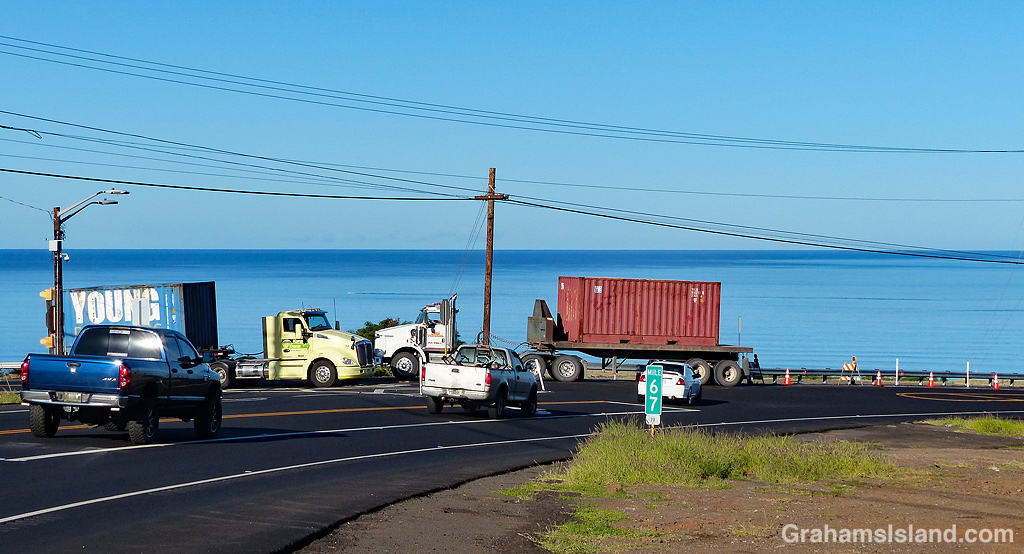

This is the highway intersection about a mile east of Kawaihae. It’s the junction of three roads, Kawaihae Road coming down from Waimea, Akoni Pule Highway from Hawi and North Kohala, and Queen Kaʻahumanu Highway (better known as ‘Queen K’) from Kailua Kona.
It’s always been a problematic junction because Kawaihae Road and Queen K are part of the main loop road around the island, but the right of way at this junction was the Kawaihae Road to North Kohala road. Traffic would get backed up on Queen K, particularly in the afternoon, and accidents were common. Compounding the problem was that the road from Kawaihae carried a lot of trucks coming to or from the port there.
So earlier this year a revision of the intersection was started. A right turn lane was added to Queen K, for traffic going up the hill to Waimea, and a right turn lane was added Akoni Pule Highway for people headed south. (There was already a left turn lane on Kawaihae Road for people going south.)
Don’t worry if this makes no sense, because it makes no sense. What was being set up seemed doomed to failure.
The problem was that the new right turn lane from Kawaihae onto Queen K was fitted with a yield sign. This meant traffic from Waimea, turning left onto Queen K had to give way to traffic heading up the hill, but had the right of way over traffic turning south.
The first accident happened before the intersection was finished. Someone failed to make this right turn and plowed into the guard rail opposite. Shortly after this, two cars collided in the middle of the junction. There were more near misses and accidents.
The yield sign was changed to a stop sign. This helped, but did nothing to stop the confusion of drivers coming down from Waimea. White poles were added to the lane divider for the right turn lane from Kawaihae. Bumps were placed in the other lane for traffic going up the hill. The accidents continued, as did the near misses.
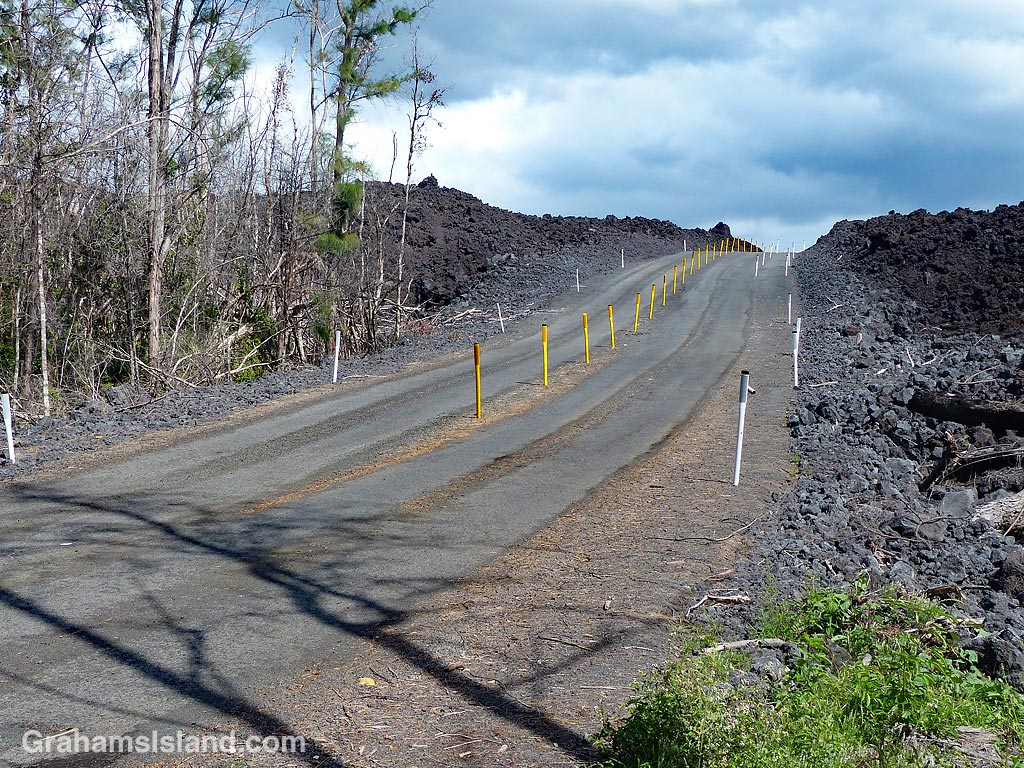
These photos show that right turn lane coned off, as the powers that be have decided to take out the right turn lane. So what we have managed here is several months of work and adjustments has caused a bunch of accidents and near misses and now a good portion of that work is going to be undone and returned to its original unsatisfactory configuration. Your tax dollars at work!
It’s not been a great period for the highway department. A major project saw the main road north of Kailua Kona to the airport widened from two to four lanes. This was delayed for several months because plans given to the road construction company failed to include right turn lanes into Kaloko-Honokohau National Historical Park. The problem here was that it’s national historical park because there are a lot of Hawaiian artifacts in the area, so a new archeological study had to be carried out.
And my personal favorite was the construction of a new highway south from Kailua Kona, intended to relieve traffic congestion in that area. The new highway connected to a previously confusing and dangerous ‘Y’ layout, that became a four-way intersection complete with traffic lights. It was opened with much fanfare and the only issue was that people, tourists and locals alike, had no clue where they were supposed go because there was no signage showing which road went where. Yes, that’s an exaggeration. There was one sign, left over from the previous configuration of the intersection, that now directed people in the wrong direction.
And the moral of this story is that, if you visit the Big Island, please drive with caution.
Posted in response to this week’s Friendly Friday challenge on the theme of ‘Mistakes.’ See more responses here.



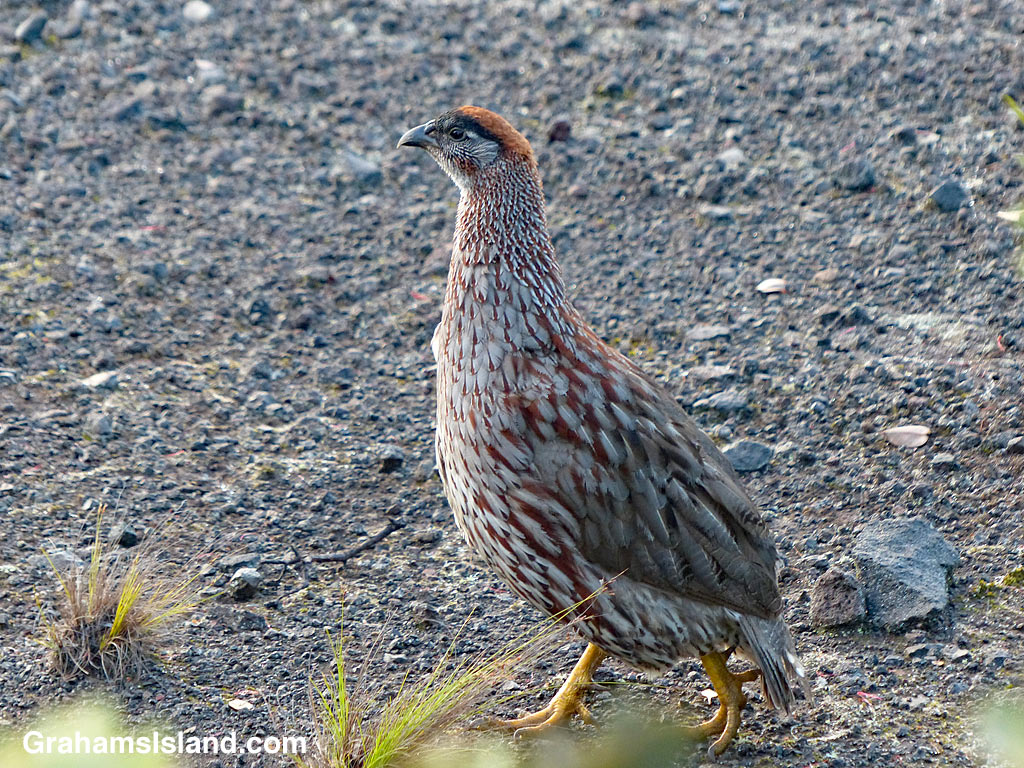
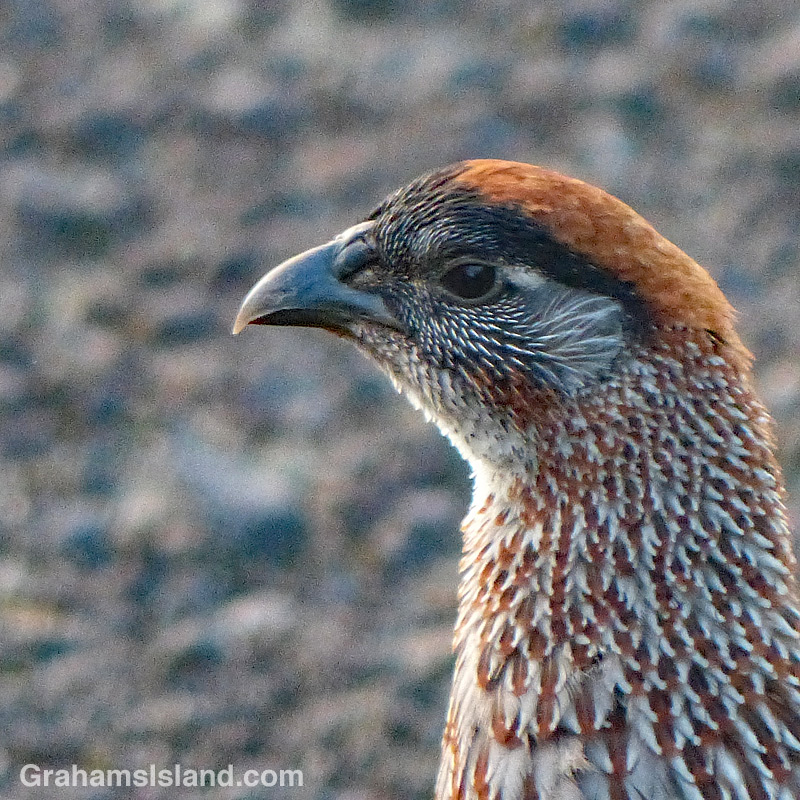 There are three kinds of francolin in Hawaii, the grey francolin, black francolin, and Erckel’s francolin. All are introduced game birds. Of the three, the Erckel’s francolin is the largest. It’s native to North Africa and was brought to Hawaii in 1957. It’s distinguished, not just by its size, but by its bold markings and chestnut crown.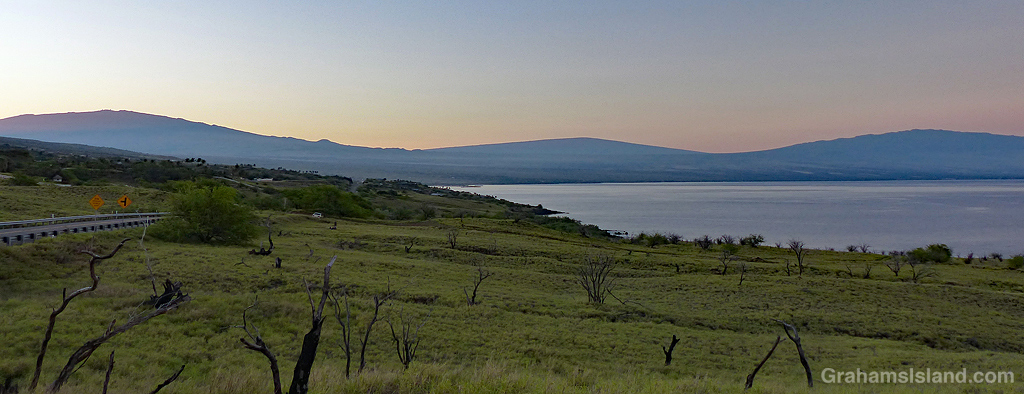
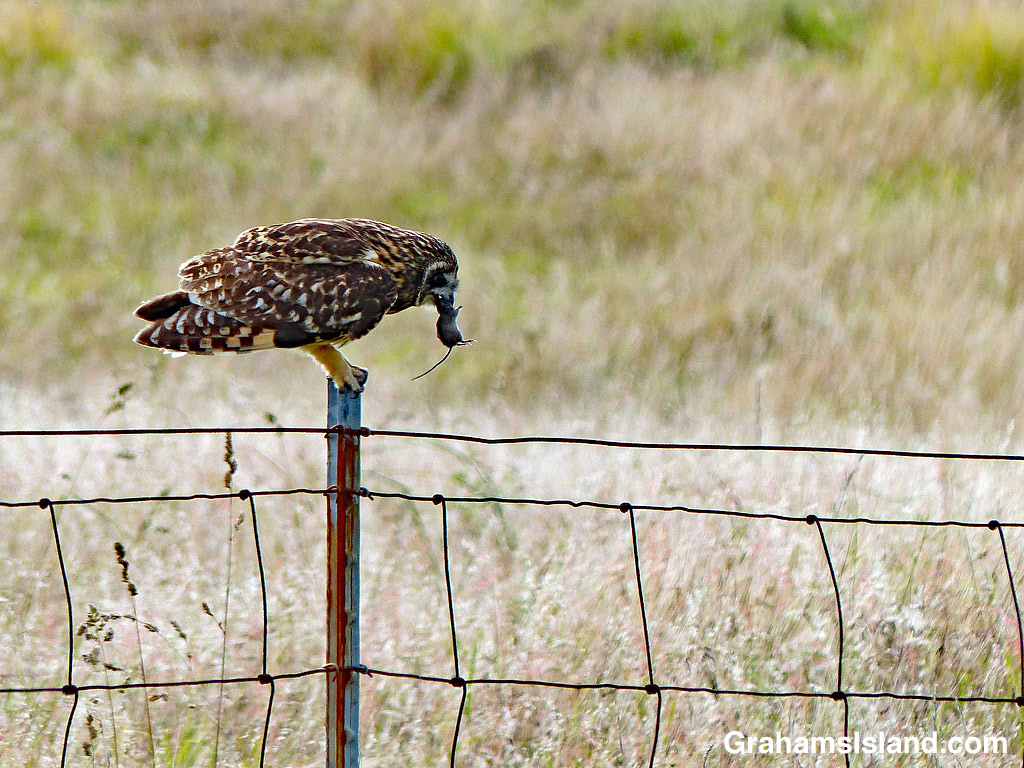

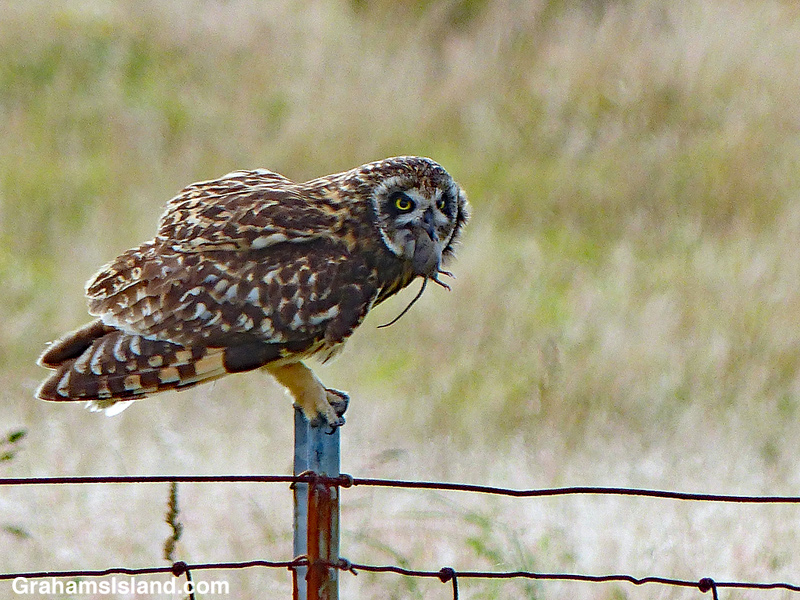
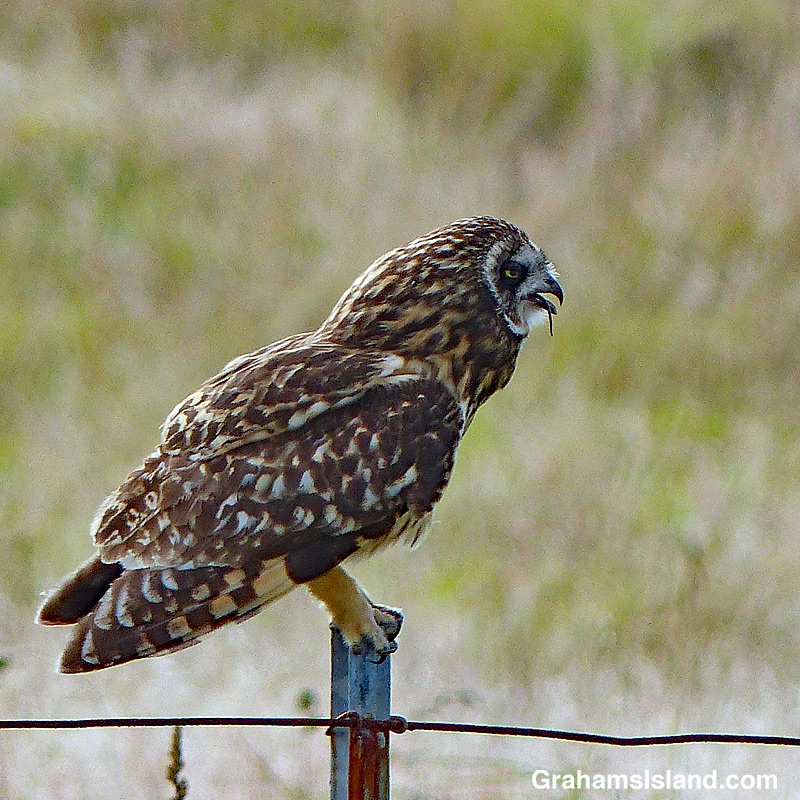 Last week’s Sunday Stills challenge theme was ‘Flight’ and I posted photos of a pueo flying
  Graham's Island