
This young goat was looking particularly bright-eyed and ready for action, as they tend to do. The myna bird, watching the kid, looked grumpy and unimpressed, as they tend to do.

This young goat was looking particularly bright-eyed and ready for action, as they tend to do. The myna bird, watching the kid, looked grumpy and unimpressed, as they tend to do.


My fish book notes that the large-spotted snake moray eel can be encountered both day and night, but is not often seen. That’s true in my experience. This is only the second one I’ve seen here and the first I’ve photographed.
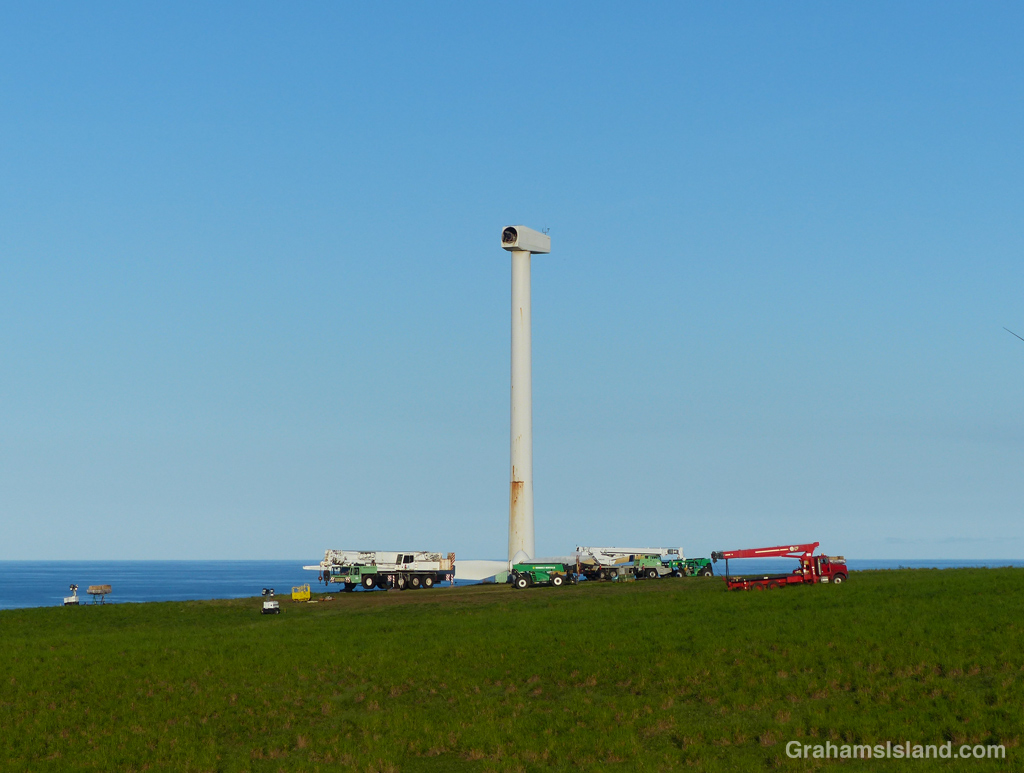
Yesterday, I stopped by Hawi Wind Farm on my way back from a walk because I’d seen this scene on the drive down. The rotor is, of course, not missing. It’s lying flat at the base of the turbine. And it wasn’t just one rotor in this position. A second turbine also had the rotor removed.
Ironically, it was a sunny day with virtually no wind but, because it was Sunday, no one was working. They’ll probably be back when the 40 mph winds and lashing rain kick in again, just to make the work challenging!
Posted in response to Bushboy’s Last on the Card photo challenge. See more responses here.
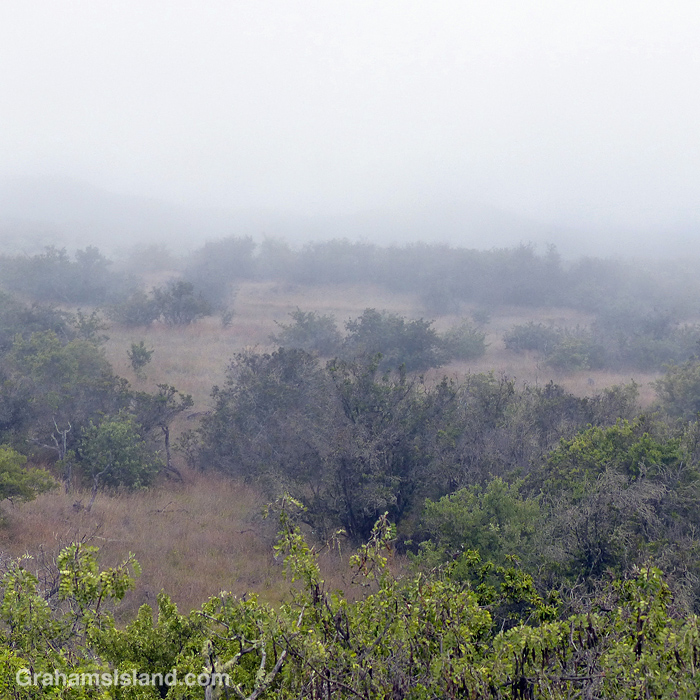
This week’s Sunday Stills challenge theme is ‘Eerie.’ See more responses here.
I couldn’t think of too many eerie things amongst my photos. This image of trees on the lower slopes of Mauna Kea, shrouded in cloud, is as close as it gets. This is a fairly common occurrence as clouds tend to build up during the day and often reach this area in the afternoons.
Also posted in response to Becky’s October Squares challenge theme of ‘Past Squares – Sky’ (See more responses here), and to the current Friendly Friday challenge theme of ‘Weather’ (See more responses here).

The coast road between North Kohala and Kawaihae is dotted with these no parking signs. There are virtually no houses along this road, so why the signs? Well, the views are lovely and in the winter, humpback whales frolic just off the coast. Who wouldn’t want to pull over.
Consequently, a 40 mph minimum speed limit is in place along this highway together with these signs. The net result is that people still crawl along taking in the view and pull over to watch whales wherever they please.
Posted in response to Becky’s October Squares challenge theme of ‘Past Squares – Circles and Squares.’ See more responses here.
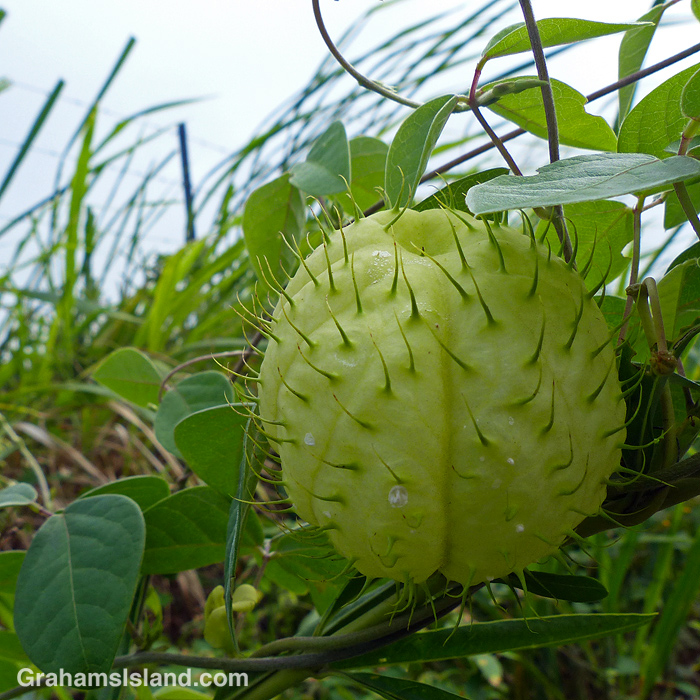
I’ve seen balloon plants (Gomphocarpus physocarpus) in local pastures before, but not up close like this. The balloons are the fruit of the plants. The long hairy spines become stiffer and spiky-looking when the balloons inflate prior to releasing their seeds.
Posted in response to Becky’s October Squares challenge theme of ‘Past Squares – Spiky.’ See more responses here.

A plane taking off from Upolu at the start of a flight to who knows where. That’s Maui in the background.
Posted in response to Becky’s October Squares challenge theme of ‘Past Squares – Words containing the word Light.’ See more responses here.
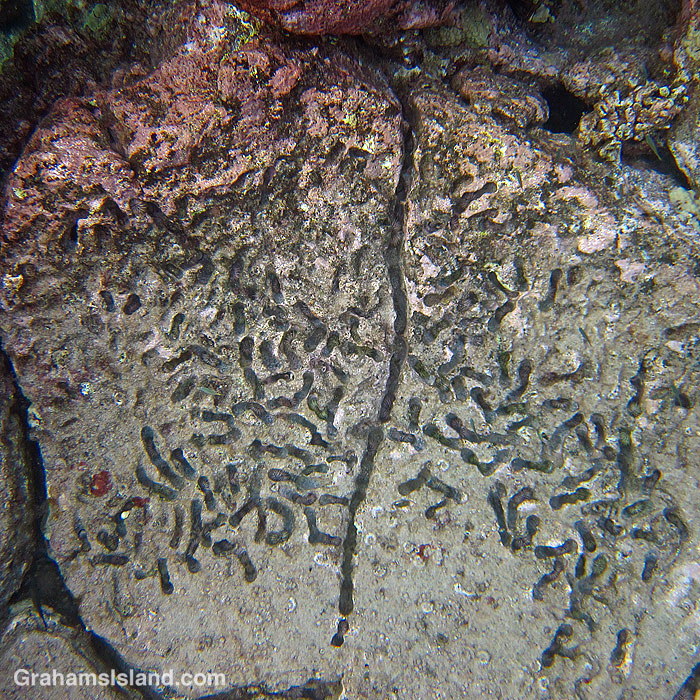
Yesterday I posted a photo of a crown-of-thorns star, with a few rock-boring urchins in it. Today’s post shows one example of the channels left by these urchins. This image initially looked like a brain to me, but then I began to see more of a tree in it.
Posted in response to Becky’s October Squares challenge theme of ‘Past Squares – Spiky/Lines.’ See more responses here.

