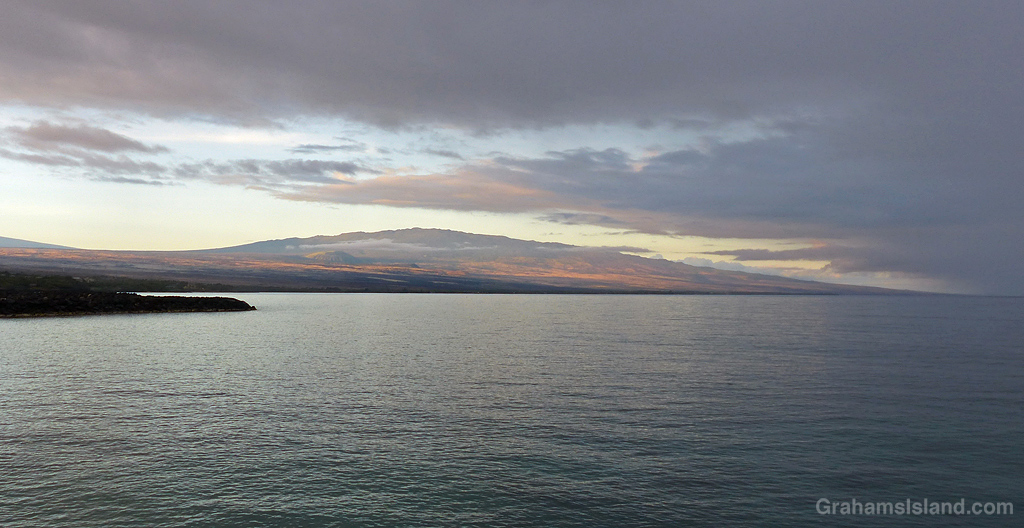
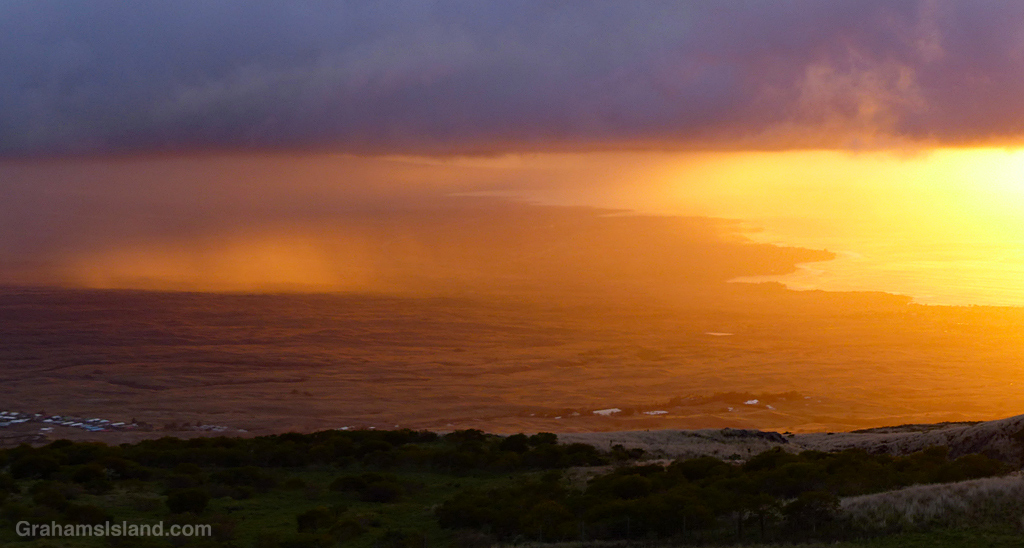
An early morning view of Hualalai Volcano from Kawaihae Harbor.

An early morning view of Hualalai Volcano from Kawaihae Harbor.
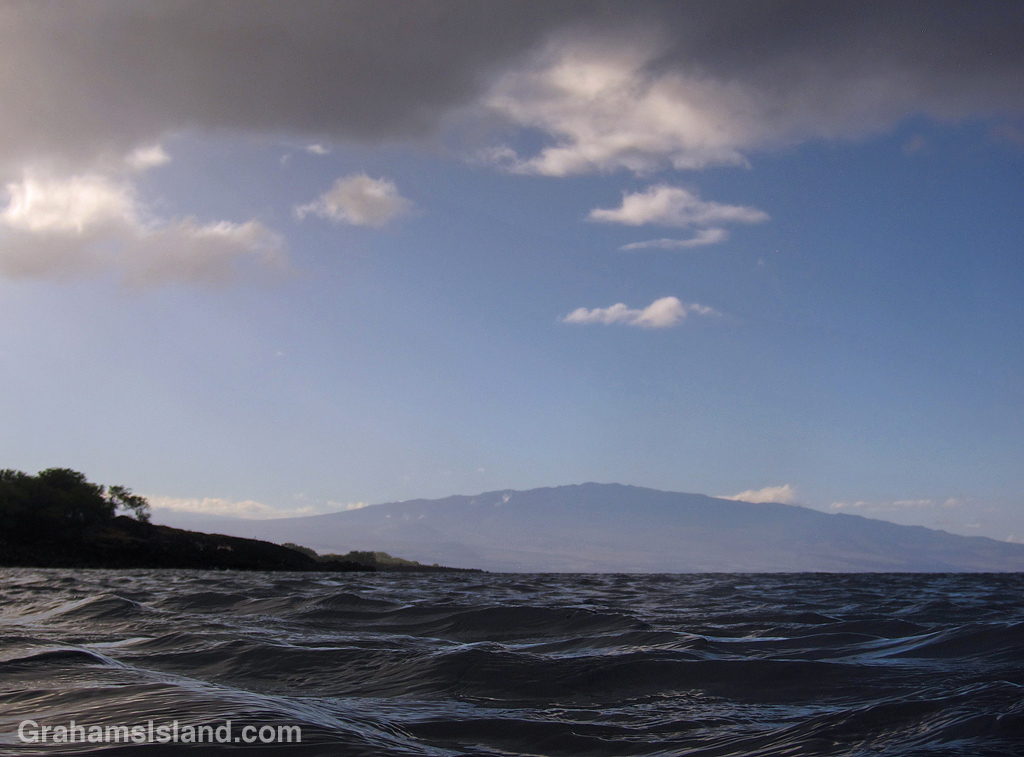
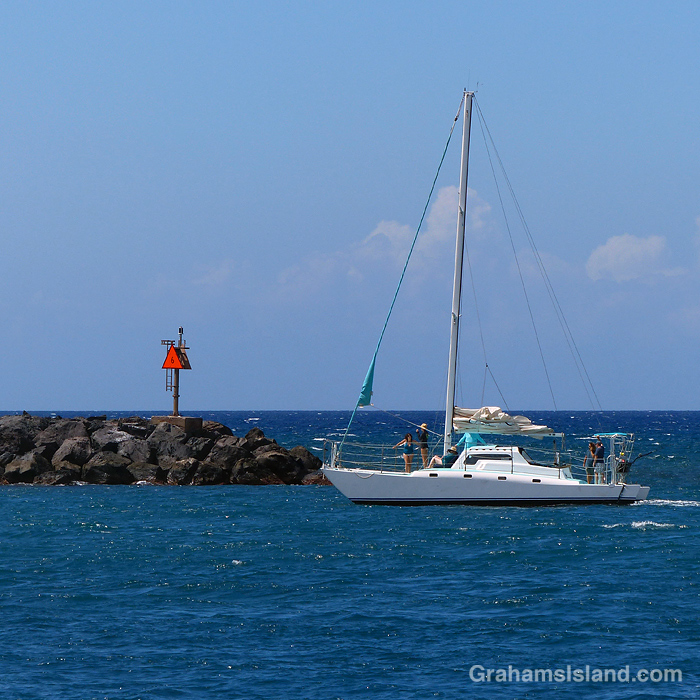
This week’s Sunday Stills challenge theme is ‘Great Outdoors.’ See more responses here.
In Hawaii, people spend a great deal of time outdoors. It’s common for people to have an outdoor kitchen, sometimes their only kitchen, sometimes a second one where a barbecue is the featured cooking apparatus. Carports often feature chairs and tables with cars parked elsewhere. The lanai, or deck, is as well-used as any room in the house.
Outdoor activities are popular here, too. Many involve the ocean and its inviting water: swimming, snorkeling, paddling, and of course surfing. Plenty of people go fishing and hunting, longtime sources of food for the table.
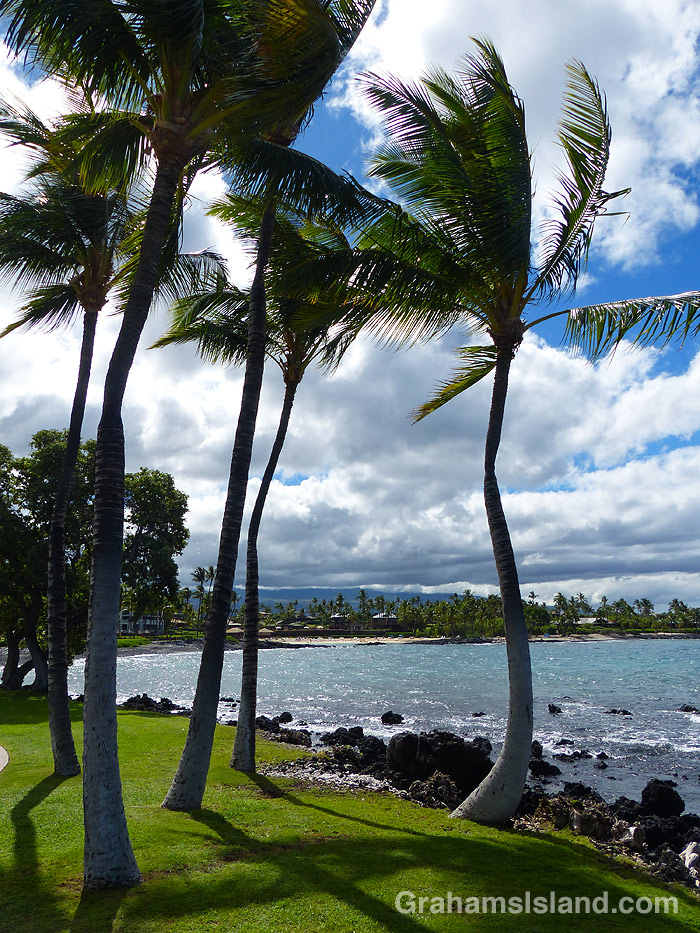
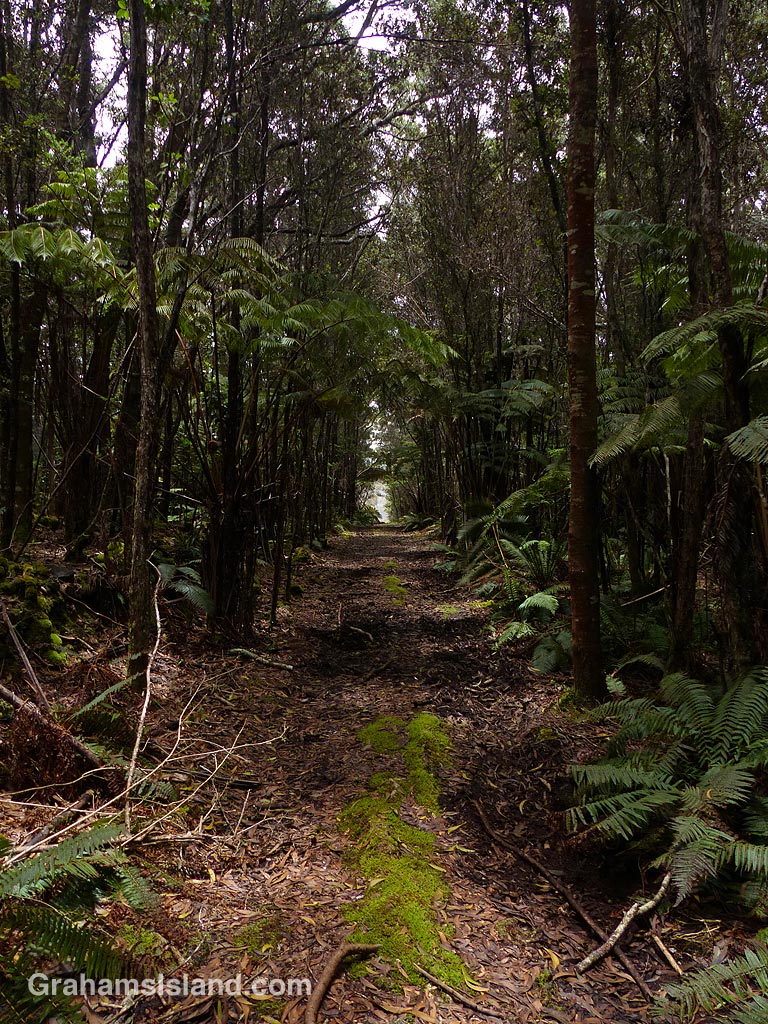
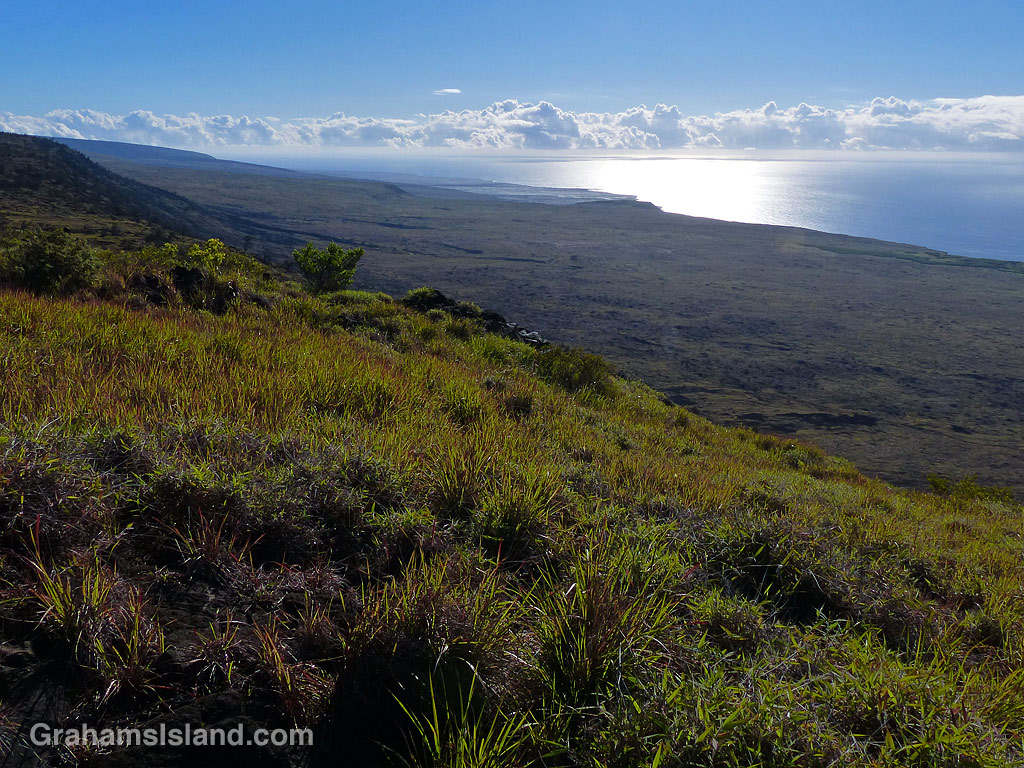
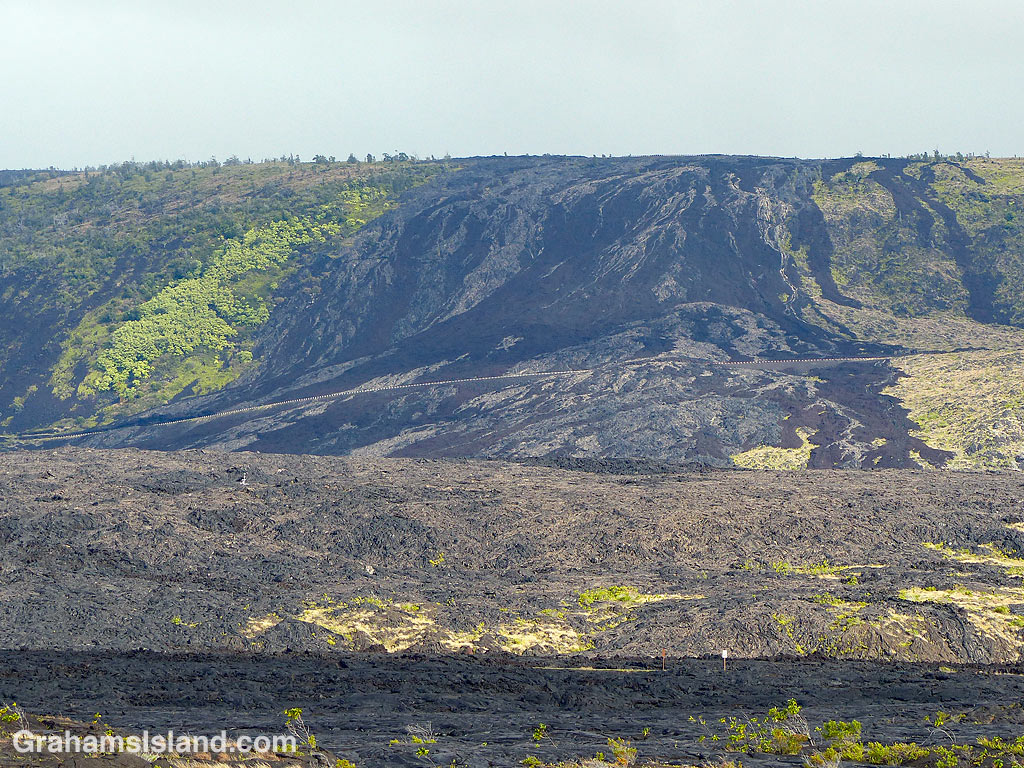
For me, experiencing the great outdoors primarily involves hiking and snorkeling. Hiking isn’t especially popular here, especially along the coast where it can get quite hot. I get strange looks when I hike the length of popular beaches togged out in hiking gear, including shoes, hat, and fanny pack loaded with water. For most, the beach is a place for stretching out and broiling in the sun, not actively working up a sweat.
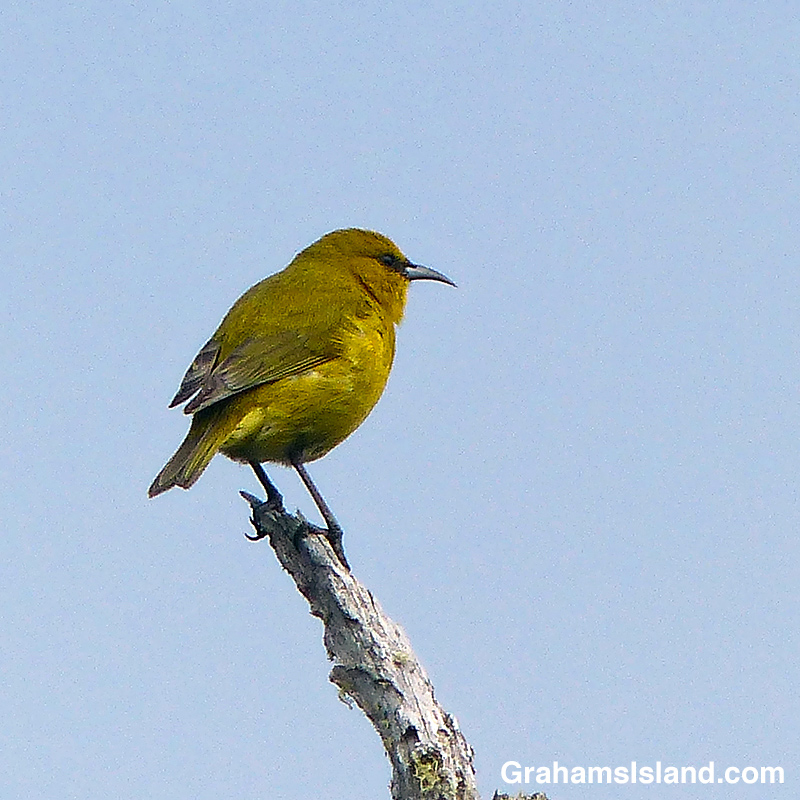
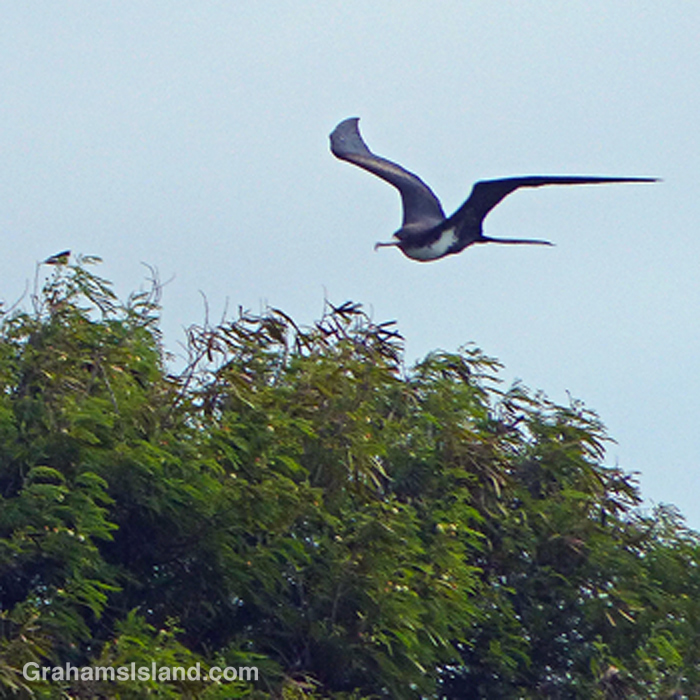
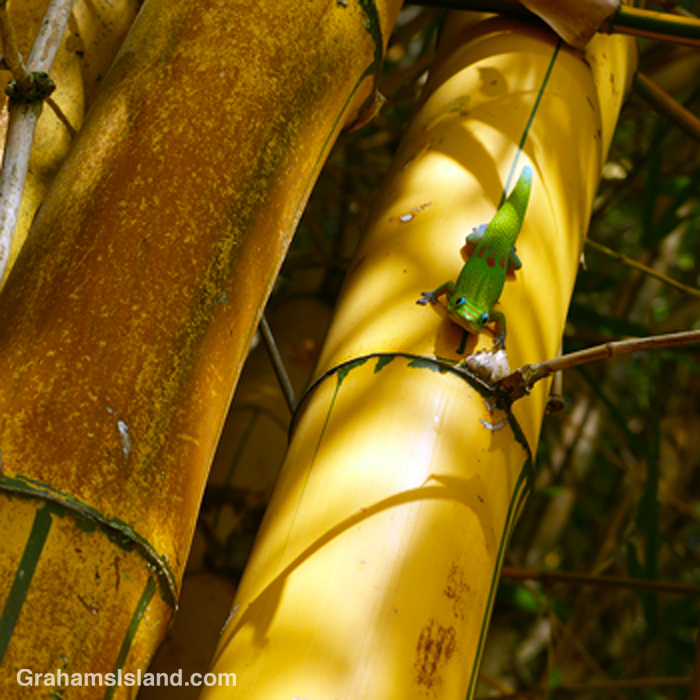
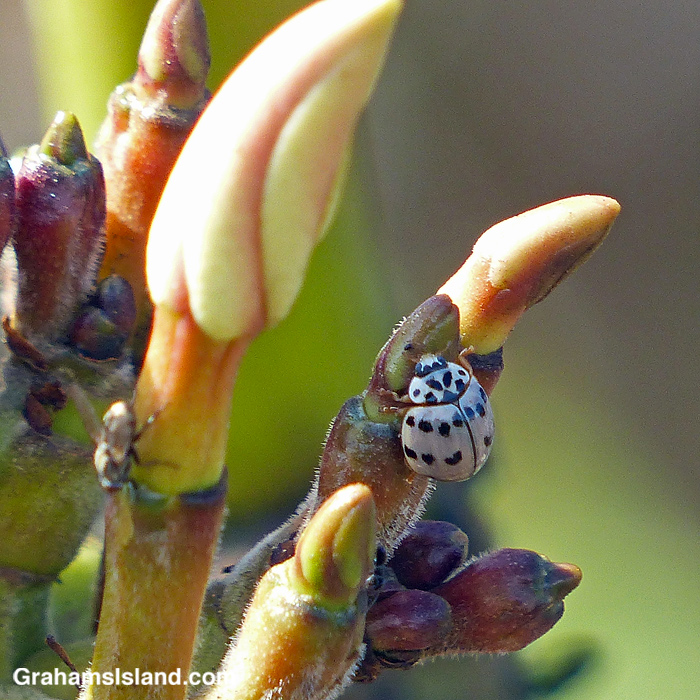
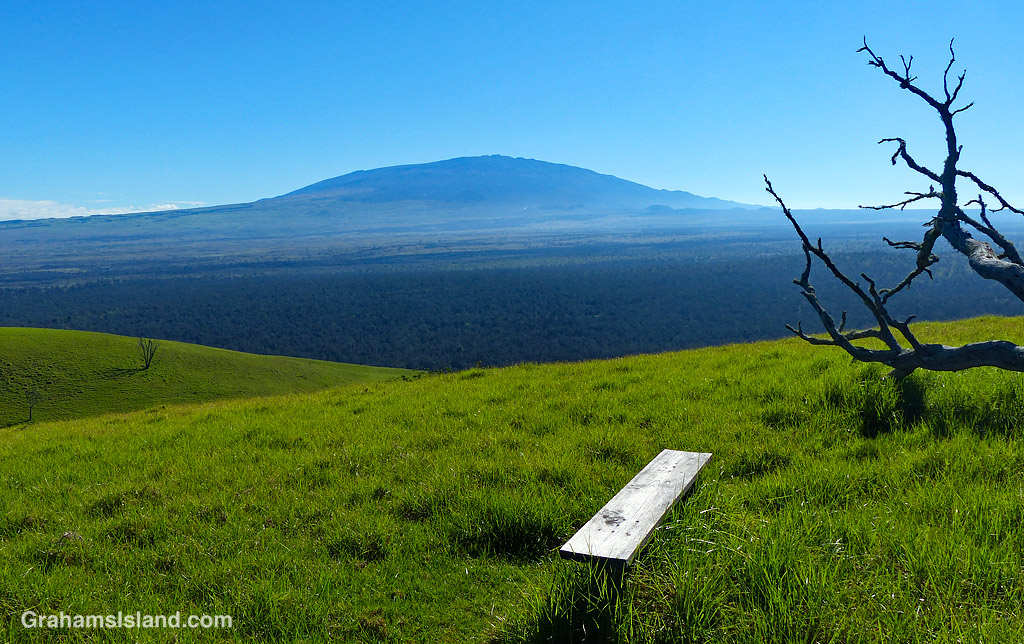
The vast majority of photos on this blog are taken in the great outdoors. These photos are a small selection of things I’ve seen while out and about, from sweeping views to birds and bugs.
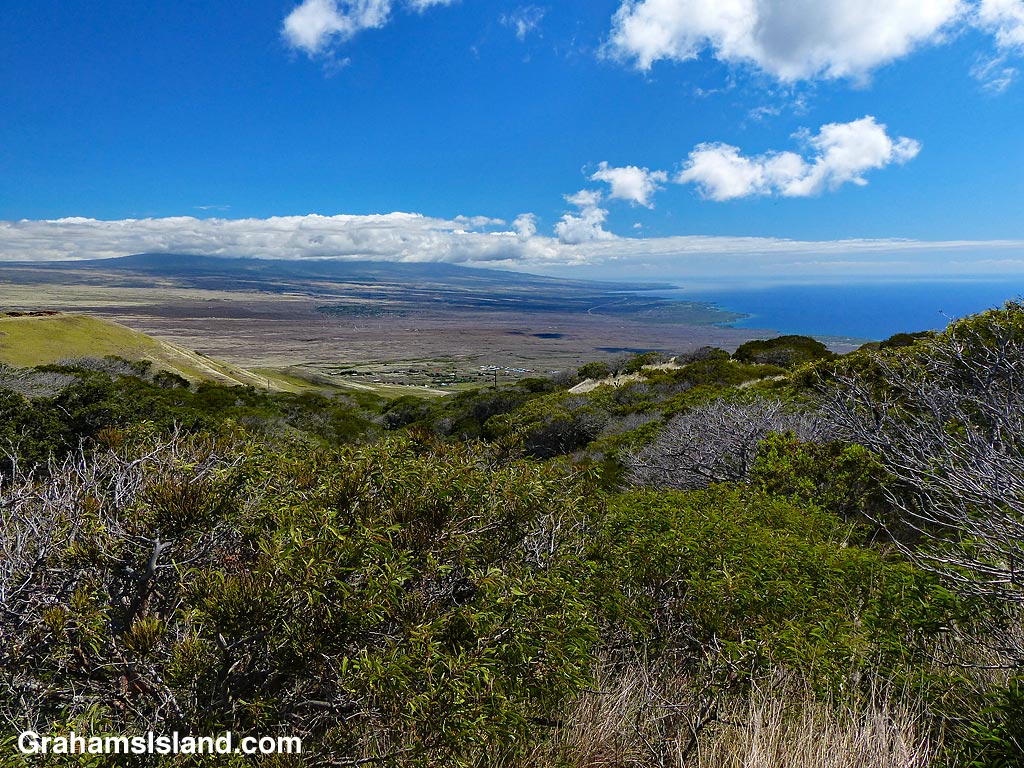

This week’s Sunday Stills challenge theme is ‘Favorite Vacation Spot.’ See more responses here.
It’s been a long while since I took a vacation, but a favorite day out is a road trip to the east side of the island and a visit to Hawaii Tropical Bioreserve & Garden.
The day starts with a drive out of Hawi, up the hill to Kohala Mountain Road. This winding road climbs to around 3,500 feet before descending into Waimea. One the way, it passes through pastureland that is home to cattle, horses, and sheep.
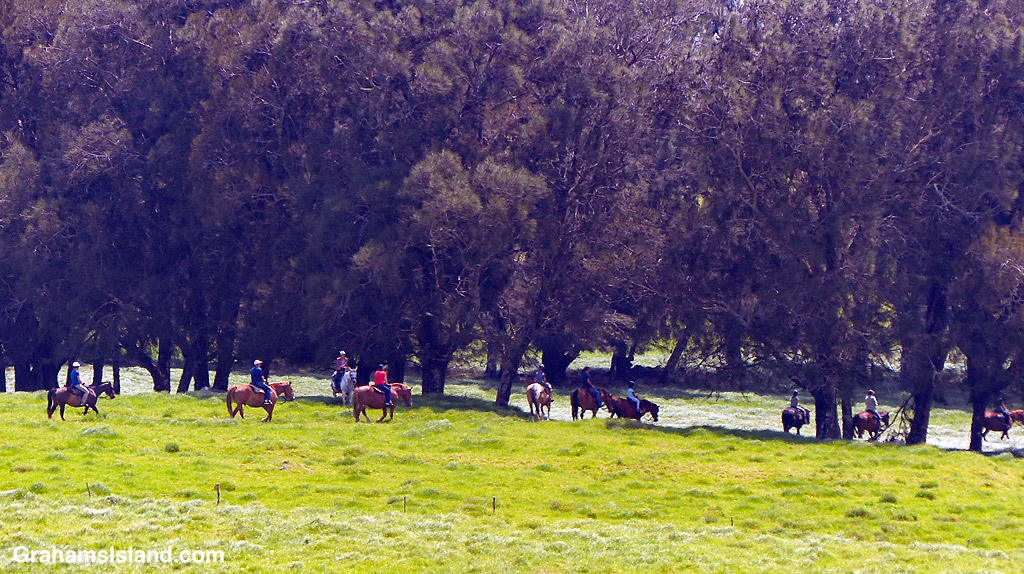
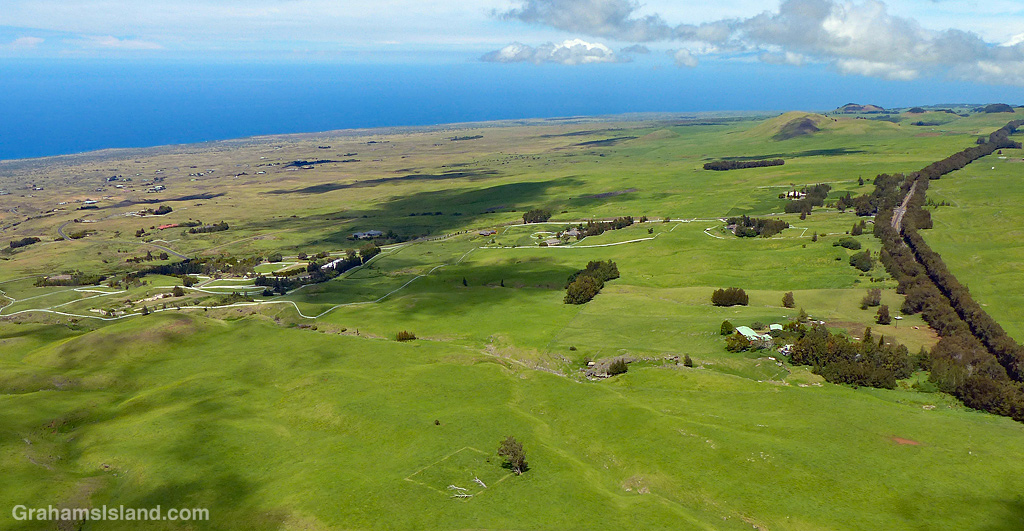
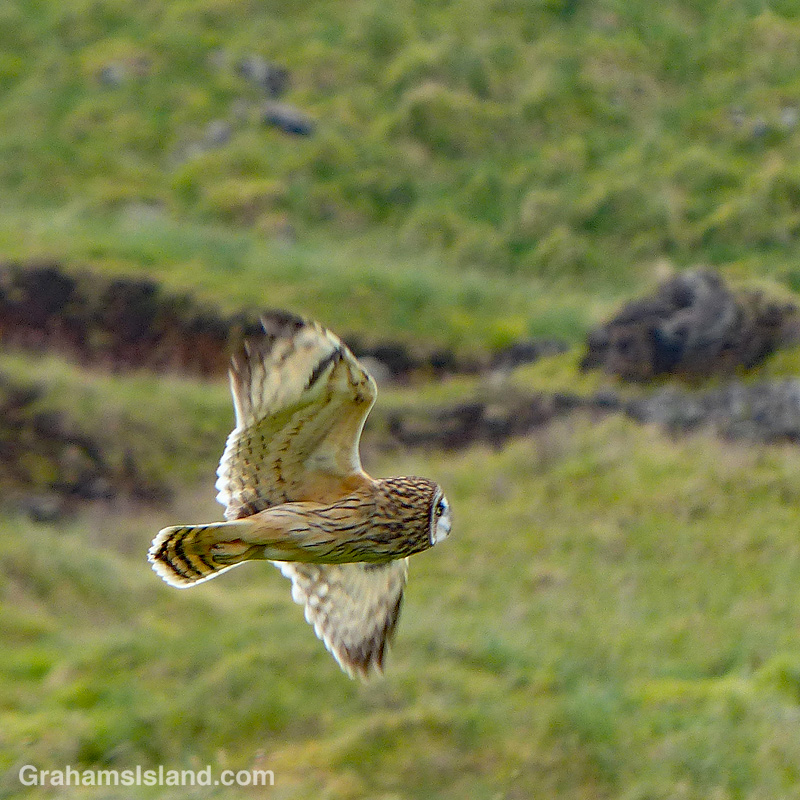
A few miles after driving through Waimea, there’s a left turn onto Old Saddle Road. These days, the main road across the island is a smooth, wide thoroughfare, but it’s not so long ago that the highway was all like Old Saddle Road – narrow and twisting. In those days, rental car companies would not allow their cars to be driven on that road. Old Saddle Road is the last remnant of the original road and it’s one of my favorite roads to drive here, not just because of the road’s qualities, but because it’s one of the most reliable places to see pueos, the Hawaiian short-eared owl. On this road I drive like one of those people you follow and say ‘What the !@^%$@)&^ is that idiot doing?’ I’m prone to zipping off the tarmac and bolting from the car, camera in hand, snapping photos as I go.
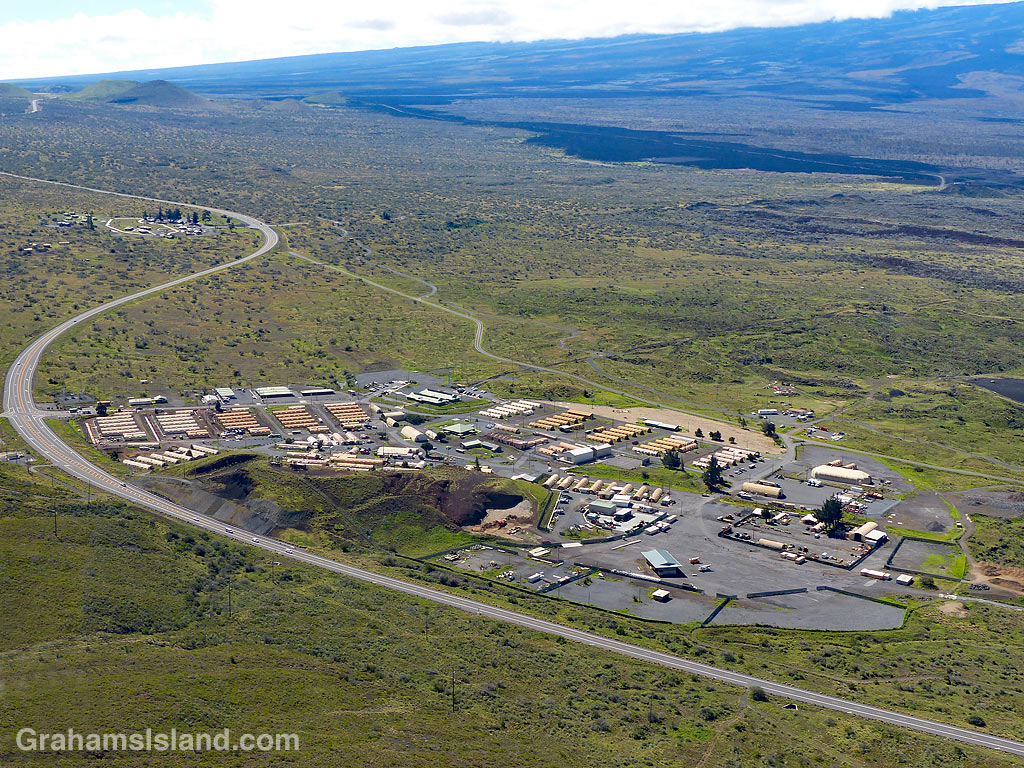
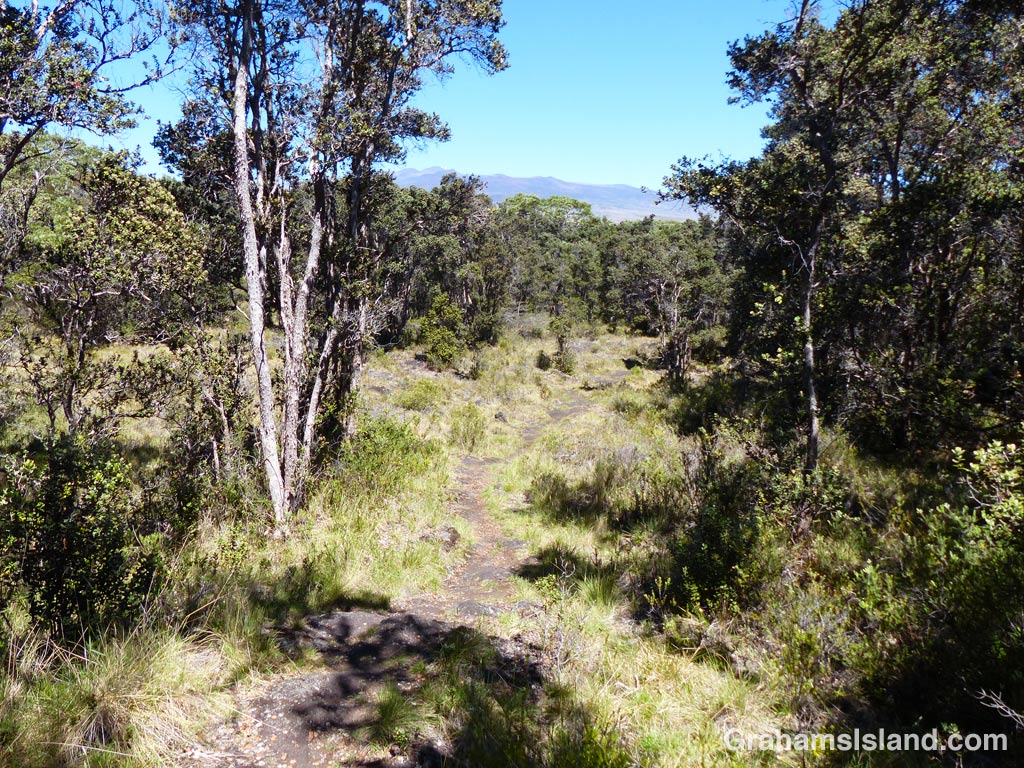
Old Saddle Road joins the new highway a just before it reaches Pohakuloa Training Area, a large military base in the saddle between Mauna Kea and Mauna Loa. It’s not unusual to hear the sound of shells exploding here as they do live ammunition fire. Past this area, there are several good hiking trails that venture into the high elevation landscape. This is one of the best areas for seeing native birds that are still hanging on in much reduced habitat.
After that, there’s the descent into Hilo and then a jog north to the garden where, every time I visit, I see something different, something that wasn’t blooming on previous visits or that I’d just missed in the profusion wonderful plants to see.
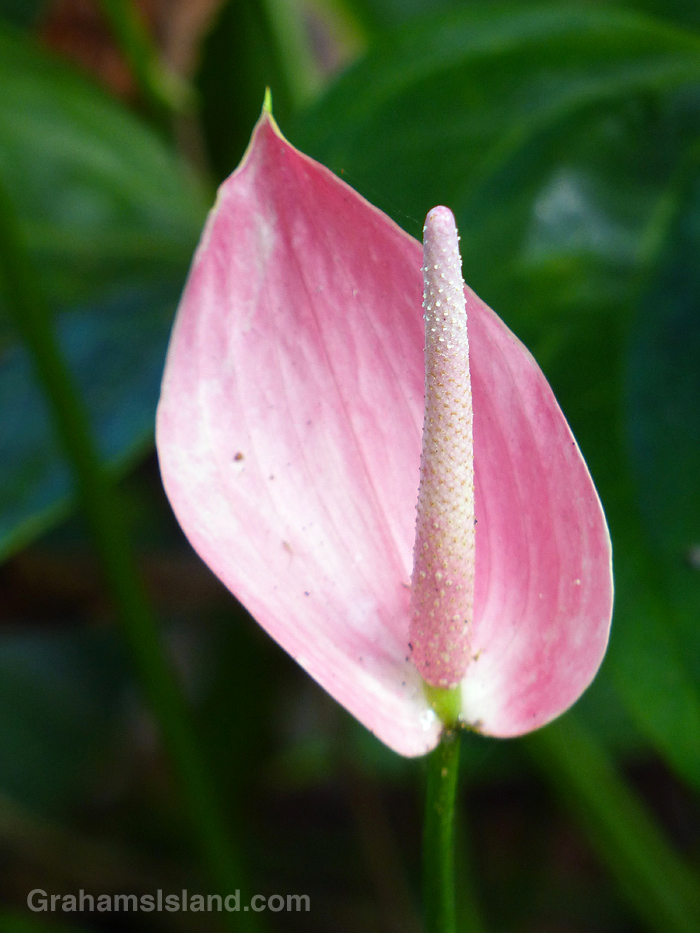
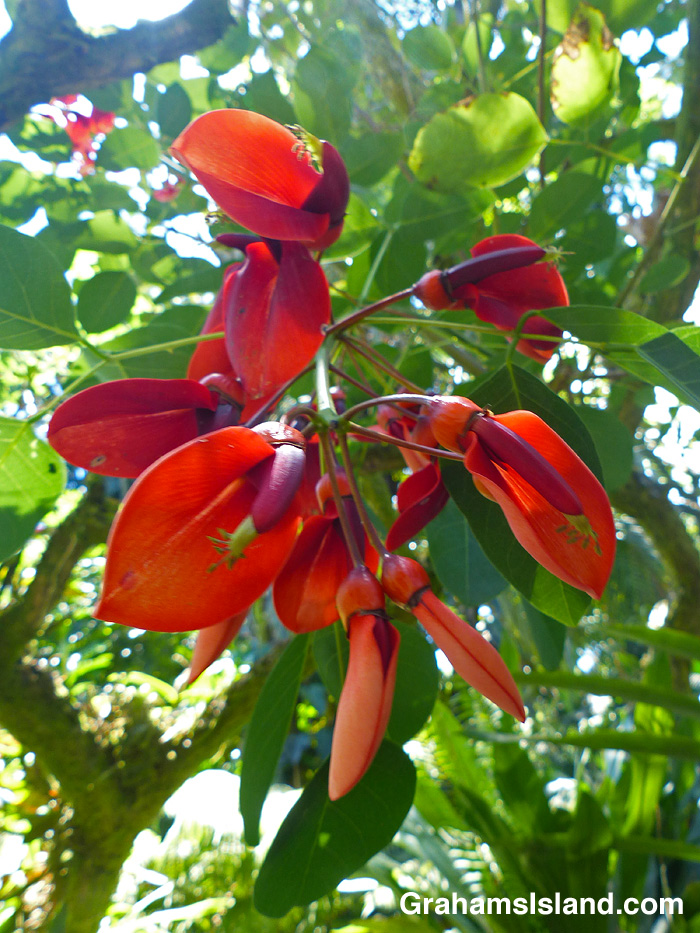
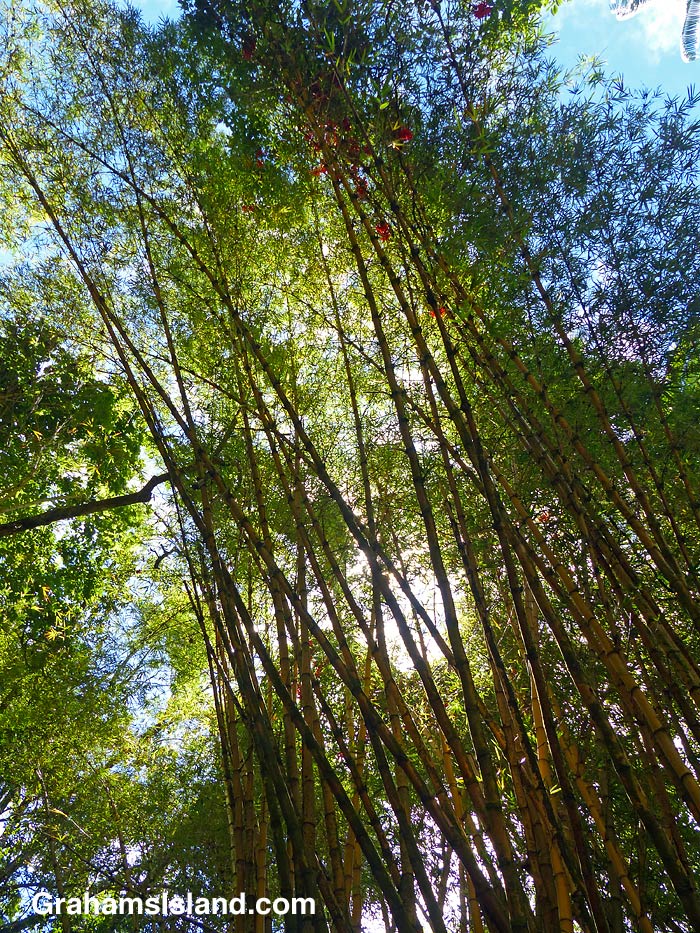
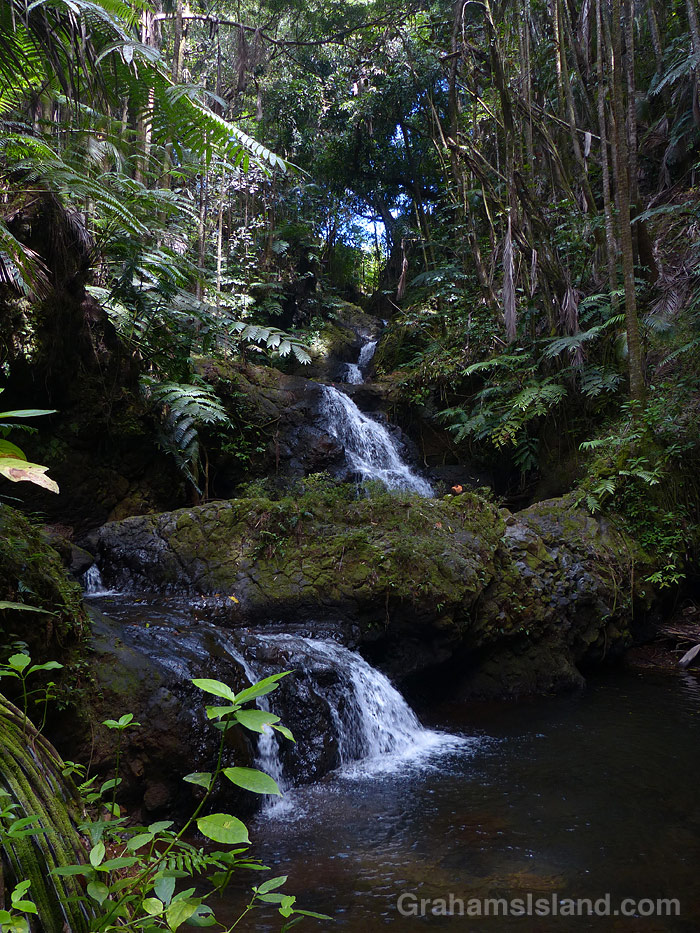
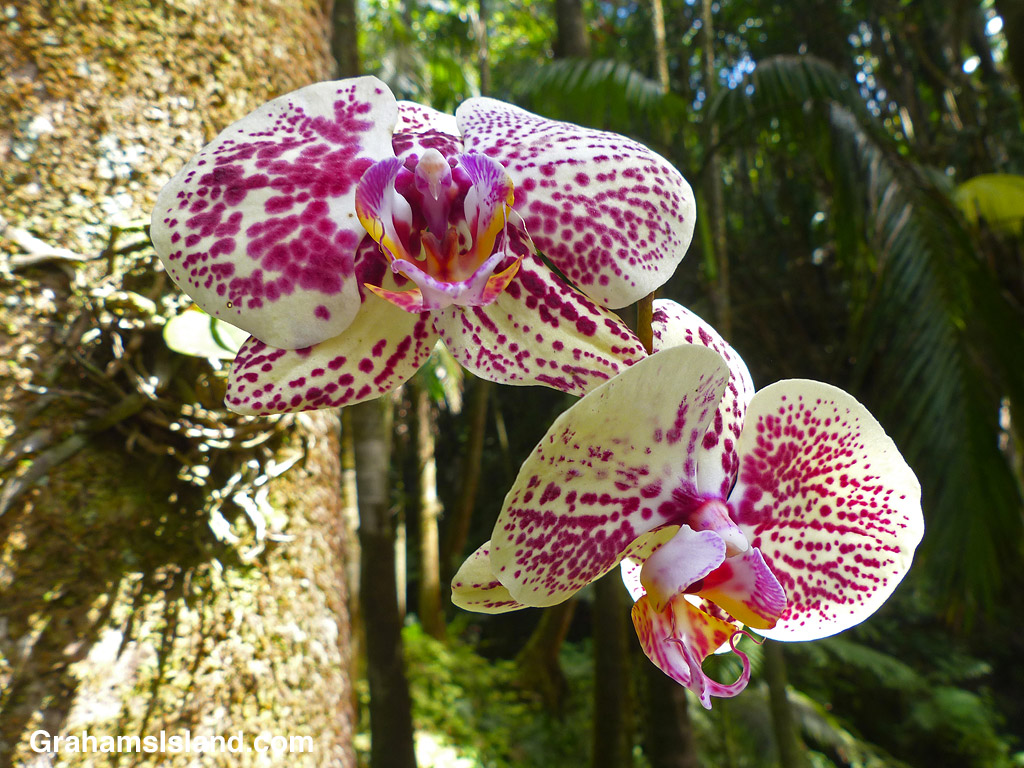
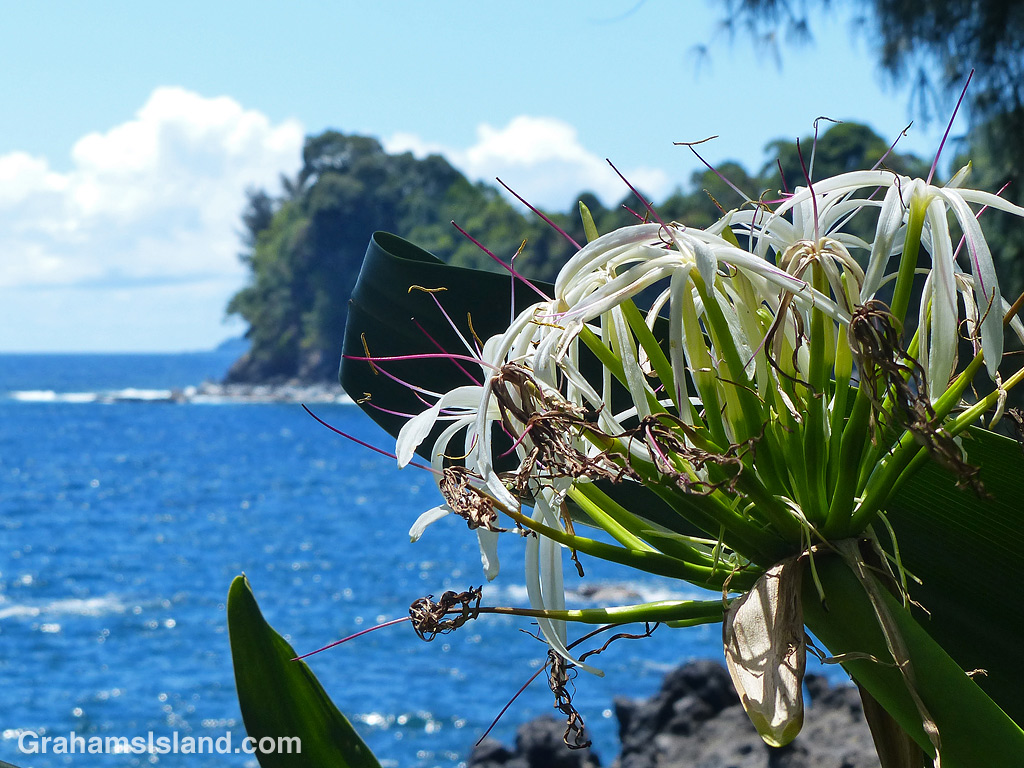
And on the way back there’s a good chance that there’ll be a splendid sunset to be enjoyed.
Also posted for this week’s Friendly Friday challenge theme is ‘Road Trip.’ See more responses here.
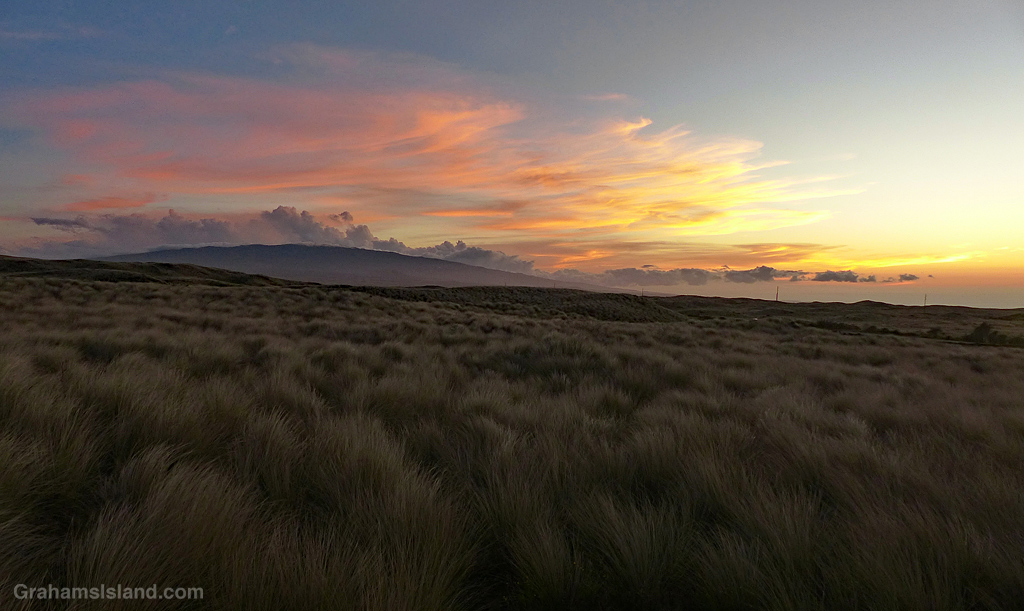
The setting sun illuminates wispy clouds over Hualalai, as seen from the scrubby pasture lands alongside old Saddle Road.

This sign marks the border between Hualalai Resort and one of the public beaches there. It’s the equivalent of prescription drug warnings that taking them might turn you into a four-armed, paranoid psychopath.
Here, the dangers include man-o-wars, sharp coral, slippery rocks, sudden drop-off, dangerous shorebreak, high surf, and strong current. Oh, and there’s no lifeguard on duty. Well, no wonder, they’d have to be crazy to enter the water there.
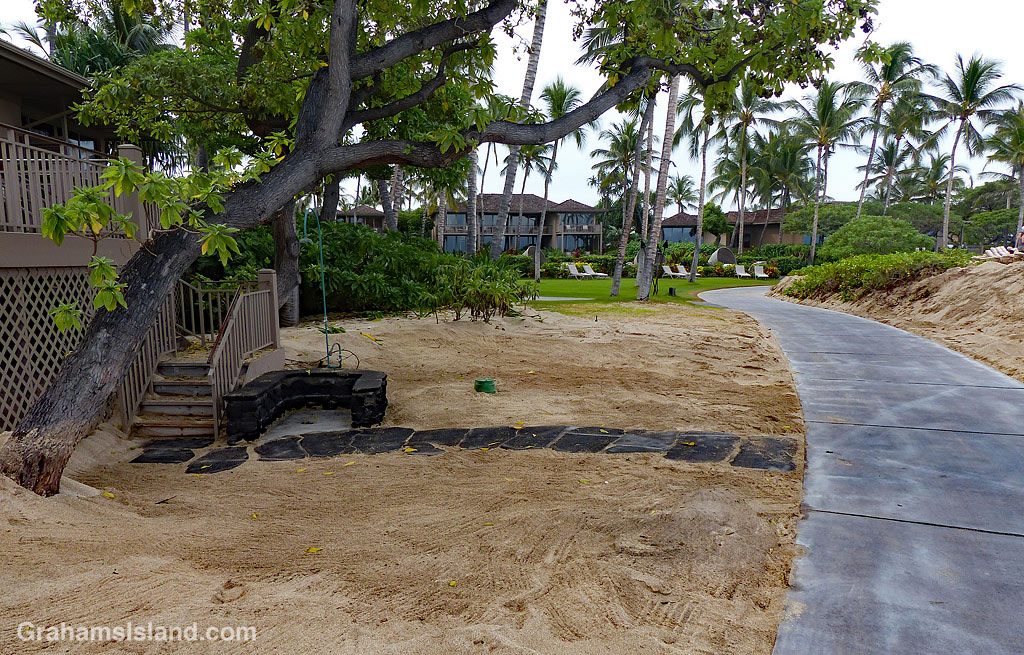
When I was down at Hualālai Resort recently, I was impressed that every morning the paths are swept and the sand, bordering these paths, is raked. Look closely at the photo, and you’ll see a some grains of sand have escaped the call to order.

This week’s Sunday Stills challenge theme is ‘For the Birds.’ See more offerings here.
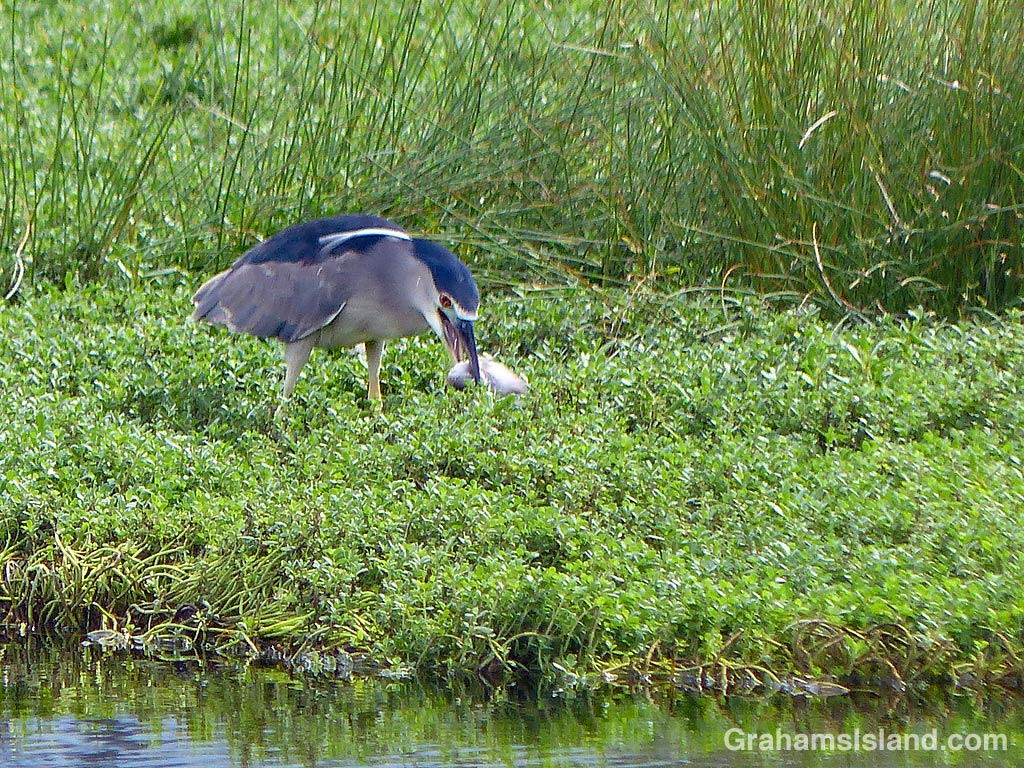
Bird baths and bird feeders are a couple of subjects for this theme and these photos are of what is, in effect, a bird feeder. It’s a fish pond at Hualalai Resort and where there’s a fish pond, there will likely be herons. I saw half a dozen perched around one of the ponds there, but this adult black-crowned night heron was the only one I saw catch anything.
It lunged its beak into the water and pulled this good-sized fish out onto the bank. After a few minutes of tossing the fish around to get it lined up properly, the bird swallowed it whole. The photo at right shows the fish on its way down.

This week’s Friendly Friday challenge theme is ‘Simple Joys.’ See more responses here.
This is one of the beaches at Hualalai Resort on the Kona coast. While the resort is private and access is restricted, Hawaii law states stipulates that the public has a right of access along the beaches and shorelines in the state situated below the “upper reaches of the wash of the waves.”
Any developments along the shore are required to provide designated public access points. The catch here is that sometimes parking at these places is limited and if it’s full, getting to the beach involves a much longer walk.
At Hualalai, there’s a good-sized parking lot, an easy walk to the coast, and a paved trail along the waterfront. Some beaches can be quite crowded but, in my experience, it doesn’t take much of a walk to find a stretch of sand that is either sparsely populated or entirely deserted. And in my book, walking along the coast, past palm trees and sandy beaches, is definitely a simple joy.
 Graham's Island