
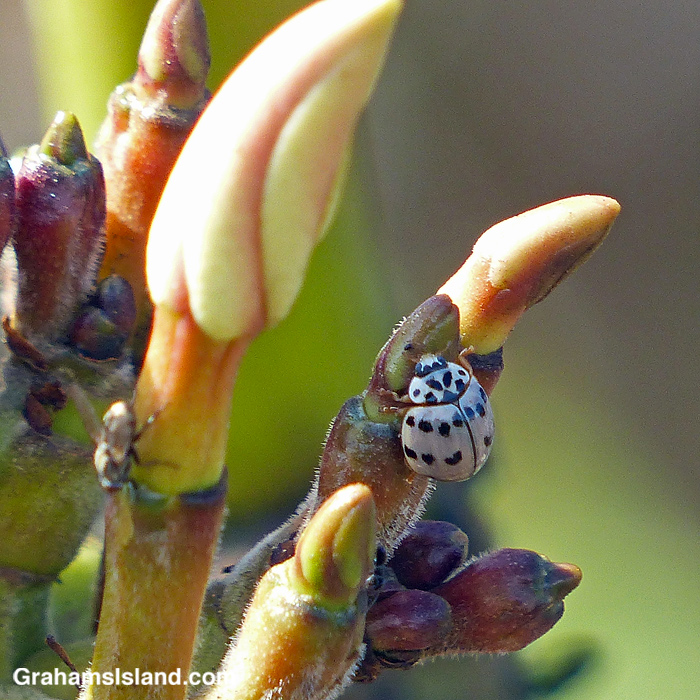
An Ashy Grey Lady Beetle climbs the buds of a Plumeria tree.

An Ashy Grey Lady Beetle climbs the buds of a Plumeria tree.
This week’s Sunday Stills challenge theme is ‘Summer Bugs.’ (See more responses here.) To the best of my knowledge, Hawaii’s bugs are pretty much the same year-round. Here are some of them.
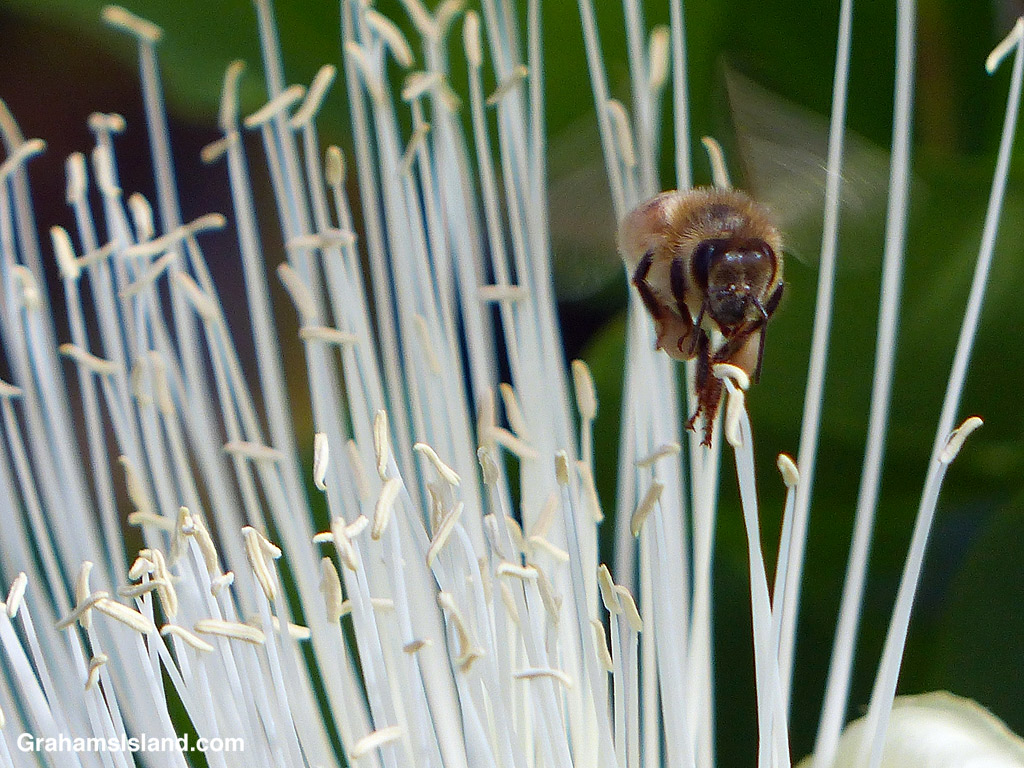
The top photo shows a bee showing impressive balance on a maiapilo flower.
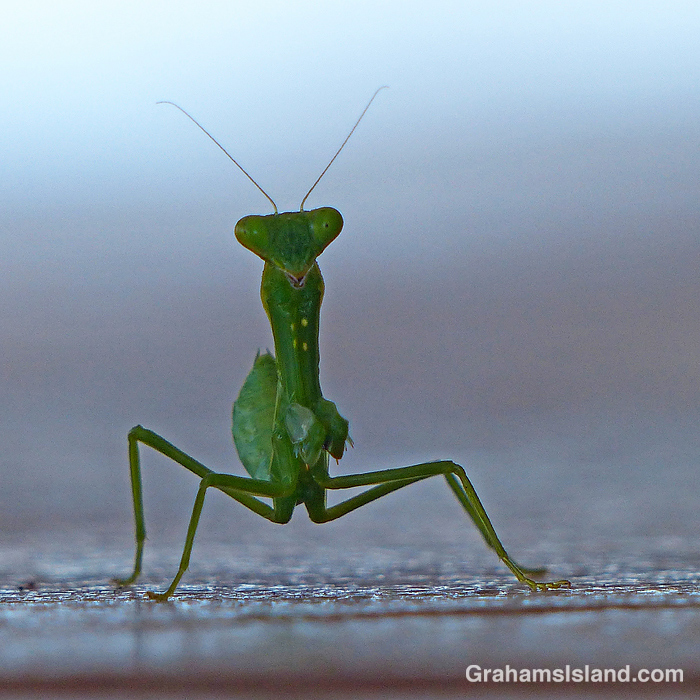
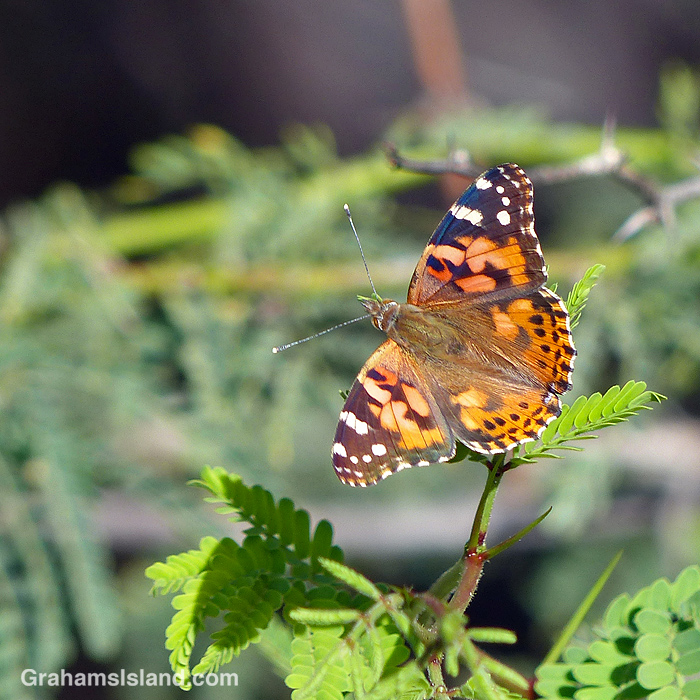
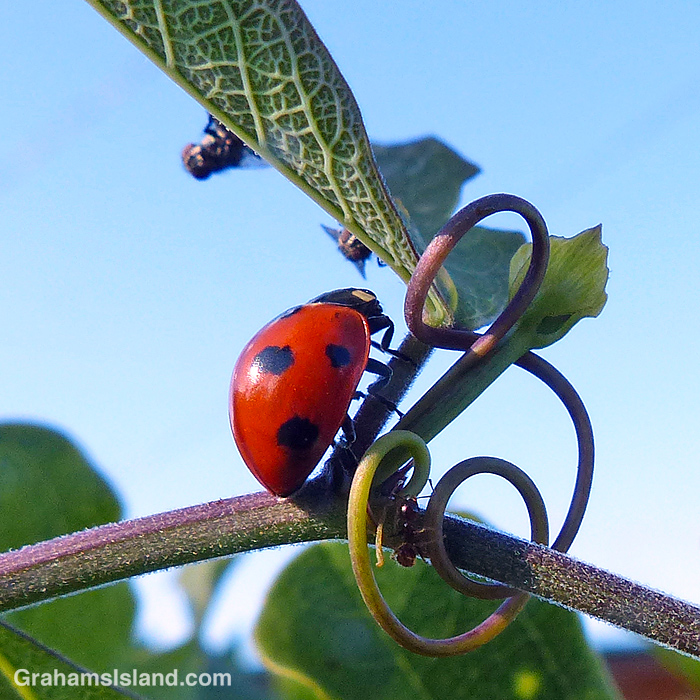
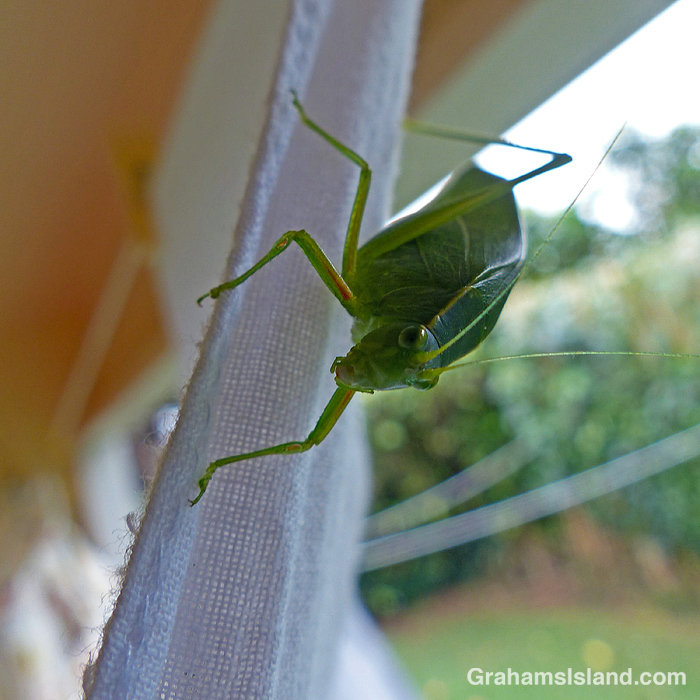
Next up, clockwise from top left: Getting down to eye level with a juvenile praying mantis. A painted lady butterfly on a kiawe tree. A katydid wondering what it’s done to deserve this much attention. A seven-spotted lady beetle being watched.
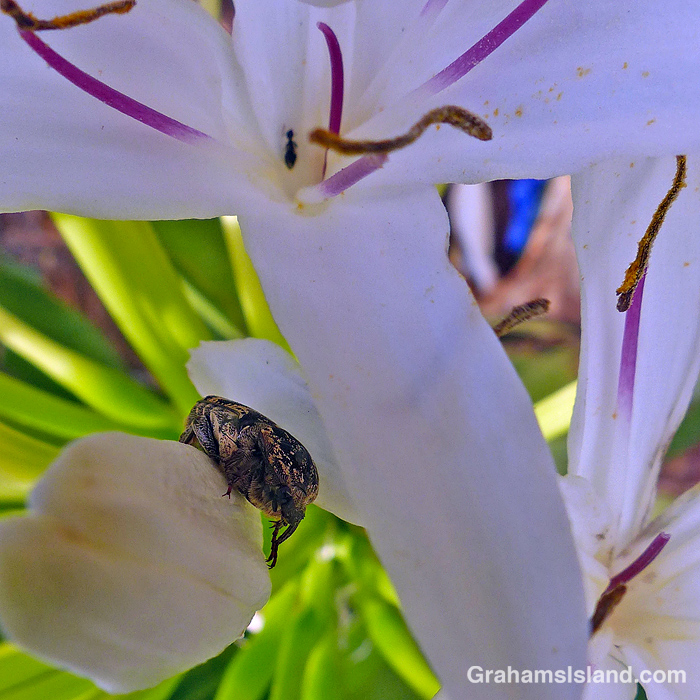
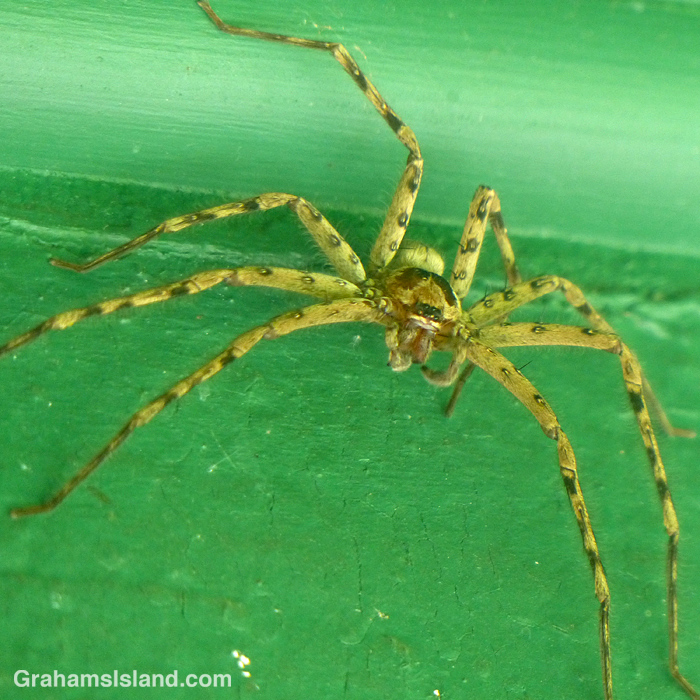
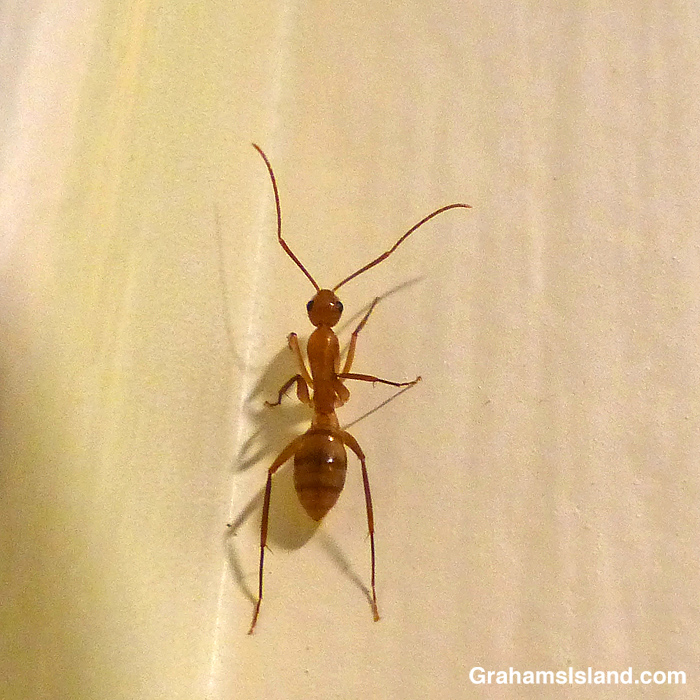
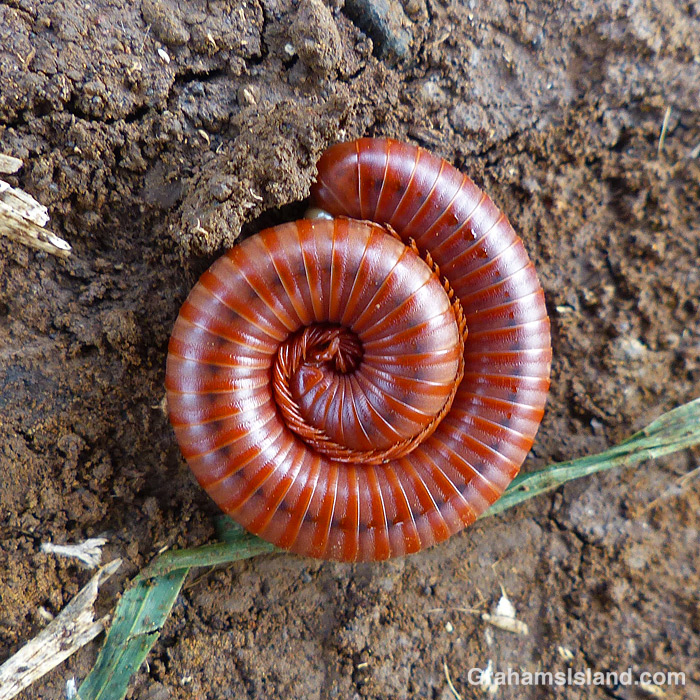
The final gallery: Top left: A mango flower beetle explores a spider lily. Top right: A watchful cane spider wondering if it should run, very fast, away. Bottom left: A Hawaiian carpenter ant (Camponotus variegatus), one of too many that have taken up residence in the house. Bottom right: A rusty millipede deciding that it’s all too much!


This week’s Sunday Stills challenge theme is ‘Great Outdoors.’ See more responses here.
In Hawaii, people spend a great deal of time outdoors. It’s common for people to have an outdoor kitchen, sometimes their only kitchen, sometimes a second one where a barbecue is the featured cooking apparatus. Carports often feature chairs and tables with cars parked elsewhere. The lanai, or deck, is as well-used as any room in the house.
Outdoor activities are popular here, too. Many involve the ocean and its inviting water: swimming, snorkeling, paddling, and of course surfing. Plenty of people go fishing and hunting, longtime sources of food for the table.

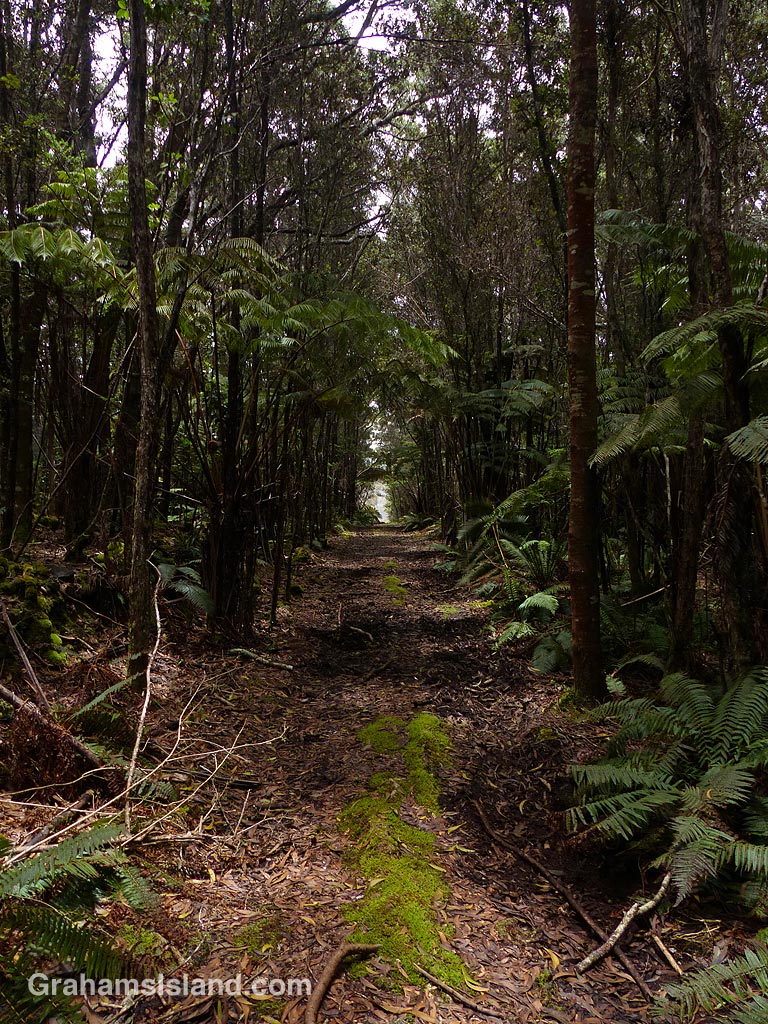
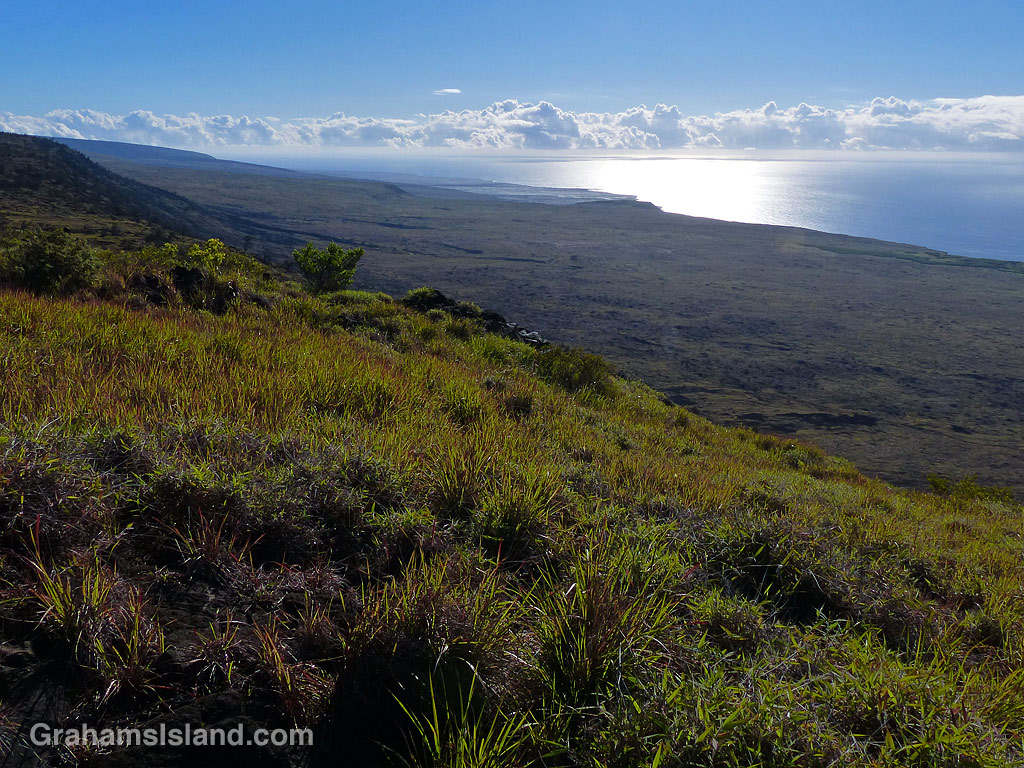
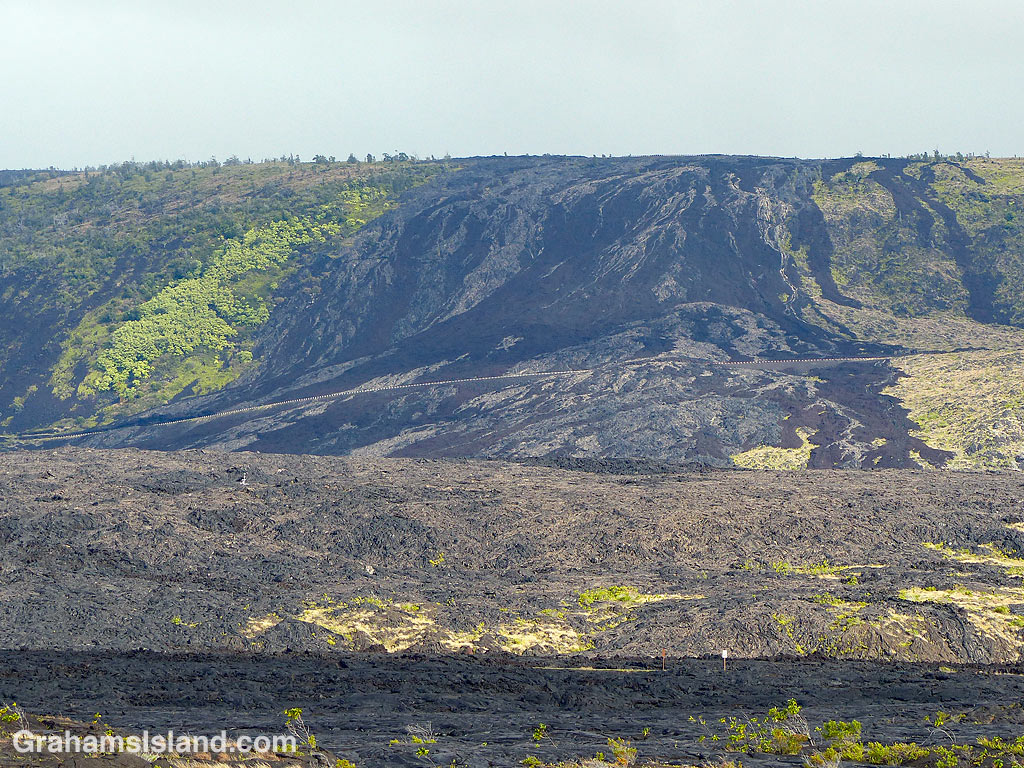
For me, experiencing the great outdoors primarily involves hiking and snorkeling. Hiking isn’t especially popular here, especially along the coast where it can get quite hot. I get strange looks when I hike the length of popular beaches togged out in hiking gear, including shoes, hat, and fanny pack loaded with water. For most, the beach is a place for stretching out and broiling in the sun, not actively working up a sweat.
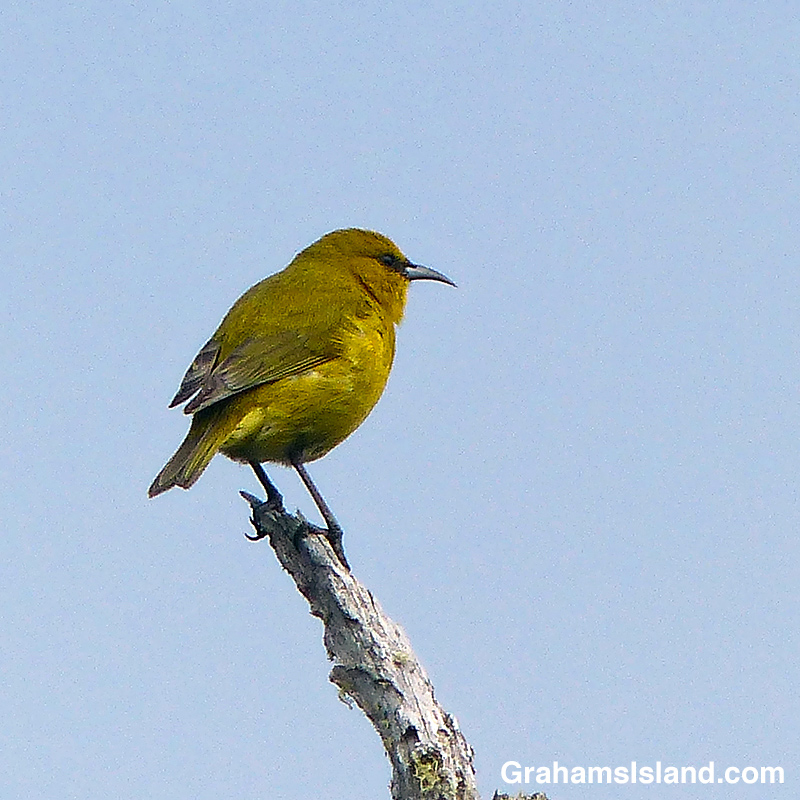
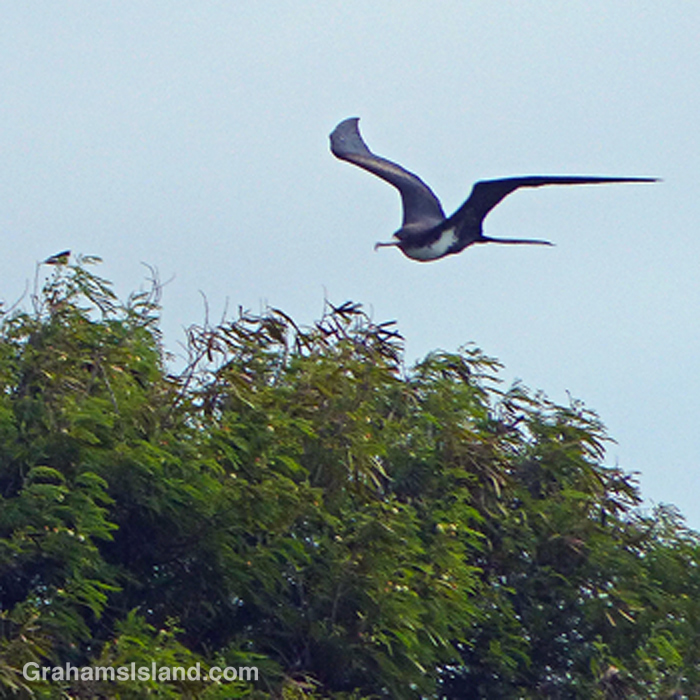
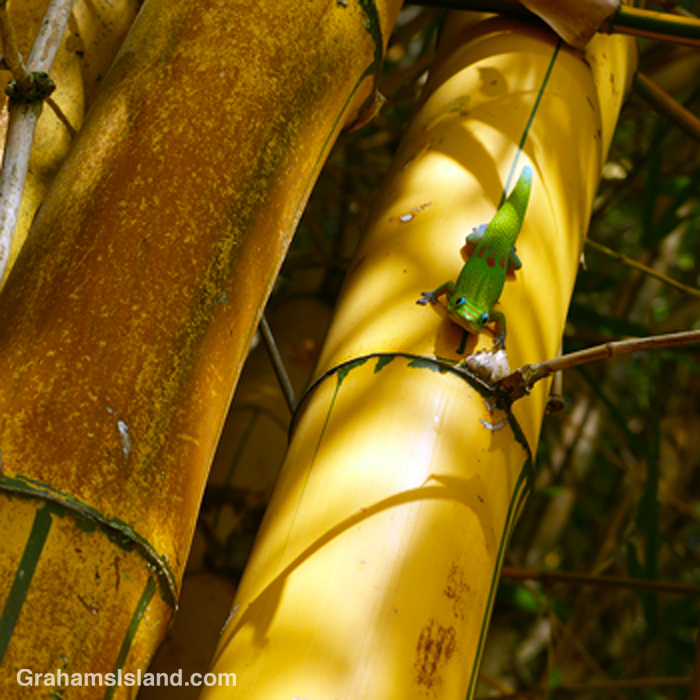
The vast majority of photos on this blog are taken in the great outdoors. These photos are a small selection of things I’ve seen while out and about, from sweeping views to birds and bugs.


A seven-spotted lady beetle climbs a plant gone to seed, presumably looking for something to eat. I never see them catch anything, only see them busily investigating.


The latest Bushboy’s Last on the Card photo challenge is for April 3, 2020. (See challenge rules and more responses here.)
I saw this seven-spotted ladybug on my usual walk along the coast (which is still permitted here). Its bright red elytra jumped out against the largely green background. I’m not sure what the weed in seed was that it was clambering over.
The top photo was the last on my card for that day. The other two were taken earlier in the same encounter and have been cropped and adjusted.


This variable lady beetle was one of two scuttling around on a bird of paradise flower. The flies seemed very interested in it and kept checking it out. There were also flying ants and a wasp on the flower, drawn by the nectar no doubt.


When I took this photo, I thought it was of two variable ladybugs mating. However, when I processed the photo, I noticed that the lower ladybug didn’t look the same as the top one. I think, instead, it’s a seven-spotted ladybug. I also noticed that that top ladybug is climbing up the side of the other one, which is not the usual mating approach.
So now I don’t know what’s going on. It could be that the top ladybug is trying to mate and has just got things seriously wrong. Or it could be a ladybug traffic accident, with the one bug getting in the way of the other. Perhaps they’re fighting. I guess I’ll never know.
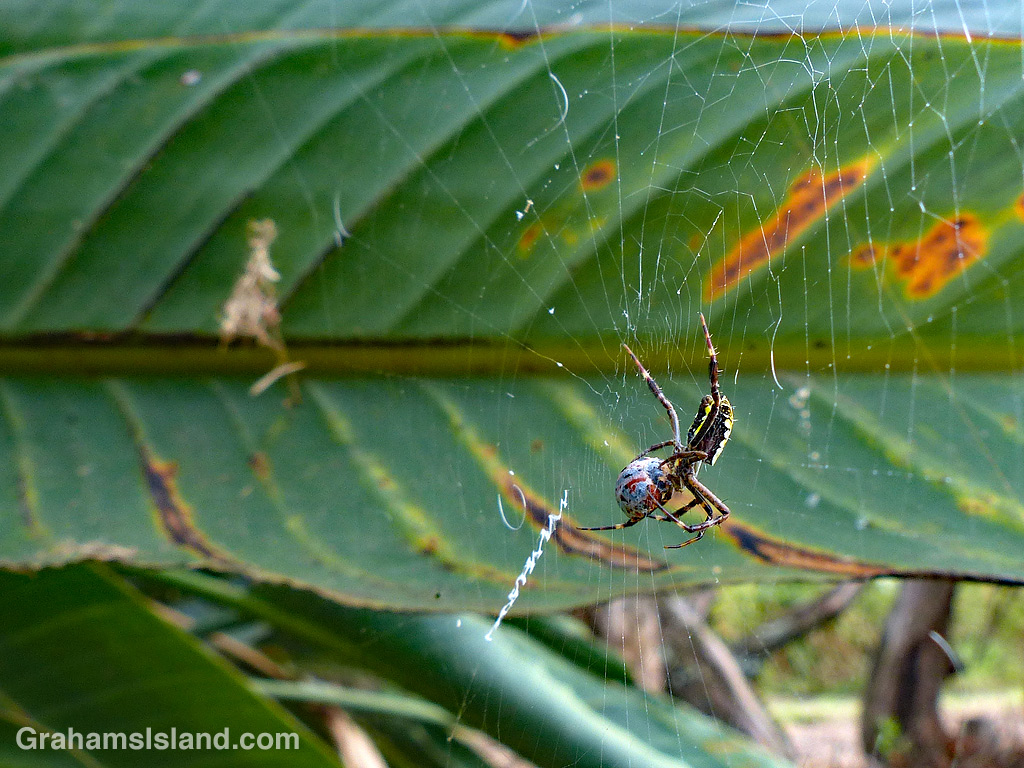
I posted a few weeks ago here about a large female Hawaiian garden spider which had spun a web in a place I often visit. A week or so later, that spider had disappeared.
Now, in that spot, three new webs have appeared, each occupied by female Hawaiian garden spiders. However, these new occupants are much smaller, about the same size as the average male of the species. I think it’s likely they’re the offspring of the first spider I saw there.
The smallness of the new spiders can be seen in the size of the prey this one had caught – a little ladybird.
 Graham's Island