Category Archives: Trees

Halemaumau Crater

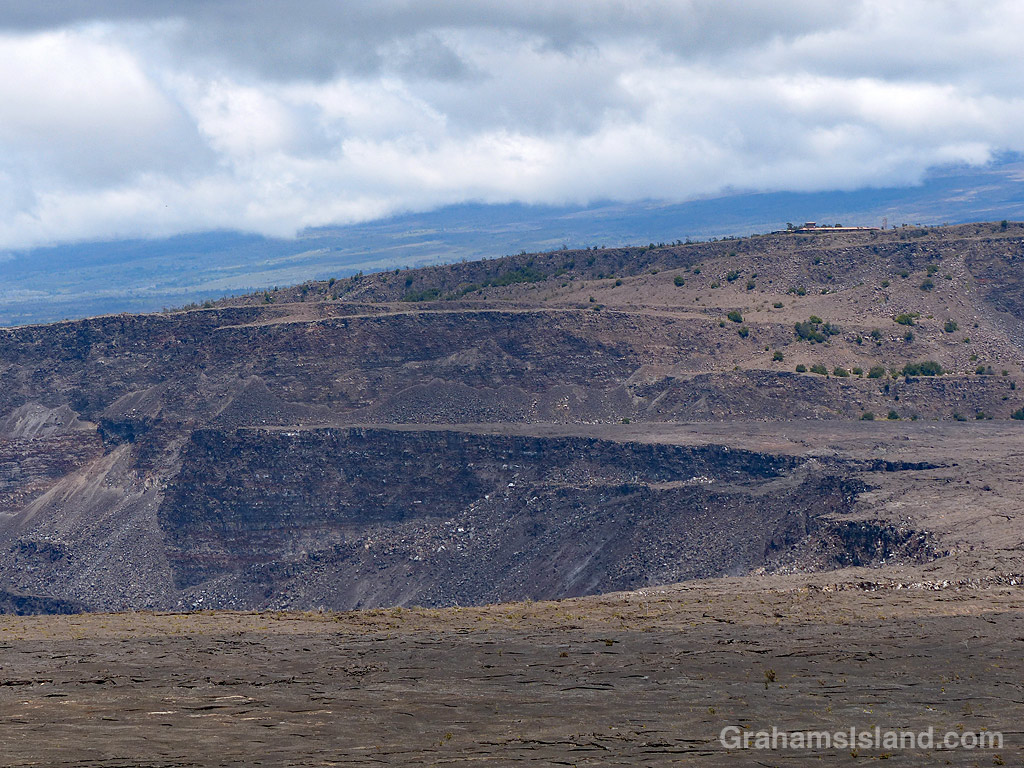
A view of Halemaumau Crater and Jaggar Museum in Hawaii Volcanoes National Park

The latest eruption at Kilauea Volcano has recently been declared paused. It was never an especially dramatic eruption, but when I went down a few days after it began (here) the sky was illuminated by the activity. In recent weeks though, the lava lake formed by the eruption crusted over completely and lava from the active vent was also hidden from view.

The photos are two views of Halemaumau Crater, taken before this latest eruption. In the top one, the collapsed floor of the crater is on the left. This is what the new lava lake was filling up. On the ridge, to the right side of the photo, is the low profile of the Jaggar Museum, which was closed after the 2018 eruption and likely won’t reopen.

The bottom photo shows the easternmost edge of Halemaumau Crater, which wasn’t greatly impacted by this eruption or the events of 2018. Consequently, the walls of the crater are quite green and the floor is dotted with plants. These plants are mostly ohia trees, which are among the first plants to grow in lava fields, in part because their roots will tap into lava tubes to find moisture and nutrients.

For more information about Hawaii Volcanoes National Park and Kilauea’s eruptions, go to nps.gov/havo/.

A view of Halemaumau Crater from the Byron Ledge Trail in Hawaii Volcanoes National Park

Tangerines

Tangerines on a tree in Hawaii

The truth is, I get to cheat on Bushboy’s Last on the Card photo challenge (more responses here). I generally see his post in the late afternoon here since he’s in Australia and many hours ahead of me in Hawaii. That was the case today and when I looked, I found that, for various reasons, I hadn’t taken any photos in more than a week.

So I poked my head outside and immediately thought of the tangerine trees in the yard. One is so heavily laden with fruit that a couple of branches are scraping the ground. Despite the trees looking to be in terrible condition, they fruit prolifically. An interesting fact is that the only flower I’ve ever seen on these trees was an orchid growing at the base of one of the branches. What’s that about?

A bright I’iwi

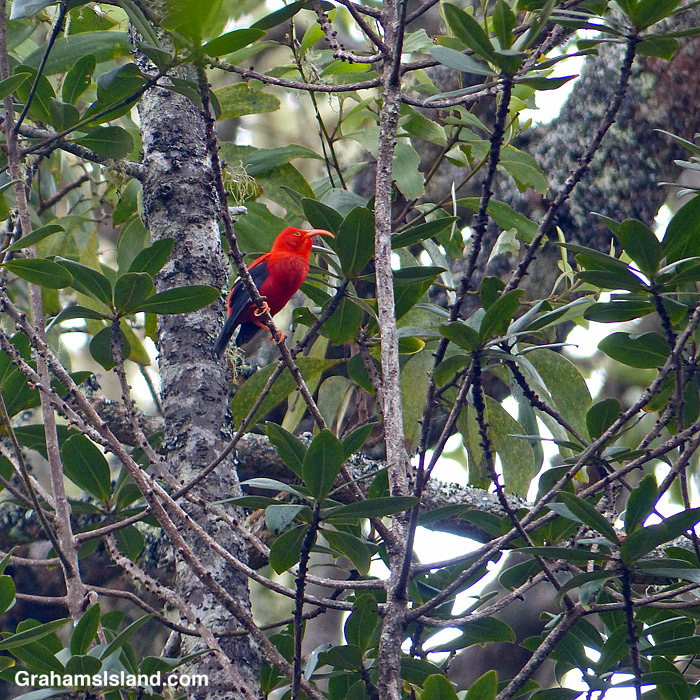
An I'iwi in a forest off Saddle Road, Hawaii
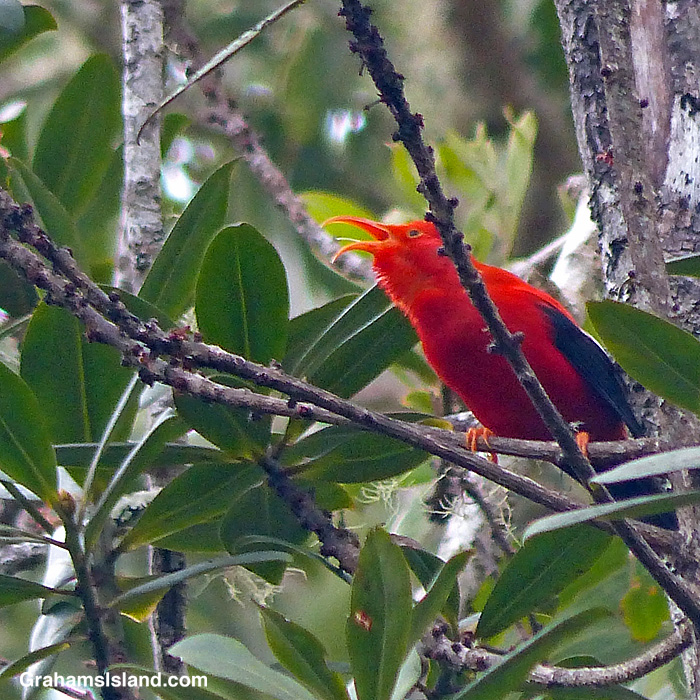
An I'iwi calls in a forest off Saddle Road, Hawaii

On my last hike on the Pu’u O’o Trail, off Saddle Road, I soon ran into a man and his son staring at a tree a short distance away. The man explained that they’d seen an i’iwi, a native Hawaiian honeycreeper, fly into the tree and were hoping to see it again. I waited with them for a while, but saw nothing and decided to move on.

A little later I ran into two men coming out of a kipuka, a cluster of old vegetation that has been bypassed by lava flows. One of them, looking pretty pleased, held out his camera and said they’d just seen an i’iwi and he’d got some good photos. He mentioned the spot where they’d seen the bird, so I headed into the trees to have a look. Nothing. It was beginning to look like it was going to be one of those days where everyone else has a wonderful experience except me!

But not long after, I saw a flash of red and then this bird settled on a branch and began to add its song to the loud chorus of bird songs in the kipuka. One thing about i’iwis is that if they’re around, they’re easy to see, their bright red plumage standing out against the green background.

After the bird flew off, I carried on with my hike. When I returned half an hour later, the bird song in the kipukas had diminished considerably and I didn’t see or hear anymore i’iwis.

Posted in response to Becky’s April Squares challenge theme of ‘Bright.’ See more responses here.

Rainbow yellow

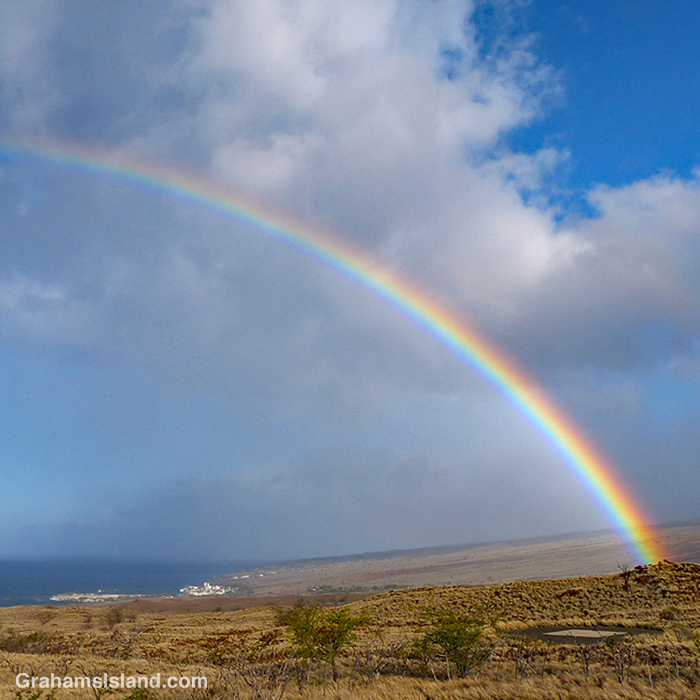
The third of my rainbow colors in response to Becky’s April Squares challenge theme of ‘Bright.’ (See more responses here.)

Today’s rainbow was taken from Kohala Mountain Road and looks down towards the southern edge of Waimea.

In the middle, a bright yellow saffron finch perches on a bare branch of a plumeria. There were zero leaves on this tree and only a few budding flowers, such as the one next to the finch.

And finally, the yellow robe of the painted statue of King Kamehameha I in Kapaau.

Rainbow orange

A rainbow over Kawaihae, Hawaii
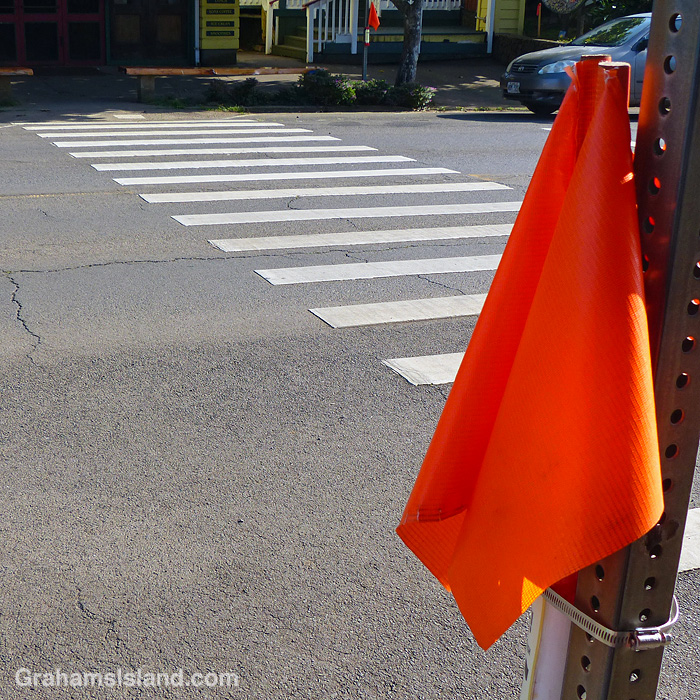
Orange flags by a pedestrian crossing
An orange Kou flower in Hawaii

This is the second of my little series of rainbow colors in response to Becky’s April Squares challenge theme of ‘Bright.’ (See more responses here.)

In the top photo, a rainbow arcs over the port of Kawaihae.

Below that are orange flags available for waving while crossing the street. I haven’t yet felt the need to use them, still being able to leap out of the way of drivers focused on their phones! Actually, drivers here are pretty good about stopping for people to cross the street. I’m more surprised by how many people will just step out into traffic 20 feet up from the crosswalk. Then they look aggrieved if you fail to stop instantaneously.

The bottom photo shows the lovely flower of the kou tree (Cordia subcordata). Kou is indigenous to Hawaii but is also a canoe plant, brought here by Polynesian settlers. It likes the sun and grows along the coast.

Praying mantis egg sacs

A praying mantis egg sac on a branch
A praying mantis egg sac on a tree trunk

When I’m out walking, I rarely see praying mantis egg sacs. They’re no more than an inch long and they can blend in with the trees and branches where they tend to be found. However, on a recent walk on the coast, I saw these three sacs in the space of 20 minutes, the top two on branches and the third on a tree trunk.

I’m not sure why they caught my eye, though this is the time of year when they’re typically seen. Perhaps it was because I was watching for butterflies and dragonflies, so was paying a bit more attention to details than usual.

Each sac can contain up to 300 eggs. The eggs are encased in foam, called ootheca, which hardens into the sacs seen here. The sac in the middle photo was crawling with ants, which I suspect is not good news for the would-be mantises inside.

Butterfly on a kiawe flower

A Painted Lady Butterfly feeds on a kiawe flower

Kiawe trees (Prosopis pallida) are native to the northeastern corner of South America. They were introduced to Hawaii way back in 1828 and now are the dominant tree in coastal areas on the drier west side of this island. The downside of this is that the tree has wicked thorns that penetrate tires and footwear. My feet have been jabbed through Teva sandals and Adidas hiking shoes. The most popular footwear in Hawaii are slippahs (flip-flops or thongs), but one has to be brave and vigilant, or maybe foolish, to wear those where kiawe grow.

On the plus side, the tree’s wood is popular for firewood and barbecues. Kiawes also provide shade and have light yellow flowers which are popular with bees and butterflies such as the painted lady butterfly in this photo.

And now for something completely different

Black and white photo of Mauna Kea from Pu'u Wa'awa'a, Hawaii
Black and white photo of a wharf on the coast of Hawaii
Black and white photo of a tree on the coast of the Big Island, Hawaii

The current Friendly Friday challenge theme is ‘Something Different.’ See more responses here.

I think in my 6+ years of doing this blog, I’ve posted exactly one black and white photo. So a selection of black and white scenes seemed like a suitable response for this challenge.

The top photo is of morning clouds scudding over Mauna Kea as seen from the top of Pu’u Wa’awa’a. Second is a shot of surf crashing against an old wharf in North Kohala and, yes, I was secretly hoping the man on the wharf would get soaked! Third is a tenacious tree on the coast near Kawaihae. The bottom photo shows a small fishing boat in the ʻAlenuihāhā Channel, as seen from the North Kohala coast.

Black and white photo of a fishing boat off the coast of Hawaii